
TL;DR: Transformer drying, impregnation, and casting equipment is the equipment group that decides how long a transformer’s insulation actually lives. Vacuum and vapour phase drying pull moisture out of cellulose insulation, curing ovens polymerize resins and varnishes, vacuum oil filling protects oil-immersed units, and VPI or vacuum casting locks insulation in place for dry-type products. This pillar guide maps all eleven machines in the group, the specifications that matter, and how to match the right line to your product mix.
Every transformer dies the same way when it dies young: moisture and voids in the insulation. Cellulose pressboard leaves the insulation shop holding several percent water by weight, resins need exact temperature curves to cure, and a single air bubble in a cast CT is a partial-discharge site waiting to happen. The equipment that fixes this — drying, impregnation, and casting equipment — is the least visible part of the transformer manufacturing process, and the part with the most direct influence on test-pass rates and service life. This guide maps the complete group: two drying technologies, four oven families, oil filling, resin casting and APG, and VPI.
Transformer insulation is cellulose plus either mineral oil or epoxy resin. Cellulose is hygroscopic — wet pressboard loses dielectric strength, ages faster, and can fail a routine induced-voltage test outright. Industry loading guides treat moisture as the single largest accelerator of insulation aging. The process targets are strict: after drying, insulation moisture content should be well under 1%, and the vacuum system must hold low absolute pressure long enough for deep moisture to migrate out. Everything downstream — oil filling, impregnation, casting — assumes the insulation is dry first. That is why the drying section anchors this equipment group.
Drying Equipment: Vacuum vs Vapour Phase
Vacuum drying equipment: the distribution-class workhorse
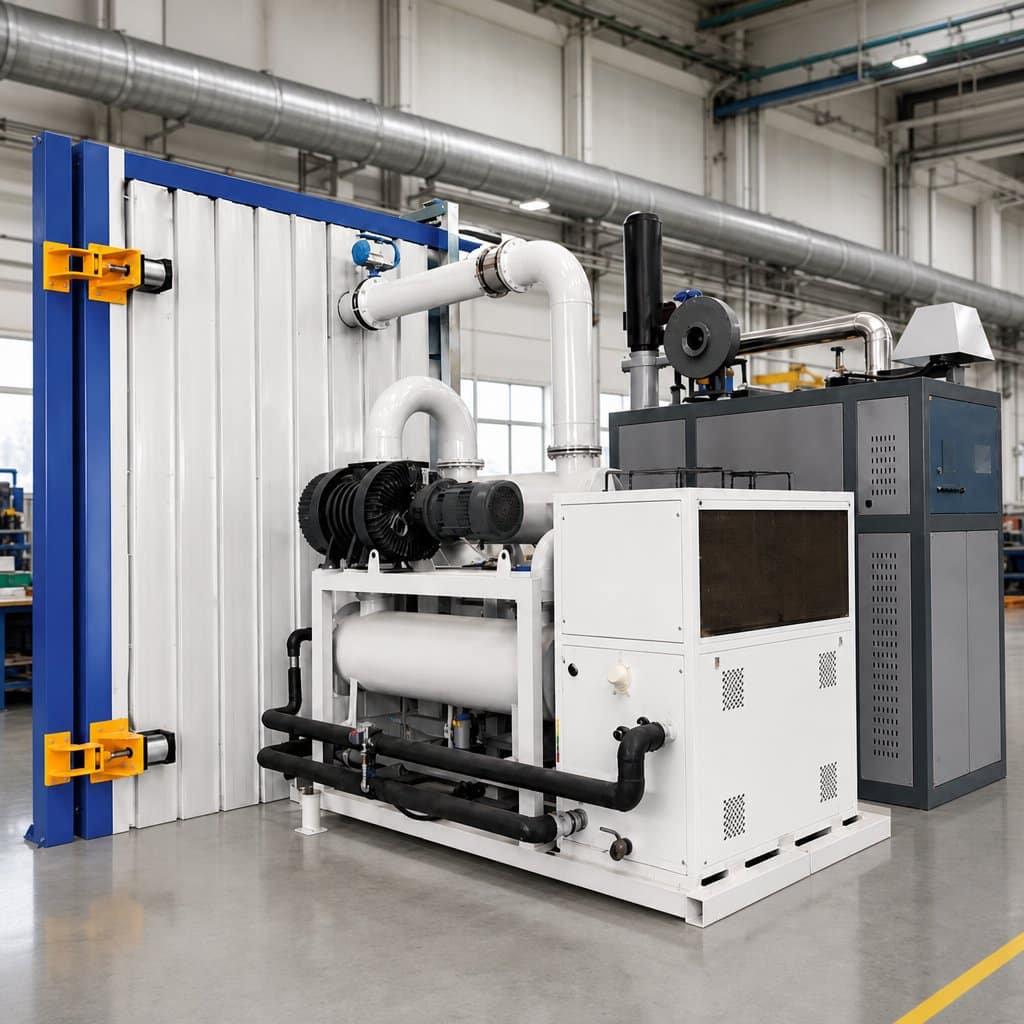
Transformer vacuum drying equipment combines vacuum and hot-air circulation to strip moisture from core-and-coil assemblies. Modern systems add micro-water (dew point) monitoring to close the loop on dryness instead of running fixed timers, and high-efficiency heating plate options shorten the cycle by 30–50% versus conventional hot-air-only designs. For distribution and mid-size power transformers, this is the default choice. For process stages and monitoring methods, see our guide to vacuum drying for transformer insulation.
Vapour phase drying: the UHV answer
For ultra-high-voltage transformers, instrument transformers, and capacitor bushings, vapour phase drying equipment replaces hot air with a solvent vapour that condenses on the insulation and transfers heat far more efficiently. The practical wins: shorter cycles on large units, the ability to reprocess repaired transformers, and an external evaporator option that can distill oil separately. The VPD-250 to VPD-600 range scales evaporator power from 250 to 600 kW with main condensers at 200–500 kW, in custom horizontal square tanks rated from -0.1 to 0 MPa. If you build 220 kV and above — or do repair work — vapour phase is where the technology curve points. For the full head-to-head, see our vapour phase drying vs hot air comparison.
One related machine sits upstream in the winding shop: the constant-pressure coil drying and compaction device dries coils under controlled compression so they reach final height before assembly — covered in detail in our core stacking and coil handling equipment guide.
Curing and Drying Ovens: Four Families
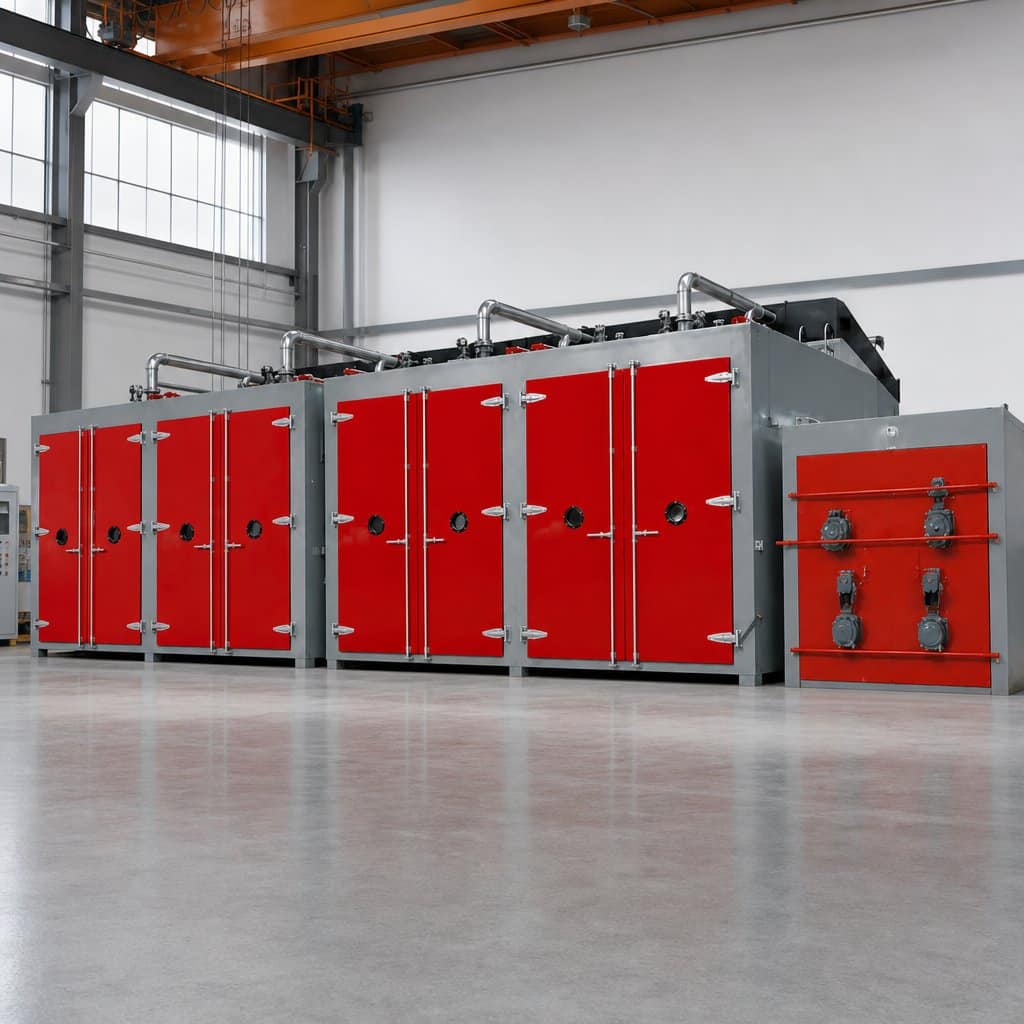
HB series curing oven — transformers, reactors, instrument transformers
The HB series curing oven handles hot-air circulation curing of insulation with optional micro-water monitoring, cutting curing time by 30–50%. Six frame sizes (HB-1 to HB-6) cover working chambers from 1500×1600×1600 mm up to 3000×5000×3000 mm, from room temperature to 200°C, with 27–96 kW of heating. The figures that matter on the datasheet: temperature uniformity ≤±2.5°C and fluctuation ≤±1°C — plus full parameter recording for traceability.
HW series — heavy curing for large generators
For wind, hydro, and thermal generator stators and rotors, the HW series curing oven scales up to heavy trolleys carrying 300 T, with custom chamber dimensions and PLC+HMI control. If your product line includes large rotating machinery insulation, this is a different size class entirely from transformer ovens.
HA series dipping paint drying oven — the safe VPI companion
After varnish dipping or VPI, the HA series drying oven bakes the insulation with an energy-efficient, high-safety design: five sizes (HA-1 to HA-5), room temperature to 250°C, 36–54 kW heating, 500–1000 m³/h ventilation, and controlled solvent exhaust at 2.5–5 L/h with around 80% thermal efficiency. Solvent handling is the specification to audit here — a dipping oven is a fire-safety system as much as a heater.
HRS series — busbar heat-shrink sleeve ovens
For switchgear and distribution work, the HRS series oven shrinks insulating sleeves onto copper and aluminum busbar: four sizes, chambers from 850×800×1000 to 2000×1800×1500 mm, room temperature to 250°C, 10.8–36 kW. It pairs naturally with the machines in our busbar processing equipment guide.
Vacuum Oil Filling Equipment
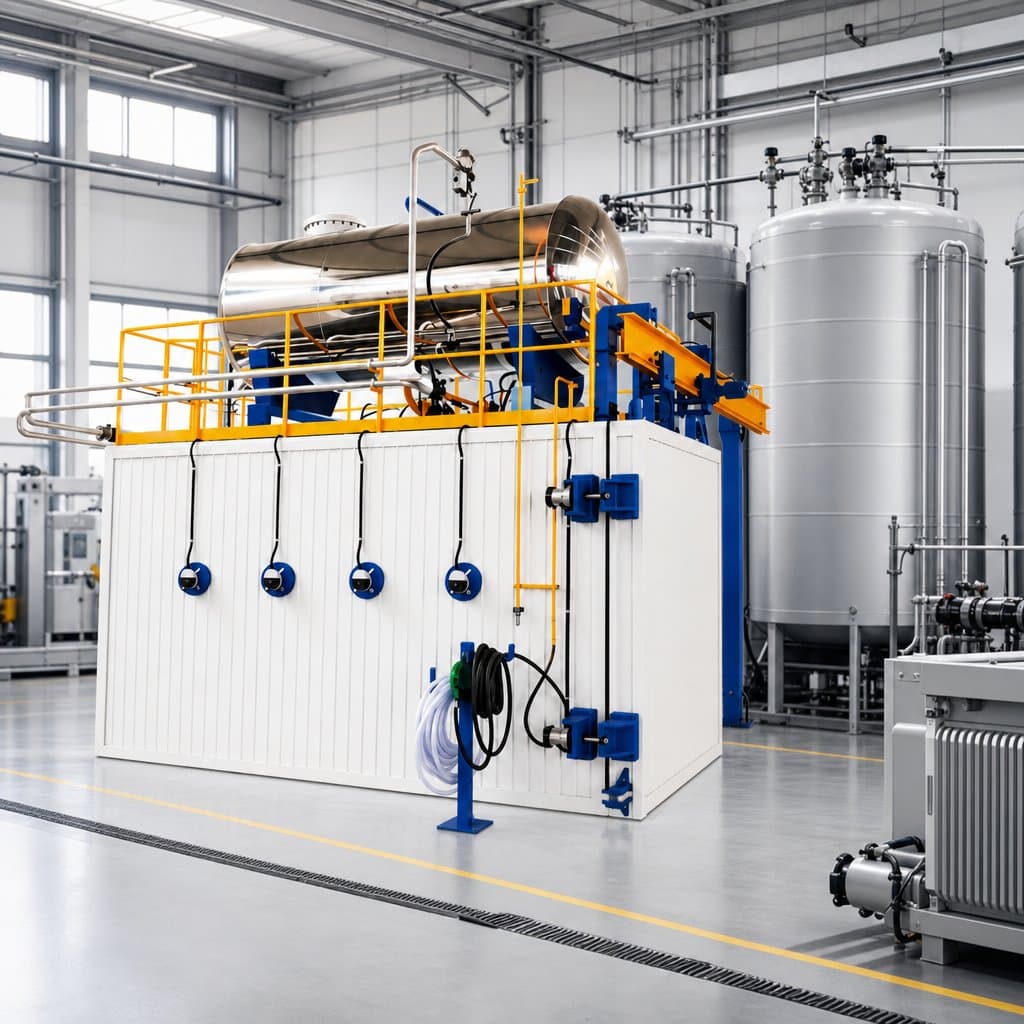
Dry insulation means little if oil filling reintroduces air and moisture. Vacuum oil filling equipment for transformers, capacitors, and instrument transformers fills under vacuum with dual control from flow meter and level gauge, holding an ultimate vacuum of 10 Pa. Storage tanks come in 3000/4000/5000 L sizes with oil temperature control from room temperature to 60°C and full process recording. In the process chain, this machine sits immediately after drying — which is why drying and oil filling are usually specified together. For the process detail, see our guide on vacuum oil filling and why 10 Pa ultimate vacuum matters.
Resin Casting: Preparation, Vacuum Casting, and APG
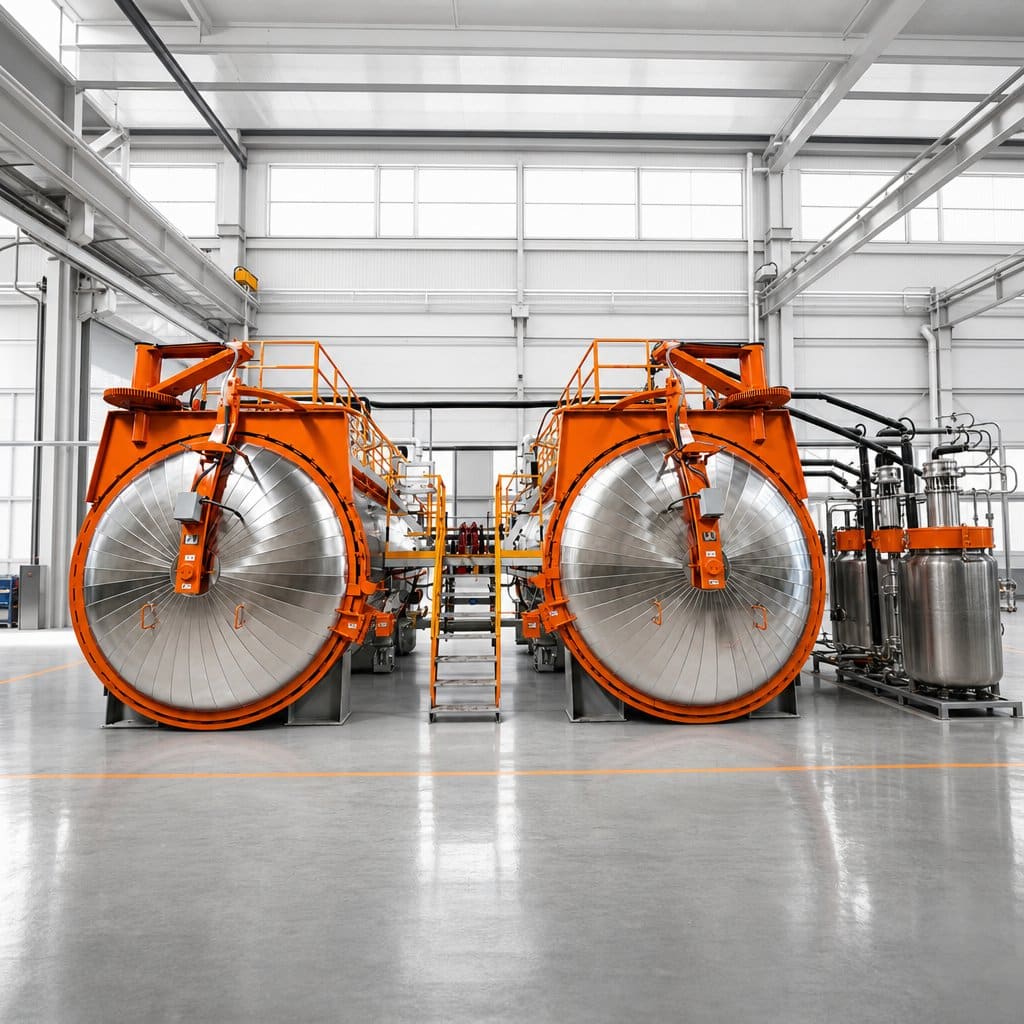
Dry-type transformers, CT/VT instrument transformers, reactors, and epoxy components replace oil with cast resin. The line has three stations:
Station 1: Vacuum material preparation
Vacuum preparation equipment pre-treats resin and filler centrally — degassing, drying, and metering before any mold is touched. Tanks run 100–500 L with preparation capacity of 3000–15000 kg per 24 hours. Casting quality is mostly decided here: wet or gassy filler becomes voids in the finished part.
Station 2: Static mixing vacuum casting
The static mixing vacuum casting equipment casts CT/VT, dry-type transformers, and reactors under vacuum, with optional rotating or two-axis servo casting arms for multi-mold lines. Specifications: 100–500 L tanks, 3000–15000 kg/24h preparation, filler drying tanks of 300–1200 kg, casting rates of 2–12 kg/min at about 10 bar, and square or round casting tanks built to order. For the full process and sizing logic, see our guide to static mixing vacuum casting for CT/VT and dry transformers.
Station 3: APG — automatic pressure gelation
For solid-sealed poles, contact boxes, insulators, and wall bushings, static mixing APG equipment injects mixed resin directly into heated molds under vacuum: same 100–500 L tank and 3000–15000 kg/24h preparation range, casting at 2–12 kg/min around 10 bar. APG trades cycle time for automation — gelation happens in the mold, so throughput scales with mold count.
Vacuum Pressure Impregnation (VPI)
Vacuum pressure impregnation equipment serves transformers, motors, reactors, and capacitors: the winding is dried under vacuum, flooded with resin or varnish, then pressurized so the impregnant penetrates deep into the insulation structure. Modern VPI lines are highly automated with full process recording and are typically customized to the vessel sizes your product range needs. The process chain closes with the HA drying oven — impregnation, then bake. For the full process breakdown, benefits, and selection criteria, see our VPI process, benefits, and selection guide.
How to Choose: Match Equipment to Your Product Line
The selection logic follows what you build:
- Oil-immersed distribution transformers → vacuum drying equipment + vacuum oil filling equipment, specified as a pair; add micro-water monitoring if your customers audit dryness records
- 220 kV and above, or repair/service work → vapour phase drying pays back on cycle time and the ability to reprocess repaired units
- Dry-type transformers, CT/VT, reactors → vacuum preparation + static mixing vacuum casting line, then HB curing ovens downstream
- Epoxy components (poles, insulators, bushings) → APG equipment; scale by mold count, not tank size
- Motors, generators, or varnish-insulated windings → VPI + HA dipping paint drying oven; large generator work upgrades the oven to the HW series
- Switchgear busbar insulation → HRS heat-shrink sleeve oven alongside your busbar fabrication line
Before signing, verify three things on any vacuum system: the measured ultimate vacuum (10 Pa class on oil filling), the dryness verification method (micro-water monitoring vs timer-only), and the parameter recording format your quality system can archive. For budget planning across the whole line, see our complete line setup and budget guide, and our supplier audit checklist before you commit.
Frequently Asked Questions
Vacuum drying vs vapour phase drying — which one do I need?
Vacuum hot-air drying covers distribution and mid-size power transformers at a lower investment. Vapour phase drying transfers heat far more efficiently through solvent condensation, which shortens cycles on large or UHV units and handles repaired transformers — it becomes economical as voltage class and unit size grow.
Why does ultimate vacuum matter on oil filling equipment?
Air trapped in insulation during filling becomes partial-discharge sites in service. A 10 Pa ultimate vacuum, verified on the installed system, ensures the oil displaces air rather than trapping it — which is why dual flow-and-level control and process recording matter as much as the pump.
What decides casting quality in a resin line?
Material preparation. Filler that is not fully dried and degassed under vacuum turns into voids and partial discharge in the cured part. Specify the preparation station first (tank size, kg/24h), then casting rate and mold handling.
How do APG and vacuum casting differ?
Vacuum casting fills open molds in a vacuum chamber — the standard for dry-type transformers and CT/VT. APG injects pre-mixed resin directly into closed, heated molds where gelation happens in the mold; it is faster per part and suits high-volume epoxy components like solid-sealed poles and insulators.
What temperature uniformity should a curing oven hold?
For transformer insulation curing, look for ≤±2.5°C uniformity and ≤±1°C fluctuation across the working chamber, with full parameter recording. Resin cure curves are unforgiving — local cold spots leave under-cured insulation.
Summary: Dry First, Then Lock It In
Drying, impregnation, and casting equipment is one process story told in stages: get the moisture out (vacuum or vapour phase drying), keep it out (vacuum oil filling), or replace oil entirely (vacuum casting, APG, VPI) and cure the result (HB, HW, HA, HRS ovens). Match the line to your product mix, and audit every machine by the same three measures — verified vacuum, verified dryness, and recorded parameters.
Planning a drying, impregnation, or casting line? Tell us your product types, voltage classes, and monthly volumes — we will recommend the machine set and the specifications to put in your RFQ.
📞 Phone: +86-15958243831
📧 Email: sales@tranfovia.com
💬 WhatsApp: https://wa.me/8615958243831
🌐 Website: tranfovia.com
References
- IEC 60076-1: Power transformers — General
- IEC 60076-7: Loading guide for oil-immersed power transformers
- IEEE C57.12.90 — Test Code for Liquid-Immersed Transformers
- Vacuum Drying — Process Fundamentals
- Transformer Types — Dry-Type and Cast-Resin Designs
- Tranfovia — Transformer Manufacturing Equipment