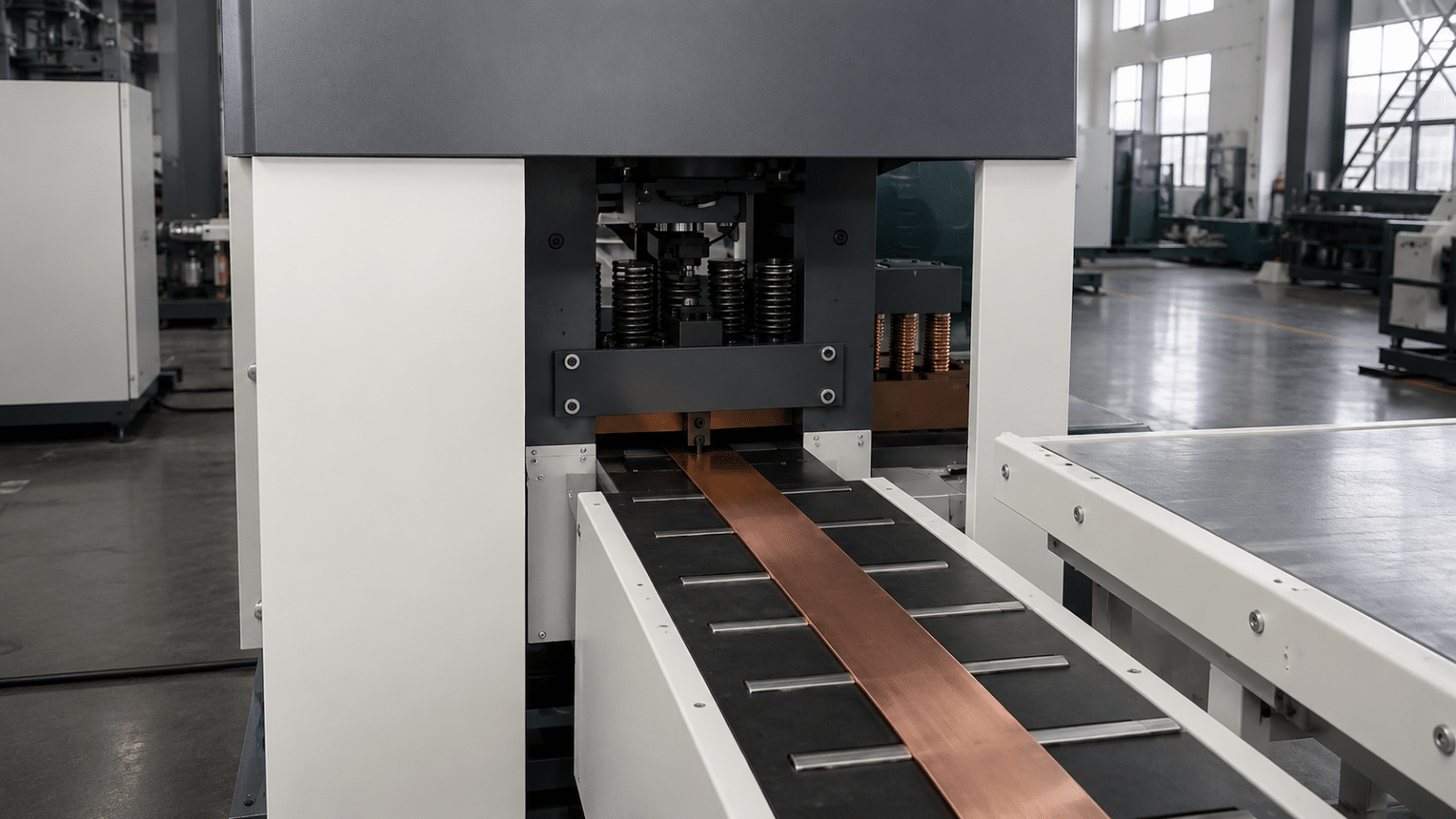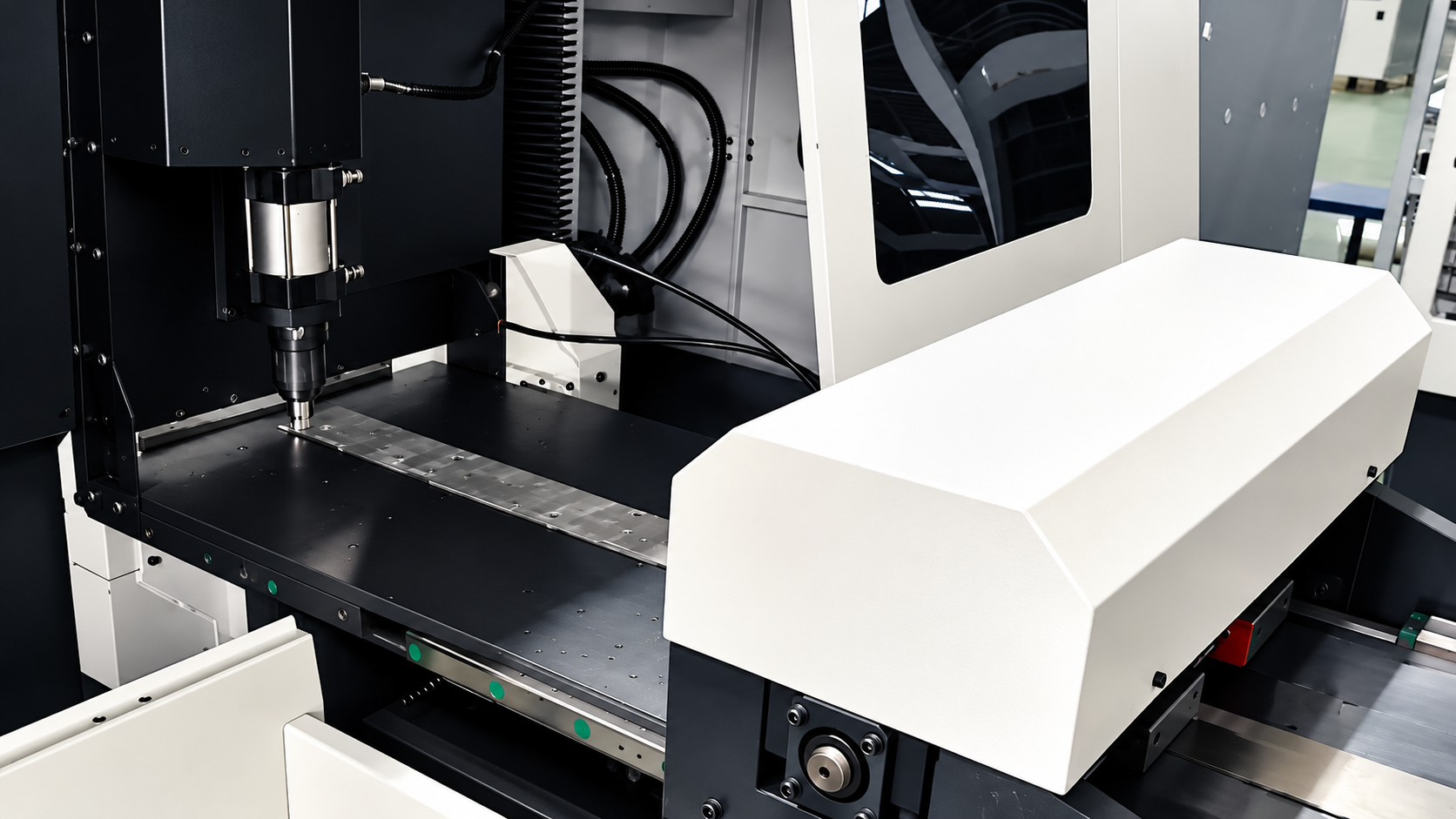
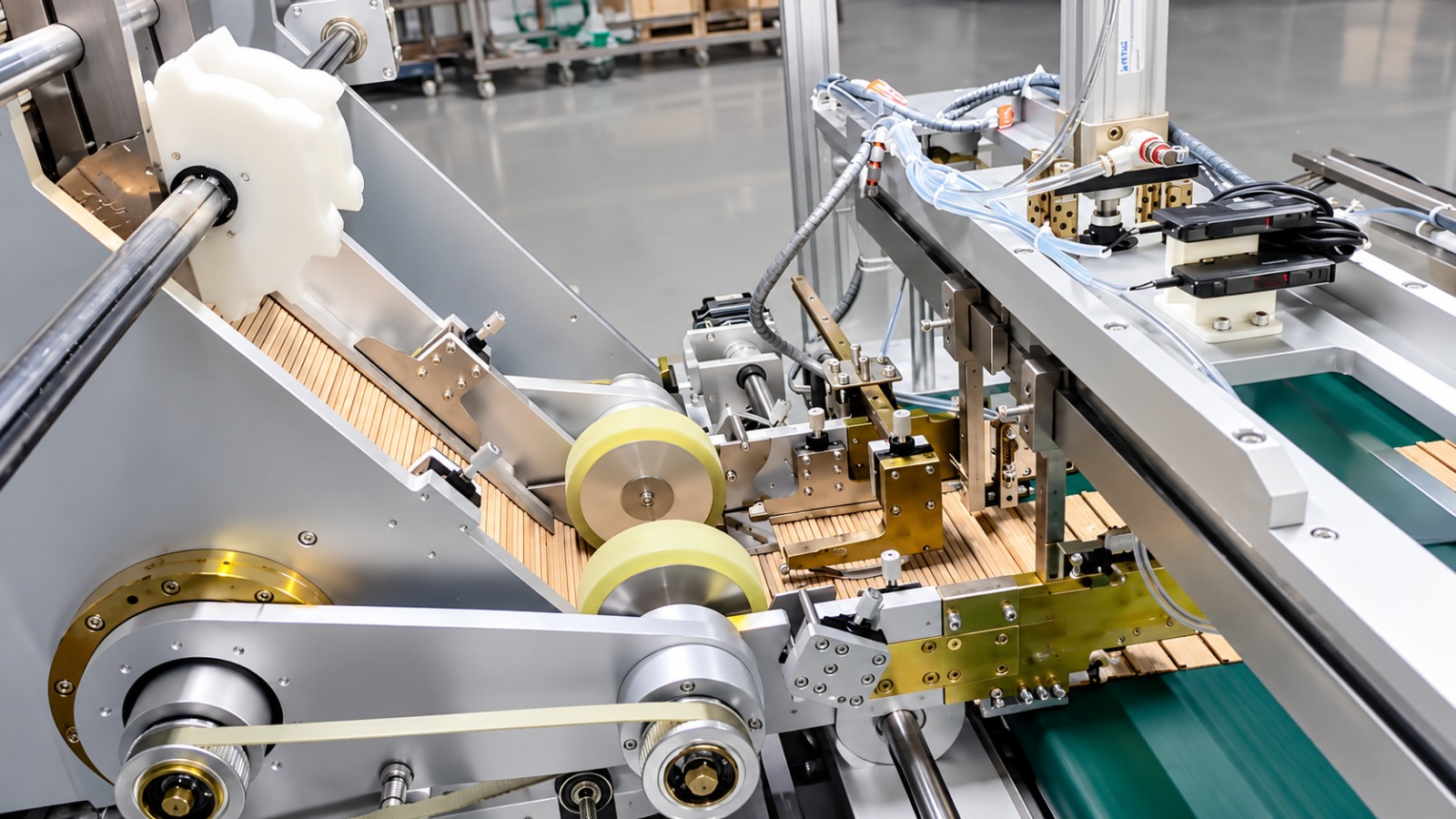
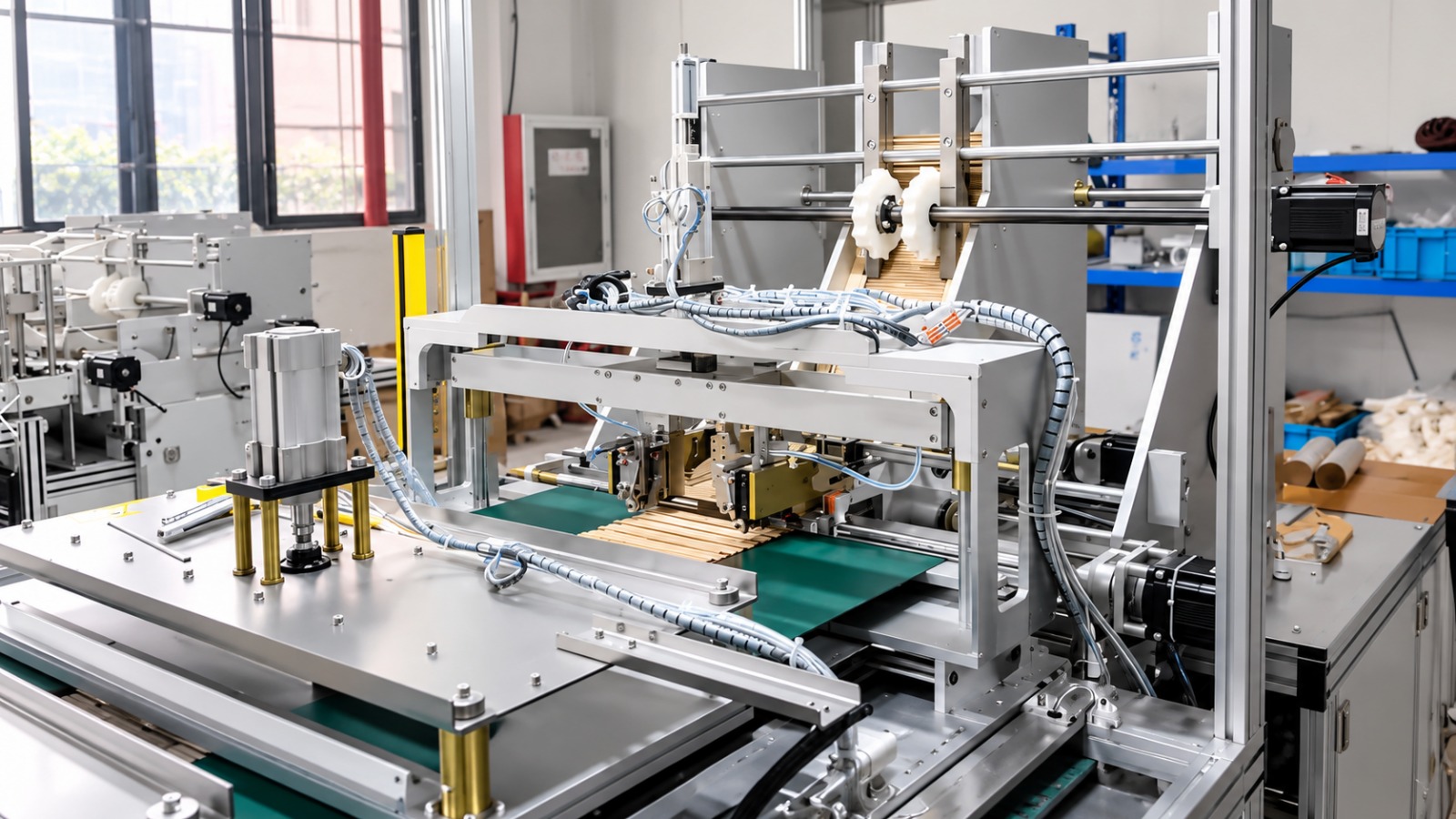
| Equipment | Oil Duct Bonding Machine for Transformer Insulation (a turnkey line integrating spacer strip straightening, feeding, paper unwinding, bottom-roller gluing, programmable pitch positioning and automated winding) |
| Customer | Distribution and power transformer manufacturer in South Korea (in-house insulation workshop) |
| Application | Automated bonding of insulation oil duct curtains (spacer strip curtains) for transformer windings — spacer strips 130–750 mm long, 3–10 mm thick, 4–12 mm wide, onto base paper 0.05–0.5 mm thick |
1. Customer Background
The customer is a South Korean manufacturer of distribution and power transformers, building both oil-immersed and dry-type units, and their windings use a large number of insulation oil duct curtains (spacer strip curtains) as cooling oil channels. Until recently those curtains were made in the insulation workshop by hand: brushing adhesive, placing each pressboard spacer strip by eye, then rolling the curtain up. A single winding needs a dozen or more curtains, and the specification changes with the product — some call for uniform pitch, others for the variable pitch needed at winding ends. As local grid and export orders ramped up together, manual bonding became the bottleneck of the whole insulation supply chain: not that they could not make the curtains, but that they could not make them evenly, fast enough, or consistently. With several winding designs running in parallel, the insulation shop was effectively a small manual factory inside the factory — and that internal line could not scale with the order book.
2. Industry Pain Points
- Pitch by feel. Operators placed the spacer strips on the base paper by eye, so the spacing drifted wide and narrow. Uniform runs were tolerable; the variable-pitch sections at winding ends were far harder to hold, and uneven oil ducts directly hurt winding cooling and oil-flow design.
- Uncontrolled glue. Hand brushing either flooded adhesive onto the strip face or left starved spots that would not hold — both drove rework and scrap, and glue consumption stayed high.
- Throughput capped the line. One winding needs many curtains, and a skilled worker could finish only a few a day, so the winding station kept waiting on curtains and the whole line lost pace to the insulation shop.
- Dependent on skilled hands. Few people could place variable pitch without jamming, they were hard to hire and harder to keep, and quality moved with whoever held the strip; training took months.
- Narrow strips jammed. Strips 130–750 mm long, 3–10 mm thick and 4–12 mm wide are narrow and easily warped; hand feeding jammed and skewed them, and anything above a 0.0085 warping ratio simply clogged the station.
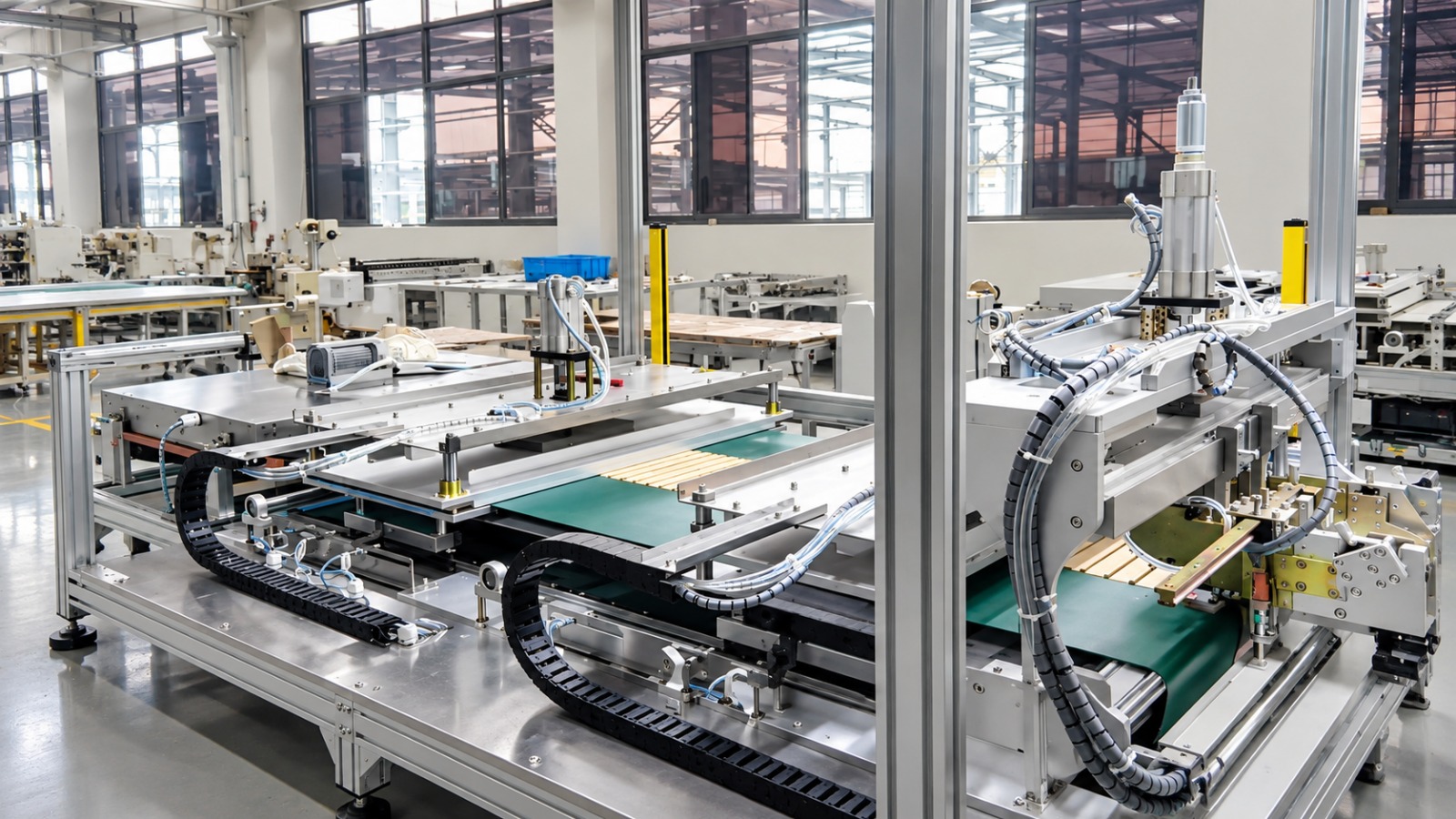
3. Solution
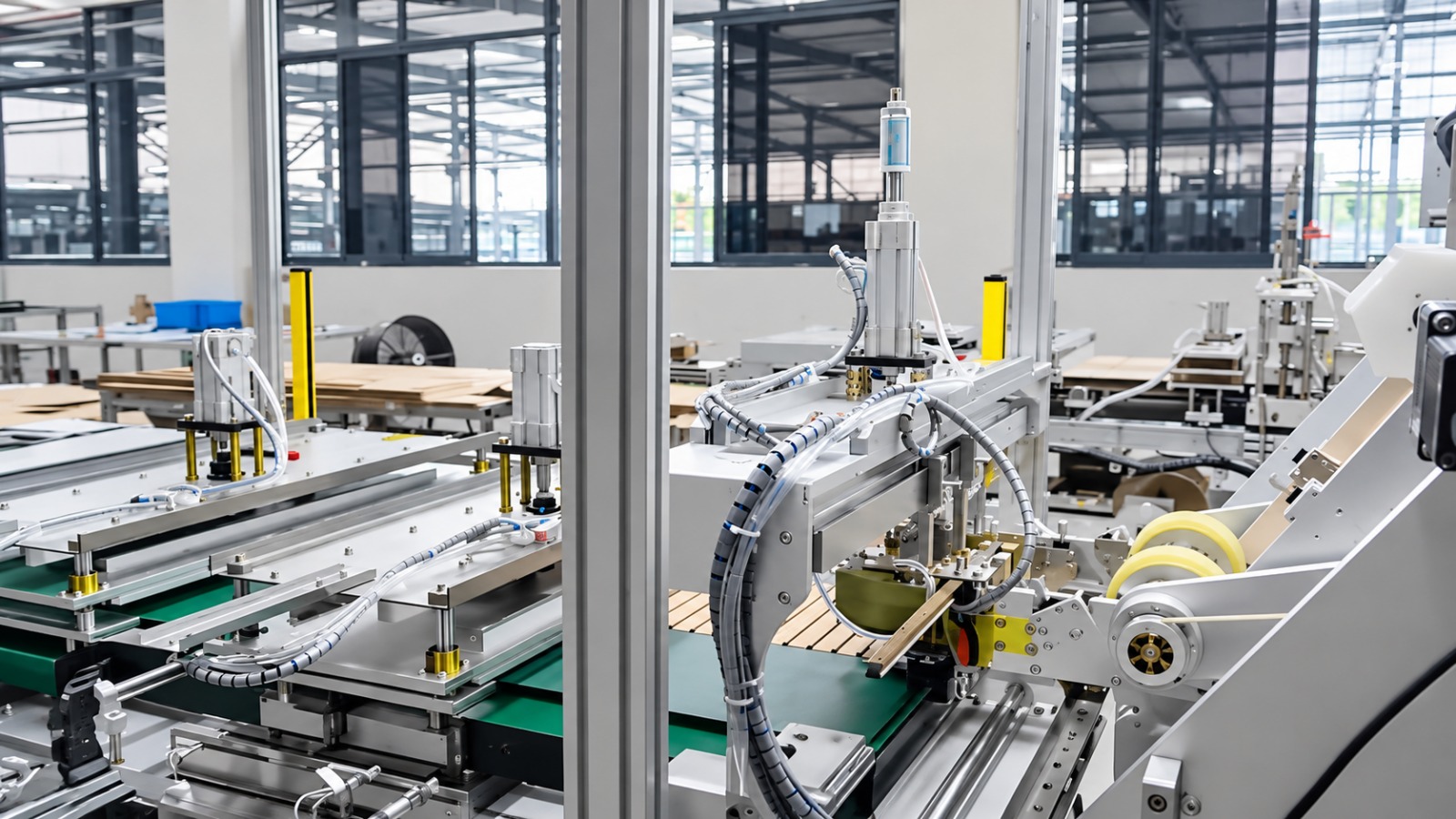
TRANFOVIA supplied a turnkey line that chains the scattered manual steps into one continuous process: spacer strip straightening → assisted feeding → paper unwinding → bottom-roller gluing → pitch-adjustable mounting → automated winding.
- Programmable variable pitch. A Siemens or Huichuan PLC with a touchscreen HMI holds pitch to ±0.5 mm and lets process engineers load both uniform and complex variable-pitch patterns directly from the winding design — no more reliance on feel.
- Uniform bottom-roller gluing. A dedicated bottom-roller applicator lays a precise adhesive film without overflow, securing 3–10 mm pressboard strips firmly onto 0.05–0.5 mm base paper, with 1–3 paper tapes running at once.
- High capacity. Processing speed reaches 50–100 pieces per minute, referenced to strip length, multiplying single-shift curtain output versus manual work.
- Jam-free feeding. Auxiliary feeding and pusher modules align the narrow strips before they enter the station, avoiding jams and skew.
- Safety and monitoring. Full safety enclosures, automatic motor initialization, real-time interactive status monitoring and automated fault diagnostics shut the machine down and alarm on abnormality.
4. Implementation and Commissioning
The machine is about 6.5 m × 1.4 m × 1.2 m and weighs roughly 626 kg. It was placed in the customer’s existing insulation shop and only needed a 6 kW supply plus compressed air at 5–6 bar with flow ≥35 L/min. Commissioning followed the process: dry run to confirm feed and wind synchronization → calibrate base-paper tension → set glue volume and roller pressure → sample-verify pitch to ±0.5 mm → load the variable-pitch program → trial-bond a full curtain → check pitch, bond strength and curtain flatness. The customer’s process engineer could switch strip specifications and pitch recipes on the HMI the same day. TRANFOVIA also supplied on-site training and a bilingual operation manual, so the customer’s team was running the line independently within the first week.
5. Acceptance Results
- Throughput. Stable output at 50–100 P/min; the insulation shop no longer holds back the winding station, and single-shift curtain volume is several times the manual rate.
- Precision. Both uniform and variable-pitch curtains hold ±0.5 mm, so the winding-end variable-pitch sections form in one pass instead of being hand-touched.
- Glue. Bottom-roller precision cut both overflow and starved spots, and glue consumption dropped visibly on the books.
- Yield. Fewer strip jams and skew gave flatter curtains with consistent bond strength, and rework fell.
- Labor. One operator watches the line, freeing the shop from dependence on a few skilled strip placers.
6. Customer Feedback
“The oil duct curtain used to be the slowest job in our insulation shop, and the variable-pitch sections were the worst part,” the customer’s insulation workshop supervisor said. After the line went in, the most visible change is that winding-end curtains are finally supplied steadily — “the winding station no longer waits on curtains, and the delivery dates on export orders are far more predictable.” Beyond the winding-end work, the supervisor noted that glue waste fell enough to show on the monthly material report, and that new operators reached qualified output in days rather than the months manual placement used to require.
7. Summary and Next Steps
The value of this line rests on three things: programmable variable pitch that forms winding-end curtains in one pass, bottom-roller gluing that drives down glue waste and scrap, and the 50–100 P/min rate that pulls the insulation shop out of the bottleneck. The equipment is also backed by one national invention patent and five utility-model patents, with mechanical reliability proven over the long term. Next, the customer and TRANFOVIA are building a variable-pitch recipe library and an adhesive-type list, while keeping space for a phase-two capacity expansion and an MES interface. For a turnkey oil duct bonding machine, contact the TRANFOVIA technical team.
- WhatsApp: +86-15958243831
- Email: sales@tranfovia.com
- Website: https://tranfovia.com/