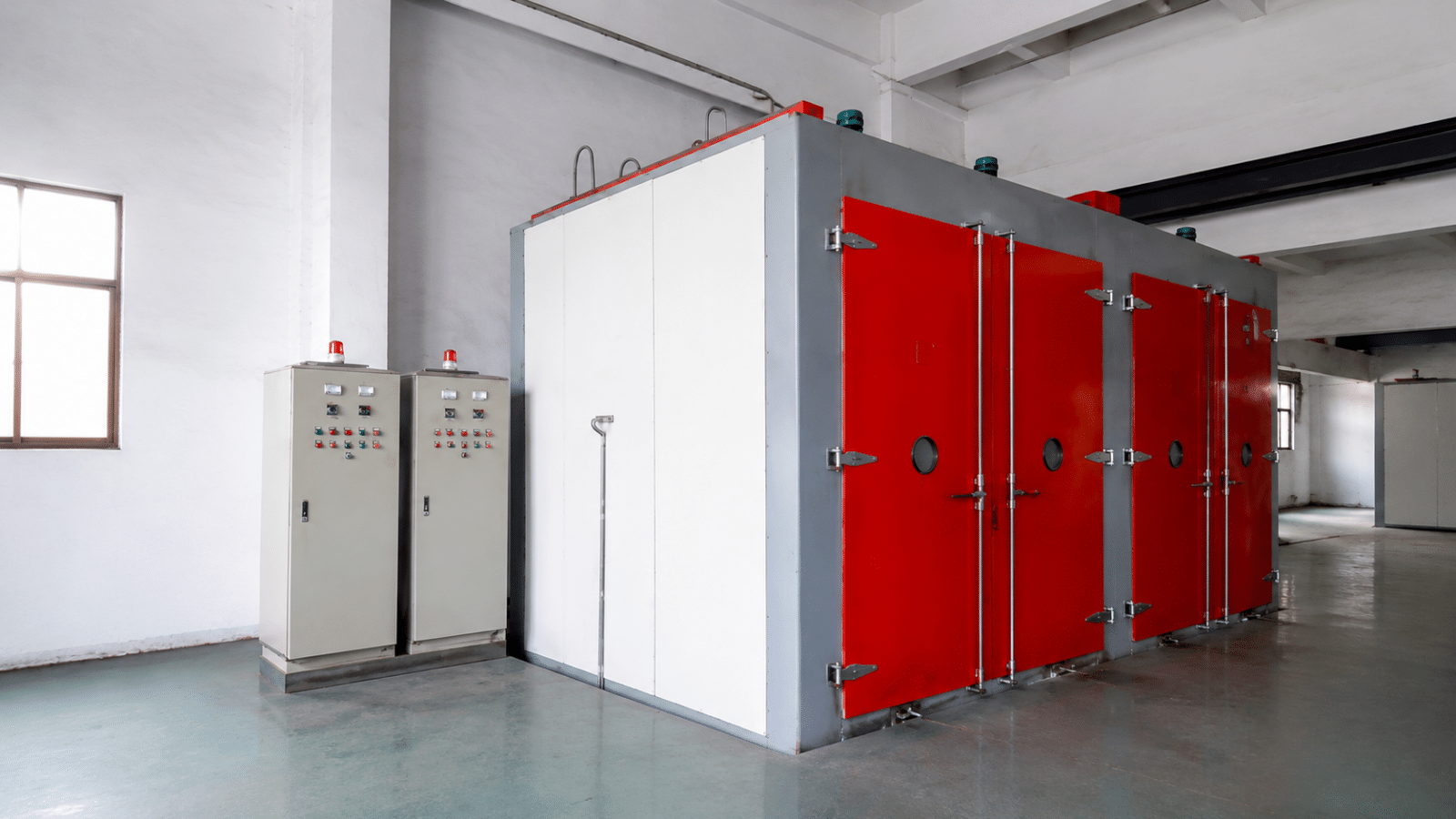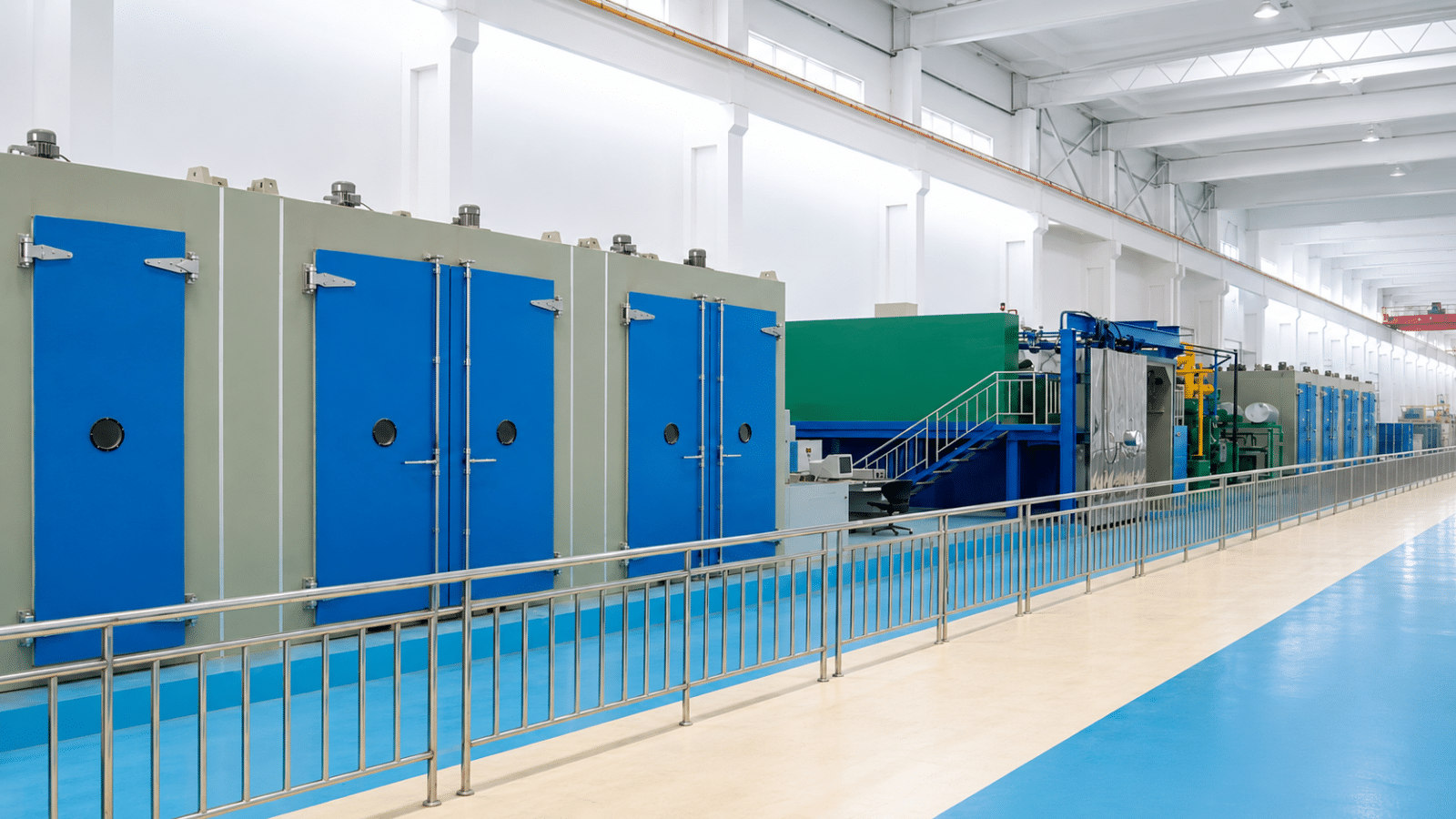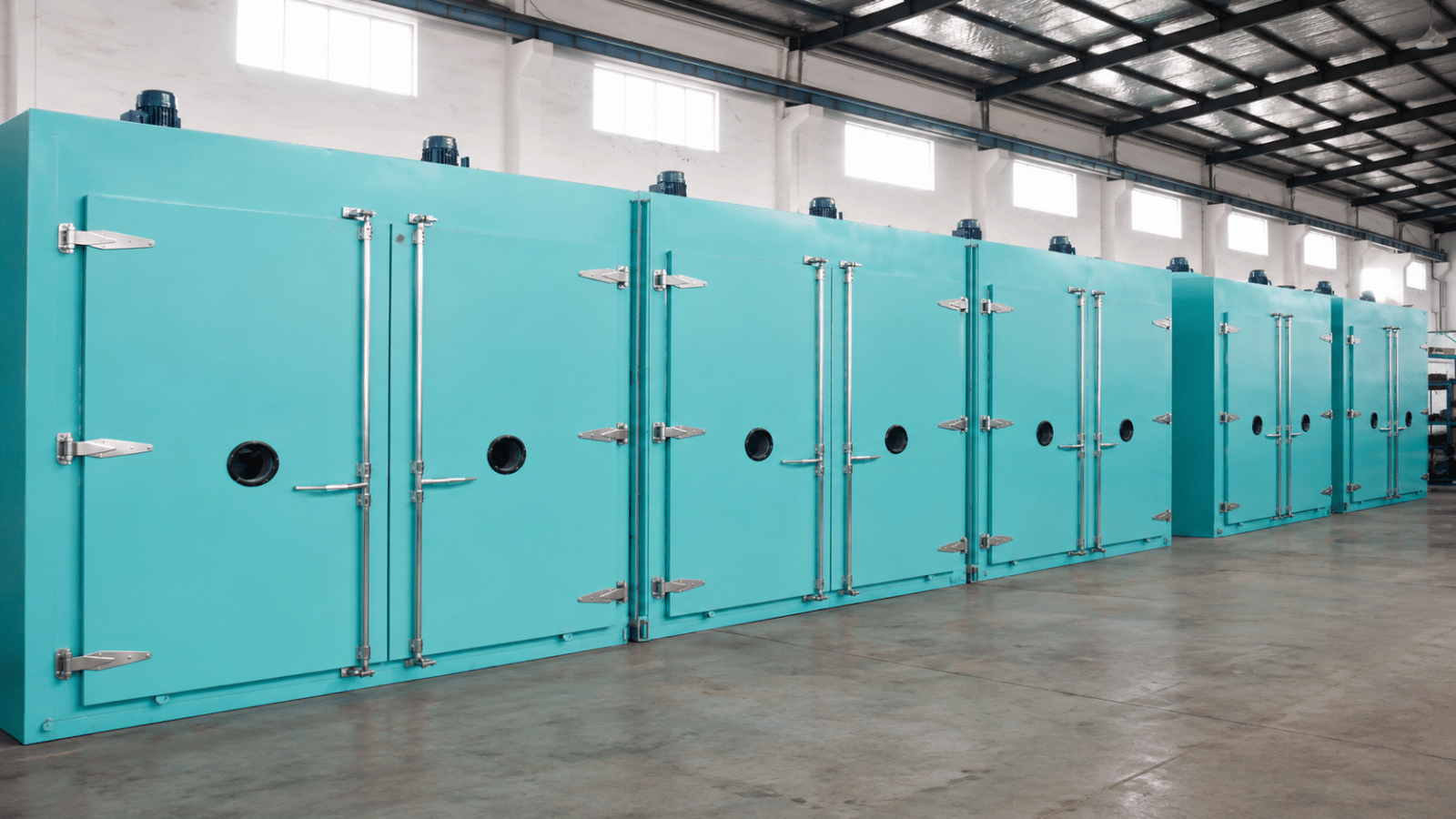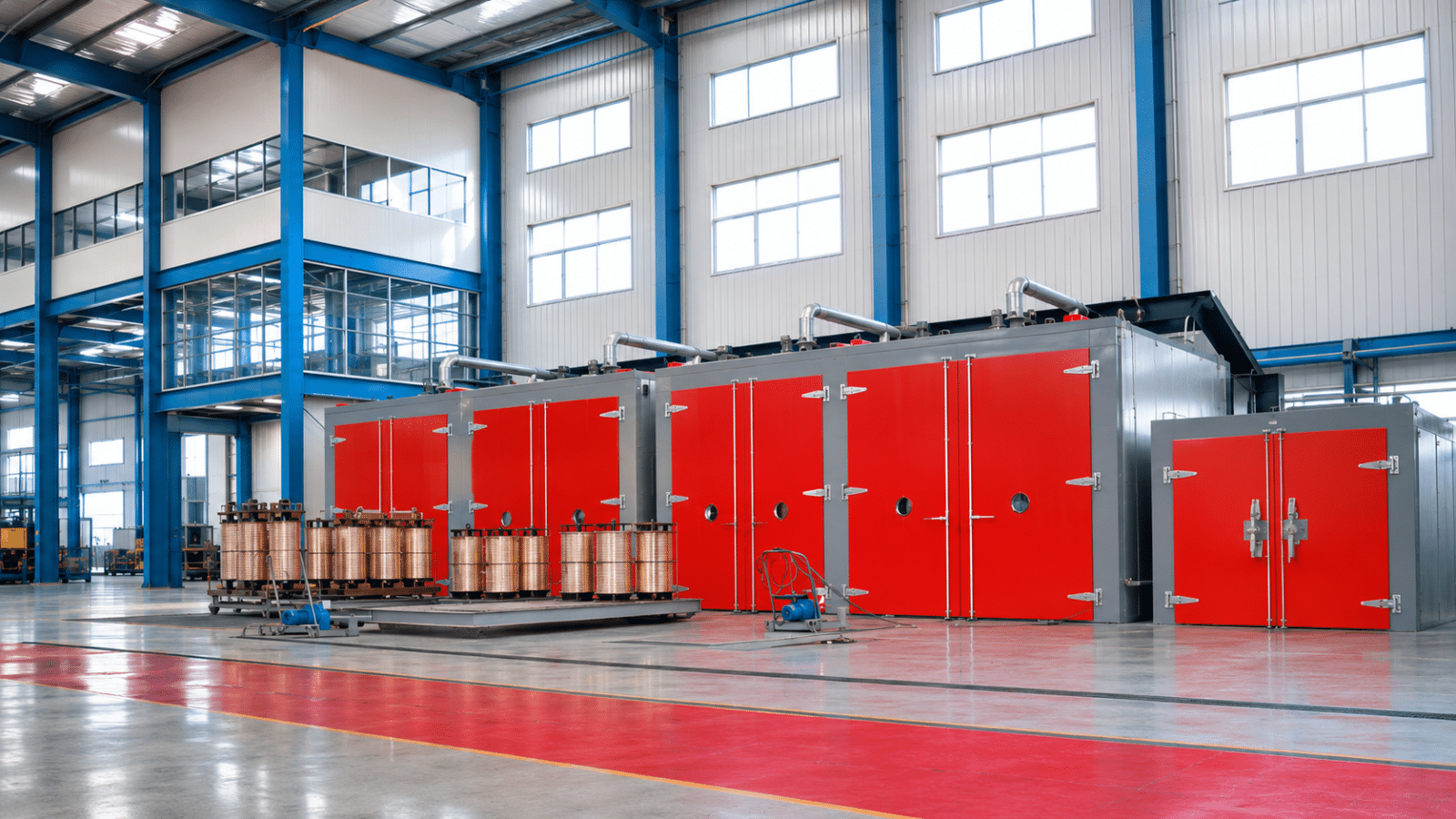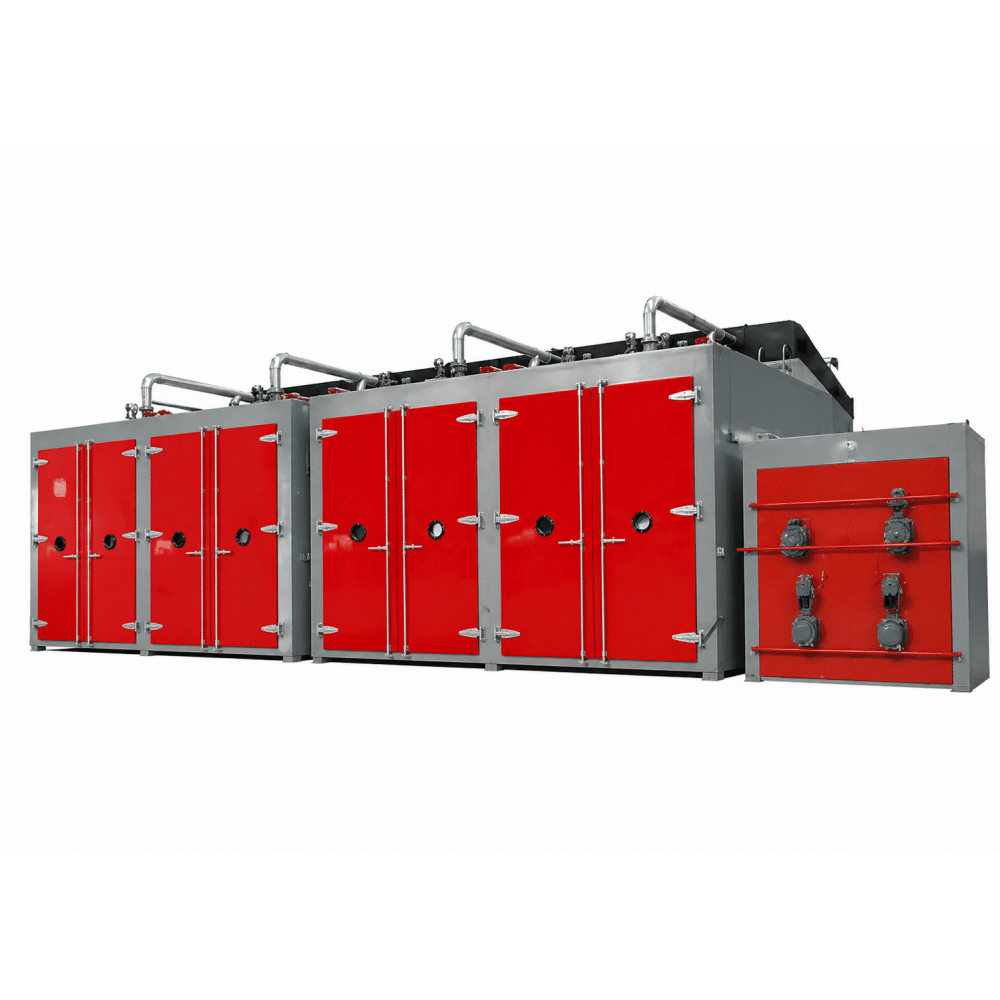
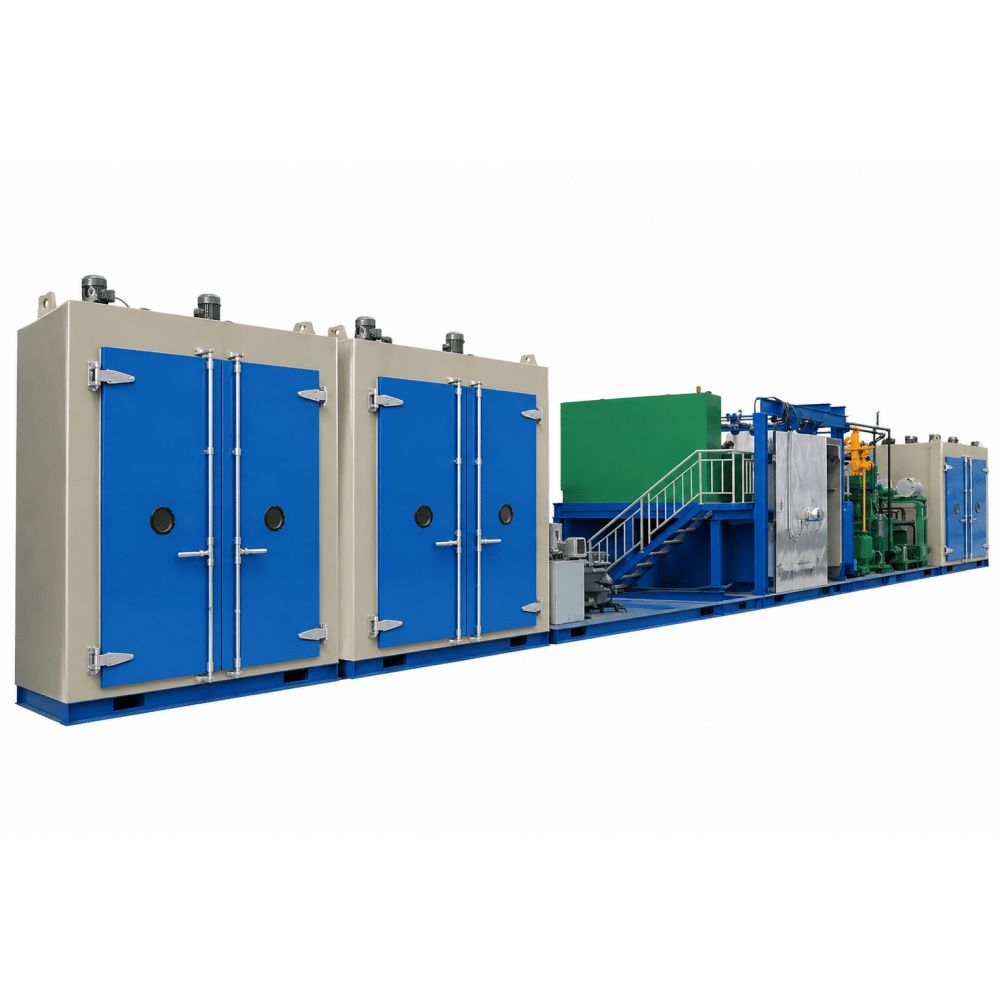
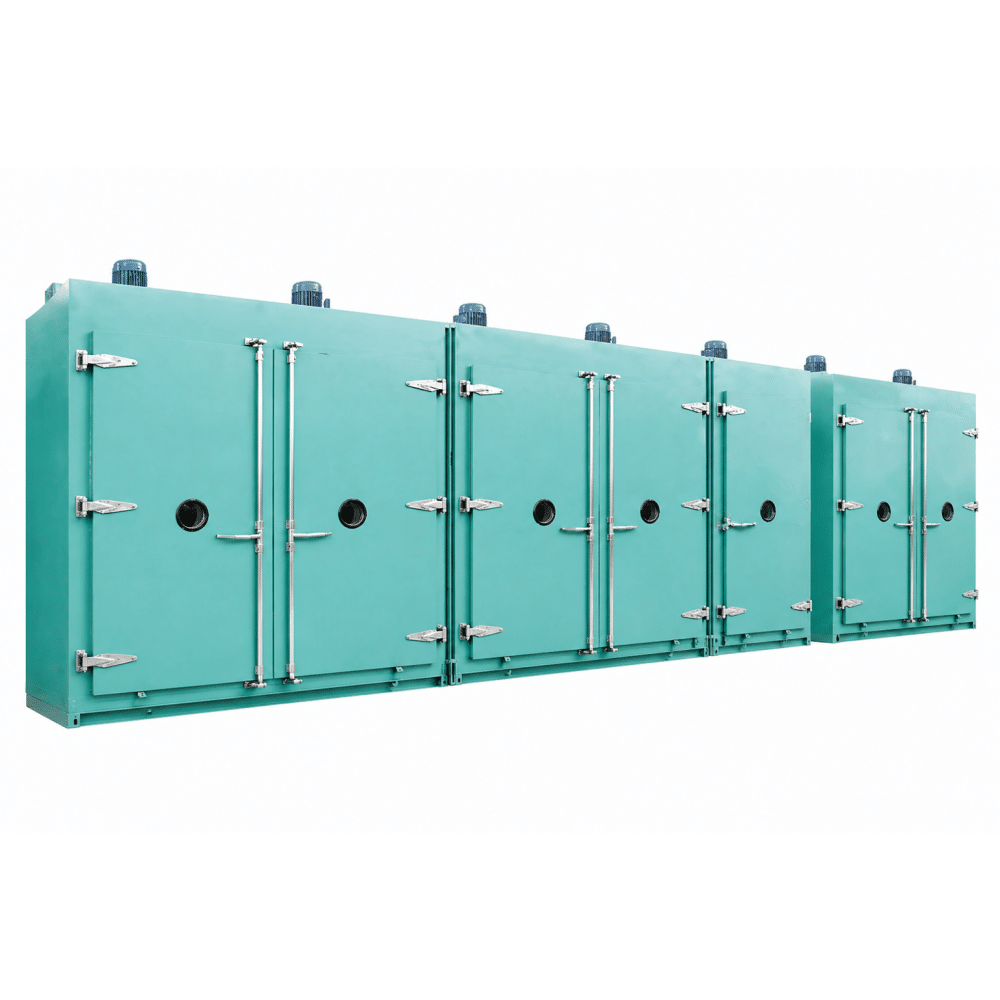
A Transformer Curing Oven is a controlled thermal-processing chamber used when transformer insulation systems require programmed heating rather than vacuum drying or varnish-impregnation treatment. The HB series is designed around the manufacturing needs of dry-type transformers, reactors and instrument transformers, where coil preheating, coil pre-drying and epoxy-resin curing require reliable temperature control and an airflow arrangement suited to the way the workpiece is loaded.
The HB Series is used in dry-type transformer, reactor and instrument-transformer production for coil preheating, pre-drying and insulation curing. It is suitable for epoxy-resin cast dry-type transformers, non-encapsulated dry-type transformer coils and related insulation assemblies that need a programmable heating curve before the next manufacturing step. Within transformer industry curing systems, this oven should be selected when the workpiece is a transformer or reactor coil requiring controlled hot-air curing; varnish-impregnated components with solvent-exhaust requirements belong to the HA dipping-paint drying process, while generator stators and rotors belong to the HW large-generator curing process.
An intelligent programmable thermostat with PID parameter self-tuning, solid-state relay power regulation and contactless continuous adjustment can execute the required curing curve automatically.
Depending on workpiece placement, the oven can use different circulation arrangements such as top heating with vertical air supply, bottom heating with horizontal air supply, or side heating with vertical air supply to improve chamber temperature distribution.
Paper-based or paperless recorders can be configured to monitor and document the heating and curing process for later review.
An over-temperature alarm cuts the heating power and gives audio-visual warning when abnormal temperature is detected.
Low-voltage lighting and observation windows can be configured so operators can check the workpiece condition during the cycle.
Tracks can be installed at the furnace bottom, with manual, rack-driven or traction-trolley movement selected according to workpiece weight.
For multiple ovens or centralized production management, the control system can support local operation or optional DCS integration for temperature-program settings and historical curve records.
The chamber uses thermal insulation material with low thermal conductivity to reduce heat loss during repeated curing cycles.
| Model | Chamber Size W x D x H (mm) | Working Temperature | Heating Power (kW) |
| HB-1 | 1500 x 1600 x 1600 | Room temperature – 200°C | 27 |
| HB-2 | 2000 x 2000 x 2000 | Room temperature – 200°C | 45 |
| HB-3 | 2000 x 2500 x 2000 | Room temperature – 200°C | 54 |
| HB-4 | 2000 x 3000 x 2000 | Room temperature – 200°C | 63 |
| HB-5 | 2200 x 4000 x 2000 | Room temperature – 200°C | 72 |
| HB-6 | 3000 x 5000 x 3000 | Room temperature – 200°C | 92 |
Common electrical data: AC380 V ±10%, 50 Hz. Temperature fluctuation: ≤ ±1°C.
It is used for programmed heating processes such as coil preheating, pre-drying and epoxy-resin curing in dry-type transformer, reactor and instrument-transformer manufacturing.
The listed HB-1 to HB-6 models operate from room temperature up to 200°C.
Yes. The HB control concept uses a programmable thermostat with PID control so the heating cycle can follow the required temperature profile.
The HB Series is selected for controlled curing of dry-type transformer and reactor insulation systems. The HA Series is selected after dipping or VPI when varnish-containing workpieces require dedicated ventilation, solvent discharge and additional safety protection.
It is the hot-air curing solution for dry-type transformer, reactor and instrument-transformer workpieces. Choose the HA series for varnish-impregnated parts requiring dedicated solvent ventilation, the HW series for large generator stators and rotors, and the HRS series for busbar heat-shrink sleeves.
The term “transformer heating oven” is broader. For equipment selection, confirm whether the process requires simple heating, pre-drying or a programmed curing curve. The HB Series is designed around controlled preheating, pre-drying and curing of dry-type transformer and reactor insulation systems.
Yes. Non-standard configurations can be engineered around workpiece size, loading method, airflow arrangement, process curve and workshop conditions.