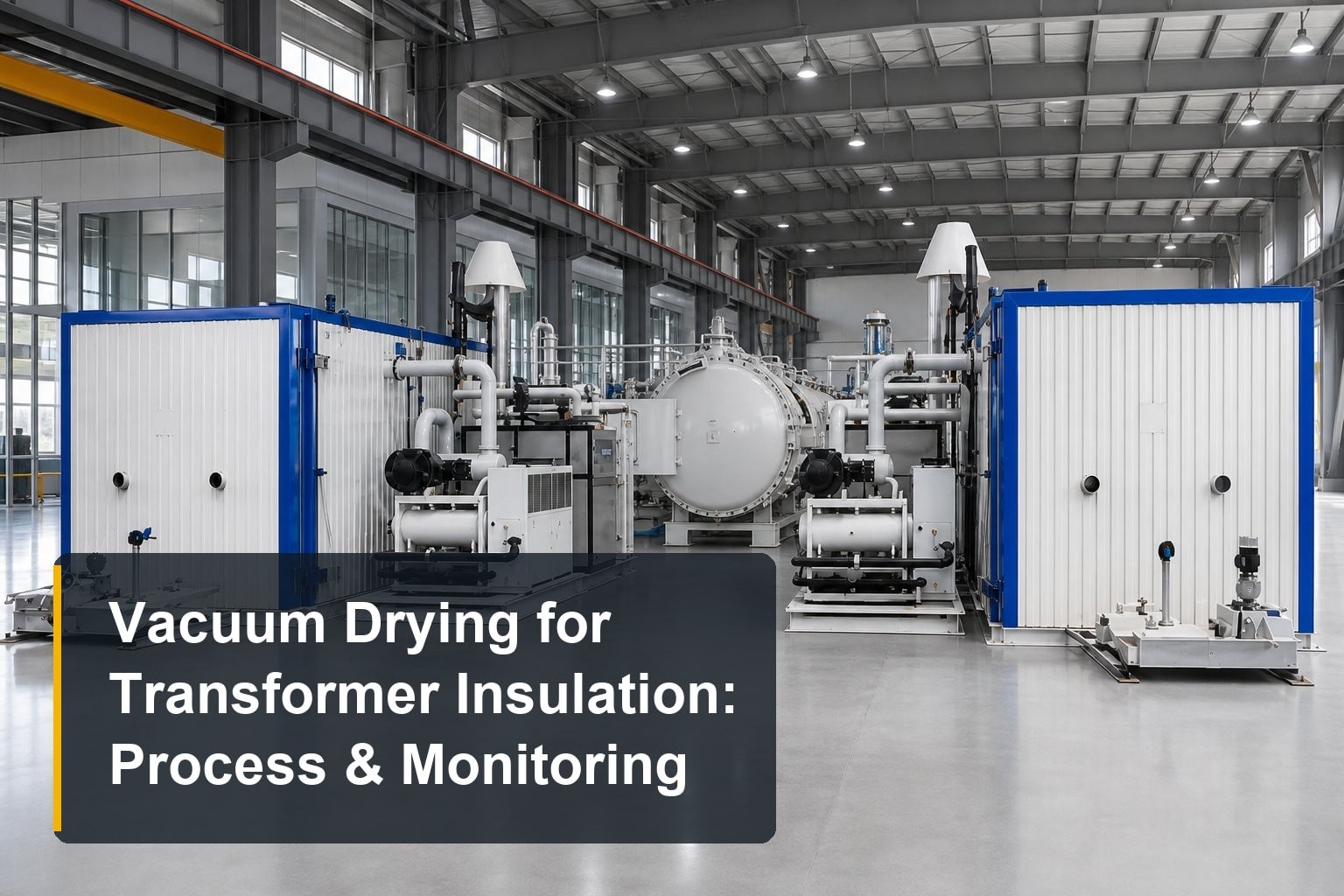
TL;DR: Transformer vacuum drying equipment removes moisture from cellulose insulation by combining heat with deep vacuum — lower pressure lets water evaporate at lower temperatures, so even thick insulation dries without thermal damage. Modern systems add hot-air circulation, high-efficiency heating plates that cut cycle time by 30–50%, and micro-water monitoring that tells you exactly when the insulation is dry instead of guessing from a timer. This guide covers the process, the monitoring methods, and the specifications to compare.
Every oil-immersed transformer passes through a drying chamber before it ever sees oil. The reason is simple: pressboard and paper insulation leave the insulation shop holding several percent water by weight, and that moisture destroys dielectric strength, accelerates aging, and fails factory tests. For distribution and mid-size power transformers, transformer vacuum drying equipment is the workhorse that does this job. This article — part of our drying, impregnation and casting equipment guide — explains how the process works and how to verify dryness instead of assuming it.
Why Insulation Is Dried Under Vacuum
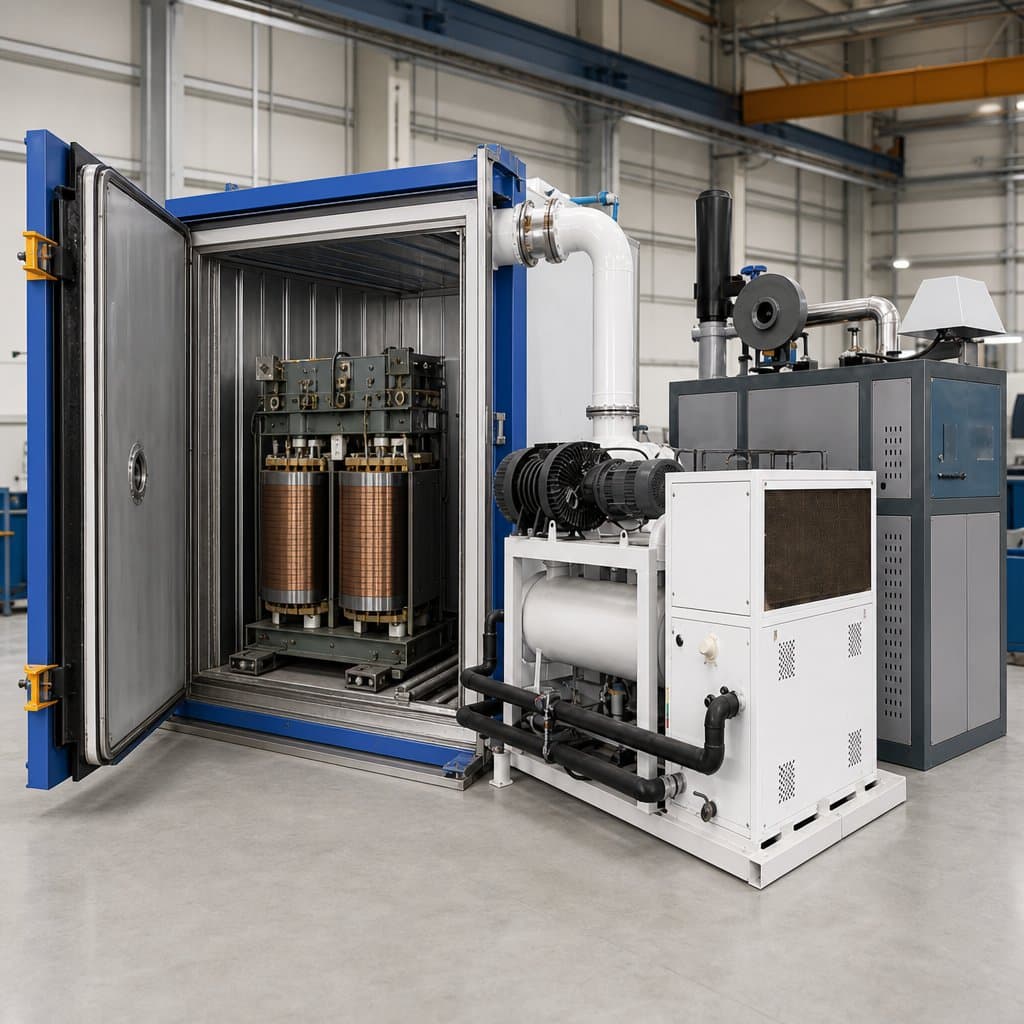
Cellulose holds moisture in two ways: surface water that evaporates easily, and bound water locked deep inside the fiber structure. Bound water is the problem — it needs energy to break free, but cellulose starts to degrade if you simply crank up the temperature. Vacuum solves the dilemma: as chamber pressure drops, water’s boiling point falls with it, so bound moisture can vaporize and migrate out at temperatures the insulation tolerates comfortably. Vacuum also removes the air that would otherwise insulate the winding and slow heat transfer. The result is deep drying at moderate temperature — fast enough for production, gentle enough for the material.
How the Vacuum Drying Process Works
A production vacuum drying cycle runs in stages:
- 1. Loading and heat-up. Core-and-coil assemblies enter the chamber and hot-air circulation brings the insulation up to temperature evenly — circulation matters because still air creates hot and cold spots across a large active part.
- 2. Rough vacuum stage. Pumps pull the chamber down and surface moisture flashes off. Pressure and temperature are ramped in a controlled profile so the outer layers do not dry and case-harden before the interior releases its water.
- 3. Fine drying stage. Deep vacuum is held while bound moisture migrates out of the thick insulation structures — the longest and most critical stage.
- 4. Dryness verification. The cycle ends on a measured criterion, not a clock — more on this below.
- 5. Unloading or direct transfer. The dried active part moves immediately to vacuum oil filling before it can re-absorb atmospheric moisture — drying and oil filling are always planned as one continuous chain — see why the 10 Pa ultimate vacuum matters in oil filling.
Where cycle time is the constraint, high-efficiency heating plates (including terahertz heating options) accelerate heat delivery into the insulation and shorten the overall cycle by 30–50% compared with conventional hot-air-only designs — a direct capacity gain on the most time-consuming station in the factory.
Monitoring: How You Know the Insulation Is Actually Dry
The weakest point of older drying practice is the endpoint: run a fixed timer and hope. Two problems follow — under-dried units that fail tests later, and over-long cycles that waste days of chamber capacity. Modern vacuum drying systems close the loop with measurement:
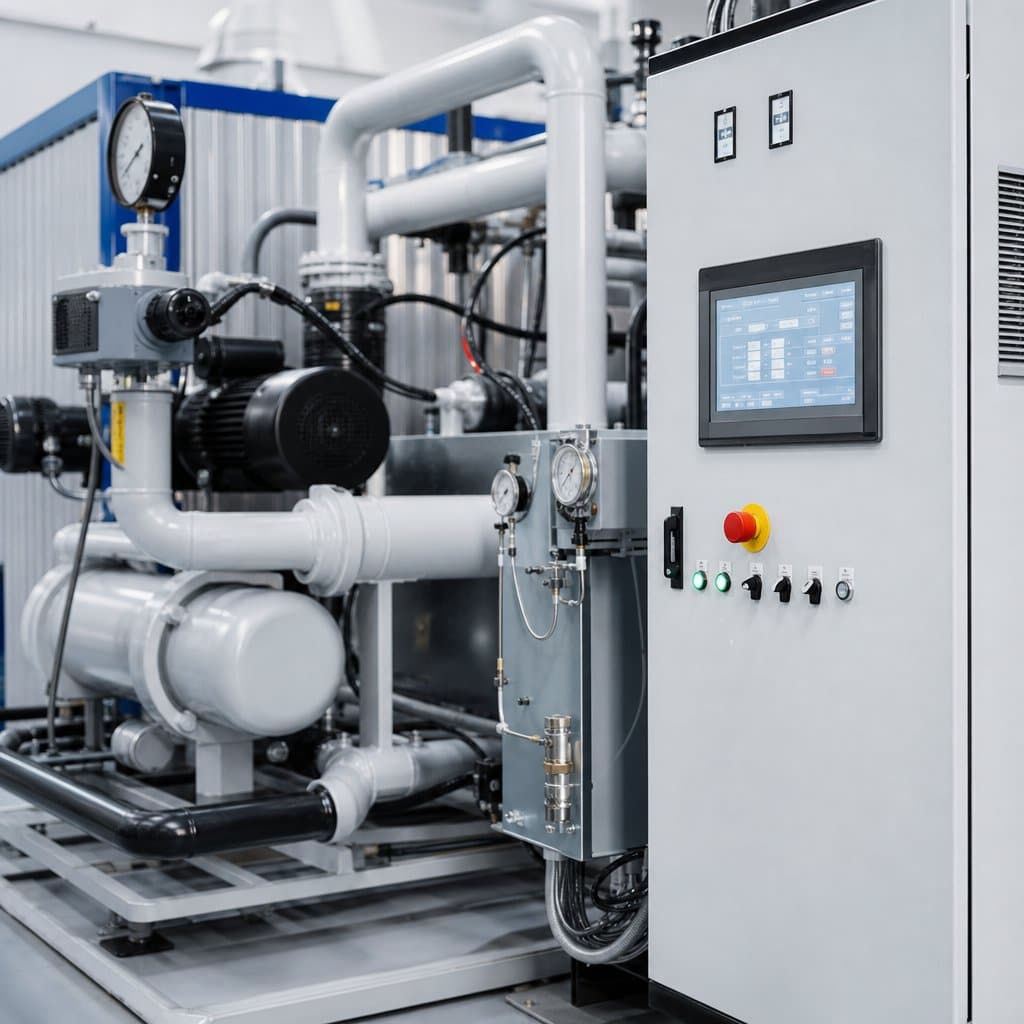
- Micro-water (dew point) monitoring — an optional micro-water measuring instrument tracks the moisture content of the gas leaving the chamber in real time. When the reading flattens at the target level, the insulation is demonstrably dry, and the cycle ends on evidence.
- Full parameter recording — temperature, pressure, and moisture curves for the entire cycle are logged, giving quality traceability for every unit and hard data when a customer or auditor asks how dryness was verified.
The practical difference: timer-only operation forces you to size cycles for the worst case and still accept risk; monitored drying runs each unit exactly as long as it needs — no shorter, no longer.
Vacuum Drying vs Vapour Phase Drying
Vacuum hot-air drying is the right answer for distribution and mid-size power transformers — the insulation is thin enough that hot air and heating plates reach target dryness economically. At 220 kV and above, on very large units, or when reprocessing oil-impregnated repaired transformers, the physics favors condensing solvent vapour instead. We published a full head-to-head with selection thresholds in our vapour phase drying vs hot air comparison — the short version is that vacuum drying wins on investment and simplicity, vapour phase drying equipment wins on cycle time and deep drying at the top of the voltage range.
Selecting Vacuum Drying Equipment: What to Compare
- Chamber dimensions and loading — sized to your largest active part with handling margin; door and trolley design decide how safely heavy assemblies move in and out
- Vacuum system — achievable ultimate vacuum and pump-down speed on the installed system, not just the pump datasheet
- Heating method — hot-air circulation as baseline; ask about high-efficiency or terahertz heating plates if cycle time constrains your capacity
- Moisture monitoring — micro-water instrument as an option worth specifying; it converts drying from a fixed recipe into a measured endpoint
- Recording and integration — parameter logging formats your quality system can archive, and process compatibility with your downstream oil filling station
Frequently Asked Questions
Why can’t transformer insulation be dried at atmospheric pressure?
Deeply bound moisture needs temperatures that would degrade cellulose at atmospheric pressure. Vacuum lowers water’s boiling point, so the same moisture leaves at moderate temperatures — protecting the insulation while drying it thoroughly.
How long does a vacuum drying cycle take?
It depends on unit size and insulation mass — from many hours for small distribution cores to multi-day cycles for large power transformers. High-efficiency heating plates shorten the cycle by 30–50%, and monitored endpoints prevent both under-drying and wasted chamber time.
What is micro-water monitoring and do I need it?
A micro-water (dew point) instrument measures the moisture in the gas leaving the chamber, so the cycle ends when the insulation is measurably dry rather than when a timer expires. If your customers audit dryness records — or you want to recover chamber capacity lost to over-long fixed cycles — it is worth specifying.
When should I choose vapour phase drying instead?
At roughly 220 kV and above, for very large units, or when reprocessing oil-impregnated repaired transformers. Below that threshold, modern vacuum drying reaches target dryness at far lower investment and without solvent handling.
Summary: Dry Deep, and Prove It
Vacuum drying earns its place in every oil-immersed transformer factory by doing one thing well: removing bound moisture at temperatures the insulation survives. Specify the chamber for your largest unit, consider high-efficiency heating for capacity, and insist on measured dryness verification — the difference between hoping insulation is dry and proving it.
Planning a drying station? Tell us your unit sizes, voltage classes, and monthly throughput — we will recommend the chamber configuration, heating options, and monitoring package for your line.
📞 Phone: +86-15958243831
📧 Email: sales@tranfovia.com
💬 WhatsApp: https://wa.me/8615958243831
🌐 Website: tranfovia.com