TL;DR: A busbar processing machine punches, cuts, and bends copper or aluminum busbar into the connection bars used inside transformers and switchgear. Five main configurations exist — CNC punching & shearing lines (400/600 kN), servo CNC bending machines, CNC sawing & folding machines, 3-in-1 hydraulic machines (350/500/800 kN), and portable units — supported by leveling and automatic feeding equipment. The right choice depends on your busbar cross-section, batch volume, accuracy target, and whether work happens in the shop or on site. This guide covers how these machines work, how the types compare, which specifications matter, and how to select the right model.
Every transformer and switchgear panel relies on busbar connections — and every one of those bars was punched, cut, and bent on a busbar processing machine. Hole position errors become assembly delays; poor bends become hot spots. This pillar guide brings together everything you need: what these machines do, the five mainstream configurations, the specifications worth comparing, and a practical selection framework. It is part of our broader coverage of the transformer manufacturing process, zooming in on the busbar fabrication stage.
What Is a Busbar Processing Machine?
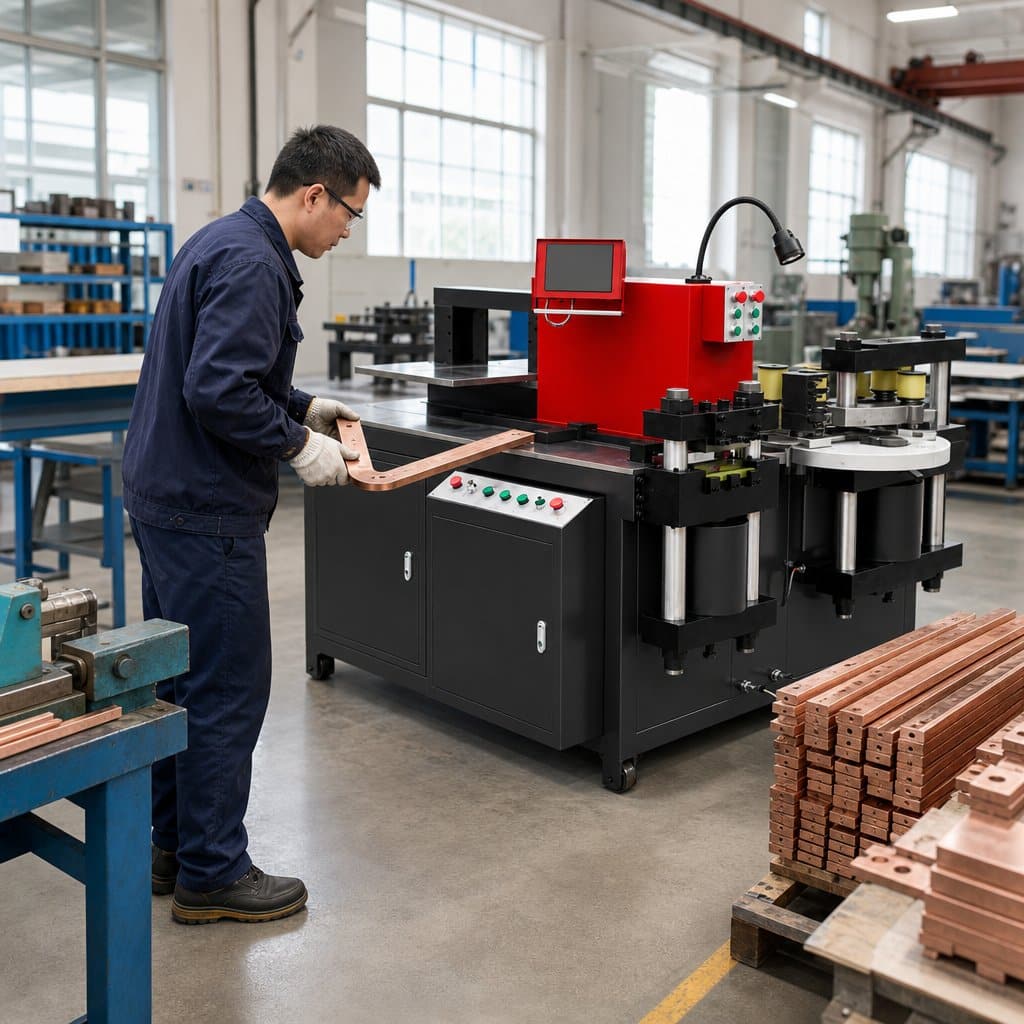
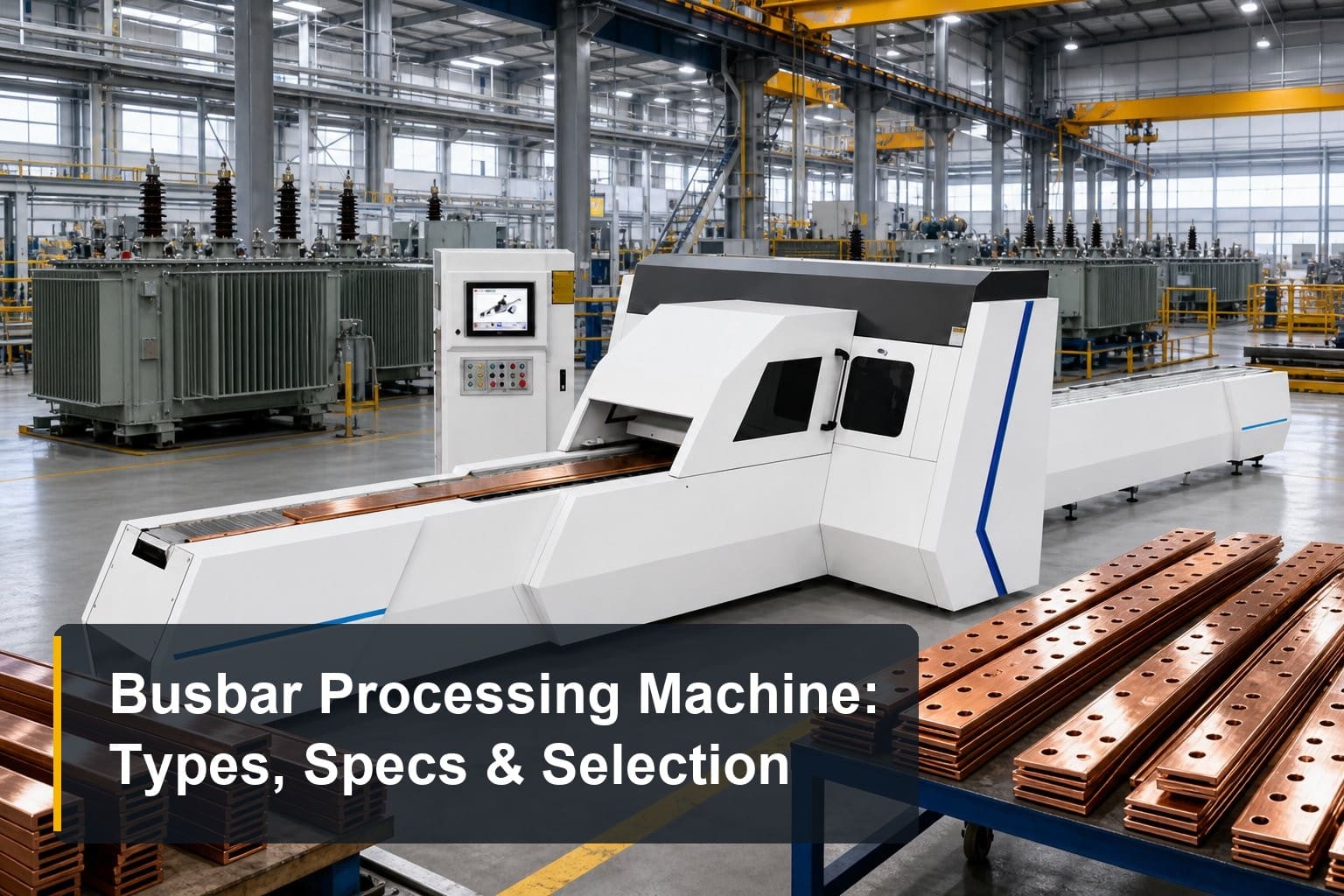
A busbar processing machine is fabrication equipment that turns straight copper or aluminum bars into finished connection pieces. Three core operations define the category: punching holes for bolts, cutting bars to length, and bending them into the offsets and angles that fit around cores, tanks, and enclosures. Machines range from fully automatic CNC lines processing tons of bar per day to portable hydraulic units carried to installation sites.
In transformer manufacturing, busbar work happens in parallel with coil winding and core assembly — the finished bars connect windings to bushings and tap changers. Accuracy matters twice: hole pitch must match mating parts exactly, and bend quality determines contact resistance at every joint.
The Main Types of Busbar Processing Machines
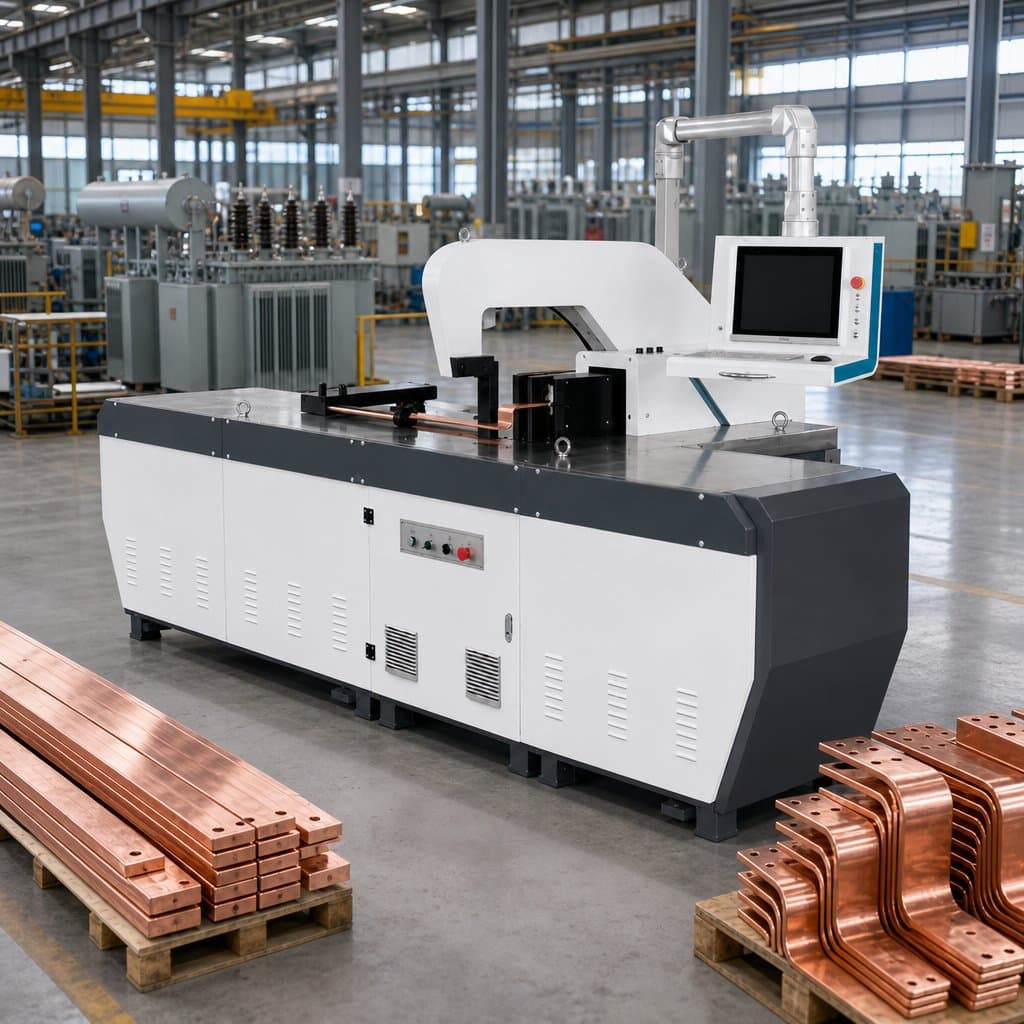
1. CNC punching & shearing lines — for volume production
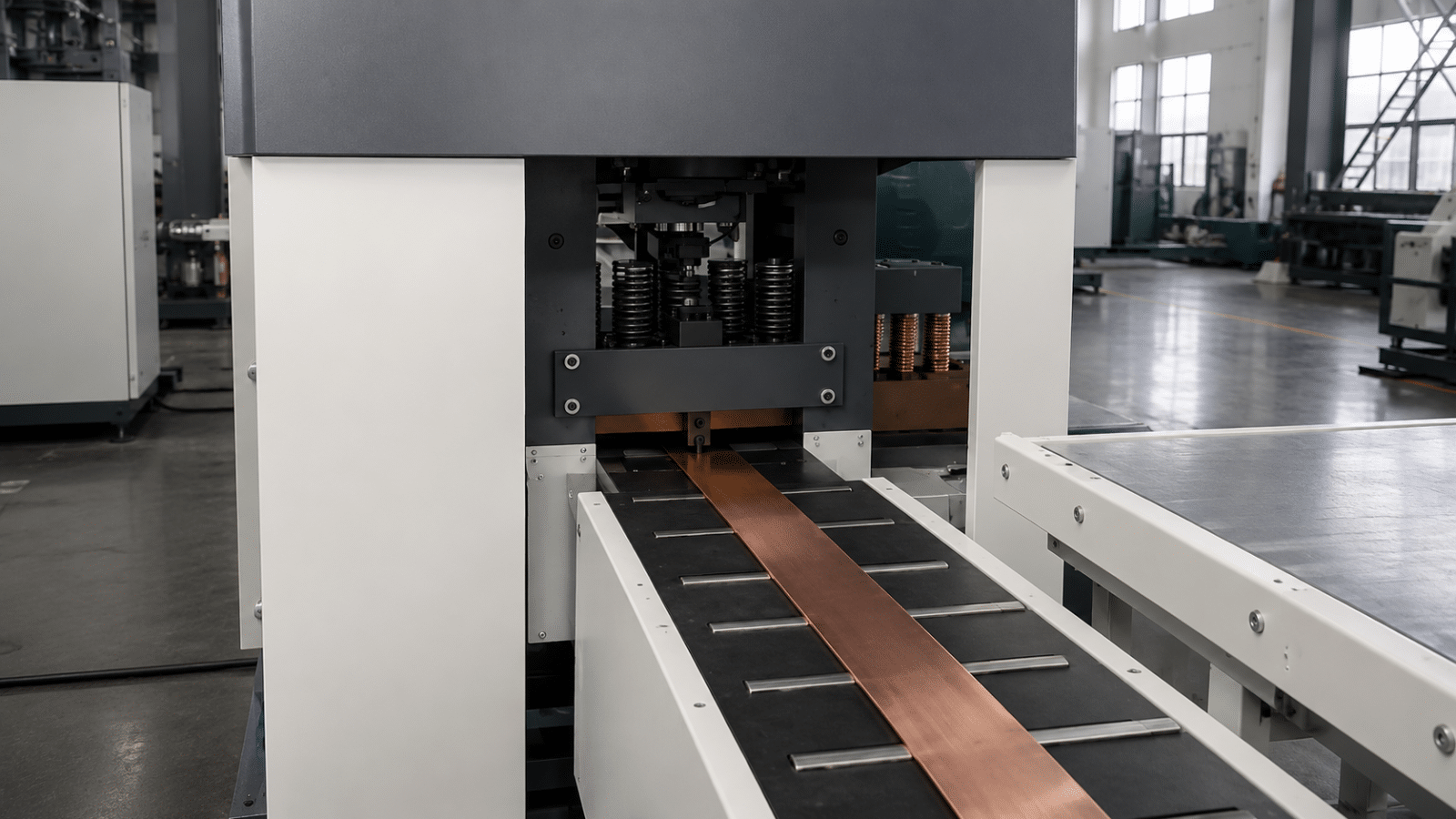
These are the high-throughput option: automatic lines that punch holes, shear bars to length, and emboss in one pass at 100–150 strokes per minute with ±0.2 mm accuracy. Single-blade shearing produces no scrap offcuts. The CNC busbar punching and shearing machine comes in 400 kN (12×160 mm) and 600 kN (15×200 mm) versions with 6-axis control — the right choice when busbar is a daily production flow rather than an occasional job.
If you are weighing the two standard sizes, our 400 kN vs 600 kN busbar punching and shearing machine comparison sets out which bar sections each model covers, how the 6-axis control affects setup time, and when stepping up from 12×160 mm to 15×200 mm actually pays for itself.
2. Servo CNC bending machines — precision flat and vertical bends
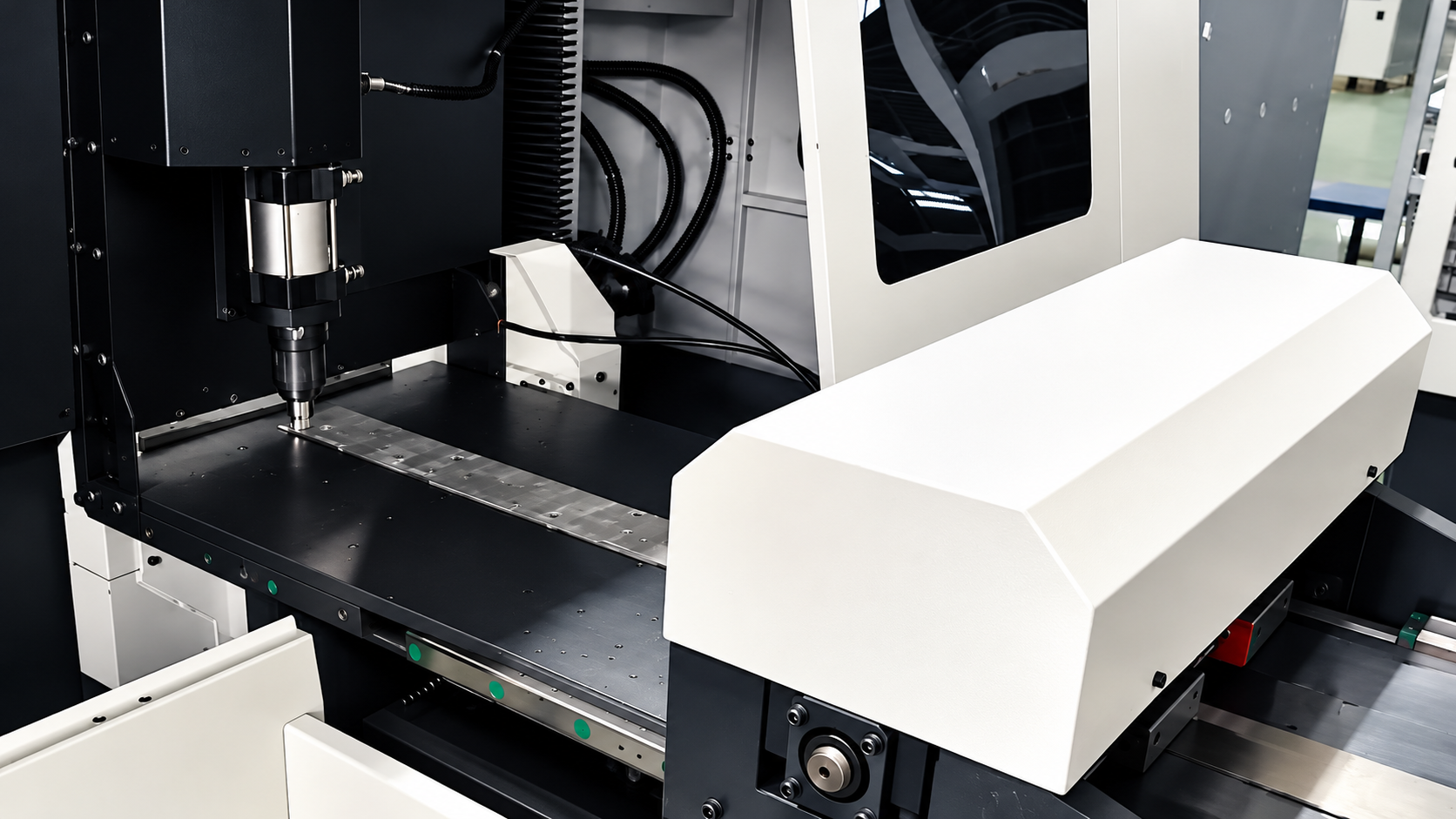
Dedicated benders use servo drives with CAD/CAM programming for repeatable flat and vertical bending. The servo CNC busbar bending machine delivers ±0.3 mm bending accuracy (±0.15 mm stopper accuracy) on bars up to 15×200 mm. For long bars that need both ends bent, the double-heads busbar bending machine bends both ends simultaneously at 600 kN — no flipping, no re-clamping, on sections from 3×30 to 6×260 mm.
Choosing between the two models in this series is a reach decision rather than a power one — both carry the same 400 kN. Our servo CNC busbar bending machine comparison sets out how material stop length and flat bending width separate the NC.40ZB-1200 from the NC.40ZB-2000, why vertical bending capacity is identical on both, and when a three-in-one hydraulic machine or a punch-shear plus bender cell serves a shop better than a dedicated CNC bender.
3. CNC sawing & folding machines — clean cuts for thick bars
Where shearing leaves a deformed edge, sawing produces a clean, burr-minimized face — important for thick bars and high-current joints. The CNC bus sawing and folding machine combines sawing and bending in one 6-axis machine with 600 kN hydraulic power, handling bars up to 260×6 mm with ±0.20 mm/m length accuracy.
4. 3-in-1 hydraulic machines — the job-shop standard
Three-station machines combine punching, shearing, and bending in one compact unit, with all three stations working simultaneously. They scale by force: the 350 kN model handles 12×160 mm bars, the 500 kN model takes 16×200 mm and punches up to Φ32, and the 800 kN heavy-duty model covers 16×260 mm with Φ36 holes. E-3-S versions add CNC bending angle control with displacement sensing and automatic energy-saving stop. For a station-by-station walkthrough of the class, see our 3-in-1 busbar machine explainer.
5. Portable machines — for site work
For installation, maintenance, and retrofit work, the portable busbar processing machine packs shearing, punching, and bending into a 165 kg unit that runs on single-phase 220 V power, handling bars up to 150×10 mm with flat bending from 0–135°. For specs, limits, and buying checks, see our portable busbar machine guide.
The Supporting Line: Leveling, Feeding, and Connection Bars
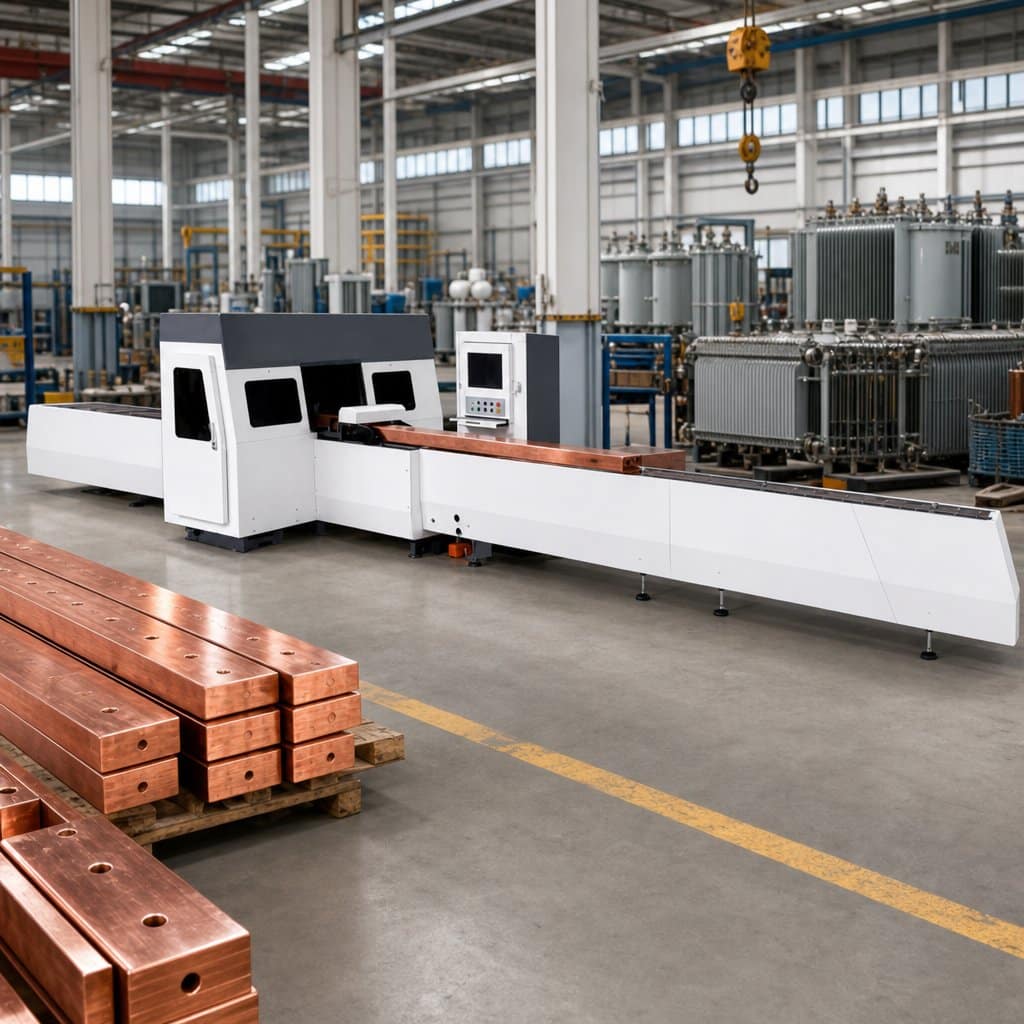
Processing machines work best with proper material preparation upstream:
Leveling — flat bars first
Copper and aluminum bars arrive with residual curvature that ruins punching accuracy. A busbar leveling machine with 13 rollers and curvature compensation brings flatness under 1 mm/m before processing — the cheapest accuracy upgrade in the whole busbar shop.
Automatic feeding — keep the CNC line running
Automatic busbar feeding equipment stores seven bar specifications (5–7 bars per position) and feeds punching lines, lasers, and benders automatically — turning a manned machine into a near-lights-out cell.
Connection busbar lines — when hole pitch is critical
Transformer connection bars demand hole-to-hole pitch within ±0.2 mm. The dedicated CNC busbar connection processing line punches, stretches, embosses, and shears in one clamping at 60 strokes per minute, so pitch accuracy never depends on re-positioning.
Key Specifications to Compare
Tonnage and busbar envelope
Force and size capacity move together: 350 kN covers 12×160 mm, 500 kN covers 16×200 mm, 800 kN covers 16×260 mm. Buy for your largest regular section with headroom — an undersized machine stalls on thick bars; an oversized one wastes capital and floor space.
CNC functions
Decide what “CNC” must cover. Full CNC lines position, punch, and shear from stored programs; on 3-in-1 machines, CNC bending angle (E-3-S versions) is the option that turns manual angle adjustment into repeatable batch production. CAD/CAM programming on servo benders eliminates trial bending for complex shapes.
Accuracy at each operation
Compare figures per operation, not a single headline number: punching accuracy ±0.2 mm, hole pitch ≤±0.2 mm on connection lines, bending accuracy ±0.3 mm, stopper accuracy ±0.15 mm, sawing length accuracy ±0.20 mm/m, and incoming flatness under 1 mm/m after leveling.
Throughput and automation level
Match cycle rate to your volume: 100–150 strokes/min CNC lines for daily tonnage, 60 strokes/min for connection bars, single-station cycle times for 3-in-1 machines. If a CNC line runs more than one shift, automatic feeding pays back quickly.
How to Choose the Right Busbar Machine for Your Factory
Based on the five types and supporting equipment above, the selection logic is straightforward:
- Daily volume punching and cutting → CNC punching & shearing line (400 or 600 kN), plus automatic feeding if running multiple shifts
- Precision or complex bending → servo CNC bending machine; long bars bent at both ends → double-heads bender
- Thick bars needing clean, burr-minimized cuts → CNC sawing & folding machine
- Mixed small-batch, limited space or budget → 3-in-1 hydraulic machine, sized 350 / 500 / 800 kN by your largest bar
- Site installation and maintenance crews → portable 3-in-1 machine
- Transformer connection bars with tight hole pitch → dedicated connection processing line
- Any configuration → add a leveling machine upstream for consistent accuracy
Two final checks before signing: verify accuracy figures on your actual largest bar section (not the smallest demo piece), and confirm tooling changeover time between bar sizes — in mixed production, changeover speed matters more than peak stroke rate.
Frequently Asked Questions
What tonnage busbar machine do I need?
Match tonnage to your largest regular cross-section: 12×160 mm bars need about 350 kN, 16×200 mm needs 500 kN, and 16×260 mm needs 800 kN. Add margin if you punch large-diameter holes near the bar edge, which raises the required force.
Shearing or sawing — which cut is better?
Single-blade shearing is fast and produces no scrap, ideal for standard sections at volume. Sawing gives a cleaner, squarer face with minimal burr on thick or wide bars — preferred when the cut face becomes a contact surface. Many factories shear standard work and saw the heavy sections.
3-in-1 machine or separate CNC stations?
Separate CNC stations (punch/shear line plus servo bender) win on throughput and accuracy for daily production. A 3-in-1 hydraulic machine wins on price, footprint, and flexibility for mixed small-batch work — three operations, one machine, one operator.
Is CNC bending angle control worth adding?
For repeat batches, yes. CNC bending angle with displacement sensing holds ±0.3 mm bend accuracy across a whole batch without test bends; for one-off prototypes and site work, manual adjustment is usually sufficient.
Summary: Size by Section, Choose by Volume, Verify Accuracy on Your Own Bars
Choosing a busbar processing machine comes down to three questions in order: what is your largest regular bar section (sets tonnage); what is your daily volume (sets CNC vs 3-in-1); which accuracy figure is critical for your joints (sets the options). Answer those, and the right configuration selects itself — then verify on your own material before you sign.
Planning busbar fabrication equipment? Send us your typical bar sections and daily volume — we will recommend the configuration that fits, with verified accuracy data on your sizes.
📞 Phone: +86-15958243831
📧 Email: sales@tranfovia.com
💬 WhatsApp: https://wa.me/8615958243831
🌐 Website: tranfovia.com
References
- IEC 60076-1: Power transformers — General
- IEEE C57.12.00 — General Requirements for Liquid-Immersed Transformers
- Busbar — Design and Application Fundamentals
- Copper Development Association — Copper Busbar Resources
- ASTM B187/B187M — Copper Bus Bar, Rod, and Shapes
- Tranfovia — Transformer Manufacturing Equipment