
TL;DR: Vacuum pressure impregnation (VPI) dries a winding under vacuum, floods it with resin or varnish, then applies pressure so the impregnant penetrates deep into the insulation structure. The result is void-free insulation with higher dielectric strength, better heat dissipation, and longer service life for transformers, motors, reactors, and capacitors. This guide explains the process step by step, the benefits over simple dipping, and the specifications to compare when selecting VPI equipment.
Windings fail where air hides. A coil that is only dipped in varnish keeps microscopic voids between turns, and each void is a partial-discharge site that erodes insulation year after year. Vacuum pressure impregnation was developed to eliminate exactly that problem, and it has become the standard insulation process for quality transformers, motors, dry-type reactors, and capacitors. This article is part of our transformer drying, impregnation and casting equipment guide, and zooms in on the VPI machine itself: how the process works, what it buys you, and how to size one for your line.
What Is Vacuum Pressure Impregnation (VPI)?
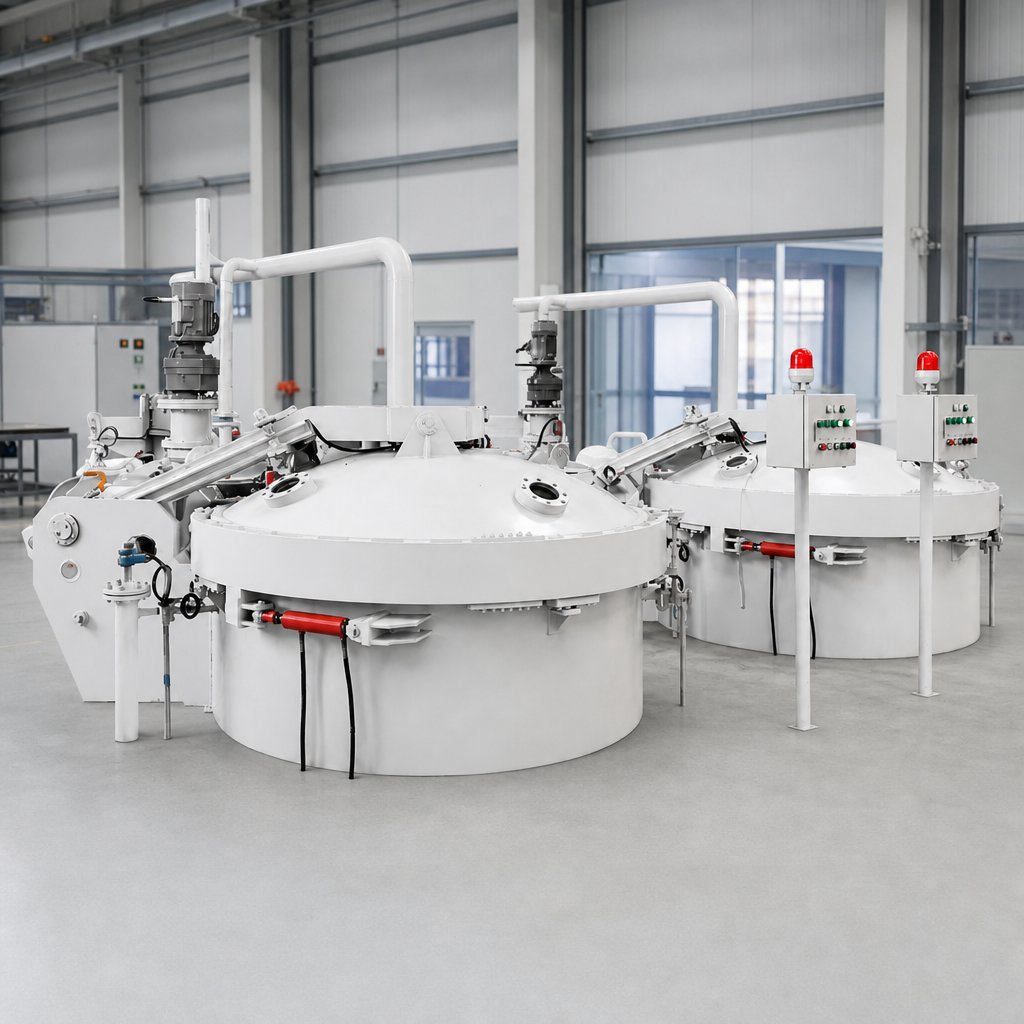
VPI is an insulation process with three levers — vacuum, impregnant, and pressure. The wound component (a transformer coil, motor stator, reactor winding) is first dried and evacuated so air and moisture leave the insulation structure. Resin or varnish is then introduced under vacuum, so nothing blocks its path into the windings. Finally, pressure is applied on top of the liquid, forcing the impregnant into the deepest capillaries of the insulation. Where atmospheric dipping relies on gravity and capillary action alone, VPI replaces every trapped air pocket with solid insulation.
The equipment that runs this cycle — a vacuum pressure impregnation system — combines a pressure-rated impregnation vessel, vacuum pumps, a resin storage and transfer system, and a pressure source, all under automated control with full parameter recording.
How the VPI Process Works, Step by Step
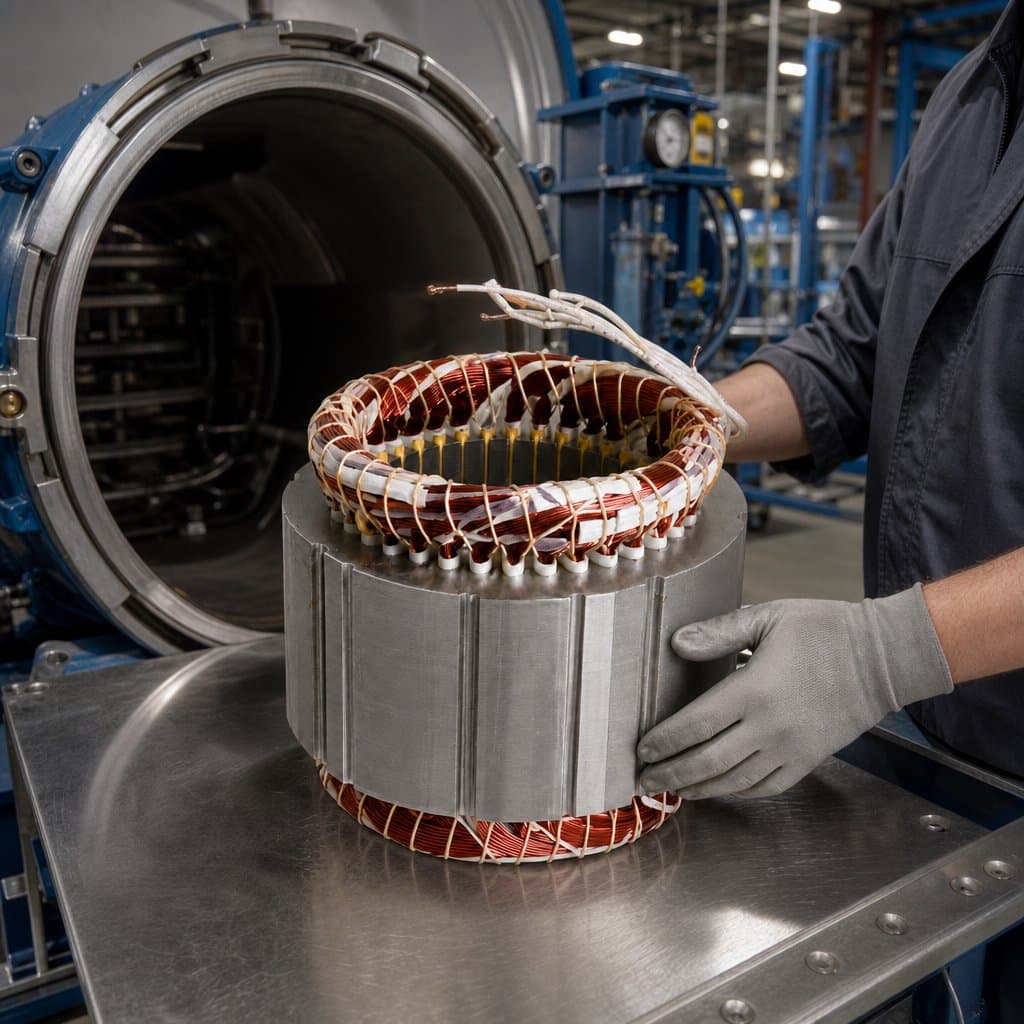
A complete VPI cycle runs through six stages:
- 1. Pre-drying. The winding is heated to drive off moisture — cellulose and film insulation arrive holding water, and impregnating over moisture locks the problem in permanently. (Large oil-immersed units do this in dedicated vacuum drying equipment.)
- 2. Vacuum. The vessel is pumped down so air leaves the winding structure. The depth of vacuum decides how much void volume remains to be filled.
- 3. Impregnant admission. Resin or varnish is transferred in under vacuum — the liquid meets no trapped air on its way into the coil.
- 4. Pressure. Compressed air or nitrogen is applied on top of the impregnant, pushing it into the finest gaps between turns, layers, and insulation sheets.
- 5. Drain and recovery. Excess impregnant returns to the storage tank for reuse; the winding emerges fully saturated but not dripping.
- 6. Curing. The impregnated winding is baked to polymerize the resin — for varnish systems, typically in a dedicated dipping paint drying oven with controlled solvent exhaust.
Each stage is a quality variable: skip depth of vacuum, and voids survive; rush the pressure hold, and penetration stays shallow; mishandle the cure, and the resin never reaches full strength. That is why modern VPI lines automate the full sequence and record every parameter for traceability.
Key Benefits of VPI for Transformers, Motors, and Reactors
Higher dielectric strength. Void-free insulation removes partial-discharge sites — the single biggest slow killer of windings — and raises both impulse and power-frequency withstand capability.
Better heat dissipation. Air is a thermal insulator; cured resin conducts heat roughly an order of magnitude better. A fully impregnated winding runs cooler at the same load, which directly slows insulation aging.
Mechanical strength. The cured impregnant bonds turns and layers into one solid block, so the winding resists vibration, transport shocks, and the enormous electromagnetic forces of short-circuit events.
Moisture and contamination sealing. A saturated, cured winding leaves no pathway for humidity, dust, or chemicals — critical for motors in harsh environments and outdoor reactors.
Consistency. Automated vacuum-pressure cycles with recorded parameters remove operator variation — every coil gets the same vacuum depth, pressure hold, and cure curve.
VPI vs Dipping vs Vacuum Casting
Three insulation processes cover most winding work, and they are not interchangeable:
- Atmospheric dipping is the cheapest entry point — but gravity alone cannot evacuate air, so voids remain. Acceptable for low-voltage, low-stress components only.
- VPI saturates the winding with varnish or resin and cures it in place. It is the standard for motors, generators, dry-type reactors, capacitors, and many transformer windings — anywhere the coil itself needs reinforced insulation.
- Vacuum casting goes one step further: the component is placed in a mold and fully embedded in cast epoxy — the process behind dry-type transformers and instrument transformers, using static mixing vacuum casting equipment. VPI impregnates a winding; casting rebuilds it inside a solid resin body — see our static mixing vacuum casting guide.
The practical rule: if the finished product keeps its winding geometry visible and relies on the impregnant for strength, VPI is the process; if the winding disappears into a cast block, you need a casting line.
How to Select VPI Equipment: Specifications to Compare
VPI systems are usually customized to the product range, so the RFQ conversation matters more than the catalog. Compare on these points:
- Vessel size and configuration — diameter and depth must clear your largest winding with handling margin; vertical vs horizontal orientation follows your product shape
- Ultimate vacuum — the deeper the vacuum before impregnant admission, the fewer voids survive; ask for the measured figure on the installed system, not the pump datasheet
- Pressure rating and control — the pressure stage drives penetration; check rated pressure, ramp control, and hold accuracy
- Impregnant handling — storage tank volume, temperature control, degassing, and transfer plumbing sized for your resin or varnish viscosity
- Automation and recording — full-cycle automation with parameter recording is what turns VPI from an art into a quality-controlled process; confirm the recording format fits your quality system
- Safety systems — solvent-based varnishes make the whole line a fire-safety system; interlocks, ventilation, and explosion protection belong in the specification
Frequently Asked Questions
What products are typically processed with VPI?
Transformer windings, motor and generator stators and rotors, dry-type reactor coils, capacitors, and cable or composite insulation — anywhere void-free insulation translates directly into dielectric strength and service life.
Is VPI worth it over simple dipping?
For anything beyond low-voltage, low-stress components, yes. Dipping leaves air voids that become partial-discharge sites; VPI removes them. The payback shows up in test-pass rates, lower failure rates, and the ability to meet customer insulation specifications that dipping simply cannot reach.
Can VPI equipment handle both varnish and resin?
Systems are configured around one impregnant family — viscosity, degassing, and curing requirements differ. Specify your impregnant in the RFQ; suppliers size the storage, transfer, and curing chain around it.
How long does a full VPI cycle take?
It depends on winding size, insulation thickness, and impregnant — from a few hours for small motor stators to extended cycles for large transformer windings. Automation shortens the effective cycle by running stages without operator waiting time; ask suppliers for a cycle-time estimate against your specific products.
Summary: Vacuum Removes the Air, Pressure Does the Work
VPI is a simple idea executed with discipline: vacuum empties the insulation structure, pressure fills it completely, and a controlled cure locks the result in place. Compared with dipping, it buys dielectric strength, thermal performance, mechanical robustness, and repeatability — which is why it anchors insulation quality for transformers, motors, reactors, and capacitors. Select the equipment by vessel size, verified vacuum, pressure control, impregnant handling, and recording — and treat it as one station in the wider drying, impregnation, and casting chain covered in our complete equipment guide.
Evaluating VPI for your winding production? Send us your product range, winding sizes, and impregnant type — we will recommend the vessel configuration and the specifications to put in your RFQ.
📞 Phone: +86-15958243831
📧 Email: sales@tranfovia.com
💬 WhatsApp: https://wa.me/8615958243831
🌐 Website: tranfovia.com