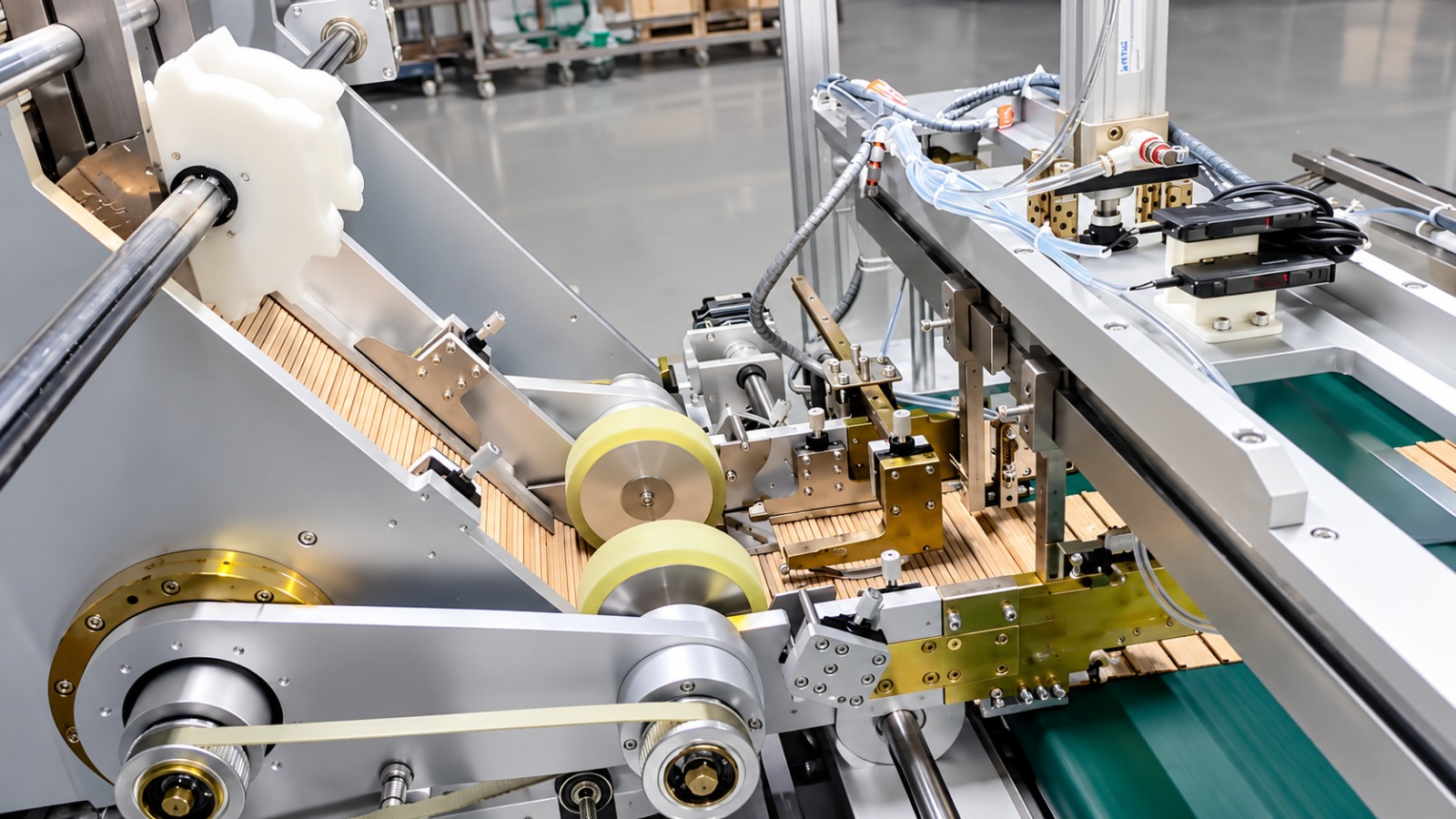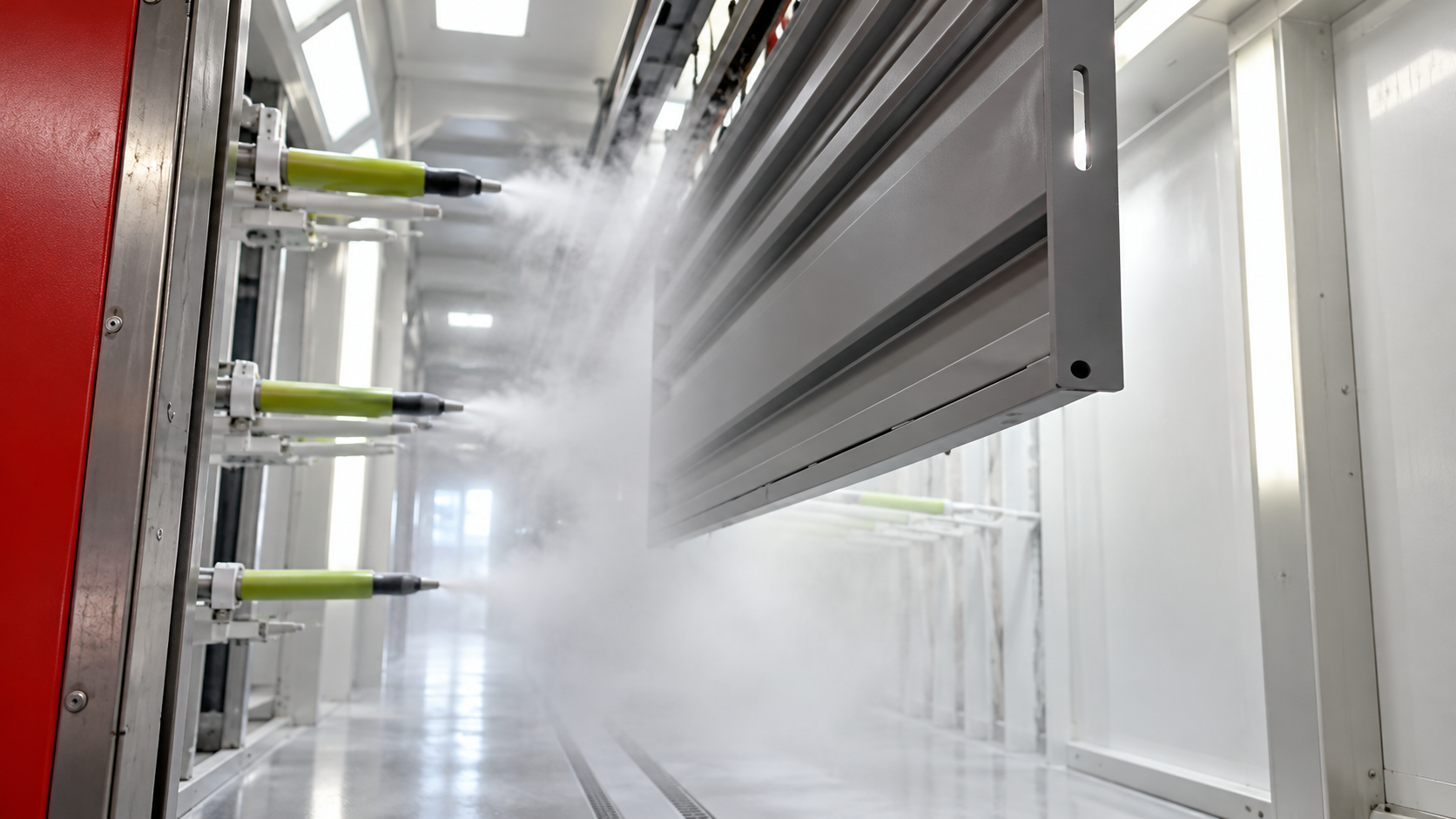
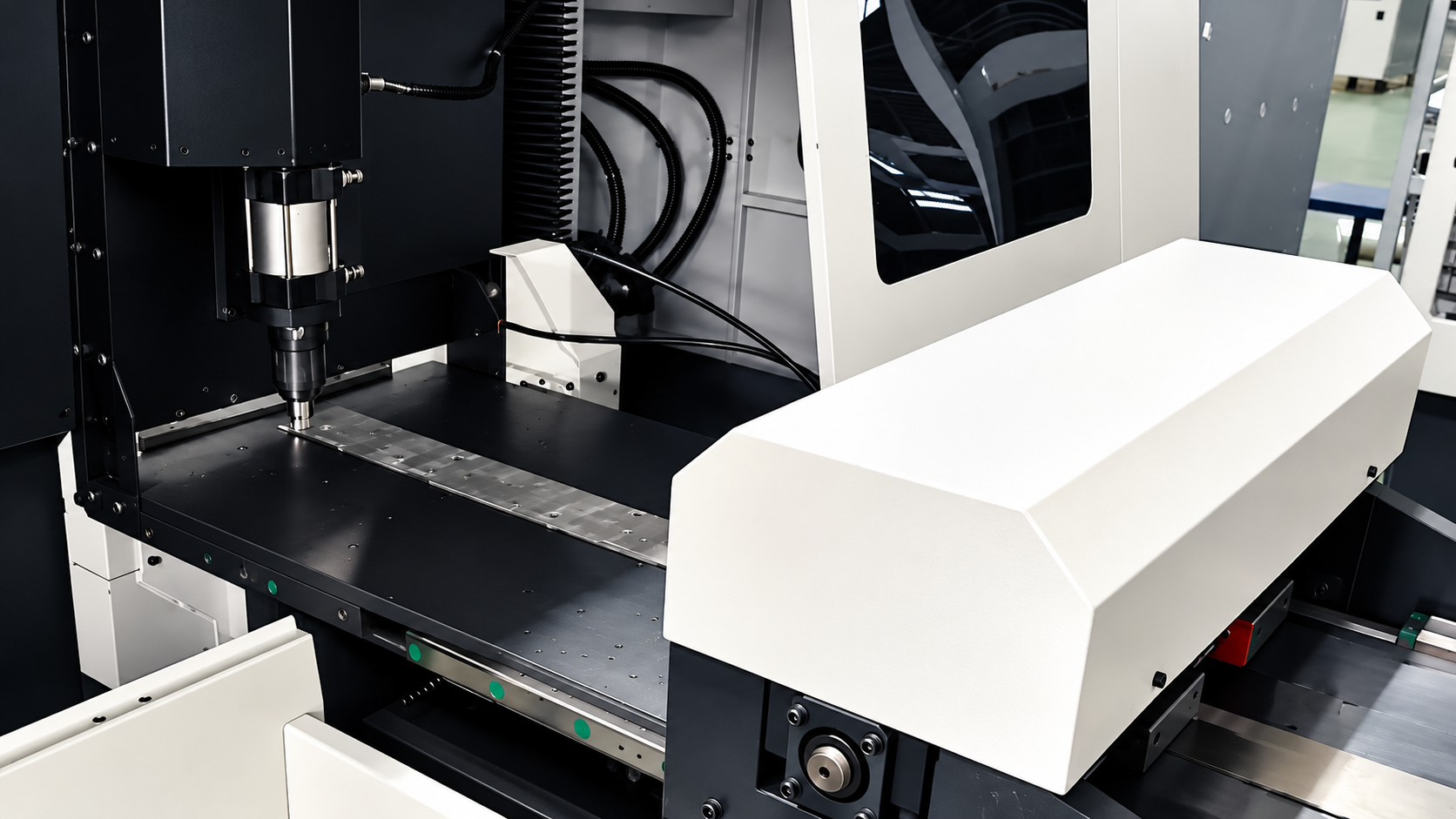
| Equipment | CNC Busbar Sawing and Folding Machine, model MXC60-260 (servo-driven circular-saw reciprocating cutting plus two-axis coordinated hydraulic folding under one six-axis CNC control) |
| Customer | Transformer and switchgear manufacturer in Chennai, India (in-house busbar fabrication shop) |
| Application | Cutting and folding copper busbars for transformers and low-voltage switchgear assemblies — busbar up to 260 mm wide and 6 mm thick, bending accuracy ±0.20 mm/m |
1. Customer Background
The customer is a transformer and switchgear manufacturer in Chennai, India, building oil-immersed distribution transformers, compact substations and low-voltage switchgear assemblies. Copper busbar is everywhere inside those products: transformer tank leads, low-voltage outgoing connections, main busbars and branch bars inside the panels. Sections run from 30×5 mm up to 260×6 mm, and a single panel can call for dozens of bars in different lengths and with different fold angles.
Cutting and folding used to be two separate operations in two separate places. Bars were sawn on a saw and then folded on a separate bending machine, with an overhead crane and manual handling in between. That worked while volumes were modest. Once local renewable-energy and industrial-park orders started landing together, the transfer between the two machines became the slowest step in the shop, and the busbar shop turned into the constraint for the whole assembly line.
2. Industry Pain Points
- Two machines, two operations, and handling in between. Sawn bars had to be lowered, counted and craned over to the bending machine, so every bar travelled the shop twice. A large-section bar weighs tens of kilograms, and moving it takes two people on its own.
- Burrs and roll-over on the cut face. Shearing left burrs and a rolled edge at the cut, so the contact faces of panel busbars still had to be dressed by hand. Without that dressing, contact resistance and temperature rise could not be held down.
- Fold position set by scriber marks. Fold lines were marked with a tape measure and located against a stop, so error accumulated over a long bar. Batches sometimes reached the panel and would not line up with the holes, and the shop had to ream them on site.
- Poor repeatability. Running the same drawing a second time produced different fold angles and leg lengths, and fitters ended up matching parts by hand.
- Large sections are hard to control. A 260×6 mm bar springs back noticeably when folded, and compensation was a manual trial: two or three attempts per corner was normal.
- Dependence on skilled hands. Bending operators who could mark and compensate accurately were hard to hire and harder to keep. Quality moved with whoever was at the machine, and training took months.
3. Solution
TRANFOVIA supplied one machine that puts both operations into a single CNC system: the MXC60-260 CNC busbar sawing and folding machine, combining servo-driven circular-saw reciprocating cutting with two-axis coordinated hydraulic folding under six-axis CNC control.
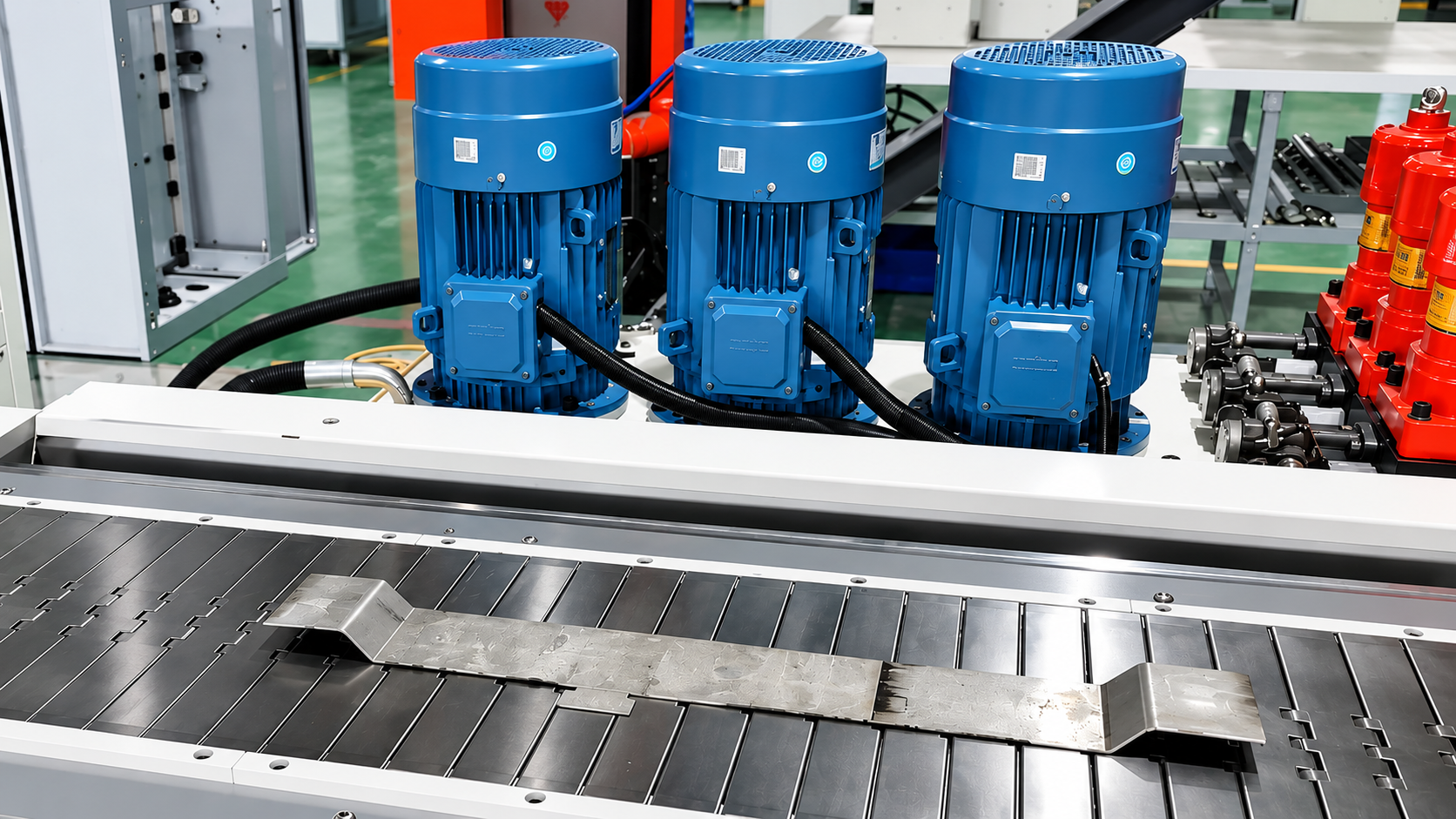
- Servo circular-saw cutting. The circular saw is driven by a servo motor through a rack-and-pinion mechanism, performing both the cutting feed and the tool retraction. The cut is clean with no shearing roll-over, so the post-cut dressing step disappears.
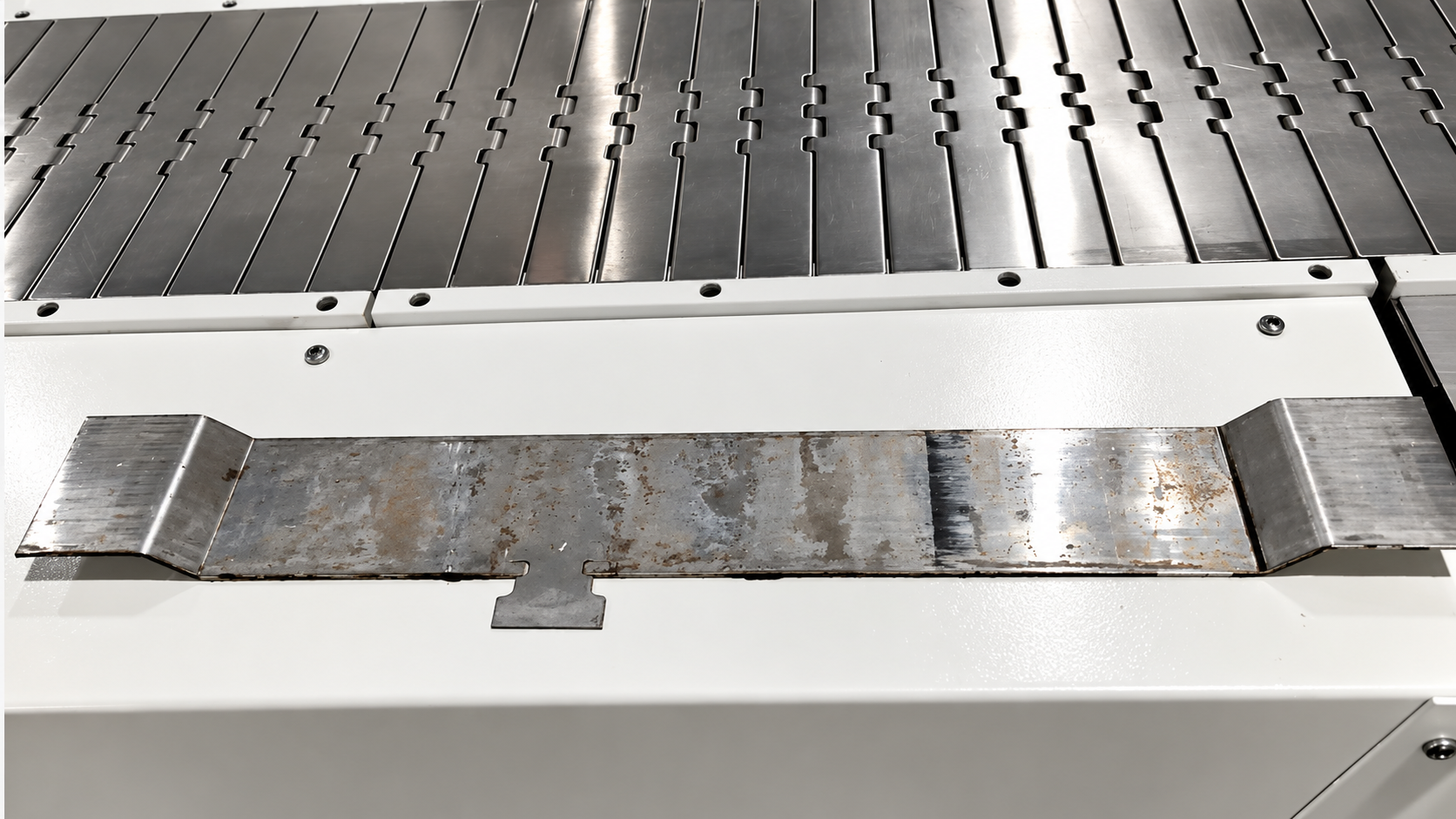
- 600 kN hydraulic folding. The hydraulic system uses dual-speed, dual-pressure rapid oil supply with up to 600 kN output force. Two hydraulic axes lift to different heights in coordinated motion to produce the fold, holding bending accuracy to ±0.20 mm/m.
- Six-axis CNC control. Positioning, cutting and folding are sequenced in one program, and drawing parameters are entered directly — no scribing and no manual tool setting.
- Processing range. Up to 260 mm wide and 6 mm thick, covering every bar size used in the customer’s low-voltage main busbars and transformer leads.
- One clamping, both operations. Bar goes from saw cut to fold without leaving the bed, eliminating the transfer and the second alignment.
- Electrical configuration. Main motor selectable from ABB, programmable controller from Siemens or Beckhoff, industrial computer from Beijing Qiyang; machine status and alarms are all on screen.
4. Implementation and Commissioning
The machine measures 9500×2980×1700 mm, a long-stroke layout, so the customer reserved a 12 m aisle for the longest cut length and cast a separate foundation. Commissioning followed the process: level the bed and guide rails → dry run to verify the servo saw stroke and retraction position → calibrate the stop positioning and feed length → zero the folding axes and set angle compensation from measured 6 mm copper spring-back → sample-verify bending accuracy to ±0.20 mm/m → load the customer’s regular bar programs → run a continuous trial batch covering one complete panel set. The customer’s process engineer was switching programs on the industrial computer the same day and running production to drawing from the second day. TRANFOVIA provided on-site training and a bilingual operation manual, so the shop was working independently inside the first week.
5. Acceptance Results
- Bending accuracy. Sampling 2 m bars folded at both ends, the leg-length and angle deviation came out within ±0.20 mm/m, and panel assembly lined up first time.
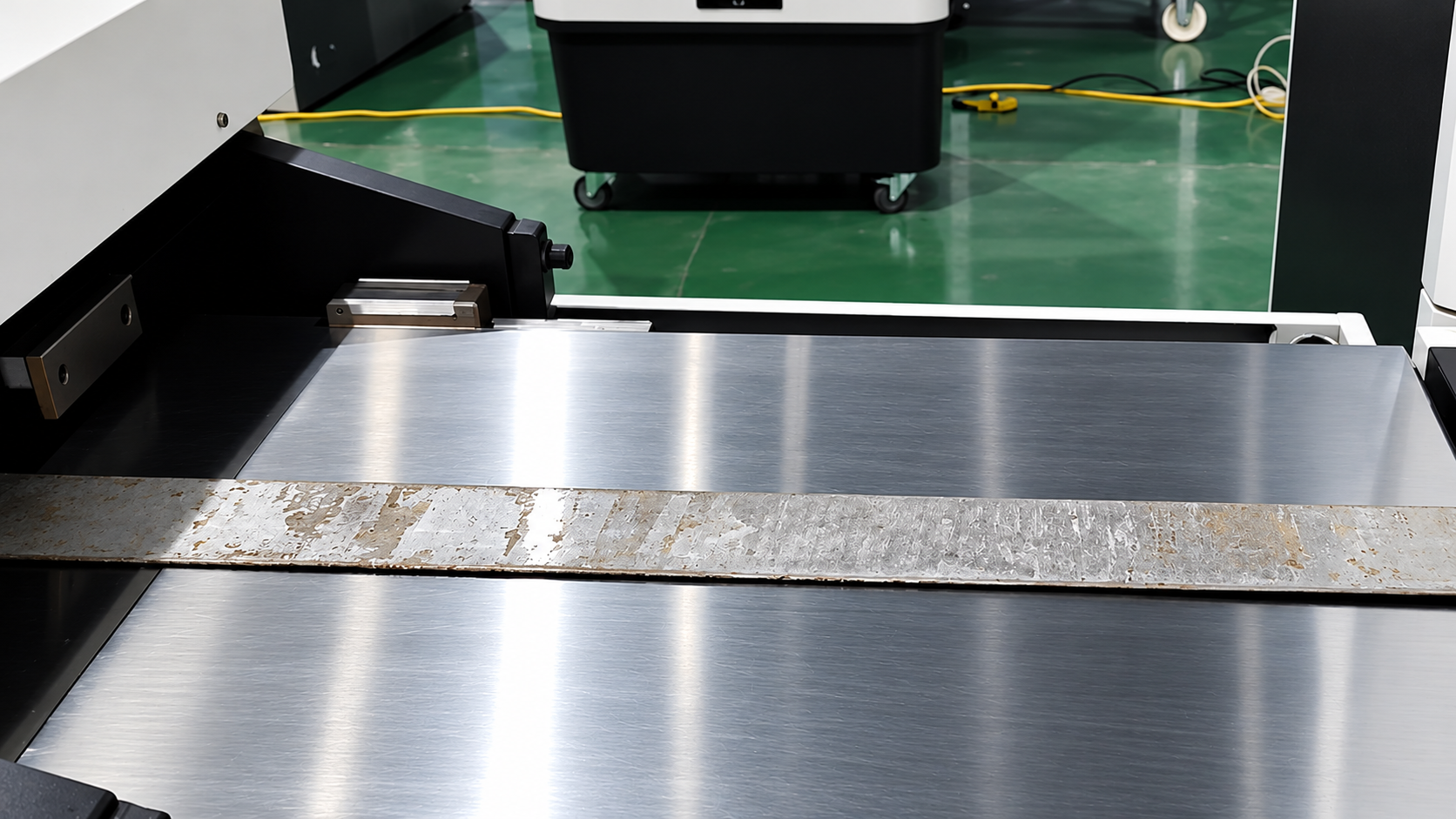
- Cut quality. The circular-saw cut is flat, contact faces no longer need hand dressing, and finishing time on the contact surface dropped.
- Cycle time. Cutting and folding run consecutively on one machine with a single clamping per bar, so individual throughput time fell noticeably.
- Repeatability. Repeated runs of the same program produce consistent leg lengths, and fitters no longer match parts on site.
- Labor. One operator runs the machine, crane transfer is gone, and large-section bars are handled once instead of twice.
6. Customer Feedback
“One bar used to travel between two machines, and the big sections needed two people to lift,” the customer’s busbar shop supervisor said. After switching to the combined sawing and folding machine, the most immediate change is that “there is no more queue between cutting and folding, and the bars drop into the panel without rework.” He pointed to two further details: because the cut face is flat, dressing hours on the contact surfaces came off the books, and 6 mm copper no longer needs a trial fold for spring-back — with compensation built into the program, the first piece is the good piece. He also noted that the shop can now quote short-notice panel orders it used to decline, because bar preparation is no longer the reason to say no.
7. Summary and Next Steps
The value of this machine comes down to three points: servo circular-saw cutting lifts cut quality and removes the dressing step, 600 kN two-axis coordinated hydraulic folding puts ±0.20 mm/m accuracy into the program, and the integrated six-axis CNC turns two clampings into one and eliminates the transfer entirely. The boundary should be stated plainly as well: the core process is sawing plus folding, and the machine does not carry punching or shearing, so hole making stays with the customer’s existing punching and shearing equipment. Next, the customer and TRANFOVIA are building a program library of regular bar sizes and a folding-parameter table, while reserving interfaces for automated loading and unloading in a phase-two expansion. For a turnkey CNC busbar sawing and folding machine, contact the TRANFOVIA technical team.
- WhatsApp: +86-15958243831
- Email: sales@tranfovia.com
- Website: https://tranfovia.com/