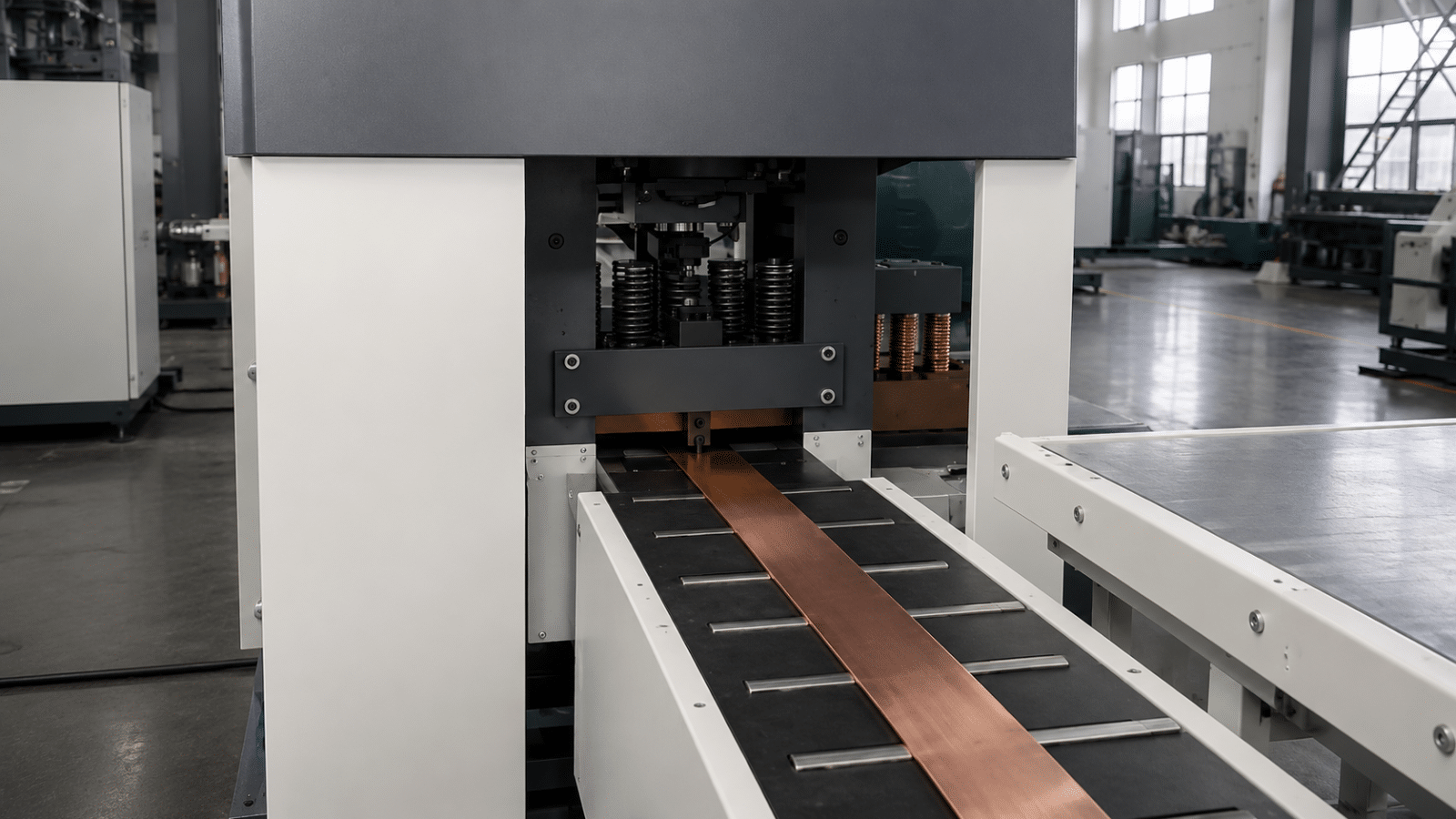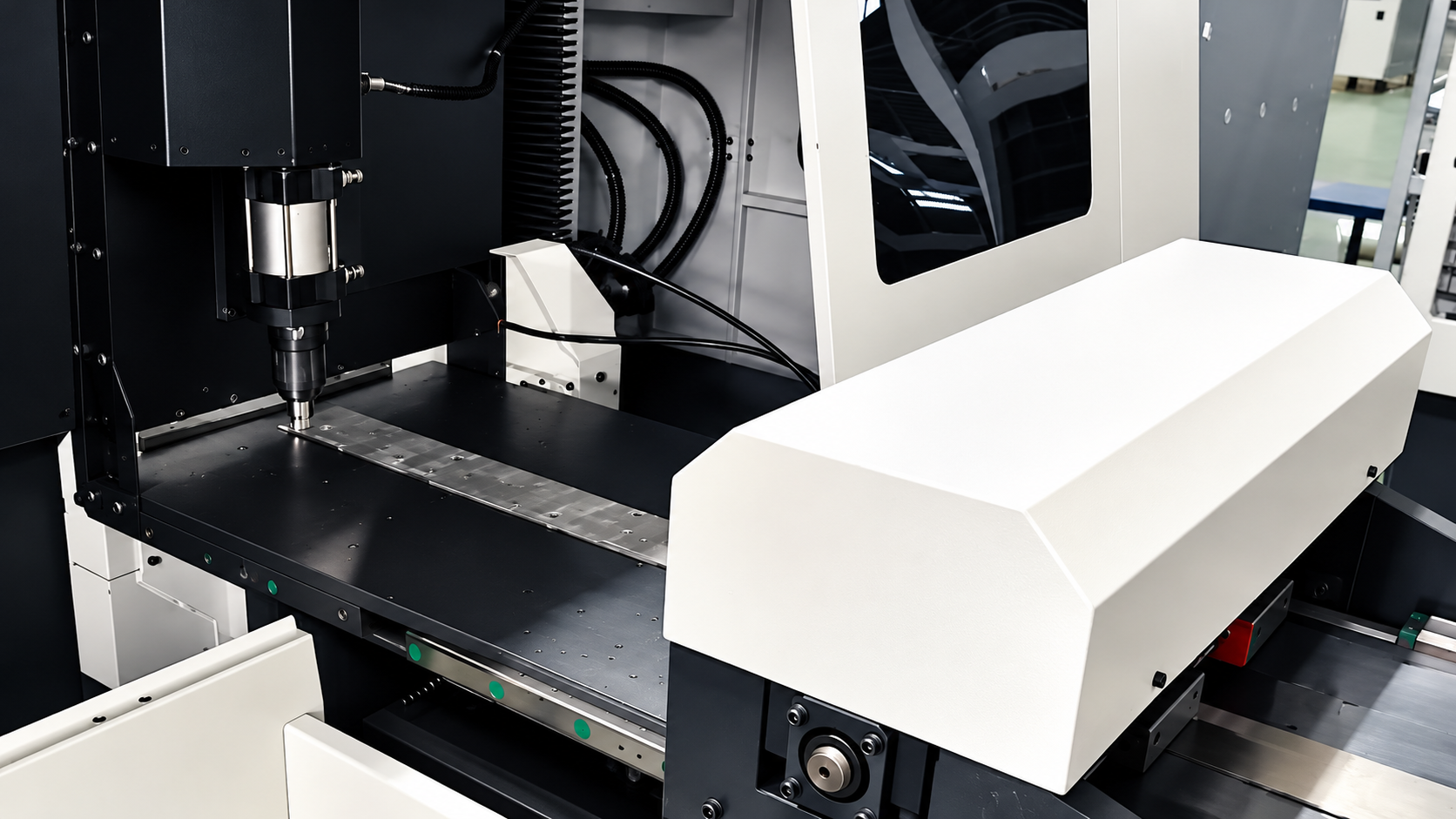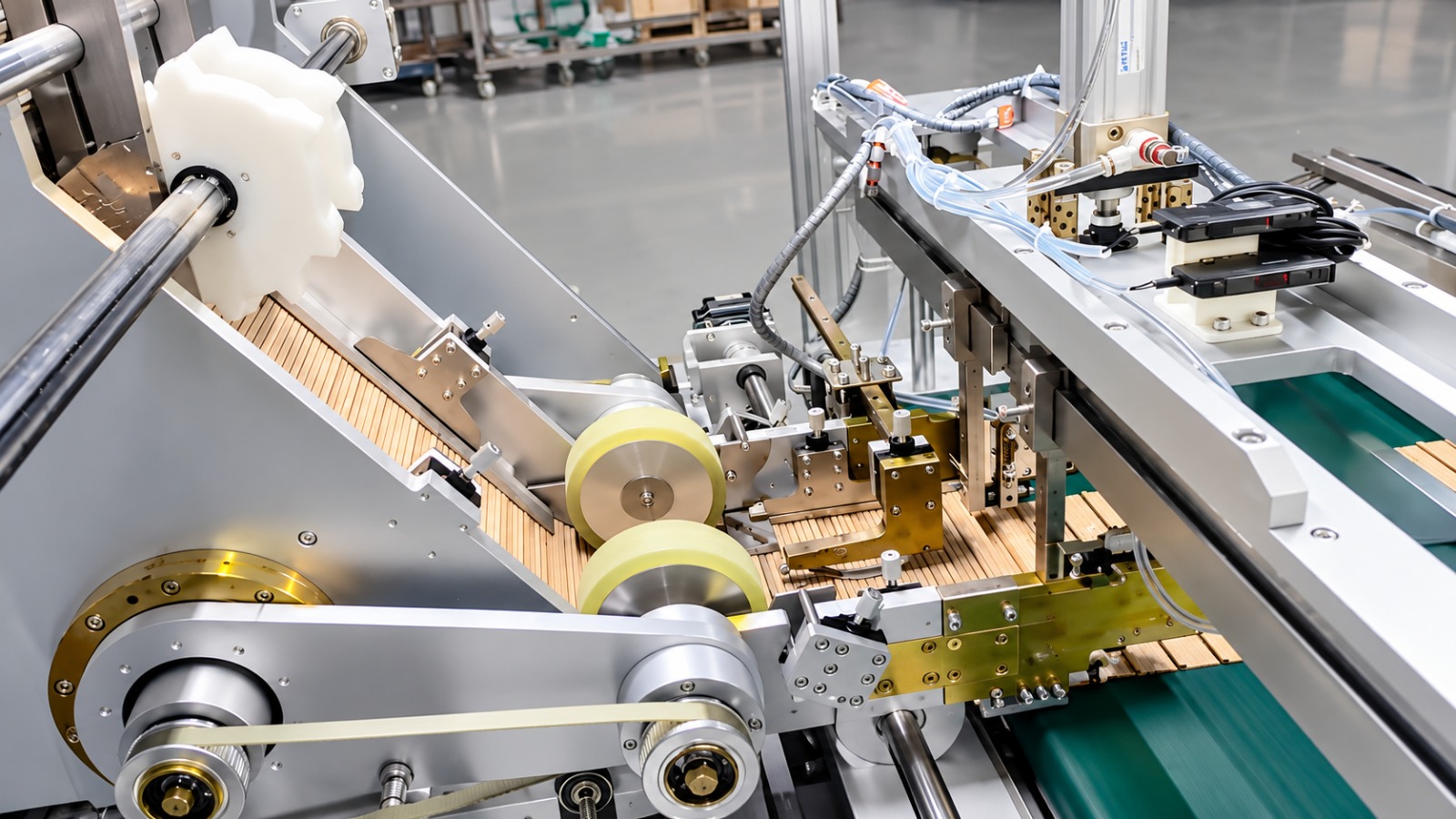

TL;DR: Transformer insulation parts processing converts pressboard and laminated wood into the cylinders, spacers, end rings, clamps, and wrapped components that give a transformer its dielectric and mechanical strength. The equipment forms five process chains — cylinder making (bevel→roll→bond), board pressing and cutting, spacer and block machining, precision CNC finishing, and wrapping/taping. This pillar guide maps each chain, the key specifications, and how to decide what to bring in-house.
Ask an experienced transformer engineer where failures begin, and many will point at insulation. The pressboard cylinders, oil-duct spacers, end rings, and wrapped leads inside a transformer carry both the electric field and the short-circuit forces — and every one of them comes off transformer insulation parts processing equipment. This pillar guide maps the complete equipment group within the broader transformer manufacturing process: five process chains, the specifications that matter, and how to choose what your factory should make versus buy.
What Insulation Parts Processing Covers
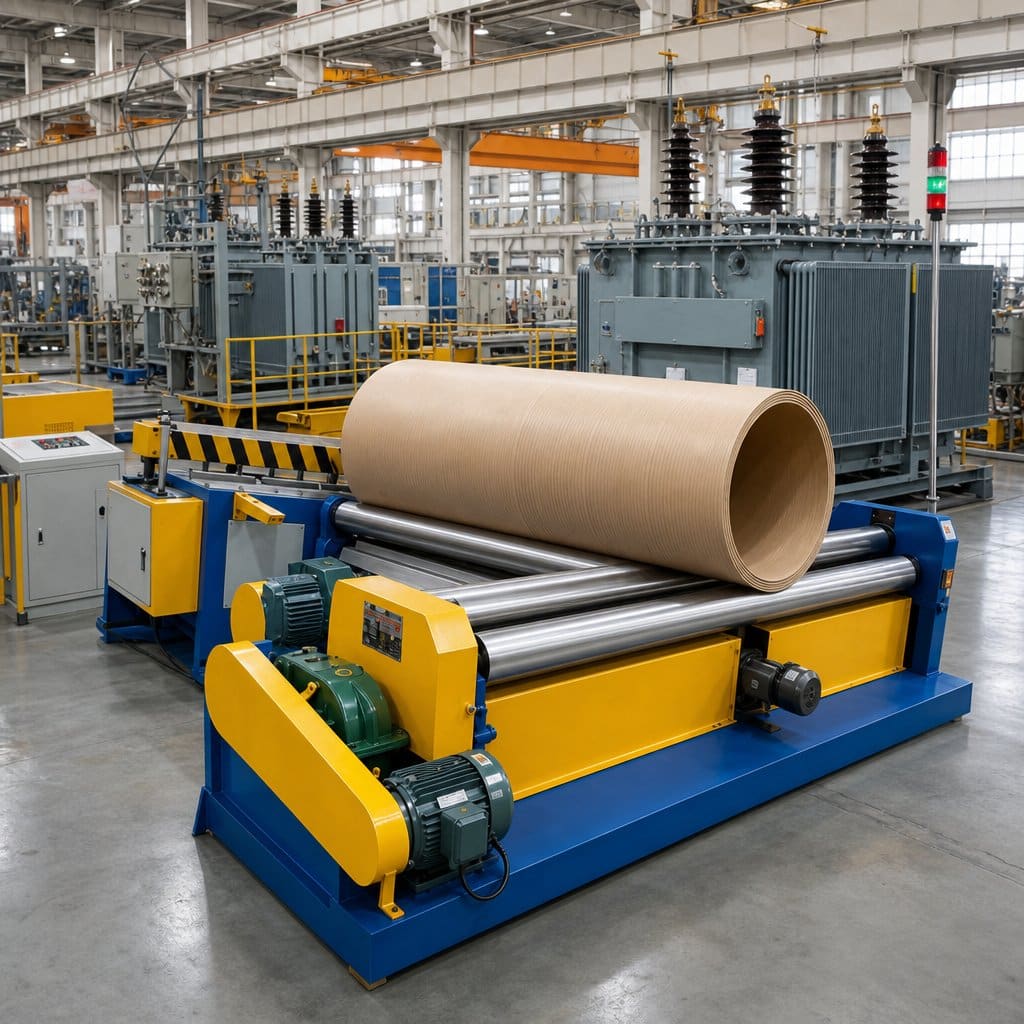
Transformer insulation is mostly cellulose: pressboard sheets, laminated wood, and paper. The equipment group’s job is to turn these raw boards and rolls into finished parts — HV/LV insulation cylinders, oil duct spacers, step blocks, end rings, pressure plates, clamps, and wrapped electrostatic rings or leads. Part accuracy matters twice: dielectric clearances are designed in millimeters, and mis-cut spacers show up later as partial discharge or failed impulse tests.
The Cylinder Chain: Bevel, Roll, Bond
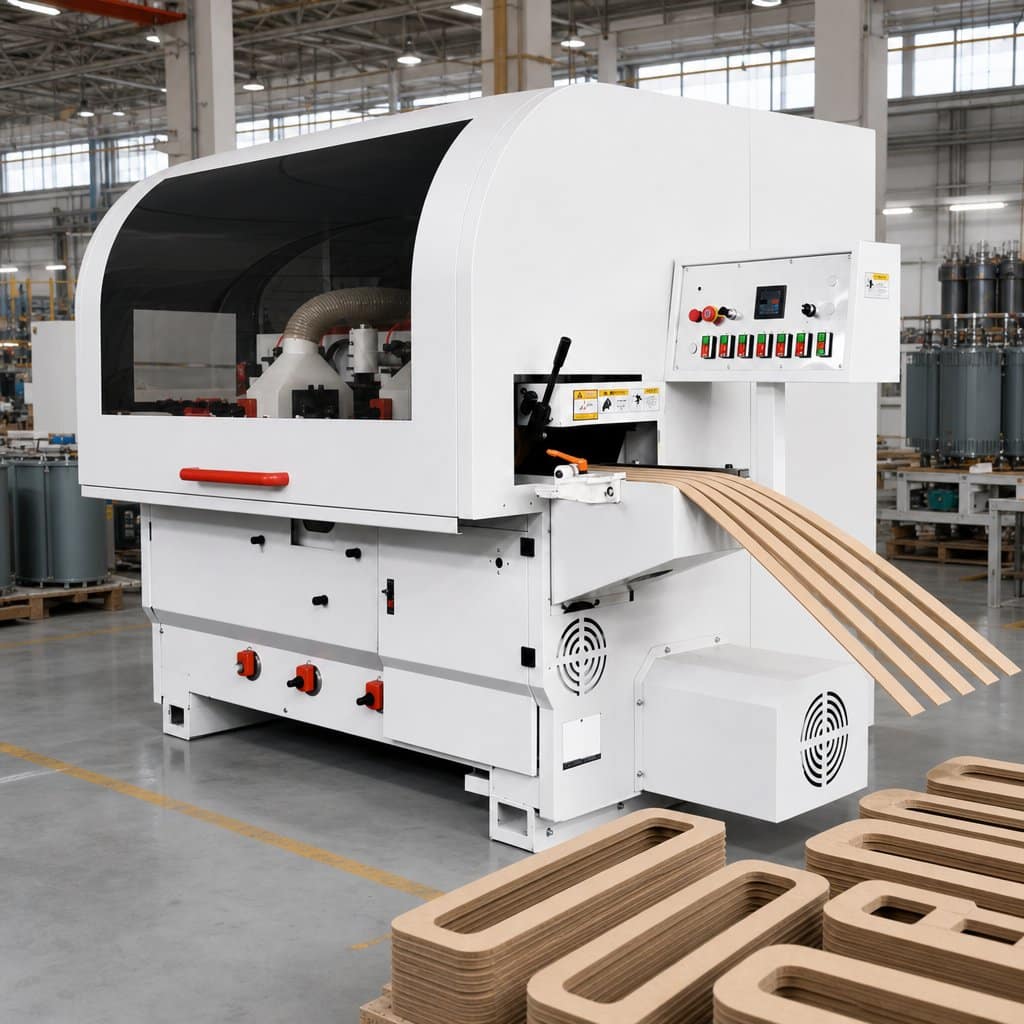
Insulation cylinders for oil-immersed transformers follow a three-step chain:
Step 1: Beveling the board edges
The pressboard beveling machine mills a long bevel (15–20× board thickness) on board edges 2–8 mm thick, so the glued overlap joint keeps uniform thickness all around the cylinder — no dielectric weak point at the seam. For the geometry behind that ratio, see our pressboard beveling machine guide.
Step 2: Rolling the cylinder
The beveled, glued board goes to the pressboard cylinder rolling machine, which rolls it into a round cylinder under CNC control, customizable for large diameters.
Step 3: Hot bonding
The cylinder cohesion machine heat-bonds the seam under hydraulic pressure (12 MPa) with thermal-oil heating at 20–150°C ±2°C, covering cylinders 270–3500 mm in diameter and up to 4000 mm high — cutting curing time dramatically versus cold bonding.
The Board Chain: Pressing and Cutting to Size
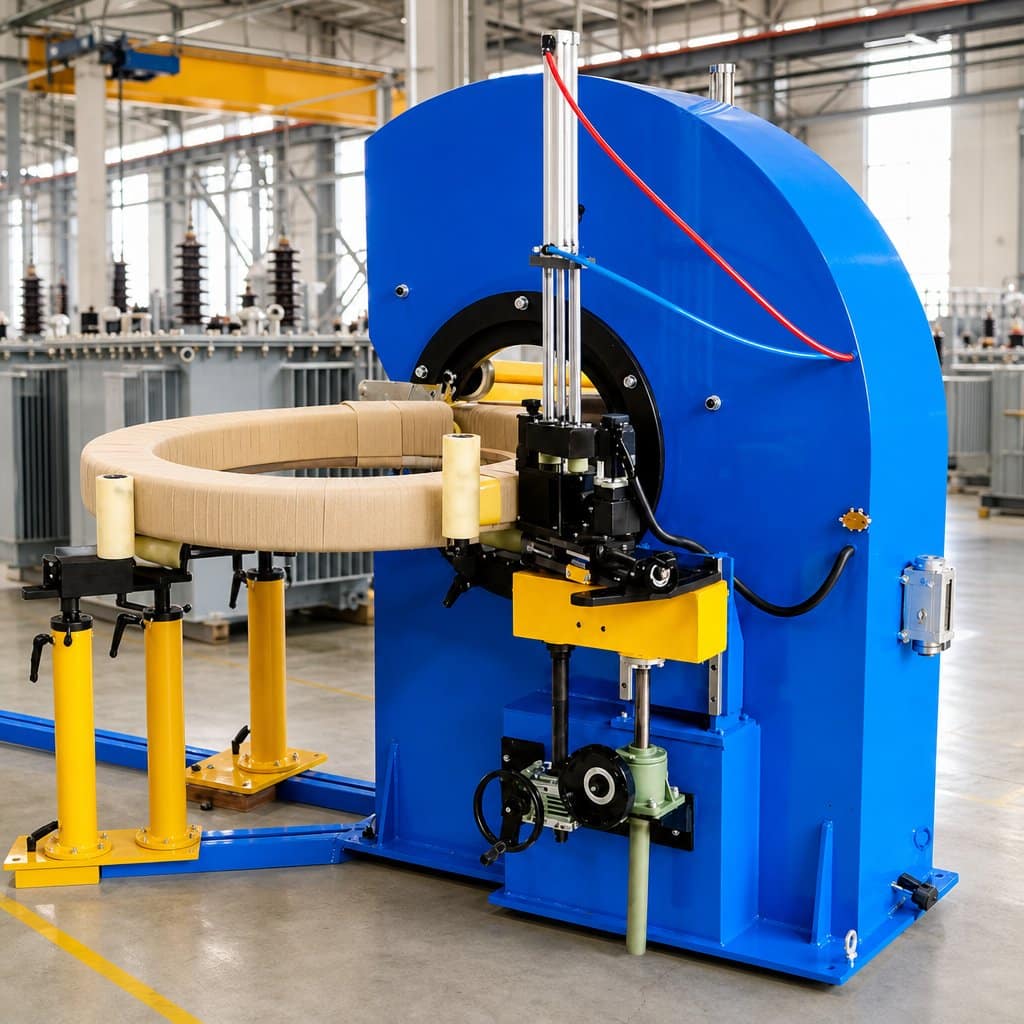
Laminating the raw material
Thick insulation parts start as laminated board. The multi-layer heat press machine laminates pressboard in 300–3000 T capacity classes with inter-layer temperature difference held within 2°C — the figure that decides whether the laminate delaminates in service.
Cutting boards and strips
Large boards go to the CNC horizontal sawing machine (3300×3300×120 mm capacity, 0–120 m/min feed). Pressboard sheets become strips on the CNC shearing machine (±0.2 mm, including trapezoidal strips for tapered end rings) or the pressboard slitting machine for narrow 5–60 mm oil-duct strips. Round end-ring blanks come off the circular shearing machine (Φ300–3000 mm, ±1 mm ovality; CNC version ±0.1 mm repeat).
The Spacer and Block Chain: Oil Ducts and Step Blocks
Oil duct spacers and step blocks are the highest-volume insulation parts — and the most labor-intensive without dedicated machines:
Spacer shaping
The single T-shaped spacer machine mills T, dovetail, and rectangular spacers one at a time (3–15 mm thick); the multiple strips shaping machine slits, shapes, and chamfers 10–22 strips in one feed — roughly 5× the output with 20% better material utilization — see our strip shaping machine guide for the full math. The rolling and chamfering machine then densifies strips (8–10% compression, up to 50 T rolling force) and rounds both edges, raising mechanical strength.
Step blocks and punched parts
Step blocks for 110 kV+ transformers are milled on the CNC step block machining center (programming-free visual input, ±0.15 mm repeat), while dovetail and straight slots go to the dove-tail spacer milling machine (full-auto ±0.2 mm, or semi-auto at up to 260 pieces/min). Small blocks and spacers at volume come off the automatic feeding punching machine at up to 150 strokes/min.
Precision Machining and Finishing
Large or complex parts — end rings, pressure plates, clamps — need CNC accuracy:
CNC processing centers
The insulation parts processing center mills, drills, and profiles large parts over a 1500×3000 or 3300×3300 mm envelope (XY positioning 0.2 mm, Z 0.05 mm), with dust-controlled, metal-contamination-free machining. For a pre-purchase checklist on envelope size, spindle power, and contamination control, see our CNC insulation parts processing center buying guide. Smaller parts — clamps, small blocks, angle pieces — fit the sawing and milling combined machine, whose 2 mm narrow saw blade saves material with vacuum-adsorption clamping.
End ring marking
The end ring equal-division draw line machine ink-marks spacer positions around end rings (Φ500–3200 mm) at ±0.02° angular accuracy in about 3 minutes per ring — replacing manual layout entirely.
Wrapping, Taping, and Formed Parts
The final chain wraps insulation onto conductors and formed parts:
Lead and ring wrapping
The lead wire taping machine wraps cables and leads (6–100 mm diameter) with automatic 0–50 N·m tension control, while the electrostatic ring wrapping machine half-lap wraps electrostatic rings up to Φ3000 mm with dual heads working simultaneously. (For equalizing pipe wrapping, see the wrapping equipment in our coil handling equipment guide.)
End insulation forming
For distribution transformers, the end insulation bonding machine forms winding end insulation in one automatic pass — feeding, gluing, bonding, cutting, counting at 12–17 m/min. A Colombian manufacturer’s line shows the before-and-after of replacing hand gluing with one-pass forming.
How to Choose: What to Bring In-House
The make-or-buy decision follows volume and voltage class:
- Distribution transformers, growing volume → start with the cylinder chain (bevel + roll + bond) and an end insulation bonding machine; buy commodity spacers
- High spacer consumption → multiple strips shaping machine first (5× output), then rolling/chamfering; single T-machine for special profiles
- 110 kV and above → add the CNC step block center and dove-tail milling — block accuracy becomes critical
- Large power transformers → CNC processing center for end rings and pressure plates, plus the end ring marking machine
- Any in-house insulation shop → board cutting (sawing + shearing/slitting) is the shared upstream for every chain
One final check before signing: confirm dust extraction and metal-contamination control on any machining equipment — a single metallic particle embedded in an insulation part can fail a transformer years later.
Frequently Asked Questions
Should a transformer factory make insulation parts in-house?
Above a certain volume, yes — in-house production cuts part cost, shortens lead time, and protects your dimensional know-how. The usual entry point is cylinders and end insulation for distribution transformers; spacer and block machining follows as volume grows.
What accuracy do insulation parts machines hold?
Typical verified figures: ±0.2 mm on shearing and slitting, ±0.1 mm repeat on CNC circular cutting, ±0.15 mm on step block machining, and ±0.02° on end ring division marking. Ask for the test method with every figure.
Why does the cylinder seam need beveling?
A square butt joint creates a thick double-layer band at the seam — a dielectric weak point and a diameter error. A long beveled overlap (15–20× board thickness) keeps wall thickness uniform all the way around.
Can one machine make different spacer profiles?
The single T-shaped spacer machine changes cutters for T, dovetail, and rectangular profiles; the multiple strips machine trades profile flexibility for volume. Factories running many profiles keep both.
Summary: Five Chains, One Rule — Accuracy Is Dielectric Strength
Insulation parts processing is five connected chains: cylinders (bevel-roll-bond), boards (press-cut), spacers and blocks, precision finishing, and wrapping. Choose what to bring in-house by volume and voltage class, and judge every machine by the same standard — in insulation work, a millimeter of accuracy is dielectric margin.
Planning an insulation workshop? Send us your part drawings and monthly volumes — we will recommend which chains to bring in-house and the machine set for each.
📞 Phone: +86-15958243831
📧 Email: sales@tranfovia.com
💬 WhatsApp: https://wa.me/8615958243831
🌐 Website: tranfovia.com
References
- IEC 60076-1: Power transformers — General
- IEC 60076-7: Loading guide for oil-immersed power transformers
- IEEE C57.12.00 — General Requirements for Liquid-Immersed Transformers
- Pressboard — Electrical Insulation Material Fundamentals
- Transformer — Insulation System Overview
- Tranfovia — Transformer Manufacturing Equipment