TL;DR: A pressboard beveling machine mills a long, precise slope on the edges of insulation pressboard before it is rolled into transformer cylinders. The critical specification is the bevel length — 15 to 20 times the board thickness — because that ratio is what lets a glued overlap joint keep the cylinder wall thickness uniform all the way around. A square butt joint creates a doubled-thickness band that becomes a dielectric weak point; a proper bevel makes the seam disappear. This guide explains the physics, the machine, and the specifications to compare.
Every oil-immersed transformer wound around a pressboard cylinder depends on a seam most people never think about. The cylinder starts as a flat board; when the board is rolled into a tube, its two edges meet — and how those edges meet decides whether the cylinder is electrically uniform or carries a hidden weak point. The pressboard beveling machine is the first station of the cylinder chain, and the one that determines the quality of everything downstream. This article — part of our insulation parts processing equipment guide — explains why.
Why the Cylinder Seam Is a Dielectric Weak Point
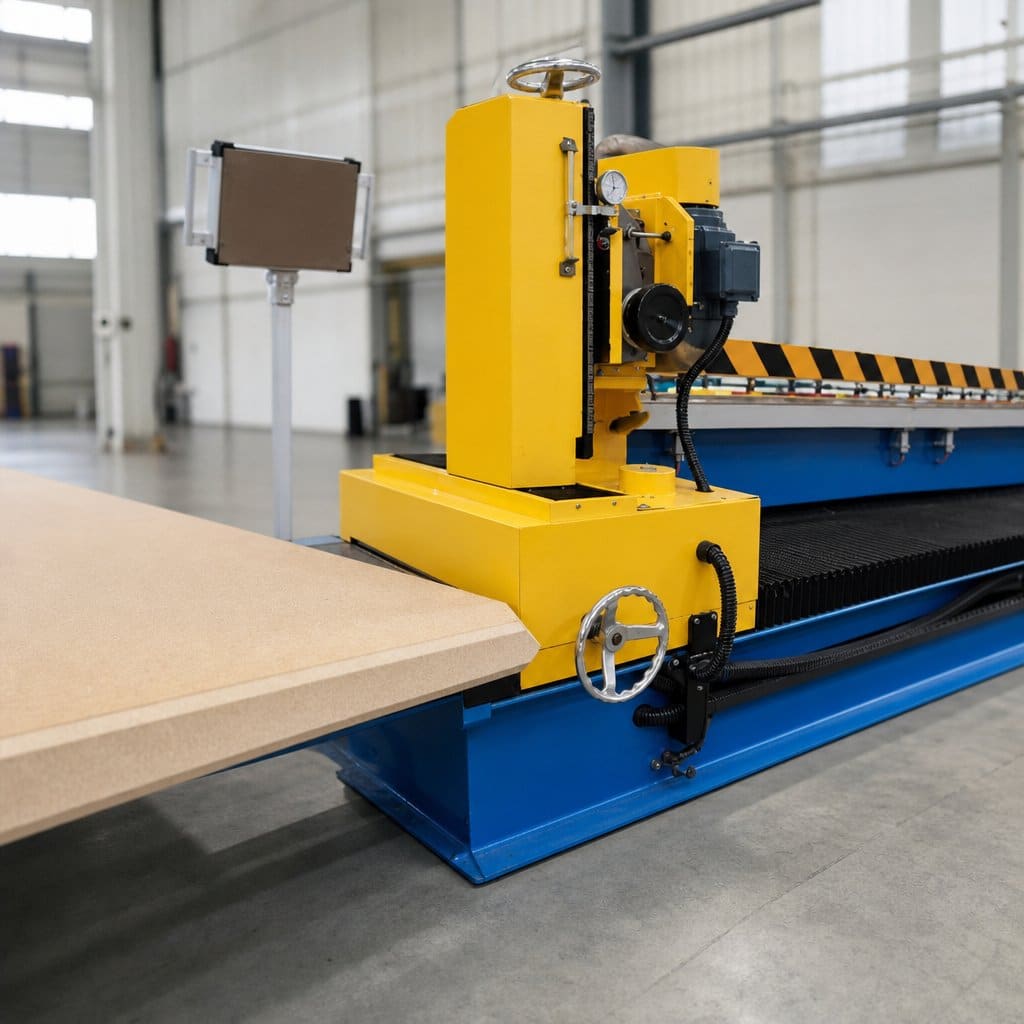
The naive way to join a rolled cylinder is a butt joint: two square edges meeting face to face, or a simple overlap glued flat. Both fail the same way. A butt joint leaves a gap line; an overlap of two square edges creates a band around the cylinder where the wall is suddenly twice as thick. Inside a transformer, that band is a problem twice over: the electric field concentrates at the thickness step, and the diameter error at the seam throws off the winding clearances designed around a uniform cylinder. On high-voltage windings, the seam band is exactly where partial discharge measurements light up.
The fix is to make the transition gradual — which is what beveling does.
What the 15–20× Bevel Ratio Actually Does
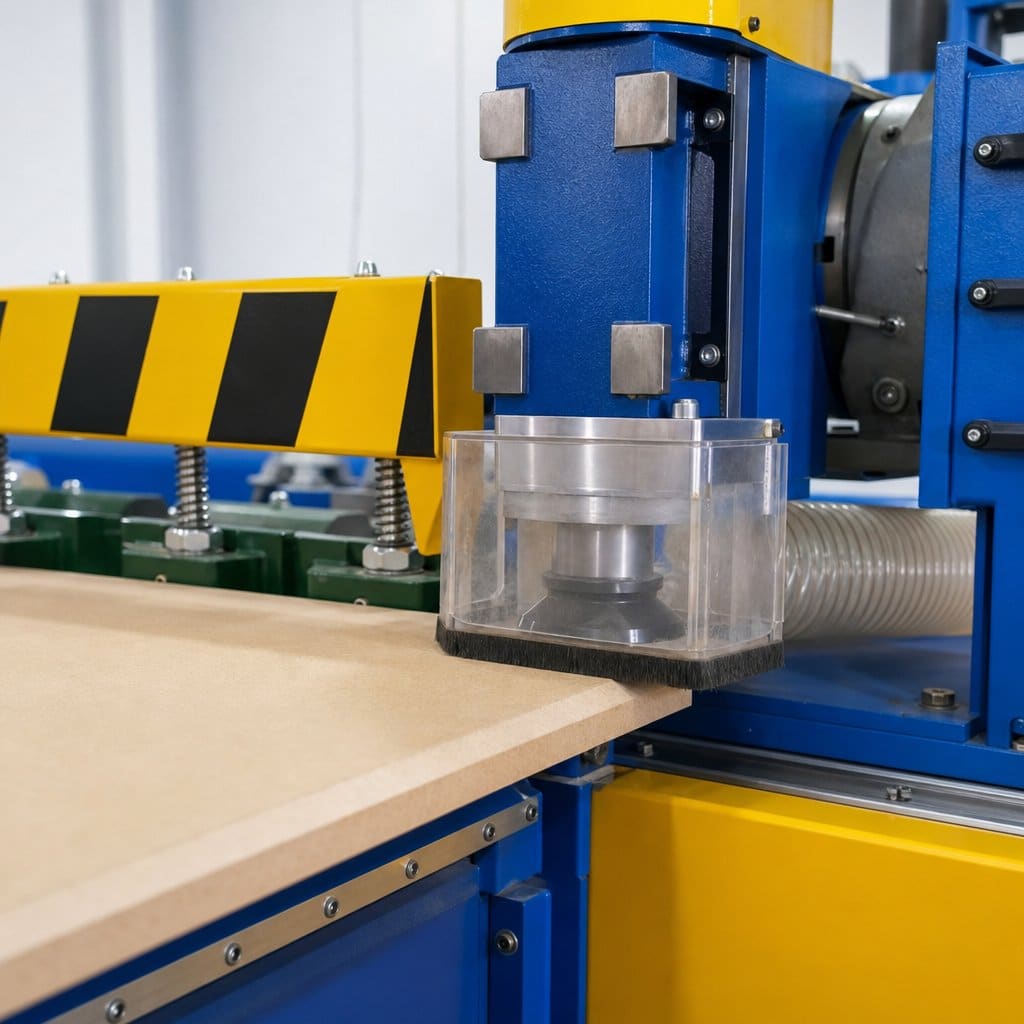
The specification sounds arbitrary until you do the geometry. The machine mills each board edge into a long, shallow slope whose length is 15 to 20 times the board thickness. For a 3 mm board, that is a 45–60 mm long bevel — a ramp so gentle that when the two beveled edges overlap and are glued, the combined thickness at every point of the joint equals the thickness of the rest of the wall. The seam disappears mechanically: the wall is uniform all the way around.
Electrically, the long taper does something equally important. Instead of an abrupt thickness step that concentrates the electric field, the field transitions gradually along the full length of the bevel — the same grading principle used everywhere in high-voltage insulation design. That is why the ratio is specified as a multiple of thickness rather than a fixed length: the geometry scales with the board, keeping both the mechanical and electrical transitions smooth at any thickness in the 2–8 mm range.
How the Machine Mills the Bevel
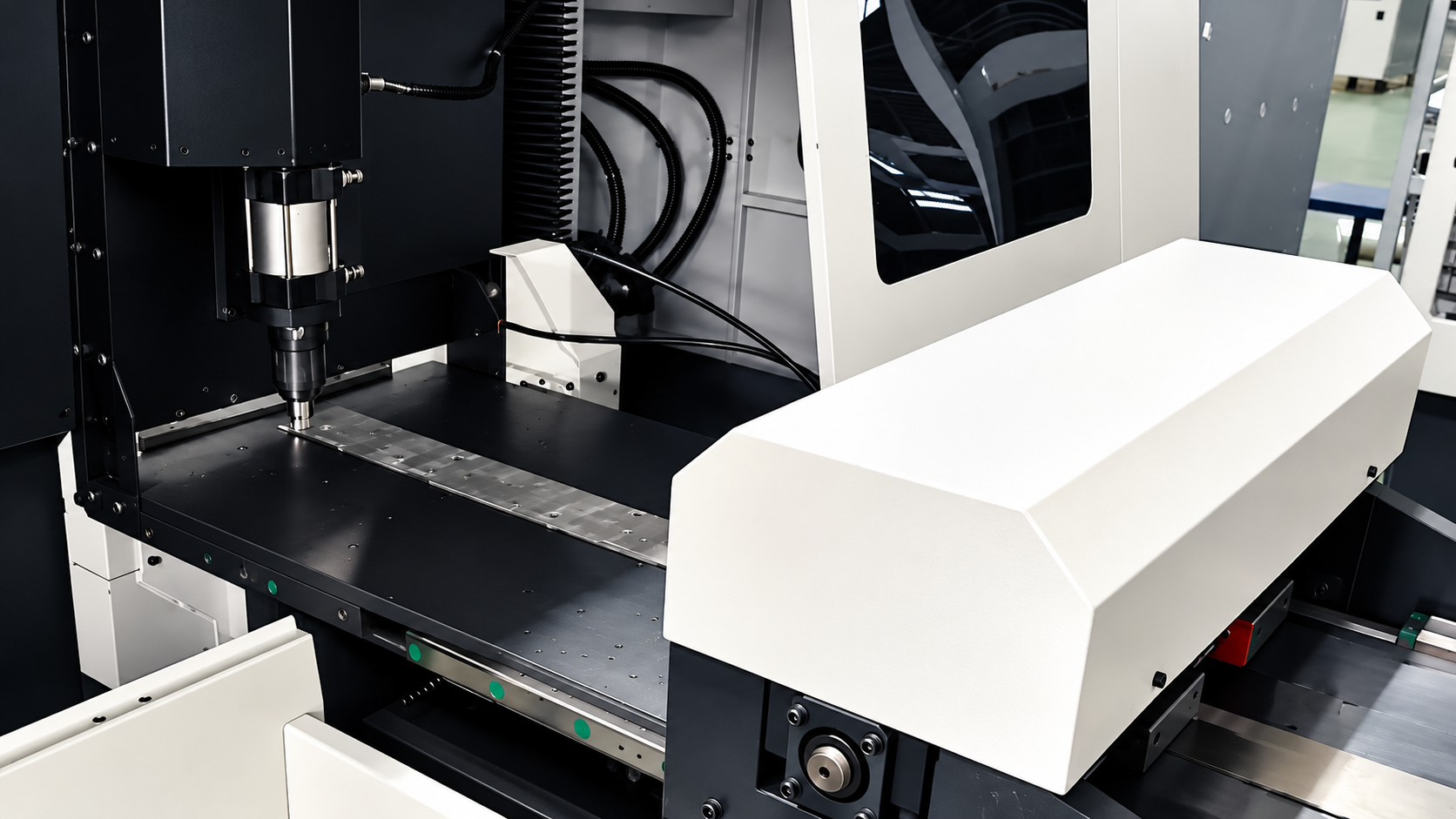
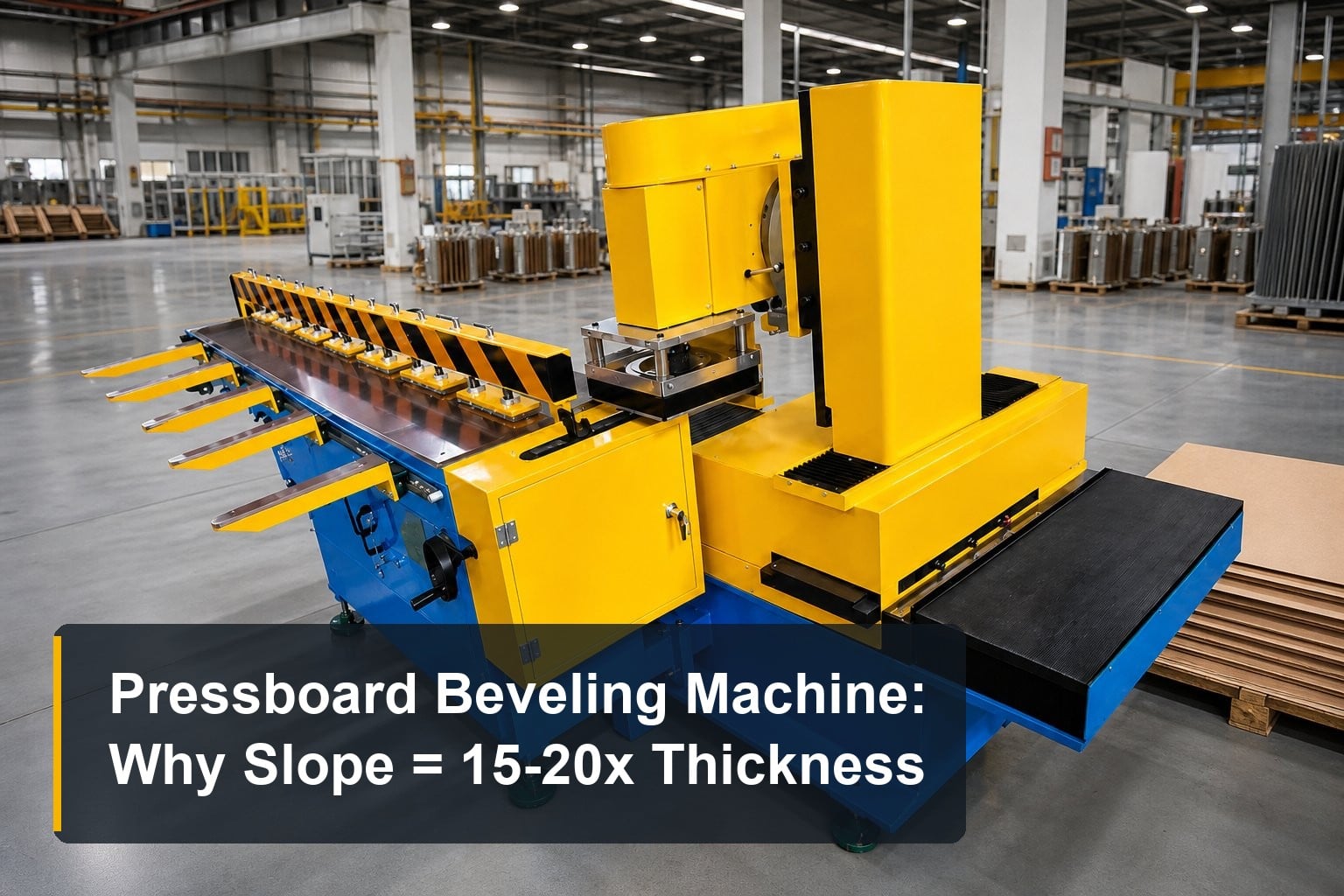
A pressboard beveling machine is a precision milling system built around one demanding cut — a long, straight, shallow slope in abrasive cellulose board:
- Adjustable cutter head — milling angle and height adjust freely, so one machine covers different board thicknesses and bevel requirements
- High-precision linear guides — the straightness of the bevel edge over the full board length is what makes the overlap glue up without gaps; guide accuracy is the mechanical foundation
- Pneumatic clamping with surface protection — the board is held by pneumatic pressing, with an elastic pad under the pressure beam so the pressboard surface is neither marked nor deformed — a dent in insulation is a defect, not a cosmetic issue
- Stepless feed control — an imported drive motor runs the feed at 1.5–6 m/min, adjustable to match board thickness and keep the milled surface smooth
- CNC with Siemens HMI — parameters are set once and repeated exactly, so every board in a batch gets the identical bevel
The Cylinder Chain: Bevel, Roll, Bond
The beveling machine earns its place as station one of a three-machine chain. After beveling, the board goes to the pressboard cylinder rolling machine, which rolls it into a round cylinder under CNC control — the beveled overlap sitting exactly in position. The seam is then permanently bonded on the cylinder cohesion machine, which heat-bonds the joint under hydraulic pressure at 12 MPa with thermal-oil heating at 20–150°C held to ±2°C.
The chain logic is worth stating plainly: the cohesion machine’s 12 MPa and ±2°C cannot rescue a bad bevel. If the overlap thickness is wrong going in, the bonded seam keeps that error forever. Bevel quality is decided at station one.
Selecting a Beveling Machine: What to Compare
- Thickness range — 2–8 mm covers standard transformer insulation board; confirm your thickest cylinder stock fits
- Bevel length capability — the machine must deliver 15–20× thickness bevels across that range, which defines cutter travel and adjustment range
- Guide straightness — ask for the linear guide specification; bevel straightness over full board length is what the overlap joint feels
- Clamping protection — pneumatic pressing with elastic pads; any machine that marks the board face creates insulation defects
- Feed system — stepless 1.5–6 m/min adjustment, with drive quality that holds speed constant under cutting load
- Control — CNC with a proven HMI (Siemens is the common standard) for repeatability across batches and operators
Frequently Asked Questions
Why can’t I just glue a simple overlap joint?
A square-edge overlap doubles the wall thickness at the seam band. That step concentrates the electric field and distorts the winding clearances designed around a uniform cylinder — it shows up later as elevated partial discharge. The 15–20× bevel makes the overlap thickness equal the wall thickness everywhere.
Does the bevel ratio change with board thickness?
The ratio stays constant — 15 to 20 times the thickness — so the bevel length scales with the board: a 2 mm board gets a 30–40 mm bevel, an 8 mm board gets 120–160 mm. Adjustable cutter angle and height are what let one machine cover the full range.
What board thickness can the machine handle?
The standard range is 2–8 mm insulation pressboard, which covers the cylinder stock used in oil-immersed transformer production.
Where does beveling sit in cylinder production?
First. The chain is bevel → roll → bond: bevel the edges, roll the cylinder, then heat-bond the seam. Bevel accuracy is the input the other two machines cannot correct.
Summary: The Seam You Cannot See Is the One That Works
A transformer cylinder should read as one continuous wall of pressboard — mechanically and electrically. That is what the 15–20× bevel ratio buys: an overlap joint with uniform thickness and a gradual field transition, produced repeatably by CNC-controlled milling on precision guides. Choose the machine by thickness range, bevel length capability, guide straightness, clamping protection, and feed stability — and remember that everything the rolling and bonding stations do afterward is built on the edge this machine cuts.
Setting up a cylinder production chain? Tell us your cylinder diameters, board thicknesses, and monthly volumes — we will recommend the bevel-roll-bond machine set and the specifications to put in your RFQ.
📞 Phone: +86-15958243831
📧 Email: sales@tranfovia.com
💬 WhatsApp: https://wa.me/8615958243831
🌐 Website: tranfovia.com