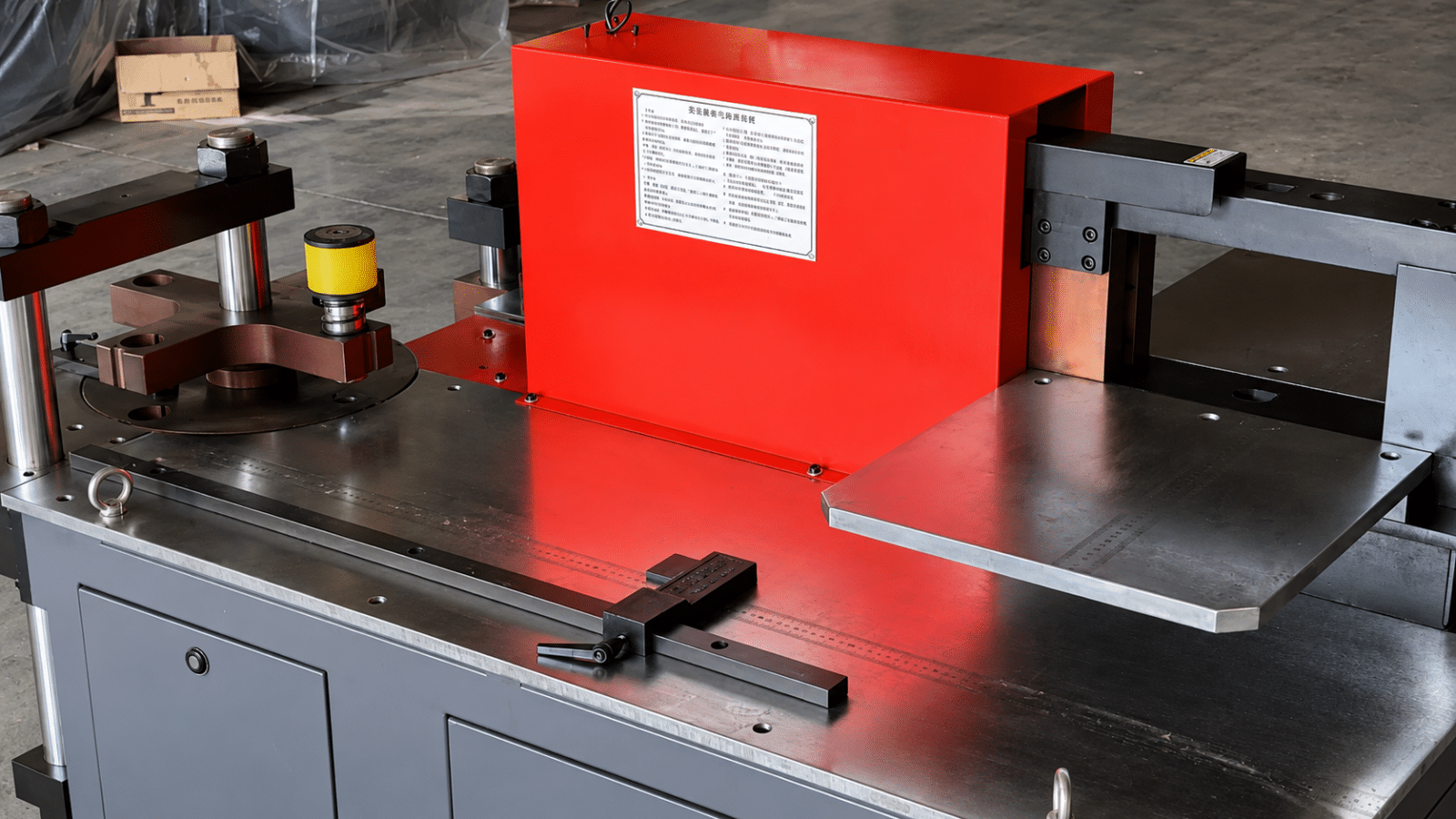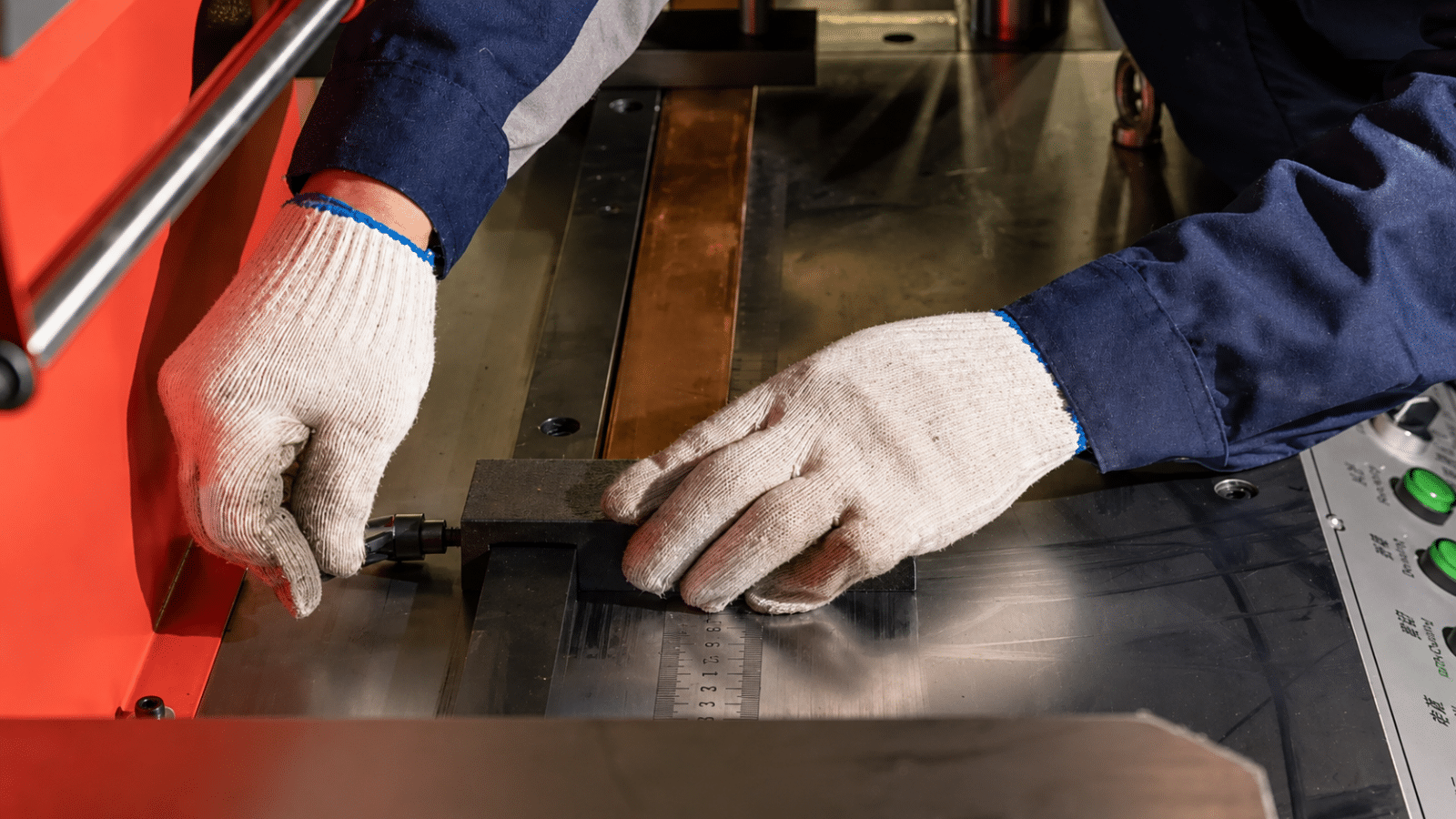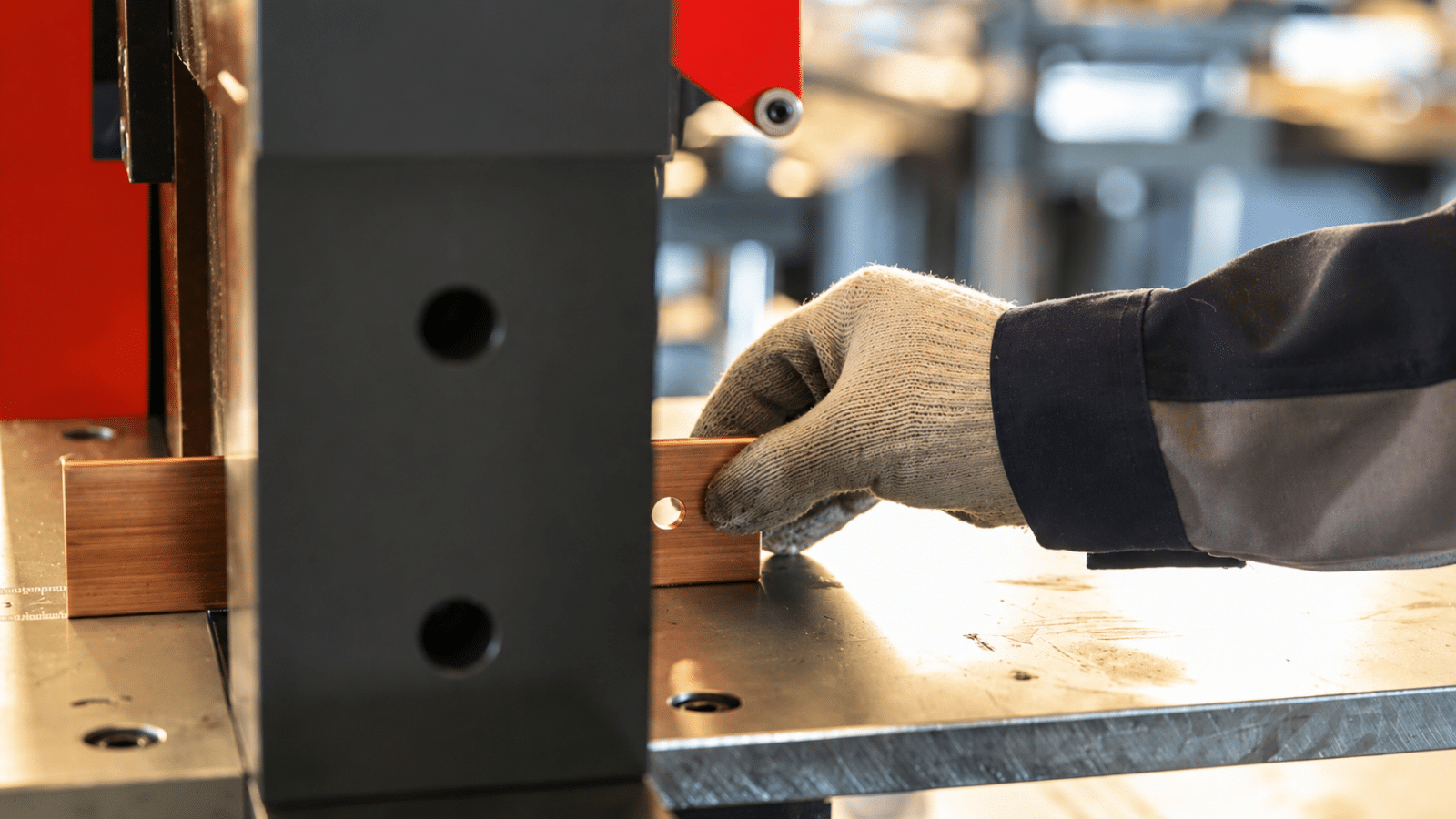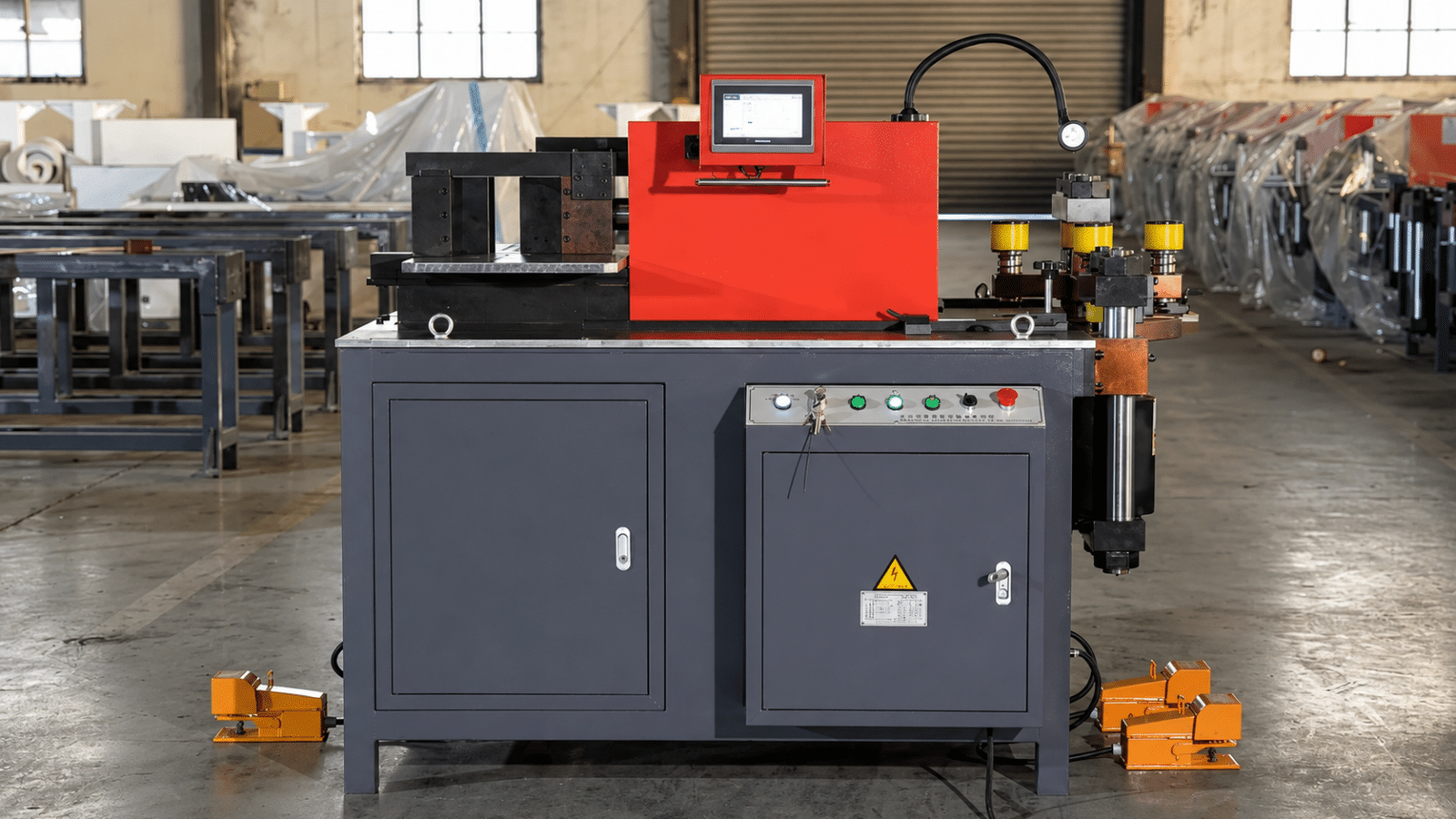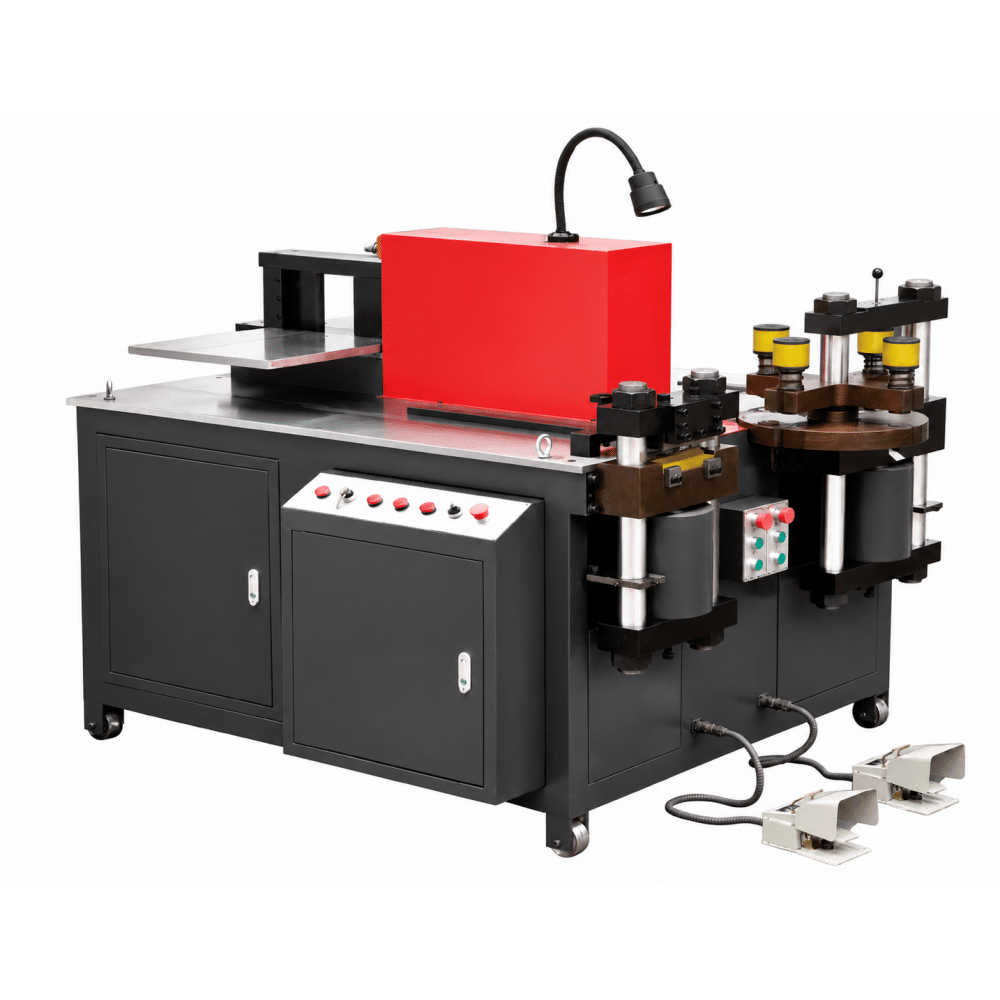
The TRANFOVIA 303 Series Hydraulic Busbar Processing Machine is designed for transformer and electrical equipment manufacturers processing copper or aluminum busbars up to 12 × 160 mm.
With a nominal force of 350 kN and a punching range of Φ4.3–25 mm, the 303 Series integrates the principal busbar fabrication operations of cutting, punching and bending into one machine platform.
Different configurations are available according to production requirements, from standard sequential processing to simultaneous three-station operation, rotary punching and digital bending angle control.
| Maximum Busbar Size | 12 × 160 mm |
| Nominal Force | 350 kN |
| Punching Range | Φ4.3–25 mm |
| Main Operations | Cutting / Punching / Bending |
| Applicable Materials | Copper and Aluminum Busbars |
The first step in selecting a busbar processing machine is to confirm the largest busbar used in your production.
The 303 Series is suitable when:
If your regular busbars already exceed 12 × 160 mm, selecting a higher 303 configuration will not increase the basic processing capacity.
In that case, the 503 Series (16 × 200 mm) or 803 Series (16 × 260 mm) should be evaluated instead.
All main 303 models share the same 350 kN nominal force and 12 × 160 mm maximum busbar size.
The correct configuration therefore depends mainly on:
| Configuration | Three Stations Simultaneously | Rotary Punching | Digital Bending Angle Control | Recommended For |
| 303C-1 | No | Standard punching | No | Basic cutting, punching and bending |
| 303C-3 | Yes | Standard punching | No | Simultaneous three-station production |
| 303E-3 | Yes | Yes | No | Frequent punching and multi-process production |
| 303E-3-S | Yes | Yes | Yes | Repeated bending with digital angle control |
| 303E-3-SK | Yes | Yes | Yes | Project-specific E-series configuration |
The 303C-1 is suitable when the workshop needs standard busbar cutting, punching and bending but does not require the three stations to operate at the same time.
The 303C-3 keeps the same 12 × 160 mm processing capacity but allows the cutting, punching and bending stations to work simultaneously.
The 303E Series is intended for transformer manufacturers that need more flexible punching and a more production-oriented three-station arrangement. It combines cutting, rotary punching and bending stations with a double-worktable configuration while keeping the same 12 × 160 mm busbar capacity.
Both the 303E-3 and 303E-3-S provide:
The main difference is the bending control configuration.
Choose the 303E-3 when:
The 303E-3-S adds PLC-based bending angle control with displacement sensing.
This configuration is more suitable when:
The digital-control version is therefore selected for repeatability and production-control requirements, not because it can process larger busbars.
The listed 303E-3-SK configuration also has:
The available technical data does not identify a clear processing-capacity difference between the 303E-3-S and 303E-3-SK.
For projects considering the SK configuration, the final equipment specification and tooling arrangement should be confirmed according to the required busbar drawings and production process.
| Parameter | 303C-1 | 303C-3 |
| Nominal Force | 350 kN | 350 kN |
| Maximum Busbar Size | 12 × 160 mm | 12 × 160 mm |
| Punching Range | Φ4.3–25 mm | Φ4.3–25 mm |
| Worktable Size | 1400 × 1000 mm | 1400 × 1000 mm |
| Machine Dimensions | 1500 × 1150 × 1170 mm | 1500 × 1150 × 1170 mm |
| Machine Weight | 1170 kg | 1270 kg |
| Digital Bending Angle Control | No | No |
| Three Stations Simultaneously | No | Yes |
| Parameter | 303E-3 | 303E-3-S | 303E-3-SK |
| Nominal Force | 350 kN | 350 kN | 350 kN |
| Maximum Busbar Size | 12 × 160 mm | 12 × 160 mm | 12 × 160 mm |
| Punching Range | Φ4.3–25 mm | Φ4.3–25 mm | Φ4.3–25 mm |
| Main Worktable | 1500 × 1200 mm | 1500 × 1200 mm | 1500 × 1200 mm |
| Second Worktable | 940 × 420 mm | 940 × 420 mm | 940 × 420 mm |
| Machine Dimensions | 1750 × 1350 × 1500 mm | 1750 × 1350 × 1500 mm | 1750 × 1350 × 1500 mm |
| Machine Weight | 1370 kg | 1390 kg | 1390 kg |
| Digital Bending Angle Control | No | Yes | Yes |
| Three Stations Simultaneously | Yes | Yes | Yes |
The 303 Series can be supplied with tooling for common transformer busbar processing. Tooling selection should be based on the finished busbar drawings and required hole or bending geometry.
For three-station configurations, the machine separates cutting, punching and bending into dedicated working areas. This is useful in transformer factories where different busbar parts are processed during the same production shift.
| Station | Primary Task | Typical Transformer-Factory Use |
| Cutting | Cut busbars to required length | Prepare copper/aluminum bars before hole processing and forming |
| Punching | Produce connection holes | Prepare bolted electrical connection points according to drawings |
| Bending | Flat, vertical and U-bending | Form busbars to match transformer terminal and connection geometry |
The 303 Series is suitable for copper and aluminum busbar fabrication in transformer factories where the required busbar dimensions remain within 12 × 160 mm.
Typical processing includes cutting, punching and forming busbars used between transformer terminals, leads and other electrical connection points before final assembly.
The machine can also be used in other electrical-equipment manufacturing applications requiring comparable copper or aluminum busbar processing.
To select the correct 303 configuration and tooling, provide the following production information:
The listed maximum processing size is 12 × 160 mm. If your regular production exceeds this range, the 503 or 803 Series should be evaluated.
The listed punching range is Φ4.3–25 mm, subject to the selected punching dies and the required hole geometry.
Both use the same 350 kN capacity and 12 × 160 mm processing range. The main difference is production organization: the 303C-3 allows the three stations to work simultaneously, while the 303C-1 does not.
The 303E Series is more suitable when rotary punching, a double-worktable arrangement and simultaneous three-station production are important to the workshop.
Both have the same basic processing capacity. The 303E-3-S adds digital bending angle control, while the 303E-3 uses the standard bending configuration.
Yes. Punching dies should be selected according to the required hole sizes and profiles shown on the customer’s busbar drawings.
Yes on the listed three-station configurations such as 303C-3 and the 303E three-station versions. The 303C-1 is not listed for simultaneous three-station operation.
Not in every case. It is most useful when repeated bending angles are produced across multiple batches and preset or recalled bending parameters are valuable to the production team.