Walk into any switchgear or panel-building factory and you will find the same bottleneck: busbar fabrication. Every copper or aluminum bar that carries current through a switchboard has to be cut to length and punched with holes before it can be bent and assembled — and the machine that does those two jobs sets the pace for everything downstream. A CNC busbar punching and shearing machine is that machine. This guide explains what it actually does on the shop floor, and how to choose between the two tonnages buyers ask about most: 400 kN and 600 kN.
What a CNC Busbar Punching and Shearing Machine Actually Does
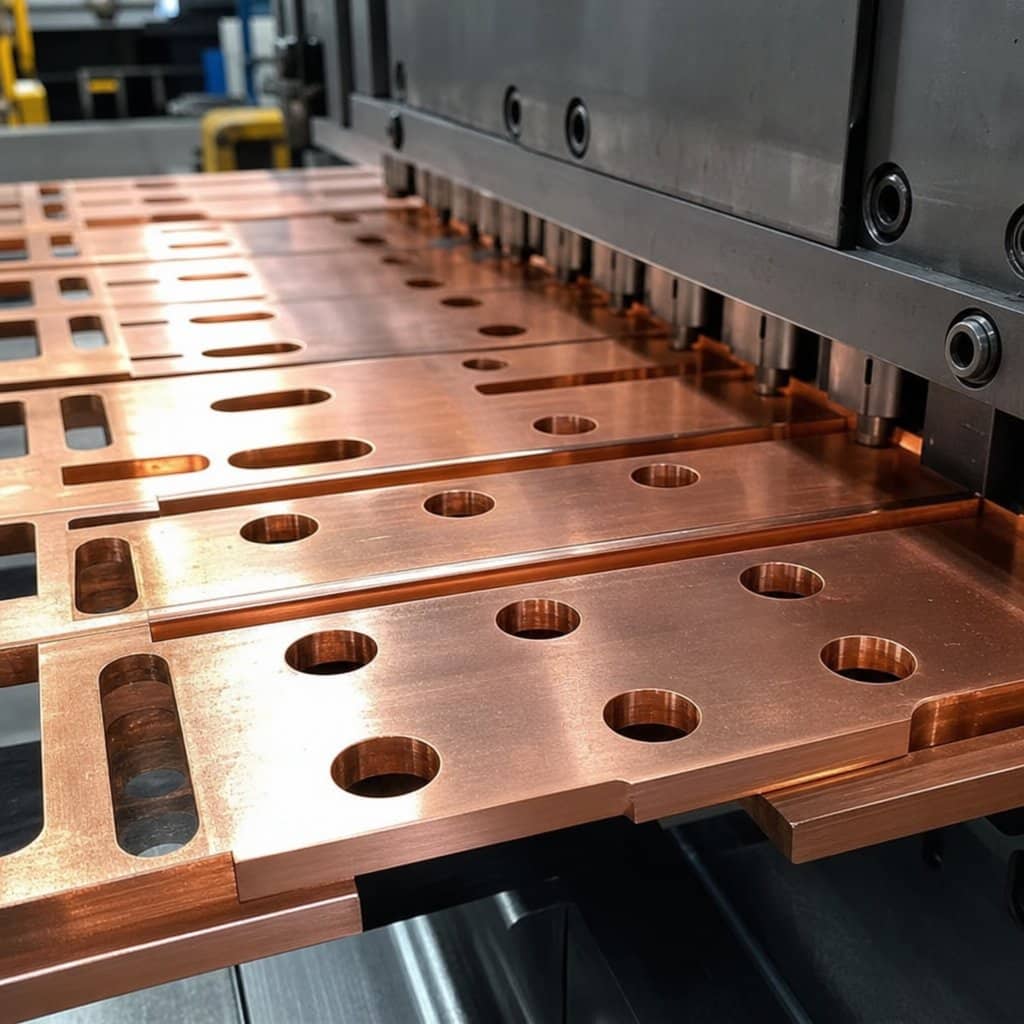
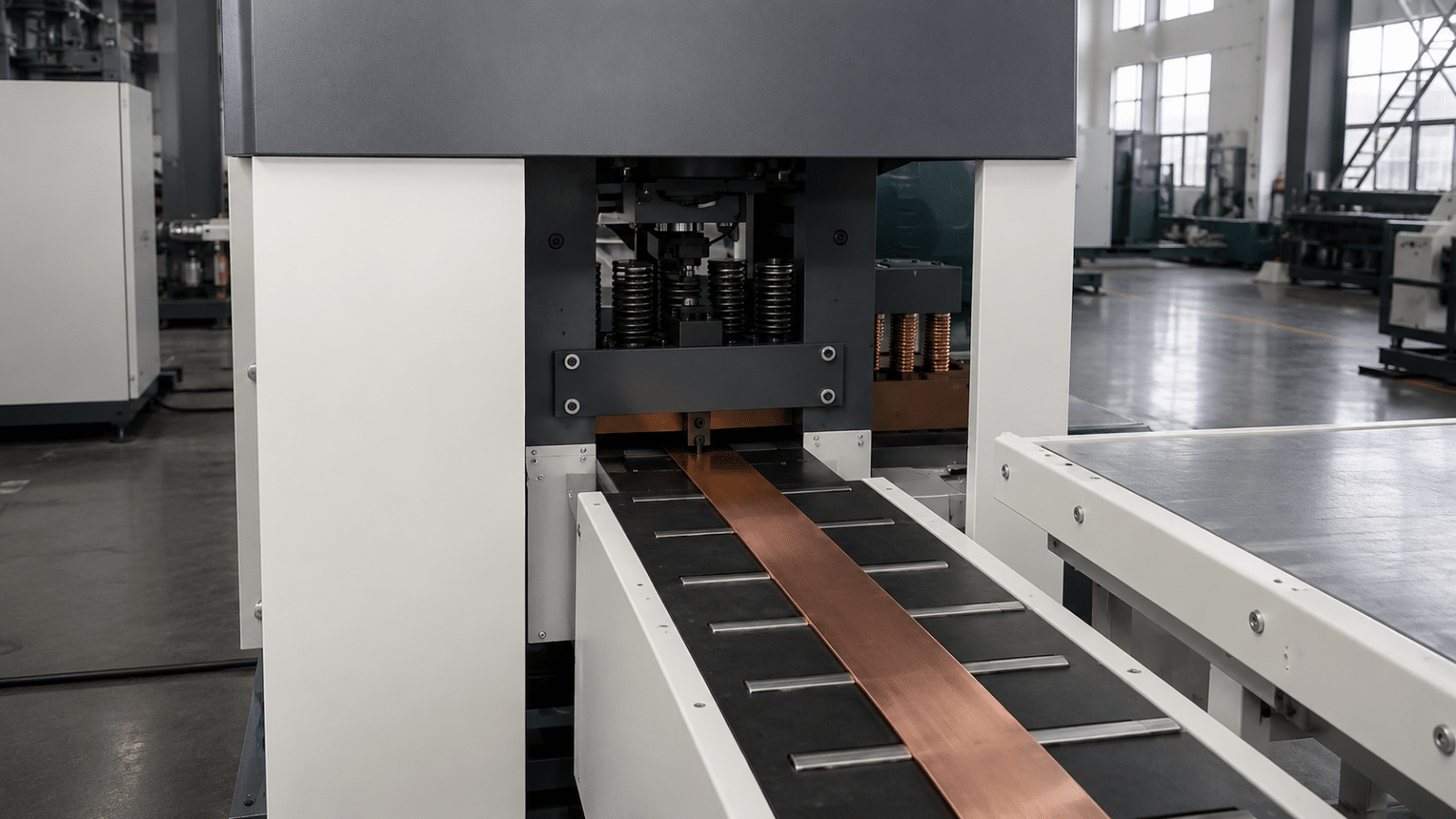
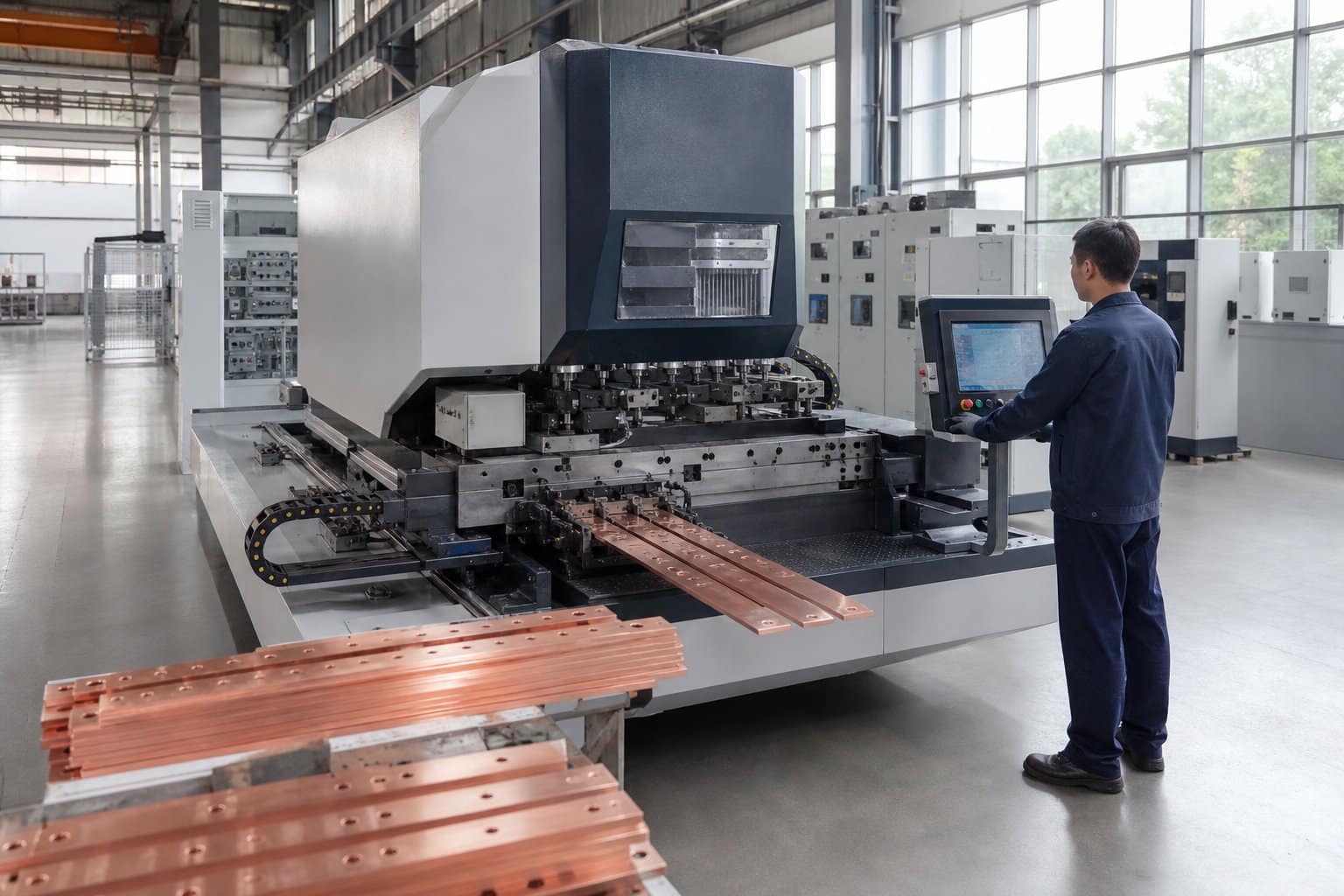
The machine combines three operations in one pass: punching (round, square, slot-shaped and irregular holes), shearing to length, and embossing — with chamfering available as part of the die set. Copper and aluminum busbars feed from a motorized platform through a die library under servo control, so a full bar comes off the line finished, with no secondary handling between operations.
Three design details separate a serious machine from a basic one:
- Single-blade shearing. The cutting unit uses a single-blade shear system, which means no waste strip is generated at each cut. On a machine processing several tons of busbar per day, that is a measurable amount of copper saved every month.
- Automatic repeated clamping. For long busbars, one clamping operation is enough — the machine reclamps automatically as it works down the bar. The operator loads, starts the program, and unloads a finished part.
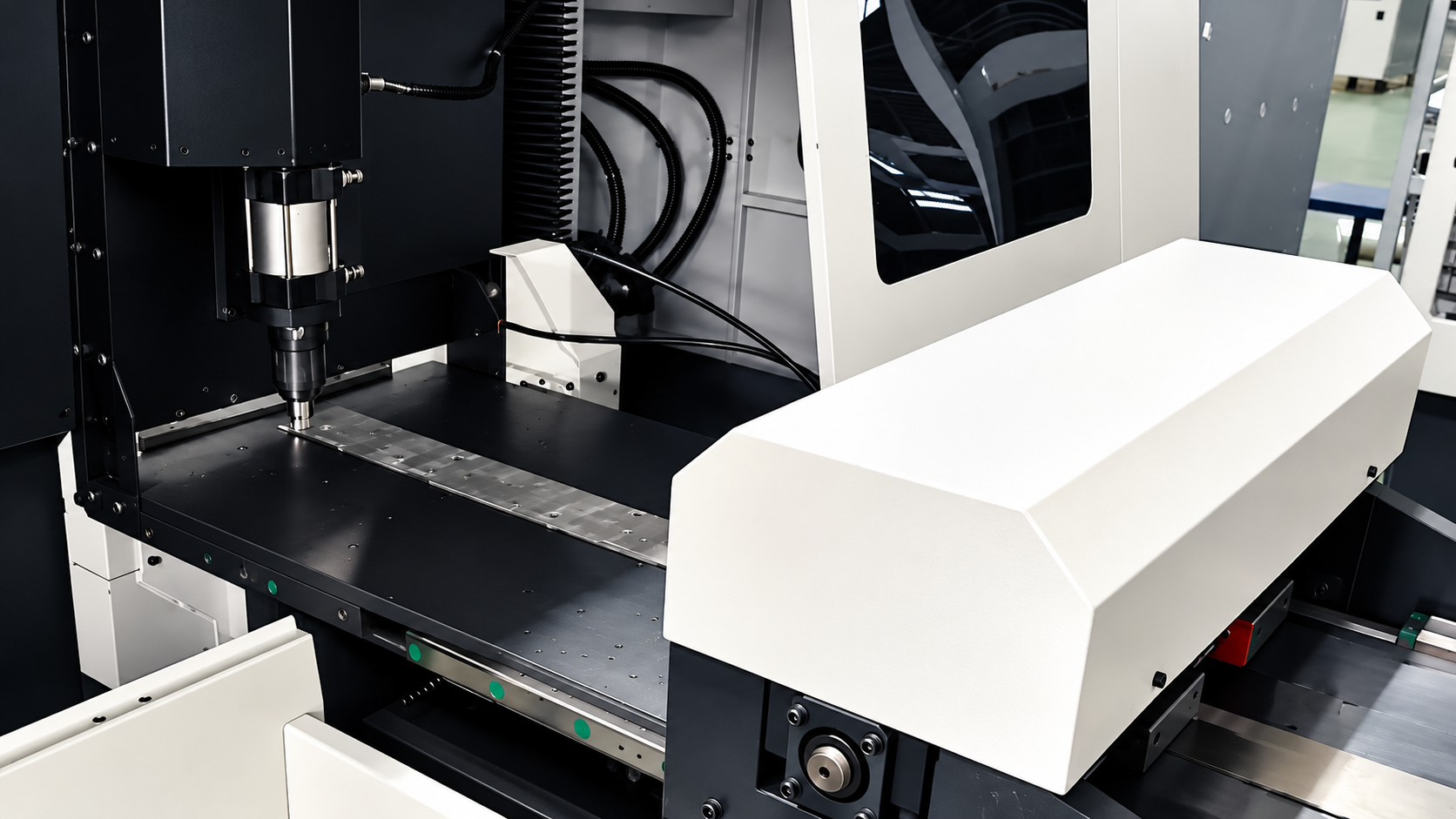
- A rigid die frame. The die library frame is made of ductile cast iron, which keeps upper and lower dies aligned after years of high-cycle work. Alignment is what protects hole quality and die life; once a frame starts to drift, burrs and out-of-tolerance holes follow.
Typical applications are exactly where you would expect: high- and low-voltage switchgear, power distribution systems, control panels, and any custom busbar fabrication where drawings change from order to order. At 100–150 punching strokes per minute, a single line keeps up with several tons of busbar per day — far beyond what a manual punch press or a three-station machine can sustain on long runs.
400 kN vs 600 kN: Choose by Busbar Size, Not by Price
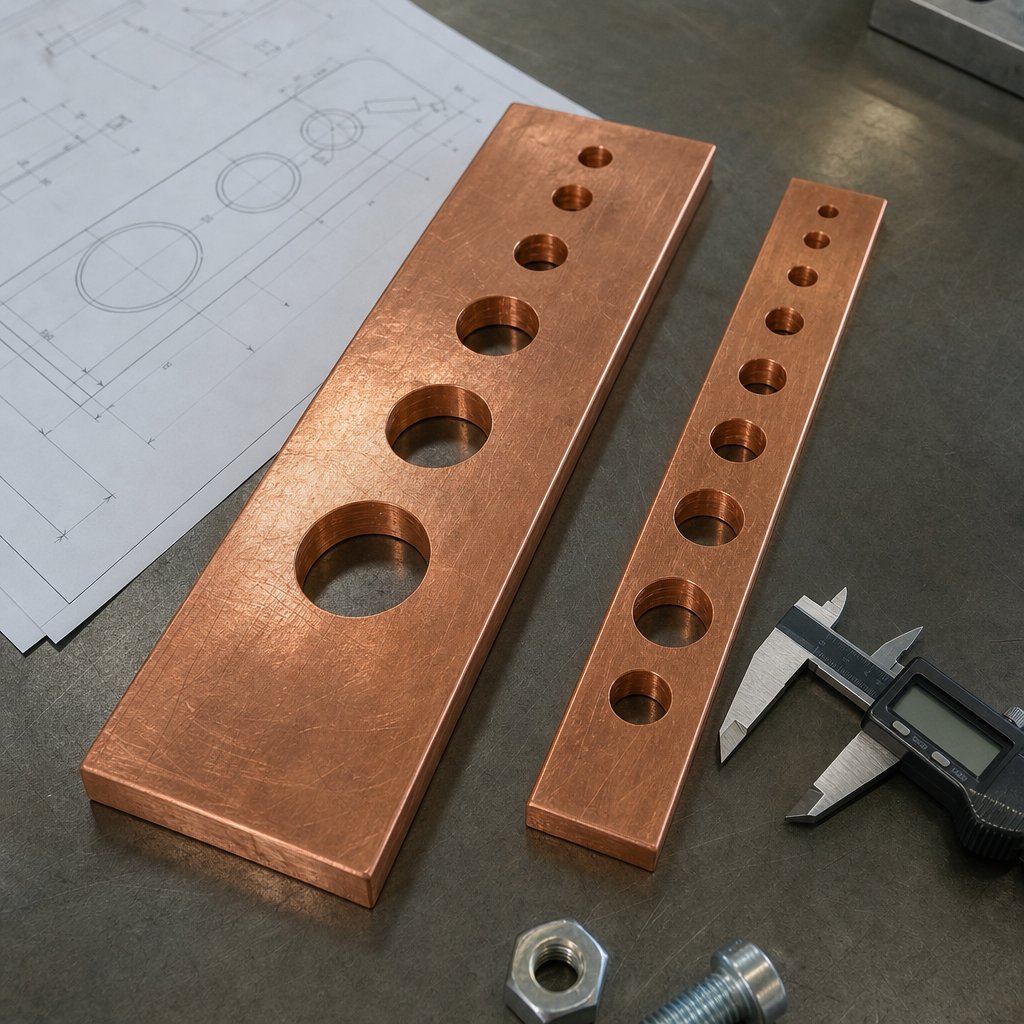
The two models buyers compare most often are the MX402K (400 kN) and the MX602K (600 kN). They share the same 6-axis architecture and the same ±0.2 mm punching accuracy, so accuracy is not the differentiator. Capacity and throughput are.
| Specification | MX402K-7C/8C (400 kN) | MX602K-7C/8C (600 kN) |
|---|---|---|
| Maximum busbar size | 12 × 160 mm | 15 × 200 mm |
| Punching range | Ø4.3–25 mm | Ø4.3–35 mm |
| Punching accuracy | ±0.2 mm | ±0.2 mm |
| Positioning accuracy | 0.10 / 500 mm | 0.10 / 500 mm |
| Striking speed | 100 cycles/min | 120–150 cycles/min |
| X-axis stroke / speed | 2000 mm / 60 m/min | 2000 mm / 75 m/min |
| Y-axis stroke / speed | 860 mm / 35 m/min | 960 mm / 35 m/min |
| Z-axis stroke / speed | 200 mm / 35 m/min | 310 mm / 35 m/min |
| Control axes | 6 axes | 6 axes |
| Footprint (L × W × H) | 10500 × 2750 × 1700 mm | 10500 × 2900 × 1800 mm |
| Typical component tier | Estun servo, Taiwan hydraulics | Rexroth servo & valves, ABB motor, Albert pump |
The decision rules are simpler than the table looks:
- If your typical work is distribution-panel busbar up to 12 × 160 mm with holes no larger than Ø25 mm, the 400 kN machine covers your envelope completely. Put the budget difference into extra punching dies and feeding automation instead — you will feel that investment every shift.
- If you regularly process 15 × 200 mm bars, need Ø32–35 mm holes, or the punch-shear line is already the constraint on a high-volume shop, the 600 kN model earns its premium three ways: more force for thick sections, 20–50% higher striking speed, and a longer Z-axis travel for larger dies.
- If you run two or three shifts, pay attention to the component tier, not just the tonnage. The 602K’s Rexroth-class hydraulics and servo system are specified for continuous duty; that is where unplanned downtime is won or lost.
A useful sanity check: pull your last three months of busbar drawings and find the largest cross-section and the largest hole diameter. If more than a handful of parts sit outside the 402K envelope, the decision has already been made for you.
Why the Shear and the Die Library Matter More Than Tonnage
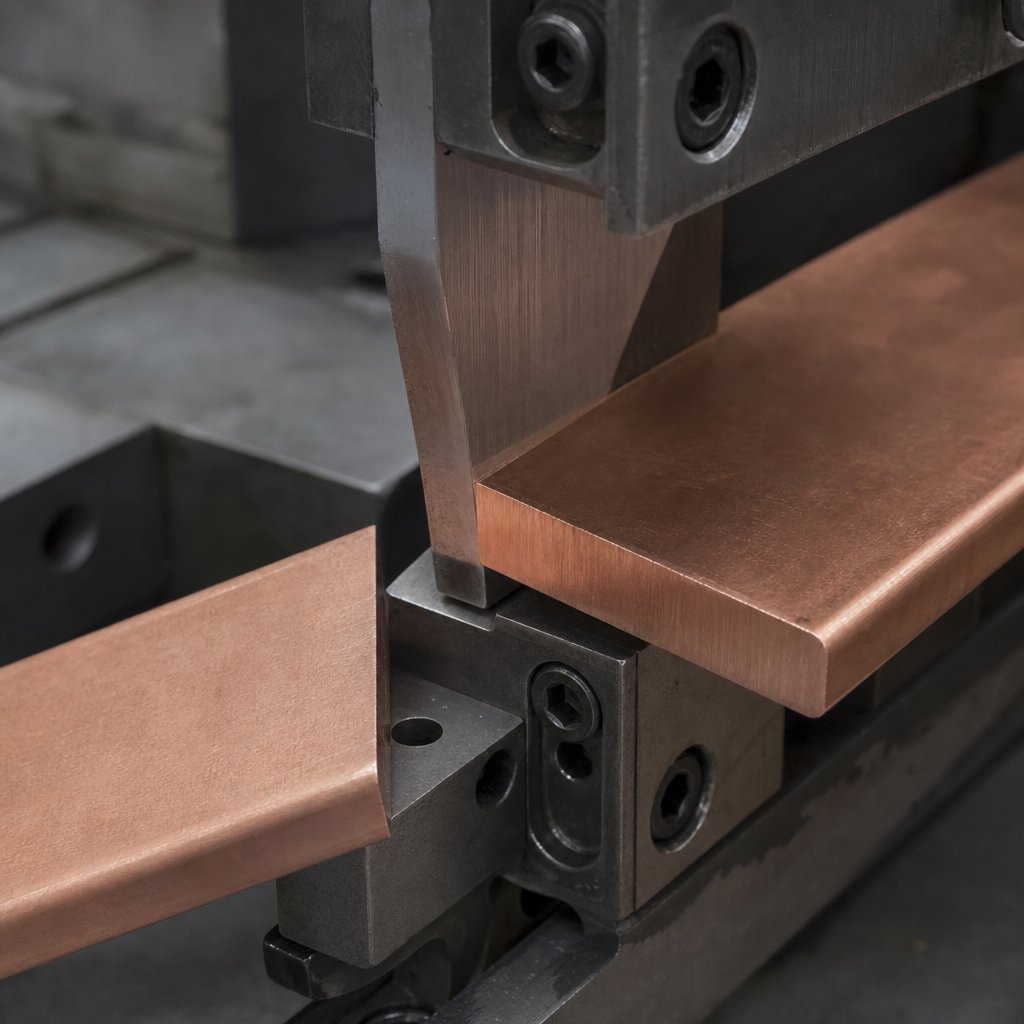
Tonnage gets the attention in quotations, but two quieter design choices decide your real cost per part.
The first is the single-blade shear. A conventional double-blade shear removes a thin waste strip at every cut; over a year of production that strip adds up to a surprising tonnage of copper or aluminum scrapped at full material price. Single-blade shearing produces no waste strip at all — the bar is simply separated. On a machine cutting all day, this one feature can pay for a meaningful share of the machine over its life.
The second is the die library layout. The standard configurations are a 7-punch + 1-cut + 1-embossing library, or an 8-punch + 1-cut library with a straight-line die. The right choice depends on your hole-pattern mix: shops that emboss contact areas or form stiffening features need the embossing station; shops that mostly punch and cut maximize punching positions. Both libraries ship with 8 sets of punching dies, one shear blade set, and tooling for routine maintenance — confirm the die sizes against your ten most common hole diameters before signing.
Also worth asking about is the hydraulic architecture. A patented moving-cylinder design keeps the punching force centered over the die rather than cantilevered, which is part of why the frame alignment — and therefore hole quality — holds up over years of cycling.
What to Check Before You Buy
A punch-shear line rarely works alone, so evaluate it as part of a flow, not as an island:
- Upstream: punched holes stay accurate only if the bar is flat. Pair the line with a busbar leveling machine (13-roller, flatness under 1 mm/m) so the CNC is positioning against a true surface, not a cambered one. For high volume, automatic busbar feeding removes the last manual step.
- Downstream: match the punch-shear output to your bending capacity. A servo CNC busbar bending machine programmed from the same part data keeps the whole cell on one drawing revision — no re-measuring between machines. Our servo CNC busbar bending machine guide covers how the NC.40ZB-1200 and NC.40ZB-2000 differ — both are rated 400 kN, so the decision comes down to material stop length and flat bending width rather than force.
- Controls and software: verify the machine runs a dedicated busbar design system with real-time program monitoring, and ask for a trial run on your own drawings — ideally the awkward ones with mixed hole sizes and tight edge distances.
- Components: servo brand, hydraulic pump and valve brand, and linear guide/screw brand (HIWIN, TBI or PMI class) tell you more about year-five reliability than any headline specification.
If you are still mapping which busbar operations your shop actually needs — punching, shearing, bending, or a three-in-one machine for smaller volumes — our busbar processing machine guide compares all the machine types side by side before you narrow down to a tonnage.
The Bottom Line
The 400 kN vs 600 kN question is a sizing question, not a quality question — both models punch to ±0.2 mm on the same 6-axis platform. Let your largest recurring busbar cross-section, your largest hole diameter, and your shift pattern make the call. If you send us your typical drawings, we can map them against both models and recommend the tonnage, die library, and feeding configuration that fits — before you commit to a machine that is either too small for next year’s orders or too large for this year’s.