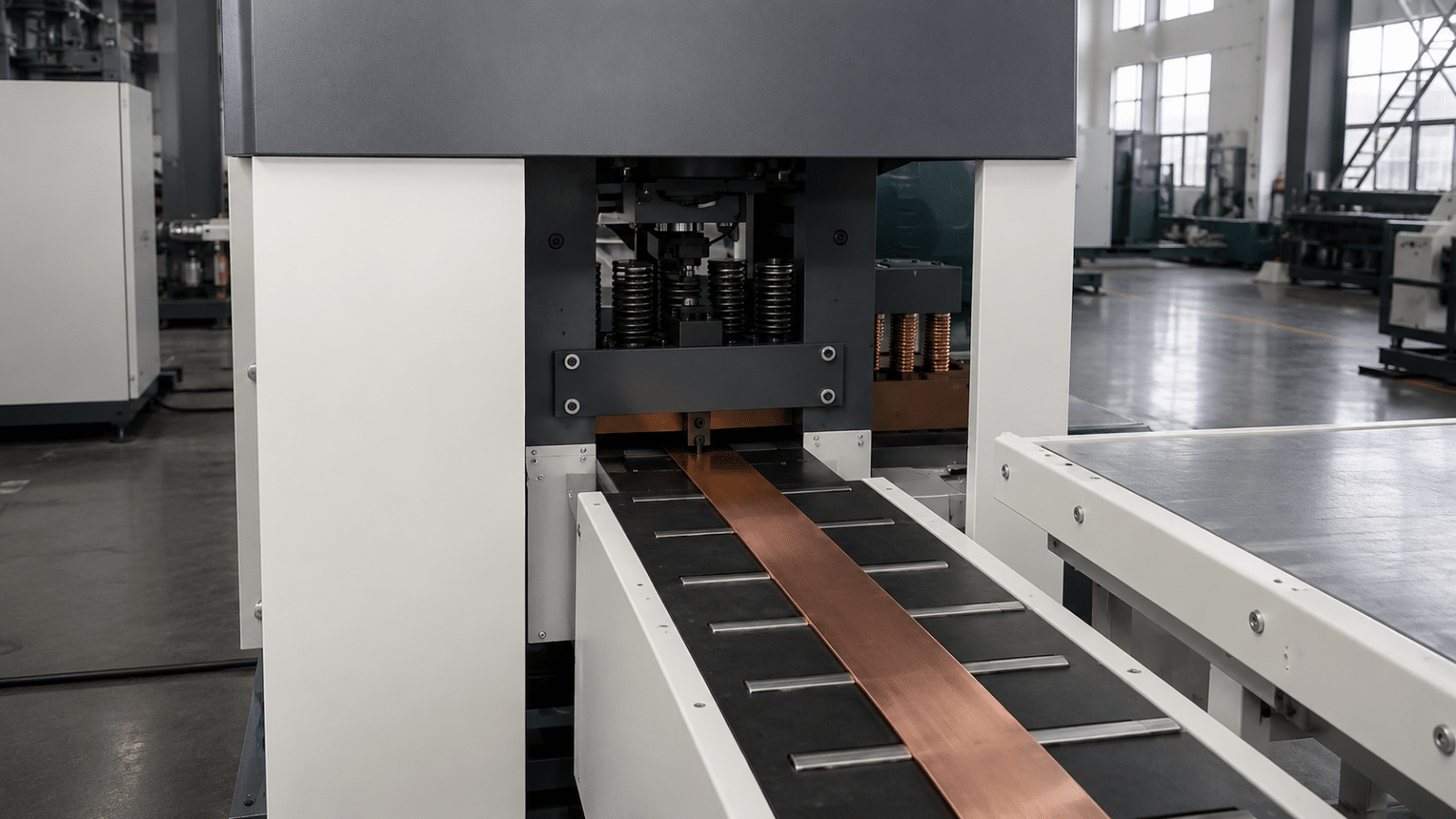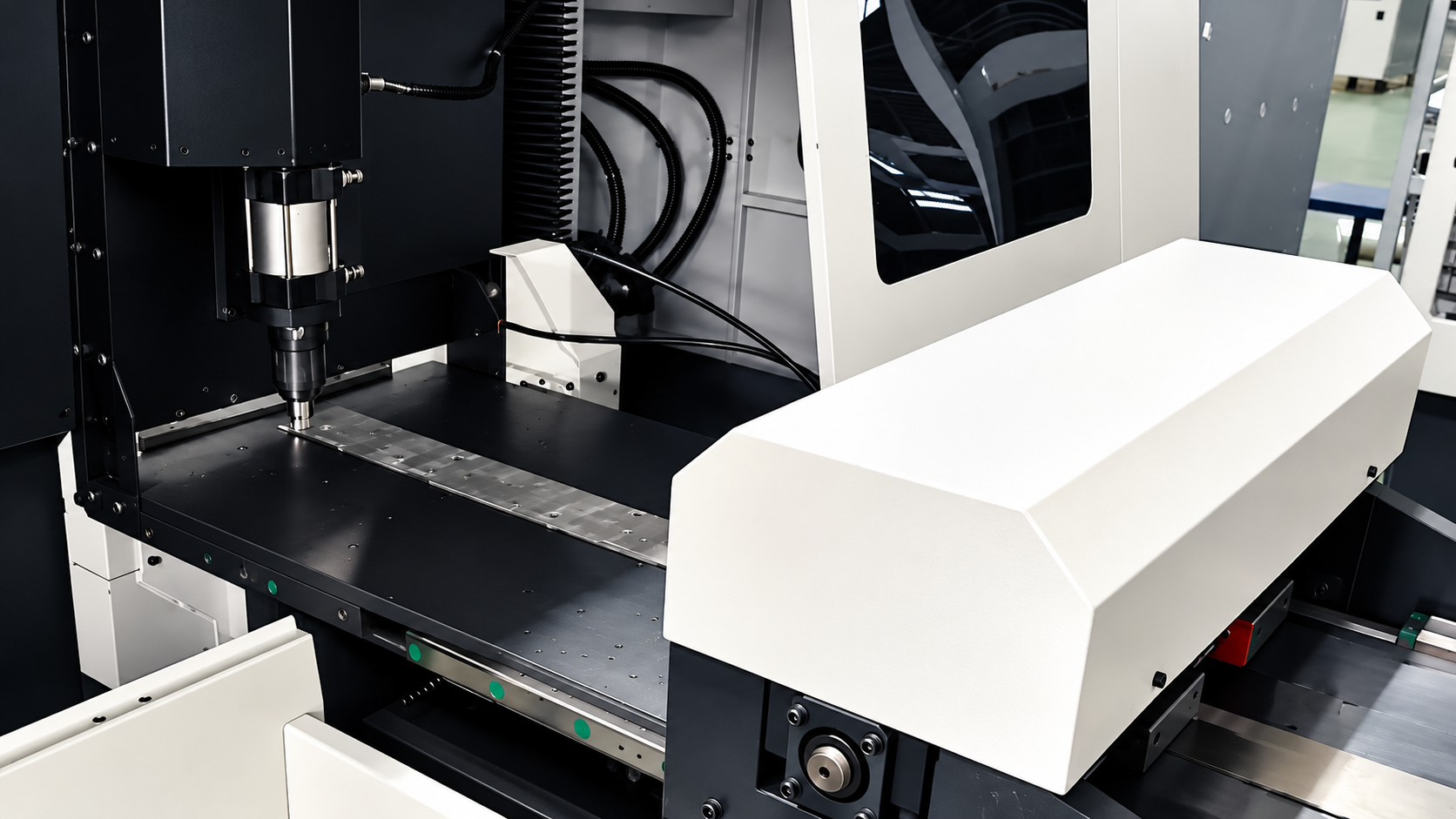
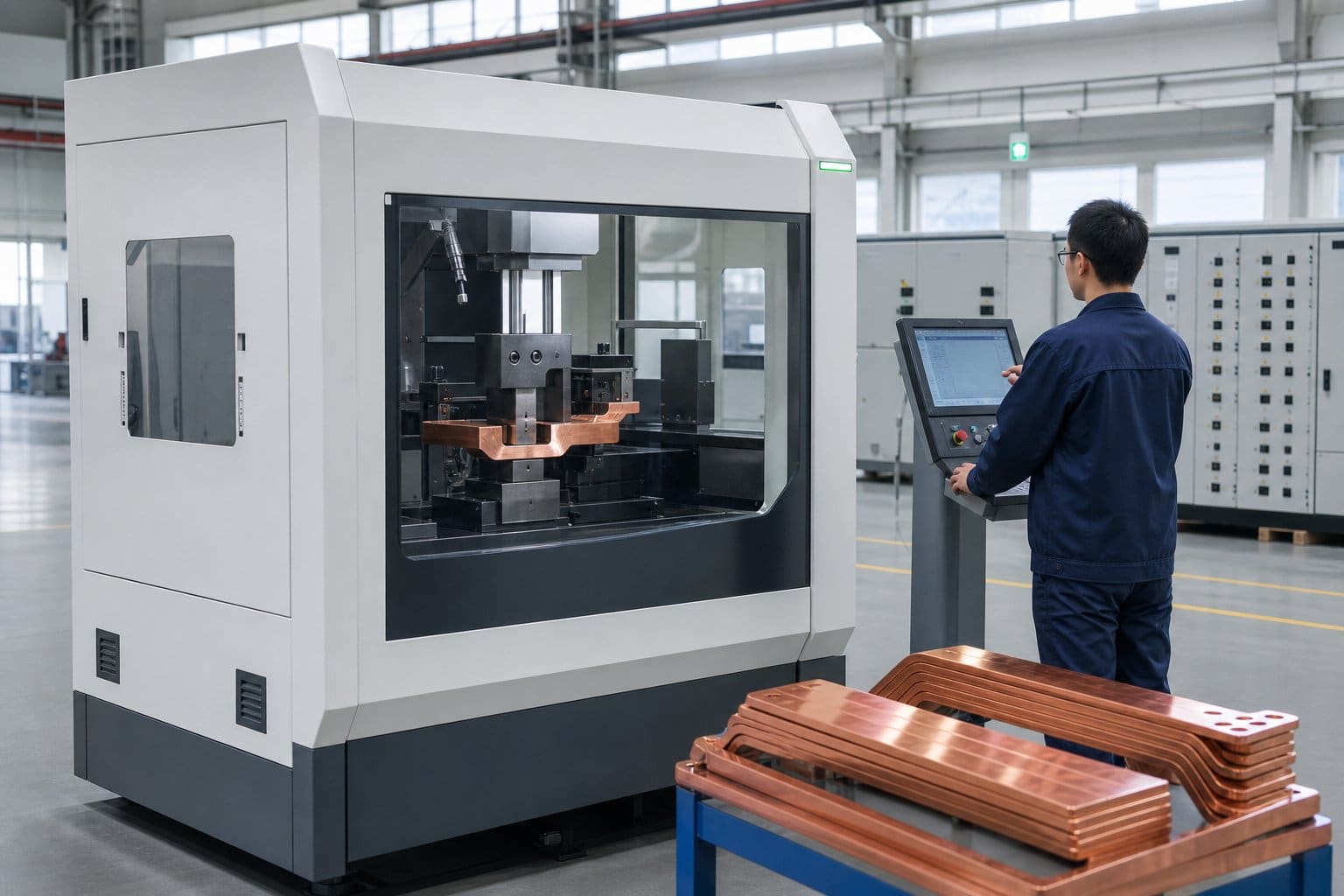
Bending is where most busbar scrap is created. Cut and punch a bar wrong and you can often salvage it; put the bend in the wrong place or at the wrong angle and the bar is finished — and it was already worth several hundred dollars in copper before anyone touched it. If your shop runs repeatable flat and vertical bends on copper or aluminum busbars, the machine that decides your yield is a servo CNC busbar bending machine. This guide explains what the servo drive actually changes on the floor, how the NC.40ZB-1200 and NC.40ZB-2000 really differ despite sharing the same 400 kN rating, and when a dedicated CNC bender is the wrong purchase altogether.
What Servo Drive Changes in Busbar Bending
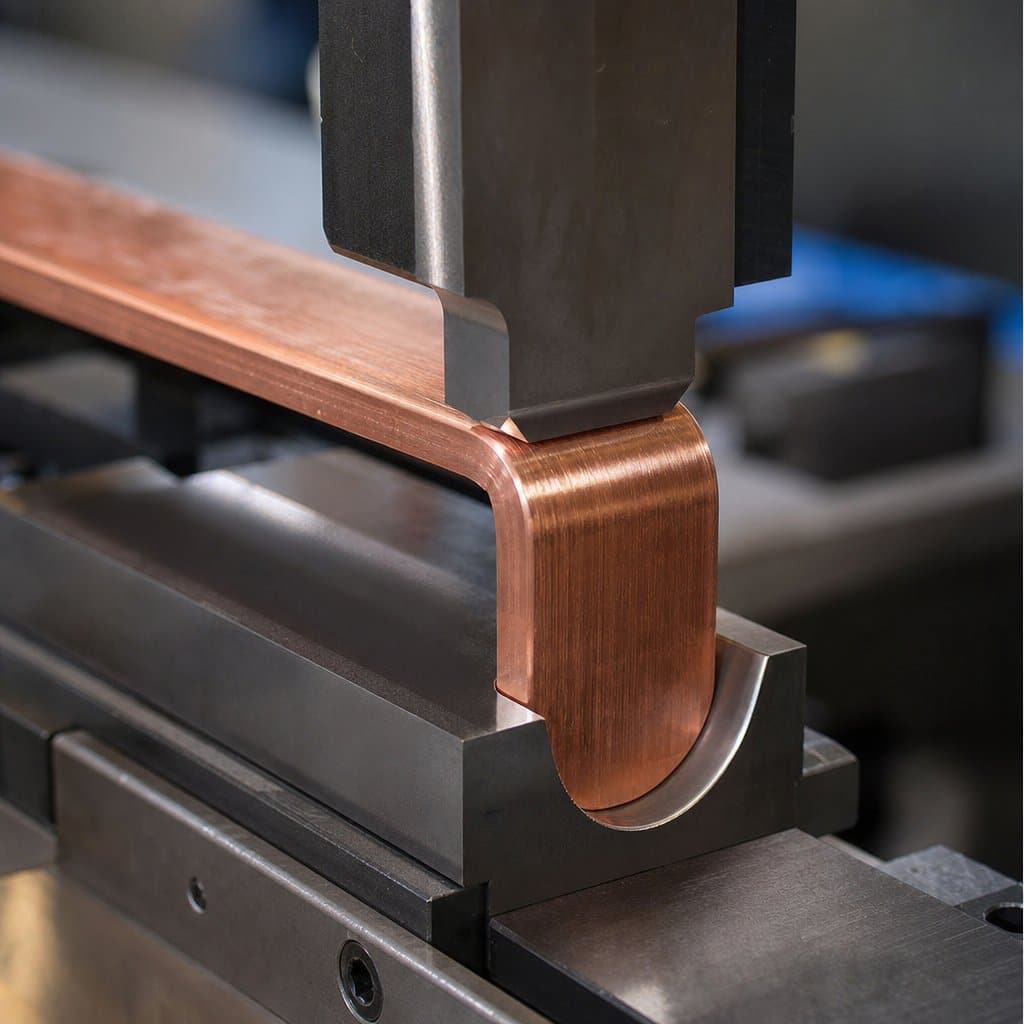
A hydraulic busbar bender reaches its angle by pressure and stops when the operator says stop — or when a mechanical limit does. Repeat a part next week and you are relying on the same person making the same judgement. A servo CNC machine removes that variable: the main bending drive is a large-inertia servo motor, positioning is controlled numerically, and the bend program is prepared in software rather than dialled in by hand.
Four design details are worth understanding before you compare specifications:
- Closed bending structure. The NC.40ZB series uses a closed frame rather than an open C-frame, which raises rigidity and spreads the forming force through the structure instead of concentrating it at a throat. This is what allows repeat bending to hold tolerance over years rather than months.
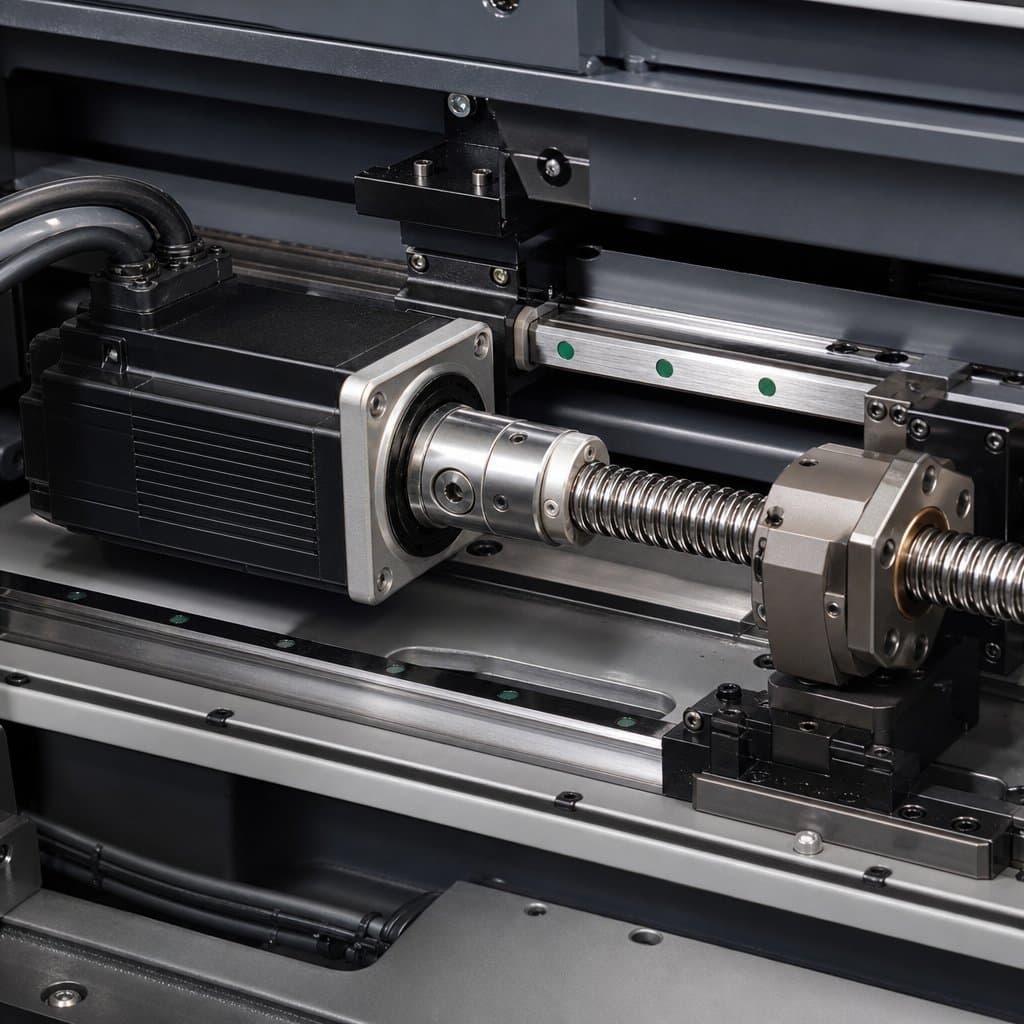
- Balanced guide layout. Linear guides are arranged so the force path does not load the ball screw eccentrically. Pushing sideways on a precision screw is the fastest way to lose accuracy, and this layout is specifically there to prevent it.
- Error-resistant transmission. Servo spindle, planetary reducer and screw are matched as a system — Rexroth servo motor, Seifert precision planetary reducer and TBI ball screw — so backlash stays predictable instead of growing invisibly between services.
- Automatic idle stop. The servo stops during standby instead of running a pump continuously. On a machine that spends part of every shift waiting for the next bar, that is real energy saved.
The published figures are ±0.15 mm stop accuracy and ±0.3 bending accuracy. Those two numbers are the real product here — not the tonnage. A bending angle that wanders by a degree across a batch shows up later as assembly rework: bolt holes that will not line up, connections that sit proud, and busbar that has to be twisted into position.
NC.40ZB-1200 vs NC.40ZB-2000: Identical 400 kN, Different Reach
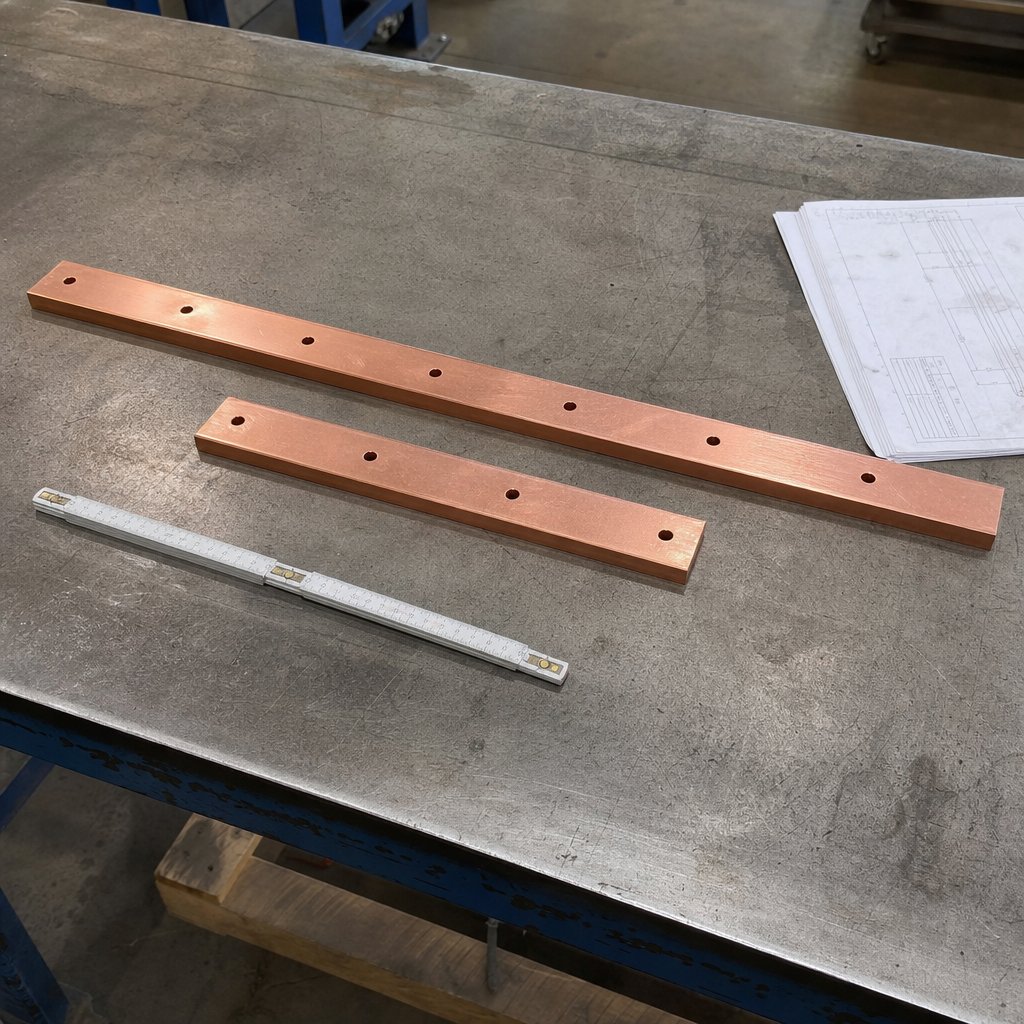
This is the question buyers get stuck on, because the headline specification is the same — both models are rated at 400 kN nominal pressure. The difference is not force. It is reach: how long the bar can be positioned, and how wide a flat bar the tooling will accept.
| Parameter | NC.40ZB-1200 | NC.40ZB-2000 |
|---|---|---|
| Nominal pressure | 400 kN | 400 kN |
| Material stop length | 1200 mm | 2000 mm |
| Max. flat bending size | 15 × 160 mm | 15 × 200 mm |
| Max. vertical bending size | 12 × 120 mm | 12 × 120 mm |
| Spindle travel | 200 mm | 200 mm |
| Main motor power | 7.5 kW | 7.5 kW |
| Stop accuracy | ±0.15 mm | ±0.15 mm |
| Bending accuracy | ±0.3 | ±0.3 |
| Machine dimensions | 4300 × 1450 × 1850 mm | |
| Machine weight | 3100 kg | 3300 kg |
Two things stand out when you read the table carefully. First, vertical bending capacity is identical at 12 × 120 mm — so if your vertical bends dominate, buying the 2000 gains you nothing. Second, the machine occupies the same floor area either way (4300 × 1450 mm) and differs by only 200 kg. Choosing the 1200 to save space is not a real argument; you are giving up 400 mm of positioning length and 40 mm of flat-bending width to save nothing.
The practical rule: size to your longest recurring bar, not your average one. Take the ten shapes you build most often, find the longest overall length and the widest flat bar among them, and check them against the material stop length and the flat bending limit. If your longest recurring part sits under 1200 mm with flat bars within 15 × 160 mm, the 1200 is the right buy. If even two of those ten parts exceed either figure, buy the 2000 — because the day a single order arrives with 1800 mm bars is the day the smaller machine becomes a bottleneck.
Servo CNC Bender, Three-in-One Hydraulic Machine, or Double-Head Press?
The most expensive mistake in this category is not picking the wrong model within a series — it is buying a dedicated machine when your production actually wants a different architecture. Three variants compete for the same budget:
- Servo CNC bending machine (NC.40ZB series). Choose it when bending is the operation you do most, the bend programmes vary, and you want parts produced from a drawing rather than from an operator’s judgement. It is a dedicated bender: it does not punch or shear, and you should plan to pair it with a CNC busbar punching and shearing machine upstream so both machines run from the same programmed data — we covered how to size that line by tonnage in our 400 kN vs 600 kN punching and shearing comparison.
- Three-in-one hydraulic busbar machine. Choose it when you need cutting, punching and bending in one machine and your batches are mixed rather than repetitive — typically smaller workshops or maintenance departments handling varied part numbers. The 12 × 160 mm class and the 16 × 200 mm class cover most transformer and panel work, and the heavy-duty 16 × 260 mm version exists for wide busbar beyond that. Note the boundary: the CNC bender exists to take manual decision-making out of bending, and a three-in-one machine asks the operator to make more decisions, not fewer.
- Double head busbar bending machine. Choose it when the same bar has to be double-bent at both ends and minimising repositioning is the priority. At 600 kN with a processing range of 3 × 30 to 6 × 260 mm, it forms both ends in one sequence — but it is a dedicated end-forming press, not a general programmed bender. When we are asked to quote both, the deciding question is usually simple: does your part need two bends at two ends, or many bends at many positions?
There is also a shop-floor option worth mentioning: a portable busbar processing machine handles cutting, punching and flat bending up to 150 × 10 mm at 0–135° and runs on single-phase 220 V supply — which makes it the answer for on-site installation work rather than production.
What to Check Before You Buy
Before requesting a quotation, write down the following. Every line you leave blank is a question the supplier has to guess at, and guessed answers are how mismatched machines get shipped:
- Flat and vertical bend sizes. Maximum so far is 15 × 200 mm flat and 12 × 120 mm vertical. This single pair of numbers decides whether a servo CNC bender can do your work at all.
- Minimum and maximum part length. Minimum matters more than people expect — short bars are often harder to clamp and position than long ones. Check both ends against the 1200 or 2000 mm material stop.
- Bend sequence and required angles. A bar that needs three bends in two planes is a different programming job from one with a single offset. Send actual drawings, not descriptions.
- Whether the line will be paired with punching and shearing equipment. If yes, confirm both machines can work from compatible programming so part data does not have to be re-entered between operations.
- Upstream flatness. Positioning accuracy starts from a true reference surface. Pairing the bender with a busbar leveling machine (13-roller, flatness under 1 mm/m) means the CNC is measuring against a flat bar rather than compensating for camber.
- Component brands. Servo spindle, controller, industrial computer, linear guide and contactor brands — Rexroth, Beckhoff, HIWIN, Siemens and TBI in this series — tell you more about year-five reliability than any headline figure.
- Services and floor. You need about 4.3 × 1.45 m of floor space for the machine itself plus bar handling room at the infeed and outfeed, and a floor capable of carrying roughly 3.1–3.3 tonnes.
If you are still deciding which busbar architecture fits your shop at all — punching, shearing, bending, or one machine doing all three — our busbar processing machine guide compares every machine type side by side before you narrow down to a model number.
The Bottom Line
The 1200 vs 2000 decision is a reach decision, not a power decision — both machines carry the same 400 kN, the same 200 mm spindle travel, the same 7.5 kW main motor and the same accuracy figures. Let your longest recurring bar and your widest flat bar choose the model, and buy the larger one if you have any doubt, because there is no space penalty for doing so. The bigger and more valuable decision is upstream of the model number: decide first whether a dedicated servo CNC bender is even the right machine for your mix, or whether your production is better served by a three-in-one hydraulic machine, a double-head end-forming press, or a CNC bender paired with a dedicated punch-shear line. Send us the drawings for your ten most common busbars and we will map them against the 1200, the 2000, and the alternatives — including telling you when we think you should buy less machine than you asked for.