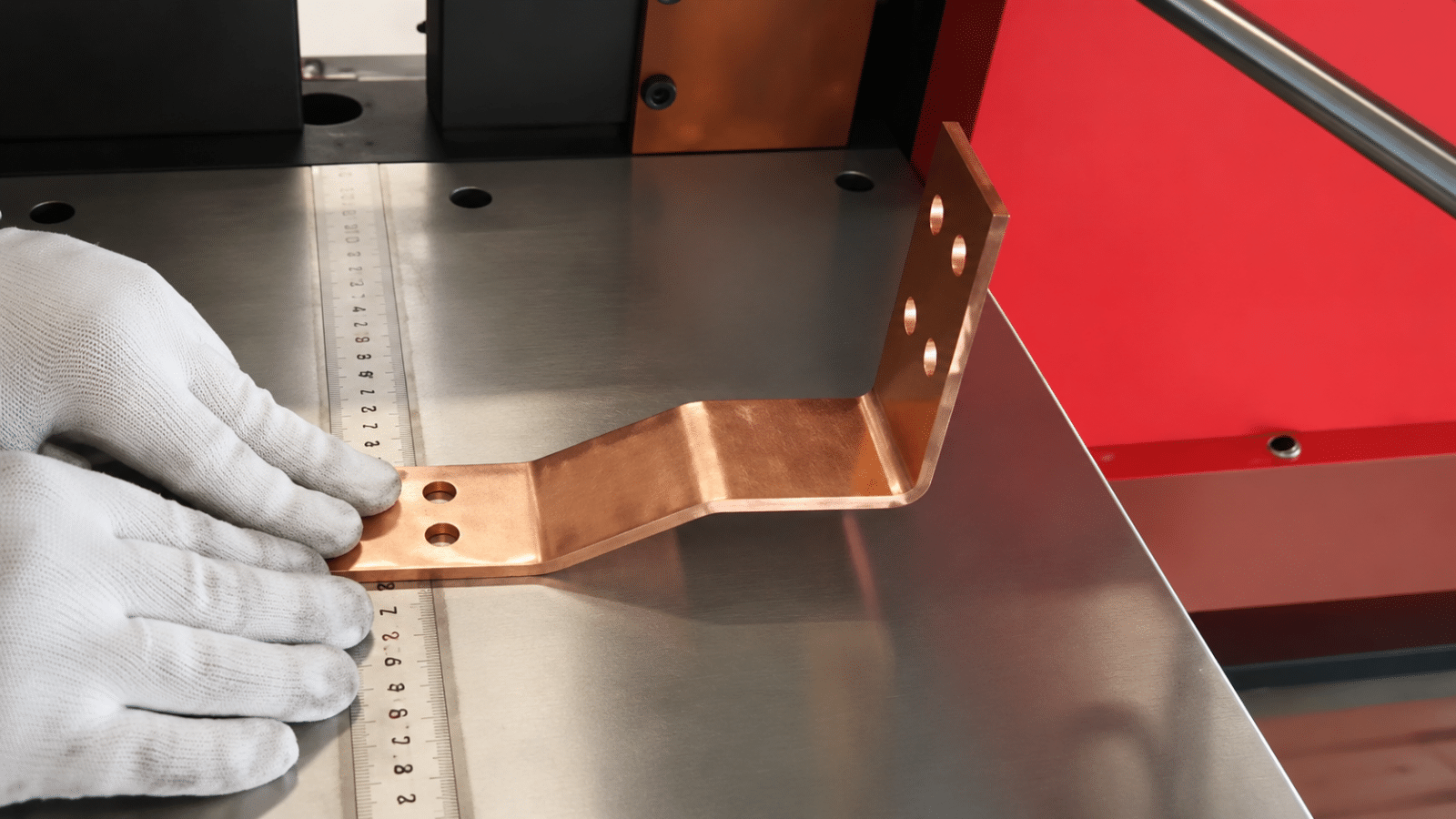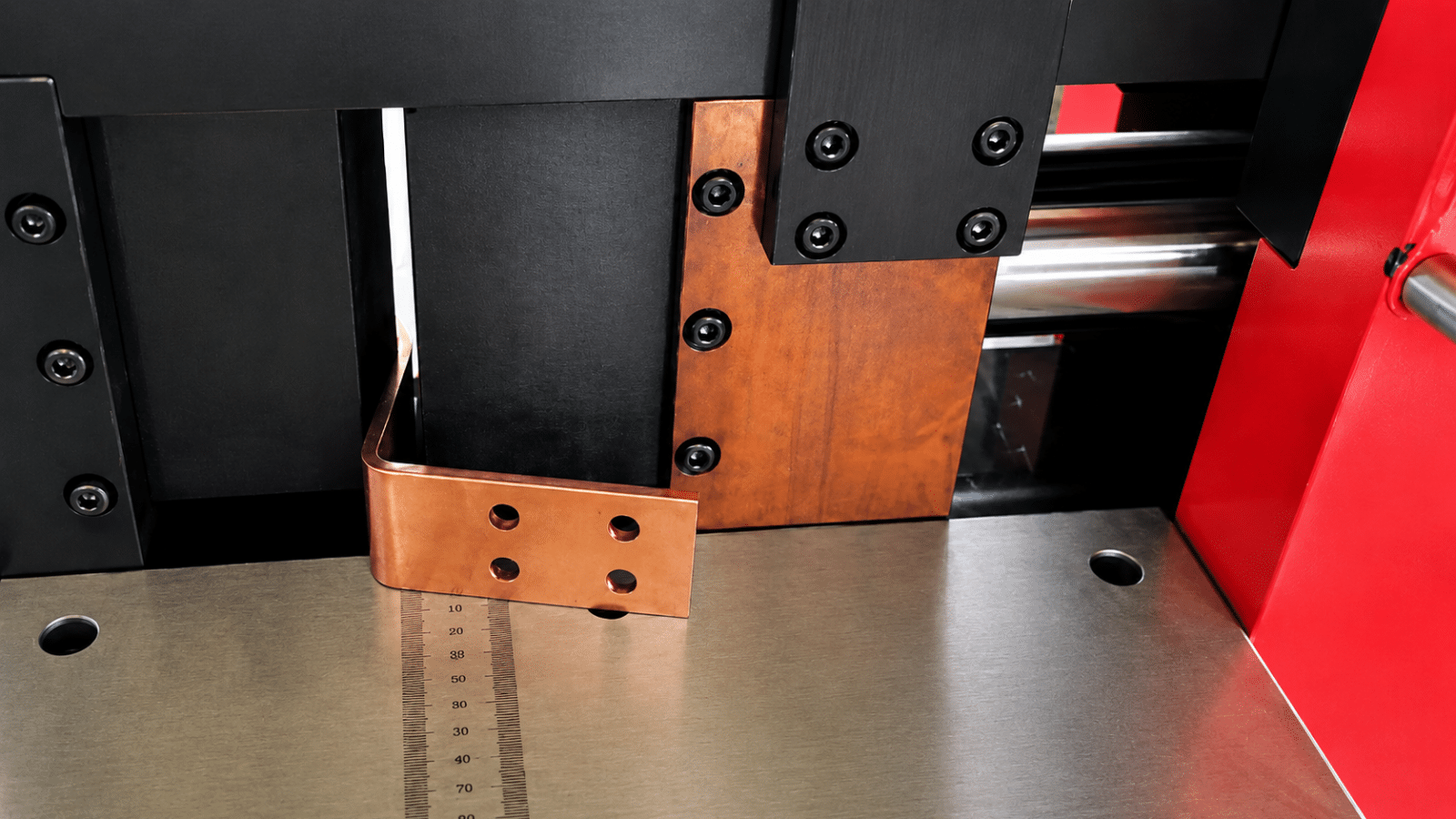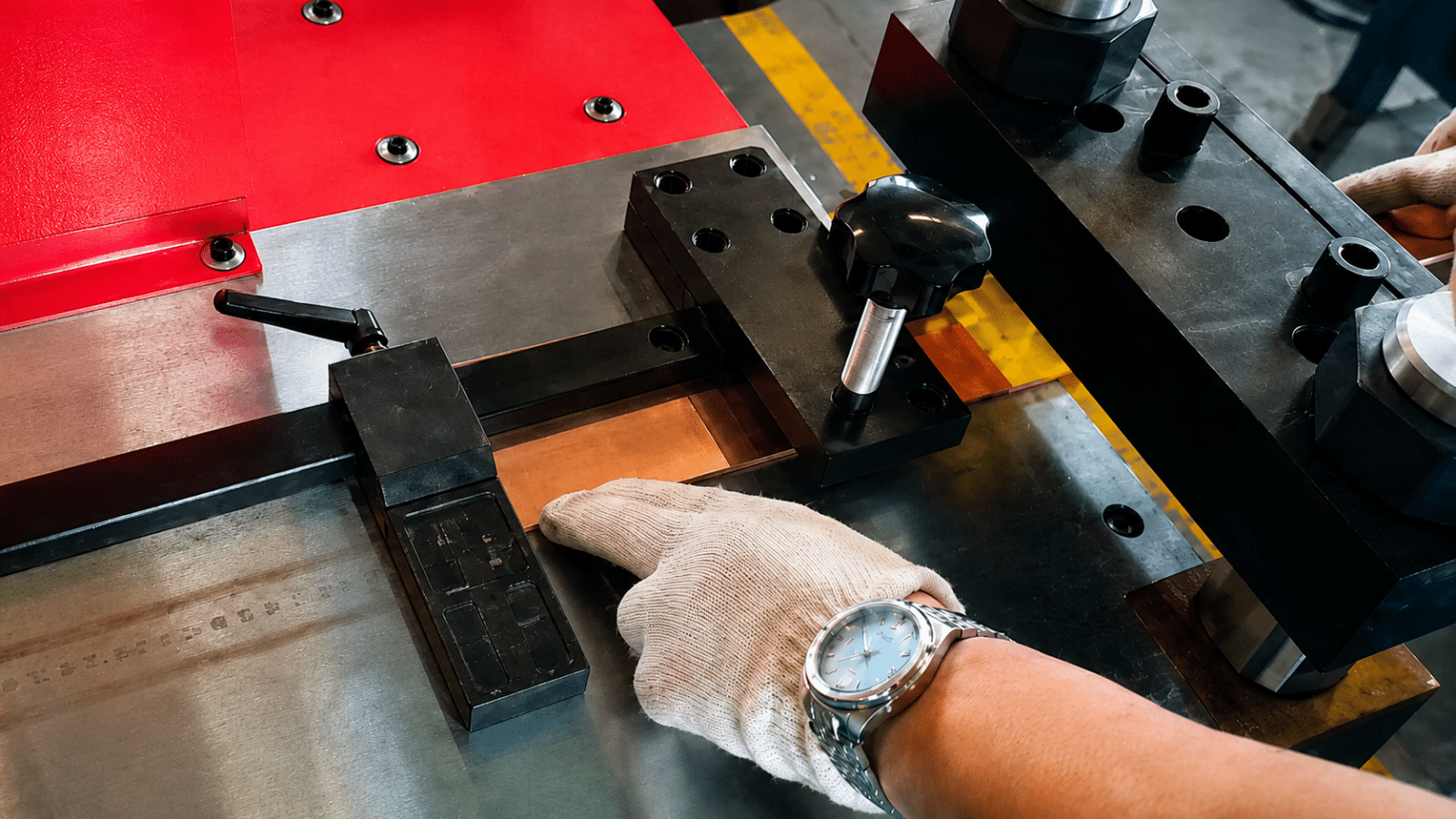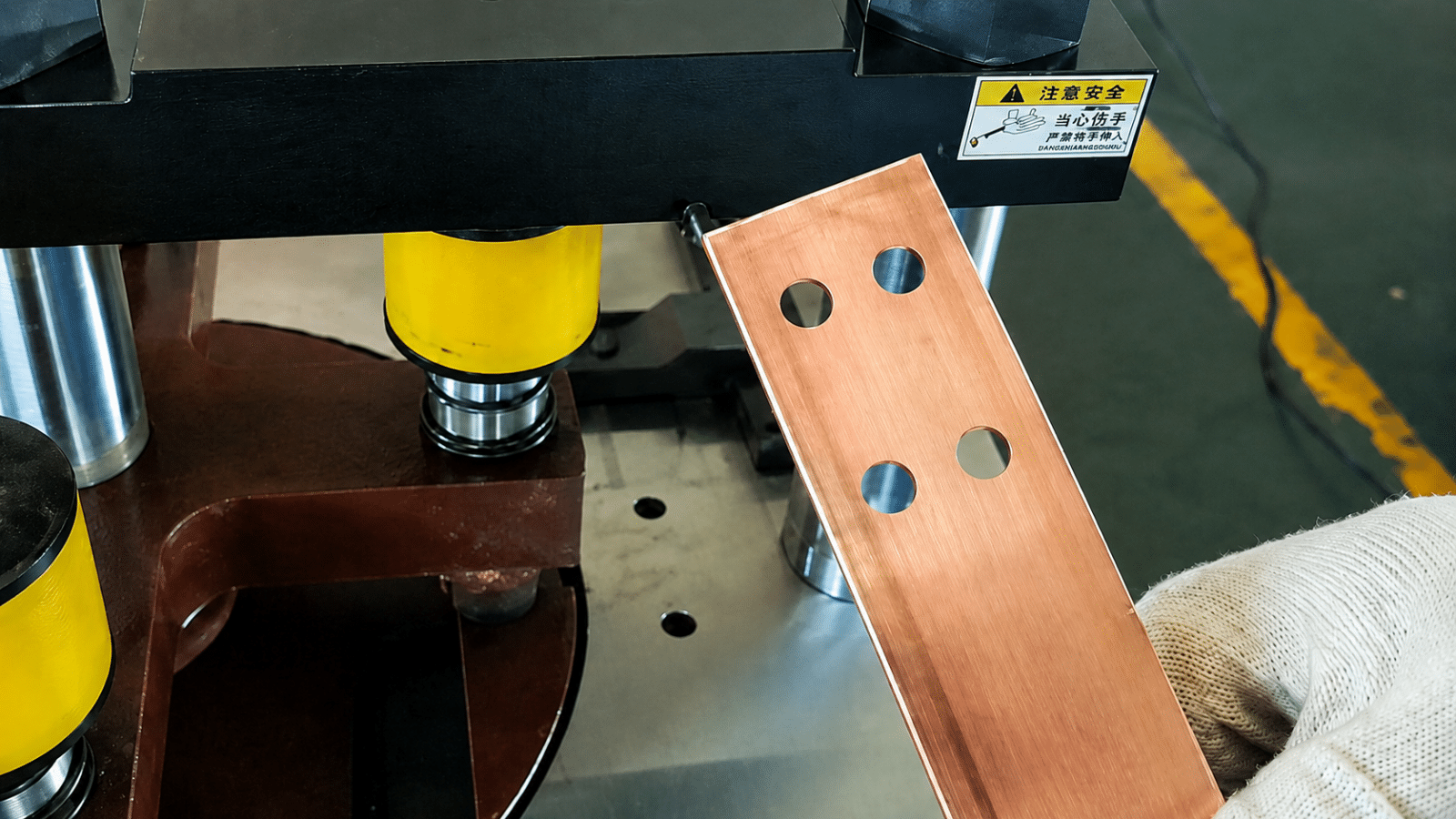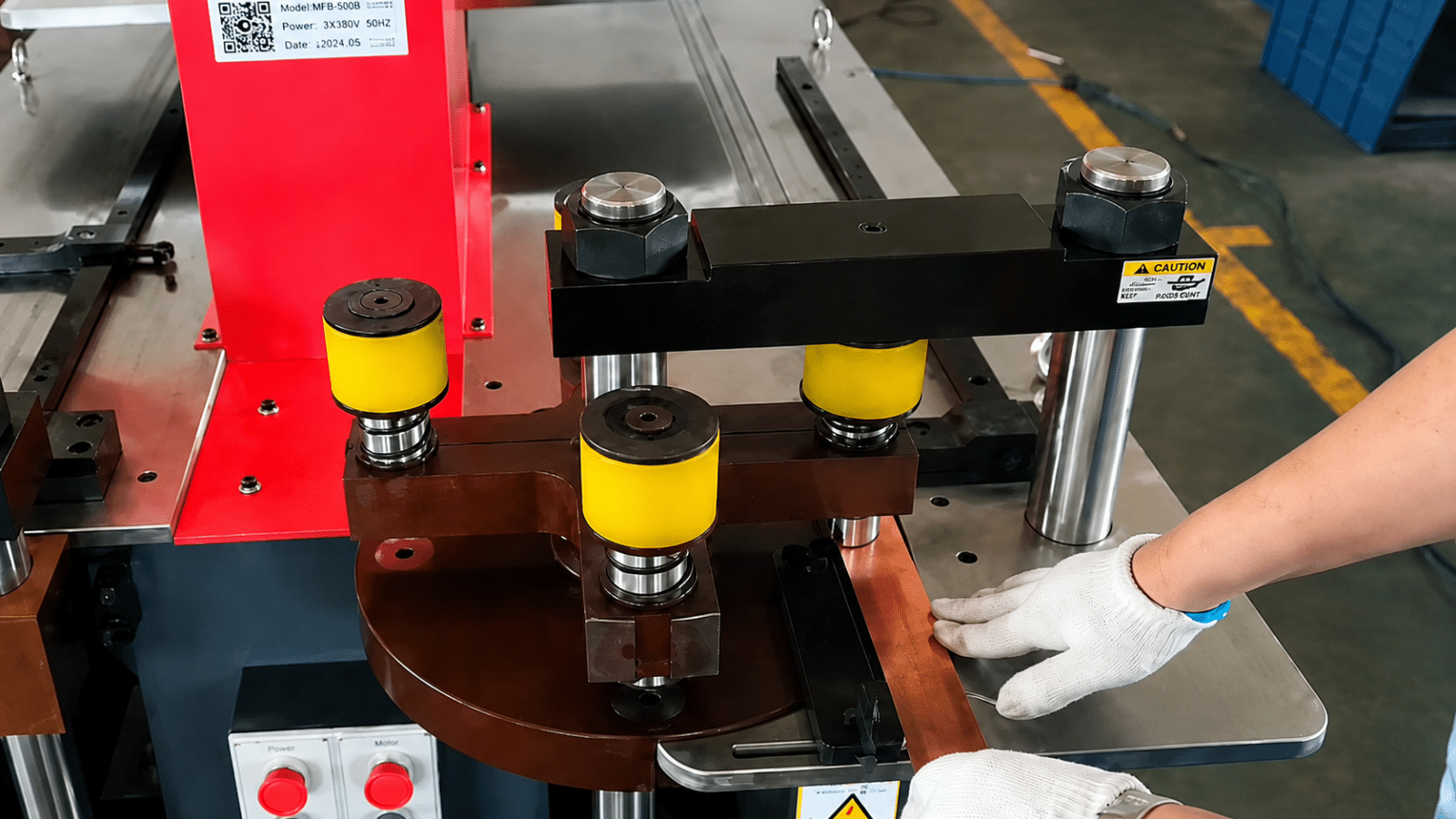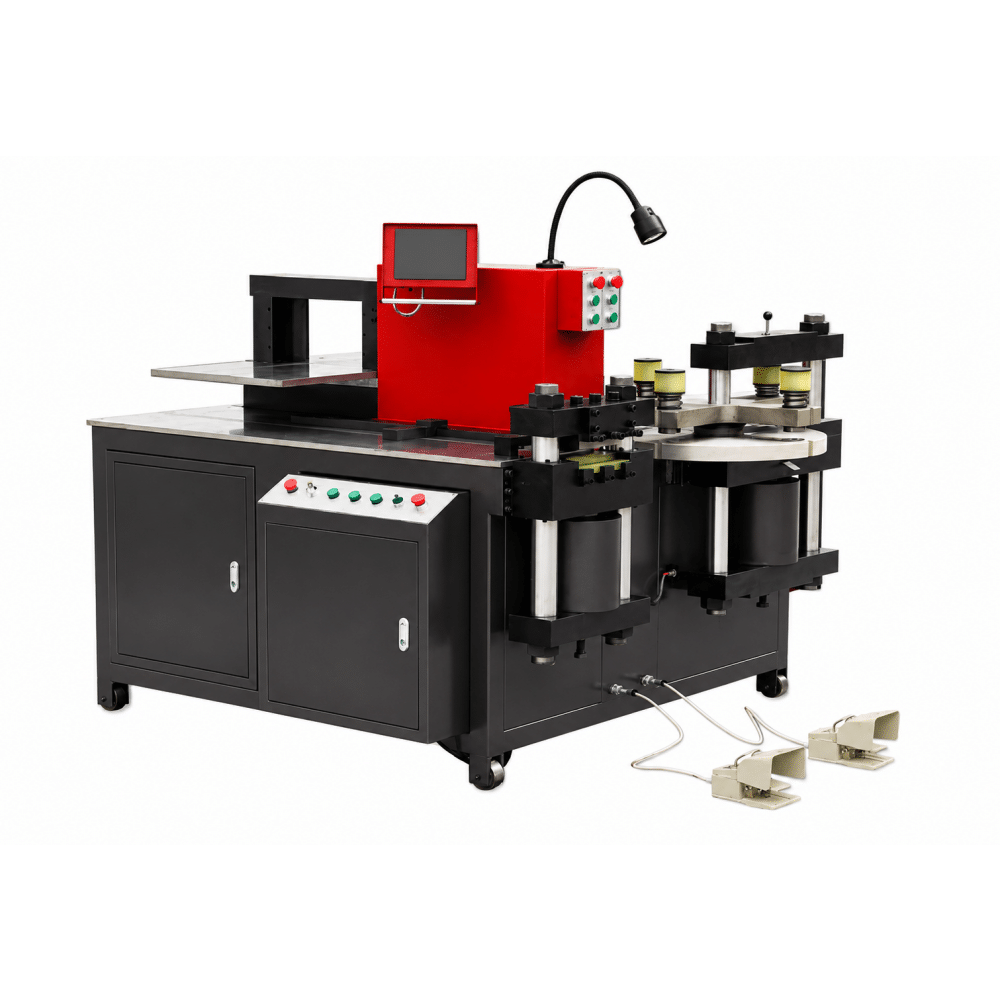
The TRANFOVIA 803 Series Heavy-Duty Hydraulic Busbar Processing Machine is the largest capacity class in the listed DGWMX family. It is designed for transformer and electrical equipment manufacturers processing copper or aluminum busbars up to 16 × 260 mm.
With a nominal force of 800 kN and a punching range of Φ4.3–36 mm, the 803 Series is selected when 200 mm-class busbar capacity is no longer sufficient and the factory needs a wider 260 mm processing range.
| Maximum Busbar Size 16 × 260 mm |
Nominal Force 800 kN |
Punching Range Φ4.3–36 mm |
Main Functions Cut / Punch / Bend |
The 803 Series is intended for projects where the actual busbar drawings require a processing range beyond the 16 × 200 mm class. Both listed 803 configurations use the E-series layout with rotary punching, double worktables and simultaneous three-station operation.
The 803 Series should not be selected simply because it is the highest-capacity DGWMX model. It is most relevant when the actual busbar dimensions or specified machine class require its wider processing range.
If all regular production busbars remain within 16 × 200 mm, the 503 Series may already provide sufficient processing capacity.
When busbar width moves beyond the 200 mm class, machine selection should be reviewed together with workshop space and material handling. The 803 Series has a listed machine size of 2150 × 1750 × 1500 mm and uses large worktables for wide-busbar processing.
Once the 16 × 260 mm / 800 kN capacity has been confirmed, the main remaining model decision is whether digital bending angle control is required.
| Configuration | Three Stations Simultaneously | Rotary Punching | Digital Bending Control | Recommended For |
| 803E-3 | Yes | Yes | No | Heavy-duty 260 mm busbar processing with standard bending control |
| 803E-3-S | Yes | Yes | Yes | Repeated wide-busbar production with digital bending settings |
Choose the 803E-3 when the factory requires full 16 × 260 mm / 800 kN capacity, rotary punching, double worktables and simultaneous three-station operation, but digital bending angle control is not necessary.
The 803E-3-S keeps the same heavy-duty processing capacity while adding digital bending angle control. It is more suitable when large busbar parts are produced repeatedly and the same bending settings need to be reused across batches.
Both listed 803 configurations use a rotary punching arrangement. This is useful when wide transformer busbars require different hole sizes or profiles and the workshop needs to switch between punching requirements without repeatedly rebuilding the station setup.
Both the 803E-3 and 803E-3-S are specified for simultaneous three-station operation. Cutting, punching and bending are separated into dedicated work areas so different operations can be organized at the same time.
| Station | Primary Task | Typical Use |
| Cutting | Cut wide copper/aluminum busbars to length | Prepare large busbar blanks before hole processing and forming |
| Punching | Produce connection holes and profiles | Prepare bolted connection points according to busbar drawings |
| Bending | Flat, vertical and U-bending | Form wide busbars to match transformer connection geometry |
| Parameter | 803E-3 | 803E-3-S |
| Nominal Force | 800 kN | 800 kN |
| Maximum Busbar Size | 16 × 260 mm | 16 × 260 mm |
| Punching Range | Φ4.3–36 mm | Φ4.3–36 mm |
| Main Worktable | 1770 × 1600 mm | 1770 × 1600 mm |
| Second Worktable | 1120 × 450 mm | 1120 × 450 mm |
| Machine Dimensions | 2150 × 1750 × 1500 mm | 2150 × 1750 × 1500 mm |
| Machine Weight | 2250 kg | 2280 kg |
| Digital Bending Angle Control | No | Yes |
| Three Stations Simultaneously | Yes | Yes |
Because the 803 Series is the largest listed DGWMX capacity class, machine selection should be reviewed together with the workshop layout.
| Selection Point | 503 Series | 803 Series |
| Nominal Force | 500 kN | 800 kN |
| Maximum Busbar Size | 16 × 200 mm | 16 × 260 mm |
| Punching Range | Φ4.3–32 mm | Φ4.3–36 mm |
| Typical Selection | Larger 200 mm-class busbars | Wide heavy-duty busbars up to 260 mm |
If all production busbars remain within 16 × 200 mm, the 503 Series may already be sufficient. Move to the 803 Series when the actual busbar drawings require the wider 260 mm range or the specified 800 kN class.
The 803 Series is suitable for transformer manufacturers whose copper or aluminum busbar production includes wide parts up to 260 mm. Typical work includes cutting, punching and forming large busbar connections for transformer terminals and other electrical connection points where the required dimensions exceed the 503 Series range.
The listed maximum processing size is 16 × 260 mm.
The listed nominal force is 800 kN for both 803E-3 and 803E-3-S.
The listed punching range is Φ4.3–36 mm, subject to the selected dies and required hole geometry.
Choose the 803 Series when regular busbar production exceeds the 16 × 200 mm capacity of the 503 class and requires widths up to 260 mm.
Both have the same 800 kN / 16 × 260 mm processing capacity. The 803E-3-S adds digital bending angle control.
Yes. Both listed 803 configurations are specified for simultaneous three-station operation.
Yes. Both listed 803E configurations use the rotary punching arrangement.
Confirm floor area, busbar feeding and handling space, access around the worktables, power supply and the required tooling layout.