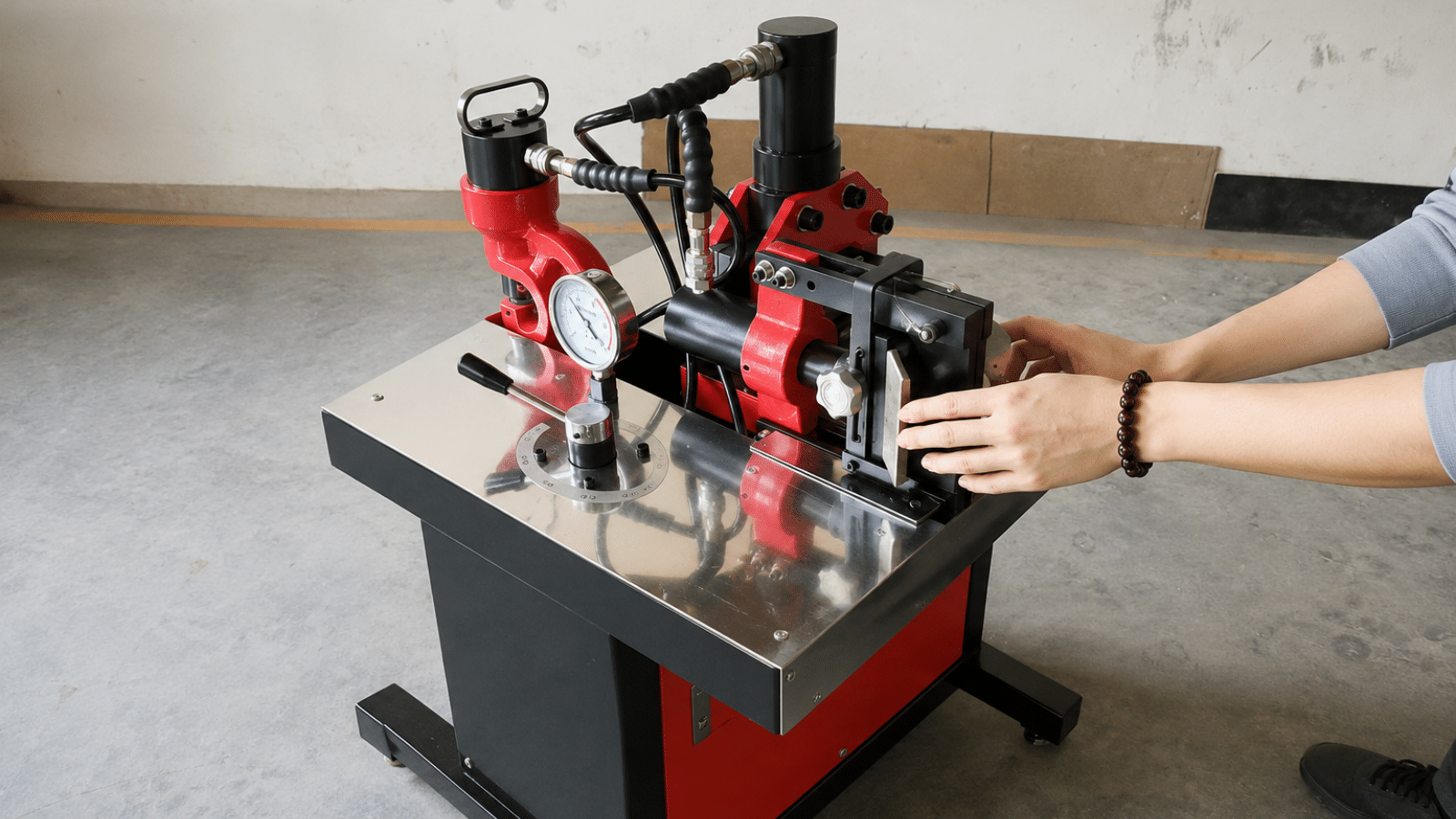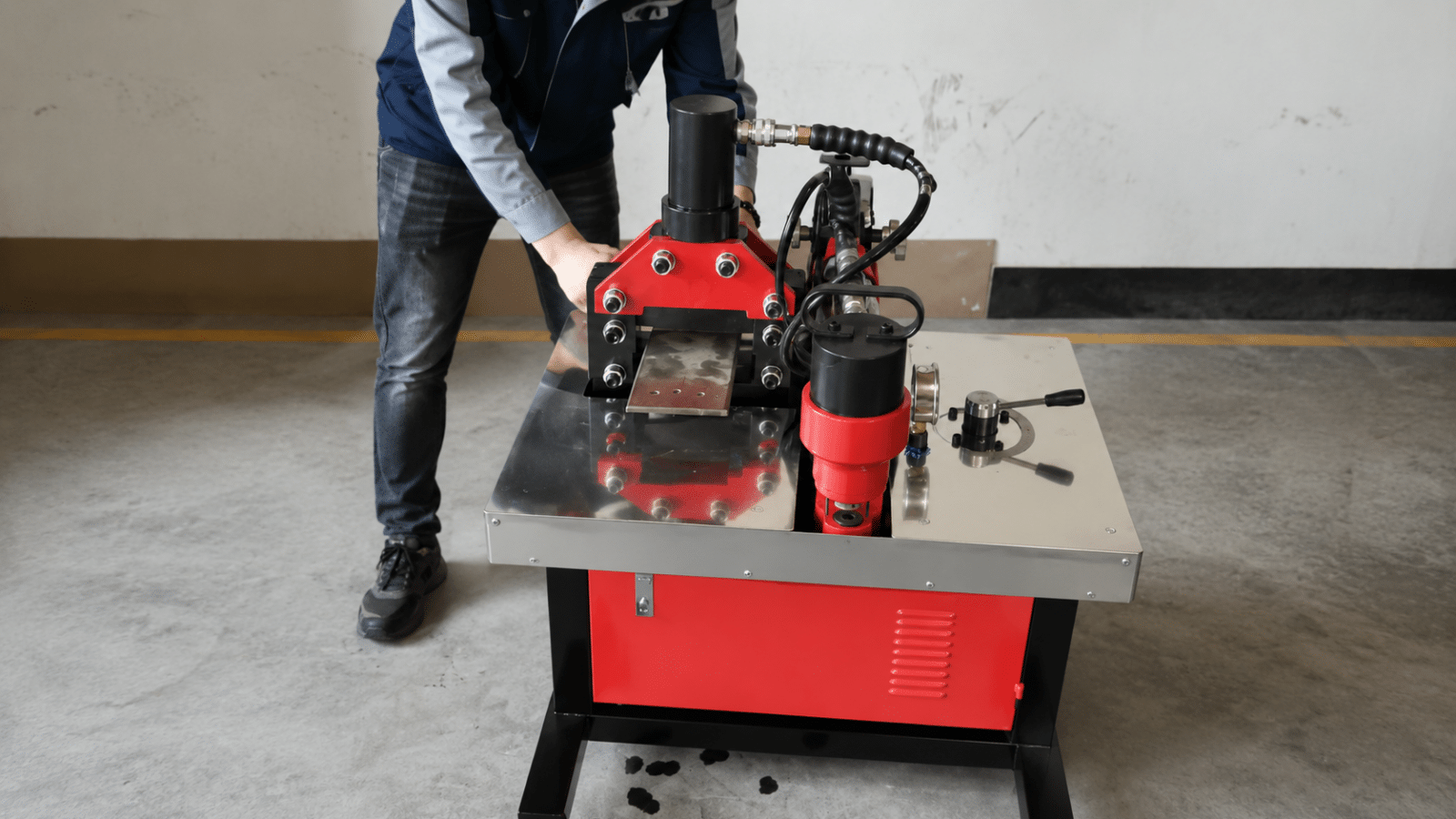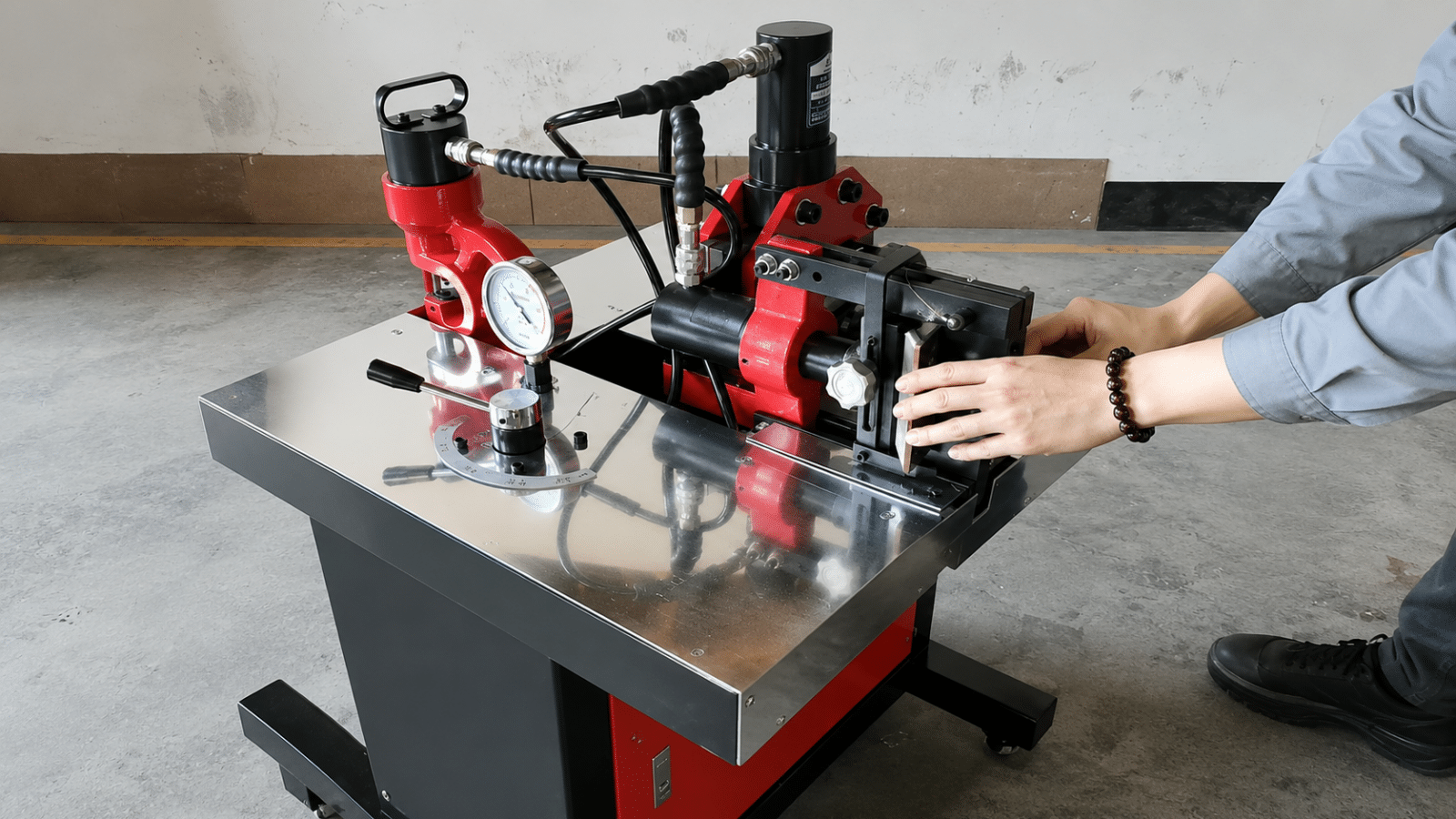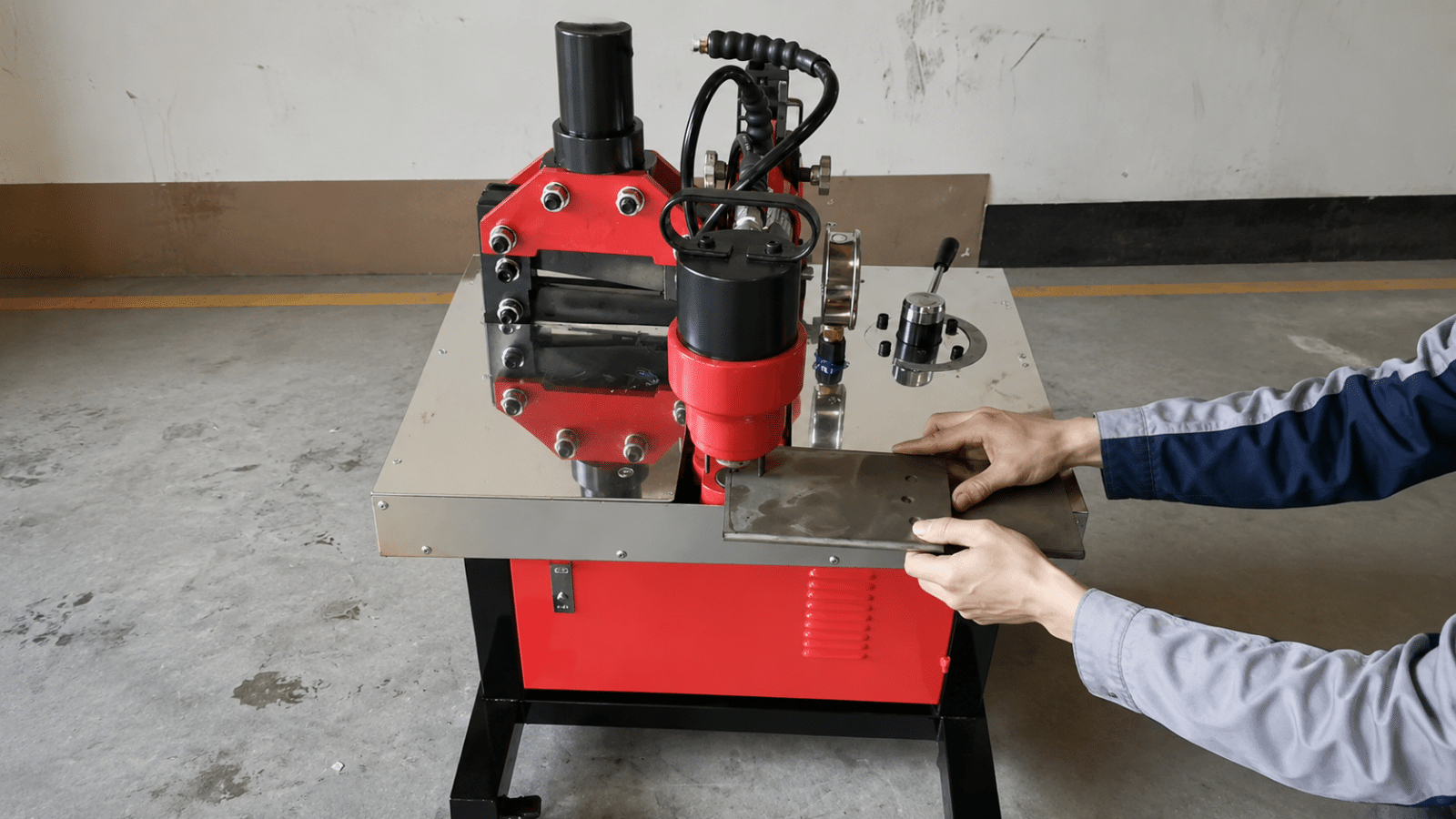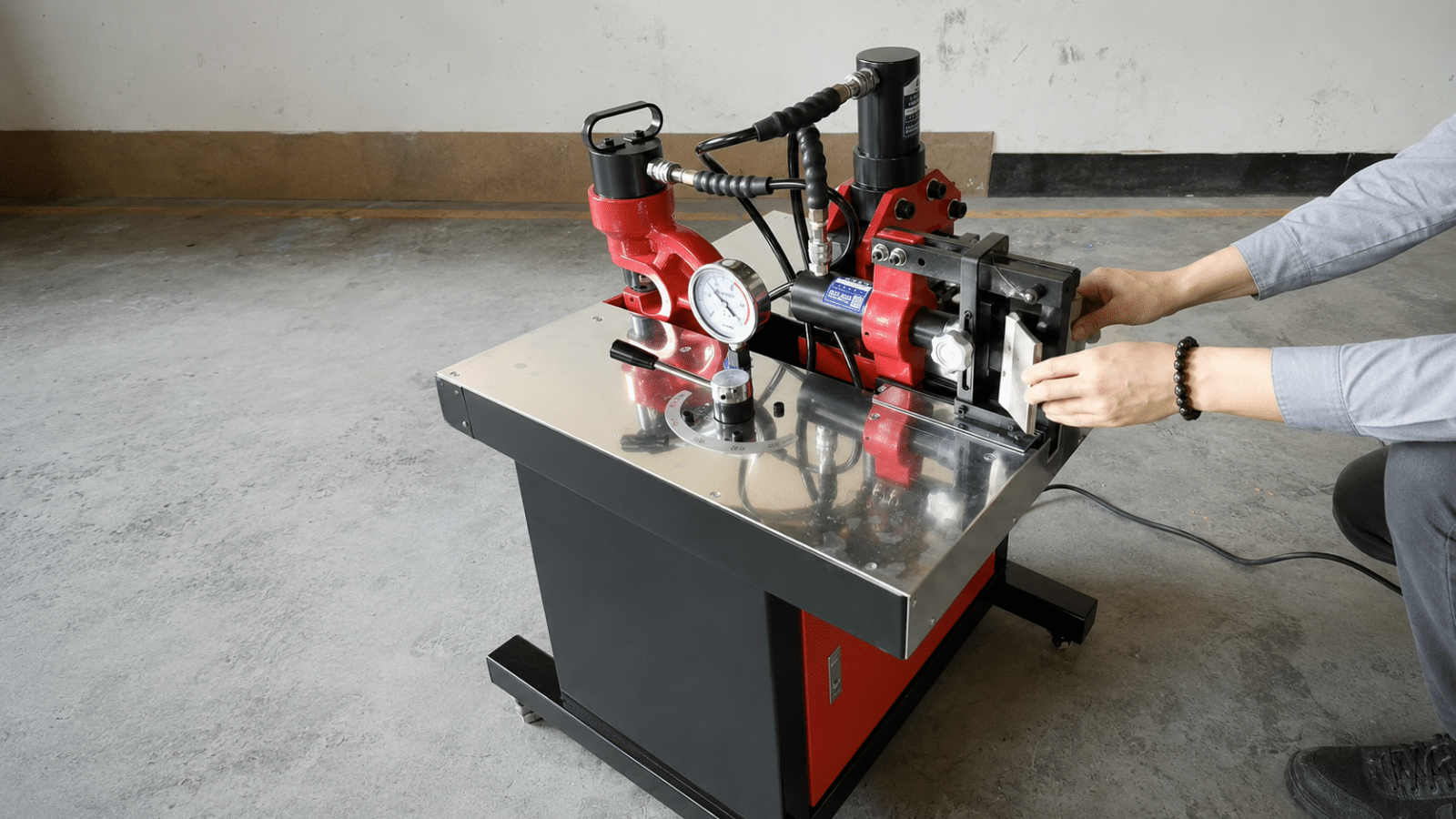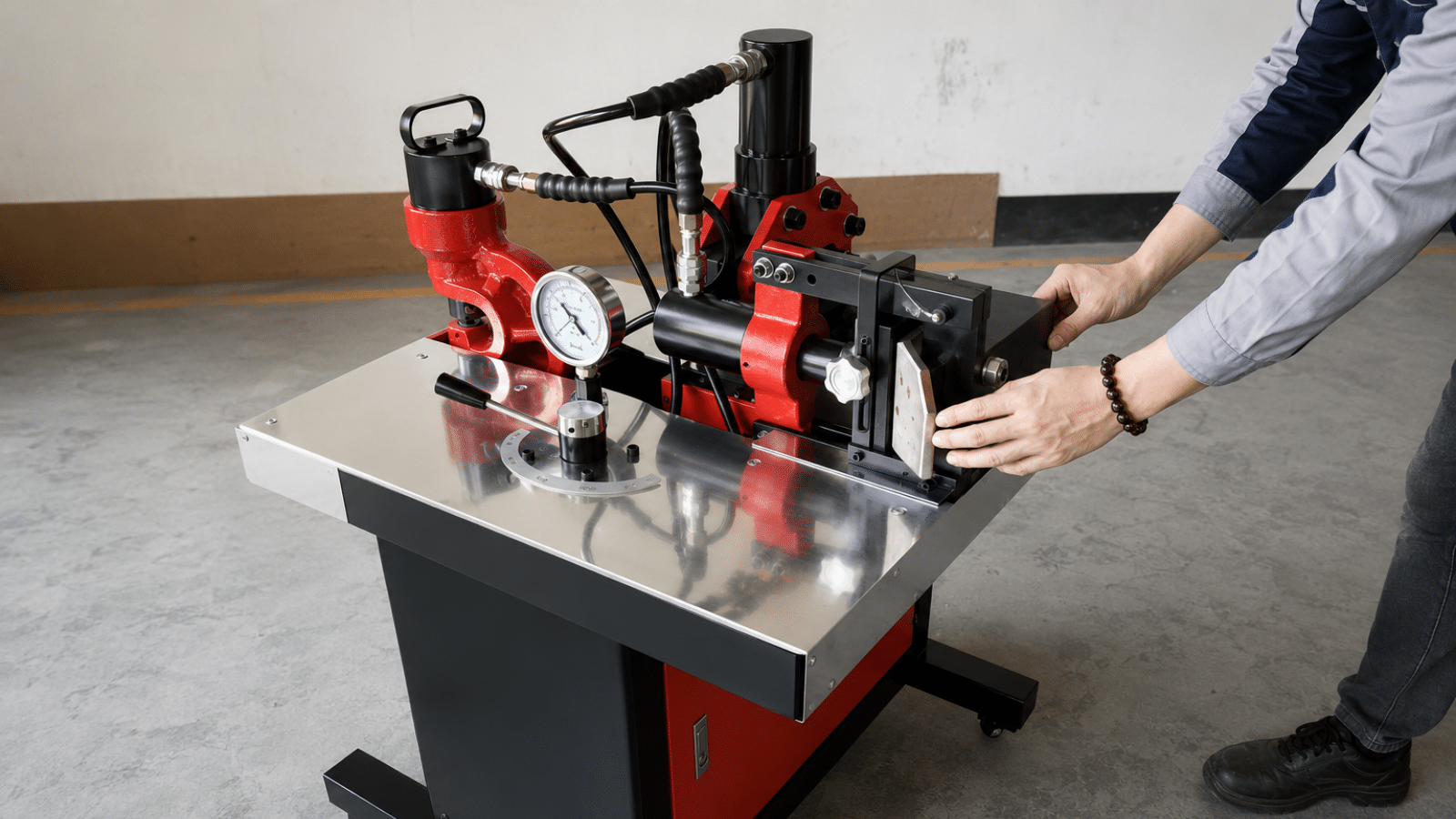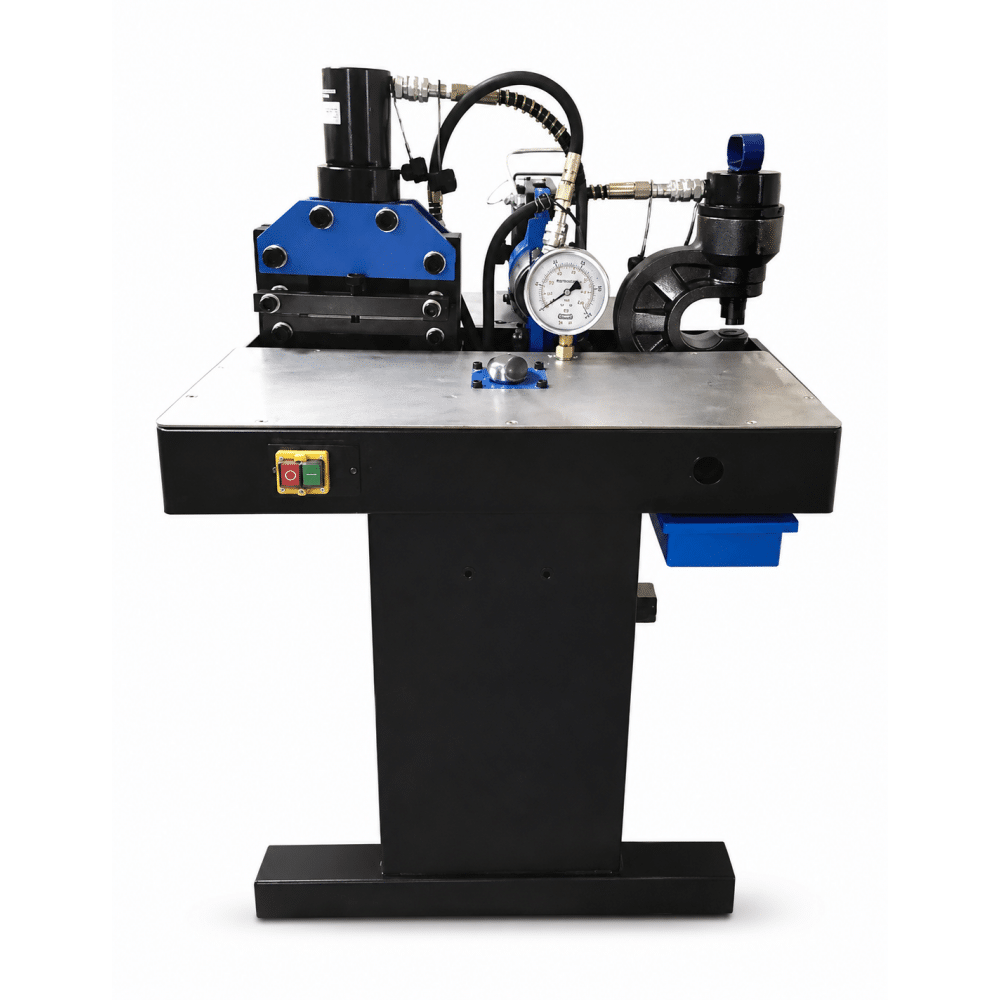
The TRANFOVIA Portable Busbar Processing Machine combines three common busbar fabrication operations – cutting, punching and flat bending – in a compact equipment configuration for copper and aluminum busbar processing.
Two configurations are available for different workshop requirements. The 30A Portable Busbar Processing Machine is designed for copper and aluminum busbars up to 150 × 10 mm, while the Combined Portable Busbar Processing Machine extends the listed cutting and flat-bending thickness capacity to 12 mm and provides separate rated forces for punching, cutting and bending.
Both configurations perform the same three basic operations. The main difference is processing capacity and machine arrangement, so model selection should start with the largest busbar and the required forming force.
The 30A Portable Busbar Processing Machine is the more compact configuration in this product family. It combines cutting, punching and flat bending on a mobile workstation and is intended for copper and aluminum busbars within the listed 150 × 10 mm processing range.
| Parameter | 30A Portable Configuration |
| Functions | Cutting / Punching / Flat Bending |
| Mobile Worktable Size | 700 × 700 × 1100 mm |
| Input Power | 50 Hz, 220 V |
| Cutting Range | Copper & aluminum busbar ≤150 × 10 mm |
| Flat-Bending Range | Copper & aluminum busbar ≤150 × 10 mm |
| Flat-Bending Angle | 0°-135° |
| Hole Center to Busbar Edge | 95 mm / 110 mm |
| Standard Tooling | 6 punching dies + 1 flat-bending die set |
| Machine Weight | 165 kg |
The Combined Portable Busbar Processing Machine provides separate punching, cutting and flat-bending heads driven by an electric hydraulic pump. It is the higher-capacity option when the workshop needs up to 12 mm busbar thickness for cutting and flat bending.
| Processing Unit | Listed Capacity |
| Punching Unit | 31T; copper/aluminum plate up to 12 mm; steel plate up to 8 mm |
| Busbar Cutting Unit | 15T; width 150 mm; max. thickness 12 mm |
| Busbar Flat-Bending Unit | 18T; width 150 mm; max. thickness 12 mm |
| Electric Hydraulic Pump | 700 kgf/cm² safety-valve setting; 10,000 psi |
| Standard Tooling | 6 punching dies + 1 flat-bending die set + 1 pair of cutting blades |
The supplied tooling differs by configuration. The final die set should always be confirmed against the required busbar hole sizes and bending requirements.
The portable busbar processing machine can be used in transformer and electrical-equipment workshops for auxiliary cutting, punching and flat-bending of copper and aluminum busbars. It is particularly relevant where the required busbar sizes fall within the listed processing ranges and a compact three-function machine is preferred over a larger fixed production line.
To choose the correct portable busbar machine, provide the following information with your inquiry:
Both configurations combine cutting, punching and flat bending for busbar fabrication.
The listed cutting and flat-bending range is copper and aluminum busbar up to 150 × 10 mm.
The 30A is the more compact configuration and is listed for busbars up to 150 × 10 mm. The Combined Portable configuration extends the listed cutting and flat-bending thickness to 12 mm and provides rated punching, cutting and bending forces.
For cutting or flat bending at 12 mm thickness and up to 150 mm width, the Combined Portable configuration is the listed option.
The listed flat-bending angle range is 0°-135°.
The listed punching force is 31T.
Both configurations are listed with six punching dies. The exact die sizes should be confirmed for the project.
Choose a larger fixed machine when the required busbar section exceeds the portable-machine range or when production requires higher throughput, additional workstations, rotary punching or digital bending control.
Send the busbar material, maximum width and thickness, required hole sizes, bending angles, typical busbar drawings and available power supply.