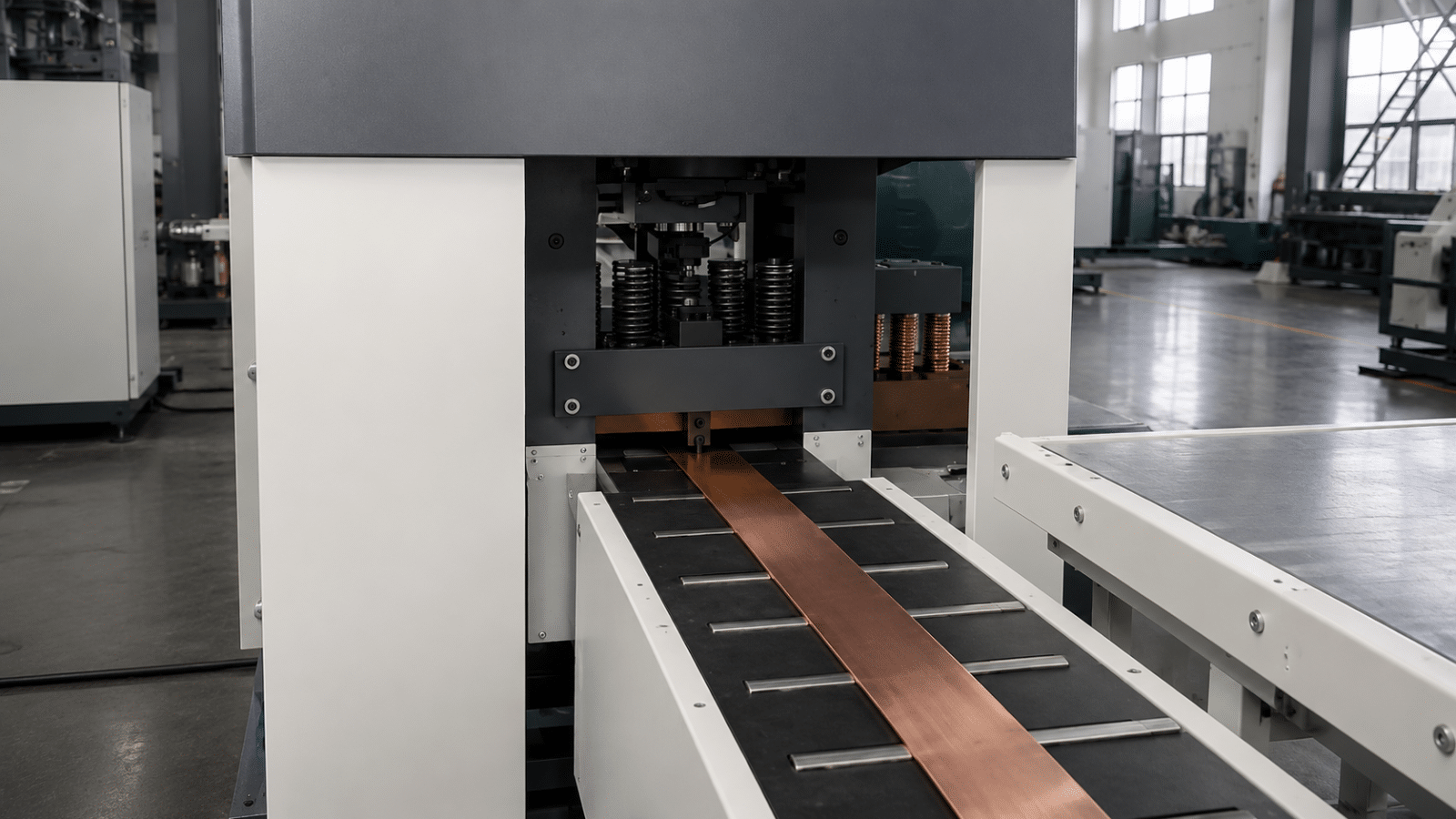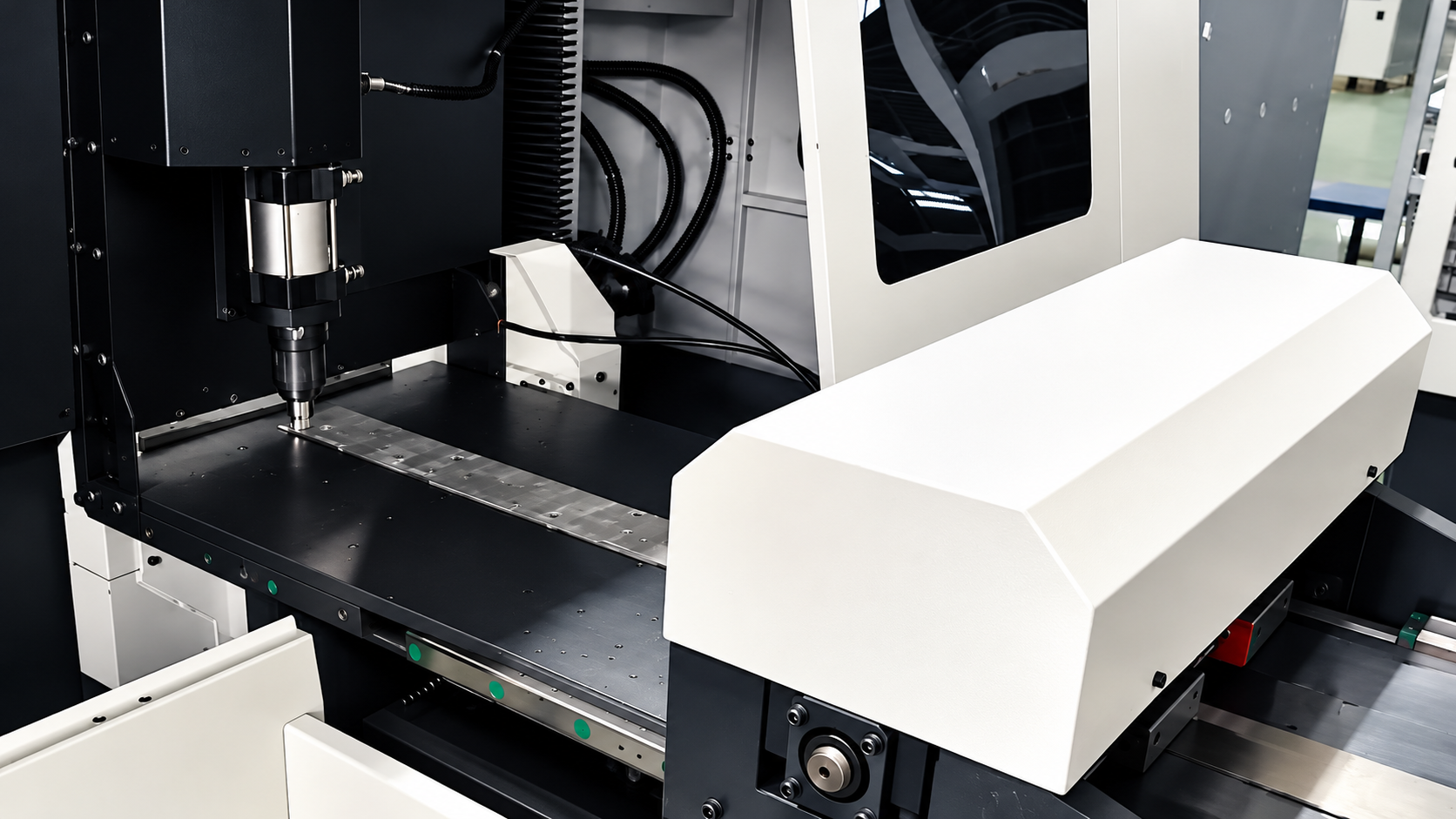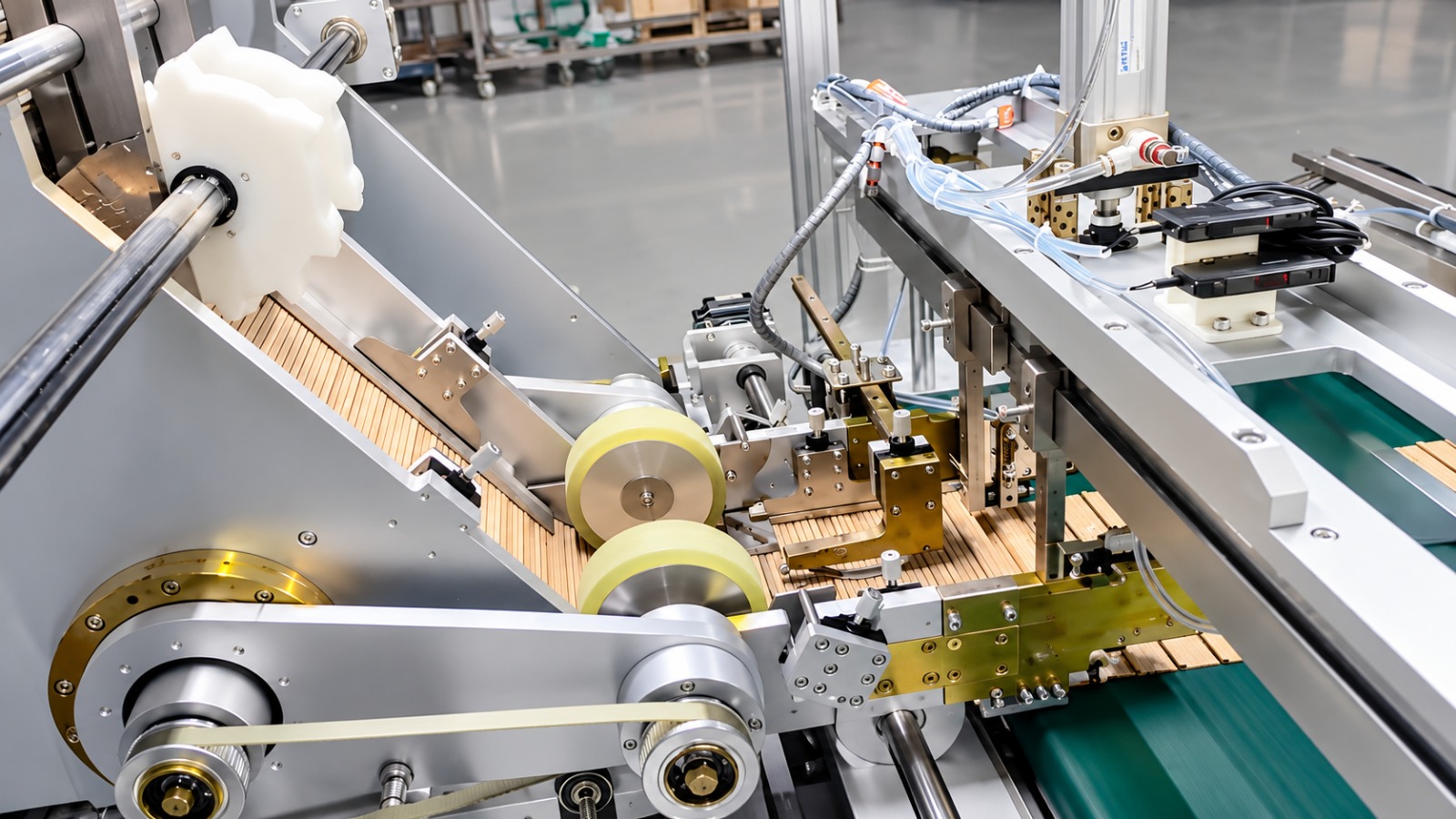
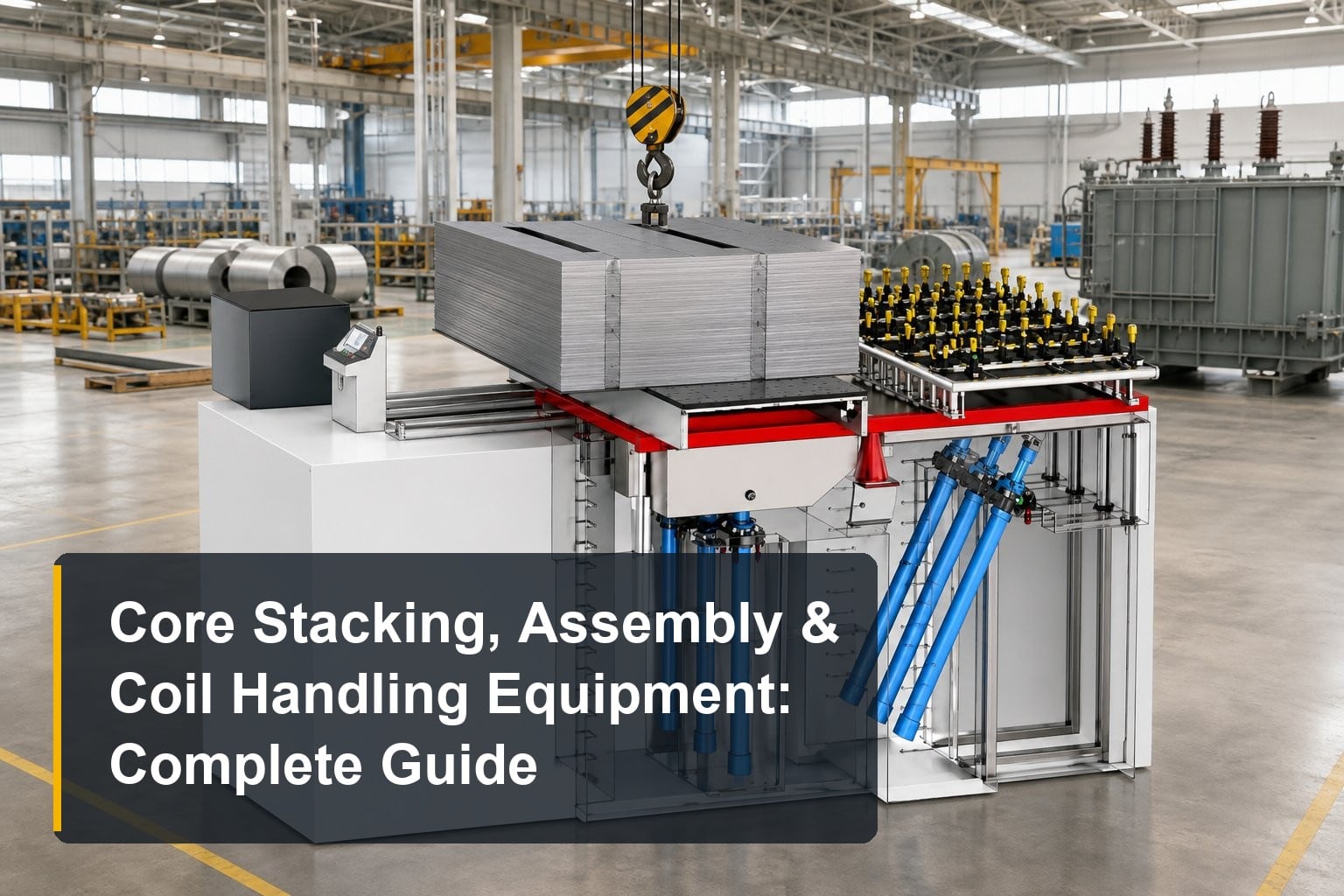
TL;DR: The core stacking and coil handling equipment group covers everything between the cutting line and the test bay: stacking & tilting tables (13 models, ≤3 mm table deformation), core banding machines, assembly platforms and lifting beams, coil presses and shaping machines, plus mandrels and wrapping tools. This pillar guide explains what each machine does, how they connect, and how to choose the right set for your transformer line.
Between the core cutting line and final assembly lies the stage where a transformer physically takes shape — stacking the core, banding it, winding and pressing coils, and moving heavy assemblies safely. This pillar guide covers the complete core stacking and coil handling equipment group within the broader transformer manufacturing process: what each machine does, the specifications that matter, and how they work together as one flow.
What This Equipment Group Covers
Four jobs define this stage. First, laminations become a finished core (stacking tables, banding machines). Second, coils are formed and consolidated (mandrels, presses, shaping machines). Third, heavy cores and coils move and turn safely (tilting tables, platforms, lifting beams). Fourth, insulation wrapping finishes the assembly (wrapping machines). Weak equipment at any one of these jobs becomes the bottleneck for all the others.
Core Stacking & Tilting Tables: Where Core Quality Is Assembled
The core stacking and turning table is the center of this stage. Workers stack laminations against precision guides on the horizontal table, then the table tilts the finished core 90° for lifting — without a foundation pit, and without consuming power (the crane does the lifting work). The two quality figures that matter: table deformation ≤3 mm under load, and vertical deviation ≤2 mm after tilting. Thirteen standard models (FT02–FT450) cover three-column cores with three tables and five-column cores with five.
For the mechanics behind these figures, see our working principle deep-dive; for how it compares with alternatives, the equipment comparison; and for a real installation, the Brazilian manufacturer case study.
Core Banding Machines: Consistent Clamping Without Stress
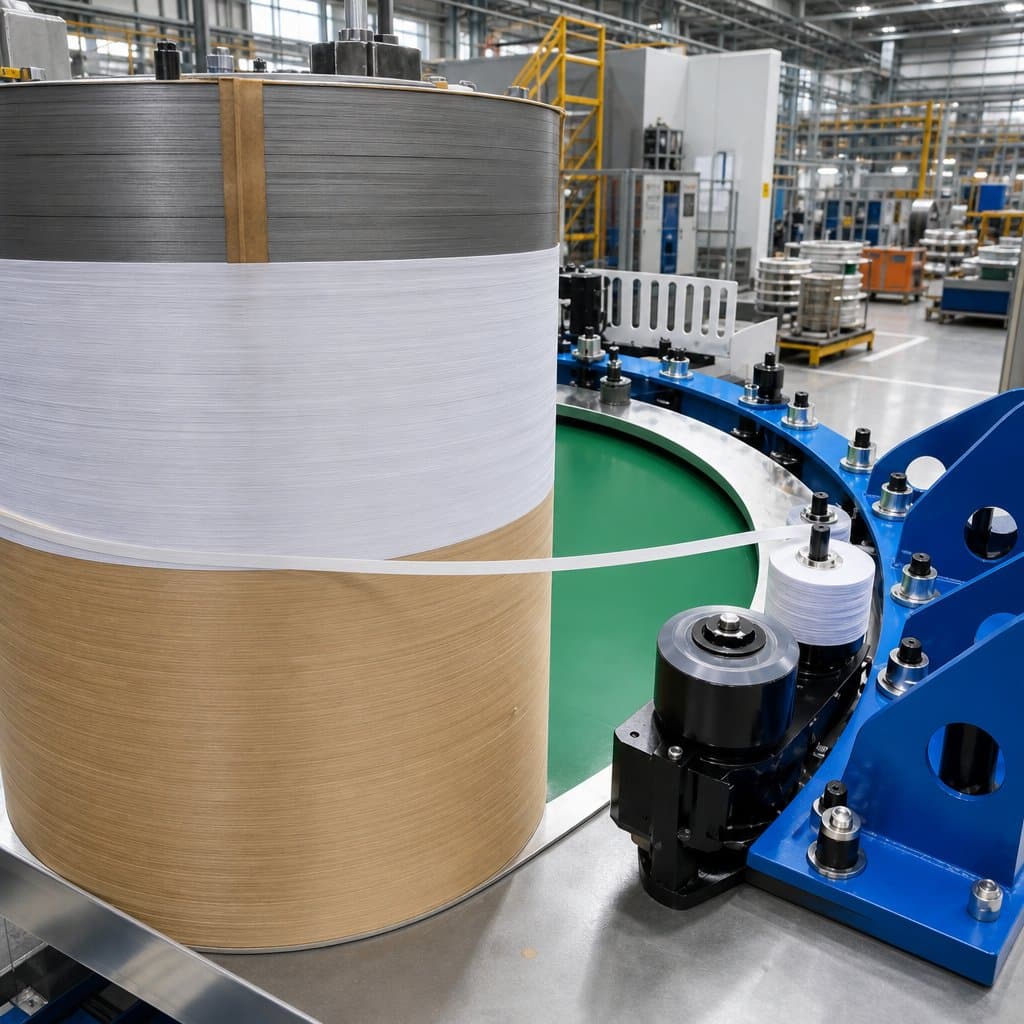
Once stacked, the core is secured by banding. A core banding machine keeps the core stationary while a winding head travels around it, applying tape (unidirectional, semi-conductive, shrink, or paper) under constant, adjustable tension — with speed, pitch, and wrapping height all programmable. Consistent banding tension is what keeps laminations tight through drying, transport, and decades of service. Our core banding machine buying guide covers selection criteria, and the Ontario case study shows one in daily production.
Coil Handling: Assembly Platforms and Lifting Beams
Heavy cores and coils must move between stations without damage or injury:
Assembly platforms
The transformer assembly platform is a mobile elevating workbench (2–20 T, six capacity classes) for final assembly work at height, with electric-mechanical dual self-locking and interlocked dual control stations. For coil insertion specifically, the fixed coil assembly platform uses a four-column structure with covers that extend to match coil diameters from 1000–3600 mm.
Coil lifting beams
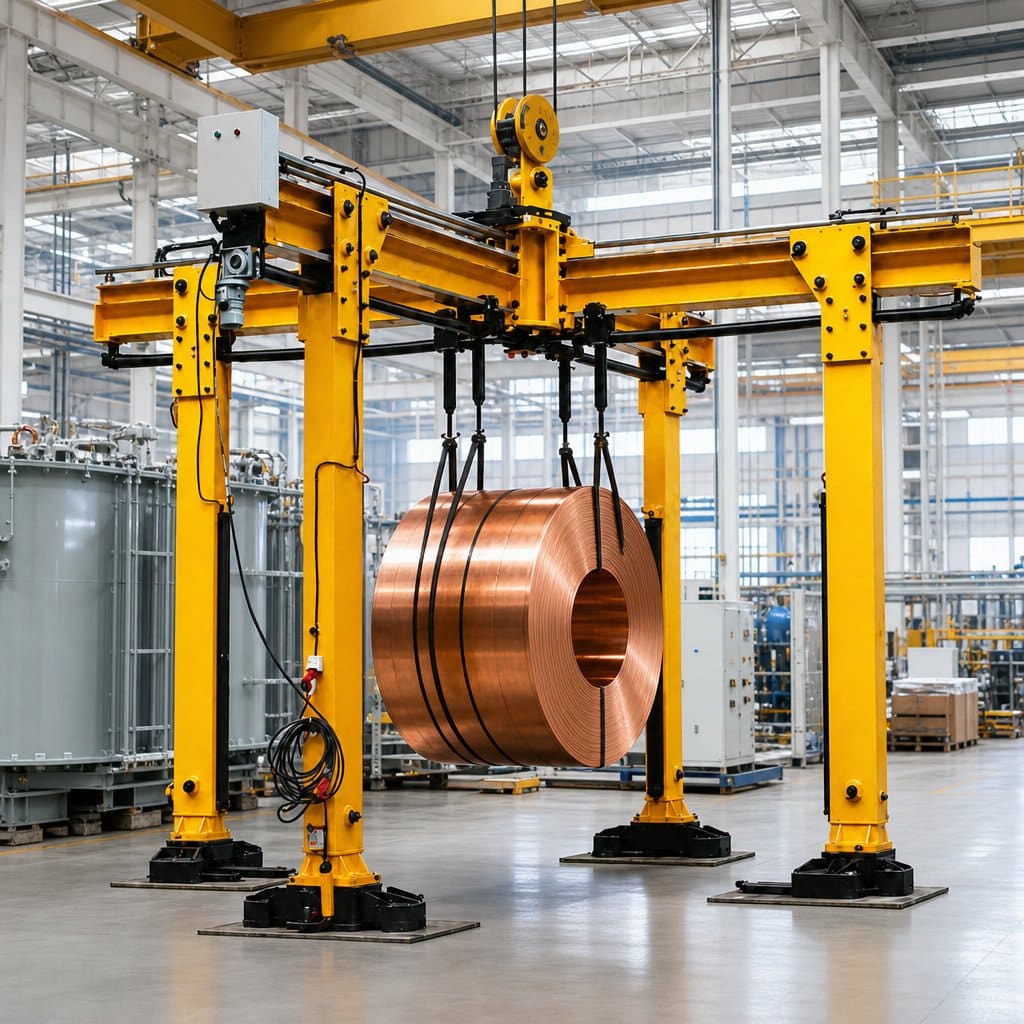
The coil cross lifting beam lifts finished coils without deformation: beam angle adjustable 90°–60°, legs adjustable across the slot for coil thickness, and four pressure rods applying axial compression during the lift.
Coil Pressing, Shaping, and Drying Compaction
After winding, coils must be consolidated to their final dimensions — this is what gives them short-circuit strength:
Coil presses
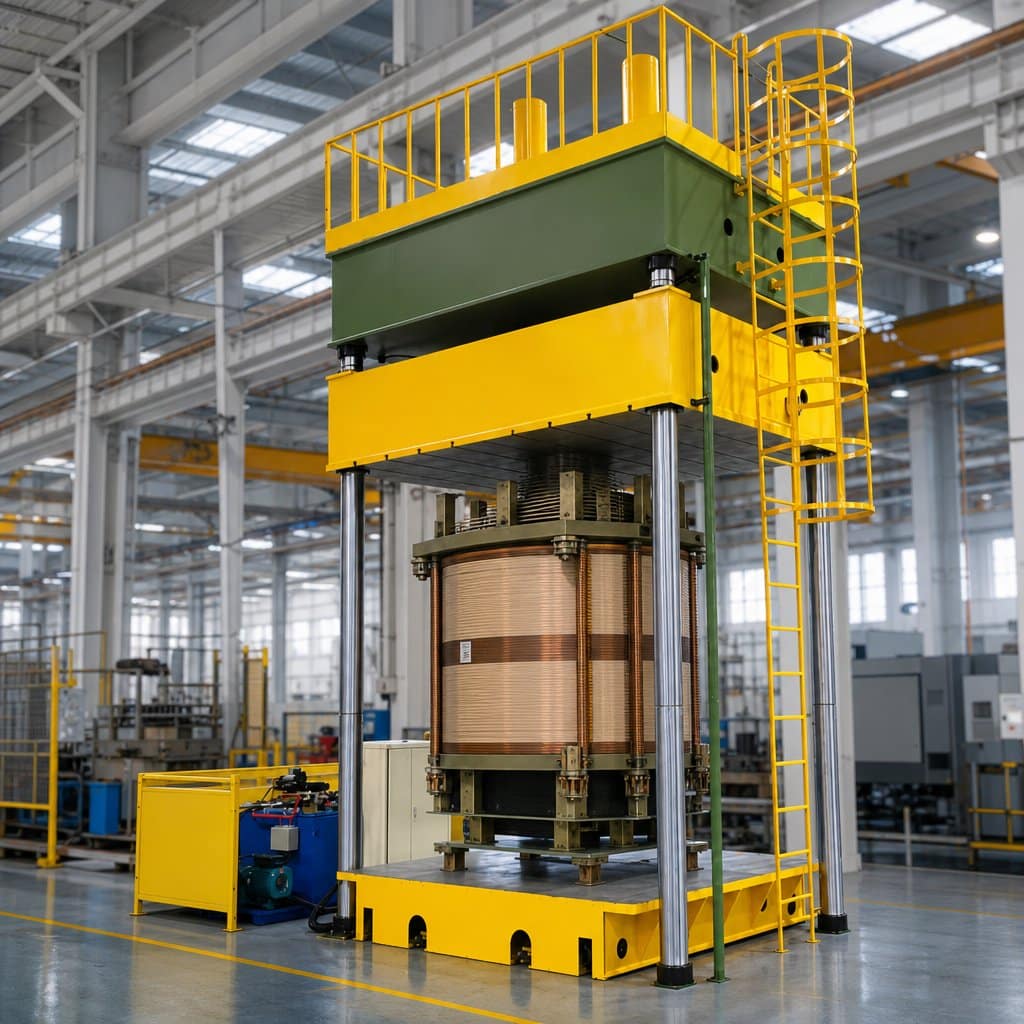
The coil press machine applies adjustable axial hydraulic pressure (four-column structure) to compact the winding, with T-slot top plates adapting to different coil diameters and a motorized transfer car for loading.
Coil shaping machines
The coil shaping machine sizes the coil axially to ±0.5 mm under PLC + HMI control, in standard, CNC, or hydraulic versions — and can interface directly with upstream winding machines.
Constant-pressure drying compaction
The constant pressure drying and compaction device keeps coils under adjustable axial pressure (80–400 T) inside the 130°C drying oven, preventing insulation shrinkage from loosening the winding — and doubles as a coil press outside the oven.
Supporting Tooling: Mandrels and Wrapping Machines
Two smaller items complete the group. The expandable winding mandrel is the tooling every winding machine depends on — 180–3000 mm diameter range with ≤1 mm deviation, contracting for damage-free coil release (see the Chilean changeover case). And for insulation finishing, the equalizing pipe crepe paper wrapping machine automates crepe paper wrapping on shielding pipes from φ50–250 mm.
How to Choose the Right Equipment for Your Line
The selection logic follows your product class and bottleneck:
- Core size class first → stacking table model (FT02–FT450) follows your largest core window; three-column cores need three tables, five-column need five
- Manual banding bottleneck → core banding machine with programmable tension and pitch
- Coil handling injuries or damage → cross lifting beam + assembly platform matched to coil weight
- Failed short-circuit or impulse tests → coil press / shaping machine / constant-pressure drying compaction, in that order of diagnosis
- Frequent coil size changes → expandable mandrels across your diameter range
One final check before signing: confirm interface dimensions across the group — table height to cutting line output, platform travel to your largest tank, mandrel range to your coil drawings. This equipment works as a system; buy it as one.
Frequently Asked Questions
What is a core stacking and tilting table used for?
It provides a precision horizontal surface for stacking silicon steel laminations into a finished core, then tilts the core 90° so a crane can lift it upright — eliminating manual core turning, which is where lamination damage and injuries historically happen.
Why band a core instead of welding or clamping?
Banding under constant tension holds laminations tight without creating shorted paths or localized stress. Welding damages lamination insulation; rigid clamps loosen as insulation settles. Tape banding maintains pressure through drying and service life.
Do I need both a coil press and a shaping machine?
They answer different questions. The press compacts the winding for density and short-circuit strength; the shaping machine sizes it axially to a tolerance (±0.5 mm). High-voltage and large power transformer production typically needs both; distribution workshops often start with the press.
When does a constant-pressure drying device pay off?
When insulation shrinkage during drying loosens your windings — visible as failed impulse tests or noisy transformers. It holds the coil compressed through the whole drying cycle, so the dimensions you pressed are the dimensions that survive drying.
Summary: Buy the Flow, Not the Machines
Core stacking and coil handling equipment succeeds or fails as a system: the cutting line feeds the stacking table, the banding machine secures what the table assembled, platforms and beams move what the press consolidated. Match capacity classes across the group, confirm the interfaces, and the whole stage runs at the speed of its design — not its weakest machine.
Planning a core assembly or coil handling upgrade? Send us your core and coil drawings with target output — we will recommend the equipment set with matched capacity classes and interface dimensions.
📞 Phone: +86-15958243831
📧 Email: sales@tranfovia.com
💬 WhatsApp: https://wa.me/8615958243831
🌐 Website: tranfovia.com
References
- IEC 60076-1: Power transformers — General
- IEEE C57.12.00 — General Requirements for Liquid-Immersed Transformers
- IEC 60076-7: Loading guide for oil-immersed power transformers
- Electrical Steel — CRGO Lamination Fundamentals
- Transformer — Core and Winding Construction
- Tranfovia — Transformer Manufacturing Equipment