TL;DR:
- A core banding machine wraps transformer cores with insulating tape or banding material under controlled tension — the winding head travels around the standing core, so the core itself never moves.
- The specifications that matter most are tension control quality and wrapping parameters: speed, pitch, and wrapping height range.
- Match the machine to your core height range (elevator travel), core diameter (winding head opening), and the banding materials you actually use.
- Verify tension uniformity with test wraps on your own cores and materials before accepting a quotation.
This article is part of our core stacking, assembly and coil handling equipment guide — the pillar page covering stacking tables, banding machines, platforms, presses, and selection logic.
How to choose the right core banding machine comes down to understanding what controlled wrapping really requires, comparing the specifications that determine insulation quality, and verifying the supplier before you commit. This article explores what a core banding machine is and how it fits into transformer manufacturing, which specifications to compare, how to match a model to your application, and the questions to ask any manufacturer or supplier, providing a practical buying framework for transformer producers.
What a Core Banding Machine Is and How It Fits into Transformer Manufacturing
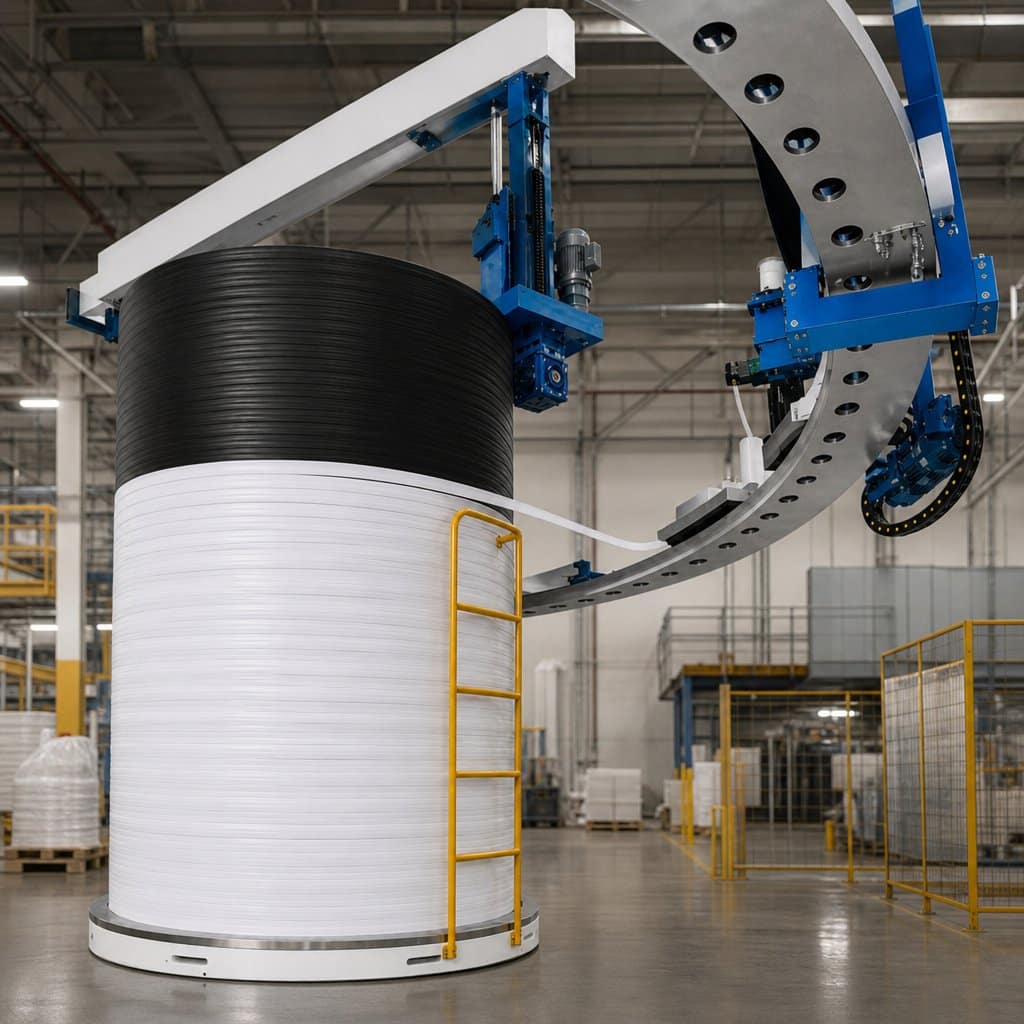
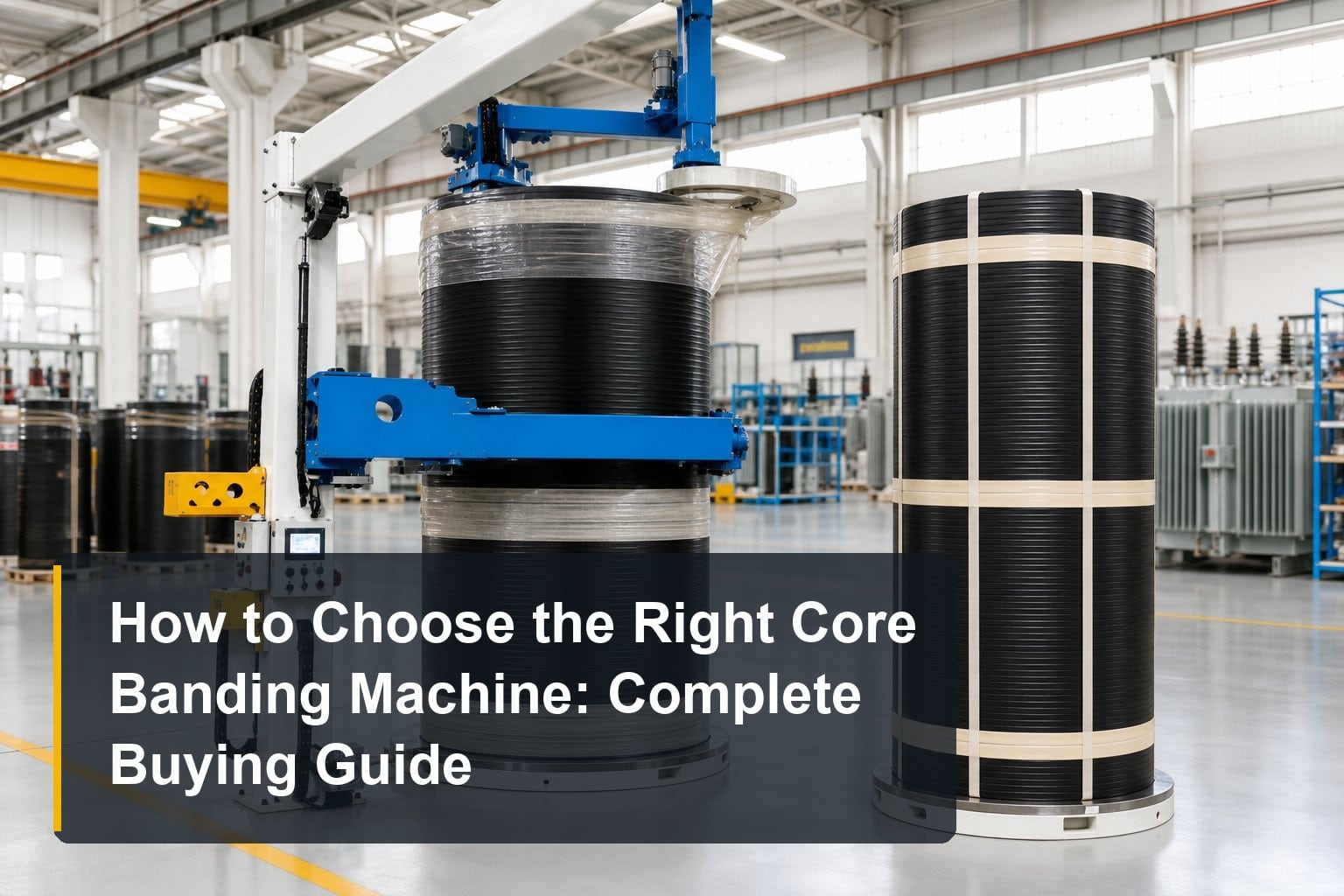
A core banding machine automates the wrapping and binding of transformer cores with insulating tape, replacing slow and inconsistent hand wrapping. Its defining design choice is that the core stands still while the wrapping head moves — a choice that matters enormously for large, fragile wound cores.
Definition and Core Function
In simple terms, a core banding machine carries a tape dispensing head on a ring or arm that orbits the standing core while an elevator moves the head vertically along the core’s height. The machine wraps non-woven belts, semiconductor tapes, shrinkable tapes, or insulation papers around the core under precise, constant tension. Because the core is never rotated or lifted during binding, there is no risk of disturbing the carefully stacked or wound lamination structure — a critical property for cores that can weigh tonnes.
Where It Fits in the Production Flow
Banding sits after core formation and before coil assembly or impregnation. Wound cores arrive from the winding machine — for example a 3D wound core winding machine — and stacked cores arrive from the stacking table, both needing their laminations consolidated and insulated before further handling. The banding provides mechanical integrity for transport and lifting, plus the first layer of electrical insulation between core and windings. A weak or uneven band fails exactly when the core is most vulnerable: during lifting and coil fitting.
Why Tension Control Defines the Machine
Hand wrapping cannot hold constant tension over thousands of turns, and tension is what makes banding work. Too loose, and the band slips or the core shifts under its own weight; too tight, and the tape crushes edge laminations or breaks mid-wrap. A machine with closed-loop tension control holds the set force from the first turn to the last, compensating for core geometry and tape stretch automatically. This is the capability that justifies the machine over manual methods — and the first thing to test when evaluating any supplier.
Key Specifications to Compare: Tension Control and Wrapping Parameters
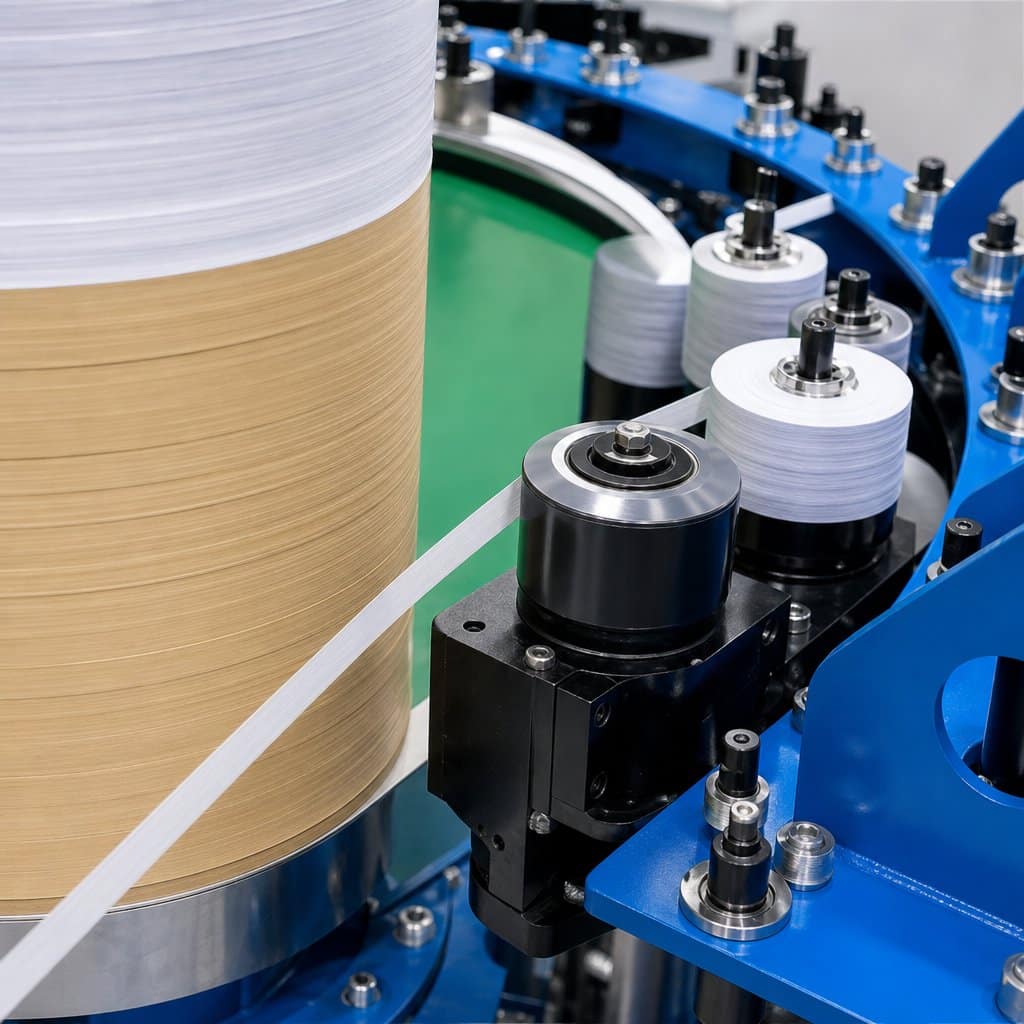
When comparing core banding machines, look past the frame size to the four parameter groups that decide wrap quality: tension control, speed and pitch, the working envelope, and material compatibility.
Tension Control System
Ask exactly how tension is controlled and measured. Quality machines use servo or magnetic-particle tension systems with closed-loop feedback, holding the set force within a narrow band across the whole wrap. Confirm the tension range suits your materials — delicate insulation papers and strong shrinkable tapes need very different settings — and ask whether tension can be programmed to vary by wrap zone, since some core designs need tighter binding at the yokes than at the limbs. Uniform tension is what turns banding into consistent insulation rather than just packaging.
Wrapping Speed, Pitch, and Overlap
The winding head speed — typically 0 to 10 rpm — combines with the elevator feed to set the wrap pitch, and pitch sets the overlap between turns. Consistent overlap is what creates a continuous insulation barrier without gaps or excessive build-up. Look for CNC control that stores recipes: tension, speed, pitch, and wrapping height recalled per core type, so repeat jobs wrap identically without re-setup. Machines that monitor and log material consumption per wrap also give you real data for cost control and quality traceability.
Working Envelope and Core Compatibility
Check the machine’s envelope against your cores with margin: elevator travel range — 500 to 5,200 mm on large models — defines the maximum core height, while the winding head opening, around 1,875 mm on heavy machines, defines the largest core cross-section the head can orbit. Also confirm the tape widths and spool sizes the dispensing head accepts, and whether the machine handles all the materials your designs specify: non-woven belts, semiconductor tapes, shrinkable tapes, and insulation papers each behave differently under tension.
How to Match the Right Model to Your Application
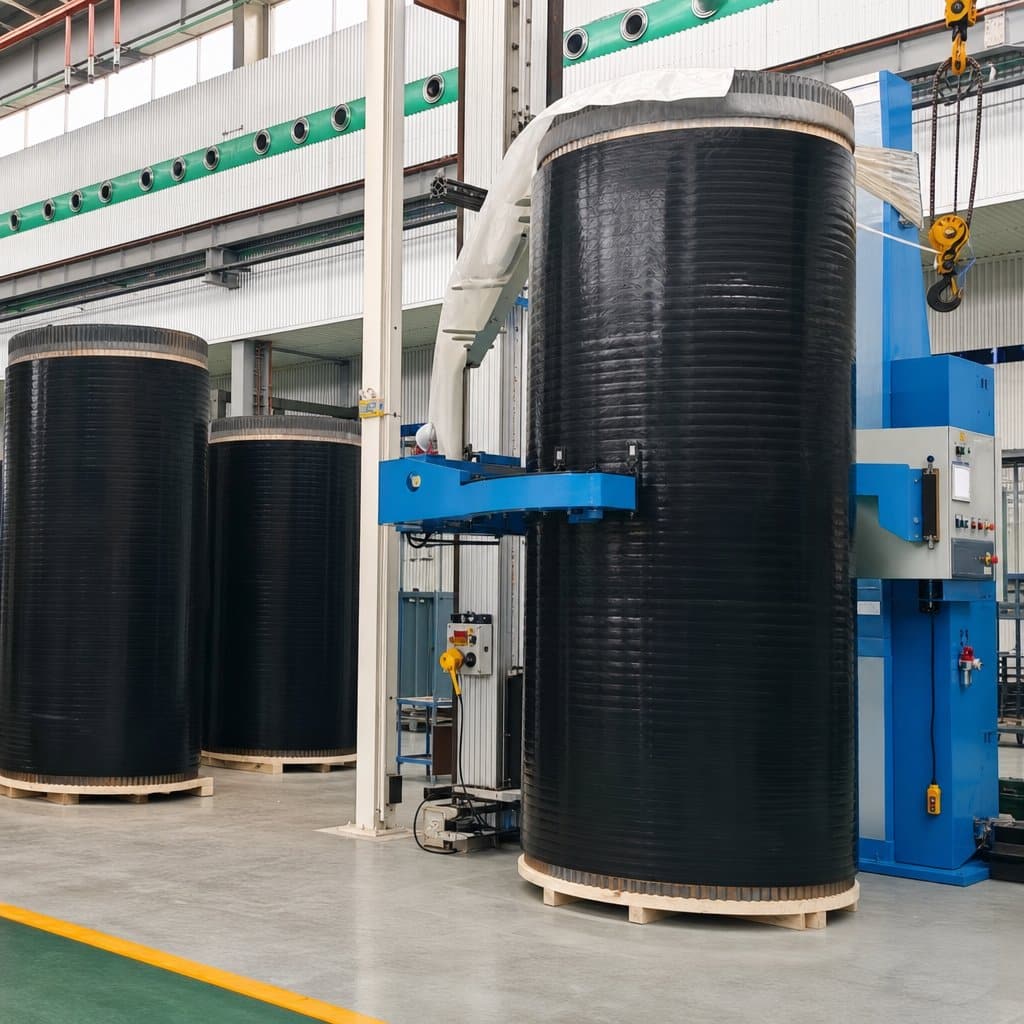
The right core banding machine is the one whose envelope covers your core range and whose control level matches your product mix. Three factors drive the match.
Core Dimensions and Weight Class
Start from your core drawings: maximum core height determines elevator travel, maximum core diameter or diagonal determines the head opening, and core weight determines whether you need auxiliary support during wrapping. Distribution transformer cores sit comfortably in standard envelopes; large power transformer wound cores quickly approach the limits of elevator travel and head opening. Buy for your largest credible core with modest margin — oversizing the ring adds cost and slows the head on small cores.
Product Mix and Changeover Frequency
High-mix producers wrapping many core designs per week should prioritize CNC recipe management and quick tape-spool changeover; single-product lines can accept simpler controls. Consider also how banding relates to neighboring processes: factories building stacked cores on a core stacking and turning table often band after tilting, so the machine’s position and crane access in your layout deserve as much thought as its specifications.
Banding Material Strategy
Your material choice shapes the machine requirement more than most buyers expect. Shrinkable tapes need precise low-tension control to avoid pre-shrink distortion; semiconductor tapes used for electrostatic shielding demand flawless overlap; non-woven belts tolerate wider settings but consume more material per core. If your designs use several materials across products, confirm the head swaps spools quickly and that tension recipes cover each material’s window. A machine matched to one material but forced onto another produces consistent-looking wraps with inconsistent performance.
Questions to Ask a Core Banding Machine Manufacturer or Supplier
A banding machine’s value lives in its control system and its fit to your cores, so supplier questions should probe verification, support, and application engineering rather than headline specifications.
How Will You Prove Tension Uniformity?
Request a demonstration wrap on a core or former of your size using your actual banding materials, with tension logged across the full wrap height. The supplier should show the recorded tension curve, not just the finished wrap. When evaluating a specific model such as a transformer core binding machine, ask for the tension control accuracy specification in writing and for references from factories wrapping similar core sizes with similar materials.
What Is Covered for the Control System and Wear Parts?
Clarify the support package for both hardware and software: spare tension sensors and drive components, control system updates, recipe backup procedures, and remote diagnostics. The wrapping head’s guide rollers and tape path parts wear with use — ask for the wear-parts list and replacement intervals. Confirm commissioning scope, operator training on recipe management, and response-time commitments, especially if your team has no prior CNC wrapping experience.
Can You Advise on Banding Materials and Wrap Design?
The best suppliers understand insulation systems, not just machinery. Ask whether they can recommend tape types, widths, and wrap patterns for your core designs — including overlap ratios for your voltage class and material consumption estimates per core. A supplier who can calculate material usage from your drawings demonstrates genuine process knowledge, and their wrap-design advice often saves more in material than the negotiation saves on machine price.
Frequently Asked Questions
What materials can a core banding machine handle?
Most machines handle the standard transformer banding materials: non-woven belts, semiconductor tapes, shrinkable tapes, and insulation papers. What differs between machines is the tension range and spool capacity each material needs. Confirm the tension window and tape width compatibility for every material your designs use, and test-wrap each one during acceptance.
Why does the core stay still during wrapping?
Large wound or stacked cores weigh tonnes, and rotating or lifting them risks disturbing the lamination structure that earlier processes worked to achieve. With the winding head orbiting the standing core and an elevator carrying it vertically, the core is never moved until it is fully bound and ready to lift — protecting geometry and improving safety.
What wrapping parameters should be adjustable?
At minimum: tension, winding head speed, wrap pitch, and wrapping height. CNC machines store these as per-core recipes so repeat jobs run identically. Useful additions include zone-programmable tension for yoke versus limb regions and material consumption logging for cost control.
How do I size the machine for my cores?
Match three numbers to your largest credible core: elevator travel to core height (large models cover 500–5,200 mm), winding head opening to core cross-section (around 1,875 mm on heavy machines), and frame capacity to core weight. Add modest margin for future designs, but avoid large oversizing — an oversized head wraps small cores slowly.
Summary
Choosing the right core banding machine means prioritizing what actually determines wrap quality: closed-loop tension control, CNC recipe management of speed, pitch and height, and a working envelope matched to your core dimensions and materials. Verify tension uniformity on your own cores and tapes before purchase, and choose a supplier who understands insulation systems as well as machinery.
TRANFOVIA supplies core banding machines with precise tension control, 500–5,200 mm elevator travel, and full material compatibility, backed by application engineering for your wrap design. For a model recommendation matched to your core range, contact TRANFOVIA today.
📞 +86-15958243831 📧 sales@tranfovia.com 💬 WhatsApp: https://wa.me/8615958243831 🌐 tranfovia.com
References
- IEC 60076-1:2011. Power transformers — Part 1: General. International Electrotechnical Commission. https://webstore.iec.ch
- IEEE Std C57.12.00-2015. IEEE Standard for General Requirements for Liquid-Immersed Distribution, Power, and Regulating Transformers. IEEE. https://standards.ieee.org
- IEC 60404-8-7. Magnetic materials — Specifications for individual materials — Cold-rolled grain-oriented electrical steel. International Electrotechnical Commission. https://webstore.iec.ch
- ASTM A876/A876M. Standard Specification for Flat-Rolled, Grain-Oriented, Silicon-Iron, Electrical Steel. ASTM International. https://www.astm.org
- Kulkarni, S. V., & Khaparde, S. A. (2004). Transformer Engineering: Design and Practice. Marcel Dekker.
- Georgilakis, P. S. (2009). Spotlight on Modern Transformer Design. Springer.