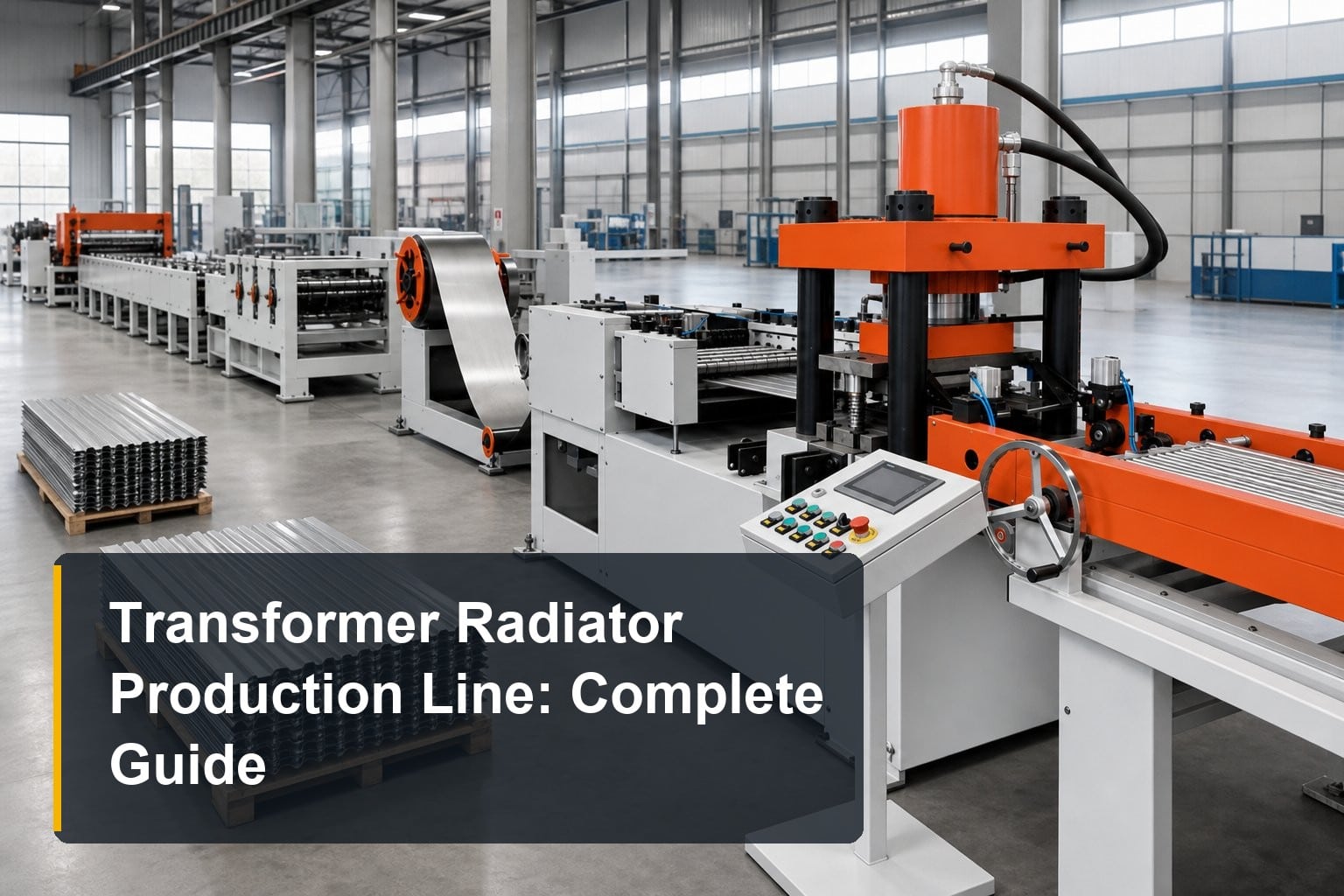
TL;DR: A transformer radiator production line turns steel coil into finished panel radiators through ten linked stations: decoiling, roll forming, turnover and joining, multi-spot welding, dual seam welding, edge trimming, end cutting, end welding, straightening, and automatic stacking — plus an assembly fixture that builds complete radiator banks. Panel width coverage of 250–545 mm, welding quality, and line synchronization decide the output. This pillar guide maps every machine, the specifications that matter, and how to plan the line for your capacity.
Oil-immersed transformers get rid of their heat through radiators — and every panel radiator on the tank wall started as a steel coil on a production line. The transformer radiator production line is one of the most automated equipment groups in transformer manufacturing: ten machines working in sequence, each one’s output feeding the next. This guide maps the complete line within the broader transformer manufacturing process: what each station does, the specifications that decide quality, and how to plan the investment — whether you are building an in-house radiator workshop or expanding an existing one.
What the Line Produces — and Why Quality Matters
A panel radiator is two formed steel sheets joined into an oil-tight component with internal oil channels: hot transformer oil enters through the top header, sheds heat through the panels, and returns through the bottom header. Two quality demands dominate everything: the welds must be permanently oil-tight (a weeping seam on an energized transformer is a warranty disaster), and panel geometry must be consistent enough that radiators assemble squarely onto header pipes at the rated pitch. Every machine on the line serves one of those two goals.
Stage 1: Panel Forming — Decoiler and Roll Forming
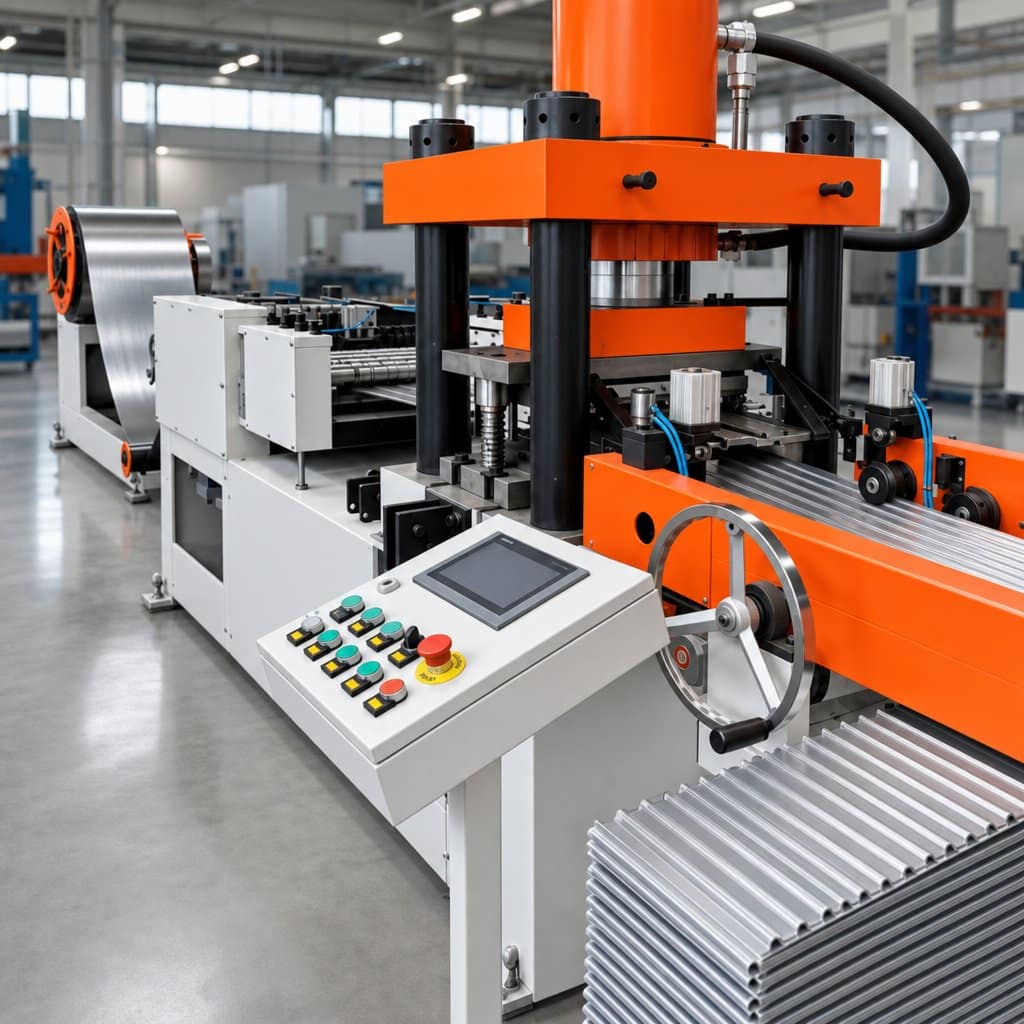
Hydraulic mandrel decoiler
The line starts at the hydraulic mandrel decoiler, which uncoils and continuously feeds steel strip to the forming machine. It takes 5-ton coils up to 545 mm wide, with a hydraulic expansion mandrel for secure holding and photo-eye loop control that synchronizes feed speed with the forming station. Stable, tension-controlled unwinding is the foundation of forming accuracy downstream.
Roll forming machine
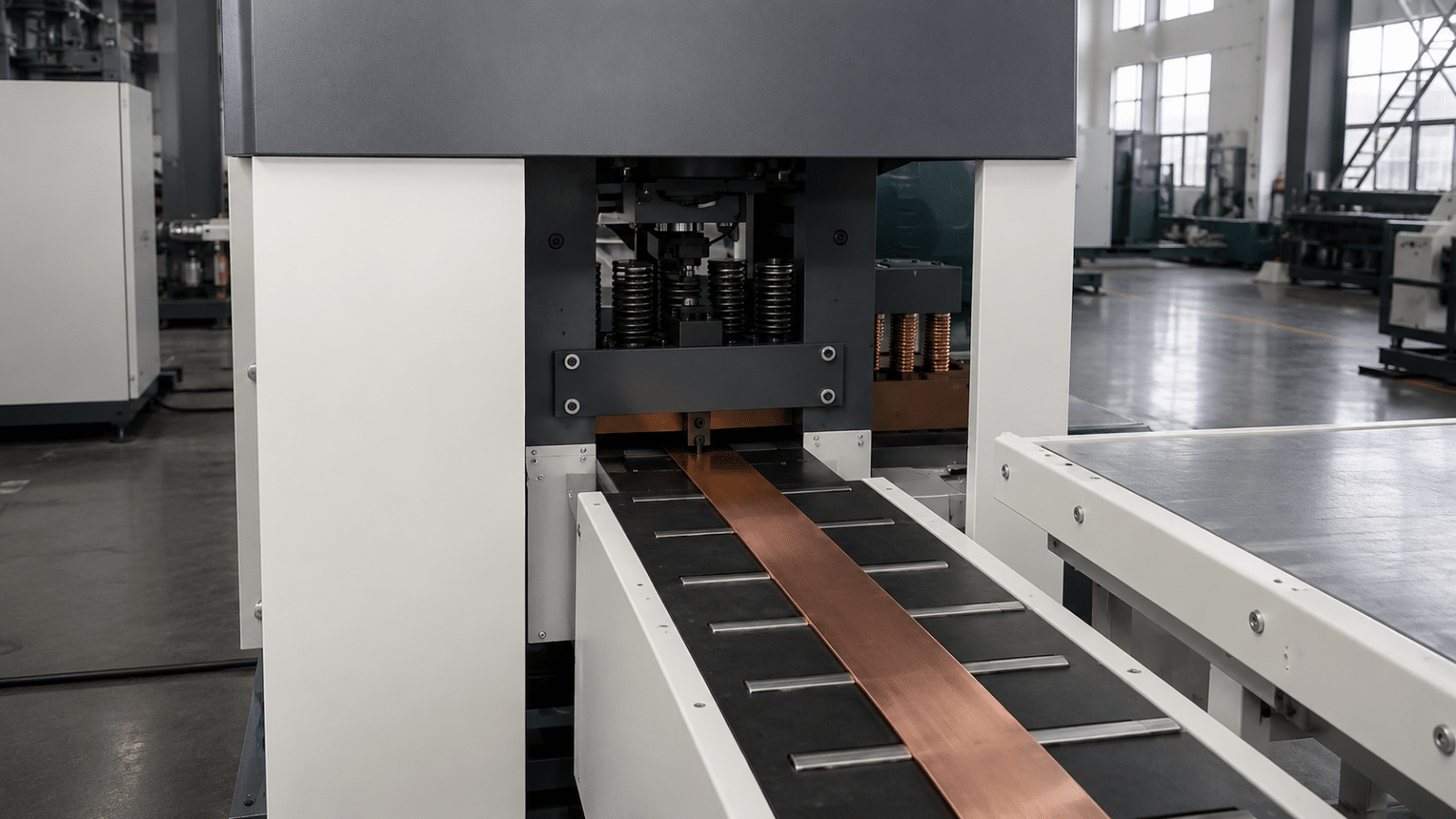
The radiator panel roll forming machine is the heart of the line. It continuously converts strip into corrugated radiator panel halves — oil-flute forming, end flanging, punching, and hydraulic cut-off in one pass, with leveling and length measurement built in. Panel widths cover 300–535 mm with forming accuracy to ±0.25 mm. One pass, four operations: this integration is what makes the line economical.
Stage 2: Joining and Welding — Building the Oil Channels
Turnover and joining machine
Two formed halves become one panel on the turnover and joining machine: it flips one half 180°, aligns the pair to within ≤0.5 mm at the edges, and joins them into the complete oil-channel component — automatically, at line speed, across 250–535 mm panel widths. This is the station that replaces the manual assembly that used to define radiator production’s labor cost.
Multi-spot welding machine
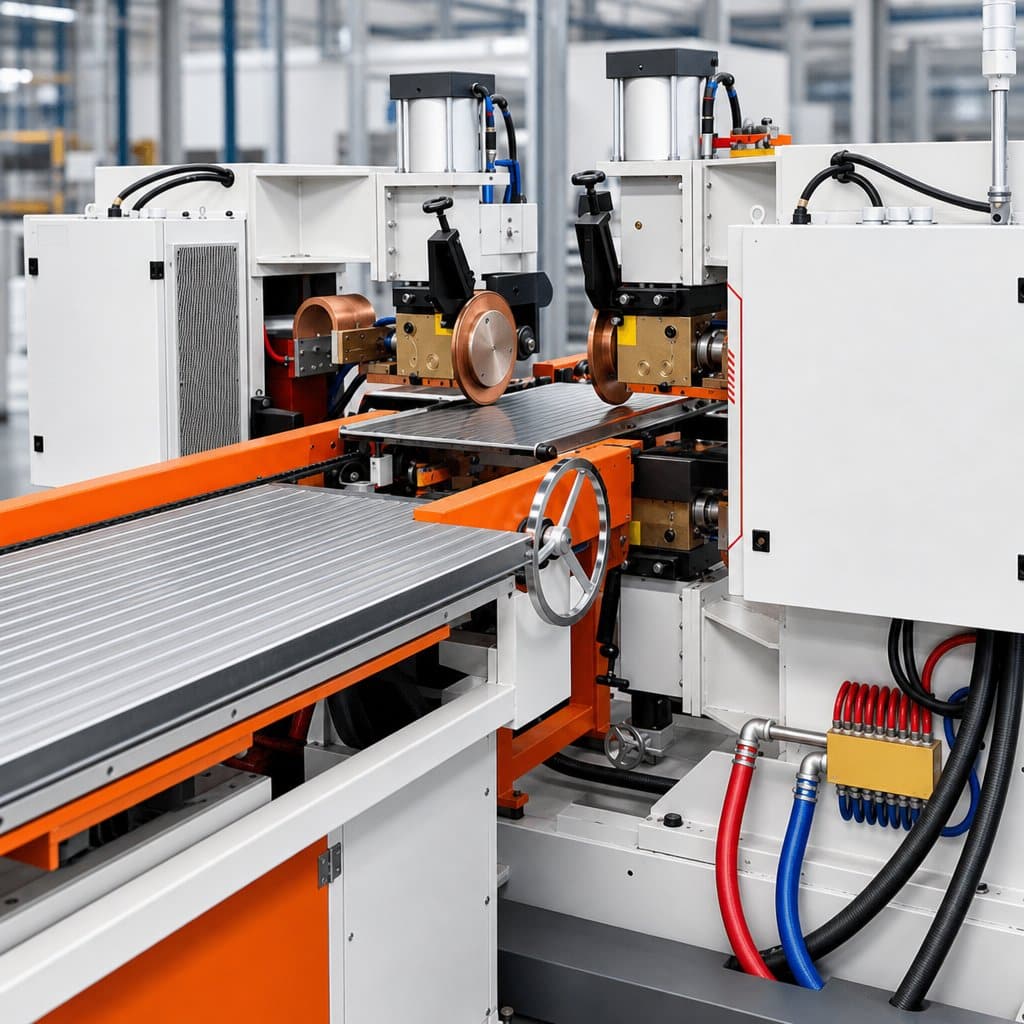
The joined panel is first tacked structurally on the multi-spot welding machine: a gantry welder placing 6 or 12 spots per stroke at 75 mm pitch, with servo indexing, 300 KVA capacity, independent electrode force control, and water cooling. The spot pattern locks the two halves together and forms the internal oil passages.
Dual seam welding machine
The critical oil-tightness step: the dual seam welding machine seals both long edges simultaneously at ≥2.5 m/min, with 2×250 KVA inverter control, dual servo-driven welding wheels, oil-immersed silver bushing electrodes, and automatic wear compensation. Two continuous, oil-tight seams in one pass — this machine is where radiator leak rates are actually decided.
Stage 3: Finishing — Trimming, Cutting, End Welding, Straightening
Rotary shear edge trimming
After seam welding, the edge trimming machine rotary-shears both long edges parallel at 14 m/min, with automatic edge positioning and a flying-knife scrap chopper. Blades are Cr12MoV tool steel at HRC58–60 — the hardness figure that determines how long edges stay clean between regrinds.
End cutting press
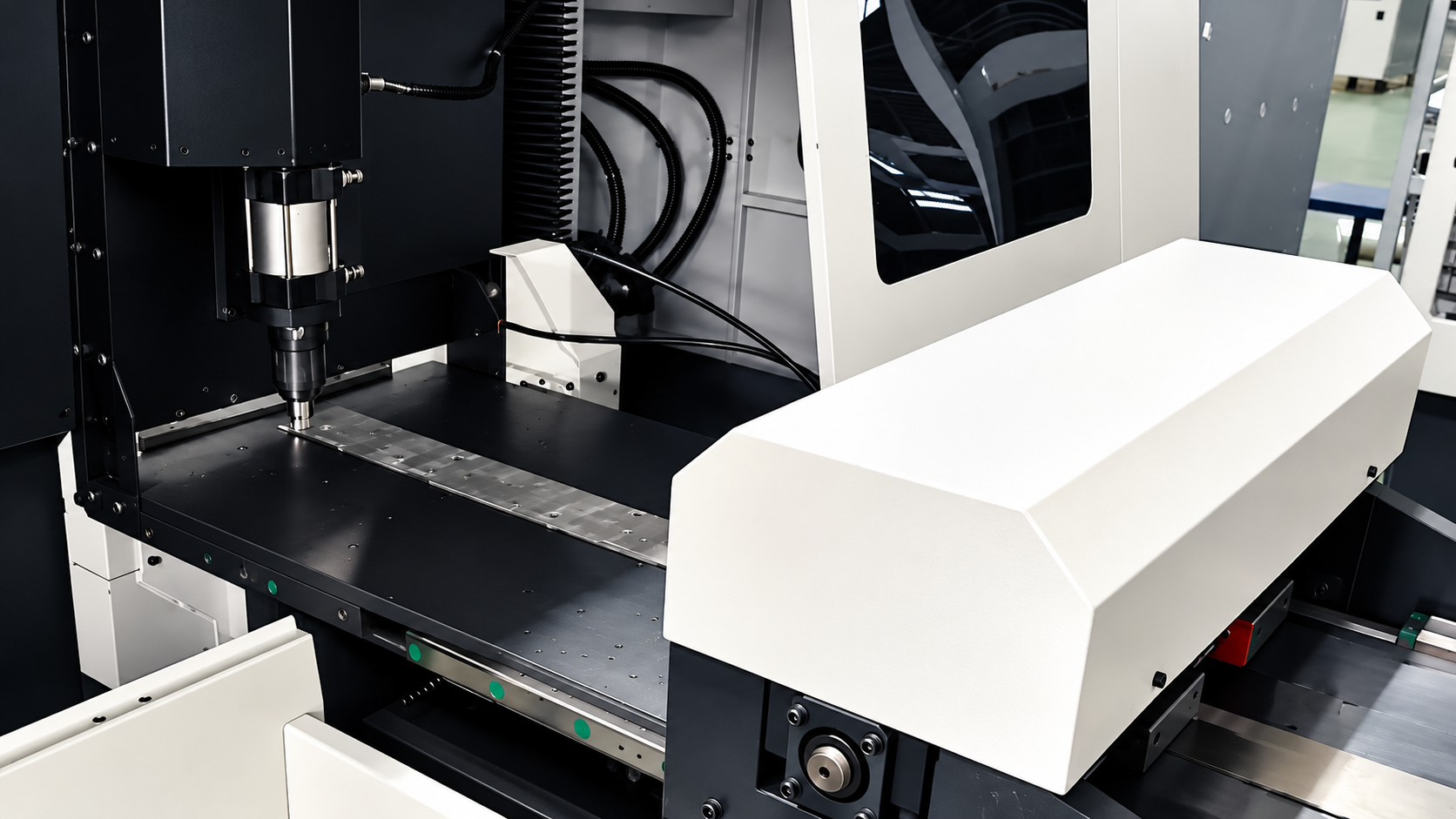
The end cutting machine trims both panel ends to final dimension on a 1200 kN hydraulic press — two panels per stroke, with center positioning and DC53 precision tooling.
End welding machine
The end welding machine seals both short ends — the only openings left after seam welding — completing the oil-tight envelope. Three process options are available (TIG, MIG/MAG, or oscillating seam welding), with four symmetrical torches and precision positioning.
Straightening and leveling machine
Welding heat distorts panels; the straightening and leveling machine removes it. Hardened 40Cr rolls restore flatness at 8 m/min, with adjustable pressure and automatic line synchronization — the dimensional reset before stacking and assembly.
Stage 4: Stacking and Radiator Bank Assembly
Automatic stacking machine
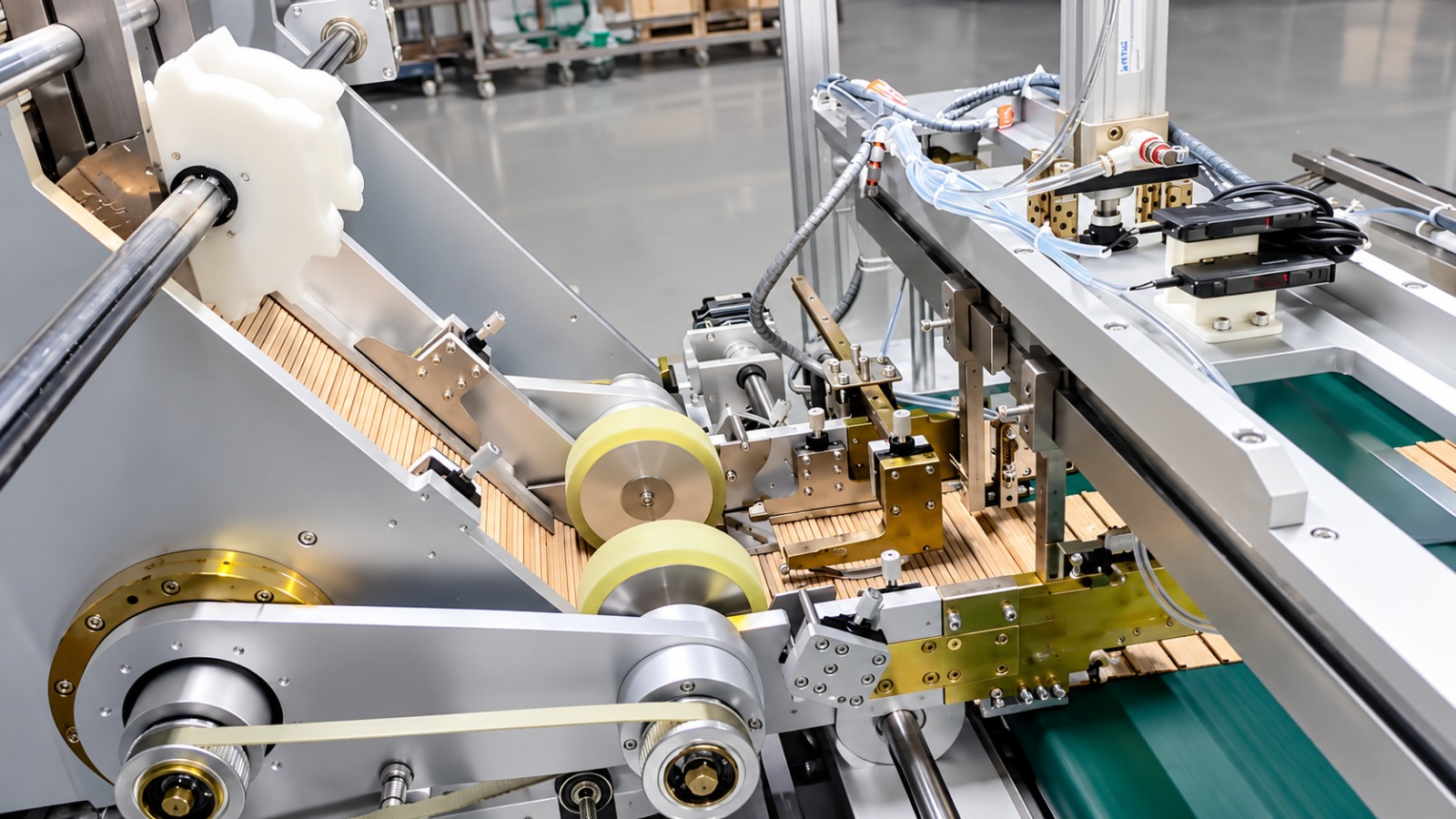
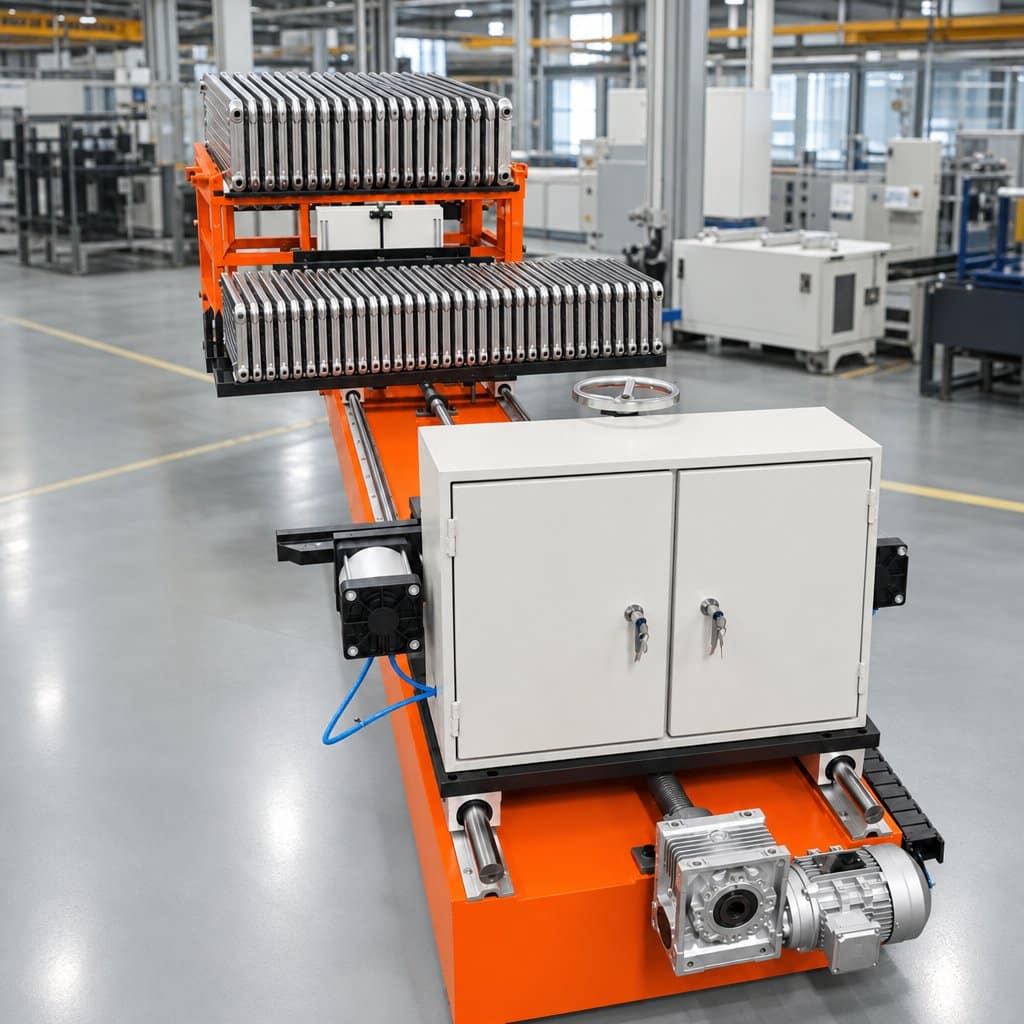
The automatic stacking machine picks up finished panels with electromagnetic lifting, rotates them 90°, and places them into comb racks at 45 mm pitch — dual-rack continuous operation, no manual handling, no panel deformation after welding.
Radiator assembly fixture
Finally, the radiator assembly fixture positions up to 40 panels at 45 mm pitch with precision locating combs and hydraulic clamping, holding panels and header pipes in exact position for header welding — the step that turns a stack of panels into a radiator bank ready for the transformer.
The Complete Line at a Glance
| Station | Machine | Key Specification |
|---|---|---|
| 1. Decoiling | Hydraulic mandrel decoiler | 5 t coils, up to 545 mm width, photo-eye loop control |
| 2. Forming | Roll forming machine | 300–535 mm panels, ±0.25 mm, four operations in one pass |
| 3. Joining | Turnover and joining machine | 180° turnover, ≤0.5 mm edge alignment, 250–535 mm |
| 4. Spot welding | Multi-spot welding machine | 6/12 spots per stroke, 75 mm pitch, 300 KVA gantry |
| 5. Seam welding | Dual seam welding machine | Both long edges at ≥2.5 m/min, 2×250 KVA inverter |
| 6. Edge trimming | Rotary shear edge trimming machine | 14 m/min, Cr12MoV blades HRC58–60 |
| 7. End cutting | End cutting machine | 1200 kN hydraulic, two panels per stroke, DC53 tooling |
| 8. End welding | End welding machine | TIG / MIG/MAG / oscillating seam, four torches |
| 9. Straightening | Straightening and leveling machine | 8 m/min, hardened 40Cr rolls, adjustable leveling |
| 10. Stacking | Automatic stacking machine | Electromagnetic lifting, 90° rotation, 45 mm pitch, dual rack |
| 11. Assembly | Radiator assembly fixture | Up to 40 panels at 45 mm pitch, hydraulic clamping |
How to Plan Your Line: Capacity and Investment
Line planning follows three questions:
- Panel size range — the line covers 250–545 mm widths; confirm your largest transformer ratings against panel height requirements with your supplier
- Full automatic vs staged investment — the line is modular: forming and welding stations first, finishing and stacking automation later. A US manufacturer’s staged expansion shows how dual-spec production can grow in phases
- Make vs buy — buying radiators from specialists works at low volume; an in-house radiator workshop starts paying back when purchased-radiator cost, lead time, and quality escapes justify the line
Real installations show the range: a full automatic line in Brazil, a high-tempo line in Korea, and a multi-spec line in Russia. For overall budget planning across your transformer equipment, see our complete line setup and budget guide.
Frequently Asked Questions
How many machines make a complete radiator production line?
Ten processing stations plus assembly: decoiler, roll forming, turnover and joining, multi-spot welding, dual seam welding, edge trimming, end cutting, end welding, straightening, automatic stacking, and the radiator assembly fixture. The line is modular — stations can be commissioned in stages.
What decides whether a radiator leaks?
The dual seam welding machine. It creates the continuous oil-tight seams along both long edges — electrode condition, welding current stability, and wheel wear compensation are the variables that control leak rate. This is the machine to audit hardest.
What panel sizes can the line produce?
Panel widths from 250 to 545 mm, with coil widths up to 545 mm and forming accuracy of ±0.25 mm. Panel height and oil-channel pattern are set by the roll forming tooling and punching dies.
Can the line run multiple panel specifications?
Yes — width changes are handled at the decoiler and forming tooling, and pitch settings adjust downstream. Multi-spec production is a standard configuration, as demonstrated in installations running dual-spec and multi-spec schedules.
Summary: Ten Stations, Two Goals
Every machine on the radiator line serves the same two goals: oil-tight welds and consistent panel geometry. Forming sets the dimensions, welding seals the oil channels, finishing restores the accuracy welding distorts, and stacking plus assembly turn panels into banks. Plan by panel range and capacity, invest in stages if volume is still growing, and judge every station by what it does to the leak rate.
Planning a radiator production line? Tell us your panel specifications, transformer ratings, and target output per shift — we will configure the line and the stage plan for your RFQ.
📞 Phone: +86-15958243831
📧 Email: sales@tranfovia.com
💬 WhatsApp: https://wa.me/8615958243831
🌐 Website: tranfovia.com