| Equipment | Transformer Radiator Production Line |
| Customer | A transformer panel radiator manufacturer in South Korea (serving the Korean market) |
| Application | Continuous, high-tempo volume production of 520 mm panel radiators |
Customer information has been anonymized; only region and industry attributes are retained. Performance figures are acceptance and typical-condition reference values and may vary depending on line configuration.
1. Customer Background
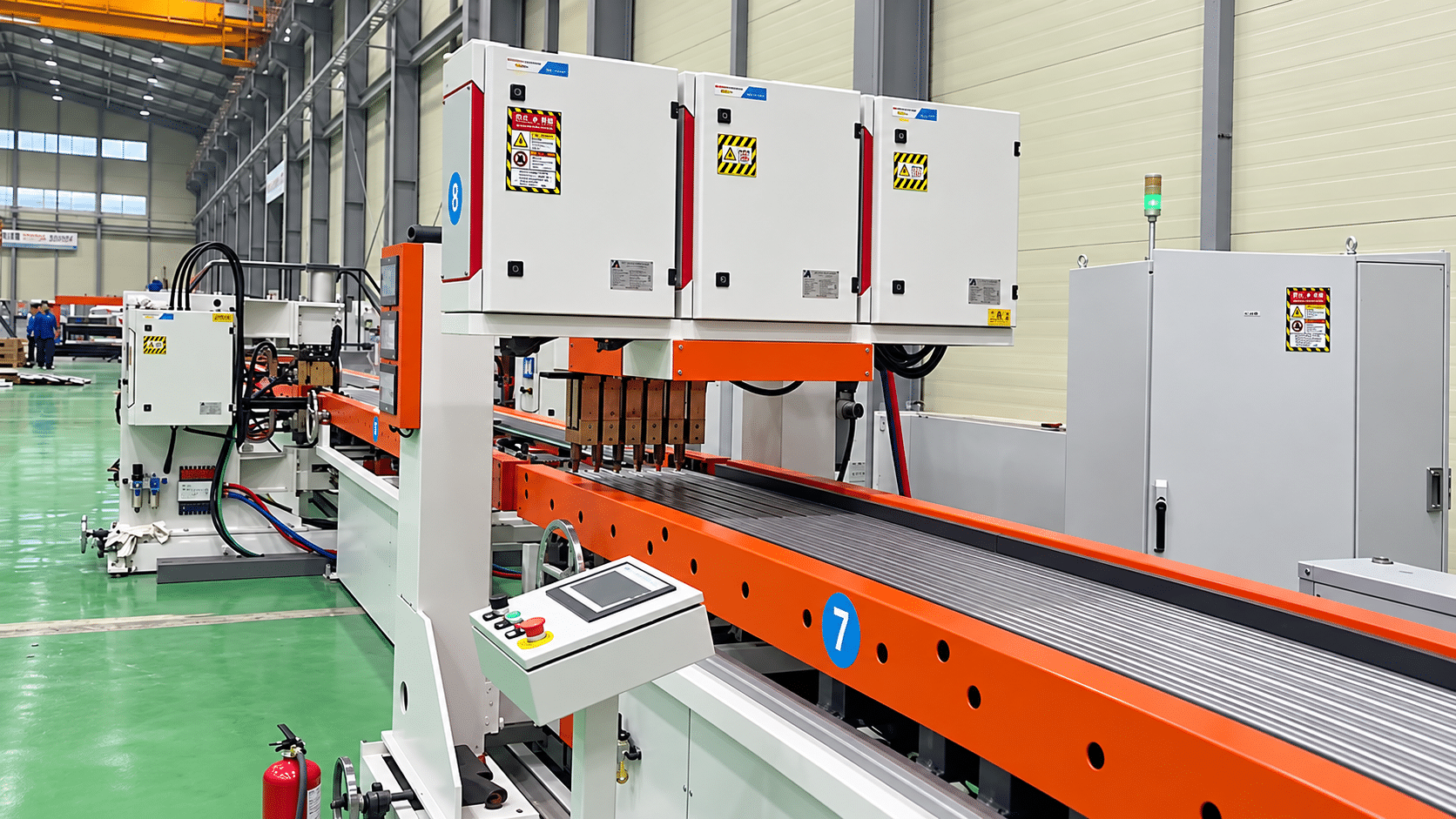
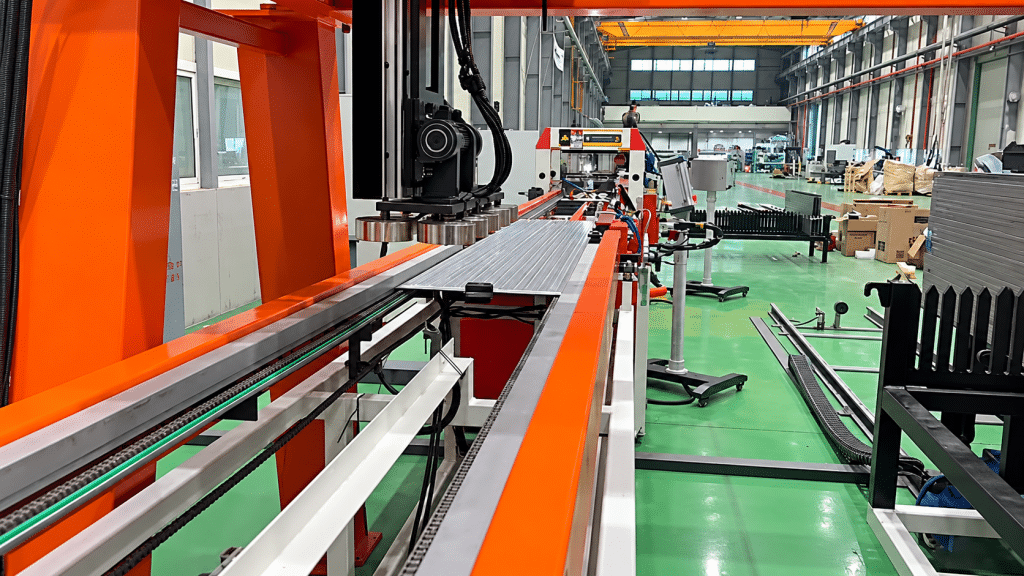
This customer supplies panel radiators to transformer manufacturers in Korea, with 520 mm as the main fin width. The plant itself is a modern workshop — epoxy flooring, bridge cranes, numbered and visually managed stations — and expectations for the equipment went beyond “it makes panels”: stable tempo, consistent appearance, and traceable settings. Its transformer customers run just-in-time assembly schedules, and a radiator delivery slip propagates directly into their production plans, so predictable output is a sales argument, not just an operations metric. Korean transformer plants also expect their suppliers to document processes, not just results. Korean manufacturing is particularly sensitive to weld appearance and first-pass yield; as a visible component on the transformer, a radiator’s surface quality directly shapes how the transformer plant rates its supplier. After comparing several equipment sources, the customer chose our automatic line and made tempo and consistency the focus of acceptance.
2. Industry Pain Points
The customer’s existing equipment capability was not poor — what dragged performance down were three things:
Tempo fluctuation. Stations were connected by people, so wherever one operator slowed, the line slowed. Shift output rose and fell, and delivery promises were hard to keep.
Appearance consistency. Rolling marks, weld ripples and edge burrs varied noticeably between batches under manual operation, and the transformer plants’ incoming inspection raised occasional objections.
Hidden cost of odd specifications. Although 520 mm dominated, occasional small special lots required long adjustments that broke the normal tempo.
None of these showed up as dramatic failures; they showed up as variance — in output, in finish, in inspection results — and variance is exactly what mature customers measure.
3. Solution
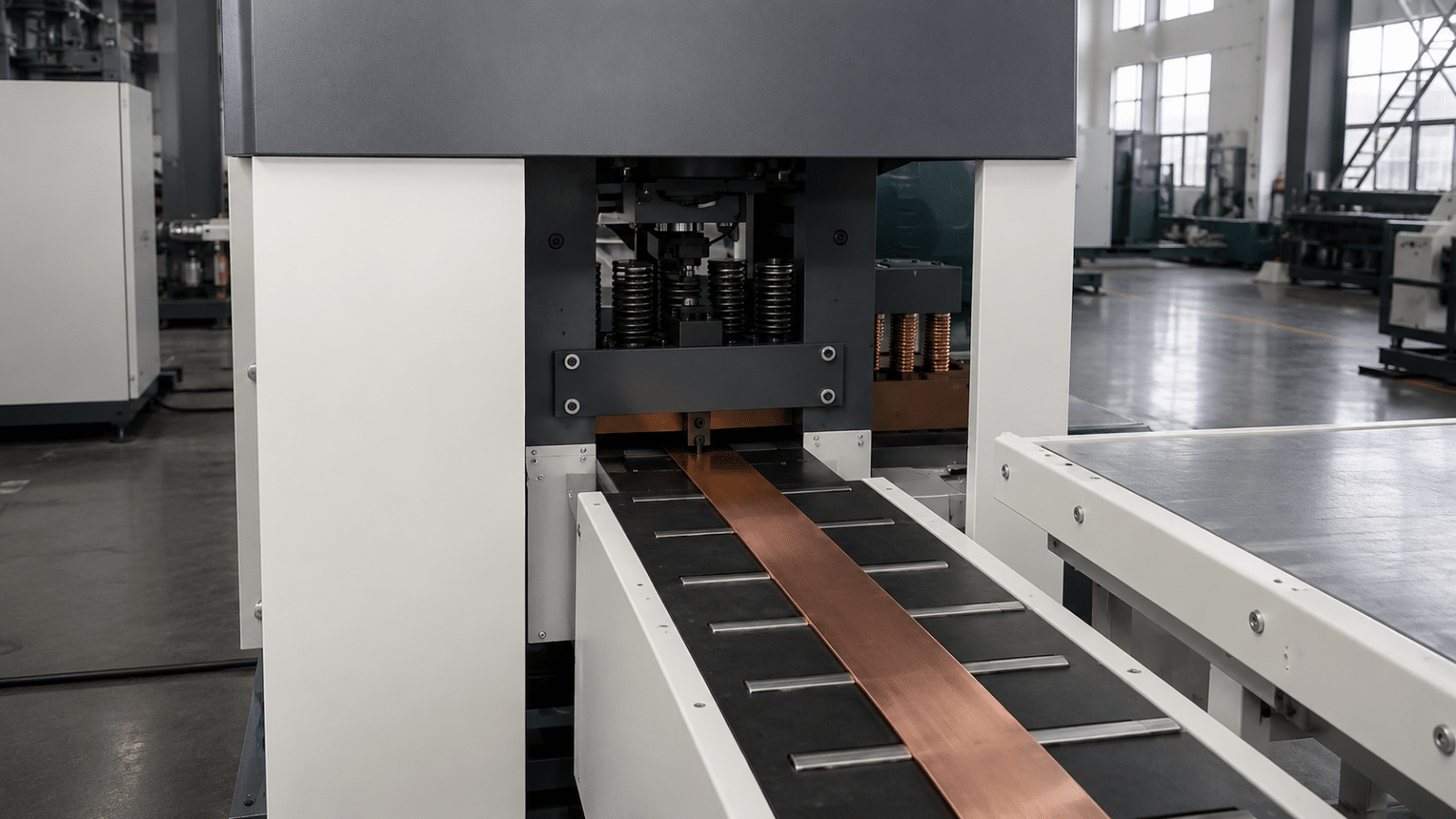
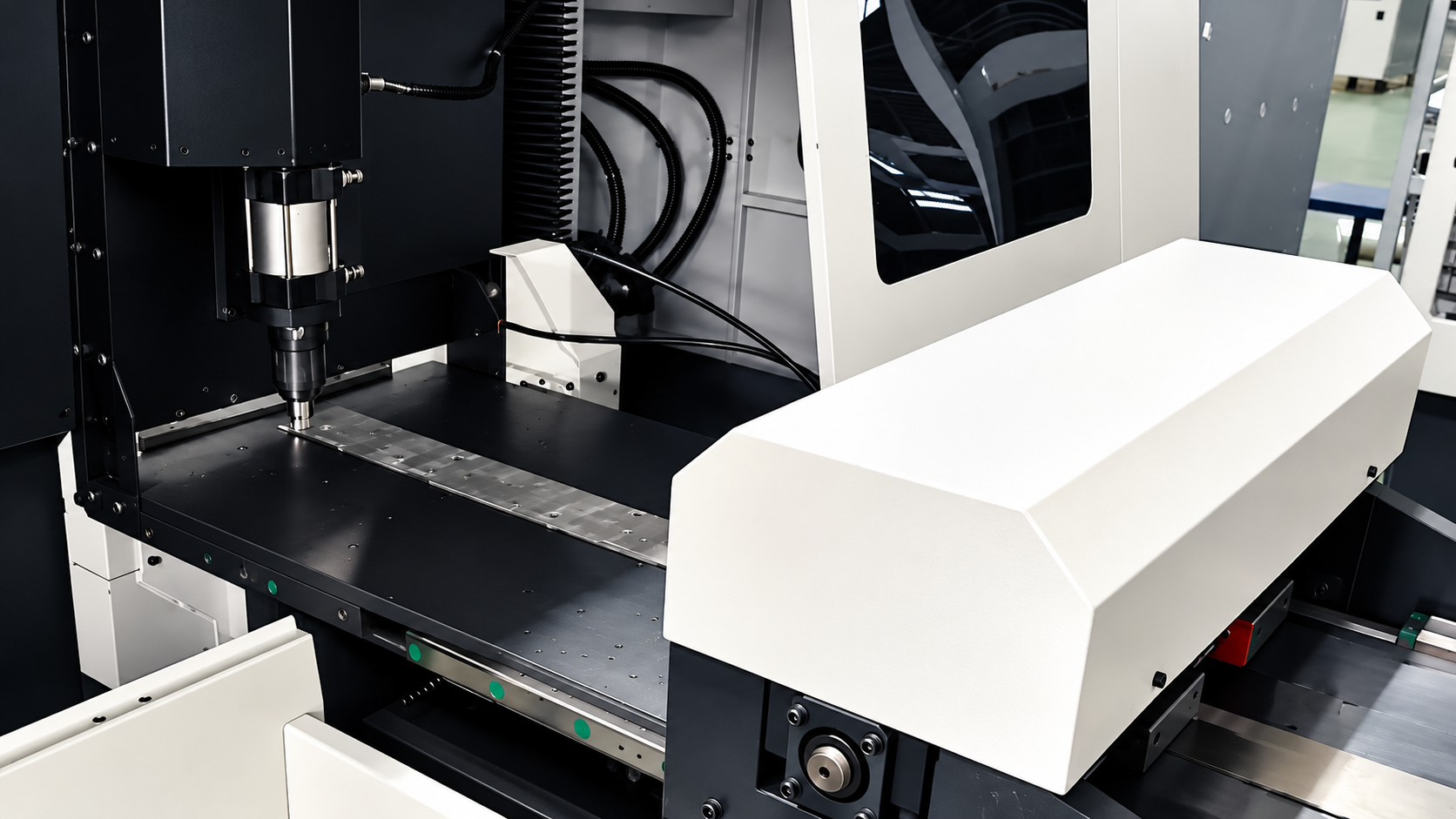
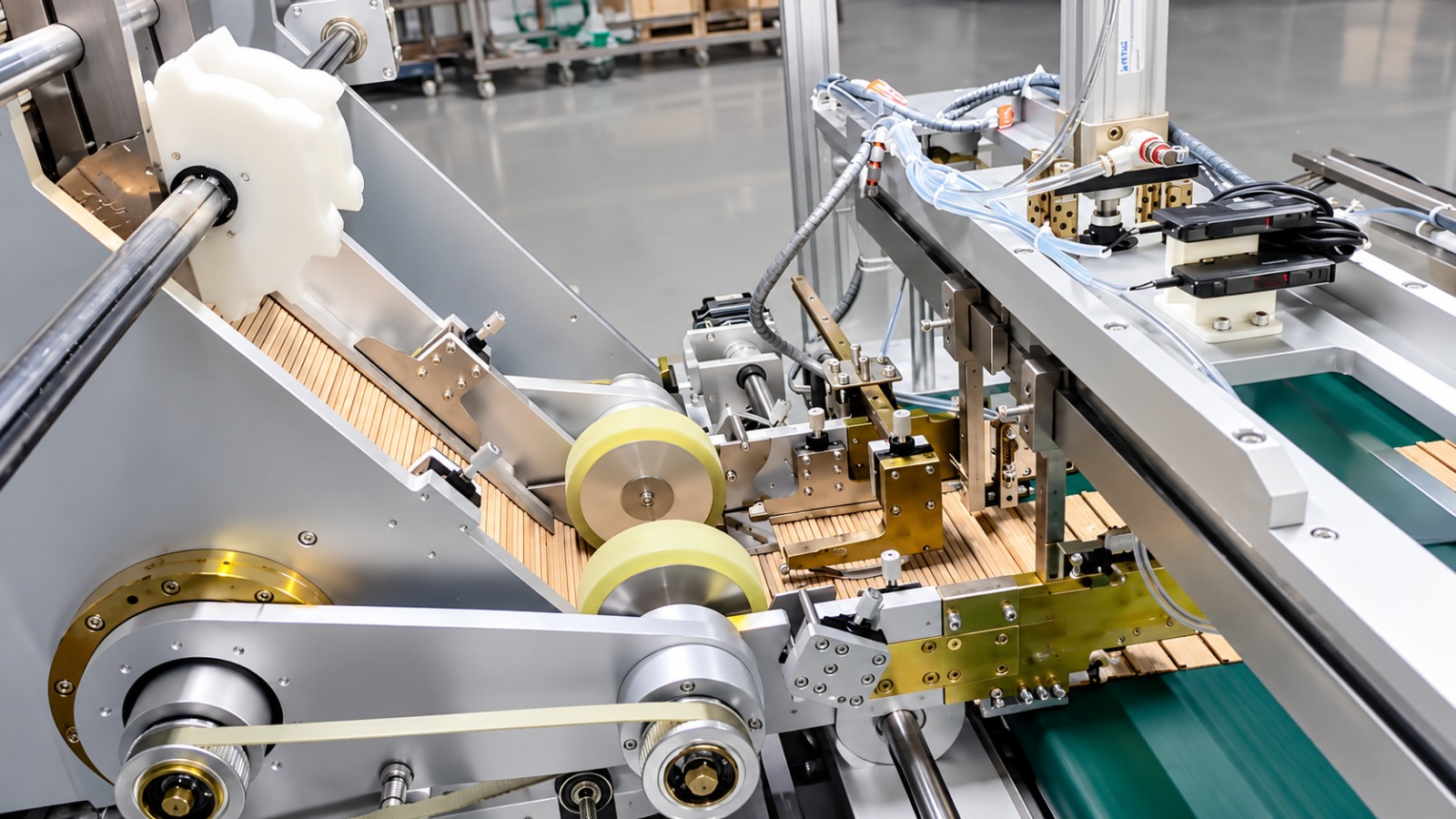
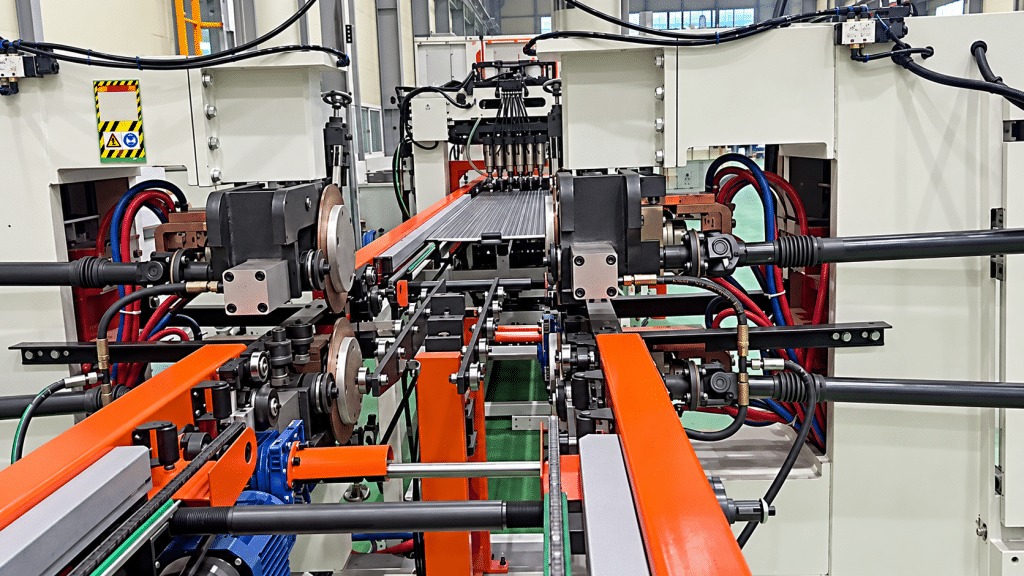
The line follows the standard ten-stage flow: decoiling → roll forming (leveling and length measurement included) → pairing → gantry multi-spot welding → variable-frequency bilateral seam welding → edge rolling shear → hydraulic end cutting → end welding → automatic leveling → gantry stacking. Commissioning and acceptance were organized around three words:
- Tempo. A photoelectric loop between decoiler and forming unit matches speeds automatically; panels travel between stations on chain conveyors at rolling speeds of 9–12 m/min, giving 60–75 panels/hour at 2,000 mm center distance — independent of which crew is on shift.
- Consistency. The multi-spot welder sets current pair by pair with servo-indexed feeding, so spot position and force repeat every cycle; the bilateral seam welders hold constant line speed on twin servo drives with an on-board wheel dresser, keeping weld appearance stable across batches.
- Fewer, sharper adjustments. Enter the specification on the touch screen and the line runs; changing fin width means swapping roll stands (520/535 share one pair), so special small lots no longer interrupt the main flow. Center distance within ±0.25–0.5 mm and diagonal error within 2 mm are held by the measuring and leveling mechanisms.
Quality checks are built into the flow rather than appended at the end: length accuracy is measured continuously by the encoder wheel, weld parameters are set and locked per recipe, and the pressure test at completion gives each radiator a documented tightness record that travels with it to the transformer plant.
Acceptance was written around these three words. The technical agreement set the tempo target and the tolerance bands; the trial production ran a full shift at 520 mm, and the measured output, dimensional samples and weld appearance were compared against archived reference panels — a method the customer’s quality team already trusted.
4. Implementation and Commissioning
Installation followed the standard three steps: verify foundations, total power supply (about 315 KVA) and the cooling-water circuit, then run each machine empty; thread the 520 mm width through the line, tuning parameters and locking tempo station by station; finally, accept with test cuts and welds against the technical agreement. The customer’s team took part in the full parameter-tuning process and merged their existing inspection checklist with our English operation and maintenance manuals into one daily check document — a key reason the line has run smoothly since: the equipment’s standard practice now lives inside the customer’s own system. Acceptance panels from the trial batches were archived as physical references for future incoming-inspection comparisons.
5. Acceptance Results
Key acceptance indicators (design and acceptance reference values; actual figures depend on the configured line):
| Indicator | Value / Result |
| Center distance error | ±0.25 to ±0.5 mm (by specification) |
| Diagonal error | ≤ 2 mm |
| Single-panel pressure test | Positive ≥ 0.15–0.2 MPa, negative ≥ 133 KPa, no distortion |
| Assembly tightness | 0.2 MPa held for 30 minutes |
| Production rate | 60–75 panels/hour (at 2,000 mm center distance) |
| Operators for the whole line | 1–2 people |
The change that mattered most: shift output now depends on the line, not the person — tempo is set by the equipment, appearance by parameters, and incoming-inspection objections from transformer plants have dropped noticeably.
6. Customer Feedback
“We were not asking for the fastest line — we wanted a line that delivers the same output every day. With the parameters locked, shift output is stable and the weld appearance is uniform, which makes things much easier with the transformer plants.” — Customer Production Supervisor
7. Summary and Next Steps
In mature manufacturing markets, the competition for radiator lines has moved from “can it run automatically” to “can it run automatically, the same way, every day”. This line fixes tempo and consistency through programmed parameters and mechanical accuracy, and by involving the customer’s team in tuning and daily checks, it keeps the equipment’s best condition inside normal operation. With tempo fixed by the line and appearance fixed by parameters, the conversation with customers shifts from inspection results to delivery planning — which is exactly where a component supplier wants to be.
To configure a line around your tempo and quality targets, contact the TRANFOVIA technical team for a proposal.
Related guide: For the complete machine-by-machine breakdown of the line, see our transformer radiator production line guide.
- WhatsApp: +86-15958243831
- Email: sales@tranfovia.com
- Website: https://tranfovia.com/