Choosing a Pressboard Cylinder Rolling Machine: 6 Numbers That Matter More Than the Price
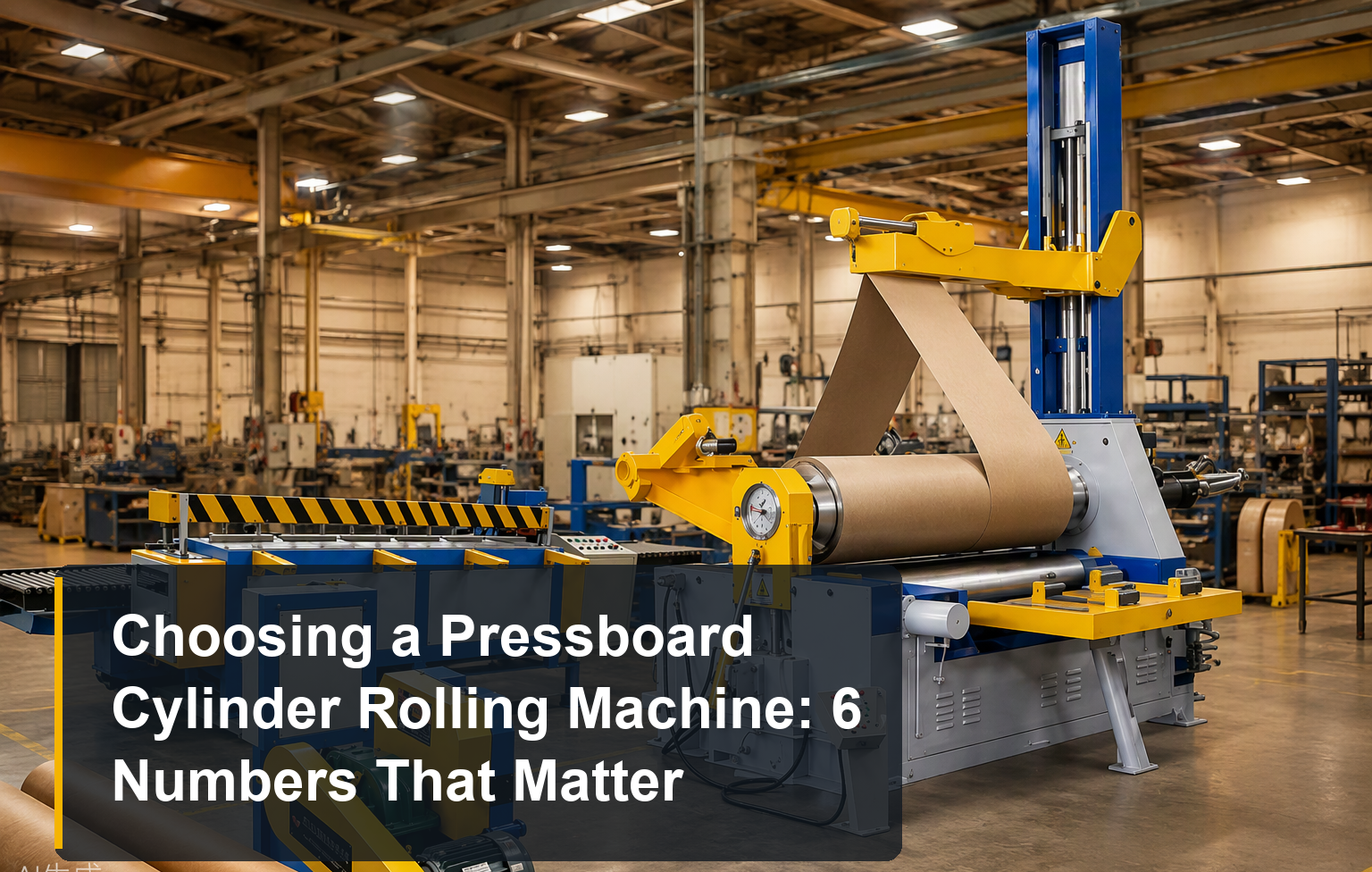
Transformer insulation cylinders start as flat pressboard. Somewhere between the beveled edge and the bonded joint, that flat sheet has to become a round, true cylinder — and the machine that does it looks deceptively simple. Three rollers, a drive, a control panel. Prices across suppliers vary widely, and it is tempting to shop on the number at the bottom of the quotation.
Don’t. A pressboard cylinder rolling machine is one of those purchases where the specification sheet quietly decides your product quality for the next decade. Here are the six numbers and features that actually matter, and what each one means on your shop floor.
What the Rolling Machine Does in the Cylinder Chain
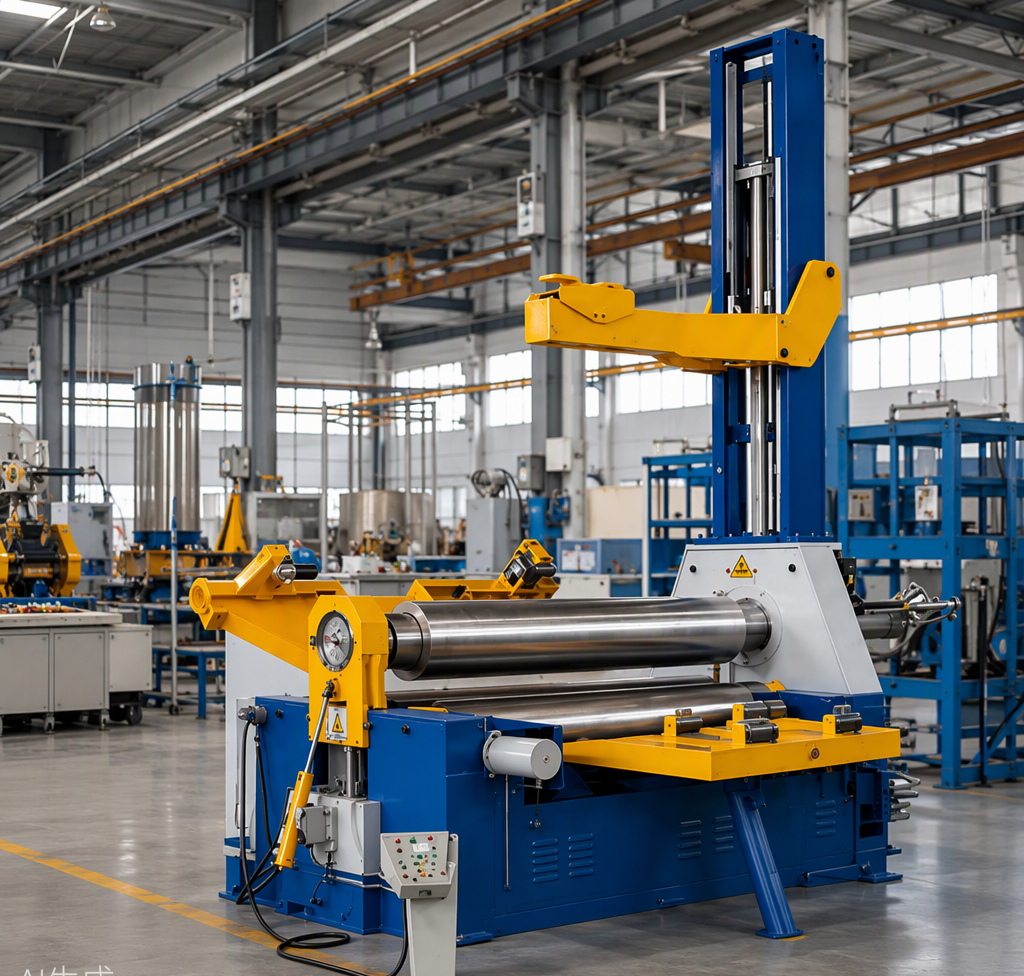
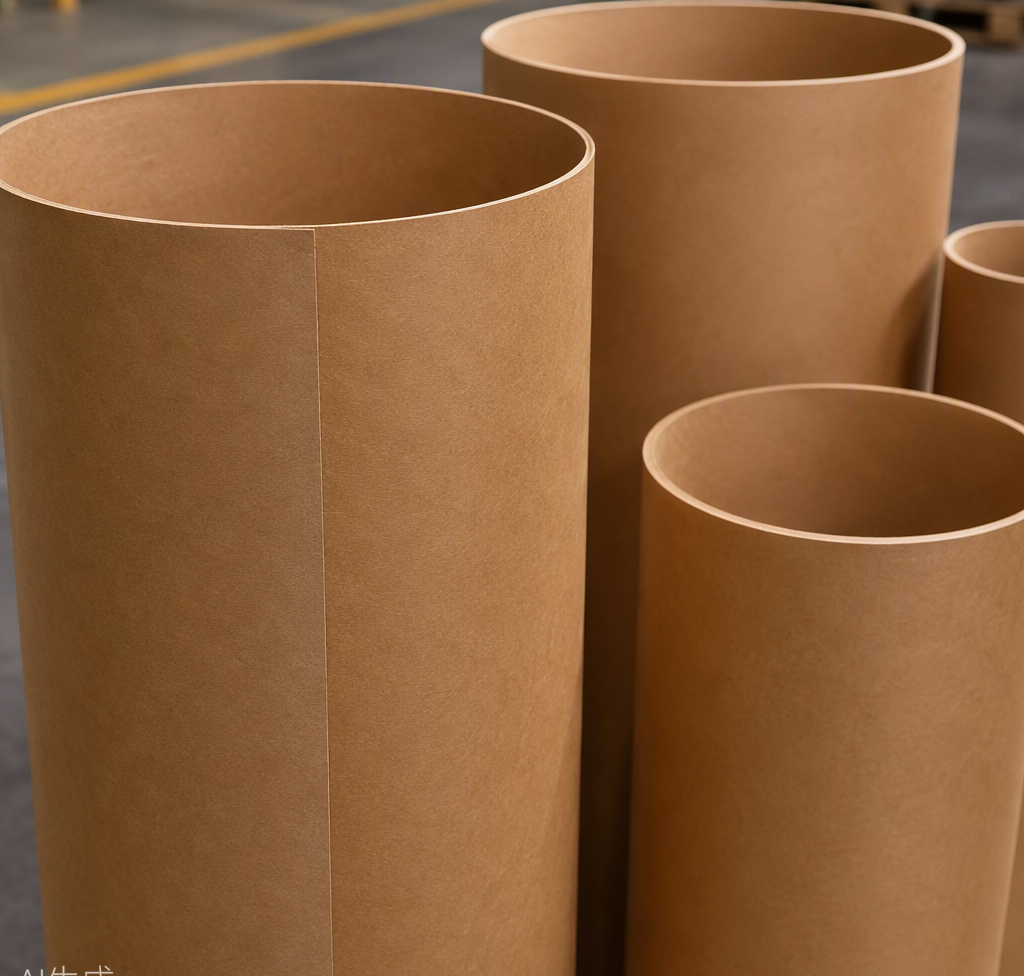
Pressboard cylinder production is a three-stage chain. First, a beveling machine mills the board edge into a controlled slope for the overlap joint — the slope logic is covered in our pressboard beveling machine guide. Second, the rolling machine pre-forms the beveled sheet into an arc or full cylinder. Third, a cohesion machine heats and presses the joint to bond it.
The rolling stage in the middle sets the geometry. If the cylinder leaves the rollers out-of-round, tapered, or with a flat spot near the joint, no amount of downstream heating and pressing will fix it — the defect is locked into the insulation structure and eventually into the transformer’s dielectric clearances.
Why a General Plate Roll Is the Wrong Tool
The most common shortcut we see is adapting a general-purpose metal plate rolling machine. It usually ends the same way, for reasons baked into the design:
- Roller surfaces are wrong. Metal rolls have bare steel surfaces sized for steel plate. Insulation pressboard needs plated or polyurethane-coated rollers that grip without marking or crushing the board surface.
- No large-diameter support. Rolling a Φ2000 mm cylinder from a 3 mm pressboard sheet means handling a large, floppy arc that wants to collapse under its own weight. Metal plate rolls have no mechanism for this; a dedicated machine carries a support device that guides the sheet through the forming zone.
- Control logic mismatches the job. Pressboard forming is iterative — jog, check, correct, continue. Dedicated machines provide forward, reverse, jog, continuous rotation, and roller-lowering modes for exactly this rhythm.
The 6 Numbers That Matter
| # | Parameter | Specification | Why It Matters |
|---|---|---|---|
| 1 | Cylinder diameter range | Φ300–Φ3500 mm | Must cover your smallest LV cylinder and largest HV winding cylinder — check both ends, not just the middle |
| 2 | Workpiece length | 1500–4000 mm, customizable | Sets your maximum cylinder height; confirm the customized range in writing if your designs exceed standard |
| 3 | Pressboard thickness | 1–8 mm | Thick end insulation and multi-layer cylinders live at the top of this range — verify the machine holds roundness at 8 mm, not just at 2 mm |
| 4 | Rolling speed | 4 m/min | Deliberately slow — pressboard forming quality comes from controlled, correctable passes, not throughput |
| 5 | Roller surface | Plated or polyurethane-coated | The difference between a gripped sheet and a scratched one; ask which option suits your board grade |
| 6 | Operating modes | Forward / reverse / jog / continuous / roller-lowering | Jog and reverse are what let an operator correct a forming pass instead of scrapping a sheet |
Notice what is not on this list: total power, machine weight, brand of motor. Those matter for shipping and installation, but none of them touches the roundness of your cylinders.
Two Questions the Spec Sheet Won’t Answer for You
“Is it CNC?” Some suppliers advertise CNC control loosely. The honest standard configuration is an electrical control panel with the operating modes above — CNC positioning should only enter the conversation if it is separately confirmed for the configuration being offered. If a supplier claims CNC, ask what exactly is numerically controlled: roller position? Repeat positioning with limit control? Vague answers here predict vague machines.
“Will it hold roundness on my board?” Pressboard grades differ in stiffness and springback. The only reliable proof is a test roll: send your actual pressboard — your thickness, your width — and ask for a rolled cylinder back, with diameter measurements at several heights. A dedicated cylinder rolling machine with an adjustable upper roller and repeatable limit positioning will pass this test; a machine stretched beyond its design envelope will not.
What a Complete Installation Looks Like
Rolling machines rarely work alone. At an insulation plant in Indonesia, a complete pressboard cylinder production line runs the full chain — beveling, rolling, and bonding as matched stages — which is the configuration that removes quality arguments between machine suppliers: one party owns the joint quality from bevel to bond.
That integration question is worth asking even if you buy machines separately: will the bevel angle your beveling machine produces match the overlap your cohesion machine expects? Suppliers who build the whole chain can answer it; those who build one machine often cannot.
How to Specify for a Quotation
Before you request prices, fix your envelope:
- Diameter range — smallest and largest cylinder you produce today, plus where your designs are heading
- Cylinder length — your maximum, and whether 4000 mm covers it or you need a customized range
- Thickness range — including the thickest board you roll, not the average
- Board grade — so roller surface and pressure settings can be matched
- Upstream and downstream equipment — existing beveling and bonding machines, if any, so interfaces match
Then compare quotations against the six numbers above — and run the test roll before you sign. The machine that passes on your material, at your thickness, at your largest diameter, is the right one. The price difference between suppliers is real; the cost of cylinders that fail roundness inspection is far larger.
Have your cylinder drawings ready? Send your diameter range, lengths, and board thicknesses — we will confirm the configuration and arrange a test roll on your material.