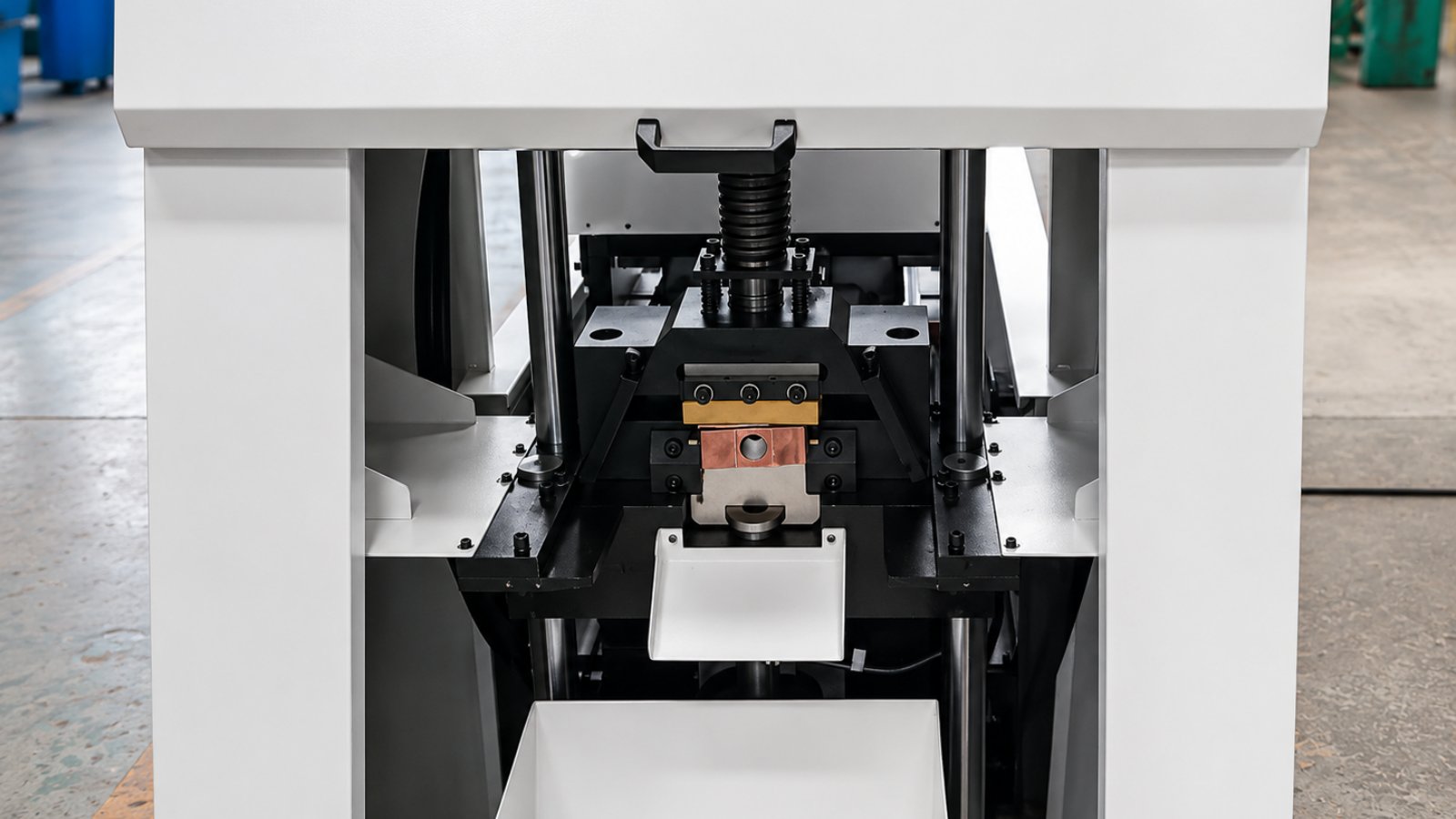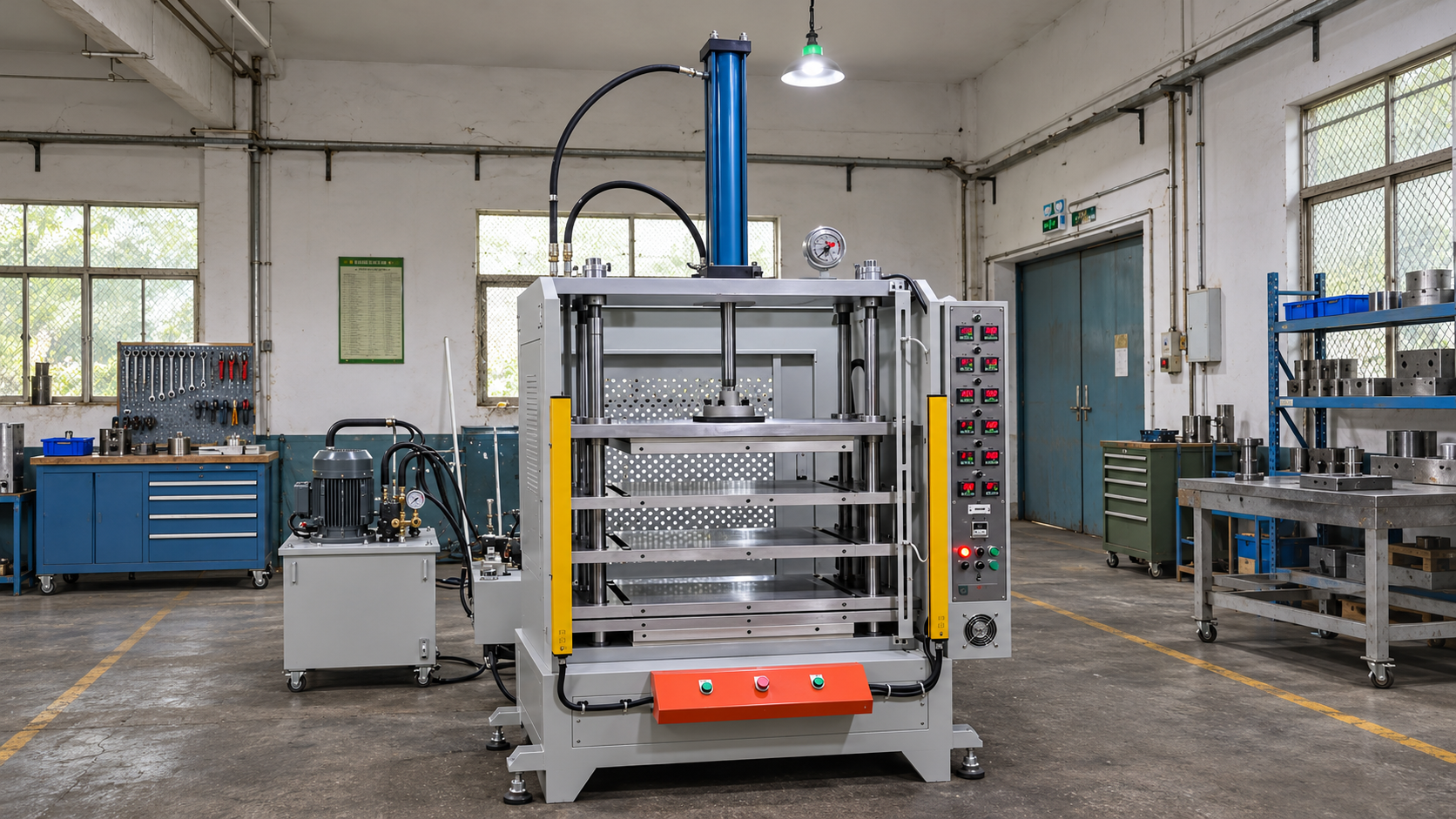
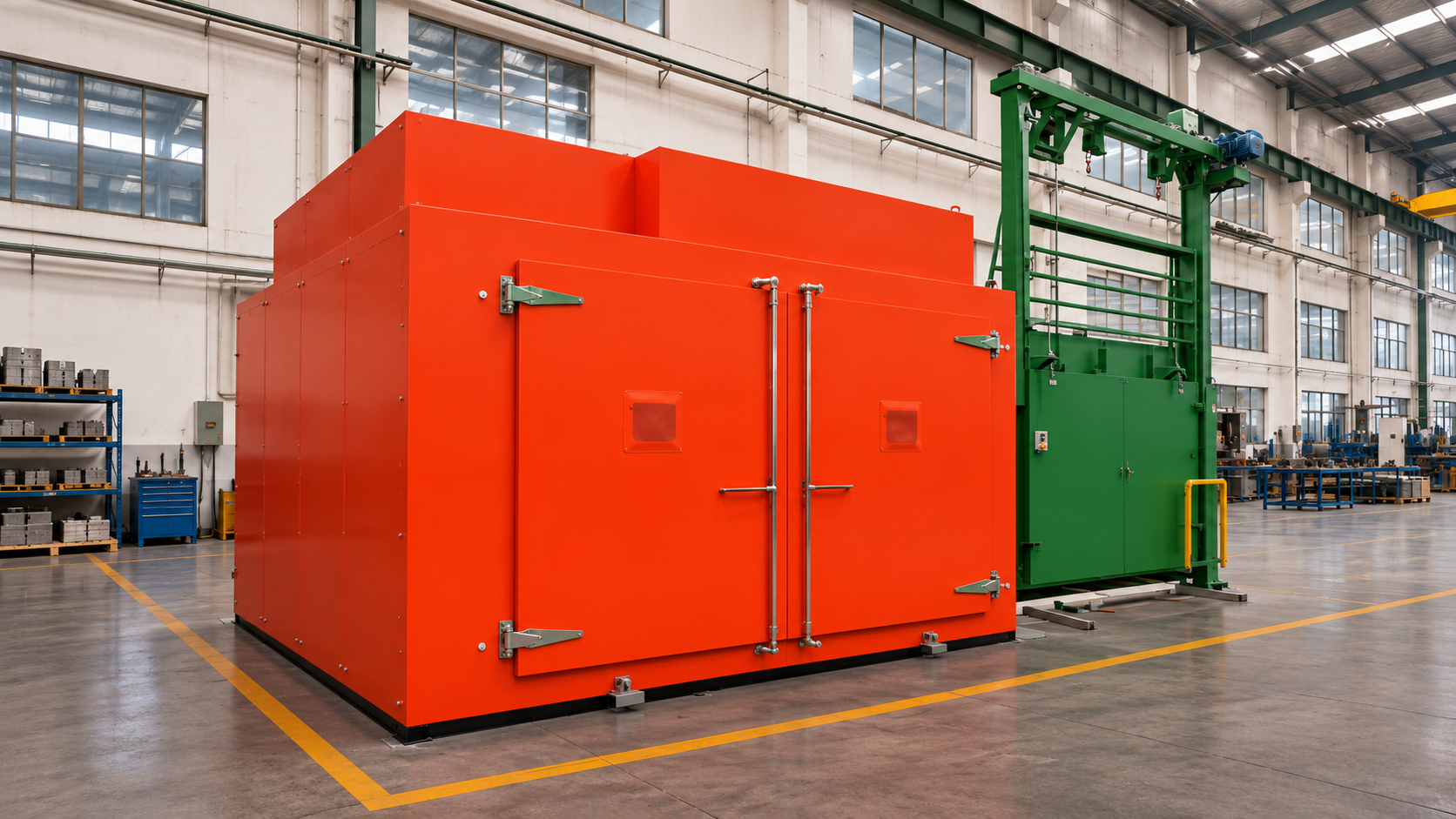
| Equipment | Large Generator Rotor and Stator Curing Oven (electric trolley rated 300 t, HMI + PLC with PID control) |
| Customer | Large generator manufacturer in Quebec, Canada |
| Application | Insulation varnish curing for hydro and wind generator stators and rotors |
Customer information has been anonymized. Technical figures are design and acceptance reference values and may vary depending on configuration and site conditions.
A generator manufacturer in Quebec used to send impregnated stators and rotors out for curing in a third-party oven. As its workpieces grew, both schedule and curing curve moved out of its own control.
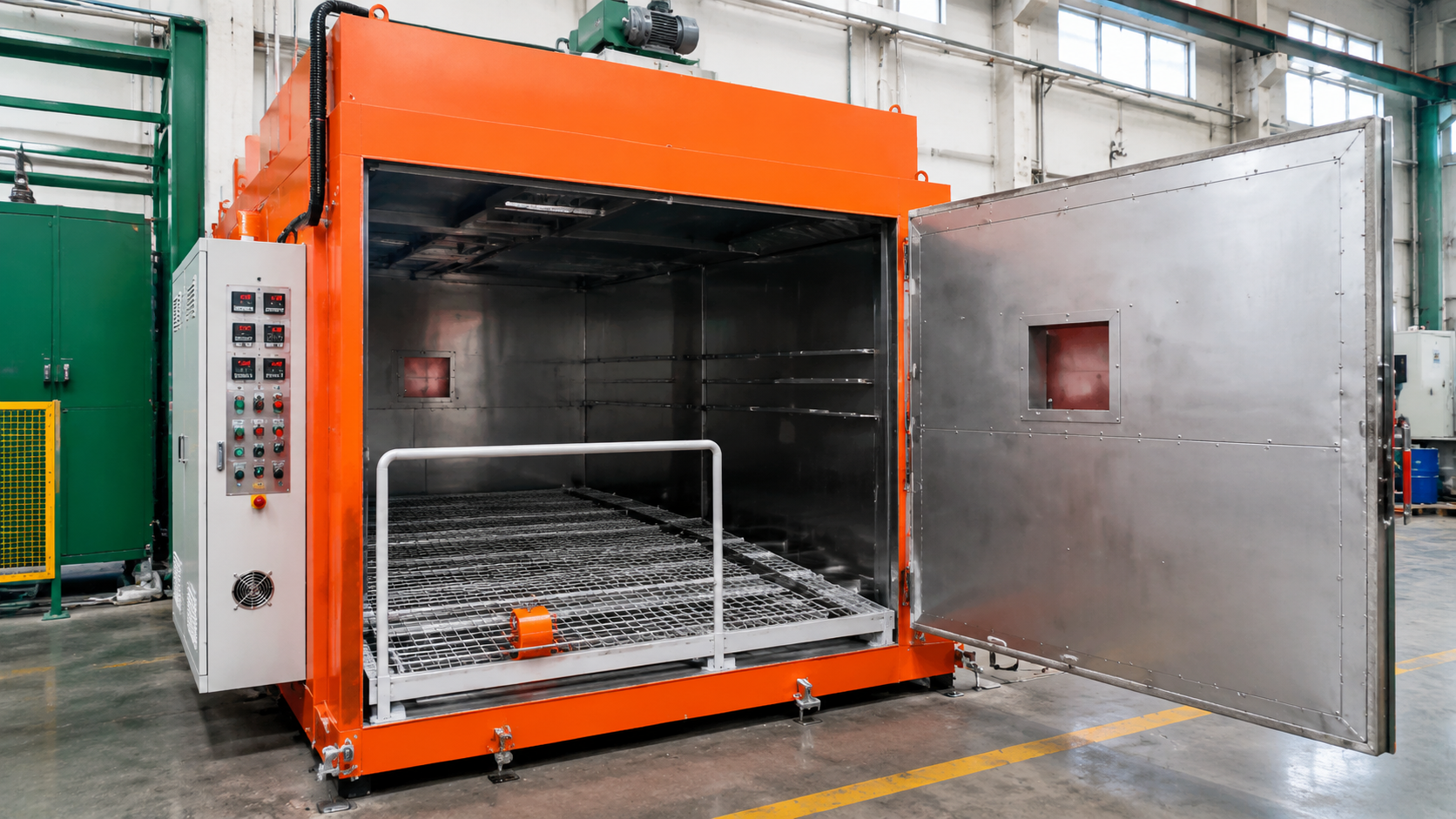
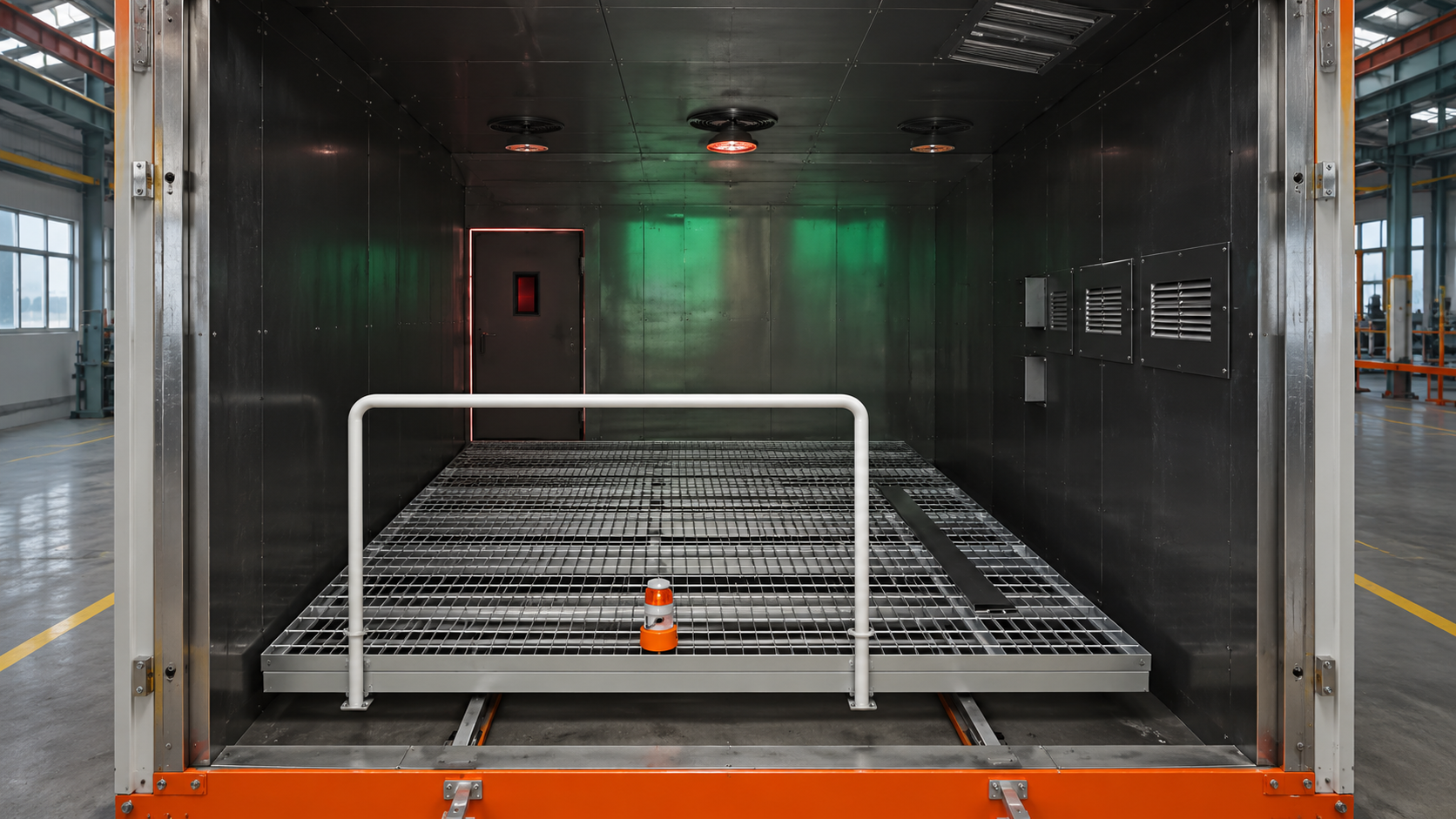
Tranfovia configured an HW Series Curing Oven for High-Rating Generators around the largest workpiece in the shop: an electric trolley designed for 300 t, balanced recirculation airflow, HMI + PLC control with PID regulation, and an optional rotating curing arrangement.
1. Customer Background
The customer builds large generators for hydroelectric and wind power projects across Quebec and eastern North America, and also rewinds and re-insulates generators already in service. Impregnation and curing sit in its own workshop. The shop handles wound stators for wind generators as well as solid rotor bodies for hydro units, so one chamber has to accept workpieces that differ widely in shape while following the same family of curing curves.
Stator frames and rotor bodies are the heaviest workpieces in the plant, with single pieces often running into the hundreds of tonnes. After varnish impregnation the part must follow a programmed heating, holding and cooling curve; under-cured or locally over-cured insulation shows up later in dielectric tests or in operating temperature rise.
Parts that exceeded the internal chamber were sent out for curing. Transport and queuing stretched delivery times, and the outside curing curve could not be matched against the customer’s own impregnation records.
2. Industry Pain Points
1. Workpiece mass and door sealing pull against each other. A rotor weighing hundreds of tonnes enters and leaves on a trolley; unstable travel and a poor seal at the oven interface magnify heat loss and air leakage at the same time.
2. Large workpieces amplify temperature differences. A stator frame is bulky, so uneven airflow creates measurable differences in cure level between positions inside the same chamber.
3. Rotating curing is a process requirement. A rotor impregnated in a horizontal position will sag and build uneven varnish thickness if it cures standing still, so the oven has to rotate the workpiece during the cycle.
4. Flammable gases must leave on the curve. Insulation varnish releases flammable gases while curing; if exhaust capacity does not follow the drying procedure, safety and quality are both compromised.
5. Results appear only after unloading. Once an expensive workpiece is under-cured it has to be reworked, and without process records there is no way to identify which part of the curve went wrong.
3. Solution
3.1 Balanced recirculation airflow
The air ducts and recirculation layout were reworked around the large workpiece, distributing return air across the chamber to reduce the spread between upper and lower levels and between the centre and the corners.
3.2 300 t electric trolley and interface sealing
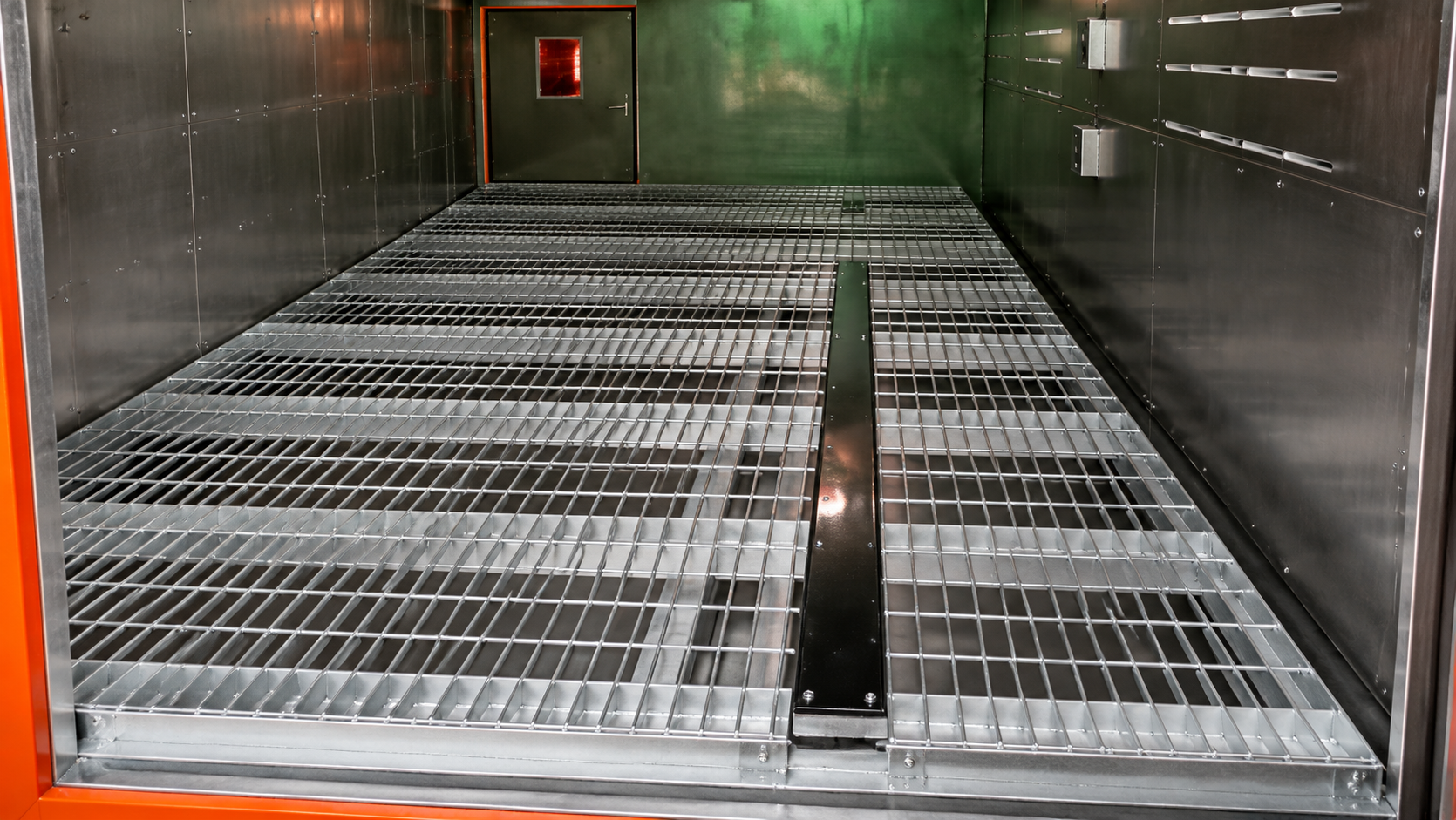
The electric trolley is designed for a maximum load of 300 t, with smooth travel and thermal stability. The joint between trolley and oven is sealed to limit air leakage and the heat loss that comes with it.
3.3 Optional rotating curing arrangement
Depending on the process, the unit can be built as a rotating baking and curing furnace that turns the rotor or stator during the cycle, meeting rotational baking requirements for horizontally impregnated parts.
3.4 Controlled exhaust with heat recovery
Exhaust is configured to discharge flammable gases in line with the drying procedure, while a heat exchanger uses the exhaust air to preheat incoming air and cut energy demand during heat-up.
3.5 Flameproof motors
Trolley drive and circulating fan motors can be supplied in flameproof execution, reducing spark generation during operation and supporting the safety concept for varnish curing.
3.6 Process monitoring
HMI + PLC control with PID regulation is standard. Options include a programmable automatic insulation resistance tester and a paperless multi-point temperature recorder, and the oven can be tied into an industrial control computer for networked remote monitoring.
4. Implementation and Commissioning
Step 1: Chamber and trolley sized on the largest workpiece. The heaviest rotor set the trolley rating, the rail layout and the sealing face at the oven mouth, with clearance left for clamping and inspection.
Step 2: No-load multi-point temperature mapping. Thermocouples were placed through the chamber, recorder channels were matched to their actual positions, and the temperature spread was confirmed to fall inside the process window.
Step 3: First-article curing. One complete heat-up, hold and cool-down cycle was run on the customer’s own curve, logging both the temperature profile and the change in workpiece insulation resistance.
Step 4: Rotation and safety interlocks. The rotating mechanism was trial-run, exhaust, flameproof motors and over-temperature alarm interlocks were verified, and a power interruption was simulated to confirm the recovery sequence.
5. Acceptance Results
| Item | Design and acceptance reference |
| Trolley rated load | 300 t |
| Curing method | Stationary curing, or rotating baking and curing |
| Temperature control | HMI + PLC with PID algorithm |
| Temperature recording | Paperless multi-point temperature recorder |
| Insulation resistance monitoring | Programmable automatic insulation resistance tester (optional) |
| Exhaust | Flammable gases discharged to the drying procedure |
| Heat recovery | Heat exchanger preheating intake air with exhaust air |
| Motor protection | Flameproof motors (optional) |
| Remote monitoring | Industrial control computer, networked (optional) |
6. Customer Feedback
“What mattered to us was whether the trolley could bring a rotor in steadily and whether the seal at the oven mouth would hold the heat. Both were tested on the largest part during commissioning, and leakage and heat loss stayed within an acceptable range.” — Equipment manager
“Being able to read insulation resistance during the cycle is far more reassuring than measuring it after unloading. If a heat-up stage drifts, the curve and the records line up.” — Process engineer
7. Summary and Next Steps
Selecting a curing oven for large generators is not a question of chamber size alone. It is the combination of trolley capacity and interface sealing, airflow uniformity, whether the process needs rotation, how flammable gases are discharged, and how much of the cycle can be recorded. This HW Series unit puts a 300 t trolley, balanced airflow, an optional rotating arrangement and insulation resistance monitoring into one system. Next, the customer is writing rotating curing into its standard rotor route and feeding the multi-point temperature records into the workshop quality file.
- WhatsApp: <+86-15958243831>
- Email: sales@tranfovia.com
- Website: https://tranfovia.com/