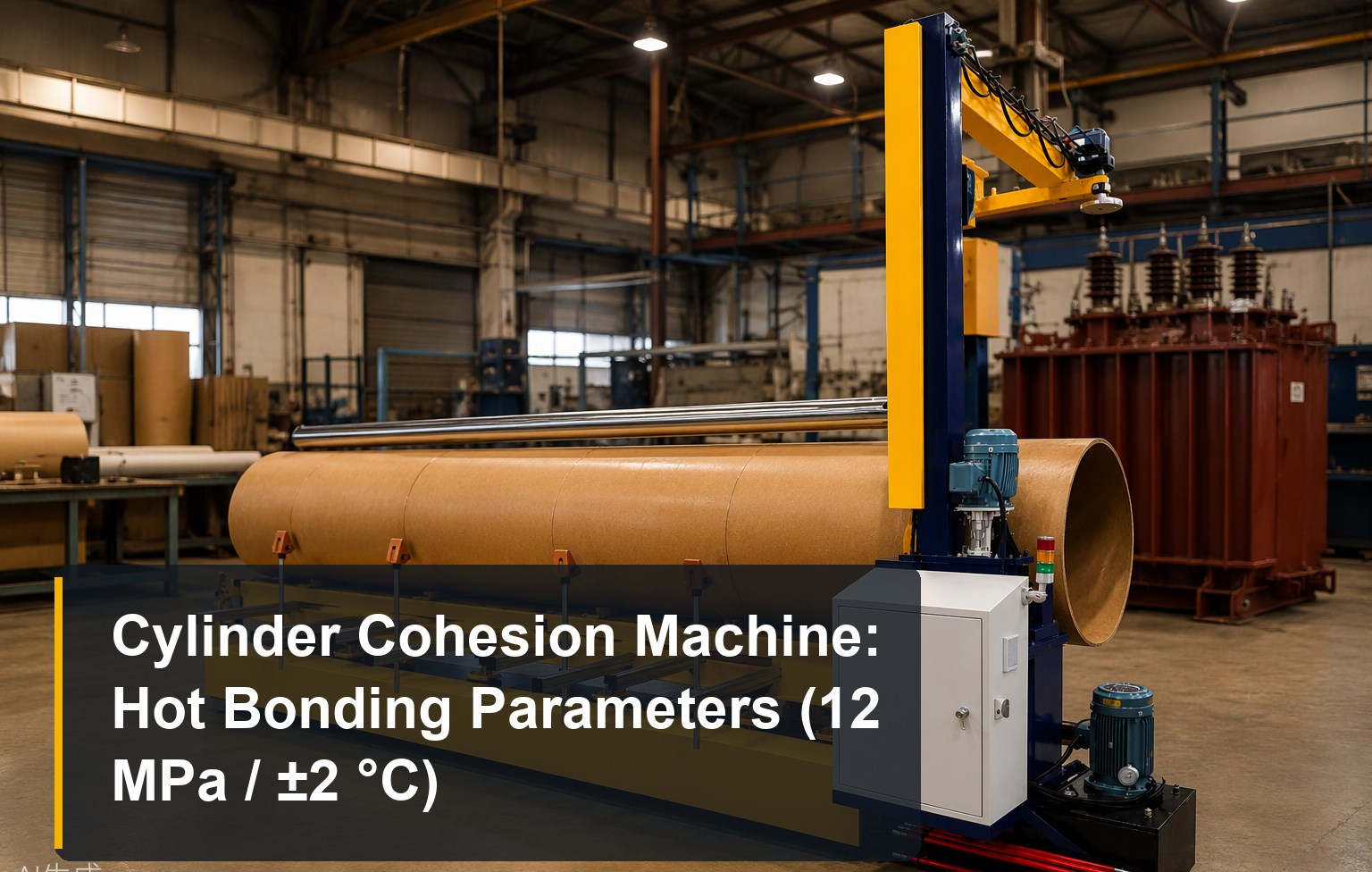
Cylinder Cohesion Machine: Hot Bonding Parameters (12 MPa / ±2 °C) Explained
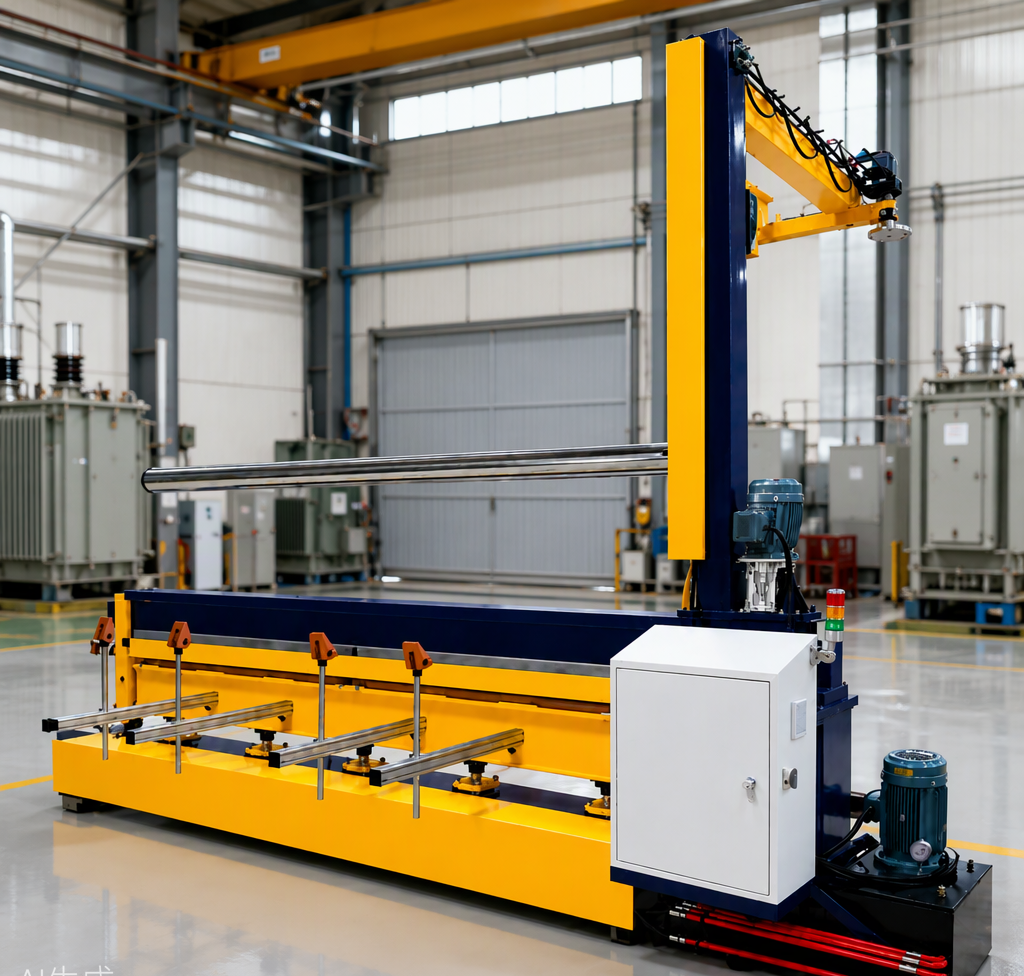
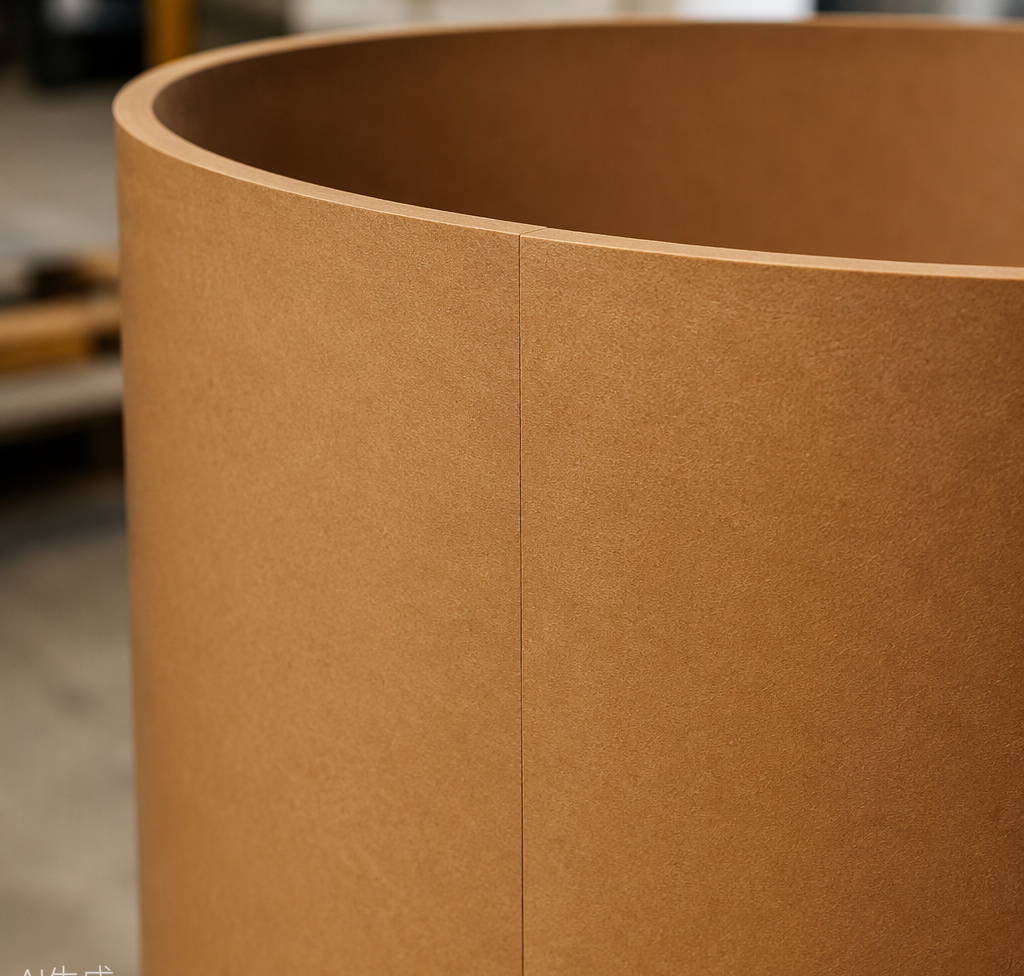
A transformer insulation cylinder is only as strong as its seam. You can bevel the edge perfectly and roll the cylinder perfectly round — but if the glued lap joint is bonded unevenly, that seam becomes the weak line in a component whose entire job is dielectric and mechanical reliability. The cylinder cohesion machine exists to make sure that never happens: it is the final station of the cylinder chain, where the glued joint is heated and hydraulically pressed under controlled, repeatable conditions.
This guide explains what the machine does, why its two headline parameters — 12 MPa hydraulic pressure and ±2 °C temperature control — matter more than anything else on the spec sheet, and how to verify bond quality before you buy.
Where the Cohesion Machine Sits in the Cylinder Chain
Pressboard cylinder production runs in three stages:
| Stage | Equipment | Function |
|---|---|---|
| 1. Bevel edge preparation | Pressboard beveling machine | Mills the board edge into the bevel needed for the lap joint |
| 2. Arc and cylinder forming | Cylinder rolling machine | Rolls the flat beveled sheet into an arc or full cylinder |
| 3. Heating and joint bonding | Cylinder cohesion machine | Applies heat and hydraulic pressure to bond the glued joint |
By the time a cylinder reaches the cohesion machine, it has been beveled, rolled, and coated with adhesive. What remains is the step that decides whether the joint actually holds: the glued lap must cure under uniform heat and pressure, across its whole width, for the full cycle. Manual pressing methods cannot deliver that uniformity — pressure varies with the operator, temperature varies with the heat source, and every variation ends up inside the joint. This is the stage where “consistent batch production” is either won or lost in the insulation parts process chain.
The Two Parameters That Decide Bond Quality
±2 °C temperature control — because adhesive cures on a curve
The machine heats the bonding area indirectly: electric heating warms a thermally conductive oil circuit, and the oil transfers heat to the pressing surfaces. The heating range is adjustable from 20 to 150 °C to match different adhesive and board requirements.
The number that matters is not the range — it is the ±2 °C control accuracy. Bonding adhesives cure on a temperature curve: too cool and the bond never reaches full strength; too hot and you risk degrading the pressboard at the joint. A ±2 °C window means every cylinder in a batch cures under the same thermal conditions, which is what “repeatable bond strength” actually means in practice. When comparing machines, ask how temperature is measured and where the sensors sit — a claimed accuracy means little if the sensing point is far from the joint.
12 MPa hydraulic pressure — and what it does and doesn’t tell you
The pressing system is hydraulic, with a system pressure of 12 MPa. One honest clarification worth knowing as a buyer: 12 MPa is the hydraulic system pressure, not the pressure per square millimeter on your joint — the actual pressure at the bonding area depends on the cylinder and platen geometry. What the figure really tells you is that the pressing system has substantial, controlled force in reserve, delivered smoothly and held constantly through the cure cycle.
The more useful questions to ask a supplier are: is pressure adjustable and held automatically through the cycle, and does the machine maintain uniform pressure along the full joint width? A bonded seam that is firm at one end and soft at the other is worse than no machine at all, because the defect hides until the cylinder is stressed in service.
Key Specifications
| Parameter | Specification |
|---|---|
| Cylinder thickness range | 1–8 mm |
| Cylinder diameter | 270–3500 mm |
| Cylinder height | 1500–4000 mm |
| Heating temperature | 20–150 °C, adjustable |
| Temperature control accuracy | ±2 °C |
| Heating method | Electric heating via thermally conductive oil |
| Standard bonding slope width | 150 mm; customizable |
| Pressing mode | Hydraulic |
| Hydraulic system pressure | 12 MPa |
Two details in this table reward a second look:
- The 270–3500 mm diameter and 1500–4000 mm height envelope covers everything from small distribution transformer cylinders to large power transformer windings — match it against your largest and smallest designs, not your average one.
- The 150 mm standard bonding slope width is customizable. The bonded width must match the bevel geometry your upstream beveling machine produces — this is the interface question that decides whether three machines behave like one line.
What Complete Integration Looks Like
The cohesion machine earns its full value when its parameters are matched to the stations before it: bevel angle from the beveling machine, roundness from the rolling machine, and bonded width at the cohesion machine must be designed around the same joint geometry. At an insulation plant in Indonesia, a complete pressboard cylinder production line runs all three stages as one matched chain — which removes the classic three-supplier argument where the beveling supplier blames the rolling supplier who blames the bonding supplier when a joint fails.
If you are buying the cohesion machine to pair with existing equipment, send your bevel and joint drawings with the inquiry — compatibility is a design question, not an assumption.
How to Verify Before You Buy
Bond quality cannot be judged from a datasheet. The honest verification path:
- Test-bond your own materials. Send your pressboard grade, thickness, and adhesive; ask for bonded sample cylinders back, and test the joint the way your quality team would.
- Ask for the temperature map. Not just the setpoint — the measured temperature distribution across the pressing surface during a cycle.
- Confirm cycle behavior. Temperature and pressure should hold automatically through the full approved cycle, not require operator correction mid-run.
- Check the envelope at the extremes. If you bond 8 mm thick or Φ3500 mm cylinders, ask for references at those sizes, not mid-range demos.
The cylinder cohesion machine covers 270–3500 mm diameters and 1–8 mm boards with ±2 °C control and 12 MPa hydraulic pressing as standard — and like every bonding process, it should prove itself on your material before it earns a place on your floor.
Have cylinder drawings and joint designs on hand? Send your diameter range, board thickness, and adhesive type — we will confirm the configuration and arrange a sample bonding run.