Automatic Feeding Punching Machine for Insulation Spacers: 150 Strokes/Min Explained
Open any oil-immersed transformer and you will find hundreds of small pressboard spacers keeping the winding’s oil ducts open. Individually they are among the cheapest parts in the build — but a single transformer needs thousands, and every one must be the same length. That combination of high volume, tight consistency, and low unit value is exactly what an automatic feeding punching machine is built for.
This guide explains how the machine turns prepared insulation strips into finished spacers, what its specifications actually tell you, and how to decide whether dedicated spacer production makes sense for your workshop.
What an Automatic Feeding Punching Machine Does
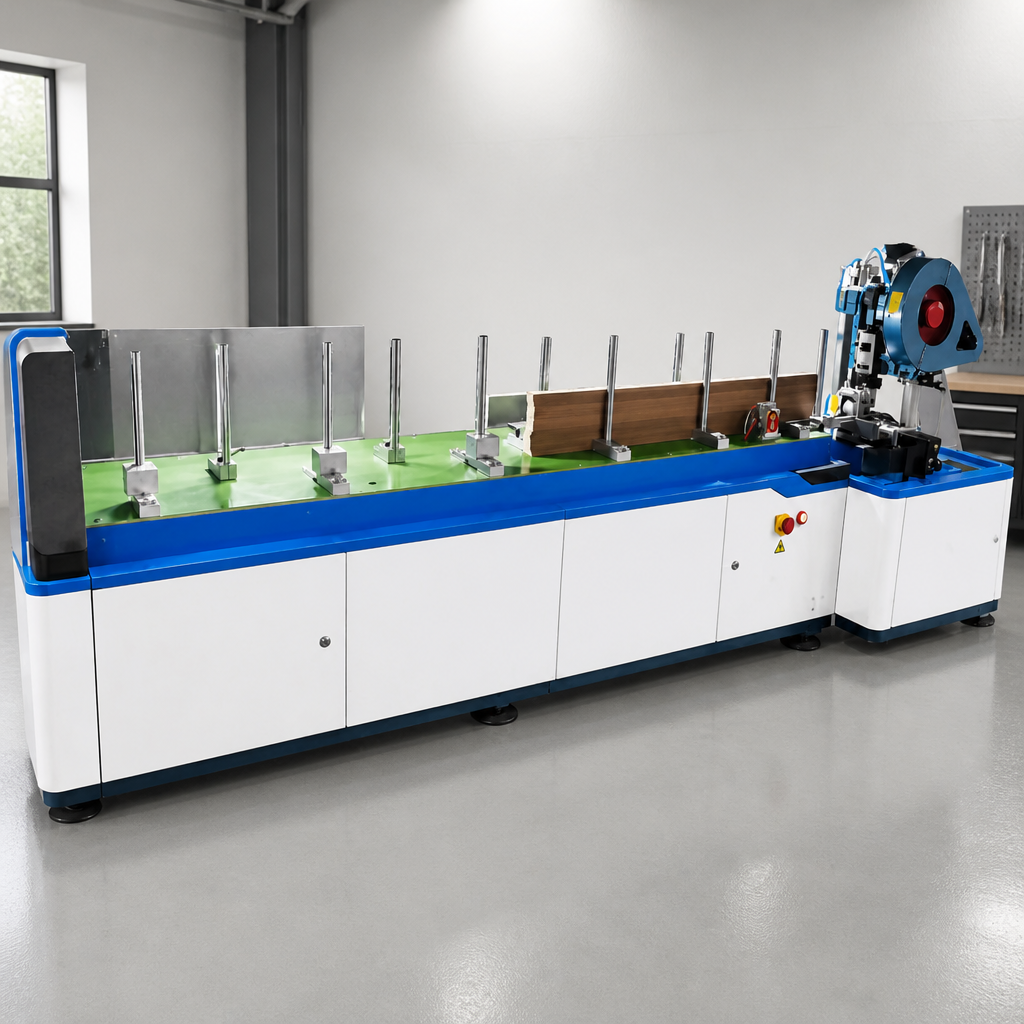
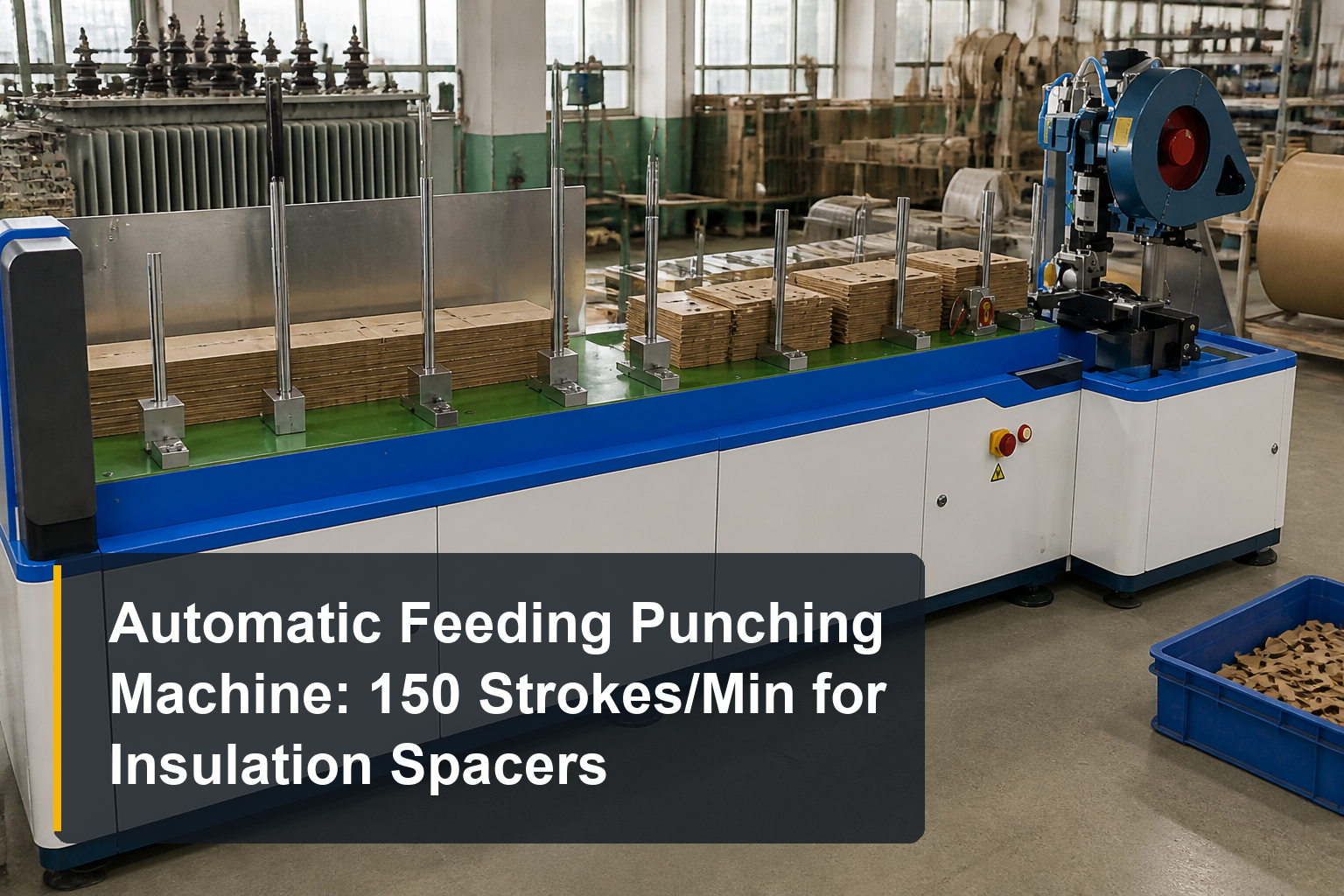
The machine is dedicated equipment for one job: converting prepared transformer insulation strips into repeatable spacer pieces. The operator loads a stack of strips, sets the required spacer length and target quantity, and the machine runs the feeding-and-punching sequence on its own — counting finished pieces as it goes.
This sits inside the spacer-and-block chain of transformer insulation parts processing. Spacers themselves are punched from narrow pressboard strips; the strips, in turn, come from upstream shearing or shaping equipment. If your spacers are bonded into oil-duct curtains rather than used loose, that is a separate downstream step — a dedicated bonding machine handles it, as an oil duct bonding machine installation in Korea shows. And for winding end insulation specifically, an end insulation bonding machine runs the same one-pass logic — feeding, gluing, bonding, cutting and counting in sequence.
What the machine replaces is the manual routine most workshops start with: measure, mark, punch, count, repeat. Manual punching is not just slow — it makes every spacer length depend on the operator’s attention, and it makes batch quantity a matter of whoever was counting.
How the Feeding-and-Punching Sequence Works
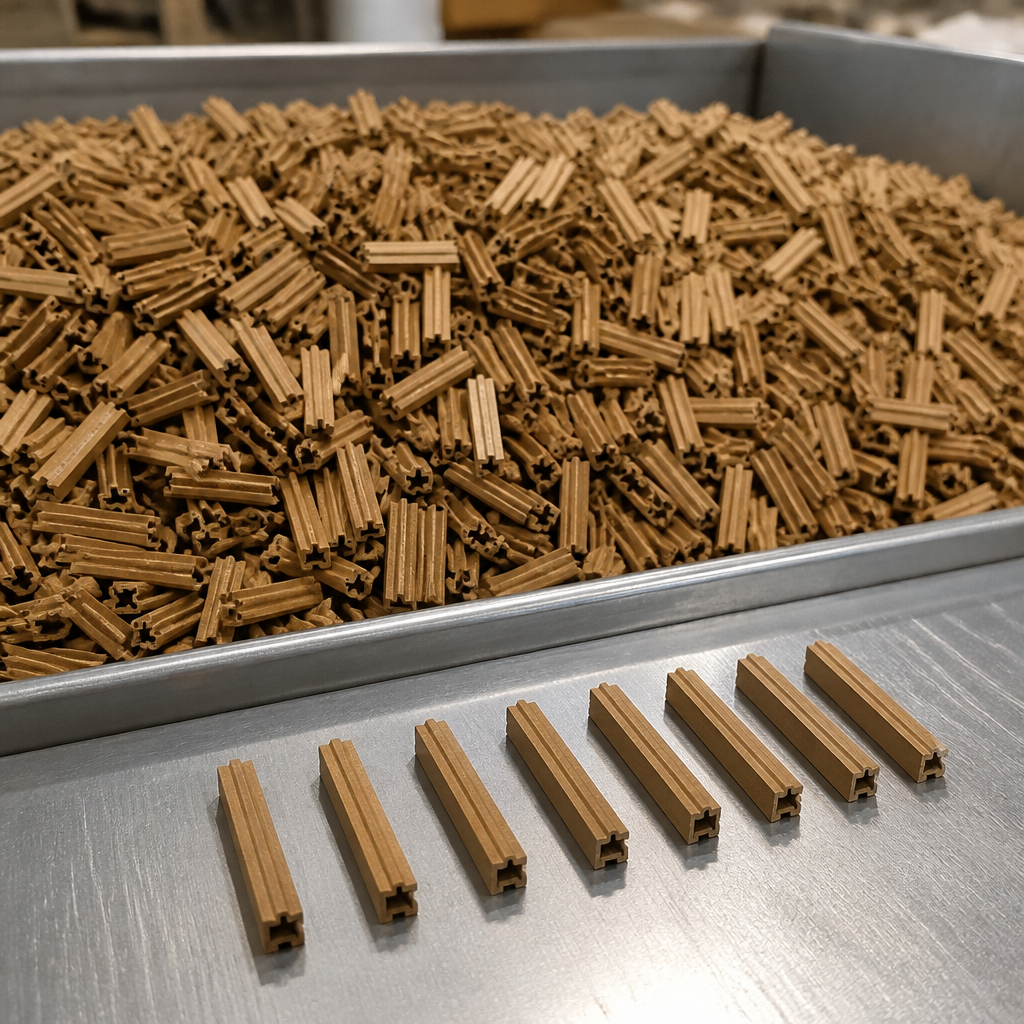
1. Loading. The feeding table accepts a strip stack up to 300 mm thick, so a single loading supports a long batch run before anyone needs to reload. For a high-volume small part, loading frequency is one of the quiet drivers of labor cost.
2. Controlled feeding. The machine advances each strip to the punching position under controlled feeding, holding a feeding accuracy of ±0.3 mm. This is the number that makes the speed figure meaningful — more on that below.
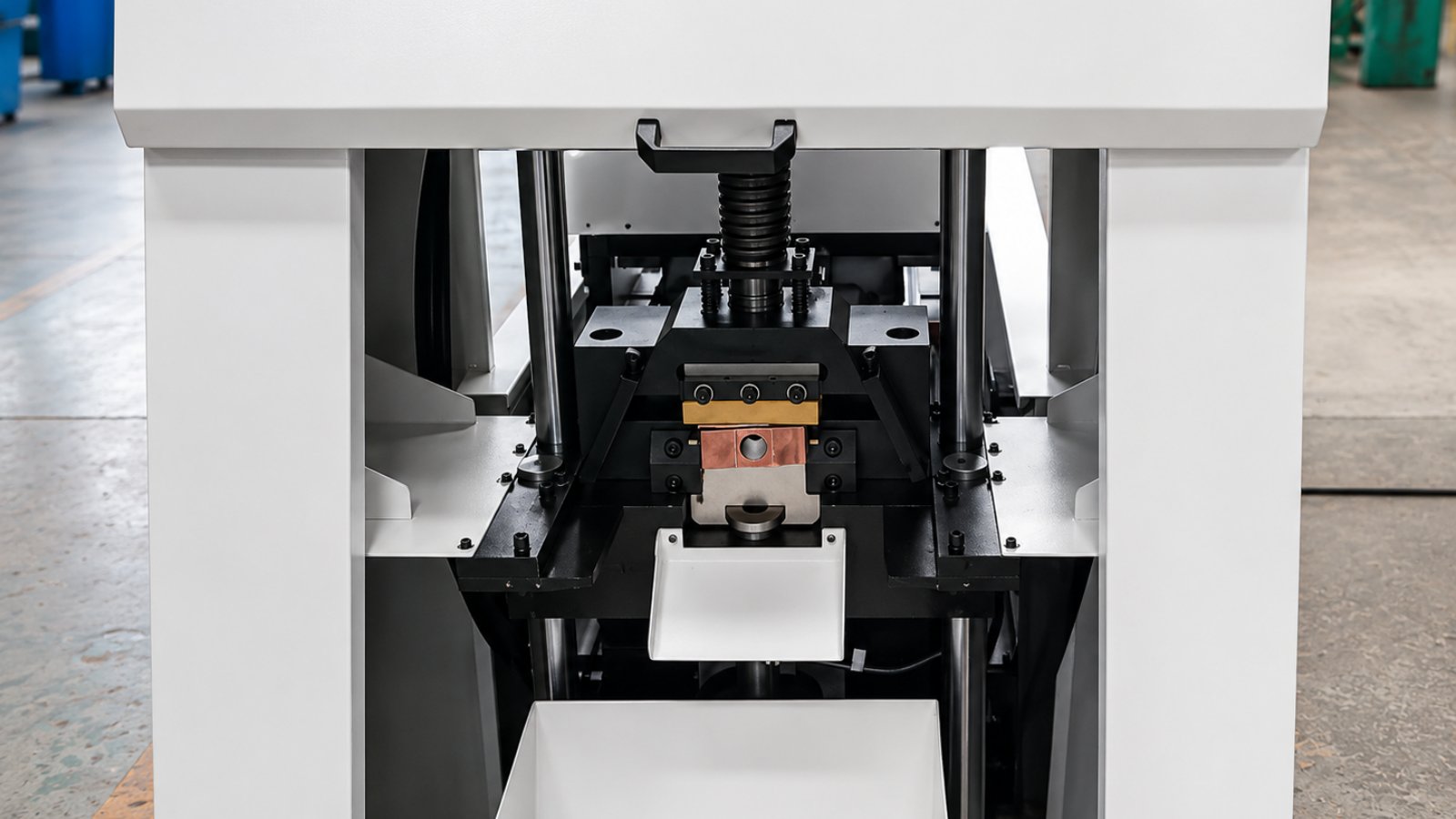
3. Punching to a set length. Spacer length is freely set anywhere from 15 to 200 mm, covering the common range of transformer insulation designs. Changing the length is a setting, not a retooling.
4. Counting and stop-at-quantity. Operators preset the target batch quantity and the machine counts its own output. Overproduction and mid-shift recounting disappear from the process.
5. Safety. The punching zone is protected by a safety light curtain — a point worth checking on any machine that cycles at high speed with an operator standing at the loading table.
Key Specifications — and the Two Numbers Everyone Skips
| Parameter | Specification |
|---|---|
| Feeding width | 20–50 mm |
| Feeding thickness | 1–3 mm |
| Feeding accuracy | ±0.3 mm |
| Spacer length | 15–200 mm, freely set |
| Max strip stacking thickness | 300 mm |
| End cut length | ≈20 mm |
| Remaining tail length | ≈50 mm (≈80 mm for a new strip tail) |
| Max punching speed | 150 strokes/min |
| Safety protection | Safety light curtain |
| Production control | Counting and quantity preset |
Most buyers read one number in this table — 150 strokes per minute — and stop. Two others deserve equal attention:
Feeding accuracy ±0.3 mm. A machine that punches 150 times a minute but drifts on feed length produces 150 wrong parts a minute. Speed and feeding accuracy are a pair; ask for both, and ask for the accuracy to be demonstrated on your strip material, not a sample strip chosen by the supplier.
Tail waste: ≈50 mm per strip (≈80 mm on a new strip). Every strip ends with a remnant that cannot be punched — roughly 50 mm, plus an end cut of about 20 mm at the start. On a 1,000 mm strip that is around 7% of material; on shorter strips, proportionally more. Almost no supplier quotes this figure, yet it is the one that determines your real material cost per thousand spacers. When comparing machines, ask each supplier for their end-cut and tail-length numbers and run the arithmetic on your own strip lengths.
Where It Fits — and Where It Doesn’t
The automatic feeding punching machine fits workshops where spacer demand is a recurring, high-volume constant:
- Transformer manufacturers punching spacers daily from 20–50 mm wide, 1–3 mm thick pressboard strips
- Insulation workshops replacing manual measure-and-punch routines with a defined, countable sequence
- Factories whose quality problem is spacer length consistency, not spacer shape complexity
It is equally important to know what the machine is not. It punches straight spacer pieces from narrow strips — it does not mill stepped profiles, cut dovetail slots, or machine wooden blocks. If your bottleneck is stepped blocks rather than flat spacers, a CNC step pad block machining center is the right tool; many insulation shops eventually run both, one for volume flat parts and one for profiled blocks.
How to Specify for a Quotation
Spacer machines are simple, but quotations still go wrong when the buyer’s strip and the supplier’s assumptions don’t match. Before requesting a price, prepare:
- Strip material and dimensions — pressboard grade, width, and thickness (the standard range is 20–50 mm × 1–3 mm; confirm yours fits)
- Spacer drawing — length, tolerance, and punch profile
- Batch quantity and output target — this determines whether the counting/preset function and 300 mm loading capacity actually serve your shift pattern
- Utilities and safety requirements — power supply and any local guarding standards beyond the light curtain
Then run the real comparison: not strokes per minute, but cost per thousand good spacers — feeding accuracy, tail waste, loading frequency, and the labor you currently spend measuring and counting. That number, not the headline speed, is what a dedicated machine actually changes.
Have your spacer drawings and strip specs ready? Send them with your monthly quantity, and we will confirm the machine’s fit and quote against your actual part mix.