TL;DR:
- A transformer core cut-to-length line for main transformers is a heavy-duty servo sorting line built for the wide, long, heavy laminations used in large power and EHV transformer cores.
- Compare cutting accuracy (±0.1 mm length, ±0.025° angle, ≤0.02 mm burr) together with structural rigidity and load capacity — heavy coils punish a light frame.
- Match the model class (600, 800, or 1000 mm width) to your largest core drawings with margin for future designs, not to your average product.
- Verify heavy-load accuracy and servo sorting reliability with test cuts on your own wide strip before signing.
This article is part of our transformer core cutting line guide — the pillar page covering all five line types, key specifications, and selection logic. For the engineering behind wide-coil processing, see our explainer on cutting lines for large transformers.
How to choose the right transformer core cut-to-length line for main transformers differs from buying a distribution-core line in one fundamental way: everything gets heavier, wider, and less forgiving. This article explores what the machine is and where it fits in transformer manufacturing, which specifications to compare, how to match a model to your application, and the questions to ask any manufacturer or supplier, providing a buying framework for producers of large power transformers.
What a Transformer Core Cut-to-Length Line for Main Transformers Is
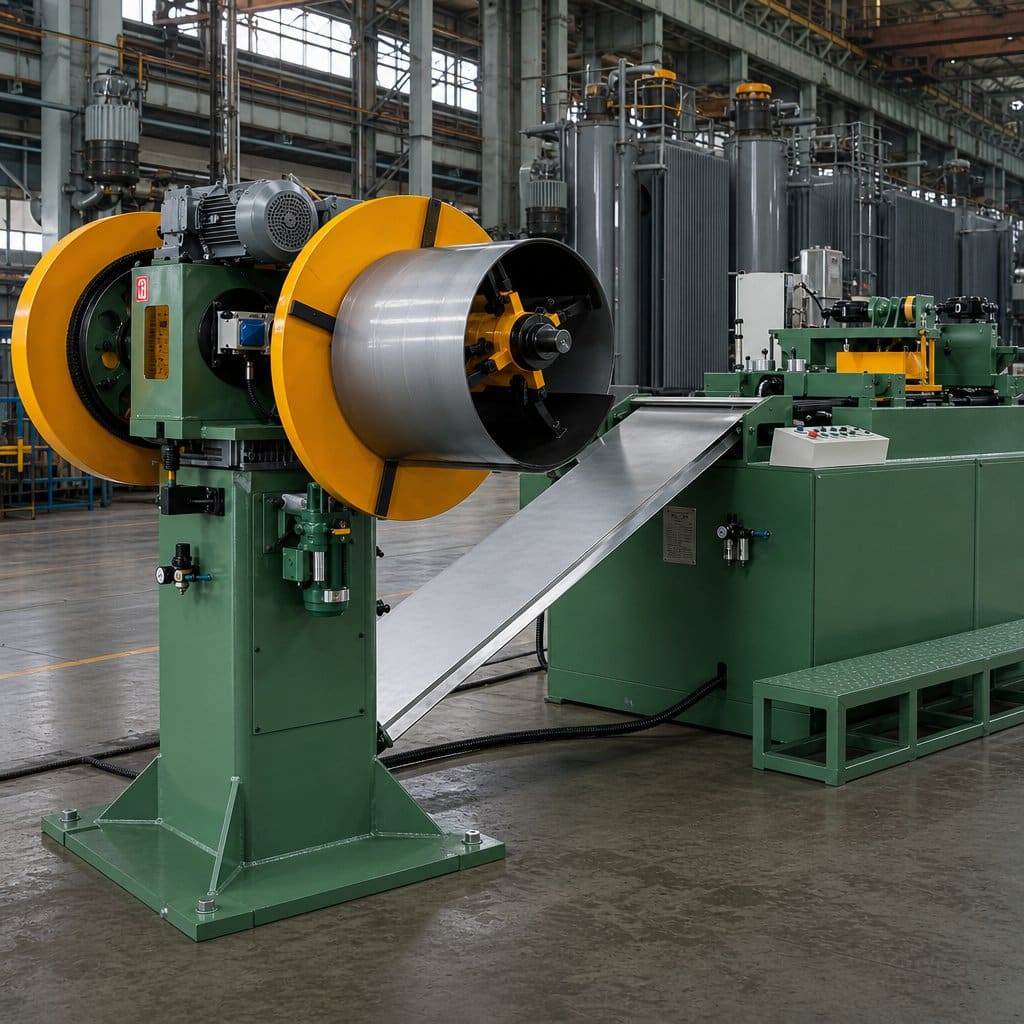
A cut-to-length line for main transformers is the heavy-duty member of the core cutting family: it processes the wide silicon steel strip and meter-long laminations that large power and extra-high-voltage transformer cores demand, then sorts and stacks them automatically. Its role in the factory is the same as any cutting line’s — but the loads, dimensions, and accuracy risks are all amplified.
Definition and Core Function
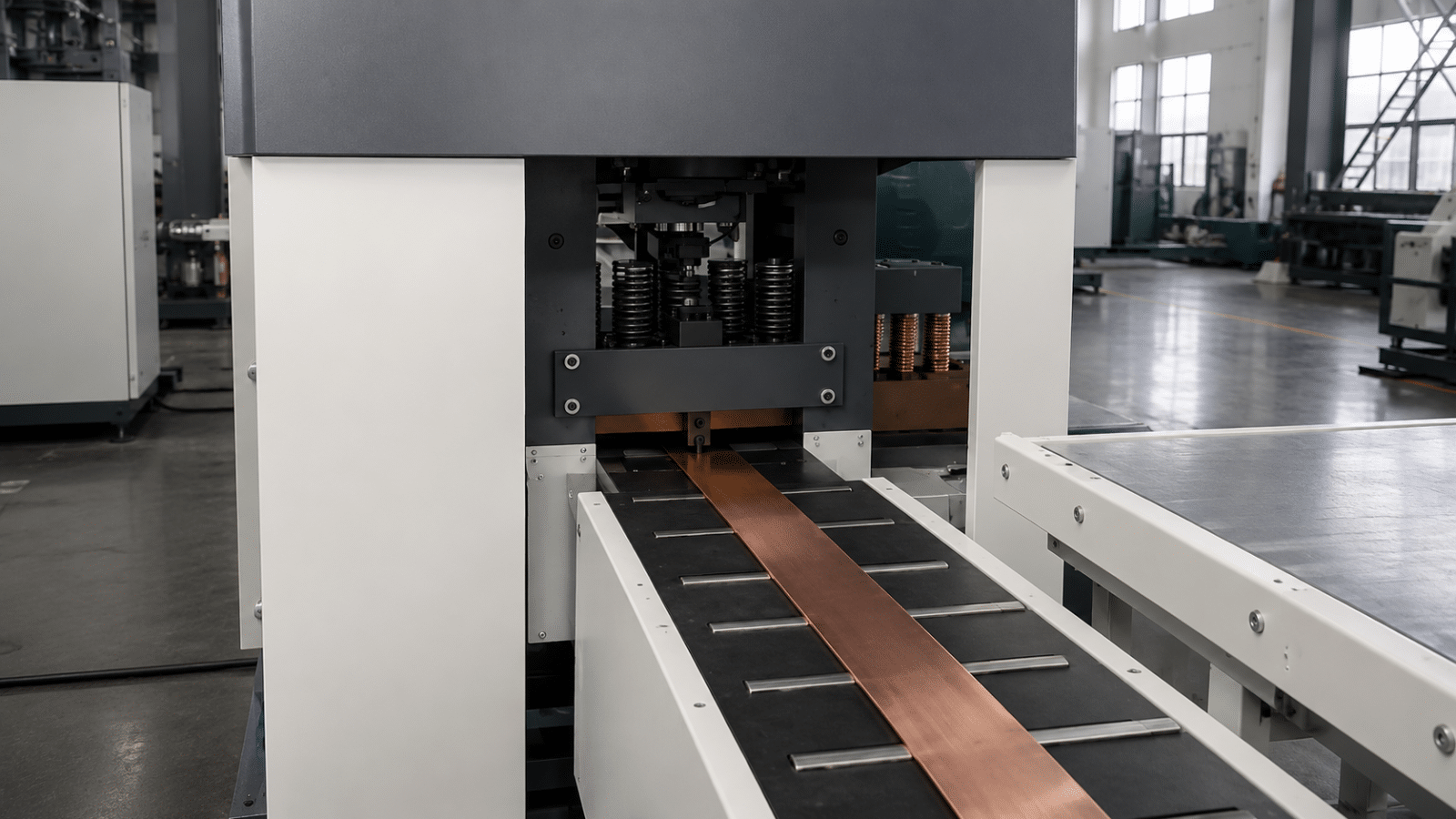
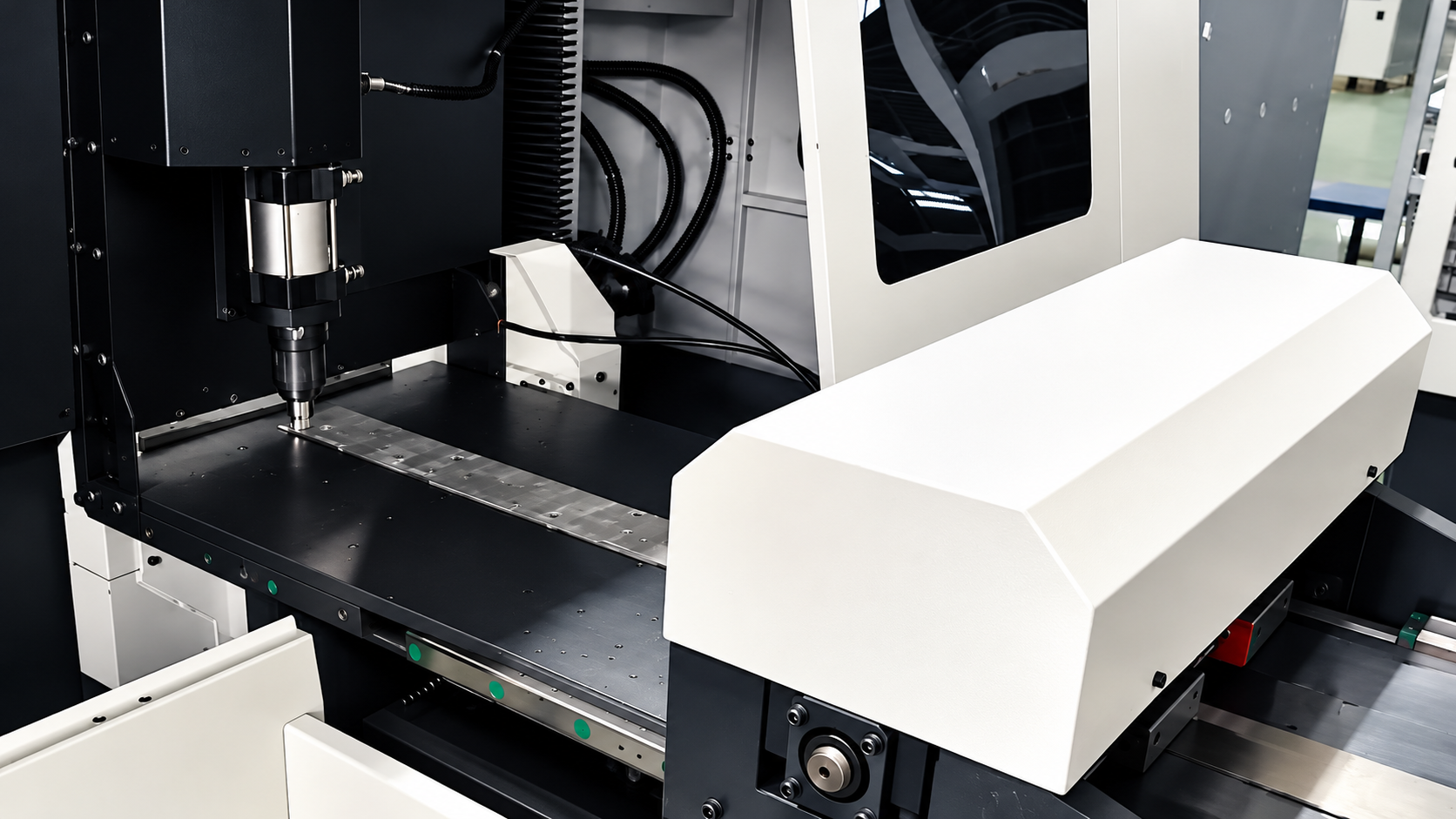
In simple terms, a transformer core cut-to-length line for main transformers uncoils heavy grain-oriented silicon steel coils, positions the strip, punches and shears it into large step-lap laminations up to 1,000 mm wide and 5,000 mm long, and sorts the finished pieces with servo-driven handling units rated for that weight. Heavy-duty frames, reinforced shears, and high-power drives — 37 to 68 kW depending on the model — keep the process stable under loads that would flex a lighter machine out of tolerance.
Where It Fits in Large Transformer Manufacturing
The line sits between slitting and core stacking, feeding the core-building team with sequenced lamination packets. In large transformer production this link is critical: a single power transformer core contains tonnes of laminations, and manual sorting of heavy, sharp-edged step-lap sheets is slow, hazardous, and error-prone. Automating classification and stacking removes a genuine bottleneck — and a safety exposure — between cutting and the core stacking and turning table where the core takes shape.
How It Differs from Distribution-Core Lines
Distribution-core lines optimize for speed and flexibility across many small designs; main-transformer lines optimize for rigidity and capacity on a few very large ones. The shear must cut 1,000 mm of strip without deflection, the feeding system must meter heavy strip without slip, and the sorter must place laminations weighing several kilograms without dropping or twisting them. Buyers should therefore evaluate this machine as heavy process equipment, not as a scaled-up version of a light line.
Key Specifications to Compare
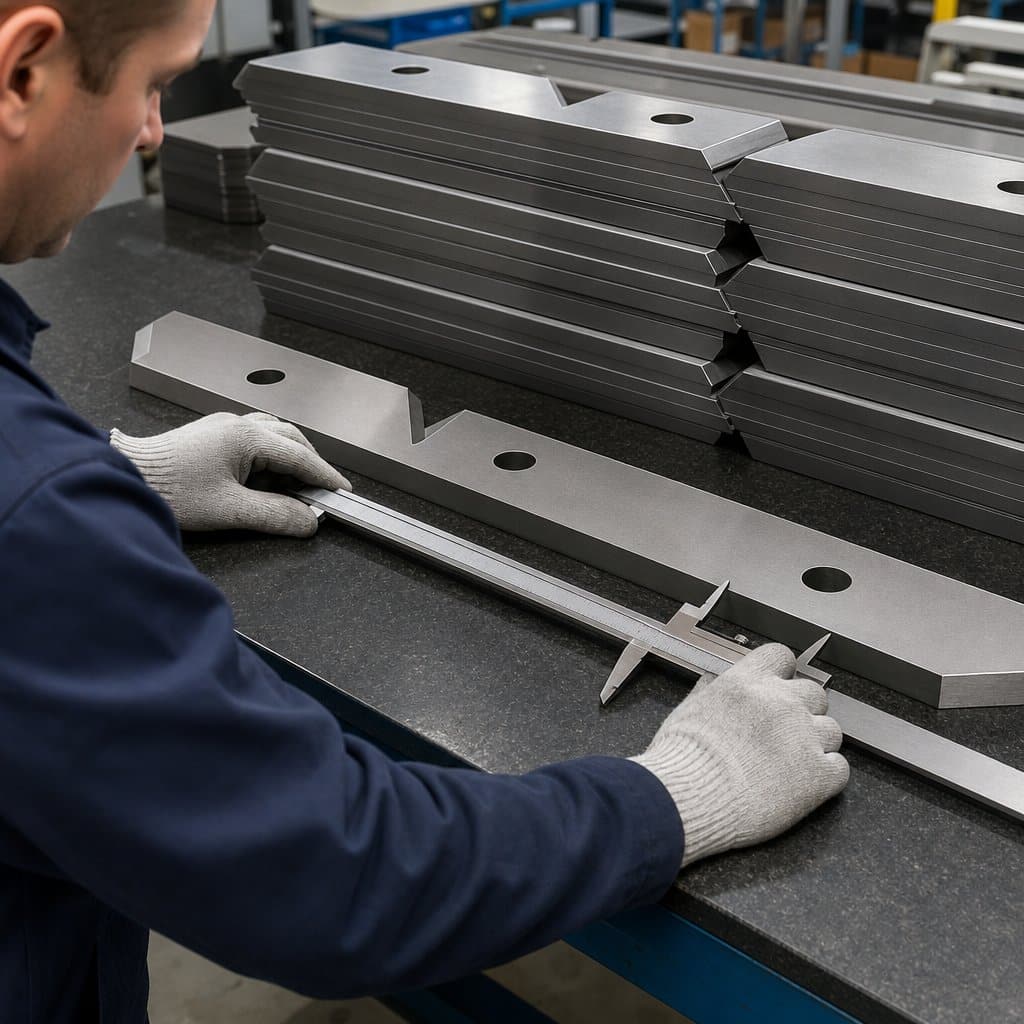
When comparing a transformer core cut-to-length line for main transformers across suppliers, three specification groups decide real-world performance: cutting accuracy under load, positioning method across the full width, and the structural capacity behind the numbers.
Cutting Accuracy Under Full Load
The accuracy targets are the same as for smaller lines — length tolerance ±0.1 mm, cutting angle accuracy ±0.025°, burr ≤0.02 mm on 0.18–0.35 mm grain-oriented steel — but they are far harder to hold on wide, heavy strip. Frame rigidity, shear blade support, and drive stiffness determine whether those figures survive at maximum width and thickness. Ask every supplier to state accuracy as guaranteed values at full width and full speed, because laboratory figures measured on narrow strip tell you nothing about a 1,000 mm cut.
Positioning Method Across Wide Strip
Large power transformer cores are overwhelmingly symmetrical step-lap designs, which is why main-transformer lines use center positioning: width variation and camber in wide strip are distributed symmetrically, protecting both edge margins of every lamination. Wide strip amplifies camber effects, so ask how the centering system corrects drift dynamically at 240 m/min feeding speed, and what centerline deviation is guaranteed across the 150–1,000 mm width range. A system tuned only for narrow strip will not hold those values at full width.
Load Capacity and Servo Sorting Rating
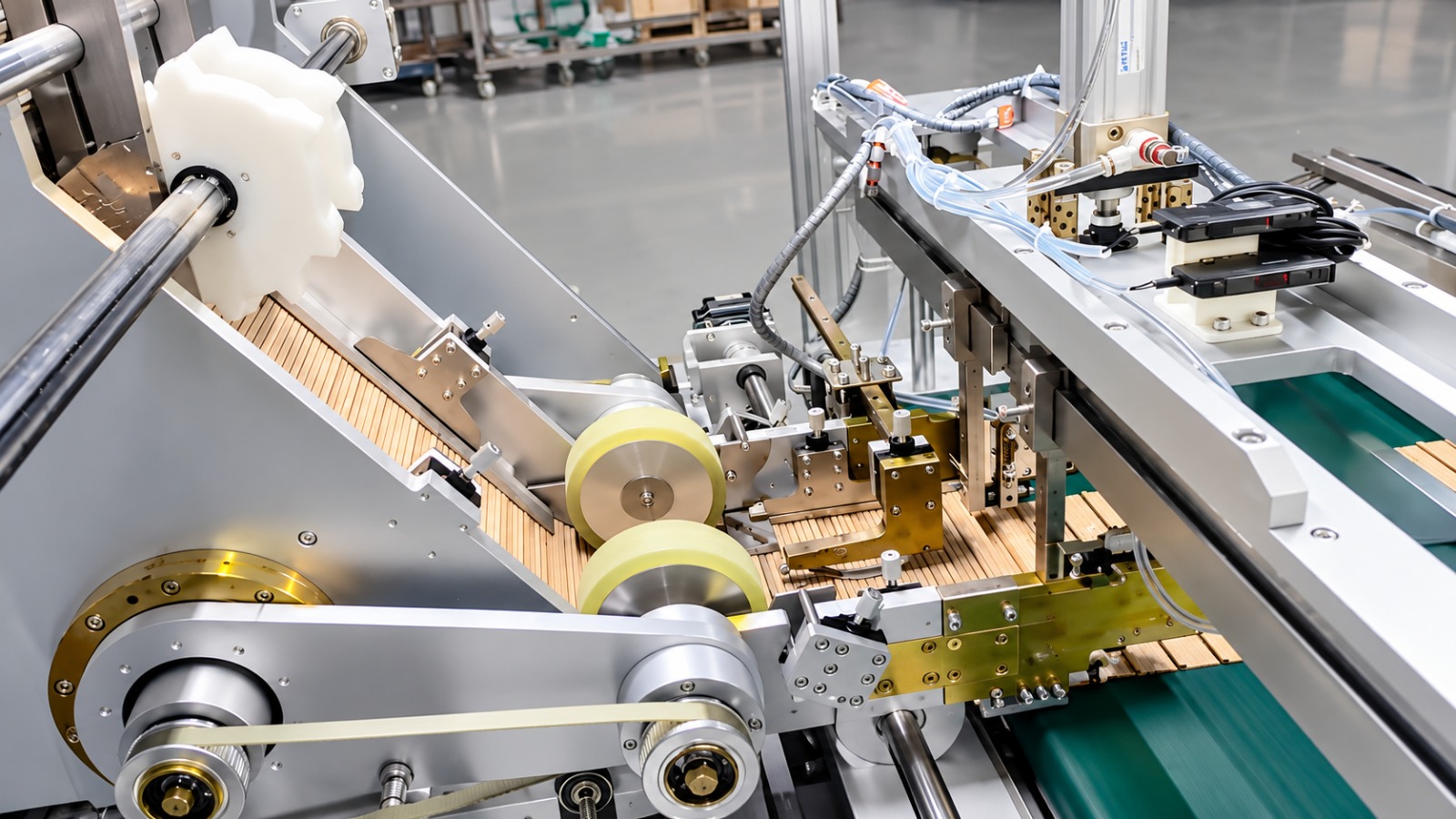
Check the structural numbers behind the brochure: maximum coil weight on the decoiler, shear force rating, and total motor power — 37 kW at the 600 mm class rising to 68 kW at the 1,000 mm class on well-built lines. For the sorting module, confirm the maximum lamination weight and length each handling unit is rated for, and how many stacking stations serve a large core’s many lamination groups. If your products sit between standard and heavy duty, compare against a standard servo sorting core cutting line to find the point where the heavy-duty frame becomes necessary rather than optional.
Matching the Right Model to Your Application
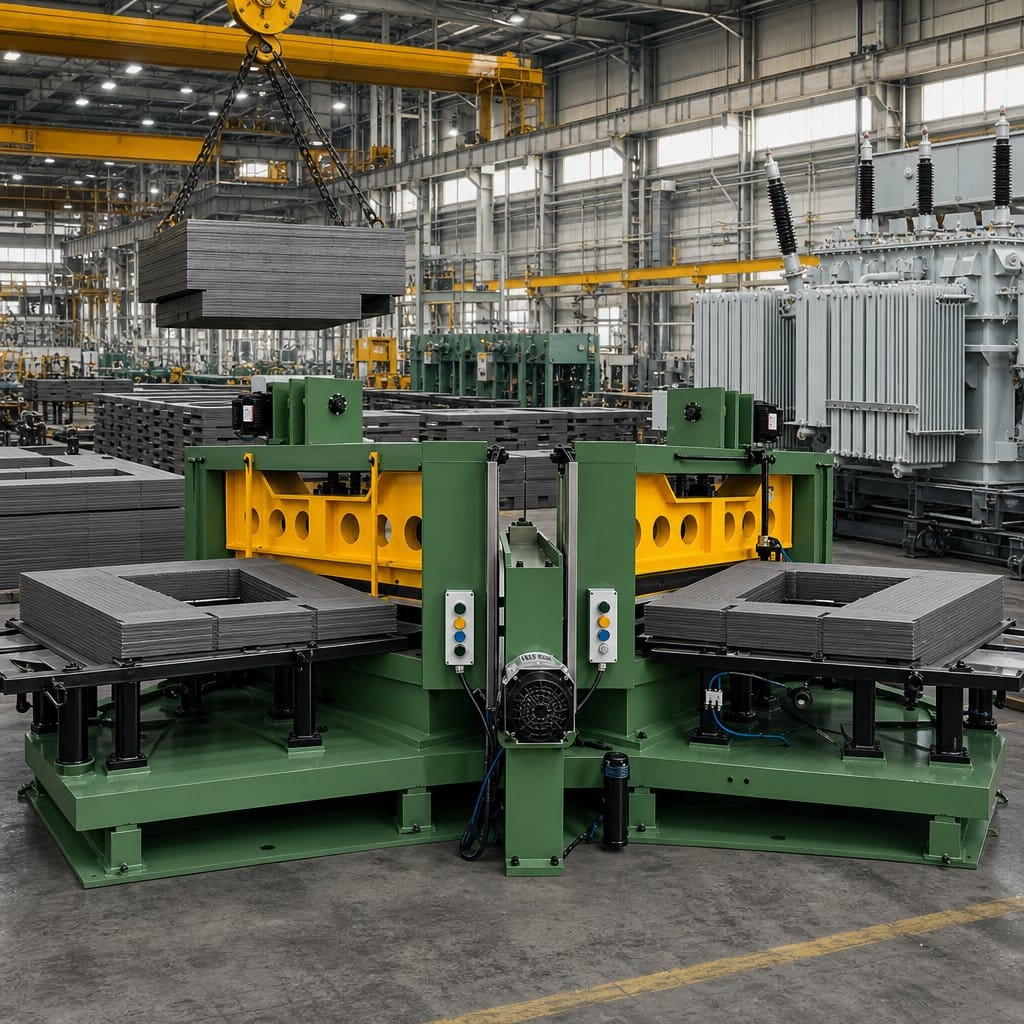
Selecting a transformer core cut-to-length line for main transformers starts from your largest core drawing, not your average one. Three factors drive the match: lamination envelope, core weight class, and downstream flow.
Lamination Envelope: Width and Length
List the widest and longest laminations in your current designs, then add margin for the designs you expect within five years. The three standard classes cover 150–800 mm and 150–1,000 mm widths with lengths from 500 mm up to 4,000 or 5,000 mm. A core designer who today needs 3,500 mm sheets may need 4,500 mm for the next EHV project; buying a line at its limit leaves no headroom, while oversizing adds cost without adding accuracy. Match the class to the largest credible design, not the largest imaginable one.
Core Weight Class and Production Pattern
Large transformer production is low-volume, high-mix: a few cores per month, each with dozens of lamination groups. In this pattern the servo sorting system earns its keep through sequencing accuracy rather than raw speed, because a misordered lamination group in a 50-tonne core packet means hours of rework. Confirm the sorting system handles your full lamination weight range gently — grain-oriented steel degrades when dropped or bent — and that recipe changeover between core designs is a program recall, not a mechanical rebuild.
Workshop Layout and Downstream Flow
A heavy-duty line is long, and its output packets are heavy. Plan the material flow from decoiler to stacking area before choosing the model: overhead crane coverage, floor loading, and the position of stacking tables relative to the sorting stations all affect whether the automation actually saves labor. Suppliers who understand large transformer workshops can lay out the cell so sorted packets travel the shortest, safest path to core assembly — a detail that matters more at this scale than at any other.
Questions to Ask the Manufacturer or Supplier
A main-transformer cutting line is a capital asset expected to run for decades, often on cores where a single scrapped lamination packet costs more than an hour of downtime. These questions separate suppliers with real heavy-duty experience from those stretching a standard design.
How Do You Guarantee Accuracy at Maximum Width?
Ask for factory acceptance testing at the extremes: your widest strip, your longest lamination, your most complex step-lap sequence, at rated speed. The supplier should provide measured length, angle, and burr data from that run, plus centerline deviation across the full width range. For a concrete reference point, review a documented large transformer core cutting line with servo sorting and ask for contactable references from EHV or large power transformer producers running the same model class.
What Does After-Sales Support Look Like for Heavy-Duty Equipment?
Heavy lines have heavier wear parts: large shear blades, high-power servo drives, reinforced guides. Clarify the recommended spare-parts package, blade regrinding logistics, remote diagnostic coverage, and response-time commitments in writing. Ask who performs annual accuracy verification and how the machine is re-leveled after years of heavy-coil loading. A supplier with documented preventive maintenance programs for heavy-duty lines will protect your accuracy far longer than one offering only break-fix support.
Can You Take Turnkey Responsibility for the Complete Cell?
At this scale, the interfaces matter as much as the machines: decoiler capacity, cutting line, sorting stations, stacking tables, and crane logistics must work as one cell. Ask whether the supplier will engineer and commission the complete flow, including operator training for heavy-strip handling. Suppliers with transformer process know-how can also advise on lamination design for large cores — step-lap patterns, notch placement, and nesting for expensive wide strip — which is where much of the real material saving hides.
Frequently Asked Questions
What makes a main-transformer cutting line different from a standard line?
Three things: size, load, and rigidity. Main-transformer lines cut strip up to 1,000 mm wide into laminations up to 5,000 mm long, handle heavy coils on reinforced decoilers, and use high-power drives of 37–68 kW to hold ±0.1 mm accuracy under loads that would deflect a lighter frame. The servo sorting units are likewise rated for laminations weighing several kilograms each.
What accuracy should I expect on wide strip?
The targets do not change with size: ±0.1 mm length tolerance, ±0.025° cutting angle accuracy, and ≤0.02 mm burr height. What changes is the engineering required to hold them — so verify these figures at maximum width and thickness during acceptance testing on your own material, not from a demonstration on narrow strip.
Do I need servo sorting for large transformer cores?
For most large-core producers, yes. A large power transformer core contains many distinct lamination groups in precise step-lap sequences, and each sheet is heavy and sharp-edged. Manual sorting at this scale is slow, physically demanding, and a common source of sequencing errors that surface only at core stacking. Servo sorting removes that bottleneck and keeps packets ordered for the stacking team.
How do I choose between the 600, 800, and 1000 mm classes?
Start from your largest current core drawing and the largest you credibly expect within five years. Choose the smallest class that covers that envelope with comfortable margin: the 800 mm class suits most large power transformers, while the 1,000 mm class serves the widest EHV designs with lengths to 5,000 mm. Oversizing costs money without adding accuracy; undersizing blocks future products.
Summary
Choosing the right transformer core cut-to-length line for main transformers means specifying for the heaviest case: ±0.1 mm accuracy verified at full width, center positioning that holds across wide strip, structural capacity matched to your coils, and servo sorting rated for your heaviest laminations. Match the 600, 800, or 1000 mm class to your largest credible design, then prove everything with acceptance tests on your own material.
TRANFOVIA supplies heavy-duty servo sorting core cutting lines for large power and EHV transformers, with factory acceptance testing, turnkey cell engineering, and responsive after-sales support. For a model recommendation matched to your core drawings, contact TRANFOVIA today.
📞 +86-15958243831 📧 sales@tranfovia.com 💬 WhatsApp: https://wa.me/8615958243831 🌐 tranfovia.com
References
- IEC 60076-1:2011. Power transformers — Part 1: General. International Electrotechnical Commission. https://webstore.iec.ch
- IEEE Std C57.12.00-2015. IEEE Standard for General Requirements for Liquid-Immersed Distribution, Power, and Regulating Transformers. IEEE. https://standards.ieee.org
- ASTM A876/A876M. Standard Specification for Flat-Rolled, Grain-Oriented, Silicon-Iron, Electrical Steel. ASTM International. https://www.astm.org
- IEC 60404-8-7. Magnetic materials — Specifications for individual materials — Cold-rolled grain-oriented electrical steel. International Electrotechnical Commission. https://webstore.iec.ch
- Kulkarni, S. V., & Khaparde, S. A. (2004). Transformer Engineering: Design and Practice. Marcel Dekker.
- Georgilakis, P. S. (2009). Spotlight on Modern Transformer Design. Springer.