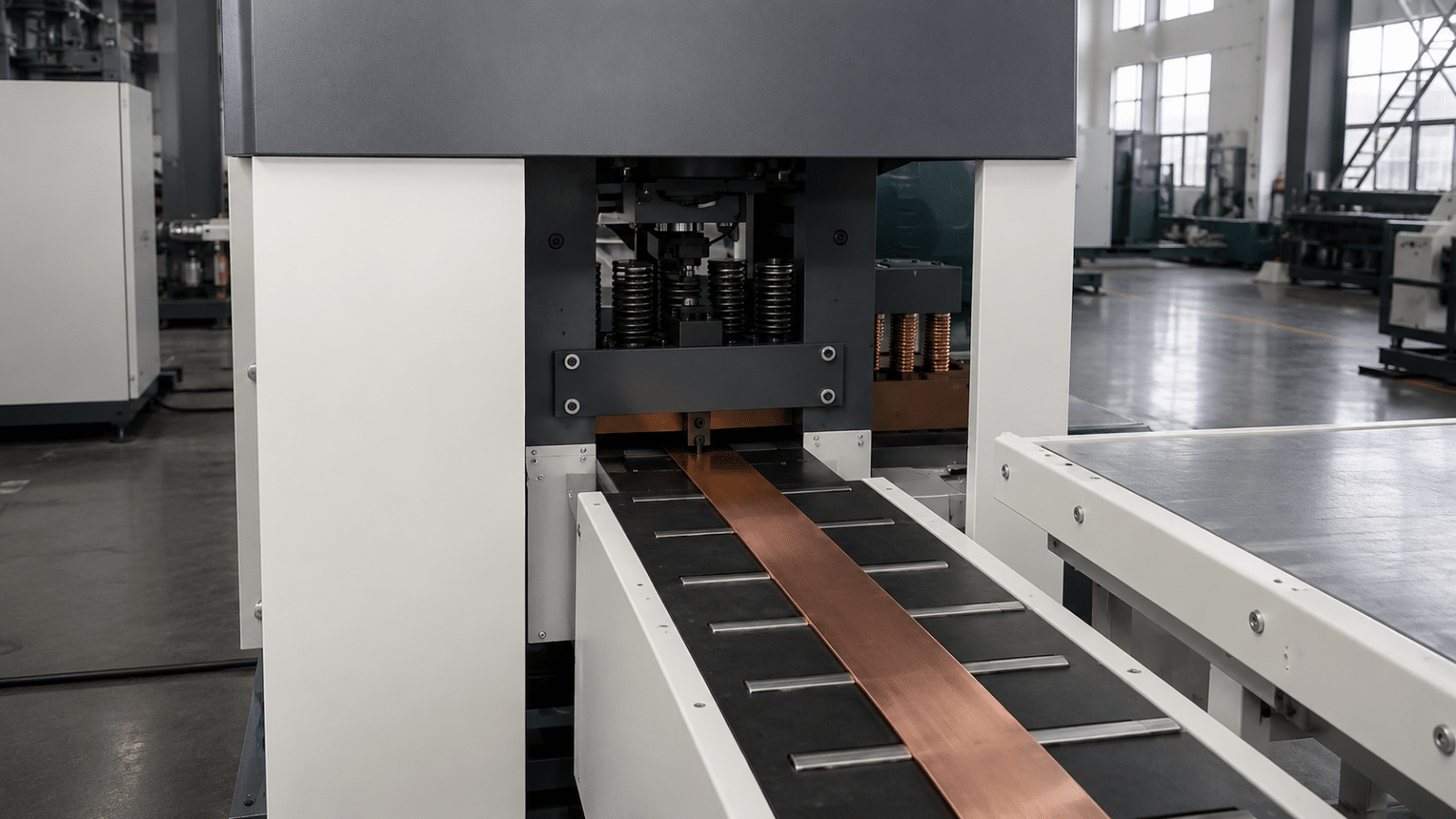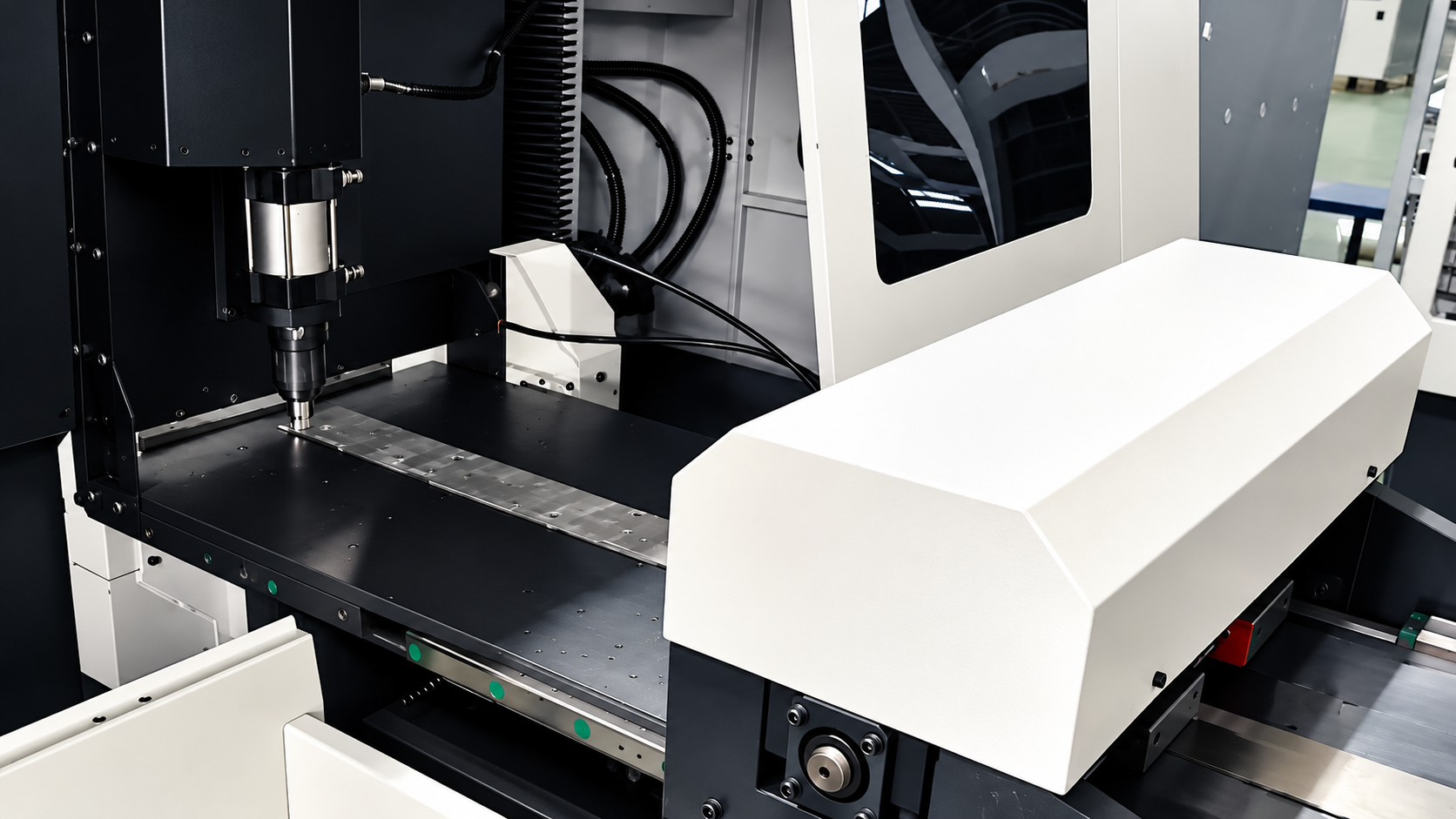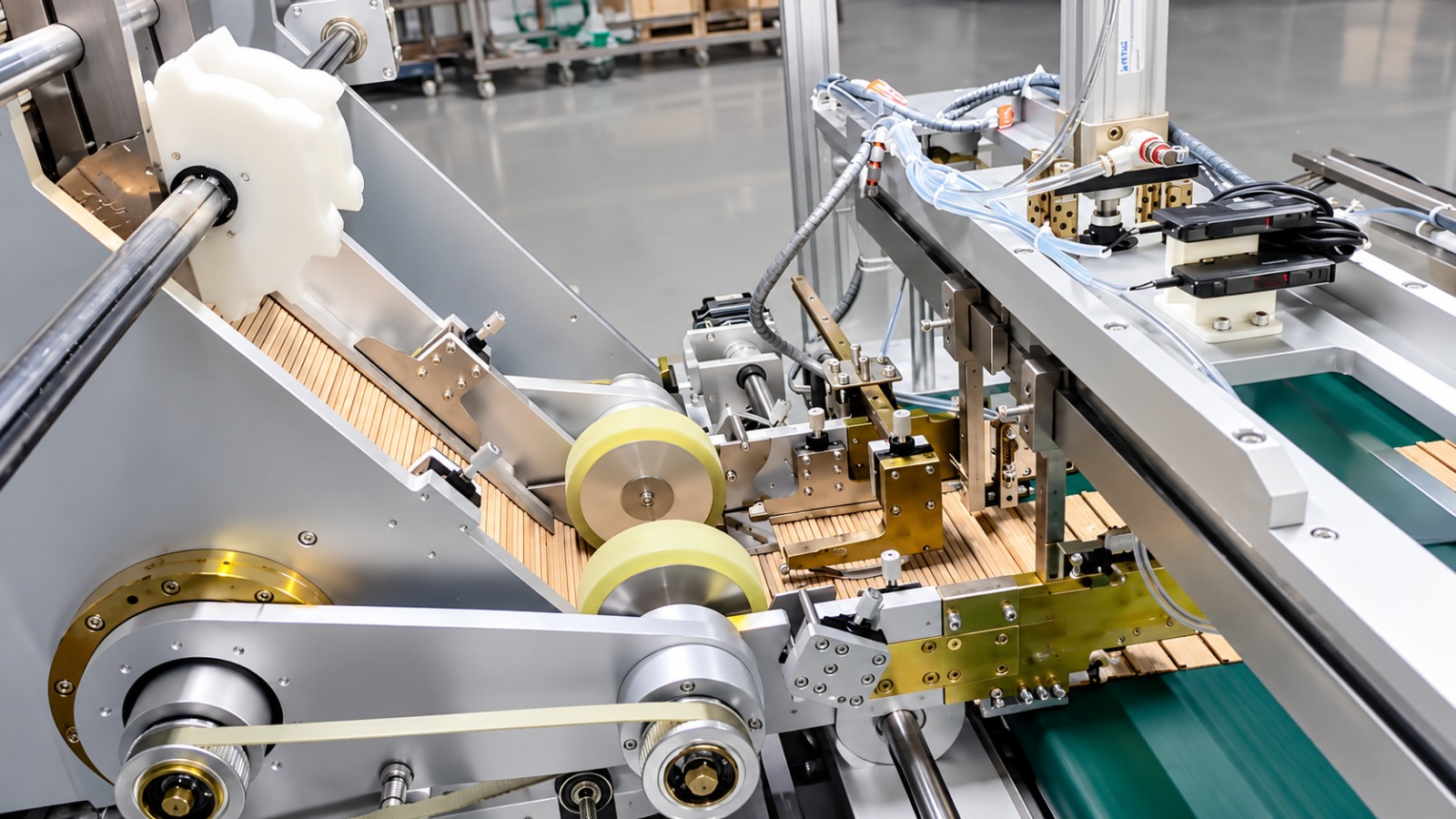
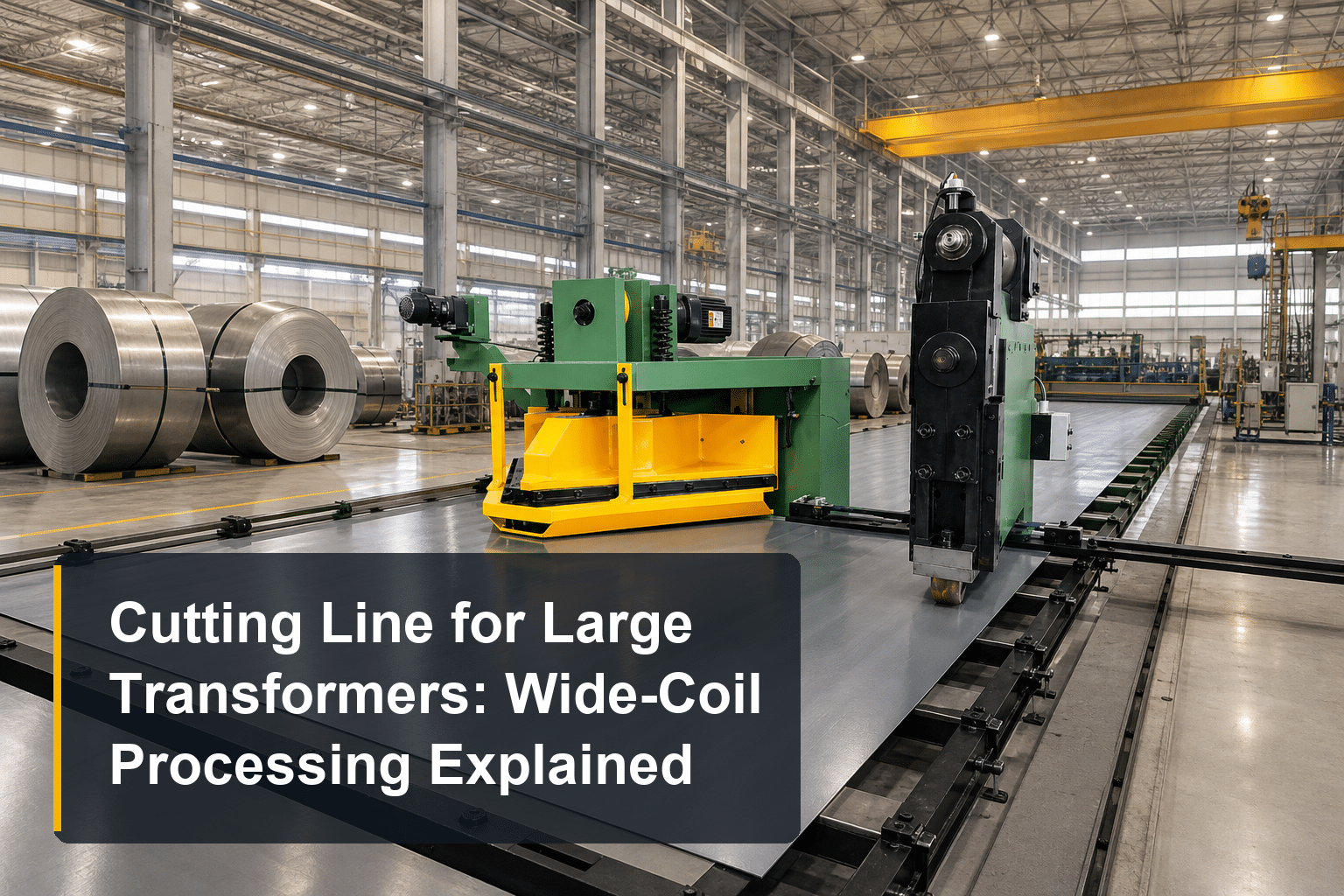
Distribution transformer cores and large power transformer cores are made from the same CRGO strip — but that is where the similarity ends. When laminations grow to a meter wide and five meters long, and coils arrive weighing several tons, the cutting line behind them stops being a standard machine with a bigger table. This article explains what wide-coil processing actually demands, and how a servo sorting core cutting line for large transformers is engineered to meet it.
What Makes Large Transformer Cores Different
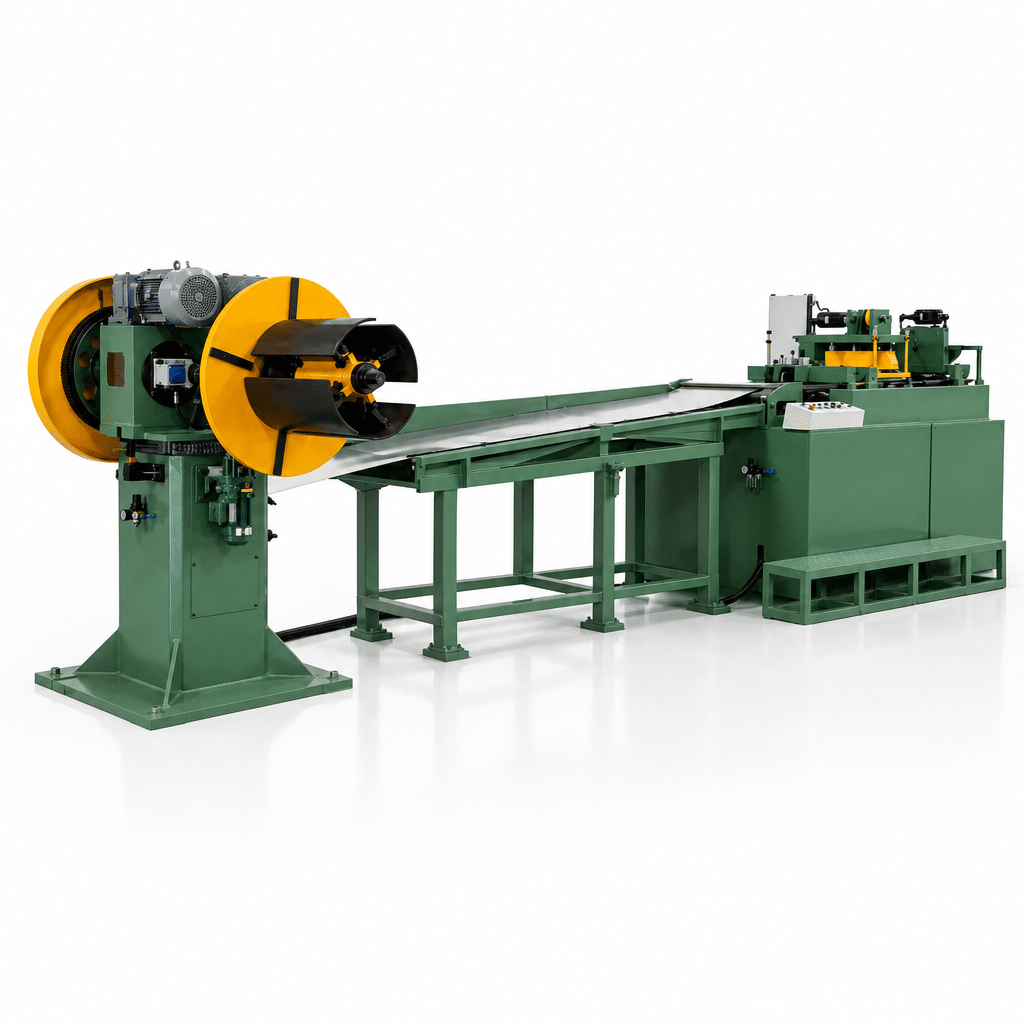
Main power transformers and EHV units operate at a different physical scale from distribution transformers, and their cores show it:
- Wider laminations. Large cores use sheets from 150 mm up to 1,000 mm wide — two to three times the width of distribution-class laminations.
- Longer pieces. Yokes and limbs reach 3,500 to 5,000 mm in length, so every millimeter of feed error matters proportionally more.
- Heavier coils. Wide master coils weigh multiple tons, and the line must unwind, guide, and feed them without edge damage or telescoping.
- Zero tolerance for loss creep. On a 100+ MVA unit, a small percentage increase in no-load loss is a large absolute number — and a contractual penalty. Cutting quality is where those losses are set.
A standard cutting line simply is not built for this envelope; running wide, heavy strip on light-duty equipment shows up quickly as vibration, edge damage, and drifting accuracy.
There is also a compounding effect that catches factories moving up-market by surprise: errors scale with size. A 0.1 mm lateral drift that is harmless on a 200 mm strip becomes a visible angle error on a 1,000 mm sheet. A burr height that distribution cores tolerate becomes a loss problem in a 100-ton core stack. Equipment that was “good enough” at distribution scale stops being good enough at power scale — not because the tolerances change, but because the geometry amplifies every deviation.
What a Large-Transformer Cutting Line Does
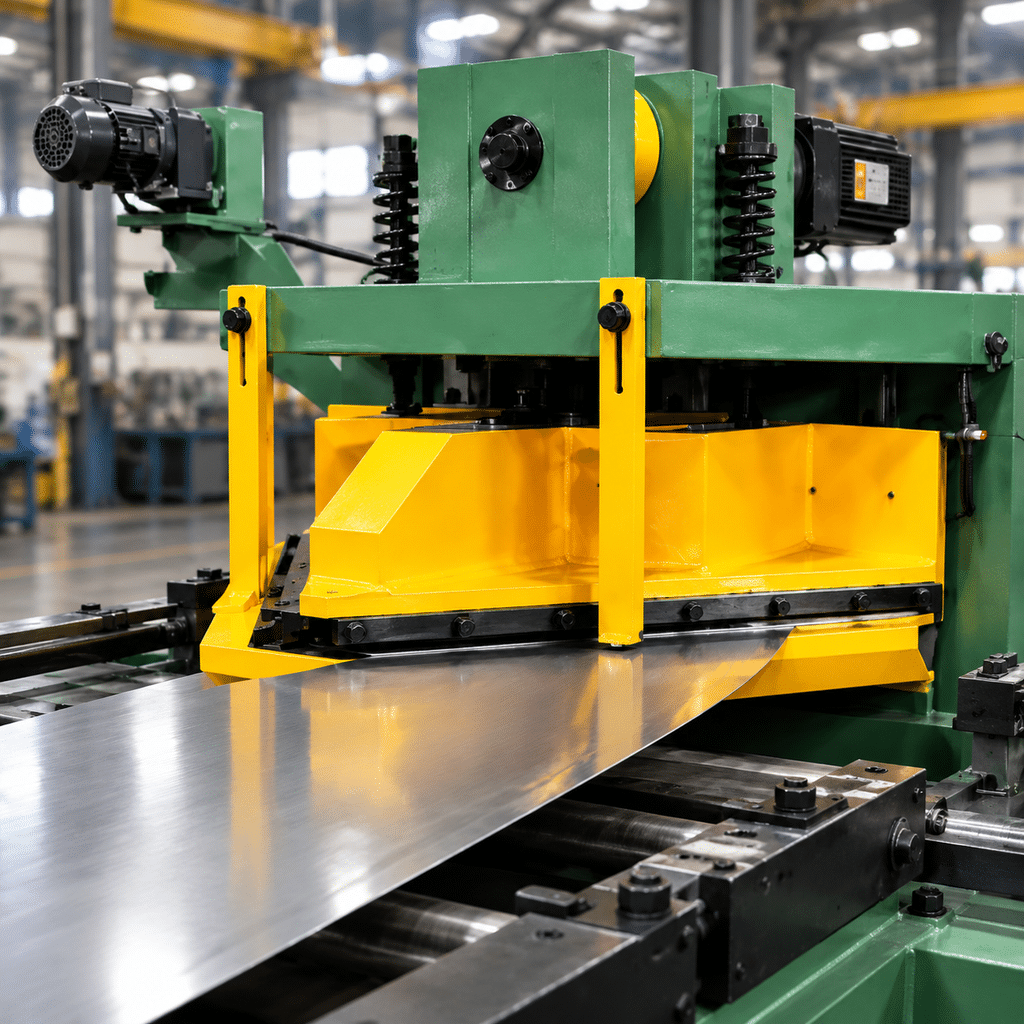
A servo sorting core cutting line for large transformers is the heavy-duty member of the core cutting family. It performs the same fundamental job — decoil, level, feed, shear to length and angle, sort, and stack — but every station is scaled and reinforced for wide, heavy coils, and servo sorting handles the finished laminations automatically, because sheets this size cannot be hand-sorted safely or accurately. For the full family overview, see our guide to transformer core cutting lines.
Wide-Coil Processing: The Engineering Challenges
Four engineering problems define this machine class:
- Decoiling heavy coils gently. A multi-ton coil stores enormous rotational energy. The decoiler needs powered braking and controlled tension so the strip never snatches or slackens — a sudden pull at this width can kink the strip or scratch the insulating coating across the full sheet.
- Keeping wide strip centered. An 800 or 1,000 mm strip wanders laterally as it pays out. Precision edge guiding keeps the strip centered through the shear, because any skew becomes an angle error on every cut.
- Shear rigidity under load. Shearing 1,000 mm of CRGO in one stroke demands a massively rigid frame and blade beam. Any flex shows up as burr variation across the width — unacceptable when the specification is ≤0.02 mm everywhere.
- Handling long, heavy sheets. A 5-meter lamination is too long and too flexible for manual handling. Servo-driven sorting supports the sheet along its length and stacks it without bending — the same automation logic covered in our article on how servo sorting cuts labor cost, applied at heavy-duty scale.
What ties these four together is stability under sustained load. A light machine can hit its accuracy figures in a demonstration cut, then lose them an hour into production as frames warm and components settle. The heavy-duty structure — thicker frames, larger bearings, oversized drives — is what keeps the numbers true across a full shift of wide-coil work.
Specifications: XE-LS-600ZX, XE-LS-800ZX, and XE-LS-1000ZX
Three heavy-duty models cover the large-transformer range:
| Item | XE-LS-600ZX | XE-LS-800ZX | XE-LS-1000ZX |
|---|---|---|---|
| Cutting thickness | 0.18–0.35 mm | 0.18–0.35 mm | 0.18–0.35 mm |
| Cutting width | 150–800 mm | 150–800 mm | 150–1000 mm |
| Cutting length | 500–3500 mm | 500–4000 mm | 700–5000 mm |
| Feeding speed | 240 m/min | 240 m/min | 240 m/min |
| Length accuracy | ±0.1 mm | ±0.1 mm | ±0.1 mm |
| Angle accuracy | ±0.025° | ±0.025° | ±0.025° |
| Cutting burr | ≤0.02 mm | ≤0.02 mm | ≤0.02 mm |
| Total motor power | 37 kW | 48 kW | 68 kW |
The notable point in this table is what does not change: length accuracy, angle accuracy, and burr are identical to the smaller lines. The heavy-duty engineering exists precisely to hold standard-machine precision at two to three times the sheet size — that is the whole design brief. Motor power climbing from 37 to 68 kW tells the real story of moving and shearing wide strip.
Choosing among the three models is an envelope decision. The 600ZX and 800ZX share the same 800 mm width ceiling and differ mainly in length capacity and structural margin; the 1000ZX is the only choice when laminations approach a meter wide or five meters long. If your largest current design sits at 600 mm, the 800ZX buys headroom for the next product generation without the cost of the flagship.
Who Needs This Line?
The answer follows directly from your product range:
- Large power transformer and EHV manufacturers — this is the core case; if your laminations exceed 400–600 mm width or 2.5 m length, standard lines are out of envelope.
- Factories moving up-market — winning your first 110 kV+ orders means your cutting capacity must arrive before the contracts do.
- Service centers supplying large-core producers — width capacity is the differentiator that wins this business.
If your production is firmly distribution-class, a standard servo sorting line is the better investment — the wide-coil premium buys capacity you will never use. For the detailed selection logic between the two, see our buying guide for large-transformer cutting lines.
Conclusion
Wide-coil processing is a precision problem at heavy-machine scale: unwind tons of steel gently, keep a meter-wide strip centered to a fraction of a degree, shear it without burr, and stack five-meter sheets without human hands. The XE-LS series exists to hold ±0.1 mm and ±0.025° at exactly that scale. Full specifications are on our servo sorting core cutting line for large transformers product page.