Buying a horizontal winding machine looks like a tonnage decision on paper — but in practice it is a torque, diameter, and control decision. Get any of the three wrong and the machine either stalls on your largest HV coil or sits oversized and underused for years. This guide walks through how to choose the right horizontal winding machine for transformer and reactor coil production, which specifications actually matter, and what to ask a manufacturer before you sign.
What a Horizontal Winding Machine Does in Transformer Manufacturing
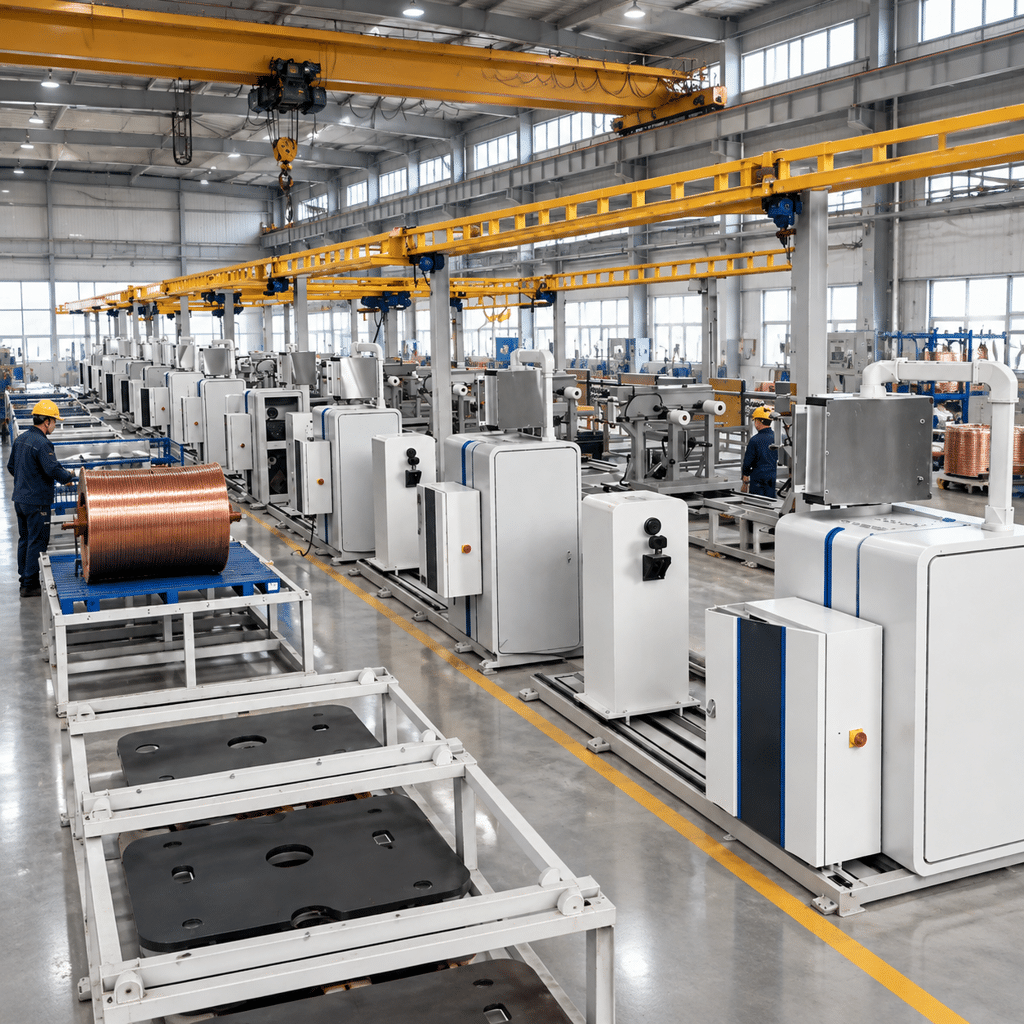
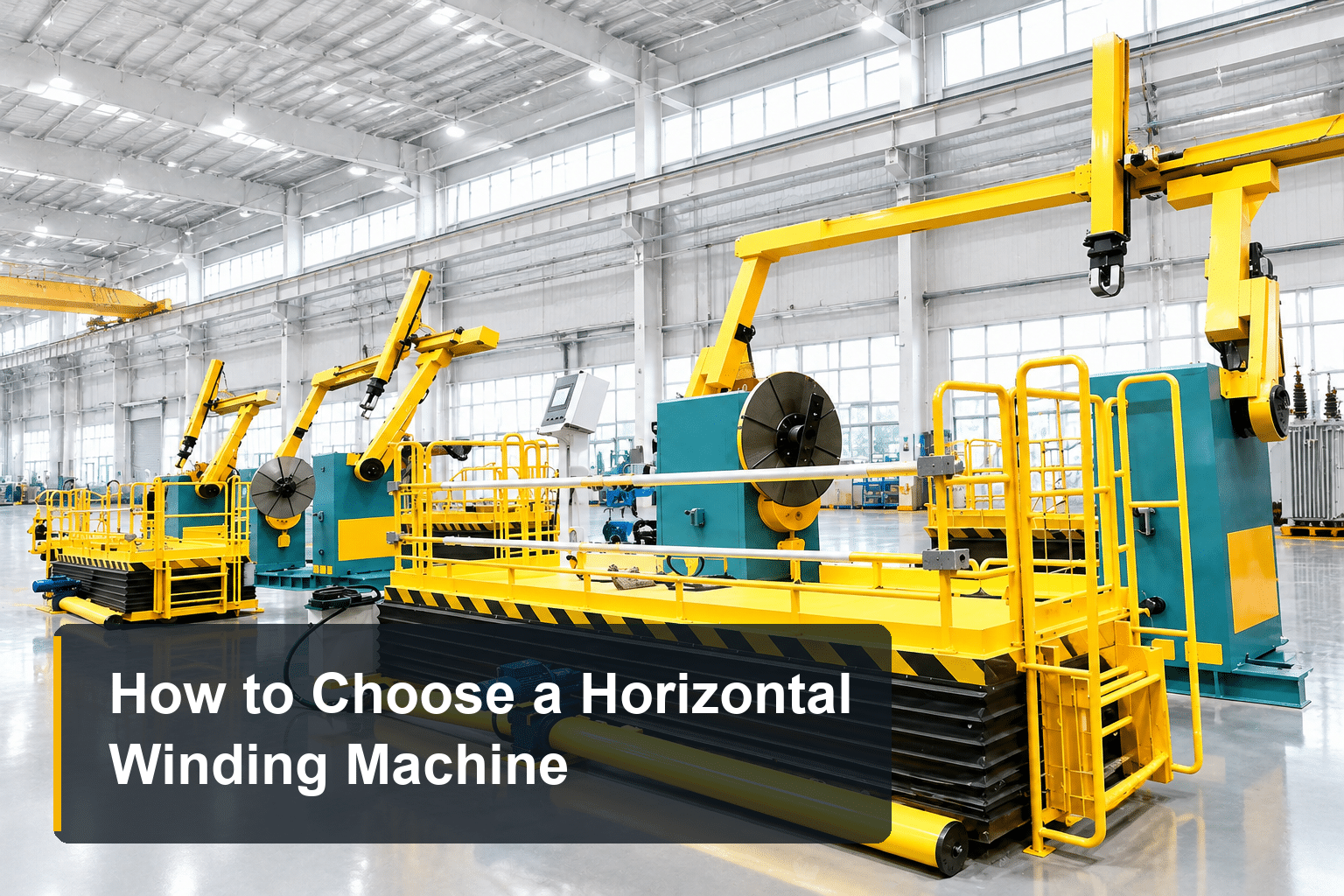
A horizontal winding machine rotates the coil form on a horizontal axis between a powered headstock chuck and a supporting tailstock. As the mandrel turns, the operator lays copper or aluminum conductor — round wire, flat strip, or foil — onto the form, building up layer or disc windings turn by turn.
This configuration is the standard choice for:
- HV layer and disc coils for medium and large power transformers
- Reactor coils, which are typically heavy, large-diameter, and wound with thick conductors
- Heavy LV windings where coil weight exceeds what smaller machines handle economically
The horizontal layout handles long, heavy coils well because the weight is carried by the bed, headstock, and tailstock rather than hanging from a single vertical faceplate. It is one station in a wider coil production flow — for the full picture, see our complete guide to transformer coil winding machines.
A recent project shows the typical workload: our horizontal winding machine winding large reactor coils in Dubai, UAE, where accurate turns counting and stable low-speed torque were critical to the reactor’s electrical performance.
Step 1: Size the Machine by Coil Weight and Diameter
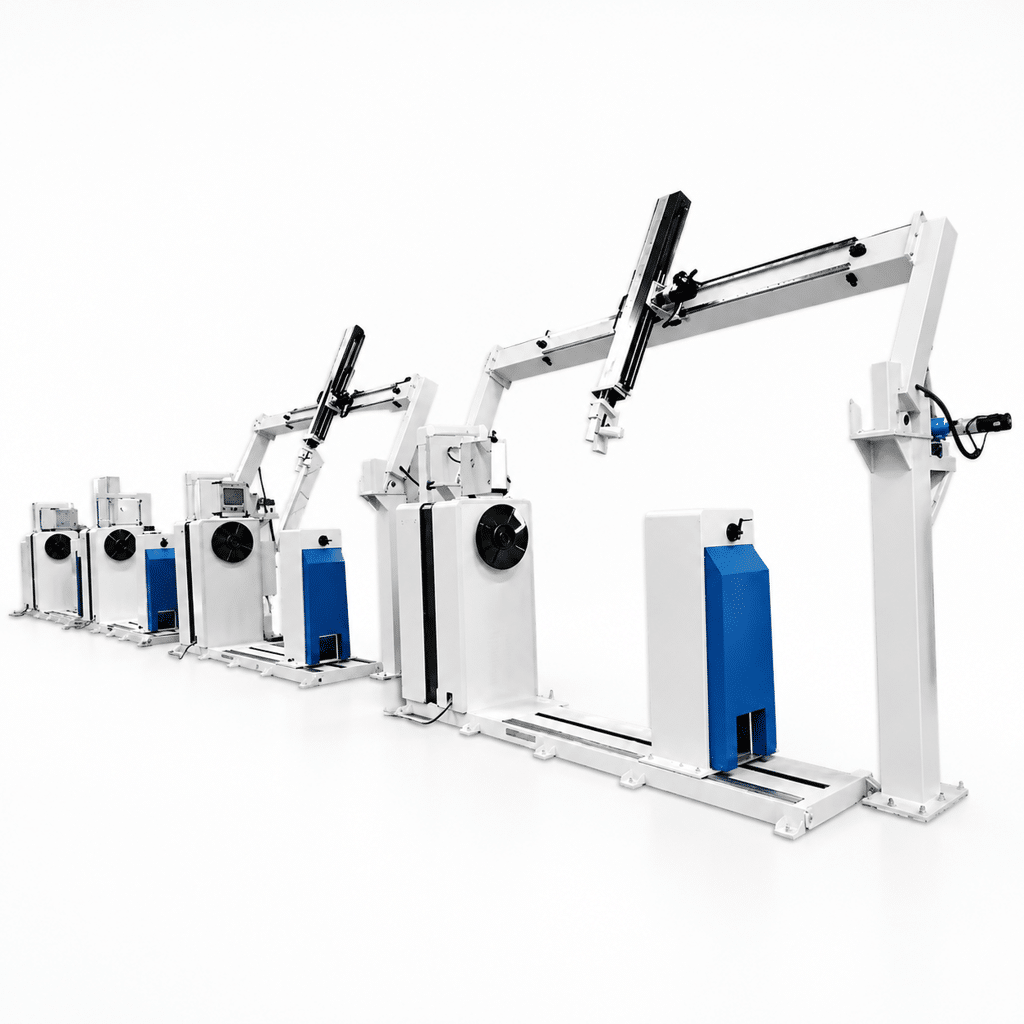
Start with the two hard limits: the heaviest coil you will wind, and the largest finished coil diameter. Rated load must cover the coil plus the mandrel and clamping fixtures — with a 20–30% margin for future products.
Below is the standard WR series range, from 1-ton to 25-ton capacity:
| Model | Max Load | Spindle Torque | Max Winding Diameter | Center Distance | Speed Range |
|---|---|---|---|---|---|
| WR-1 | 1 T | 1,000 N·m | 1,500 mm | 800–2,000 mm | 0–100 rpm |
| WR-3 | 3 T | 4,000 N·m | 2,000 mm | 1,200–2,100 mm | 0–120 rpm |
| WR-5 | 5 T | 4,000 N·m | 2,200 mm | 1,600–2,500 mm | 0–120 rpm |
| WR-10 | 10 T | 15,000 N·m | 2,400 mm | 1,500–4,000 mm | 0–16 rpm |
| WR-15 | 15 T | 18,000 N·m | 3,400 mm | 2,200–4,000 mm | 0–10 rpm |
| WR-25 | 25 T | 25,000 N·m | 3,400 mm | 2,000–4,500 mm | 0–10 rpm |
Two details worth noticing in this table:
- Center distance defines the maximum coil length you can mount. If you wind long reactor coils, check this figure before tonnage.
- Speed falls as capacity rises. Small machines run up to 120 rpm for fast production of distribution-class coils; 10–25 T machines run at 0–10 or 0–16 rpm, because large coils demand slow, controlled rotation.
Step 2: Torque Matters More Than Tonnage
Many buyers compare only load capacity. In real production, the spindle torque rating decides whether the machine can actually wind your coil.
Here is why. Winding a large-diameter coil with thick rectangular conductor means bending that conductor around a big radius, hundreds of times, under tension. The resistance the spindle must overcome scales with conductor cross-section, winding tension, and coil radius. A machine can be rated for 10 tons of static load yet still struggle if its torque output is undersized for a 2-meter-diameter coil wound with heavy strip.
That is also why torque jumps sharply across the range — from 4,000 N·m at 5 tons to 15,000 N·m at 10 tons. The 10 T class is where true power-transformer HV coils begin, and the torque rating reflects that step change.
What to confirm with the supplier:
- Is the quoted torque continuous torque, available across the full speed range?
- Does the drive provide constant torque with stepless speed regulation, so winding tension stays stable as the coil diameter grows?
- What is the starting torque with a fully loaded chuck?
Step 3: Control Features That Protect the Coil
A power transformer coil can contain hundreds of turns. Lose the count, and you scrap the coil — or worse, ship one with an incorrect turns ratio. These control features directly protect product quality:
- Forward/reverse counting with power-off memory. If power fails mid-winding, the turns count is preserved and the machine resumes without recounting. For a production machine, this is non-negotiable.
- Soft start. An impact-free start prevents the sudden jerk that can snap conductor or shift insulation at the beginning of a winding.
- Combined button and foot-pedal control. The operator guides the conductor with both hands; foot control of start, stop, and speed keeps both hands free and improves safety.
- A rigid, quick-positioning tailstock. Changeover time between coil sizes depends on how fast the tailstock travels and locks.
Horizontal or Vertical: Which Configuration Fits?
If most of your products are heavy HV layer coils, reactor coils, or long windings, a horizontal machine is the right choice. Vertical machines suit very large disc windings and save floor space, but that is a separate decision with its own sizing rules — see our vertical coil winding machine buying guide for that side of the comparison. Many transformer plants run both: vertical for the largest disc coils, horizontal for everything else.
Questions to Ask a Horizontal Winding Machine Manufacturer Before Buying
Before requesting a quotation, prepare your coil data: maximum weight, diameter, length, conductor type and size, and turns per coil. Then ask the manufacturer or supplier:
- Which model do you recommend for my coil range — and what margin does that leave?
- Is spindle torque continuous across the full speed range, and which drive system is used?
- Does the counter include forward/reverse counting and power-off memory as standard?
- Which mandrels, chucks, and fixtures are included, and what do additional sizes cost?
- What are the tailstock travel and locking method?
- What installation, commissioning, and operator training are included?
- Can you provide references from transformer or reactor manufacturers using the same model?
- What are the lead time, warranty terms, and spare-parts availability?
You can review specifications and configuration options on our horizontal winding machine for transformer coils product page, or send us your coil drawings for a sizing recommendation.
Conclusion
Choosing the right horizontal winding machine comes down to three numbers — coil weight, winding diameter, and the torque to turn them — plus the control features that keep every turn accounted for. Size with margin, verify continuous torque, insist on power-off memory counting, and the machine will serve your winding shop reliably for decades.