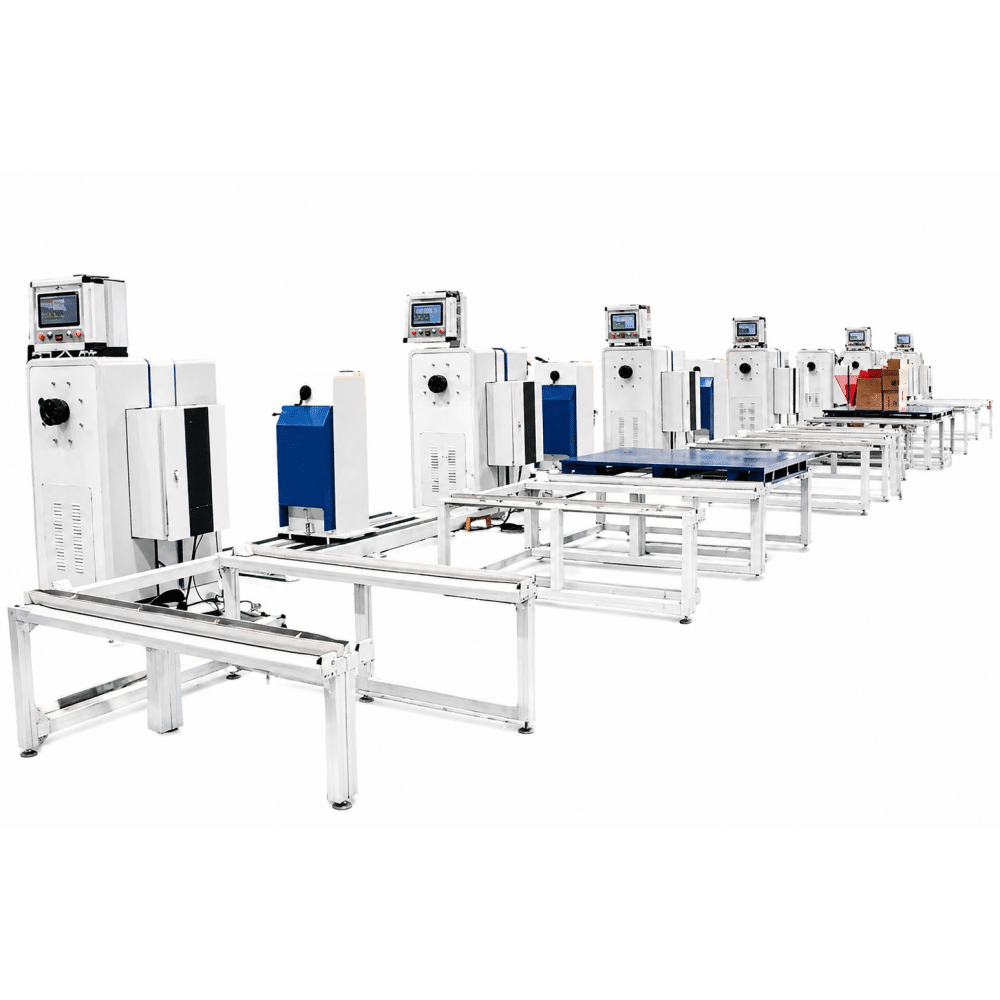
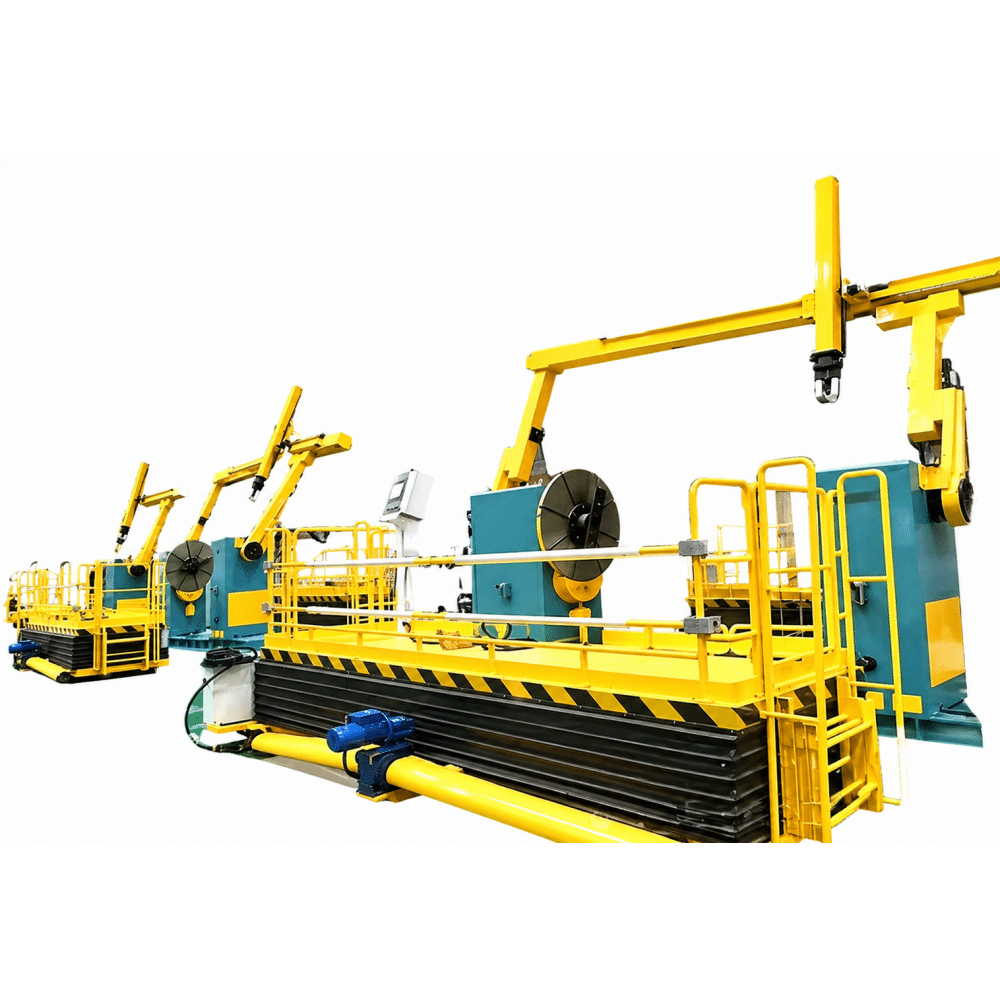
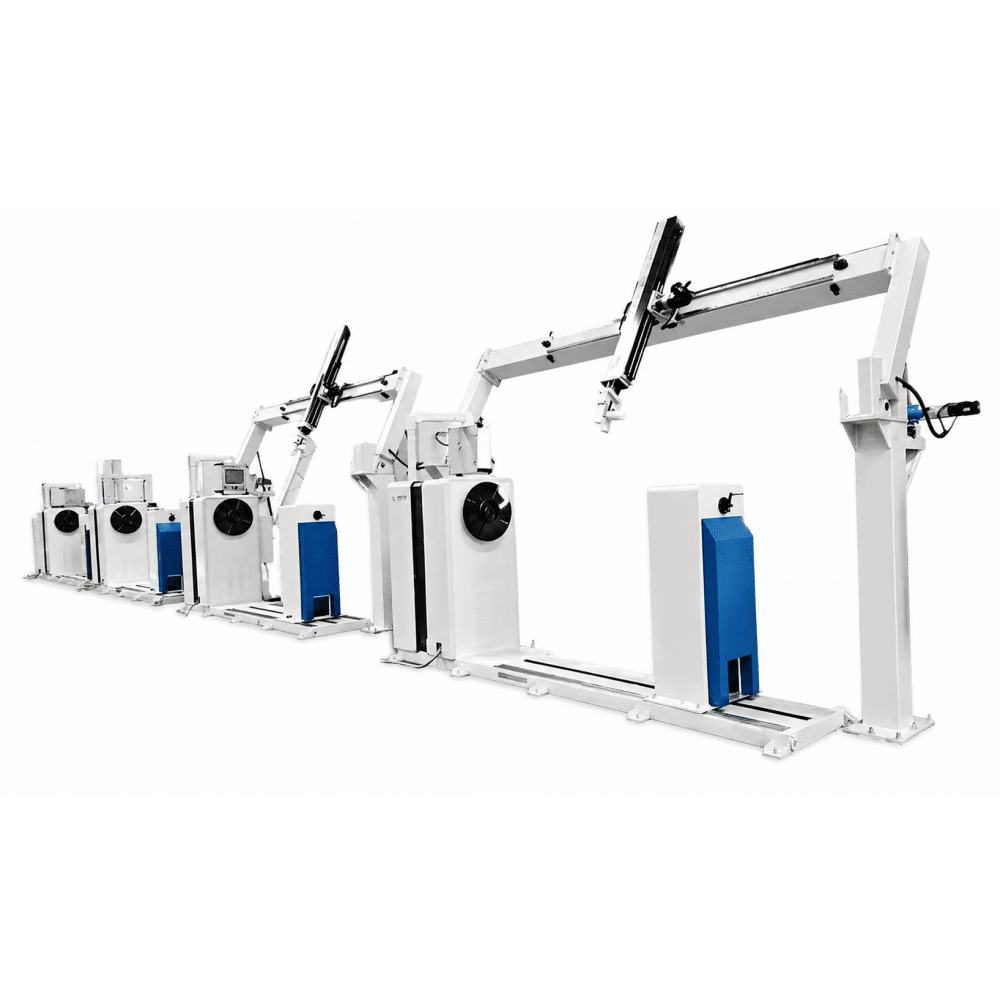
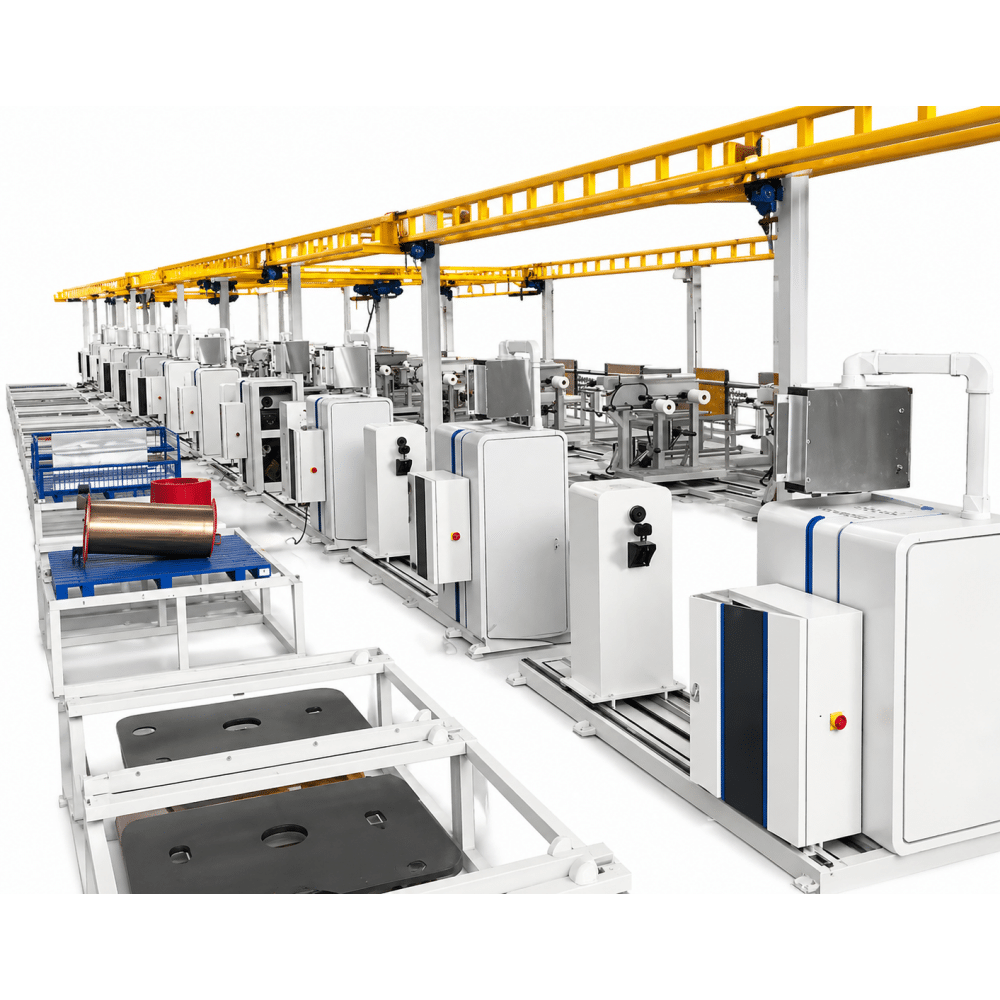
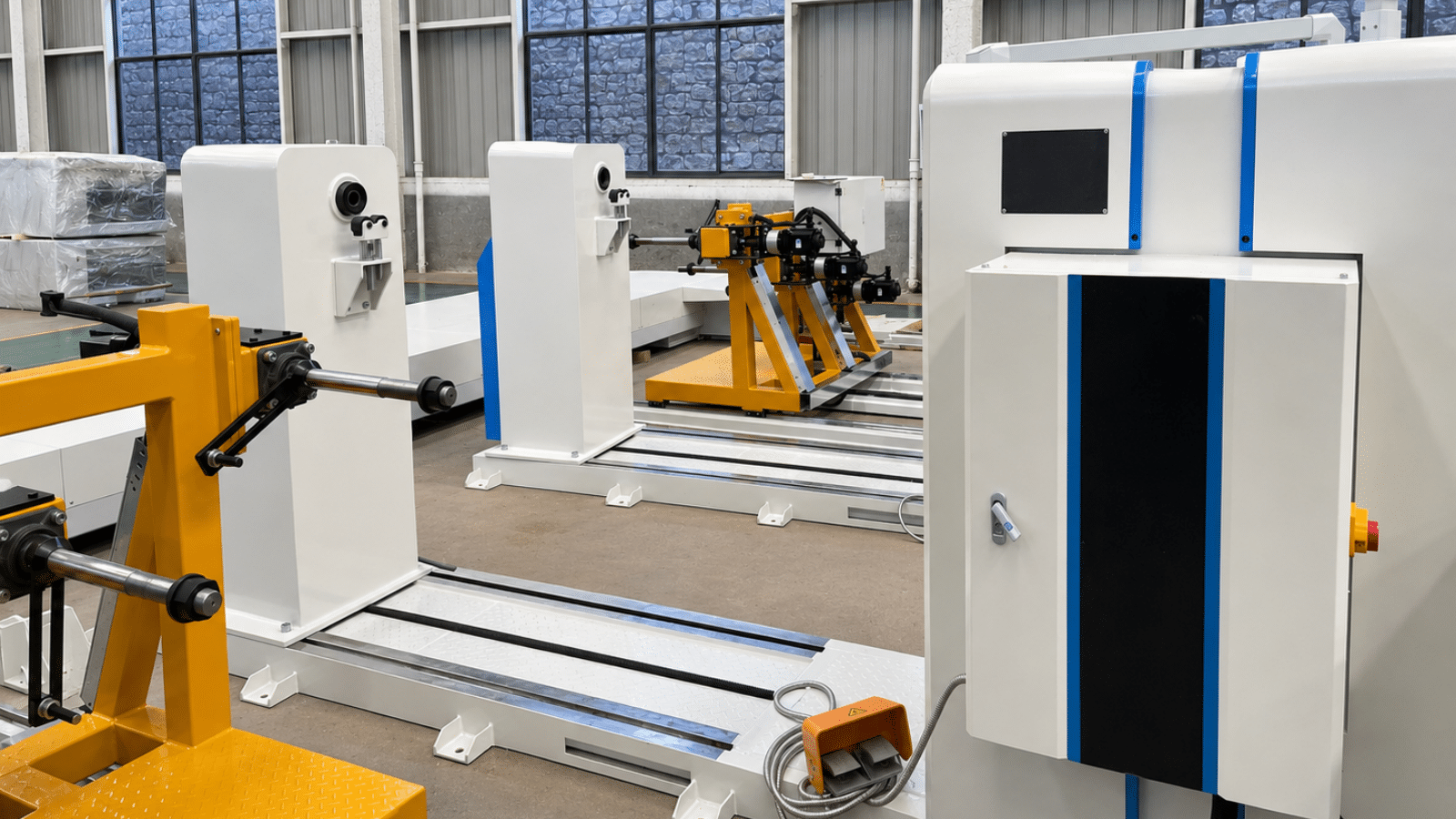
WR Series Horizontal Winding Machine for Transformer Coils
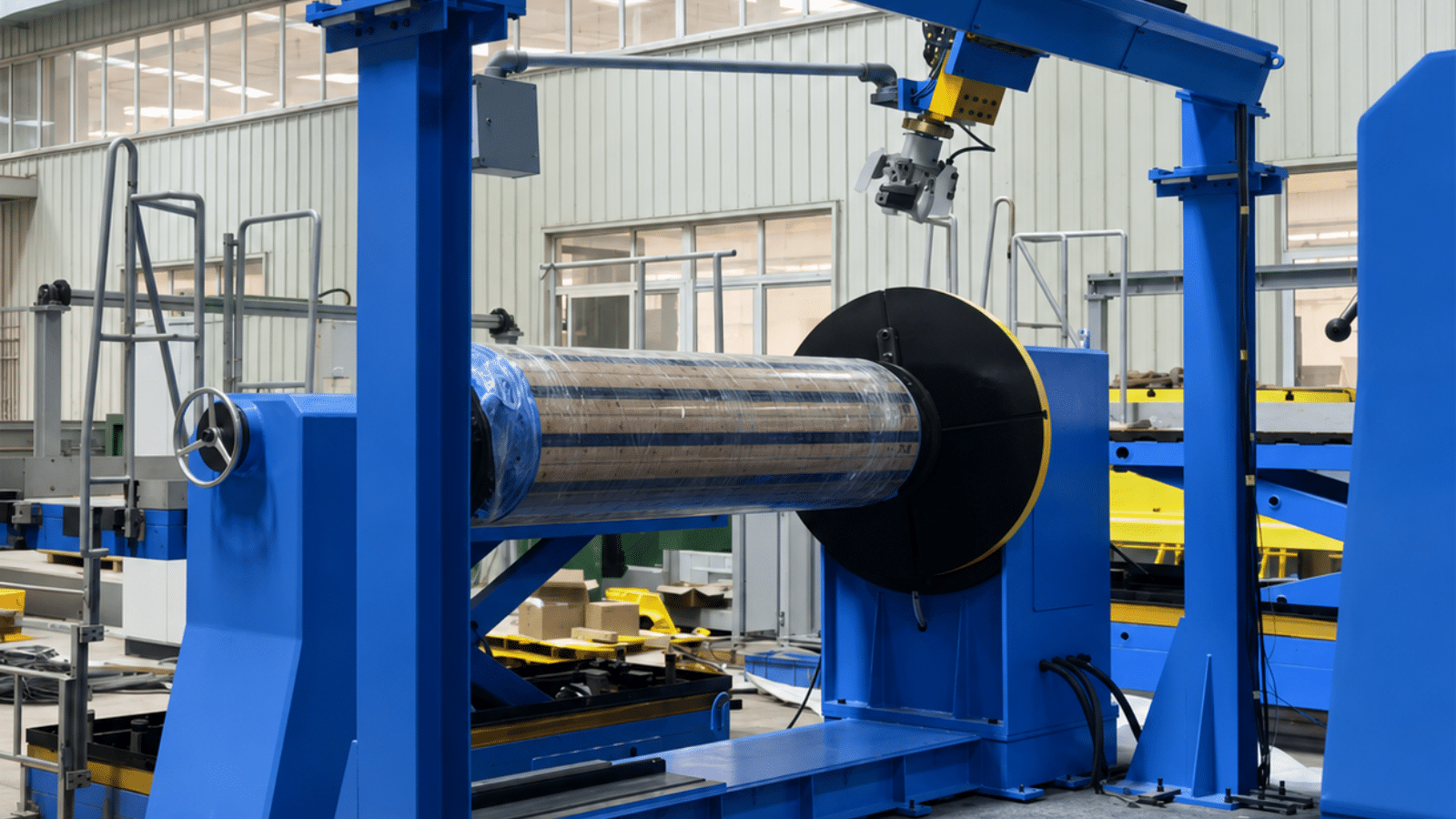
The WR Series Horizontal Winding Machine is engineered for winding high-voltage and large-capacity transformer coils and reactor coils. With load capacities from 1 to 25 tonnes, high spindle torque, smooth soft starting, stepless speed regulation and accurate forward/reverse turn counting, the machine provides stable and controlled winding for demanding coil production.
Typical Applications
- High-voltage transformer coil winding
- Large-capacity power transformer coil production
- Reactor coil winding
- Heavy-duty winding processes requiring high torque and stable low-speed rotation
- Transformer factories producing different coil sizes across a 1-25 T load range
Key Features
- High Load Capacity and Spindle Torque The WR Series covers rated loads from 1 to 25 T and maximum spindle torque from 1,000 to 25,000 N.m, allowing the model to be matched to the actual coil weight and diameter.
- Smooth Soft Start The drive starts smoothly without sudden impact, reducing shock to the winding structure, mandrel and transmission system.
- Stepless Speed Regulation Variable-speed control allows the operator to select an appropriate winding speed for different coil diameters and process stages.
- Constant-Torque Drive Within Each Mechanical Gear Stable torque output within the selected mechanical gear supports more consistent winding when the coil becomes heavier as the diameter increases.
- Accurate Forward and Reverse Turn Counting The electronic counter records both forward and reverse rotation, helping prevent turn-count deviations during adjustment or correction.
- Power-Off Memory Stored turn data is retained after a power interruption, reducing the risk of restarting from an incorrect winding count.
- Flexible Operator Control A button station and pedal switches allow the operator to control the winding process conveniently while keeping attention on conductor placement and coil formation.
- Wide Model Range Six standard models are available, from WR-1 for lighter coils to WR-25 for heavy transformer coil production.
Main Components
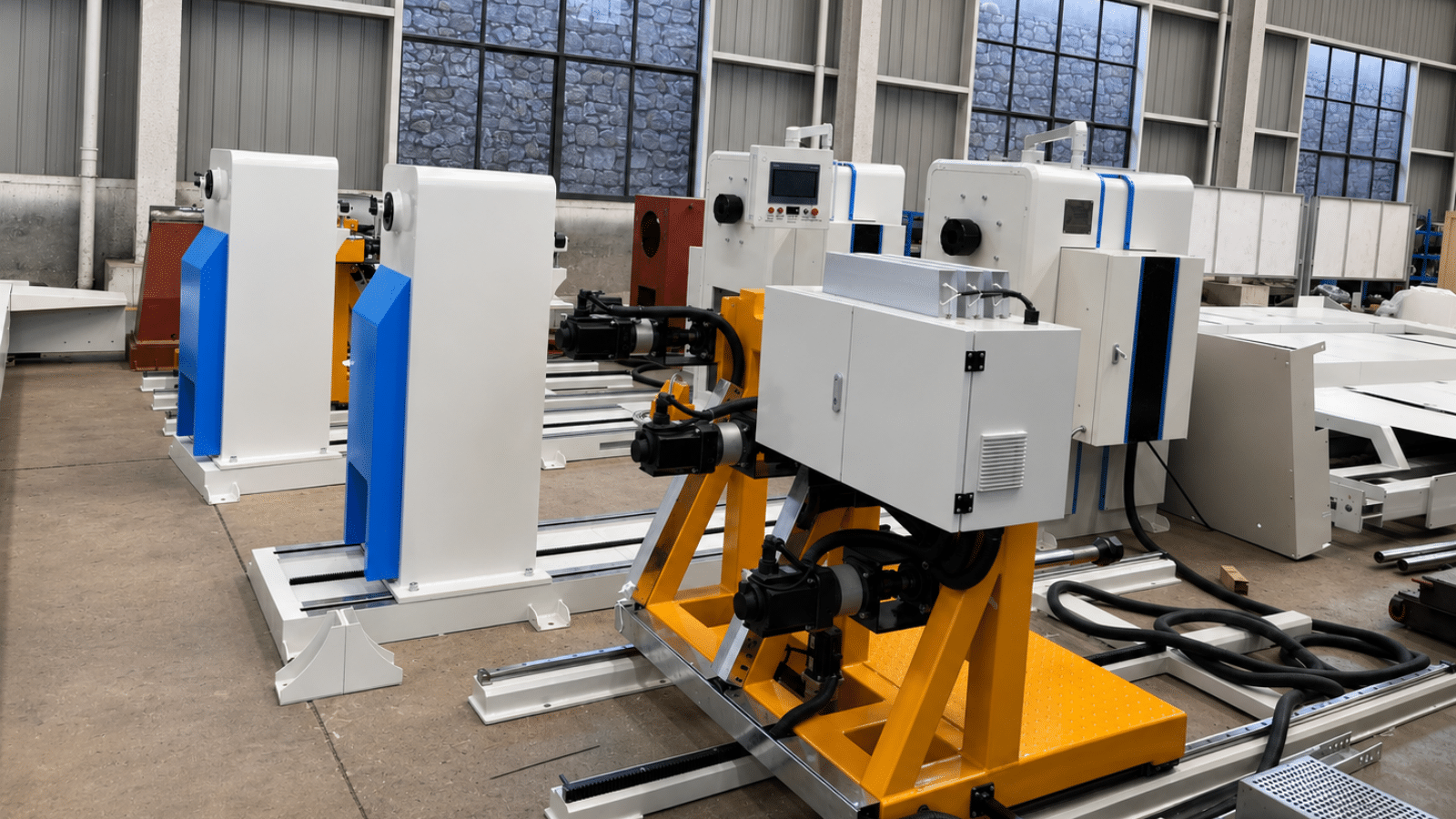
- Pedestal:Provides the machine base and structural support.
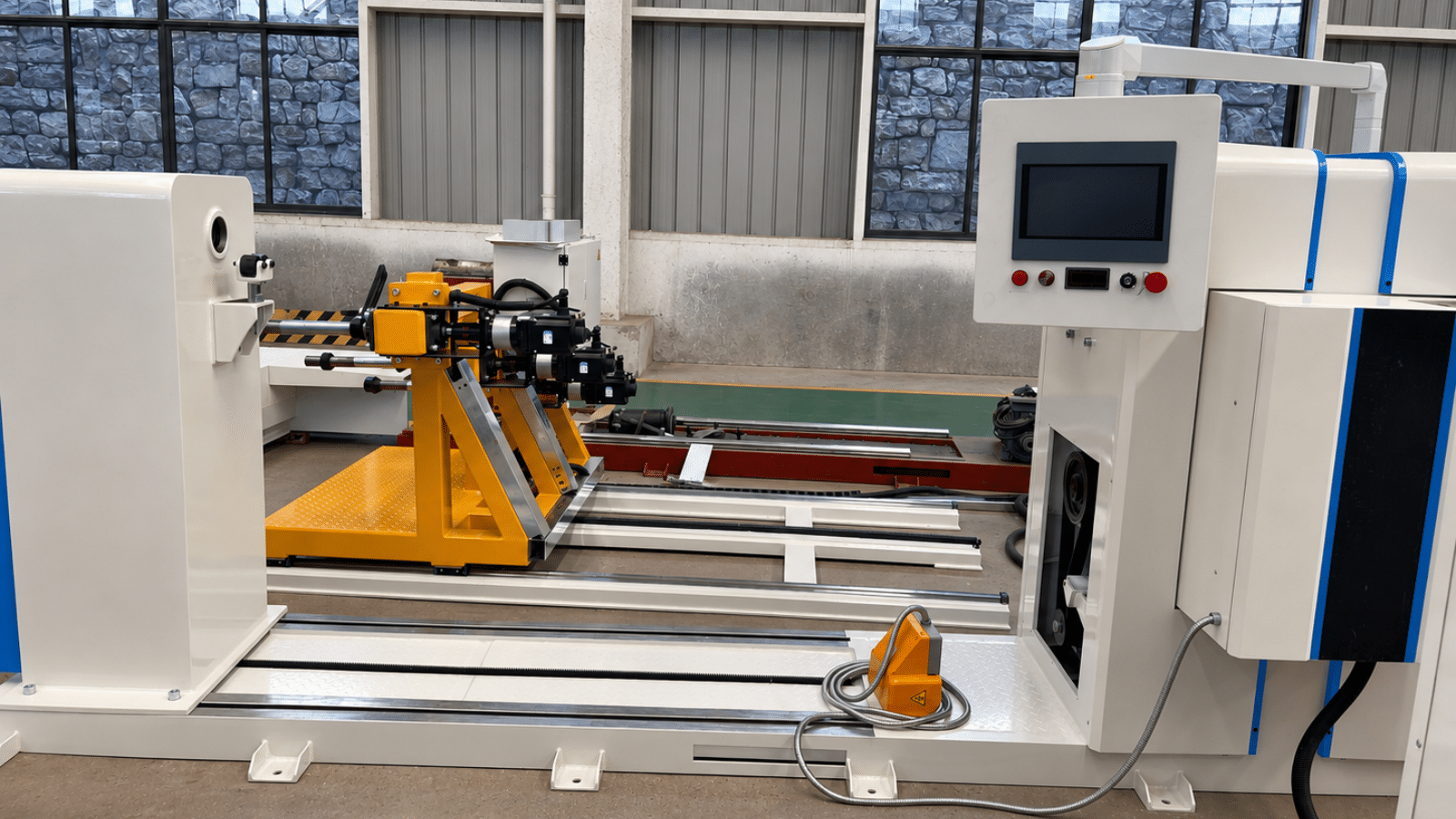
- Headstock:Houses the main drive and transmits torque to the chuck.
- Chuck:Connects the winding mandrel or coil form to the drive system.
- Tailstock:Supports the opposite end of the winding assembly and adapts to different center distances.
- Electrical Control System:Controls starting, speed regulation, braking and machine operation.
- Electronic Counter:Records forward and reverse turns and provides power-off memory.
- Button Station and Pedal Switches:Provide convenient operator control during winding.
Technical Parameters
| Parameter |
WR-25 |
WR-15 |
WR-10 |
WR-5 |
WR-3 |
WR-1 |
| Maximum load (T) |
25 |
15 |
10 |
5 |
3 |
1 |
| Chuck center height (mm) |
1,800 |
1,600 |
1,400 |
1,400 |
1,200 |
900 |
| Chuck diameter (mm) |
1,600 |
1,600 |
1,000 |
|
|
400 |
| Center distance (mm) |
2,000-4,500 |
2,200-4,000 |
1,500-4,000 |
1,600-2,500 |
1,200-2,100 |
800-2,000 |
| Maximum winding diameter (mm) |
3,400 |
3,400 |
2,400 |
2,200 |
2,000 |
1,500 |
| Maximum spindle torque (N.m) |
25,000 |
18,000 |
15,000 |
4,000 |
4,000 |
1,000 |
| Rated load (kg) |
25,000 |
15,000 |
10,000 |
5,000 |
3,000 |
1,000 |
| Motor power |
15 kW |
11 kW |
15 kW |
7.5 kW |
5.5 kW |
5.5 kW |
| Chuck rotation speed (r/min) |
0-10 |
0-10 |
0-16 |
0-120 |
0-120 |
0-100 |
How to Select the Correct Model
- Maximum coil weight:Choose a model with sufficient rated load and a practical engineering safety margin.
- Maximum coil outside diameter:Confirm that the finished winding diameter is within the model limit.
- Coil axial length:Match the required winding length to the available center-distance range.
- Required spindle torque:Heavy conductors, larger winding diameters and higher tension generally require more torque.
- Required winding speed:The maximum speed varies significantly by model; larger heavy-duty models prioritize torque and stability over high rotational speed.
- Mandrel and chuck interface:Provide the shaft, mandrel or tooling drawing so the connection can be technically confirmed.
- Electrical and safety requirements:Specify the destination voltage, frequency, local standards and required guarding or interlocks.
Project-Specific Configuration
Because transformer coils vary in weight, diameter, axial length, conductor size and winding method, the final machine configuration should be based on the actual production data rather than model capacity alone. The following items can be evaluated during technical confirmation:
- Chuck, mandrel and tooling interface
- Center distance and tailstock arrangement
- Motor, gearbox and speed range for the target process
- Counter and control interface requirements
- Conductor tension and pay-off arrangement
- Electrical standard, language and documentation
- Required safety guarding, interlocks and factory acceptance tests
Why Work With TRANFOVIA
- Transformer-industry equipment matching based on the customer’s coil and process data
- Model selection support across winding, coil handling, pressing and assembly equipment
- Pre-shipment inspection and technical-document coordination
- Responsive communication for installation, commissioning and after-sales scope confirmation
- A broader one-stop equipment portfolio for transformer manufacturing projects
Request a Model Recommendation and Technical Proposal
Send us your coil drawing or the key production data below. Our team will recommend the appropriate WR Series model and confirm the machine configuration for your winding process.
- Maximum coil weight and finished outside diameter
- Coil axial length and required center distance
- Conductor material, shape and dimensions
- Required winding speed and conductor tension
- Mandrel or shaft drawing
- Power supply, destination country and applicable safety requirements
FAQ
- What products can the WR Series Horizontal Winding Machine produce?
It is mainly used for high-voltage and large-capacity transformer coils and reactor coils. The exact suitability depends on coil weight, diameter, axial length, conductor specification and winding process.
- How do I choose between WR-1, WR-3, WR-5, WR-10, WR-15 and WR-25?
Start with the maximum coil weight and outside diameter, then verify center distance, required torque and winding speed. A complete coil drawing is recommended before model confirmation.
- How does the machine maintain accurate winding turns?
The electronic counter supports forward and reverse counting. When the operator reverses the spindle for adjustment, the counter can track the correction instead of treating it as additional forward turns.
- What happens to the turn count if the power supply is interrupted?
The counter includes a power-off memory function, allowing the recorded turn data to be retained for verification before production resumes.
- Can the machine operate at low speed under a heavy load?
The machine uses mechanical gearing with stepless speed regulation and constant-torque drive within each gear. The correct model and gear selection must be confirmed for the actual load and process.
- Is the machine controlled by buttons or a foot pedal?
Both a button station and pedal switches are included in the standard functional description, giving the operator flexible control during winding.
- What is the difference between a horizontal and a vertical winding machine?
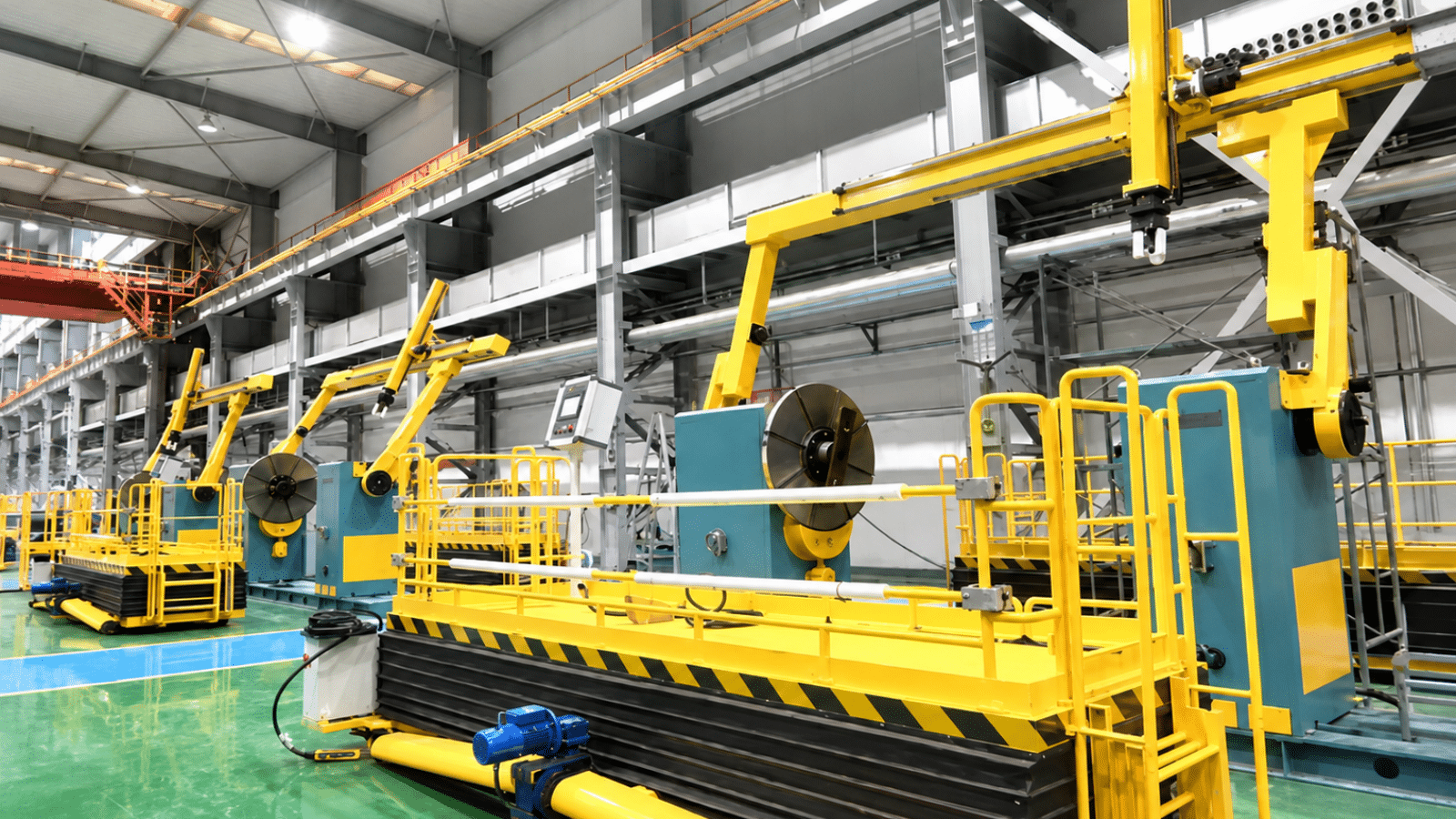
A horizontal machine supports the winding assembly between the headstock and tailstock. A vertical machine supports the coil on a vertical axis and is commonly selected for very large high-voltage or ultra-high-voltage coil processes. The correct choice depends on coil structure, workshop process and handling method.
- Can the machine be matched with a tension pay-off stand or adjustable winding mandrel?
Yes, these related systems can be evaluated as part of the winding solution. The conductor specification, required tension and mandrel dimensions should be provided for technical matching.
- Which technical details are required for a quotation?
Please provide maximum coil weight, finished outside diameter, axial length, conductor type and size, target winding speed, required tension, mandrel drawing, power supply and destination country.