Introduction
For transformer manufacturers, selecting the right transformer coil winding machine is a strategic production decision. It affects coil forming quality, winding accuracy, labor efficiency, workshop layout, and the long-term reliability of the whole transformer production line.
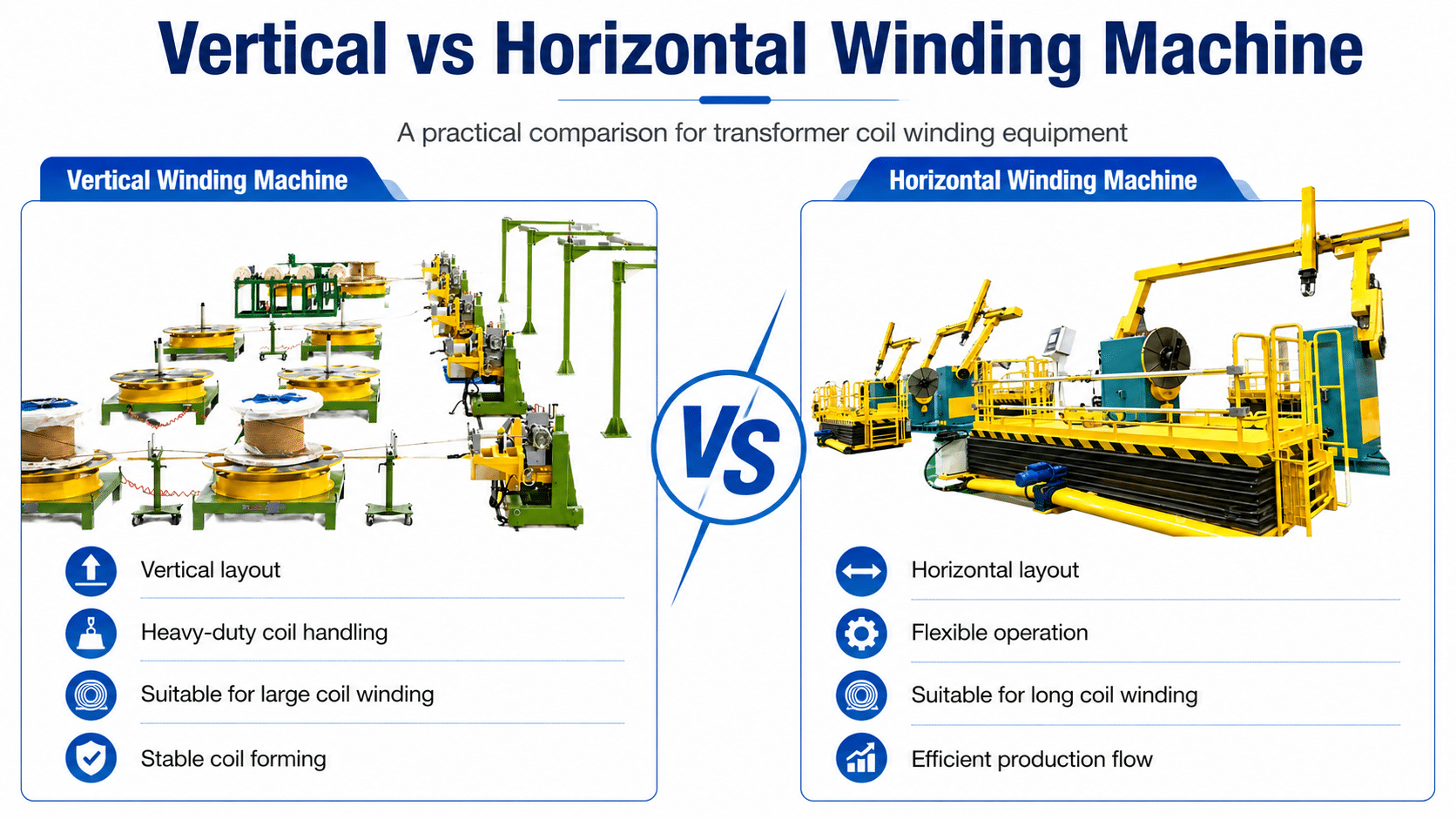
A vertical winding machine is usually selected for large power transformer coils, ultra-high voltage transformer coils, continuous disc coils, and applications where heavy coil support and stable coil forming are critical. A horizontal winding machine is more widely used for high-voltage coils, large-capacity transformer coils, reactor coils, and general transformer winding processes.
For transformer factories and procurement teams, the key question is not simply which machine is better. The real question is: Which winding machine matches your coil structure, transformer capacity, production process, and factory layout?
This article compares vertical and horizontal winding machines from a practical manufacturing and procurement perspective.
1. Structural Difference Between Vertical and Horizontal Winding Machines
The most direct difference between the vertical winding machine and the horizontal winding machine is the winding direction.
- A vertical winding machine winds the coil in a vertical position. The coil is placed on a rotating plate or chuck system, and the winding process is carried out around a vertical axis. For the LR series vertical winding machine, the machine can be designed as a pit type or over-floor type. The pit type structure allows the chuck to be elevated while keeping the operating platform position stable. This makes the operation easier and safer when winding large coils with different heights.
The vertical structure is especially useful when the coil is large, heavy, or sensitive to deformation. Since the coil is supported from below during winding, it can help maintain better roundness, alignment, and dimensional stability.
- A horizontal winding machine, such as the WR series, winds the coil along a horizontal axis. The main machine normally includes the pedestal part, headstock, chuck, tailstock, electrical control system, counter, button station, and pedal switches. The coil rotates horizontally between the headstock and tailstock.
This structure is highly practical for many transformer factories because it offers easier access for operators, flexible coil loading, and strong adaptability for different coil types.
In simple terms:
- The vertical winding machine is more suitable for heavy-duty, large-diameter, and precision coil forming applications.
- The horizontal winding machine is more suitable for versatile, high-voltage, large-capacity, and general transformer coil winding applications.
2. Suitable Coil Sizes and Transformer Types
Different transformer factories produce different coil structures. Before choosing a winding machine, buyers should evaluate coil diameter, coil height, coil weight, wire type, transformer capacity, and winding process.
Vertical Winding Machine Applications
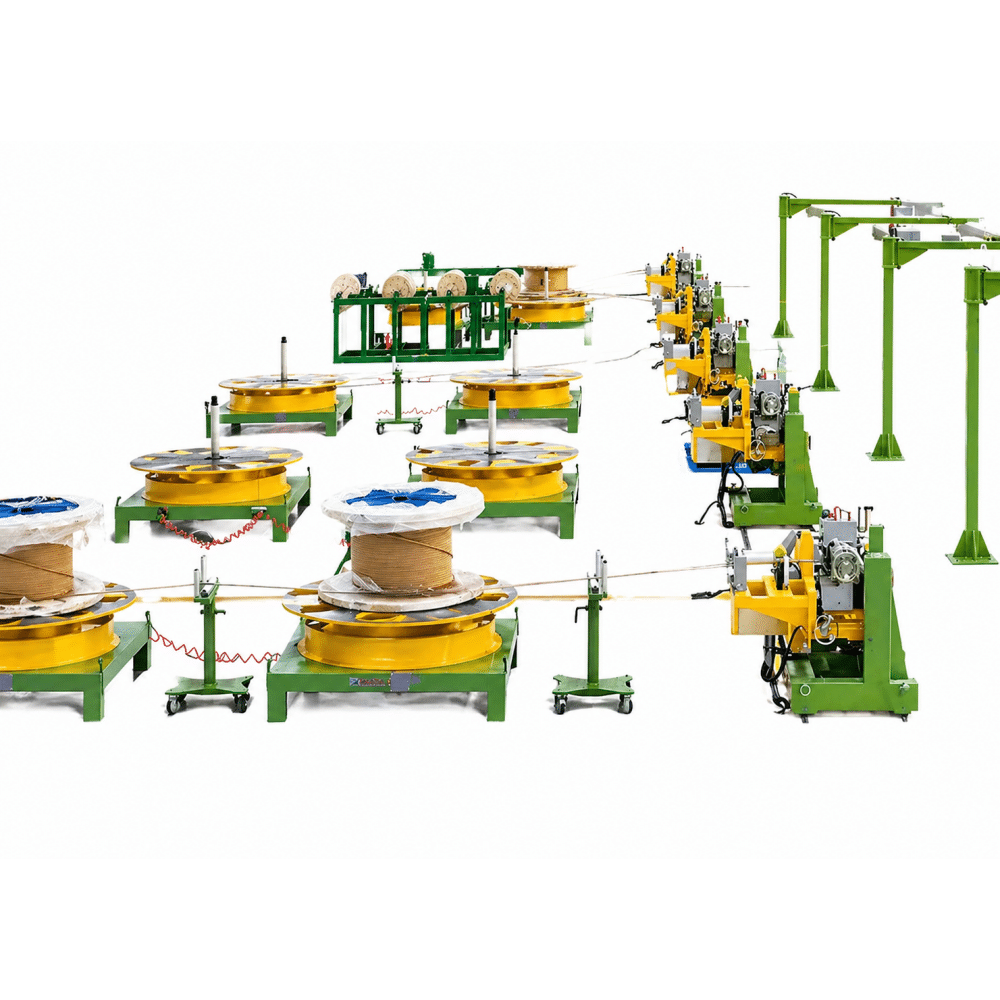
The LR series vertical winding machine is mainly used for large power transformer coil winding. It is an ideal equipment option for high voltage, ultra-high voltage, continuous coil, and disc coil manufacturing.
Typical applications include:
- Large power transformer coils
- Ultra-high voltage transformer coils
- Continuous disc coils
- Large-diameter transformer coils
- Heavy coils requiring stable support
- Coils requiring high forming accuracy
- Transformer factories focusing on heavy-duty production
The LR series can cover different load capacities, including models such as LR-5, LR-10, LR-20, LR-30, LR-35, and LR-45. The loading range can reach from 5 tons to 45 tons, making it suitable for medium to large power transformer coil production.
From the catalog data, the LR series can support running diameters up to approximately Φ3400–Φ3500 mm, depending on the model. The torque range can reach up to 45,000 N·m, which is important for heavy coil winding and stable rotation.
This makes the vertical winding machine a strong choice when coil weight, diameter, and deformation control are key concerns.
Horizontal Winding Machine Applications
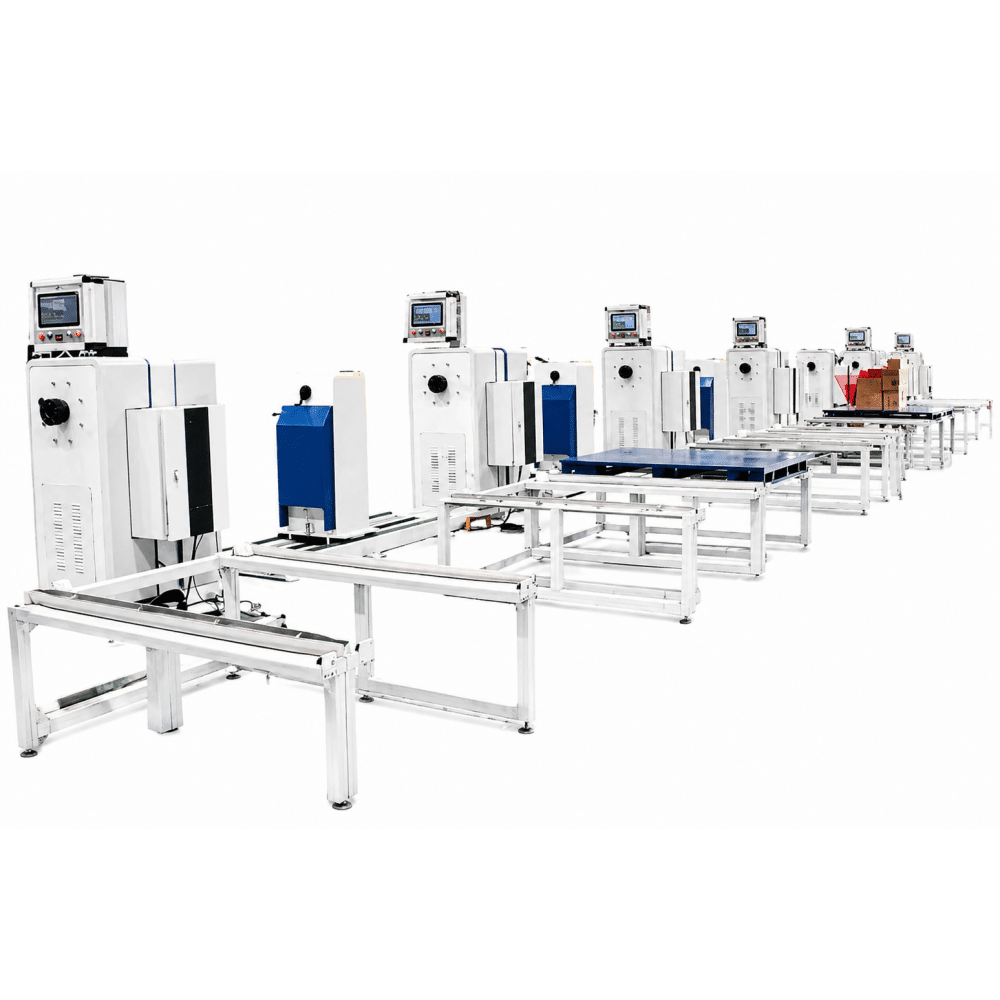
The WR series horizontal winding machine is mainly used to wind coils for high-voltage, large-capacity transformers and reactors. It is designed with large carrying capacity, large torque, accurate counting, smooth start, and reliable operation.
Typical applications include:
- High-voltage transformer coils
- Large-capacity transformer coils
- Reactor coils
- Distribution transformer coils
- Oil-immersed transformer coils
- Medium and large transformer production
- General-purpose transformer coil winding
The WR series includes models such as WR-1, WR-3, WR-5, WR-10, WR-15, and WR-25. The maximum load range covers approximately 1 ton to 25 tons, allowing transformer factories to select a model based on their actual coil weight.
According to the catalog data, the WR series can support maximum winding diameters from around 1500 mm to 3400 mm, depending on the model. The center distance range can reach up to 4500 mm for larger models, making it suitable for long coil structures and large transformer winding requirements.
For transformer factories that produce different coil sizes and need flexible operation, the horizontal winding machine is often a practical and cost-effective choice.
3. Production Efficiency, Operation Method, and Space Occupation
When selecting coil winding equipment, procurement teams should not only compare machine price. Operation efficiency, control accuracy, safety, and workshop layout are also important.
Production Efficiency
- The horizontal winding machine is often preferred when a factory produces multiple transformer models. It offers flexible adjustment for different coil sizes and can support frequent product changes. The WR series adopts soft start, smooth starting without impact, stepless variable speed, and constant torque drive within each mechanical shift gear. These features help improve winding stability and reduce mechanical shock during operation.
The machine is also equipped with an inverse electronic counter, positive and reverse counting function, and power-off memory function. This ensures that the number of coil turns remains accurate even if the machine stops or loses power.
- The vertical winding machine, however, has stronger advantages in heavy coil forming. The LR series can freely set the number of windings, and it also supports positive and reverse counting with power-off memory. The pit cover can be expanded or shrunk according to coil diameter, improving safety and convenience during large coil winding.
For large power transformer coils, the vertical structure can reduce deformation risk and improve forming stability. After winding, many factories also use a coil press to further improve coil compactness and dimensional stability.This can reduce rework and improve final coil quality.
Operation Method
The WR series horizontal winding machine is equipped with both button station and pedal switches, making it easy for operators to control the machine during winding. This is useful when operators need to adjust wire position, insulation placement, and winding speed during the process.
The LR series vertical winding machine is designed for simple and convenient operation. For the pit type machine, the winding coil height can be adjusted according to coil requirements, while the operator platform remains fixed. This improves operator comfort and safety during large coil production.
Both machine types should ideally include:
- Variable speed control
- Accurate turn counting
- Positive and reverse counting
- Power-off memory
- Smooth start
- Reliable braking
- Stable torque output
- Safety protection
- Operator-friendly control system
These features are critical for modern transformer factories that require consistent winding quality and efficient production control.
Workshop Space
- A horizontal winding machine usually requires more floor length because the machine body, headstock, tailstock, coil area, and wire feeding space are arranged horizontally. It also requires sufficient space for operators, pay-off stands, insulation materials, and material handling.
- A vertical winding machine may reduce horizontal space occupation in some cases, but it requires enough workshop height, crane capacity, ground foundation strength, and safe pit or platform design. For pit type vertical winding machines, civil construction and workshop layout must be considered in advance.
Therefore, when planning a complete transformer production line, the winding machine should be evaluated together with crane system, coil press, drying oven, core assembly area, insulation processing area, and final assembly flow.
4. Key Technical Parameter Comparison
The following practical comparison can help transformer factories understand the typical selection direction.
| Item | Vertical Winding Machine LR Series | Horizontal Winding Machine WR Series |
| Main application | Large power transformer coils, HV/UHV coils, continuous and disc coils | HV coils, large-capacity transformer coils, reactor coils |
| Winding direction | Vertical axis | Horizontal axis |
| Typical load range | Approx. 5–45 tons | Approx. 1–25 tons |
| Max winding/running diameter | Up to approx. Φ3400–Φ3500 mm | Up to approx. Φ3400 mm |
| Torque range | Up to approx. 45,000 N·m | Up to approx. 25,000 N·m |
| Operation advantage | Better support for heavy coils and stable coil forming | Flexible operation and wide application range |
| Control features | VF speed control, smooth start, reliable braking, counting, power-off memory | Soft start, stepless speed, constant torque, electronic counter, power-off memory |
| Factory requirement | Suitable foundation, crane height, pit or platform planning | Longer floor space, headstock/tailstock layout, operator access |
This comparison shows that the vertical winding machine is more focused on heavy-duty stability, while the horizontal winding machine is more focused on versatility and operational flexibility.
5. Procurement Selection Advice for Transformer Factories
Before requesting a quotation for a vertical winding machine or horizontal winding machine, buyers should prepare clear technical information. This helps the supplier recommend the right model and avoid unnecessary cost.
Choose a Vertical Winding Machine If:
- Your factory mainly produces large power transformers
- Your coils are heavy and large in diameter
- Your production involves continuous coils or disc coils
- You need better coil support during winding
- Stable coil forming is a priority
- Your workshop has suitable crane height and foundation conditions
- You need load capacity up to 30 tons, 35 tons, or even 45 tons
The LR series vertical winding machine is a strong choice for transformer manufacturers focusing on high-voltage, ultra-high-voltage, and heavy-duty coil production.
Choose a Horizontal Winding Machine If:
- Your factory produces high-voltage transformer coils
- You need flexible winding equipment for different coil sizes
- Your products include reactors or large-capacity transformers
- You need easier operator access and convenient control
- Your workshop is better suited for horizontal machine layout
- You need load capacity from 1 ton to 25 tons
- You require accurate counting, smooth start, and variable speed control
The WR series horizontal winding machine is suitable for transformer factories that need practical, flexible, and widely applicable coil winding equipment.
6. Recommended Information for Quotation
To receive an accurate quotation, transformer factories should provide the following information:
- Maximum coil diameter
- Maximum coil height or coil length
- Maximum coil weight
- Transformer type and capacity range
- Wire type and wire size
- Required winding speed
- Required torque or load capacity
- Coil drawing if available
- Workshop layout or space limitation
- Power supply requirement
- Whether pit type or over-floor type is preferred for vertical machines
For a complete transformer production line, buyers can also consider related equipment such as foil winding machines, coil press machines, core cutting lines, insulation processing machines, vacuum drying systems, and busbar processing machines. Choosing compatible equipment from the same solution provider can reduce process mismatch and improve production efficiency.
Conclusion
The vertical winding machine is more suitable for large, heavy, high-voltage, ultra-high-voltage, continuous, and disc coil winding applications. It provides strong support for heavy coils and helps achieve stable coil forming.
The horizontal winding machine is more suitable for high-voltage coils, large-capacity transformer coils, reactor coils, and general transformer production. It offers flexible operation, accurate counting, smooth start, constant torque drive, and broad application coverage.
For transformer factories and procurement managers, the best choice should be based on coil size, coil weight, transformer type, workshop layout, and future production capacity planning.
Get Your Tailored Winding Machine Configuration
Looking for the right vertical winding machine or horizontal winding machine for your transformer factory?
TRANFOVIA provides professional transformer coil winding machines and complete transformer production equipment, including vertical winding machines, horizontal winding machines, foil winding machines, coil press machines, core cutting lines, insulation processing equipment, vacuum drying systems, and busbar processing machines.
Send us your coil size, coil weight, transformer capacity, wire specification, and workshop layout. Our technical team will recommend the most suitable coil winding equipment configuration for your production line.
Contact TRANFOVIA to get a customized winding machine solution and quotation for your transformer factory.