| Equipment | Multiple Strips Shaping Machine |
| Application | One-pass slitting and shaping of transformer pressboard into cooling duct strips and winding insulation strips |
| Region | Algiers, Algeria — distribution transformer and transformer insulation parts manufacturing |
A distribution transformer manufacturer in Algiers was feeding pressboard through a single-strip shaping machine a dozen times per workpiece — one strip at a time, one operator standing at the machine all day. After switching to a multiple strips shaping machine, one pressboard section produces 10–20 shaped strips in a single feed, processing efficiency reached about 5× that of the single-strip method, and pressboard utilization improved by roughly 20% — with smooth, burr-free strip edges throughout.
1. Customer Background: A Transformer Insulation Parts Workshop in Algiers
This customer, based in Algiers, Algeria, builds distribution transformers and the insulation parts that go with them for grid refurbishment and industrial distribution projects. A distribution transformer winding is packed with cooling duct strips and insulation strips in widths from 5 mm to 70 mm, and a single transformer can consume several hundred metres of them.
The customer’s original method was a single-strip shaping machine working one strip at a time: pressboard was first cut into narrow blanks and then shaped strip by strip, so one workpiece went back to the machine a dozen times and both labour and material went to waste. As orders moved toward repeat batch production, this operation became the bottleneck of the winding shop.
After comparing several suppliers, the customer chose our multiple strips shaping machine.
2. Why Single-Strip Shaping Falls Short in Batch Production
A duct strip looks like nothing more than a piece of pressboard cut to width, but making it stable in batch production comes down to efficiency and consistency. Note that the limits below apply to high-volume, repeat batch production — for small batches, prototype work or frequent specification changes, a single-strip shaping machine remains a cost-effective and flexible choice. This customer’s workshop had outgrown that profile:
- One strip at a time caps output. A single-strip shaping machine runs one piece per pass, each taking more than ten seconds, so shift output is fixed by the machine.
- Heavy edge waste. Cutting one strip at a time leaves wide offcuts, and pressboard is not a cheap material — the discarded part goes straight into cost.
- Repeated loading ties up an operator. Every strip has to be loaded, aligned and clamped, so one person stands at the machine all day.
- Fuzzy strip edges. A dulled cutter or insufficient clamping leaves burrs on the strip edge, which can score the insulation once the strip is in the winding.
- Dust in the workshop. Pressboard cutting dust spreads through the shop, and operators work in masks all day.
- Unstable strip width. Hand feeding drifts sideways, so strips from the same batch vary in width and the winding oil-duct clearance varies with them.
Struggling with the same bottlenecks in your insulation parts workshop? Get a strip shaping configuration and quotation →
3. Machine Configuration and Solution
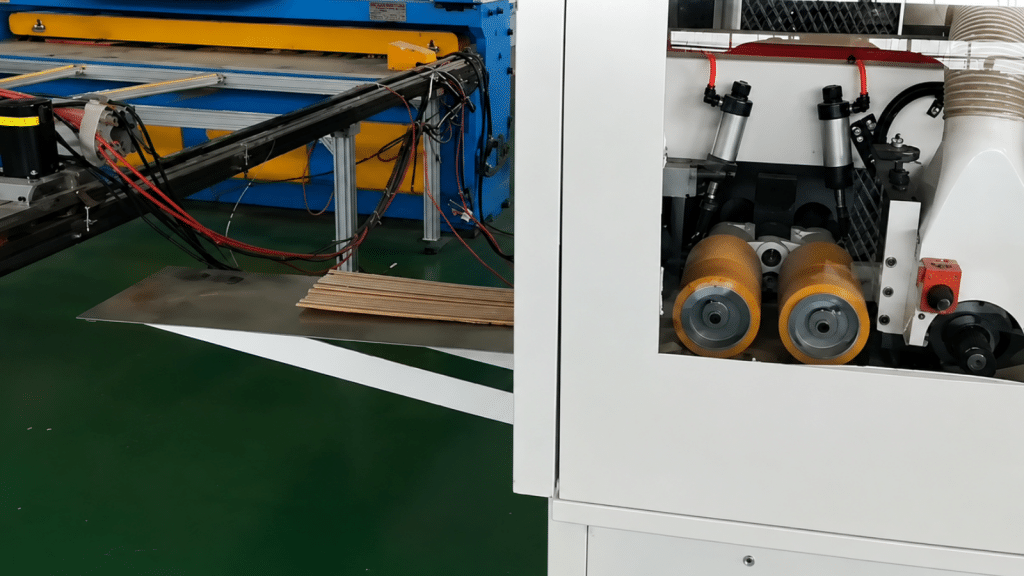
We configured the multiple strips shaping machine — a pressboard slitting and shaping machine built for transformer insulation production — around the customer’s incoming pressboard width, finished strip range and batch rhythm:
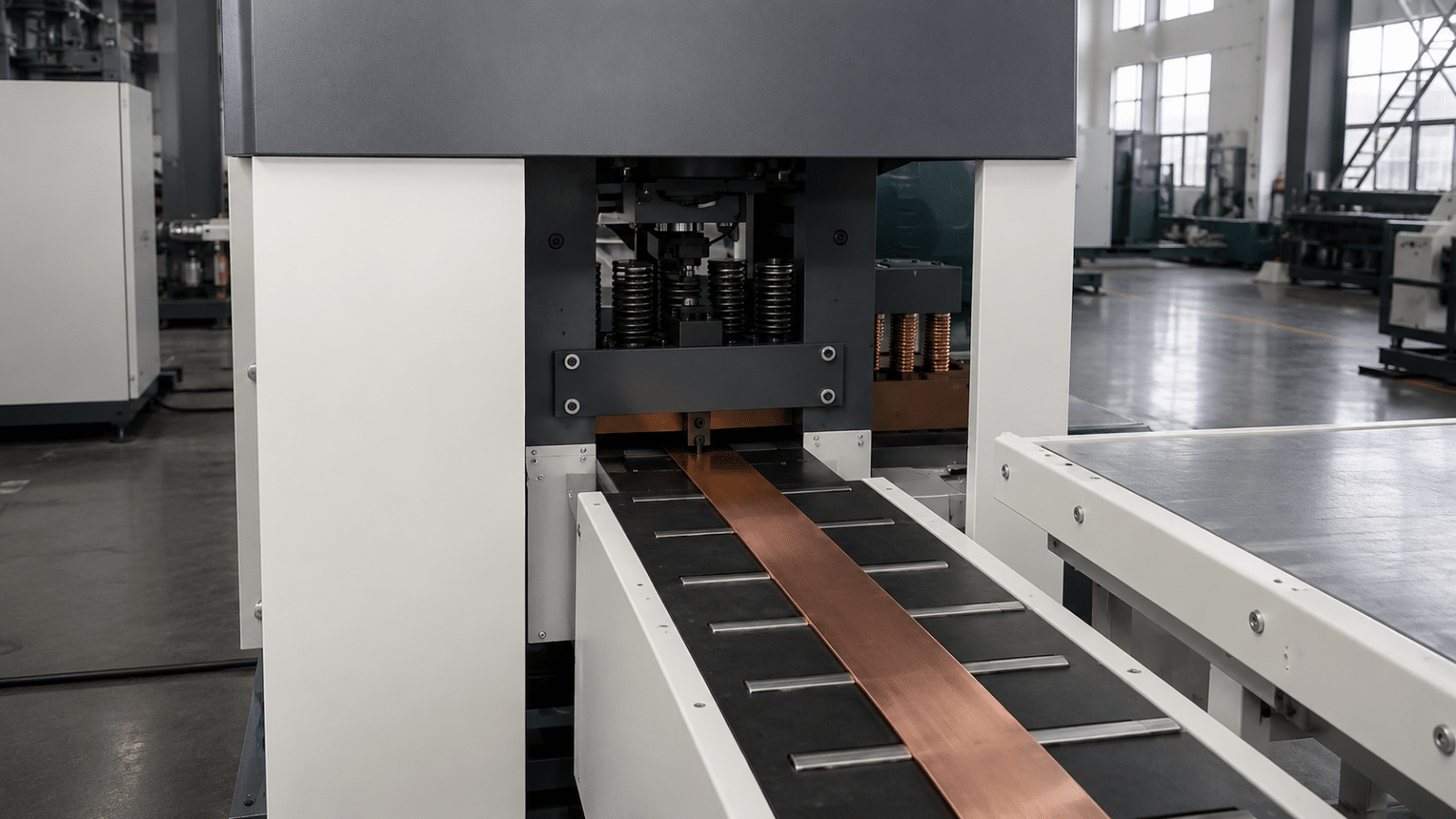
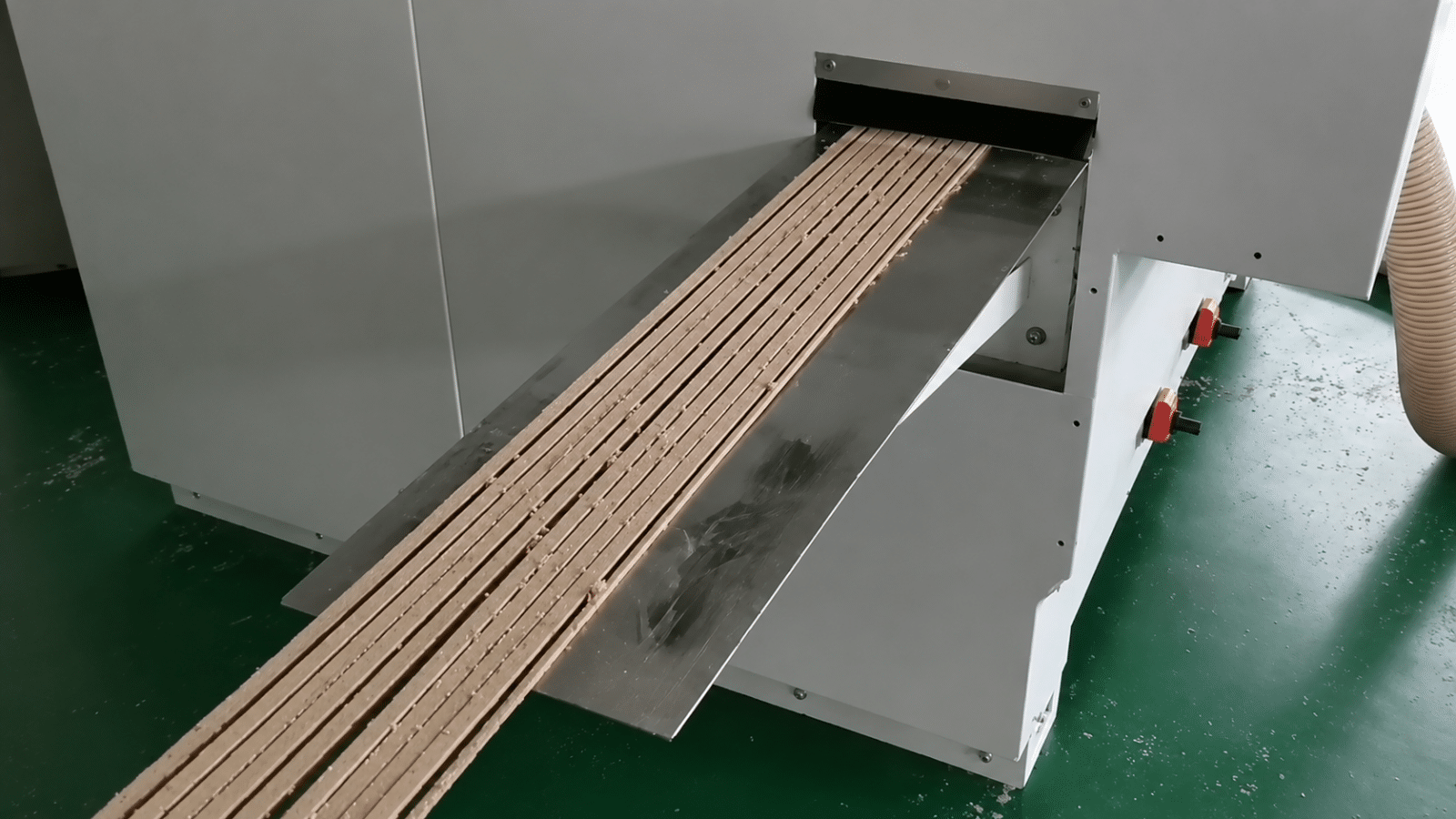
- Slitting and shaping in one feed. A pressboard section up to 150 mm wide is fed in at one end, and the machine divides it into several strips and shapes them in the same pass — 10 to 20 strips per feed, with a stated maximum of 22 strips.
- Covers the customer’s full strip range. Pressboard 3–15 mm thick and finished strip widths of 5–70 mm, so cooling duct strips and winding insulation strips run on the same machine.
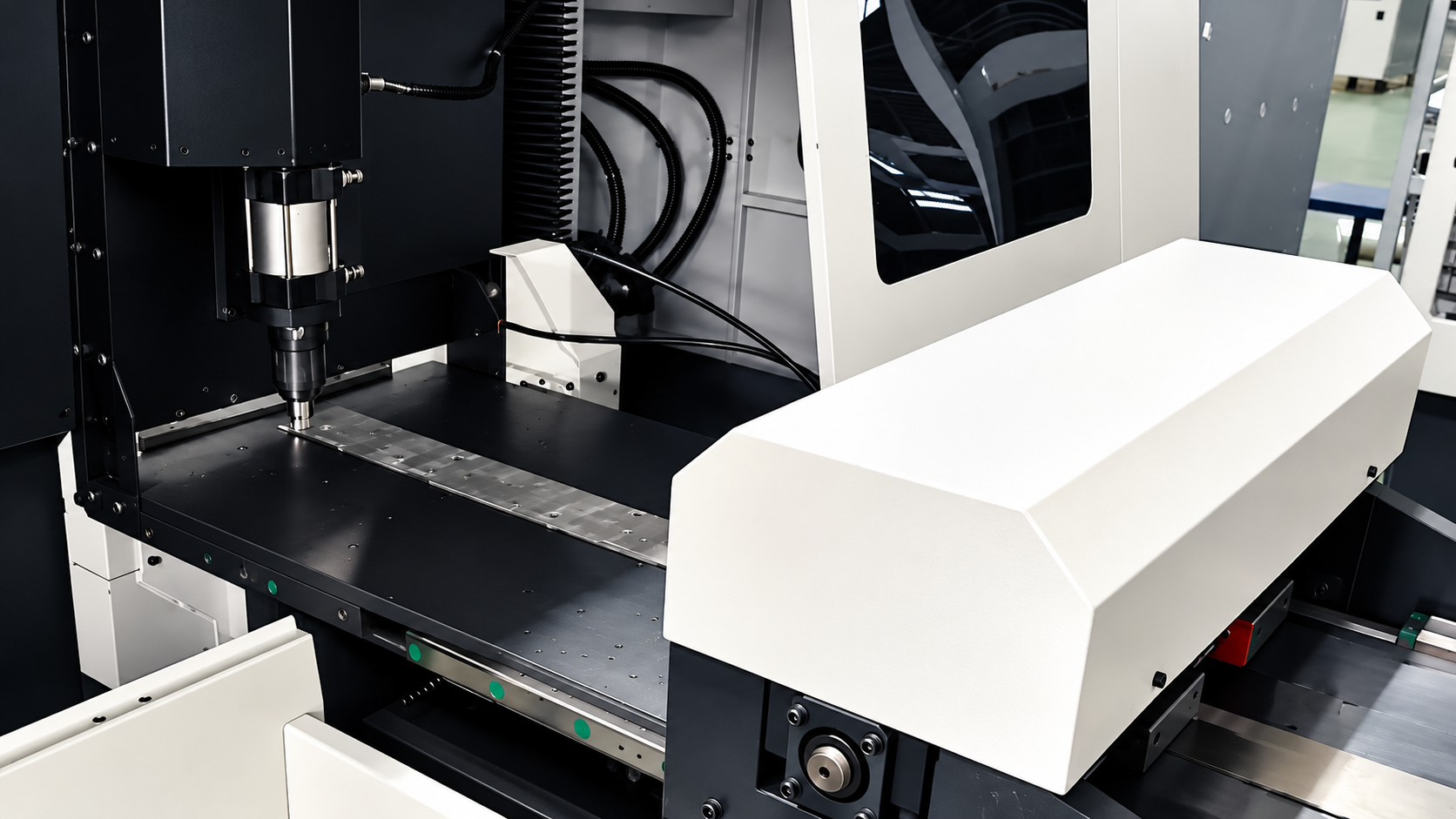
- Adjustable cutter shaft with a safety and dust-proof cover. The shaft is set for the required strip width and profile and stays enclosed behind the cover, so a specification change does not mean stripping the machine down.
- Plate-thickness adjustment. Clamping is set to the pressboard thickness from 3 to 15 mm, so thin plate does not wander and thick plate is held firmly.
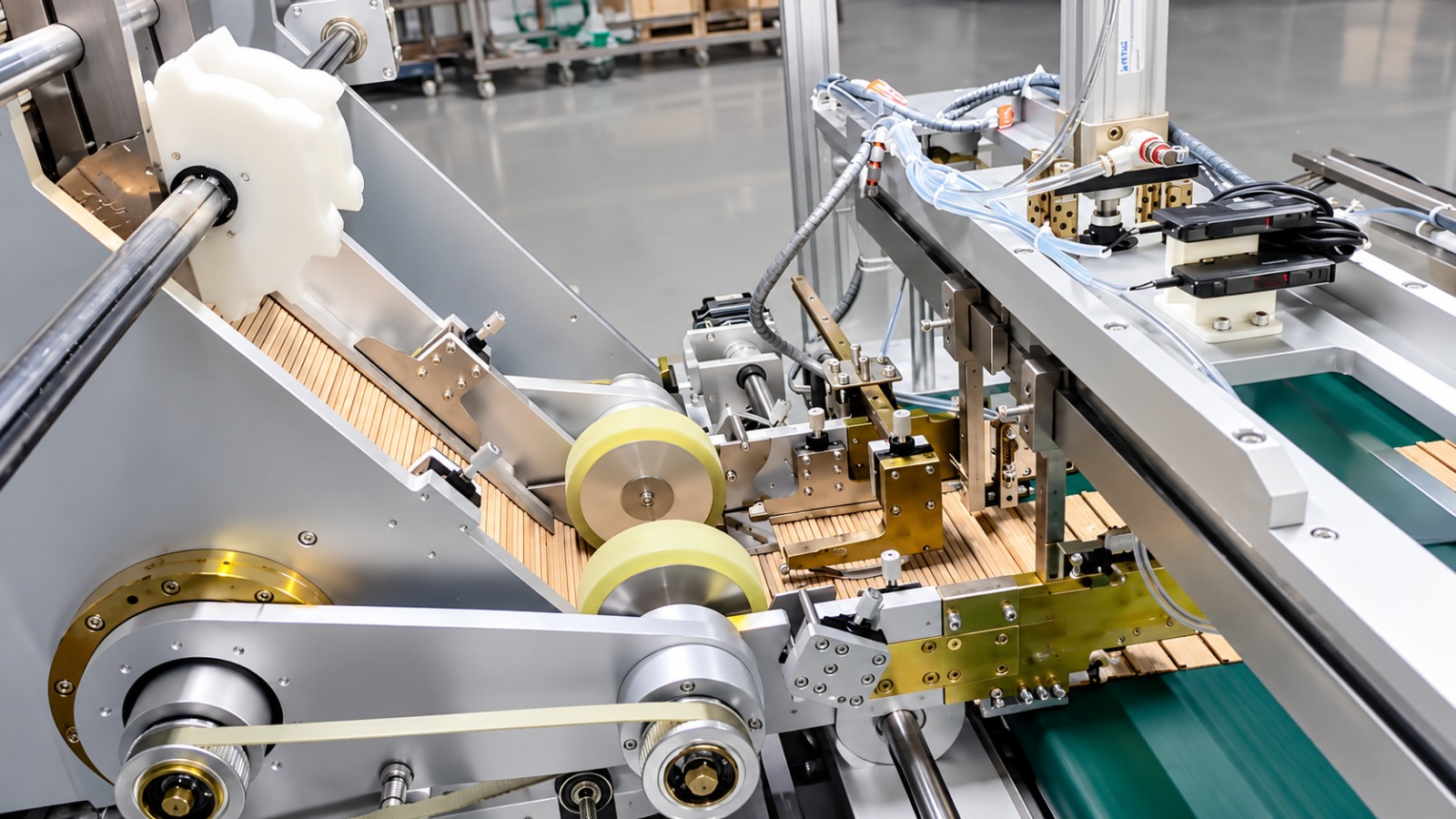
- Front and rear active shafts. Two driven shaft sets feed the plate continuously, and an optional automatic feeding system can be added for smoother long runs.
- Cooling, dust removal and a bag-type collector. The cutting zone is cooled and extracted, which extends blade life and draws the dust into a bag-type dust collector.
4. Installation, Commissioning and Operator Training
After the machine arrived, TRANFOVIA engineers worked through three steps with the customer’s insulation parts workshop:
- Incoming material and finished strip checks. The feeding width was calculated against the thickness and width of the pressboard the customer actually uses, the finished strip widths and strip count were confirmed to fall within the machine’s range, and the strip layout needed for the duct strips was reviewed.
- Cutter and clamping calibration. Cutter spacing was set for three strip widths of 5 mm, 20 mm and 70 mm in turn, each was trial run, and clamping force was matched to the speed of the front and rear active shafts so that feeding stayed straight and the strip cross-section came out clean.
- Trial processing and training. The customer’s own pressboard was run in production batches, strip width and edge burrs were sampled, the bag-type dust collector was checked for correct extraction, and the operators were trained on cutter changes, strip-width setting and routine dust removal using the English operation and maintenance manuals.
5. Acceptance Results: Single-Strip vs Multiple Strips Comparison
The machine was verified item by item against the technical agreement. Key parameters (design and acceptance reference values; actual figures depend on the configuration ordered):
| Parameter | Single-strip shaping machine (before) | Multiple strips shaping machine (after) |
|---|---|---|
| Strips per pass | 1 | 10–20 (maximum 22) |
| Processing speed per strip | >10 seconds per strip | 2–8 m/min continuous feed |
| Operator requirement | One operator dedicated per machine | One operator can monitor two machines |
| Pressboard utilization | Wide offcuts per strip | Improved by roughly 20% |
| Overall efficiency | Baseline | About 5× the single-strip method |
| Strip edge quality | Burrs possible with dulled cutters | Smooth, burr-free |
| Dust control | Open cutting zone | Cooling + extraction + bag-type collector |
Additional machine parameters confirmed at acceptance:
| Parameter | Value / Result |
|---|---|
| Pressboard thickness | 3–15 mm |
| Finished strip width | 5–70 mm |
| Maximum feeding width | 150 mm |
| Strips per feed | 10–20 strips (maximum processing quantity 22 strips) |
| Processing speed | 2–8 m/min |
| Feeding | Front and rear active shafts, optional automatic feeding system |
| Dust control | Cooling and dust-removal system with bag-type dust collector |
| Strip surface | Smooth, burr-free |
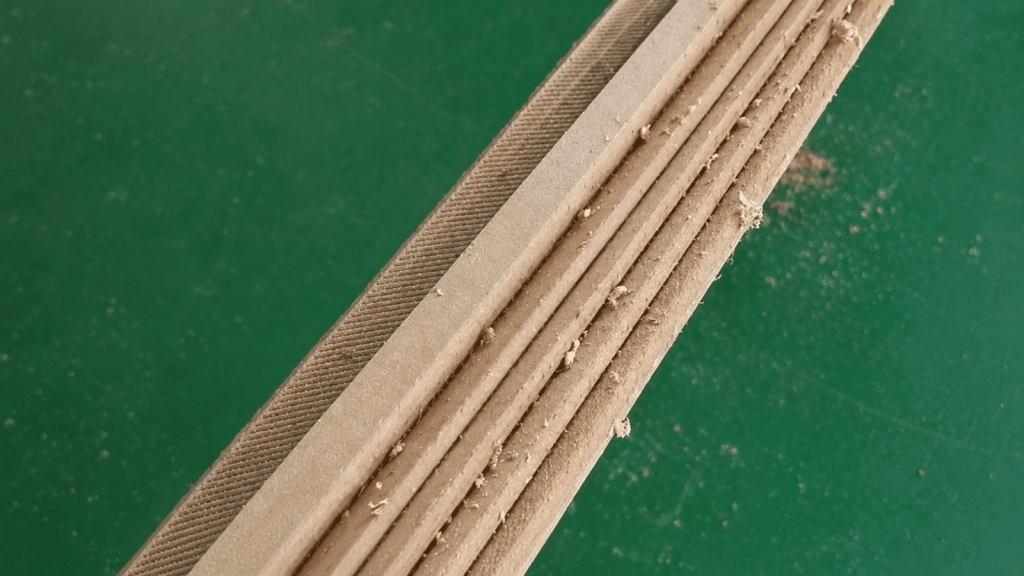
The most visible change at acceptance was the multi-strip output: one pressboard section goes in at the feed end and more than a dozen shaped duct strips come out together at the other end, all at the same width, with no fuzzy edges. The customer ran the same pressboard batch for comparison — the time a single-strip shaping machine needed for one batch produced several times the quantity on the multiple strips machine.
Is a single-strip machine still the right fit for your volume? If your workshop runs small batches or changes strip specifications often, see the single-strip shaping machine — the same build quality with a lower entry cost, and an easy upgrade path as volume grows.
6. What the Customer Says
“We used to work strip by strip — a dozen trips back to the machine for one workpiece, and somebody standing next to it the whole day. Now one plate goes in and twenty-odd strips come out together, there is less offcut, and one operator can keep an eye on two machines.” — Customer insulation parts workshop process engineer (at acceptance)
7. Summary: Where Batch Consistency Starts
The value of a multiple strips shaping machine is not that it can cut strips, but that it folds slitting and shaping into a single feed: one machine replaces the previous single-strip operation, 10 to 20 strips come out per feed with a maximum of 22, efficiency reaches about five times that of a single-strip machine, pressboard utilization improves by roughly 20%, and the strips come out smooth and burr-free — which is where batch consistency starts.
Next, the customer plans to write the cutter spacing, clamping force and strip count for each strip width into the process card that travels with the workpiece, and to add an automatic feeding system and a set of cutters for narrower strips so that the common cooling duct strip sizes can be locked to dedicated cutter groups.
To configure a strip shaping solution around your pressboard width, finished strip sizes and shift output, contact the TRANFOVIA technical team for selection advice and a quotation.
- WhatsApp: +86-15958243831
- Email: sales@tranfovia.com
- Website: https://tranfovia.com/