| Equipment | Insulation Pressboard Cylinder Production Line (Pressboard Beveling Machine + Pressboard Cylinder Rolling Machine + Pressboard Cylinder Hot Bonding Machine) |
| Customer | A distribution transformer insulation parts manufacturer in Jakarta, Indonesia (serving the domestic and Southeast Asian markets) |
| Application | Complete processing of insulation pressboard cylinders for oil-immersed transformer coils — from board beveling and cylinder rolling through to glue-and-hot-press bonding of the lap joint |
Customer information has been anonymized; only region and industry attributes are retained. Performance figures are design and acceptance reference values and may vary depending on configuration and site conditions.
1. Customer Background
This customer operates in an industrial zone of Jakarta and manufactures insulation components for oil-immersed distribution transformers — insulation pressboard cylinders, insulation blocks and angle rings. Its output serves transformer plants across Indonesia and is also exported to neighbouring Southeast Asian markets. As grid refurbishment and localised distribution transformer production advanced in Indonesia, the customer’s order book shifted from few specs in large batches to many specs in small batches. Within a single quarter, cylinder diameters could span Φ400 mm to Φ2000 mm while board thickness swung between 2 mm and 6 mm.
The customer’s cylinder shop was originally three disconnected steps: beveling was outsourced, rolling was done on an old plate-bending machine with manual support, and glued cylinders were left to cure in open air on racks. As soon as the order mix changed, the shortcomings of all three steps surfaced at the same time.
2. Industry Pain Points
1. Outsourced beveling left lap thickness uncontrolled. Insulation pressboard cylinders use a bevelled lap joint, and the bevel must be milled to 15–20 times the board thickness so the overlap matches the parent material. During outsourced processing, neither the cutter angle nor the feed rate was controlled, so a visible step appeared at the lap after rolling — and the winding shop regularly sent cylinders back for rework.
2. Large-diameter cylinders were hard to roll and hard to keep round. The existing plate bender had no cylinder support mechanism. Above Φ1500 mm, the board sagged under its own weight during rolling, roundness had to be corrected by hammering, and end faces came out uneven. Boards thicker than 3 mm also tended to slip.
3. Curing was long and entirely weather-dependent. After gluing, the lap was left to cure in ambient air. Jakarta is hot and humid year round, so curing time varied with the weather and bond strength was inconsistent; the rework rate rose noticeably in the rainy season.
4. Every spec change was a trial-and-error reset. A change of board thickness or cylinder diameter meant re-establishing rolling speed, clamping pressure and heating temperature by feel, which kept first-article acceptance low and changeover downtime long.
5. The line tied up manpower. Supporting, loading and holding large cylinders required two to three operators working together, so a significant share of the shop’s available labour was permanently committed to this line.
3. Solution
The customer selected a complete insulation pressboard cylinder production line from us, with three machines connecting the beveling, rolling and hot bonding steps.
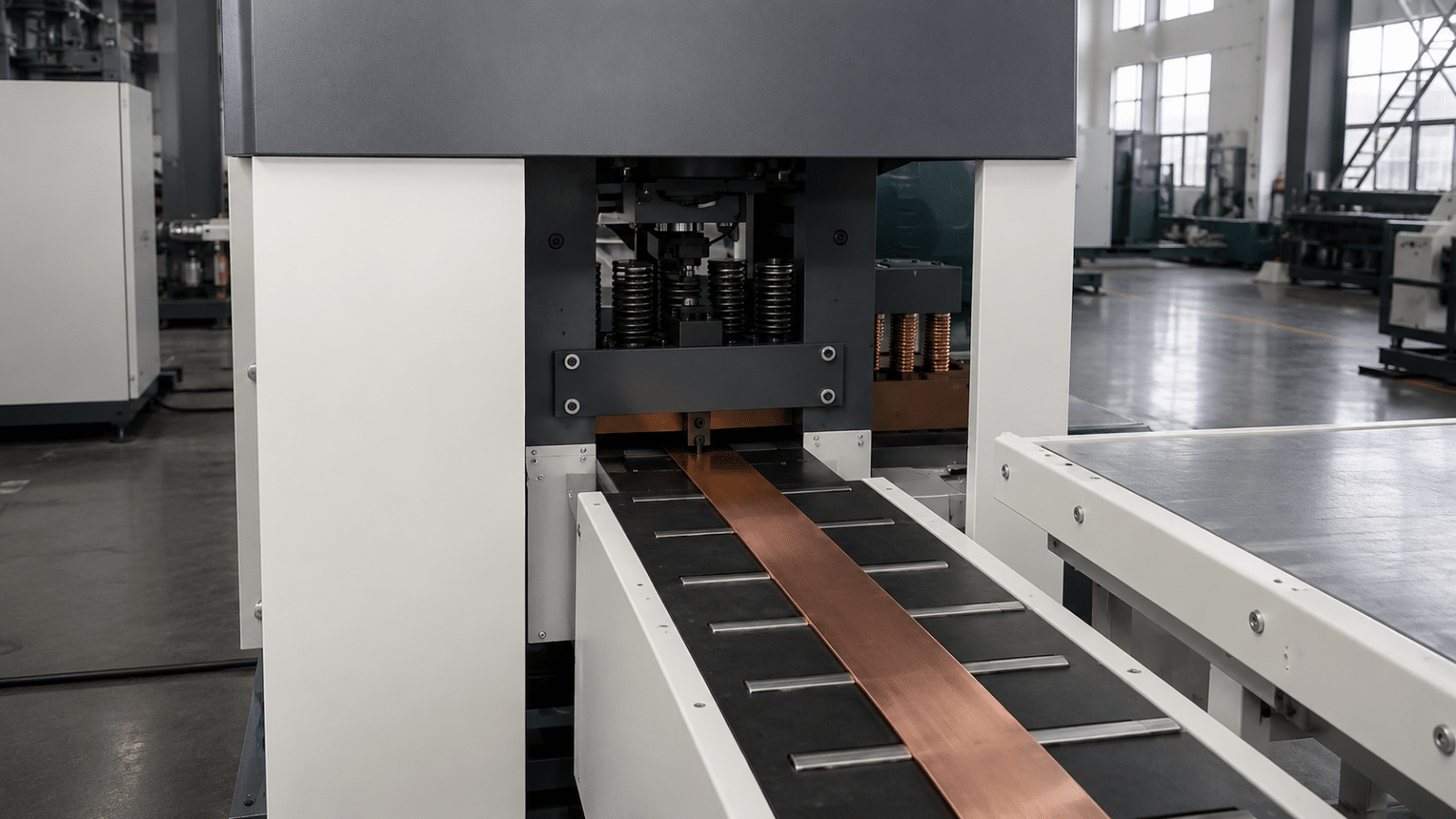
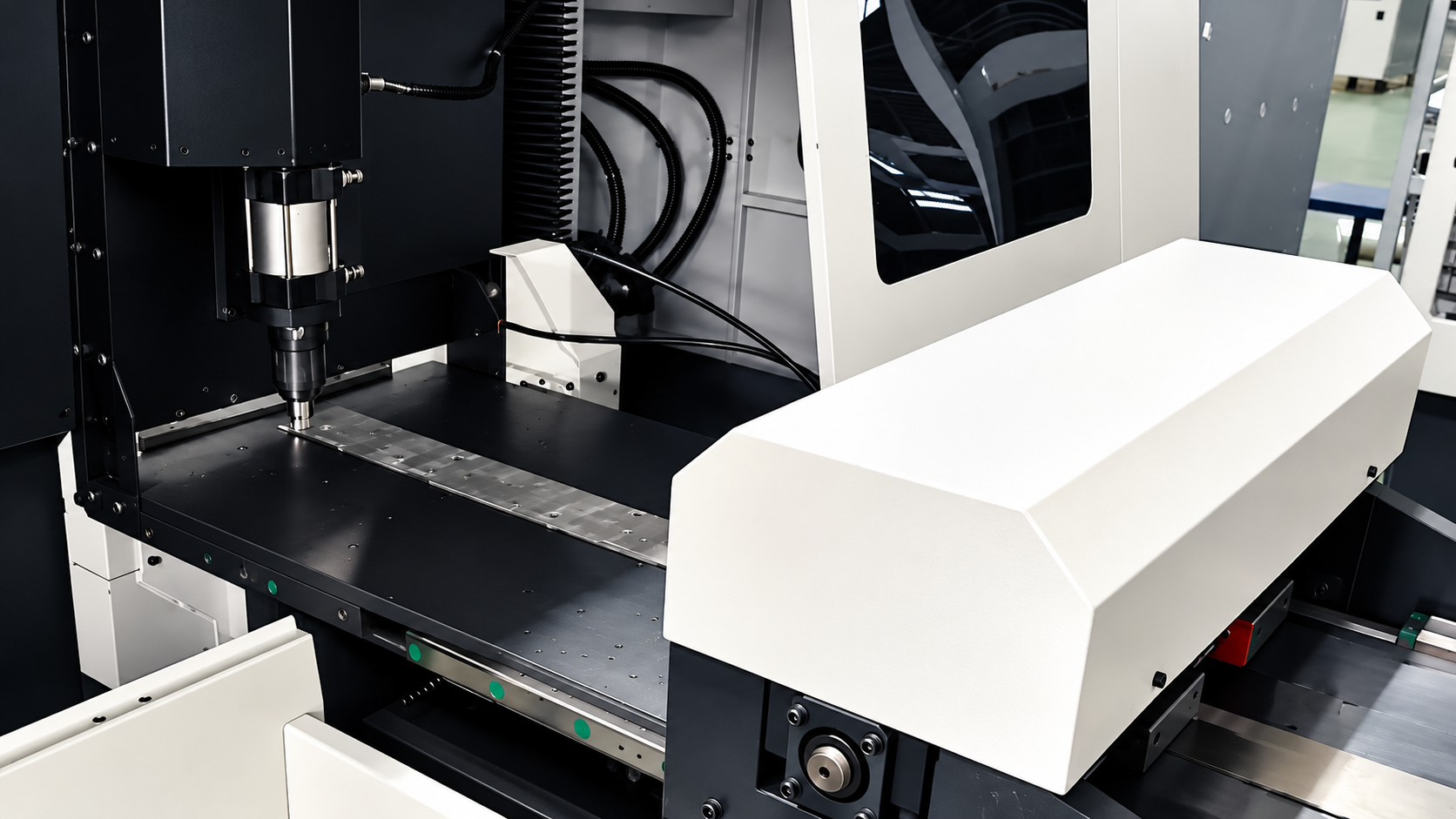
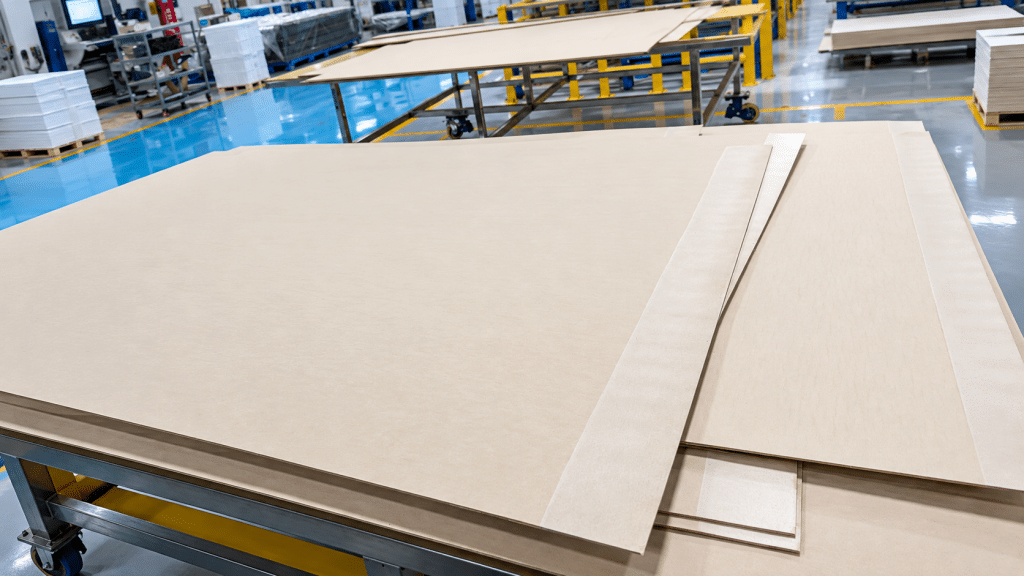
Pressboard Beveling Machine — standardising the bevel to “15–20 times board thickness”
- Cutter angle and height are freely adjustable, so the bevel length is set from board thickness and matches the parent material after lapping;
- Workpieces are clamped pneumatically; the clamping beam carries an elastic pad so the board surface is not damaged;
- Handles insulation board from 2 mm to 8 mm, covering the customer’s full production range;
- High-precision linear guides hold the milled edge straightness deviation under 10%;
- Feed is driven by an imported motor with stepless adjustment from 1.5 m/min to 6 m/min;
- A fully CNC version with a Siemens HMI is available as an option.
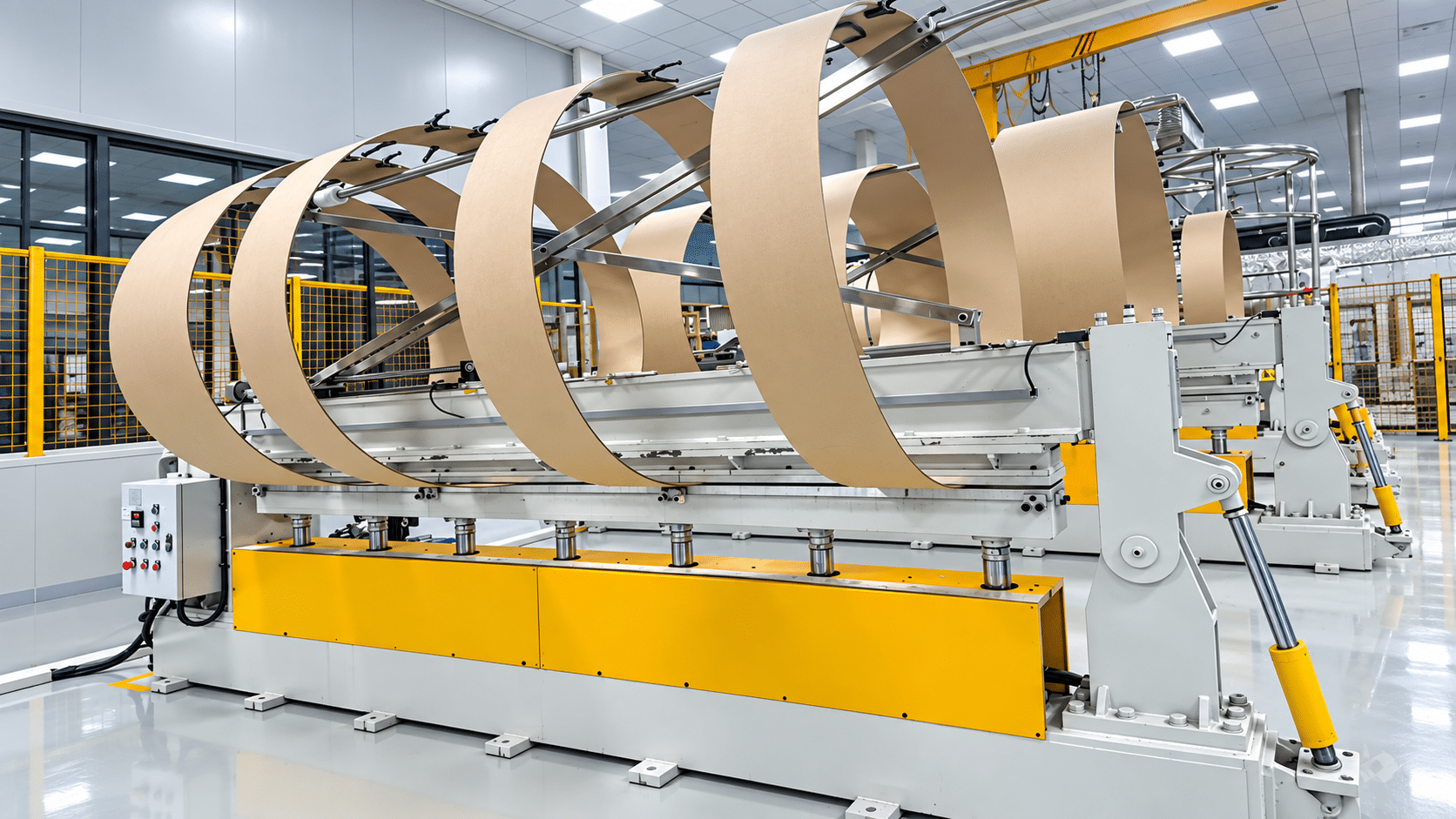
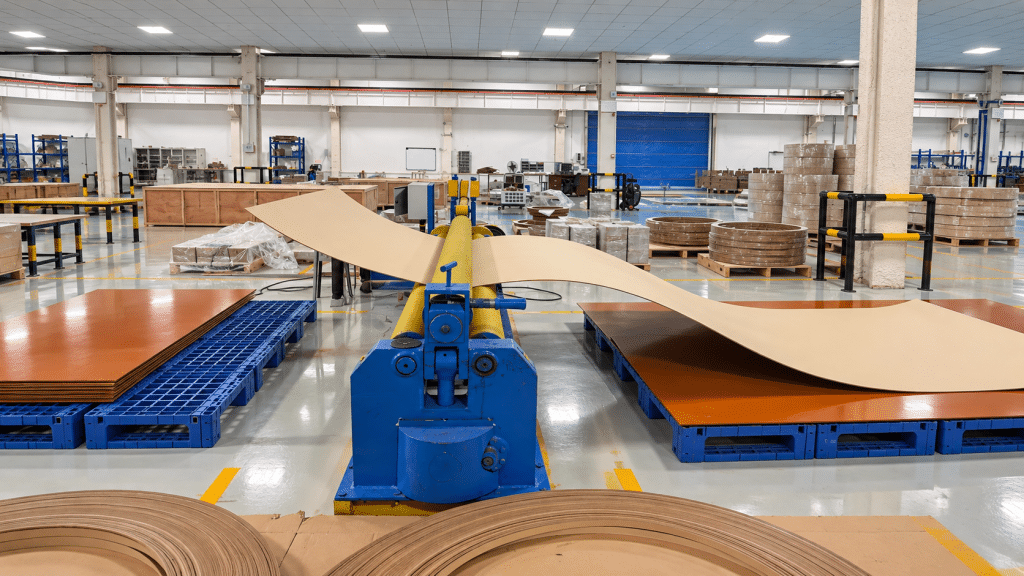
Pressboard Cylinder Rolling Machine — three-roll drive plus cylinder support turns large-diameter rolling from manual work into machine work
- The upper roll moves up and down with limit control, giving the board a stable clamping force and preventing slip during rolling;
- The upper roll is driven synchronously through a reducer and coupling, and connects to the lower roll through a gearbox;
- The control panel covers forward, reverse, inching, continuous rotation and lowering;
- A cylinder support mechanism makes large-diameter cylinders practical to roll;
- Cylinder diameter Φ300–3500 mm, length 1500–4000 mm, non-standard designs built to customer specification;
- Rolling speed 4 m/min; upper and lower rolls are electroplated or polyurethane-wrapped to combine wear resistance with a surface that will not mark the board.
Pressboard Cylinder Hot Bonding Machine — replacing weather-dependent curing with controlled temperature and pressure
- The glued lap is loaded onto the machine; heat comes from an electrically heated thermal oil system, adjustable from 20 ℃ to 150 ℃ with ±2 ℃ control accuracy;
- Hydraulic clamping at a system pressure of 12 MPa presses the upper roll and lower plate evenly across the full lap width;
- Bonding face width 150 mm, and it can be widened to customer requirement;
- Accepts cylinder diameters of 270–3500 mm, heights of 1500–4000 mm and bonded board thickness of 1–8 mm;
- Holding time is set from board thickness — 10 to 24 hours — keeping the thick board lap under uniform heat and pressure throughout.
All three machines share one specification envelope (board thickness 1–8 mm). A changeover means adjusting parameters, not swapping tooling, so multi-spec scheduling no longer requires long trial runs.
4. Implementation and Commissioning
On site, the machines were arranged in beveling, rolling and hot bonding sequence within the same shop, cutting the secondary handling of boards between steps. Commissioning ran in three stages.
Stage one — no-load and motion checks. Cutter angle and feed speed on the beveling machine were verified step by step; upper-roll limits, forward and reverse rotation and inching on the rolling machine were confirmed; the heating curve and temperature deviation on the bonding machine were logged point by point.
Stage two — trial production with customer material. The customer’s in-production 2 mm and 3 mm insulation boards were used: bevel first, with the bevel length and the resulting lap thickness checked by calliper; then cylinders of Φ800 mm and Φ1500 mm were rolled to check roundness and end-face alignment; finally the glued laps were bonded with temperature and holding time set from board thickness.
Stage three — parameter freeze and training. Bevel feed speed, rolling speed, bonding temperature and holding time for each board thickness were compiled into process cards posted next to the machines. Operators and maintenance staff were trained on daily inspection and on handling common faults across the three machines.
The main adjustment during commissioning was calibrating holding time. The customer’s previous air curing had a very wide time spread, so moving to hot pressing required a new time table by board thickness — the lower limit for thin boards, the upper limit for thick ones — before bond quality settled.
5. Acceptance Results
After trial parts and process cards were confirmed, the line was handed over against the following design and acceptance reference values.
| Parameter | Design and acceptance reference value |
| Board thickness | 1–8 mm |
| Cylinder diameter | Φ300–3500 mm |
| Cylinder length / height | 1500–4000 mm |
| Rolling speed | 4 m/min |
| Beveling feed speed | 1.5–6 m/min (stepless) |
| Bonding temperature | 20–150 ℃ adjustable |
| Temperature control accuracy | ±2 ℃ |
| Clamping method | Hydraulic, 12 MPa system pressure |
| Bonding face width | 150 mm (customisable) |
| Holding time | 10–24 h (by board thickness) |
6. Customer Feedback
“The bevel used to be outsourced, the rolling was done with someone holding the board, and after gluing we just left the cylinders on racks to dry. Now the three machines sit in one shop and we run the whole sequence ourselves, from beveling through rolling to hot pressing. The most immediate difference is that the lap thickness is consistent — the winding shop no longer sends cylinders back because of a step at the joint.”
— Production manager, customer
7. Summary and Next Steps
The problem in this project was not the accuracy of any single machine but the fragmentation of the cylinder shop: beveling outside, rolling by hand, curing at the mercy of the weather. Once beveling, rolling and hot bonding were brought under one process parameter system, board thickness and cylinder diameter became the only variables — everything else follows the settings on the machines.
For insulation parts plants scaling up distribution transformer output, the value of this combination comes down to three points. The lap bevel is milled to a length calculated from board thickness, so thickness inconsistency is solved at the source. The cylinder support mechanism removes the need for manual support when rolling large diameters. And hot pressing converts curing time from an environmental variable into a process parameter that can be set and repeated.
Next, the customer plans to add the CNC beveling option in line with its expansion schedule and to evaluate an extended support mechanism for larger cylinder diameters.
Get a Quote
- WhatsApp: +86-15958243831
- Email: sales@tranfovia.com
- Website: https://tranfovia.com/