TL;DR:
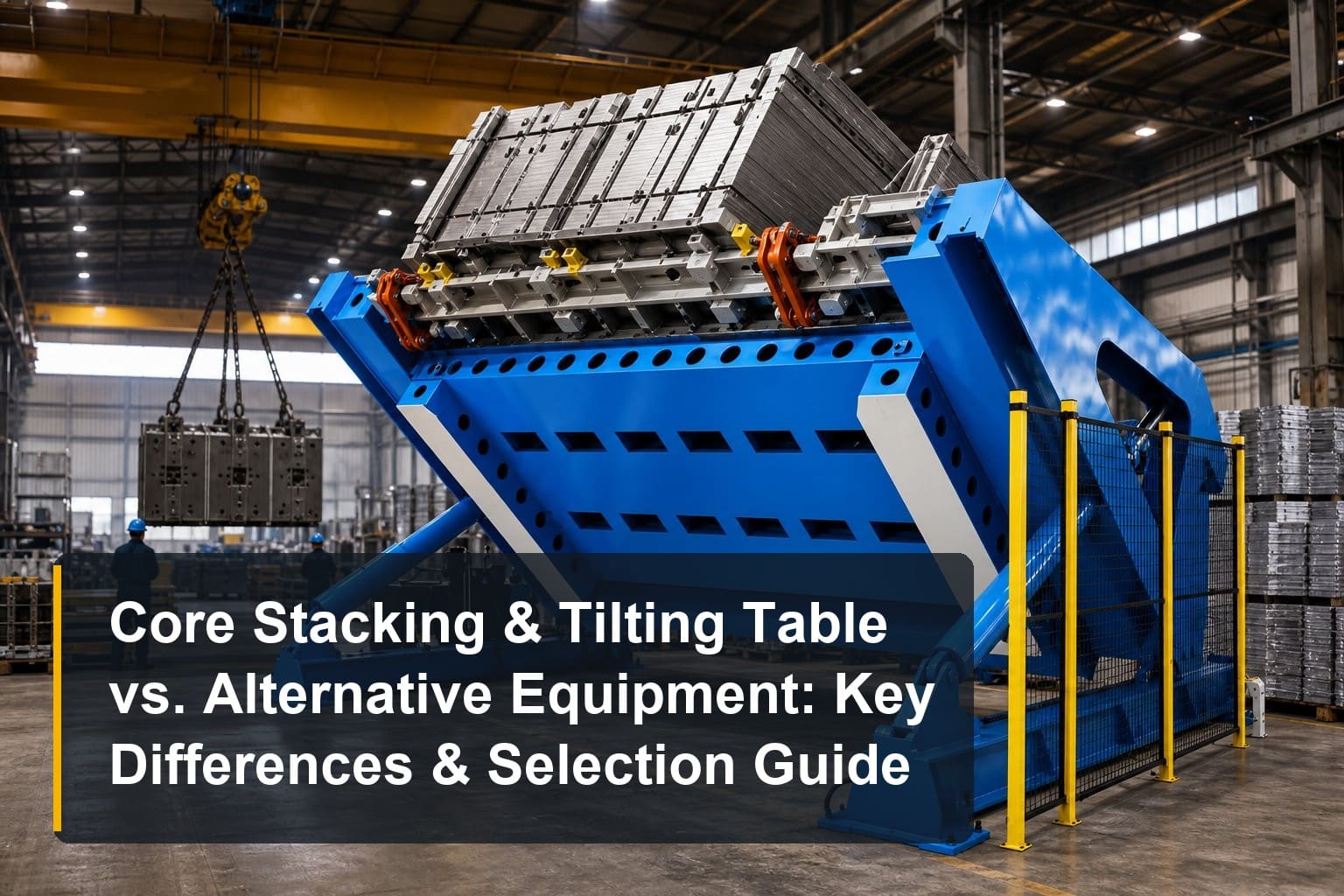
- A core stacking & tilting table stacks the transformer core horizontally at working height, then tilts the clamped core 90° upright — alternatives are manual floor stacking, crane-turning fixtures, and pit-mounted automatic machines.
- Against manual methods it wins decisively on stacking efficiency and tilting safety; against pit-mounted machines it wins on installation cost and flexibility while giving up fully powered automation.
- Manual stacking still suits tiny workshops and one-off giant cores; pit-mounted machines suit ultra-high-volume heavy lines; the crane-assisted table covers the broad middle of medium and large transformer production.
- Decide by core weight range, weekly volume, floor layout, and whether your workshop crane capacity can drive the tilt.
This article is part of our core stacking, assembly and coil handling equipment guide — the pillar page covering stacking tables, banding machines, platforms, presses, and selection logic.
Core stacking & tilting table vs. alternative equipment is a comparison every transformer factory faces when organizing core assembly. This article compares how the table differs from manual stacking, crane-turning fixtures, and pit-mounted automatic machines across the dimensions that matter — stacking efficiency, tilting angle control, installation, and cost — helping you match the right equipment to your production reality.
How a Core Stacking & Tilting Table Differs from Alternative Equipment
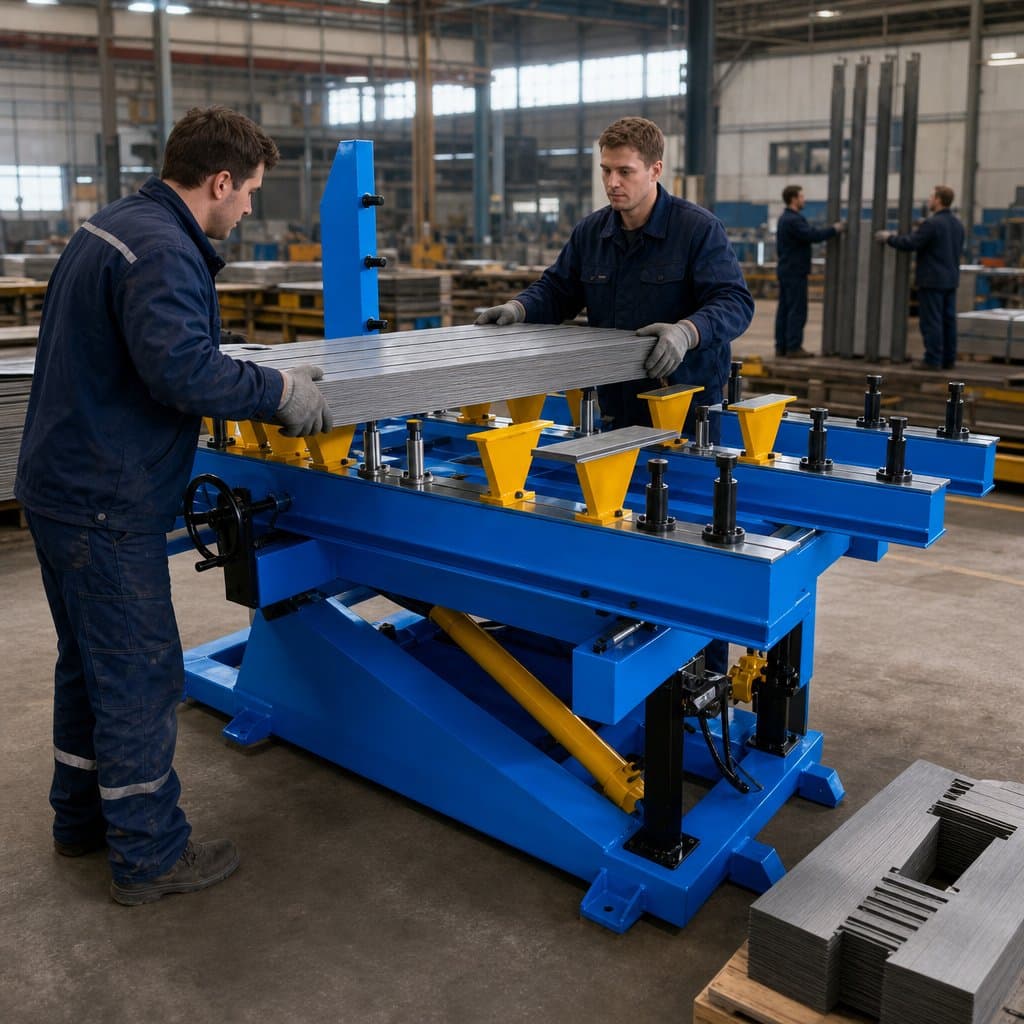
The core stacking & tilting table occupies a deliberate middle ground: more engineered than manual methods, less infrastructure-heavy than fully automatic machines. Understanding what each alternative actually is makes the later head-to-head comparison meaningful.
Manual Floor and Trestle Stacking
The baseline method stacks the core vertically on the floor or on simple trestles, with laminations passed up by hand or crane and the core turned — if at all — by crane sling alone. It costs almost nothing in equipment and remains common in very small shops. Its weaknesses are ergonomic (operators work overhead or on platforms), slow placement, registration that depends entirely on operator skill, and a turning moment with no mechanical control over the core’s geometry.
Crane-Turning Fixtures
A step up from pure manual work, turning fixtures clamp the stacked core and give the crane a controlled pivot point, but they provide no horizontal stacking surface: the core is still built vertically or stacked flat on the floor and clamped afterward. Fixtures improve turning safety yet leave stacking efficiency untouched. They suit factories that already stack acceptably and only need to de-risk the turn.
Pit-Mounted Automatic Stacking Machines
At the top end, pit-mounted machines combine powered stacking platforms with hydraulic tilting drives, delivering the highest automation and repeatability. The price is civil works — a pit and foundations — plus a hydraulic power pack, higher energy consumption, and a fixed installation that cannot be relocated as the workshop evolves. A platform-type core stacking and turning table achieves the same horizontal stacking and controlled 90° tilt without the pit, using the existing workshop crane as the tilting drive.
Head-to-Head: Stacking Efficiency and Tilting Angle
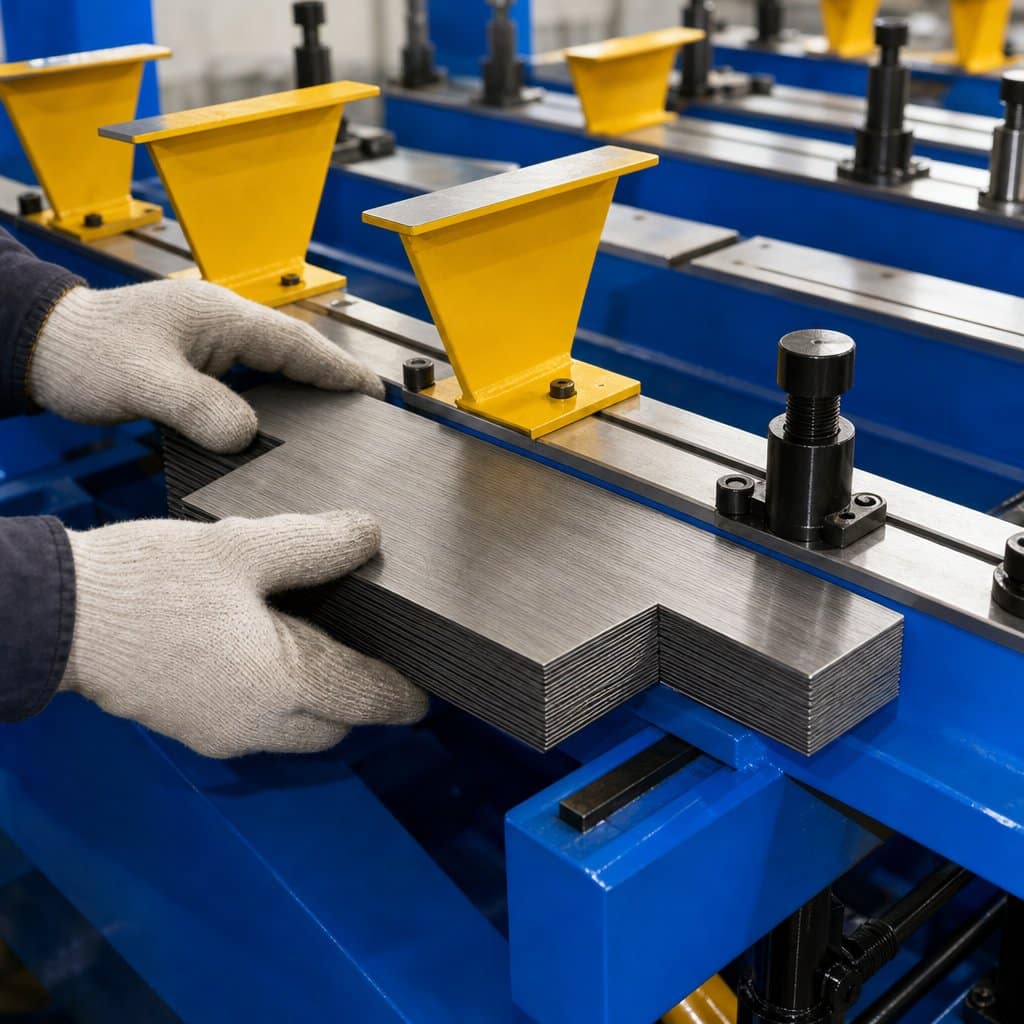
Two dimensions separate these options more than any others: how efficiently laminations become an ordered core, and how safely and accurately the finished core reaches vertical. The table below summarizes the comparison, and the sections after it explain the numbers.
Stacking Efficiency Compared
Horizontal stacking at waist height is the table’s structural advantage: operators place step-lap packets against fixed datums without climbing or reaching, which roughly doubles to triples placement speed versus vertical manual stacking on medium and large cores, and removes the fatigue errors that appear late in a shift. Pit-mounted machines match this and add powered handling; crane fixtures and floor stacking cannot. Registration quality follows the same ranking — the table’s machined platform and indexed datums make layer accuracy a property of the equipment rather than of the individual operator.
Tilting Angle Control Compared
All turning methods reach 90°; what differs is control during the journey. Sling turning by crane alone offers the least control — the core can sway or twist, and step-lap joints can open. The stacking & tilting table rotates the clamped core on a synchronized frame with anti-overturn outriggers, holding vertical deviation after turning within about 2 mm and table deformation within about 3 mm under load. Pit-mounted machines add powered hydraulic motion with the finest control, but for most core weights the crane-assisted tilt is equally accurate in practice, because the frame geometry — not the power source — governs the motion path.
Comparison Table
| Dimension | Stacking & Tilting Table | Manual / Trestle | Crane Fixture Only | Pit-Mounted Automatic |
|---|---|---|---|---|
| Stacking posture | Horizontal, waist height | Vertical / floor | Vertical / floor | Horizontal, powered |
| Stacking efficiency | High (datum-guided) | Low, skill-dependent | Low, skill-dependent | Highest |
| Tilting control | Synchronized frame, ≤2 mm deviation | Minimal (sling turn) | Controlled pivot only | Fully powered, finest control |
| Installation | No pit, no foundation | None | None | Pit + foundation + power pack |
| Energy use | None (crane-driven tilt) | None | None | Hydraulic power pack |
| Relocation flexibility | High | High | High | Fixed |
| Relative cost | Medium | Lowest | Low | Highest |
Which Scenarios Each Option Suits Best
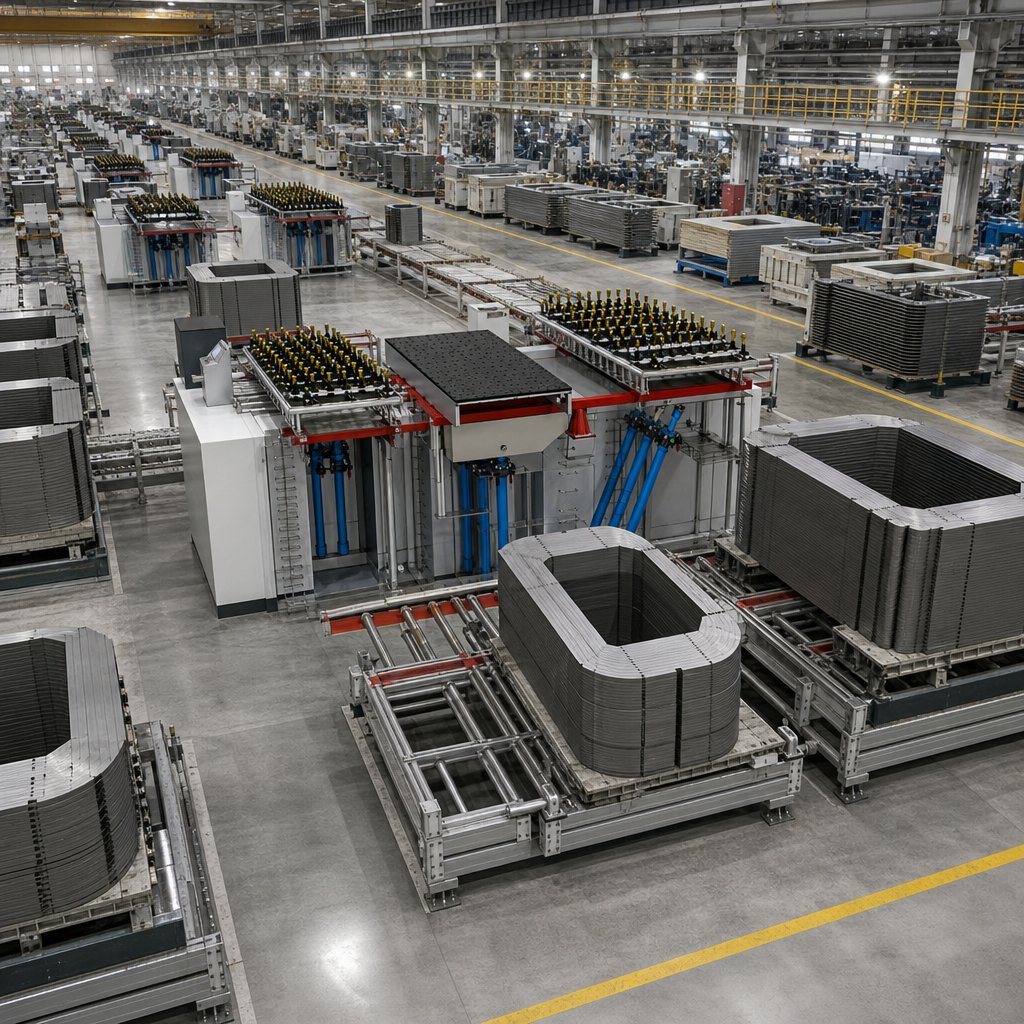
No option wins everywhere. The right choice depends on what you build, how much of it you build, and what your workshop already provides. These scenario profiles make the selection concrete.
When Manual or Fixture-Only Methods Still Make Sense
Manual stacking remains rational for very low volumes — a few small cores per month — where equipment payback never arrives, and for one-off giant cores beyond any standard table’s range. A crane-turning fixture is the sensible minimum upgrade when stacking itself is not the bottleneck but turning safety is. Be honest about the hidden costs, though: slower stacking, higher lamination damage rates, and reliance on a shrinking pool of skilled stackers.
When the Stacking & Tilting Table Wins
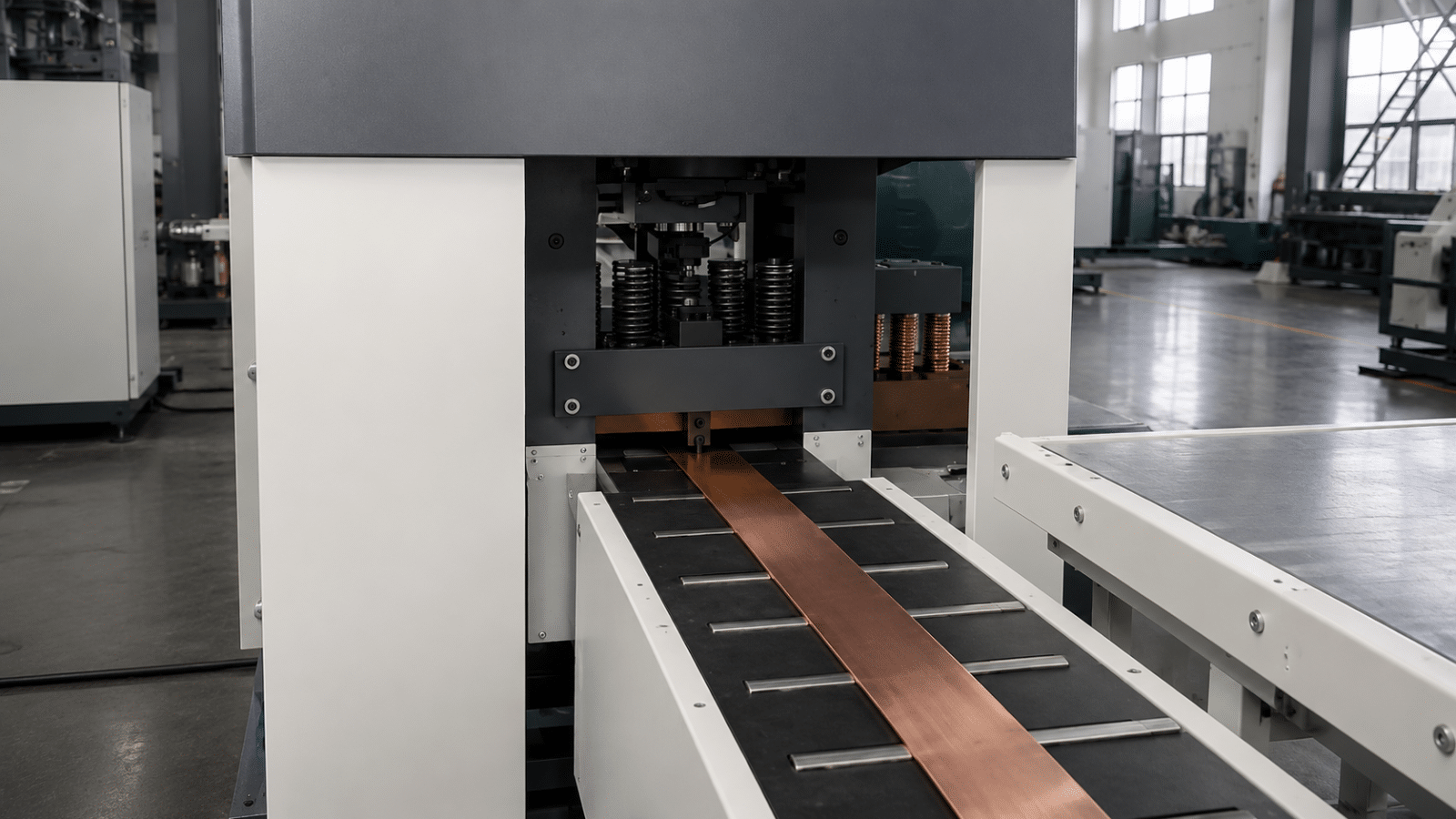
The table wins the broad middle: medium and large power transformer cores produced regularly, in shops that want engineered accuracy without civil works. No pit means the machine installs on existing floors and can move when the layout changes; crane-driven tilting means zero additional energy cost. Factories feeding it with pre-sorted lamination packets from a large transformer cutting line with servo sorting get the strongest result, because sequenced packets make the horizontal stacking advantage fully automatic in practice.
When a Pit-Mounted Automatic Machine Justifies Its Cost
Pit-mounted machines earn their infrastructure in very-high-volume heavy production: multiple large cores per week, takt-driven lines, or cores so heavy that crane time is the plant’s scarcest resource. If your crane is already the bottleneck, spending it driving tilts is expensive — a powered machine frees it. For nearly everyone else, the same money buys a platform table plus upgrades elsewhere in the core shop.
How to Decide the Right Equipment for Your Line
Equipment decisions stick for a decade or more, so work through them systematically. Four questions, answered with your own production data, will land you on the right option.
Quantify Your Core Weights and Weekly Volume
Start with the numbers: your core weight range, the largest core you realistically expect within five years, and cores per week. Tables are offered in tonnage classes from around 2 to 450 tonnes, so there is a class for every range — but buying two classes above your need wastes money, while buying at the limit blocks growth. Volume per week, honestly assessed, is what separates the table from the pit machine.
Audit Your Crane Capacity and Floor Layout
Because the table’s tilt is crane-driven, confirm your crane’s capacity and availability at the stacking station — including the load moment during the tilt, not just the core’s static weight. Then check the floor: if your building cannot take a pit, the decision is already made. If it can, price the civil works honestly and add them to the automatic machine’s cost before comparing.
Calculate Total Cost, Not Purchase Price
Compare five-year totals: equipment, installation and civil works, energy, operator hours per core, lamination damage rates, and expected rework. Manual methods look free until operator hours and damage are priced; automatic machines look expensive until takt time is priced. The platform table typically wins this calculation across the middle of the market precisely because its costs after purchase are close to zero.
Frequently Asked Questions
What is the main difference between a stacking & tilting table and manual stacking?
The table stacks the core horizontally at waist height on a machined, datum-guided platform, then tilts the clamped core to vertical on a synchronized frame. Manual stacking builds the core vertically with registration dependent on operator skill, and turns it by crane sling with little geometric control. The practical results are two to three times faster stacking, consistent step-lap accuracy, and a controlled, safe turn.
Is a crane-driven tilt as safe as a hydraulic one?
Yes, when the table is properly engineered. The crane supplies force, but the tilting frame’s synchronized linkage governs the motion path, and anti-overturn outriggers stabilize the table past 90°. Vertical deviation after turning stays within about 2 mm. Hydraulic drives add convenience and free crane time; they do not inherently add accuracy, because accuracy comes from the frame.
Can a stacking table handle different core sizes?
Yes — that is the point of the modular design. Platform sections, support posts, and clamp positions reconfigure to each core window size: three platforms for three-limb cores, five for five-limb designs. One table covers a family of cores within its tonnage class, with setup reduced to repositioning indexed standard components.
How do I choose the tonnage class?
Choose from your largest credible core within five years, then verify the platform dimensions against its window size and the frame rating against its stacked weight. Standard series run from FT02 to FT450. After tilting, the upright core typically moves to binding or coil assembly — planning that flow together, including equipment such as a core binding machine, avoids bottlenecks after the tilt.
Summary
Compared with alternative equipment, the core stacking & tilting table delivers horizontal, datum-guided stacking and a controlled 90° tilt without pits, foundations, or energy consumption — the engineered middle ground between manual methods and pit-mounted automation. Manual stacking suits very low volumes, fixtures suit turn-only upgrades, pit machines suit takt-driven heavy lines, and the platform table covers the broad middle of transformer production. Decide with your own core weights, weekly volume, crane capacity, and a five-year total cost calculation.
TRANFOVIA supplies core stacking and turning tables from FT02 to FT450 and can evaluate your core drawings and workshop layout against every option discussed here — including honestly recommending against a table when one does not fit. Contact TRANFOVIA today.
📞 +86-15958243831 📧 sales@tranfovia.com 💬 WhatsApp: https://wa.me/8615958243831 🌐 tranfovia.com
References
- IEC 60076-1:2011. Power transformers — Part 1: General. International Electrotechnical Commission. https://webstore.iec.ch
- IEEE Std C57.12.00-2015. IEEE Standard for General Requirements for Liquid-Immersed Distribution, Power, and Regulating Transformers. IEEE. https://standards.ieee.org
- ASTM A876/A876M. Standard Specification for Flat-Rolled, Grain-Oriented, Silicon-Iron, Electrical Steel. ASTM International. https://www.astm.org
- IEC 60404-8-7. Magnetic materials — Specifications for individual materials — Cold-rolled grain-oriented electrical steel. International Electrotechnical Commission. https://webstore.iec.ch
- Kulkarni, S. V., & Khaparde, S. A. (2004). Transformer Engineering: Design and Practice. Marcel Dekker.
- Georgilakis, P. S. (2009). Spotlight on Modern Transformer Design. Springer.