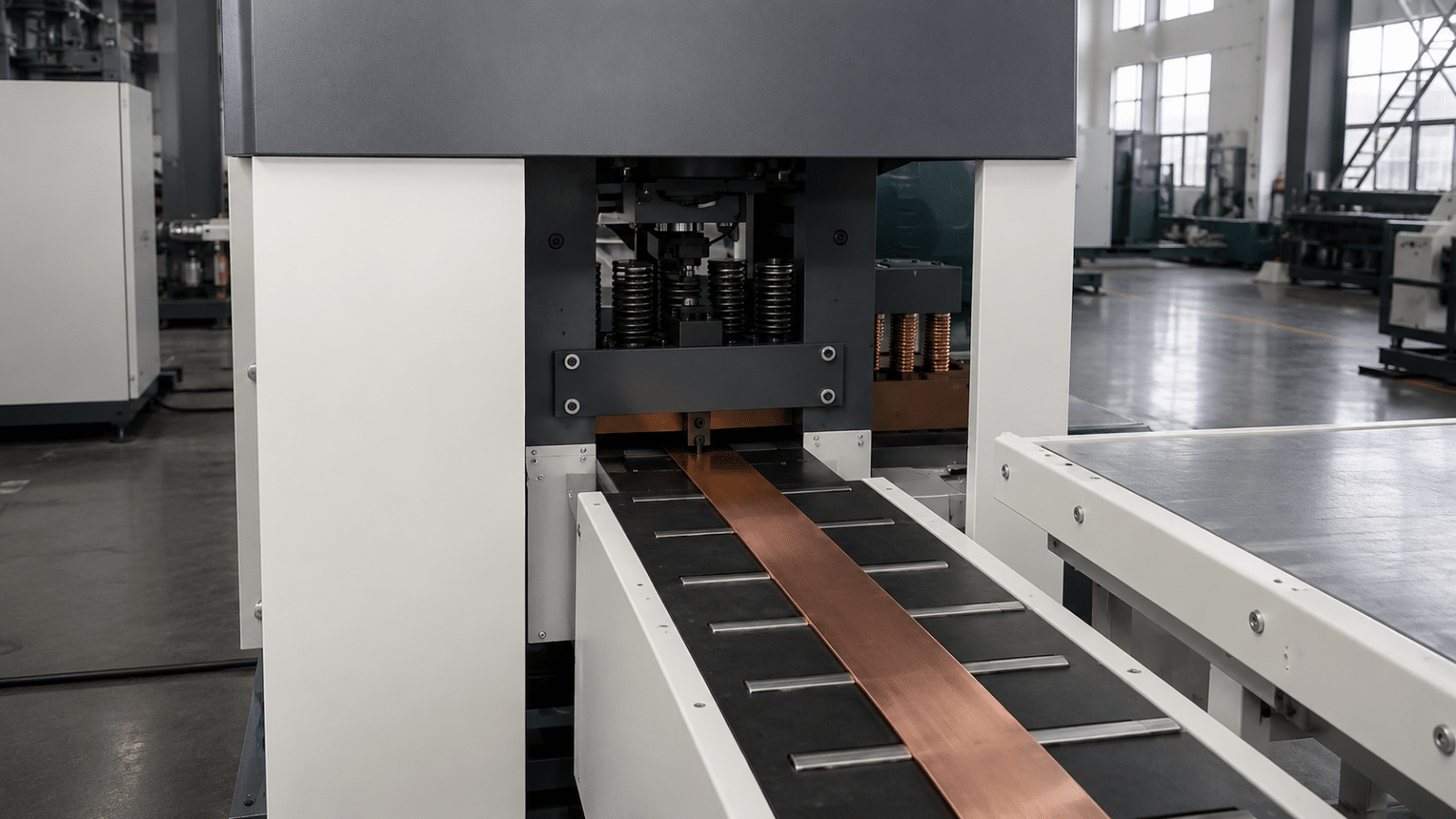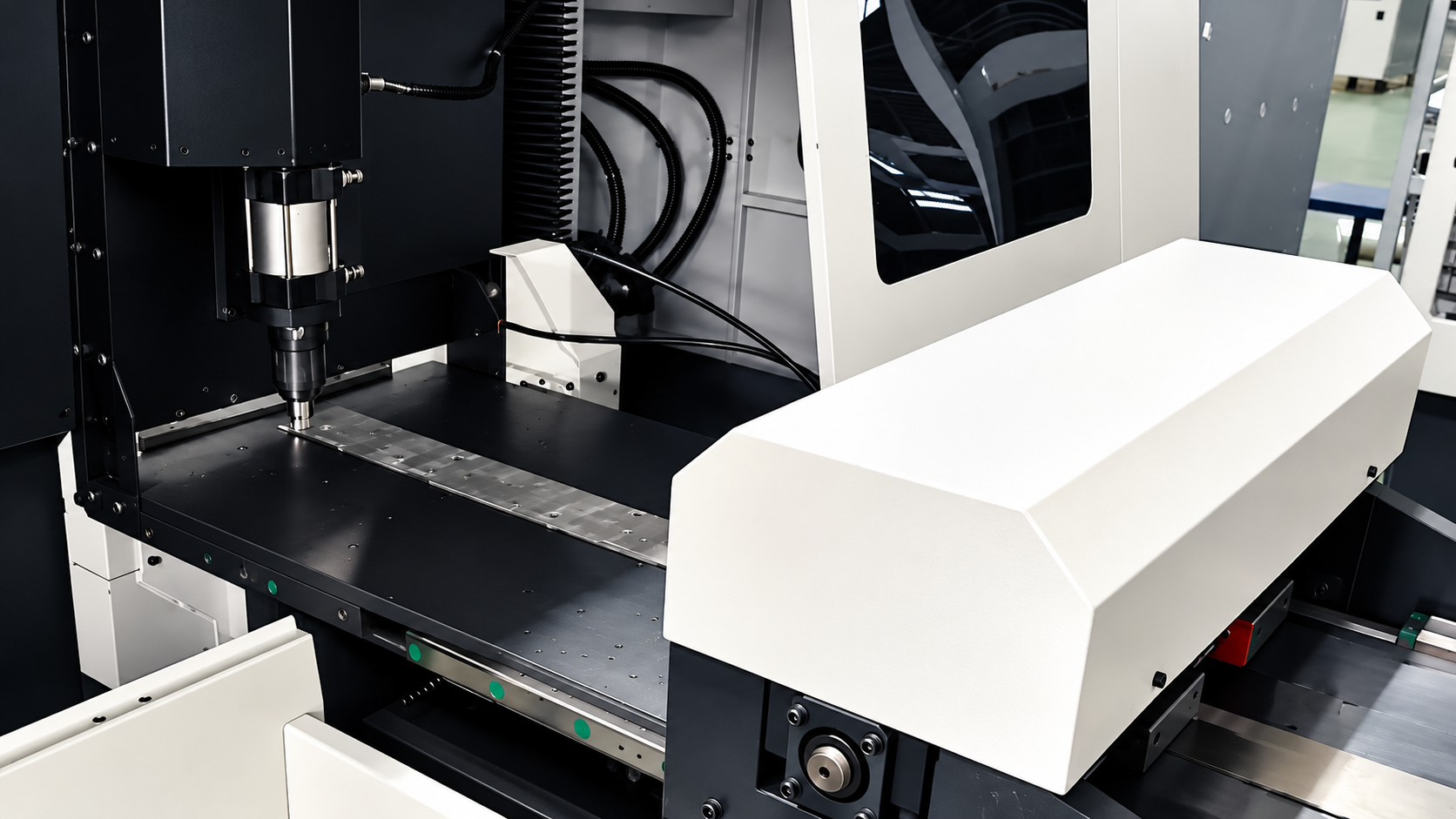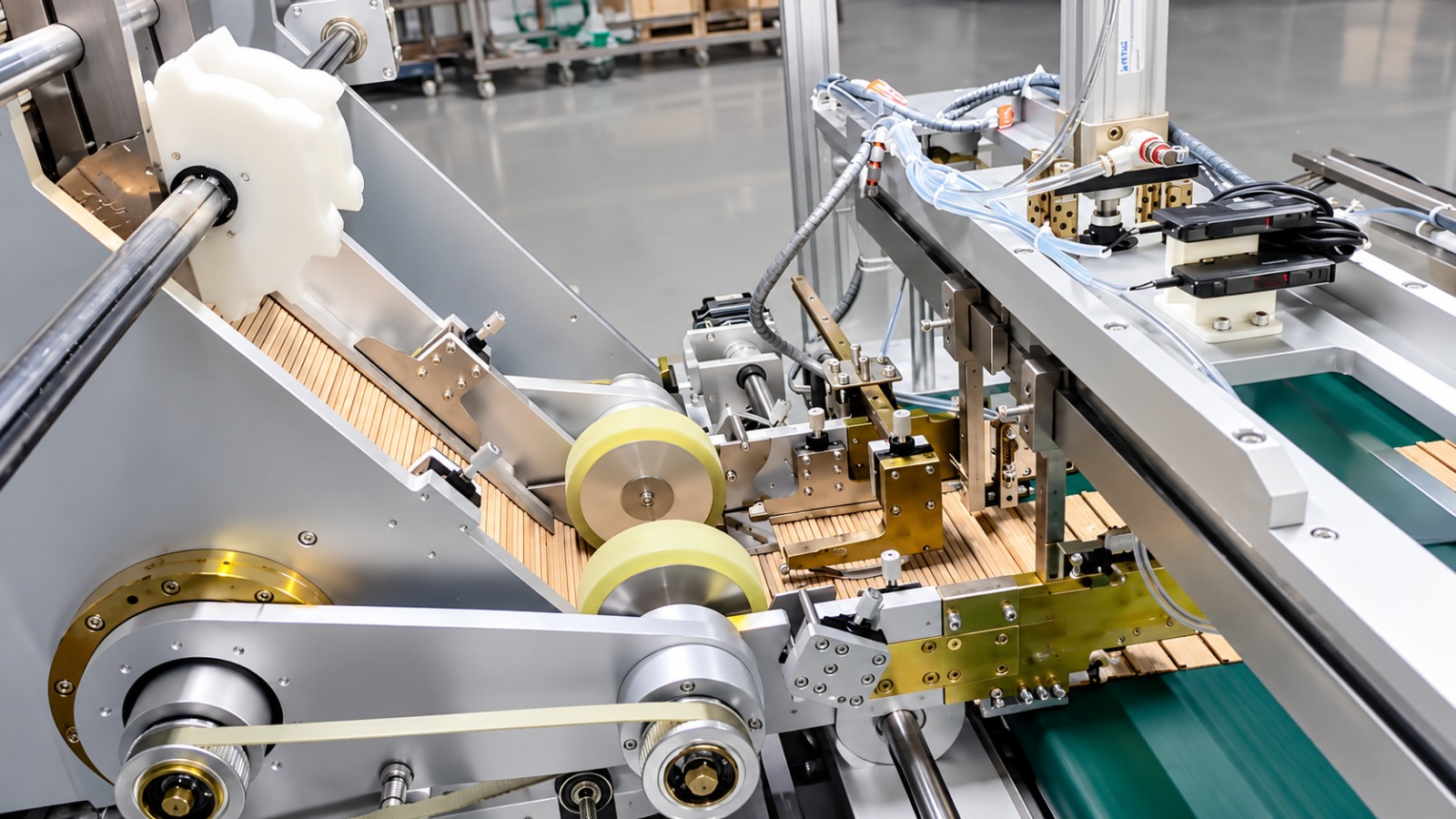

Every transformer core starts as a coil of CRGO silicon steel — and before laminations can be stacked, that strip must be cut into precise sheets. The silicon steel cutting machine is the compact, dedicated machine that does exactly this: unwind, level, feed to length, and shear. This guide explains what the machine does, how the cut-to-length process works, which specifications matter, and how it differs from a slitting line.
What Is a Silicon Steel Cutting Machine?
A silicon steel cutting machine is an automatic cut-to-length machine that converts CRGO (cold-rolled grain-oriented) silicon steel strip into flat laminations of a set length. It sits at the very beginning of transformer core production: material goes in as coiled strip and comes out as accurately sized sheets ready for stacking or further punching.
Typical users include:
- Distribution and power transformer factories cutting core laminations in-house
- Electrical steel service centers supplying cut sheets to transformer manufacturers
- Reactor and special-core producers processing CRGO for chokes, welding machine cores, and instrument transformer cores
CRGO is not an ordinary sheet metal. Its magnetic properties depend on a precise grain orientation and a thin insulating surface coating, and both are easily damaged: rough handling scratches the coating, excessive bending work-hardens the strip, and a poor cut leaves burr that short-circuits adjacent laminations in the stacked core. That is why transformer-grade cutting uses a dedicated machine with controlled tension, precision leveling, and a sharp, rigid shear — rather than a general-purpose guillotine.
Compared with manual shearing or semi-automatic cutting, a dedicated machine delivers consistent length accuracy, low burr, and far less material waste — and it runs continuously at production speed. It is one element of the wider core cutting family; for the full equipment landscape, see our guide to transformer core cutting lines.
How the Cut-to-Length Process Works
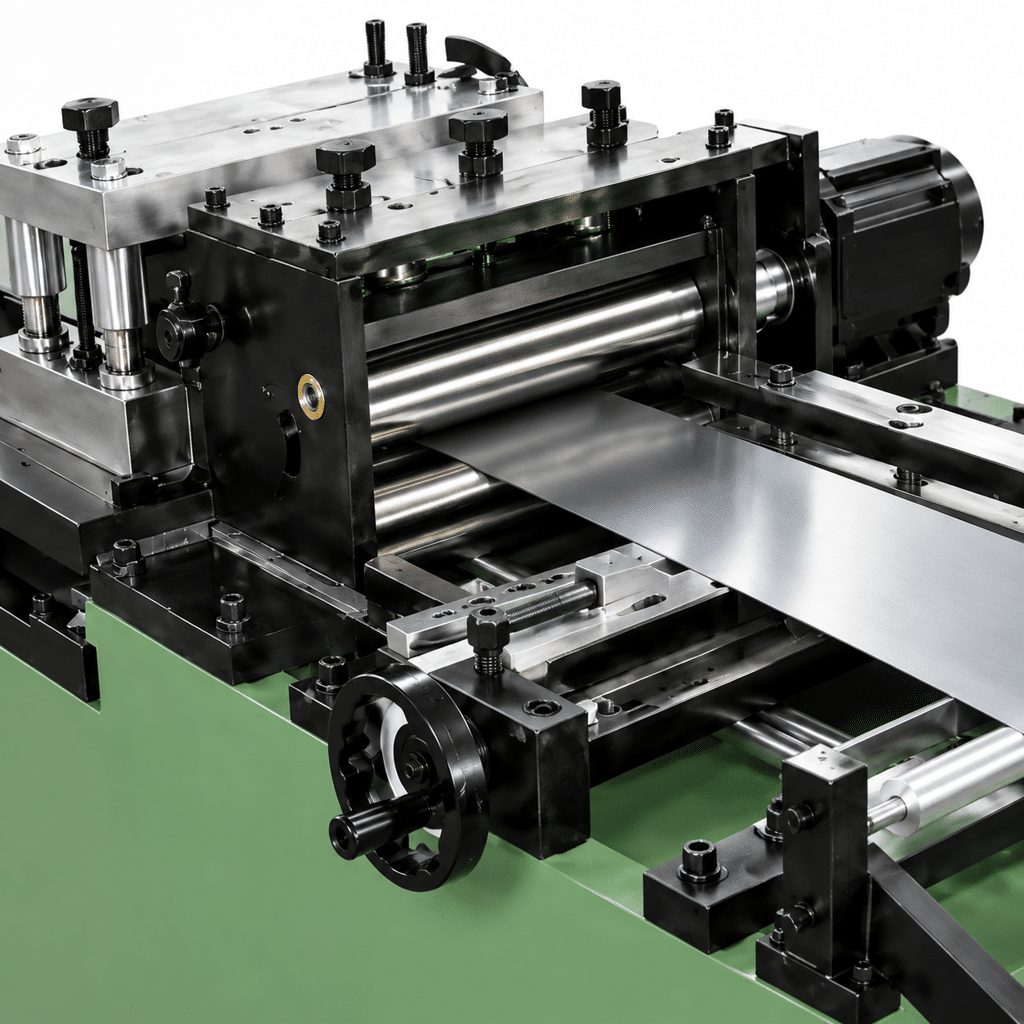
The machine combines four stations in one compact frame:
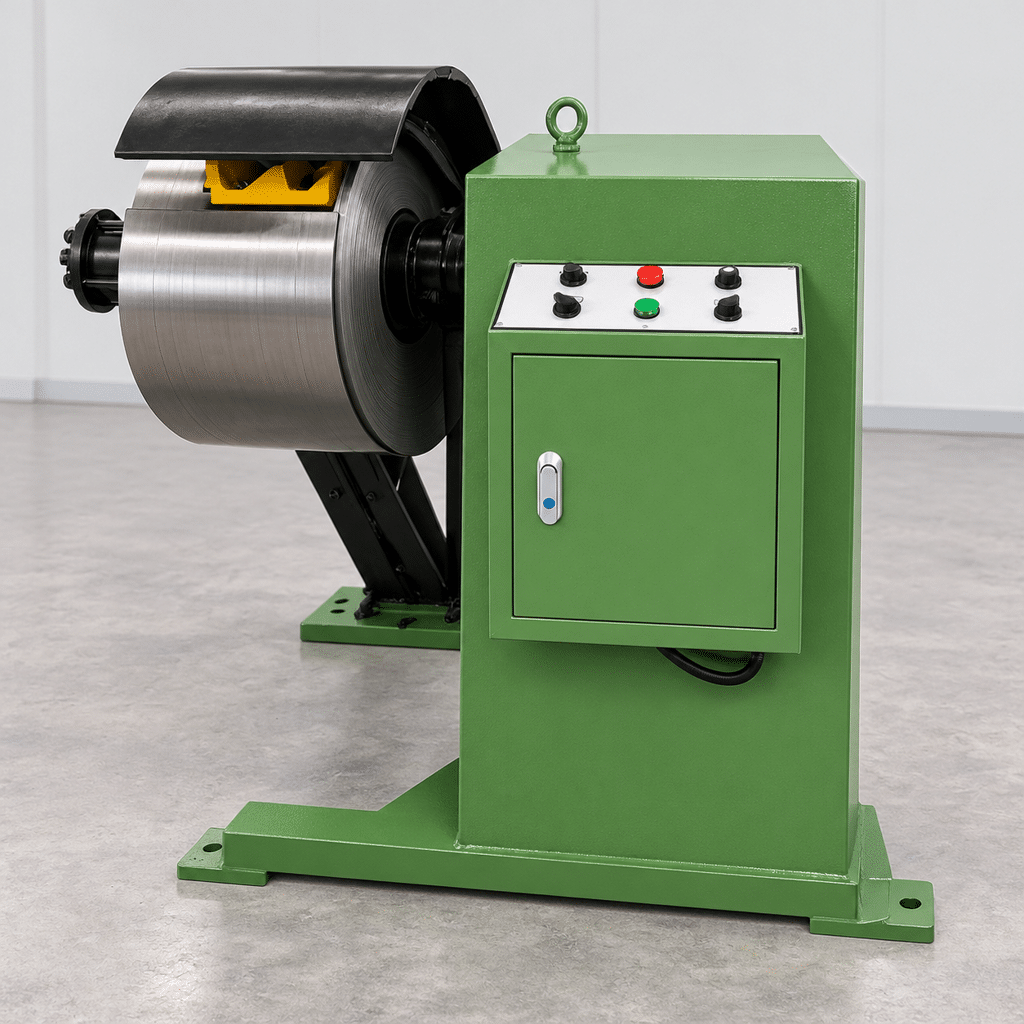
- Uncoiling. A mandrel holds the silicon steel coil and pays out strip under controlled tension, protecting the material’s surface coating.
- Leveling. Leveling rollers remove coil set — the natural curvature of wound strip — so the sheet lies perfectly flat before cutting. Flatness here directly determines lamination flatness in the finished core.
- Measuring feed. A servo-driven feeding system advances the strip by an exact, programmable length at speeds up to 180 m/min.
- Shearing. A precision shear cuts the strip square across its width, and finished sheets discharge for collection.
Because the whole cycle is automatic, one operator can run the machine for batch production of a single lamination size, or change length settings between jobs in minutes.
Key Specifications: XE-300, XE-400, and XE-600
The three standard models differ mainly in the strip width they accept. All share the same thickness range, accuracy, and feeding speed:
| Item | XE-300 | XE-400 | XE-600 |
|---|---|---|---|
| Cutting thickness | 0.23–0.5 mm | 0.23–0.5 mm | 0.23–0.5 mm |
| Cutting width | 25–300 mm | 25–400 mm | 40–600 mm |
| Cutting burr | ≤0.02 mm | ≤0.02 mm | ≤0.02 mm |
| Length accuracy | ±0.05 mm/m | ±0.05 mm/m | ±0.05 mm/m |
| Feeding speed | 180 m/min | 180 m/min | 180 m/min |
Two figures deserve attention:
- Length accuracy of ±0.05 mm/m. On a 500 mm lamination, that is a deviation of just 0.025 mm — tight enough that stacked cores need no shimming or re-sorting.
- Burr ≤0.02 mm. Burr on a lamination edge punctures interlaminar insulation and raises core losses. Keeping burr at or below 0.02 mm protects the magnetic performance of CRGO steel.
Model choice follows your widest lamination: XE-300 covers most distribution transformer cores, XE-400 suits medium cores, and XE-600 handles wide sheets for larger units. If your factory produces several transformer models, buying one width class up preserves flexibility. A service center cutting for many outside customers should usually start at XE-400 or XE-600, since incoming orders are unpredictable; a factory cutting for one or two in-house designs can safely match the machine to its known strip width.
One more check before ordering: confirm that your slit strip thickness falls inside the 0.23–0.5 mm window. This range covers virtually all transformer-grade CRGO (0.23, 0.27, 0.30, and 0.35 mm are the common grades), but thicker strip for special applications needs a different shear design.
Cutting vs. Slitting: What’s the Difference?
These two processes are often confused, but they answer different questions in material preparation:
- Slitting cuts a wide master coil lengthwise into narrower coils — it sets the strip width.
- Cut-to-length (cutting) cuts strip across its width into sheets — it sets the lamination length.
A typical workshop runs both in sequence: first a slitting line divides a 1,000 mm master coil into strips of the required width, then a cut-to-length machine shears those strips into laminations. For the slitting side of the process, see our article on silicon steel slitting lines and burr control; for a head-to-head of both processes, see slitting vs cut-to-length.
Where It Fits in Transformer Core Production
In a complete core shop, the silicon steel cutting machine sits between slitting and stacking: slit coils go in, finished laminations come out, and stacking tables assemble them into cores. For factories producing step-lap cores or punched laminations with holes and V-notches, a full core cutting line with integrated punching stations may be the better choice — but for straight-cut laminations, distribution transformer cores, and service-center work, a dedicated cut-to-length machine is the economical answer. It is also the natural second machine for a growing factory: start with manual cutting, add a cut-to-length machine when volume justifies it, and step up to a full cutting line when step-lap designs enter the product mix. If your shop also recuts offcuts and remnant sheets back into usable laminations, a dedicated secondary silicon steel cutting line keeps that work off your main machine.
A real installation shows the impact: at a transformer plant in Tabriz, Iran, a silicon steel cutting machine turned lamination preparation into a one-pass job, replacing manual shearing and stabilizing sheet quality for downstream stacking.
Conclusion
A silicon steel cutting machine is a simple concept executed to tight tolerances: level the strip, feed an exact length, shear cleanly, repeat at 180 m/min. When evaluating machines, focus on the width range you need (XE-300/400/600), length accuracy of ±0.05 mm/m, and burr control at or below 0.02 mm — these three numbers decide the quality of every lamination you stack afterward. For the full selection walkthrough, see our guide to choosing between the XE-300, XE-400, and XE-600. Specifications and configuration options are on our silicon steel cut-to-length machine product page.