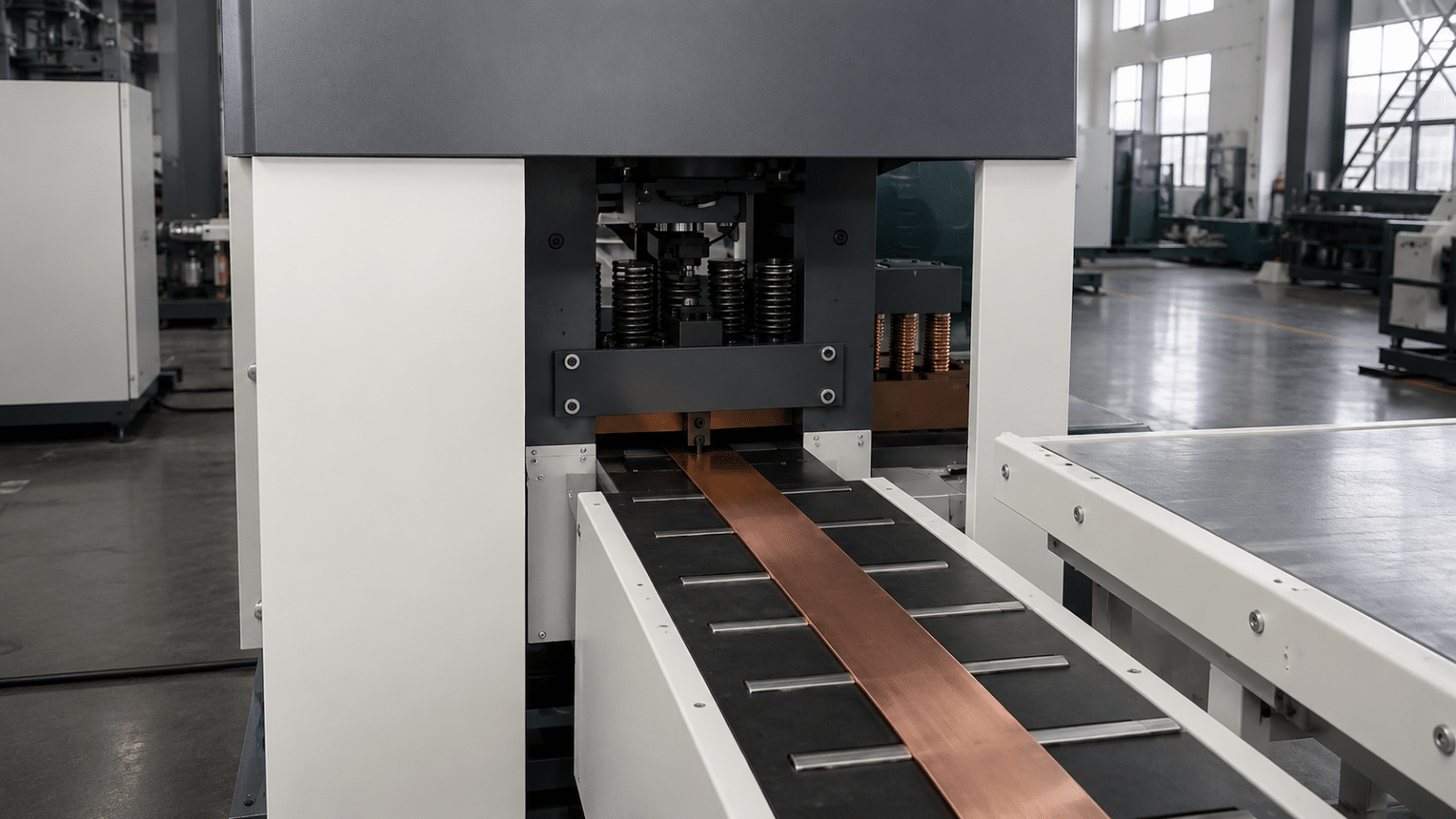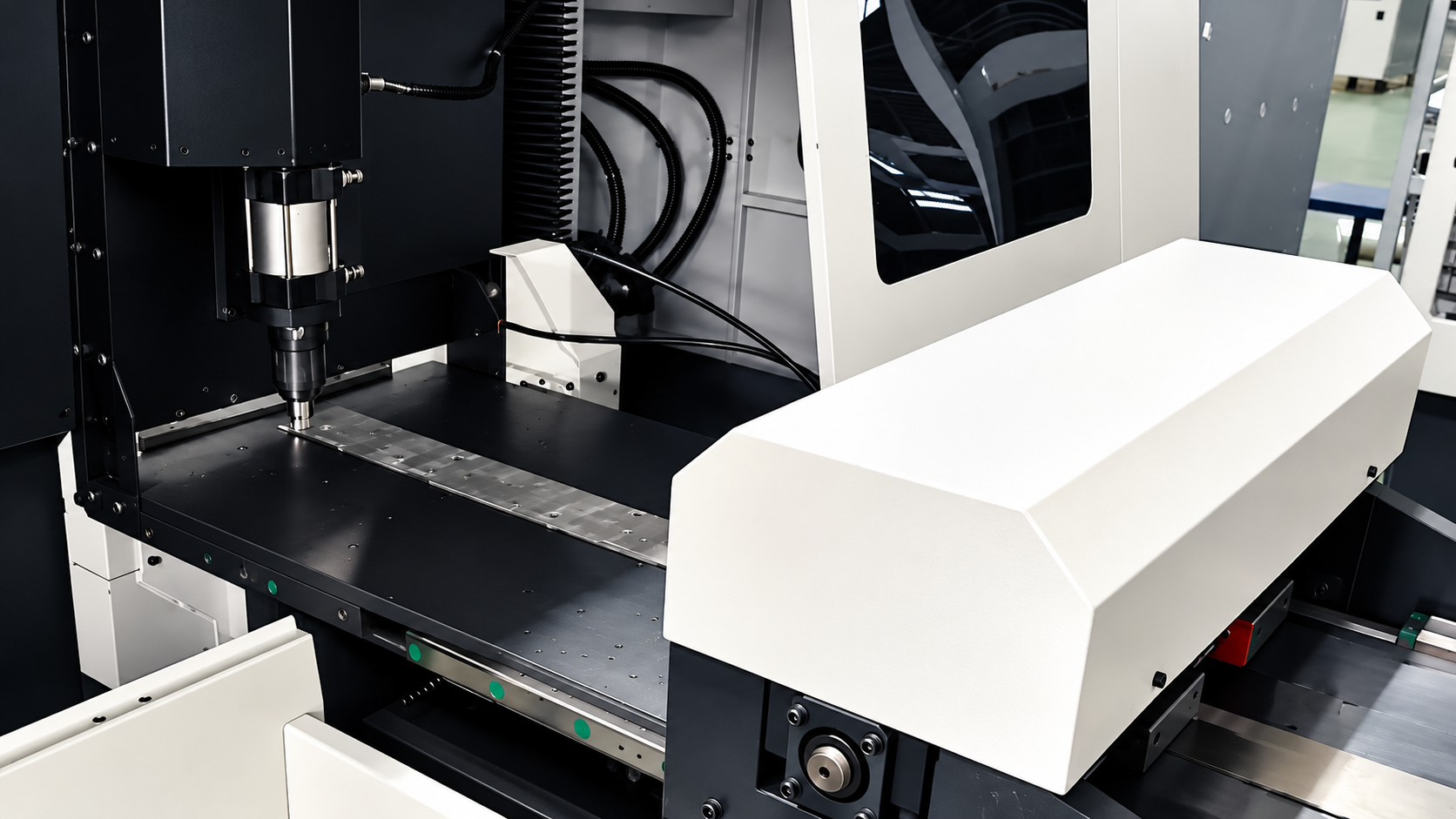
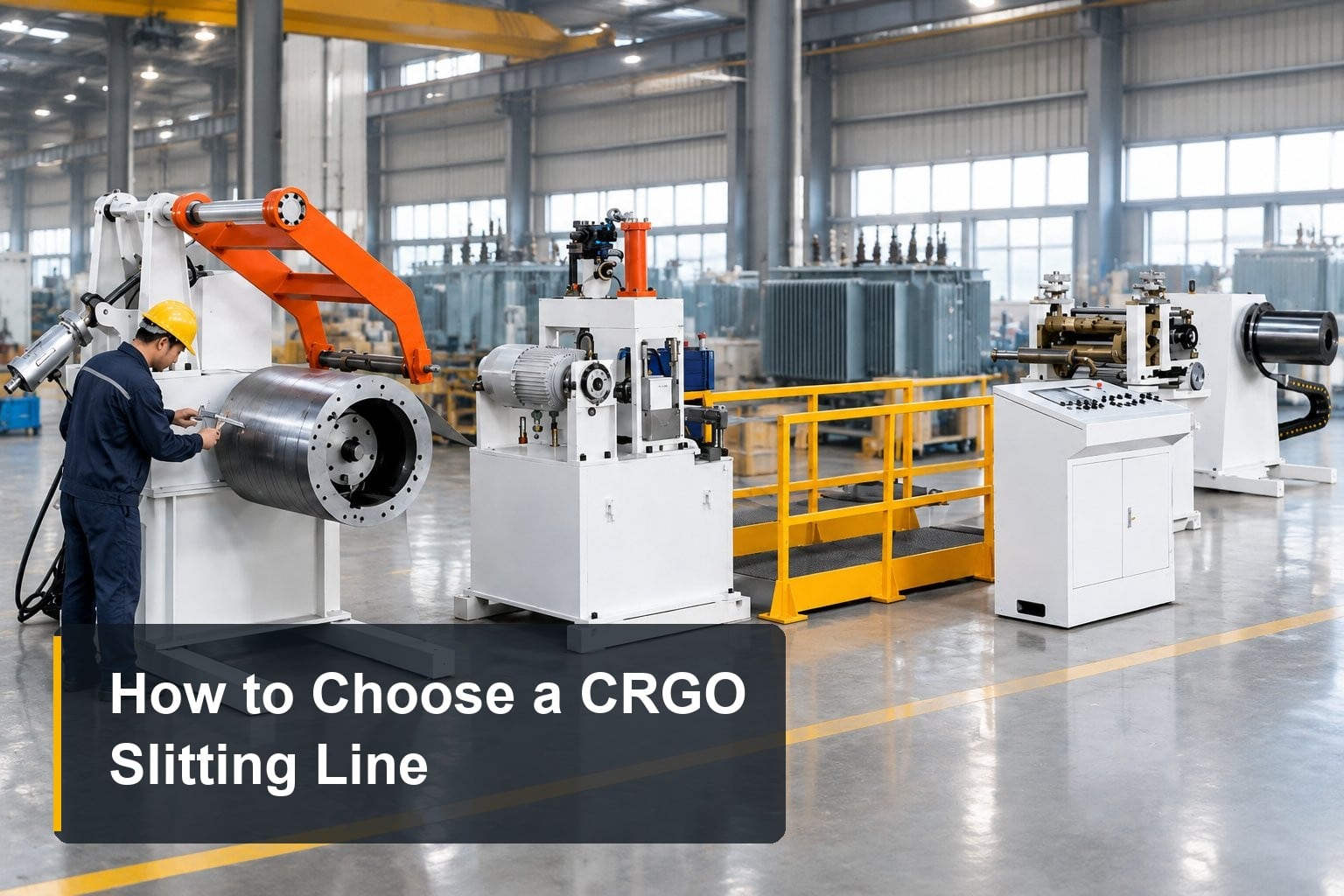
A CRGO slitting line is a 10-to-15-year asset, and the most expensive buying mistakes are made in the first sentence of the inquiry: buyers quote a speed and a price, when the line class is actually decided by coil width and weight, and long-term core quality is decided by burr acceptance and tension control. Get the order right and the machine selects itself.
This guide walks through the selection sequence for a silicon steel slitting line, from coil data to acceptance criteria. If you want the process background first, our slitting line working principle and burr control guide covers how the line works and why burr matters; this article is about choosing the machine.
Step 1: Match the Line Class to Your Coils — Width and Weight First
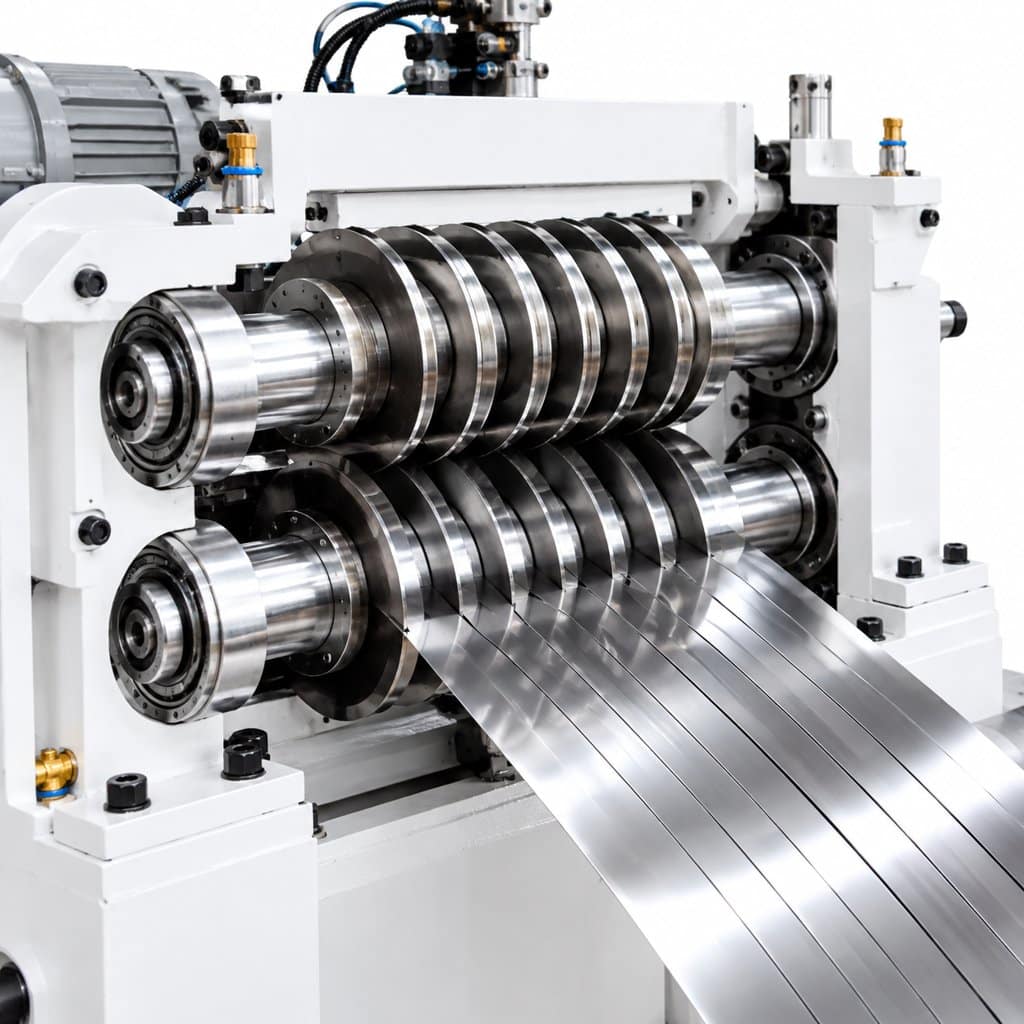
Slitting lines are sized by the master coil they can carry. Everything else — speed, power, automation — follows from that. The three standard classes:
| Class | Master Coil Width | Coil Weight | Installed Power | Typical Buyer |
|---|---|---|---|---|
| 500 / 2 T | 100–500 mm | 2 T | 26 kW | Distribution transformer shops, service centers with narrow coils |
| 1250 / 5 T | 200–1250 mm | 5 T | 55 kW | Mid-size transformer factories with mixed product range |
| 1250 / 10 T | 200–1250 mm | 10 T | 73 kW | Power transformer plants, high-volume core shops |
Two rules keep this step honest:
- Size for the coils you will actually buy, not the largest coil that exists. If your supplier delivers 1000 mm × 5 T masters, a 10 T line adds cost, floor space, and foundation load with zero return. But if you plan to move up to 1250 mm masters within the machine’s life, buy for that now — decoiling and recoiling capacity cannot be retrofitted economically.
- Check your crane before your wallet. A 10 T coil needs a crane and floor that can carry it. The line’s coil weight class must match your workshop’s lifting capacity, or the real bottleneck moves from the machine to the crane runway.
Step 2: Confirm Strip Width Range and Strips per Setup
After coil size, the deciding question is what the line can produce from it:
- Minimum strip width. Transformer core designs routinely need narrow strips — 40 mm minimum strip width covers virtually all distribution and power transformer laminations. Verify the machine holds burr spec at minimum width, not just at mid-range.
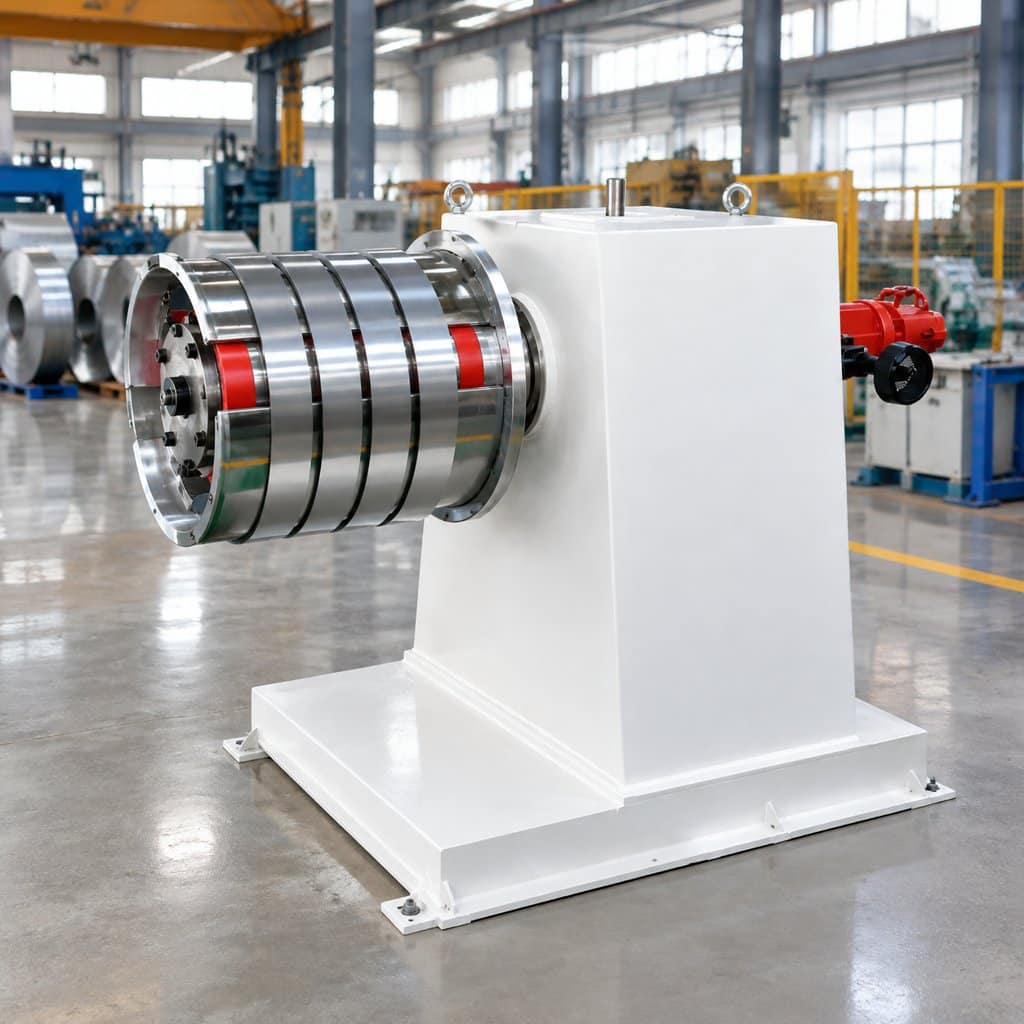
- Strips per setup. A 1250 mm master slit into 100 mm strips means 12 simultaneous cuts — check that the knife arbor, separator discs, and recoiler are sized for your maximum strip count, and ask how long a full knife changeover takes. Under an hour with a setup cart is a good benchmark; if the answer is vague, changeover time will eat your flexibility advantage.
One material note belongs in this step: confirm the line is specified for the steel you actually run. CRGO strip for transformer cores (typically 0.15–0.35 mm, coated) needs finer knife clearance settings and gentler tension than thicker CRNGO motor lamination strip. A line quoted for “0.15–0.5 mm silicon steel” covers both — but ask for the knife clearance table across that thickness range, because the clearance that shears 0.5 mm cleanly will tear 0.15 mm strip if the adjustment resolution is too coarse.
Step 3: Put Burr and Tension in the Contract, Not the Brochure
For CRGO strip feeding transformer cores, burr ≤0.02 mm is the acceptance figure that matters — burr drives stacking factor, interlaminar shorts, and core noise (the mechanisms are covered in our burr control guide). Two buying disciplines follow:
- Write burr into the acceptance test. Not “low burr” — a number, a measuring method, and sampling along a full coil, not at one point. Reputable builders accept this; those who resist it are telling you something.
- Ask how the machine holds burr, not just whether. The answer should mention knife clearance adjustment (as a percentage of strip thickness), arbor rigidity and runout control, and edge guiding. These are the machine features that keep burr inside spec at 120 m/min between knife regrinds.
Tension control is the quieter specification: thin CRGO strip (0.15–0.27 mm) stretches or edge-cracks under excessive rewind tension, and telescopes under too little. Ask whether rewind tension is closed-loop controlled and taper-programmable — for thin, high-grade strip this is the difference between shippable coils and scrap.
Step 4: Treat Speed as a Balance Question, Not a Trophy
Lines in this class run 0–120 m/min, but your effective speed is set by the slowest link downstream. A slitting line feeding cut-to-length machines that run 60 m/min equivalent gains nothing from the headline 120. What actually matters at speed:
- Edge guiding quality — camber and telescoping appear at speed first; automatic edge control is what makes high speed usable rather than theoretical.
- Loop/tension decoupling — the slitting head must see constant feed regardless of recoiler acceleration.
- Threading and changeover time — for multi-width, small-batch production, a 15-minute faster knife change beats 20 m/min more speed every shift.
Questions to Ask a Slitting Line Manufacturer
- Show me a burr report from a running line, measured along a full coil of 0.23 mm CRGO — not a sample strip.
- What is the knife changeover time for a full 12-strip setup, and does the machine ship with a setup cart?
- Is rewind tension closed-loop and taper-programmable? What happens to a 0.15 mm strip at full speed?
- What is the minimum strip width at which the ≤0.02 mm burr spec still holds?
- Which wear parts (knives, separator discs, stripper rings) are consumable, what do they cost, and what is the delivery time to my country?
- What foundation, crane capacity, and electrical supply does this line class need? (A 10 T line is a civil-engineering question as much as a machine purchase.)
For a real commissioning example — what delivery, installation, and acceptance look like in practice — see our slitting line project at a transformer core shop in Dhaka.
Conclusion
Choosing a CRGO slitting line is a sequence, not a spec-sheet comparison: coil width and weight pick the class, strip width range and changeover time set your flexibility, and burr acceptance with tension control protects the core quality the whole investment is for. Speed comes last. For the downstream half of the chain, see our transformer core cutting line guide — or send us your coil data and product mix, and we’ll size a line for you.