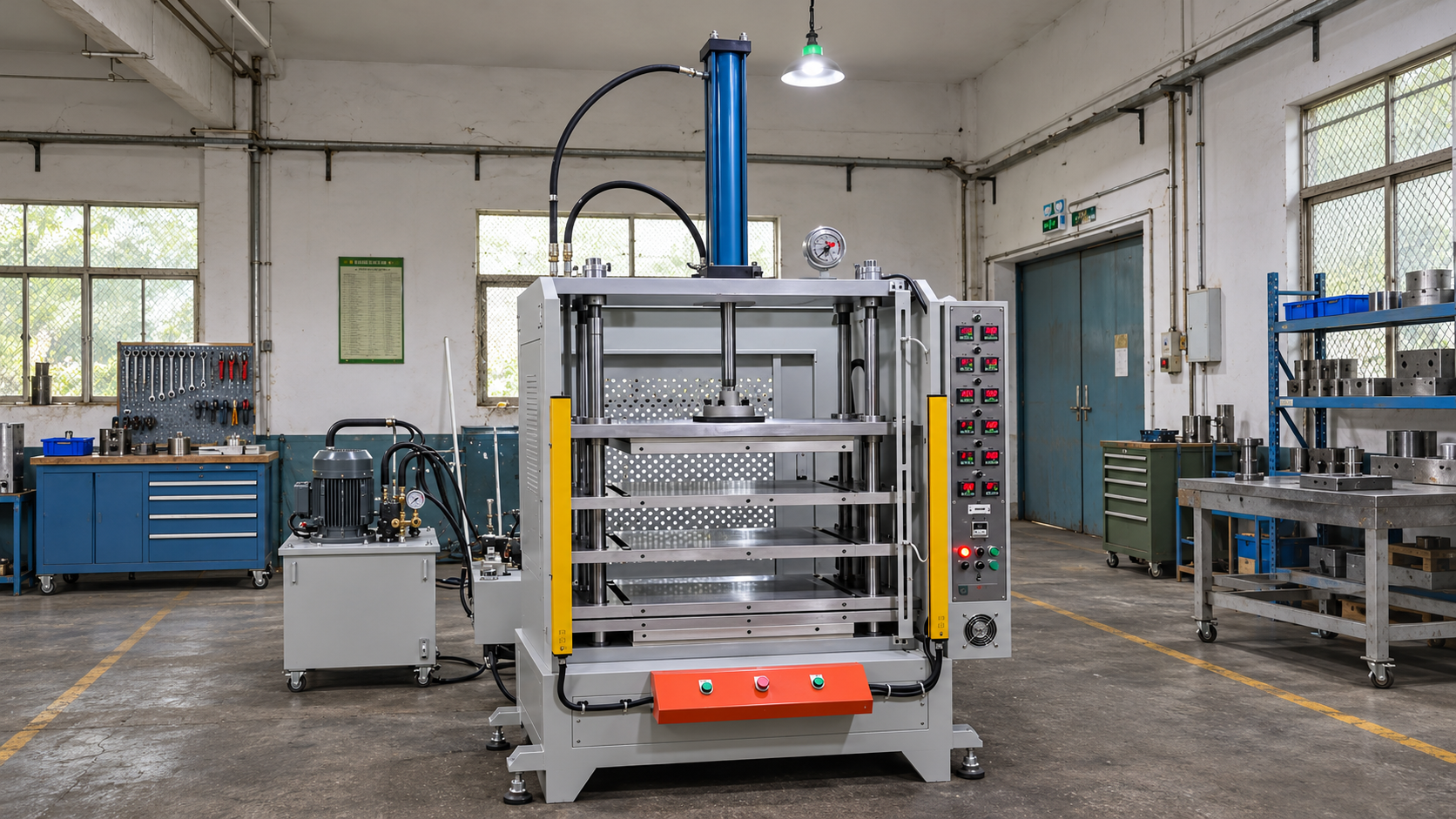
| Equipment | Multi-Layer Heat Press Machine (300 T, four working openings, electric heating, Mitsubishi PLC with HMI) |
| Customer | Transformer manufacturer in Jordan with an in-house insulation workshop |
| Application | Hot pressing and curing of laminated pressboard stacks for pressure plates, end insulation and lead supports |
Customer information has been anonymized. Technical figures are design and acceptance reference values and may vary depending on configuration and site conditions.
A transformer manufacturer in Jordan relied on a single-opening press plus purchased laminated pressboard blanks to cover its thick-wall insulation demand. As oil-immersed power transformer orders grew, pressure plates and end insulation became thicker and larger, and single-opening pressing turned into the bottleneck of the insulation workshop.
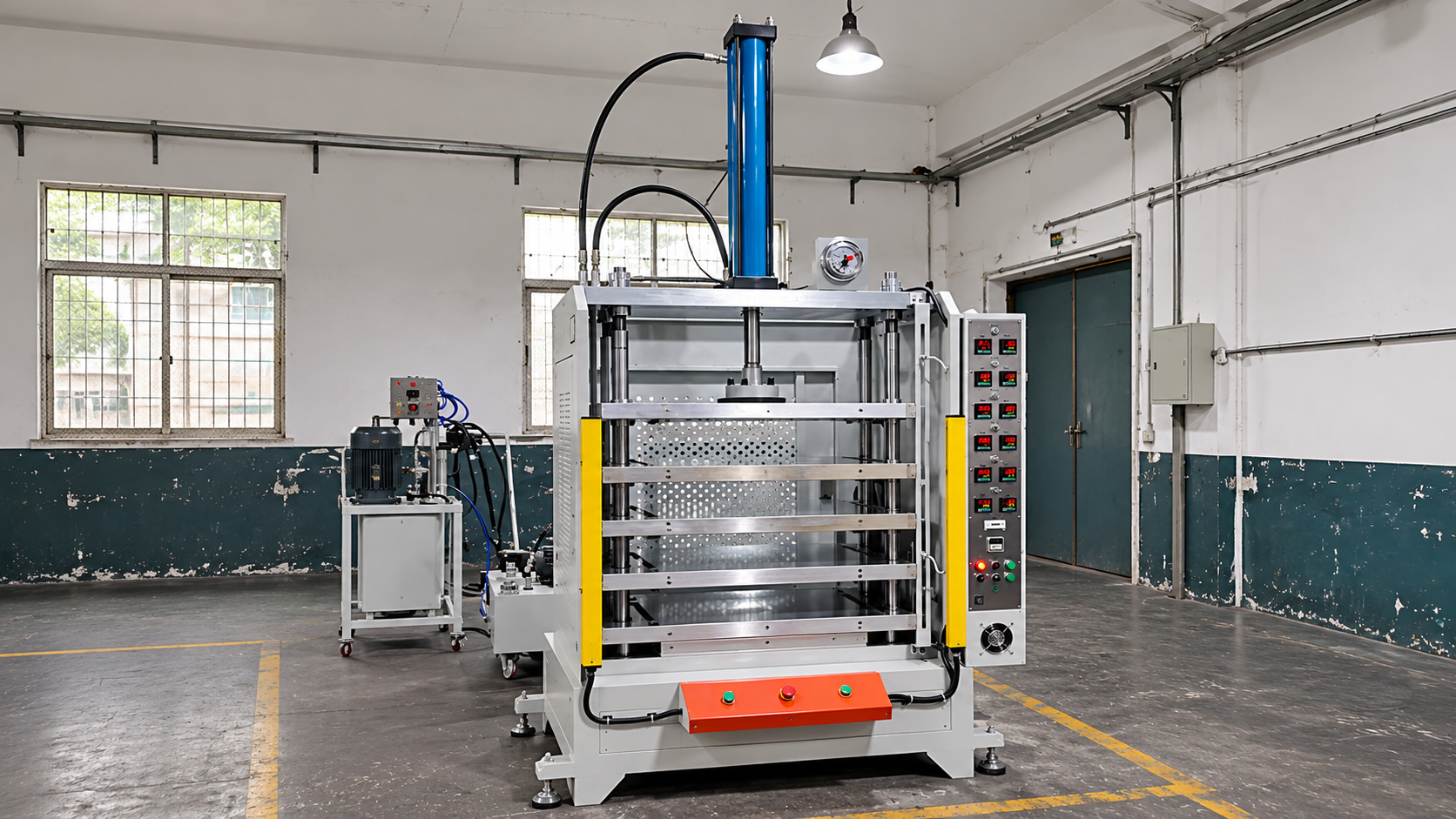
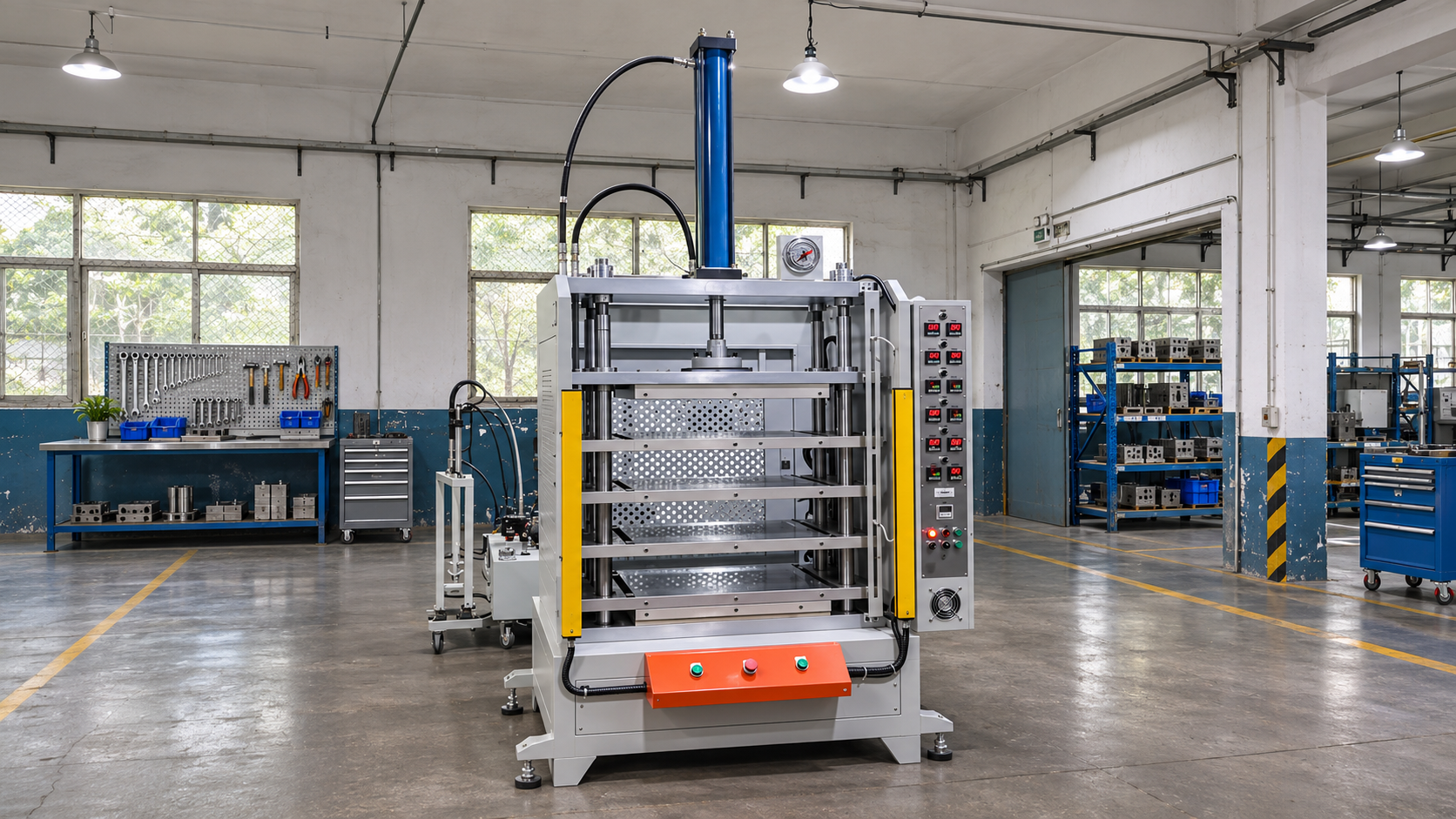
Tranfovia supplied a Multi-Layer Heat Press Machine with 300 T press capacity, four working openings, electric heating and Mitsubishi PLC with HMI. Up to four laminated stacks can be pressed in one cycle, with temperature uniformity held within 2°C across the working system.
1. Customer Background
The customer manufactures oil-immersed power transformers and distribution transformers for transmission and distribution projects in Jordan and neighbouring markets, and runs its own insulation workshop where pressboard cylinders, strips and blocks are machined in house.
Thick-wall laminated parts — pressure plates, end insulation, lead supports — were previously handled in two ways: part of the demand was bought as laminated pressboard blanks and machined afterwards, and part was pressed on the workshop’s single-opening press. A single-opening press takes one stack per cycle, and a thick part has to complete the full heat history of heating, soaking, curing and cooling, so workshop output was tied to the number of cycles available.
Order structure has shifted over the past two years: transformer ratings moved up, plate thickness and part size grew with them, and purchased blanks became harder to fit to the assembly schedule in both lead time and batch consistency. The requirement was therefore clear: a press that can process several stacks in one cycle, with temperature across the working layers kept under control.
2. Industry Pain Points
Before selection, the customer listed five constraints in the insulation workshop.
1. Single-opening pressing capped output. Every stack consumed a complete heating, soaking, curing and cooling cycle, and thick parts have the longest heat history, so the number of stacks per day was fixed.
2. Temperature difference between layers drove curing consistency. Pressboard lamination needs uniform temperature across the full platen area. A larger deviation produces under-cured zones and uneven resin flow, which shows up as delamination, blistering and thickness variation.
3. Sealing rings are wearing parts. Under continuous high temperature and pressure, a failed seal means leakage plus a stop for replacement, interrupting production.
4. Unstable pressure build-up caused layer slip. Pressure rising too fast or with shock displaces the stacked layers and squeezes resin out, leaving uneven thickness after curing.
5. The heat source had to match site utilities. The plant has no steam boiler, so a steam-only machine would have required a new boiler and steam piping.
3. Solution
After reviewing the largest workpiece size, lamination thickness and process curve, Tranfovia recommended an electrically heated multi-layer heat press with platen size and opening count built to the customer’s drawings.
3.1 Four working openings, four stacks per cycle
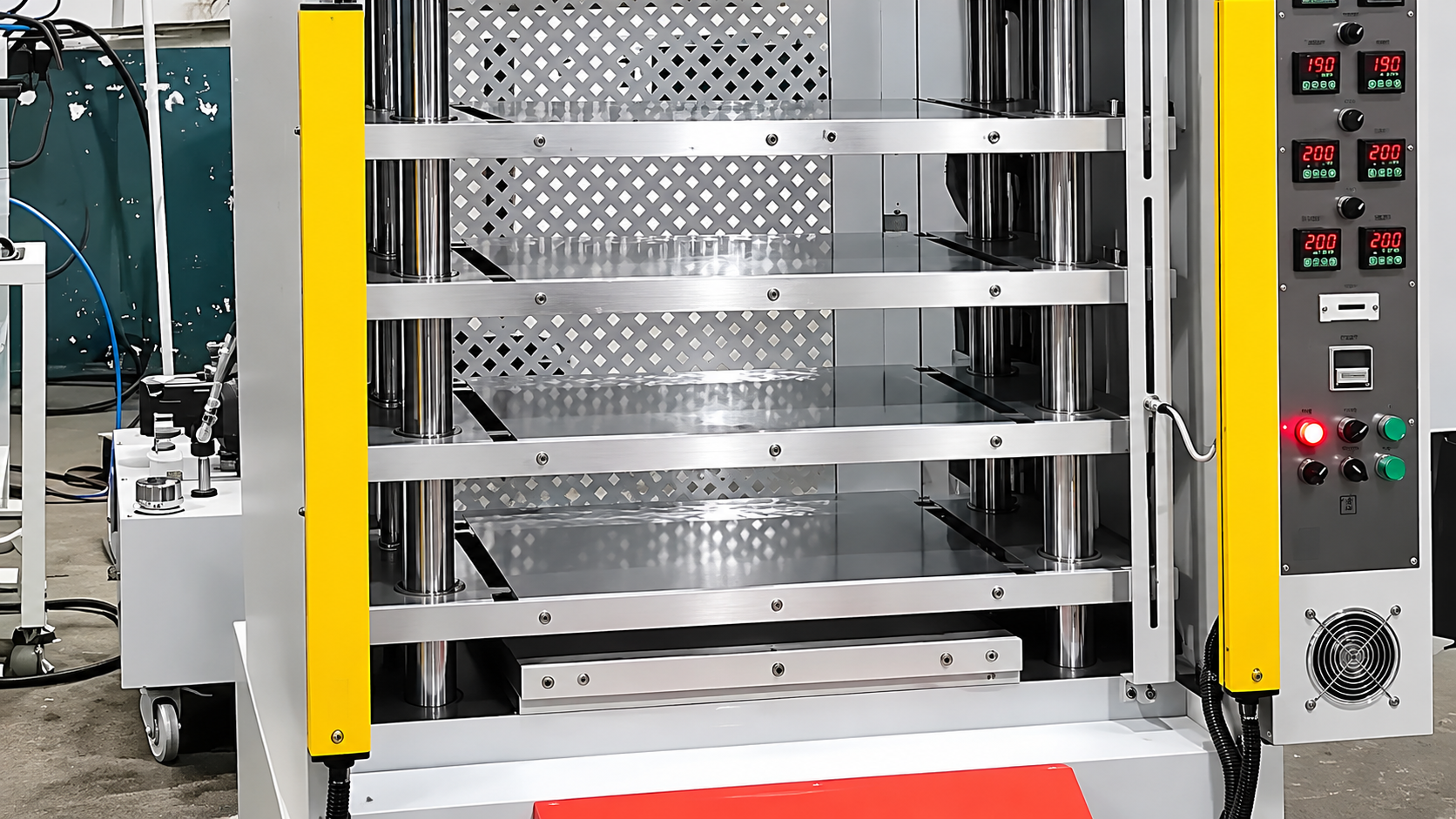
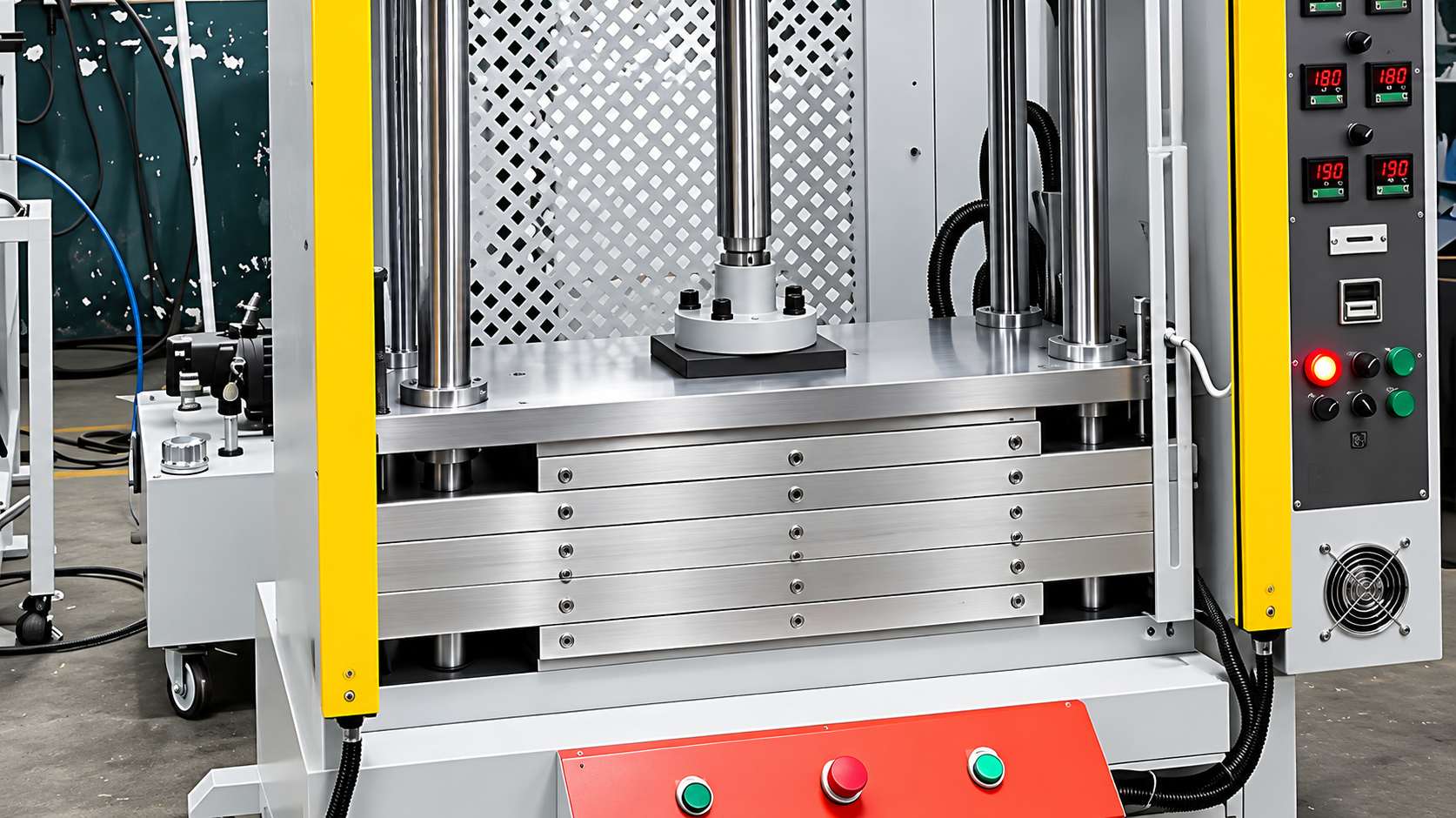
The machine has four working openings, each able to take a laminated stack between heated platens. Four stacks are heated and pressed in the same cycle, so the curing time of a thick part is paid once instead of four times. Opening count and daylight are configured to the production batch and can be adjusted as output grows.
3.2 Temperature uniformity within 2°C
The heating system is designed for consistent temperature across the working layers, with full-area deviation held within 2°C. Temperature controllers are arranged in separate zones on the control panel — six controllers on this machine — so each zone can be read and set individually, keeping upper and lower layers and centre and edge from curing differently.
3.3 Reliable sealing with a stated ring life beyond three years
The sealing design is intended for good sealing and leakage prevention. Under the agreed operating, maintenance and working conditions, the sealing-ring service life is specified as more than three years, which reduces stops for replacement.
3.4 Stable pressure build-up with safety protection
Pressure rises smoothly and the press includes safety protection, avoiding the layer slip and resin squeeze that come with impact loading, so thickness consistency of thick parts stays controllable.
3.5 Mitsubishi PLC with HMI
The control system uses a Mitsubishi PLC with human-machine interface, where pressure and temperature are set. Recipes for different thicknesses and workpiece sizes can be stored and recalled, so a specification change does not require re-developing parameters.
3.6 Electric heating and a platen built to drawings
With no steam boiler on site, the machine was configured for electric heating, which avoided investment in a boiler and steam piping; the same model can be supplied with steam heating if waste steam becomes available. Platen size and opening count were built to the customer’s largest workpiece and batch size.
4. Implementation and Commissioning
Commissioning was based on the customer’s actual workpieces and process curves, in four steps.
Step 1: No-load heating and inter-layer temperature survey. The four platens were brought to process temperature empty, then measured layer by layer and zone by zone to confirm deviation stayed within 2°C, establishing the acceptance baseline.
Step 2: First-article pressing. The thickest laminated pressure plate stack was pressed first under the set pressure and temperature curve, and interlaminar bonding, thickness and appearance were checked.
Step 3: Single-stack versus full-load comparison. One stack and then four stacks were pressed with identical parameters, and curing consistency and thickness deviation across the four parts were compared to confirm that multi-opening pressing does not trade away layer uniformity.
Step 4: Recipe freeze and training. Workpieces of different thickness and size were organised into recallable recipes, and operators and maintenance staff were trained, including the sealing inspection interval and platen cleaning requirements.
5. Acceptance Results
The machine was configured to the customer’s lamination workpiece size and process requirements.
| Parameter | Design and Acceptance Reference |
| Press capacity | 300 T (300–3000 T available in the same series) |
| Working openings | 4 layers, configured to production requirements |
| Temperature uniformity | ≤2°C |
| Heating method | Electric heating (steam heating available) |
| Control system | Mitsubishi PLC with HMI |
| Pressure movement | Stable rising with safety protection |
| Sealing performance | Good sealing, no leakage |
| Sealing-ring life | More than 3 years under agreed conditions |
| Working platen size | Customized according to workpiece dimensions |
Key Project Outcomes
- Output scales with openings: four stacks pressed in one cycle, so the curing time of a thick part is paid once.
- Layer consistency under control: full-area deviation within 2°C with zoned temperature control.
- Longer maintenance interval: a stated sealing-ring life beyond three years reduces stops for replacement.
- Faster specification changes: PLC recipe recall replaces trial pressing to find parameters.
6. Customer Feedback
The process supervisor in the insulation workshop put the gain in terms of cycle time.
“A thick pressure plate used to take a full heating and curing cycle of its own. Now four of them go through together, and we still wait the same time.”
The equipment supervisor valued the maintenance interval more.
“A sealing ring rated beyond three years under agreed conditions matters more to our scheduling than another hundred tonnes of capacity.”
7. Summary and Next Steps
The project shows what to check first when selecting a multi-layer heat press for a transformer insulation workshop: how many stacks one cycle can take, whether temperature deviation can protect curing consistency, and whether the heat source matches site utilities — tonnage is only one variable. For this customer, four openings spread the curing time of thick parts across four stacks, the 2°C deviation held layer differences in check, electric heating removed the boiler investment, and PLC recipes made specification changes repeatable. Next, the customer plans to group recipes by thickness and size and to add loading and unloading tooling to cut auxiliary time further. For comparable insulation workshops, Tranfovia configures multi-layer heat presses by workpiece size, lamination thickness and batch size, including opening count and heating method.
Looking for a multi-layer heat press for transformer insulation parts? Contact the Tranfovia technical team to discuss your workpiece drawings and process curve.
- WhatsApp: +86-15958243831
- Email: sales@tranfovia.com
- Website: https://tranfovia.com/