
Slitting and cut-to-length are the two cutting operations behind every transformer core — and the pair most often confused by first-time equipment buyers. They are not alternatives and not competitors: they cut in different directions, answer different questions, and most transformer factories need both, in a fixed order. This article explains the difference, shows the two side by side, and helps you decide which machines your workshop actually needs.
Two Cuts, Two Directions
The entire distinction comes down to the direction of the cut relative to the strip:
- Slitting cuts along the strip — lengthwise, in the direction the material travels. It divides a wide master coil into several narrower coils.
- Cut-to-length cuts across the strip — perpendicular to the direction of travel. It divides a coil (wide or narrow) into individual flat sheets of a set length.
Think of it in terms of what dimension each process fixes. Slitting sets the width of your material. Cut-to-length sets the length of each lamination. A transformer lamination needs both dimensions fixed, which is why the two processes exist as separate machines rather than one combined unit.
A simple memory aid used in most core shops: slitting makes coils smaller; cut-to-length makes coils disappear — into sheets. If the output is still on a reel, you are looking at a slitting process. If the output lies flat on a table, it came from cut-to-length.
What a Slitting Line Does
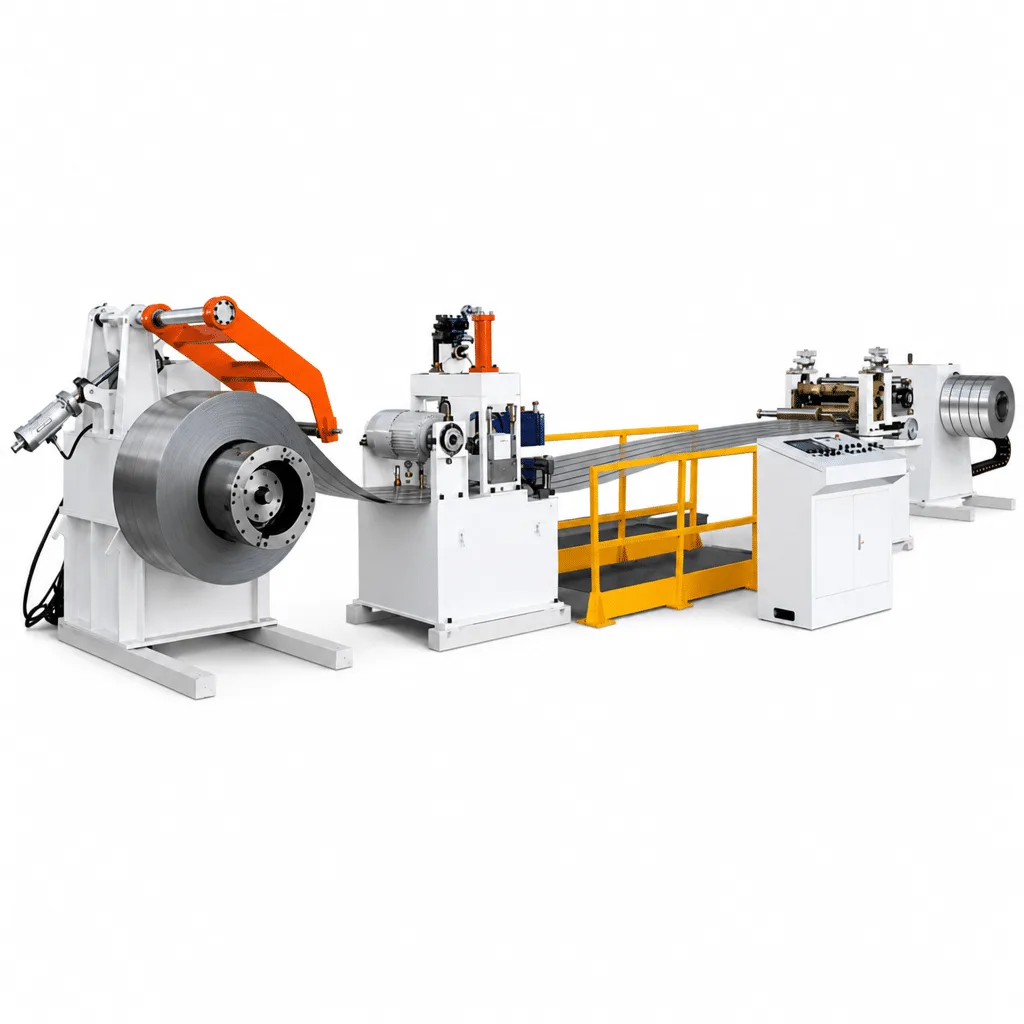
A silicon steel slitting line takes a master coil of CRGO — typically 1,000 to 1,250 mm wide — and cuts it lengthwise into narrower strips. Rotary knives positioned across the strip make continuous longitudinal cuts as the material passes through, and the separated strips are rewound into individual coils on a recoiler.
Key characteristics of the process:
- Continuous cutting. The knives never stop; output is measured in meters of strip, not individual pieces.
- Input and output are both coils. Material enters and leaves wound — a slitting line changes width, not form.
- Burr control is the quality battleground. Knife clearance, alignment, and sharpness decide whether strip edges stay at or below 0.02 mm burr — critical because those edges become the lamination edges in the finished core.
For the full working principle, knife setup, and burr acceptance criteria, see our silicon steel slitting line guide.
Why can’t one machine do both jobs? The tooling is fundamentally incompatible. Slitting needs rotary knives that cut continuously as strip flows past — there is no natural point to stop and make a cross-cut. Cut-to-length needs a guillotine shear that clamps and cuts the full width in one stroke — a rotary knife set cannot produce the clean, square, burr-controlled cross-section a lamination edge requires. Combining both into one frame would mean two complete cutting systems plus doubled coil handling, which is why the industry builds them as separate machines and links them by logistics instead.
What a Cut-to-Length Machine Does
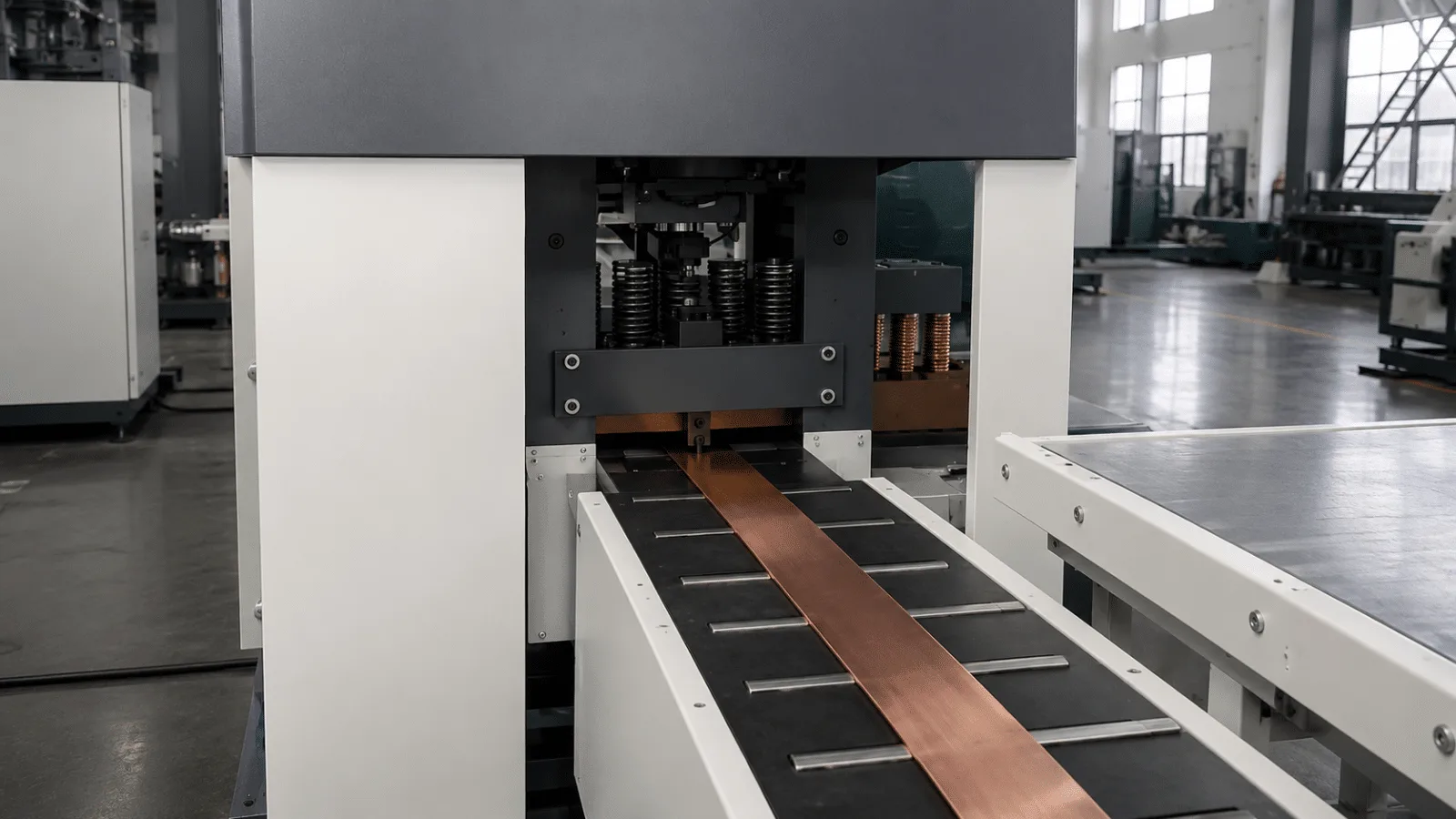
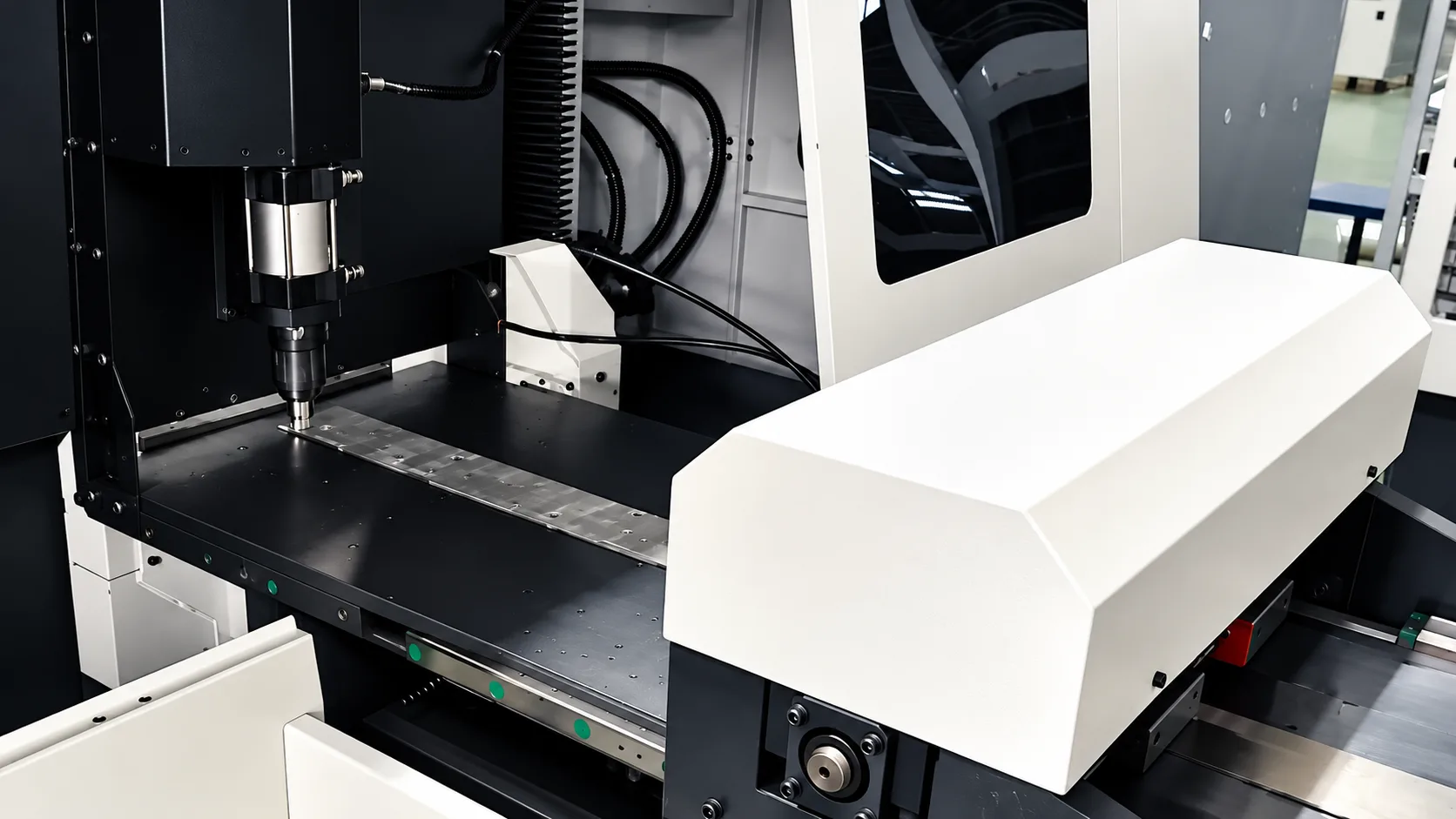
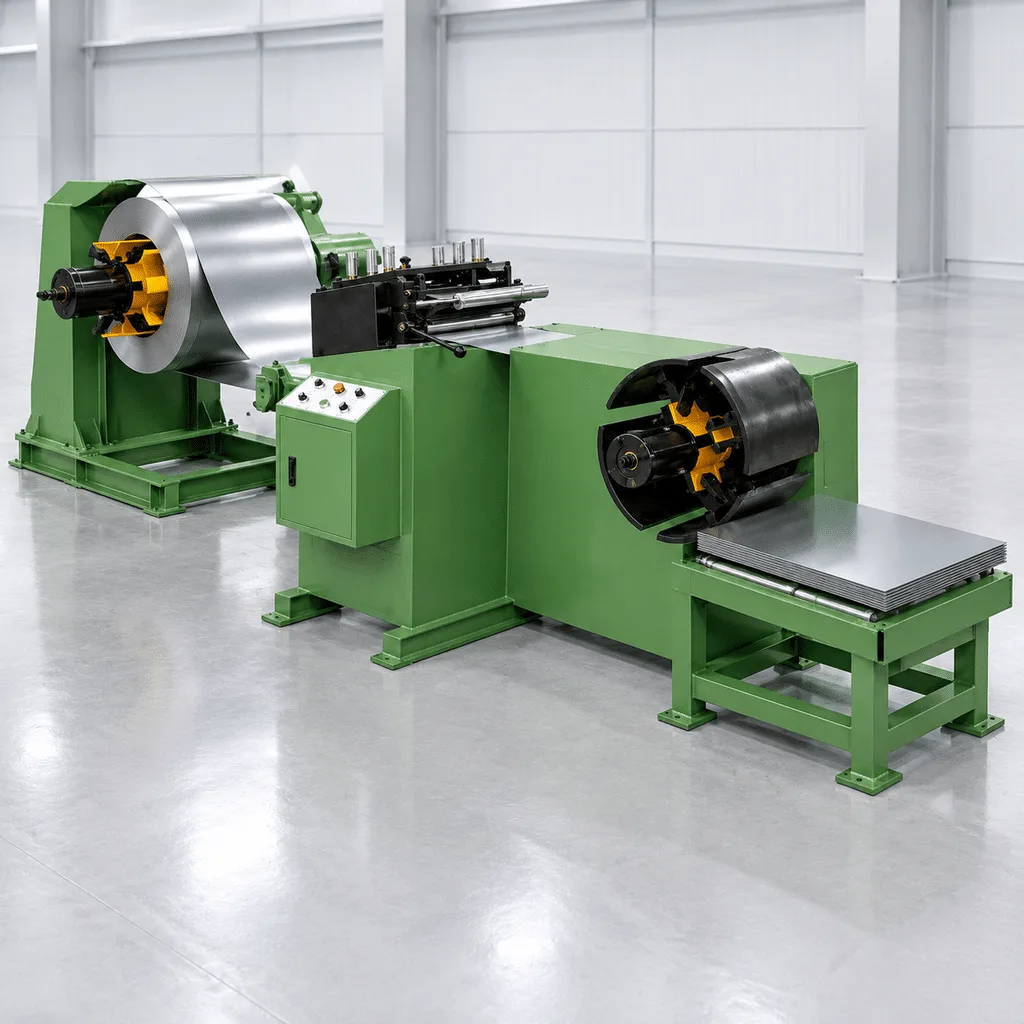
A cut-to-length machine takes a coil — usually pre-slit strip — and shears it across its width into flat laminations of a programmed length. The strip is uncoiled, leveled, fed forward by an exact measured distance, and sheared square; finished sheets discharge for stacking.
Key characteristics:
- Cyclic cutting. The shear operates once per piece; output is counted in sheets per minute.
- Coil in, sheets out. The process changes the material’s form from coil to flat laminations ready for core stacking.
- Length accuracy is the headline spec. Transformer-grade machines hold ±0.05 mm/m to ±0.1 mm so stacked cores need no re-sorting.
More advanced versions — full core cutting lines — add miter cuts, punching, and automatic sorting; our core cutting line guide covers those. For the standalone machine, see the silicon steel cutting machine guide.
Head-to-Head: Slitting vs Cut-to-Length
| Slitting Line | Cut-to-Length Machine / Line | |
|---|---|---|
| Cut direction | Along the strip (longitudinal) | Across the strip (transverse) |
| Dimension fixed | Strip width | Lamination length |
| Input | Wide master coil | Coil (usually pre-slit strip) |
| Output | Narrower coils | Flat sheets / laminations |
| Cutting tool | Rotary knives, continuous | Shear blade, cyclic |
| Headline quality spec | Edge burr ≤0.02 mm | Length accuracy ±0.05–0.1 mm |
| Position in the chain | First (material preparation) | Second (lamination production) |
One row in that table drives every purchase decision: input. What arrives at your factory gate — master coils or pre-slit strip — determines which machine you need first.
Which One(s) Does Your Factory Need?
The decision logic is simpler than the equipment catalogs make it look:
- You buy pre-slit strip from a service center. You need only the cut-to-length side. This is the normal starting point for small and growing transformer factories — the slitting investment waits until volume justifies it.
- You buy master coils and cut your own strip. You need both, in this order: the slitting line first (nothing to feed the cut-to-length machine without slit strip), then cut-to-length capacity matched to your output.
- You are a service center yourself. Slitting is your core business, and cut-to-length is the value-added service that wins transformer customers.
Why do factories bring slitting in-house at all? Three triggers: master coils cost meaningfully less per kilogram than pre-slit strip; in-house slitting frees you from a service center’s width schedule; and controlling your own edge quality removes a variable from core-loss guarantees. The break-even is volume — below a few hundred tons of CRGO per year, buying pre-slit usually wins.
The classic procurement mistake is buying in the wrong order: a factory invests in a fast cut-to-length line while still depending on an outside service center for slit strip, then discovers the new machine idles whenever a strip delivery slips. Capacity planning has to start at the material source — the fastest shear in the world produces nothing without strip in the right widths.
Conclusion
Slitting cuts along the strip to set width; cut-to-length cuts across it to set length. They are sequential partners in the same chain, not substitutes: slitting first, cut-to-length second, and which one you buy first depends on the material arriving at your gate. For equipment details, see the silicon steel slitting line and silicon steel cut-to-length machine product pages — or send us your material flow and we will map the machines to it.