Open up a three-phase transformer core and you will find three limbs: two outer limbs and one center limb. The center limb carries the combined magnetic flux of both outer limbs, and its laminations — the center pieces — are the most geometrically demanding sheets in the whole core. A center piece core cutting line is the specialized machine that produces them. This article explains what the line does, why center limbs justify dedicated equipment, and what the specifications mean.
What Is a Center Piece Core Cutting Line?
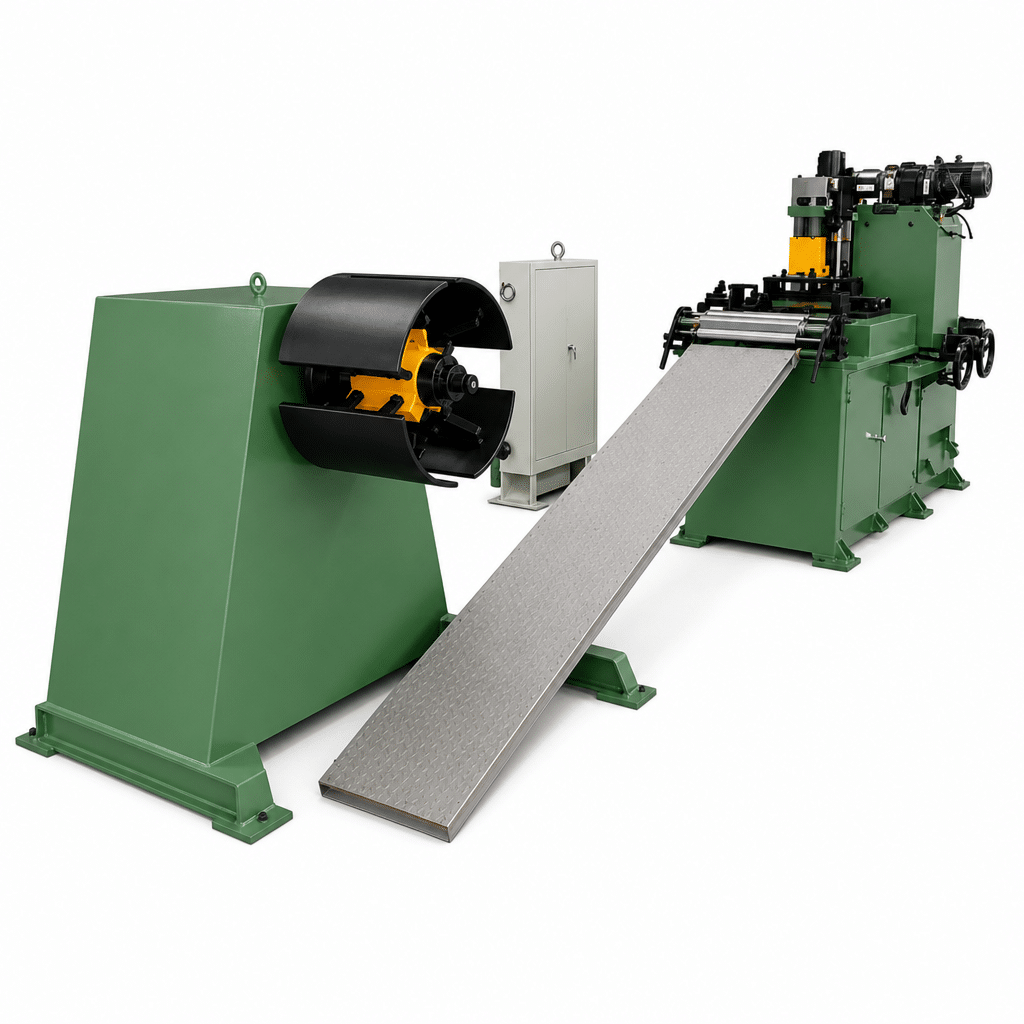
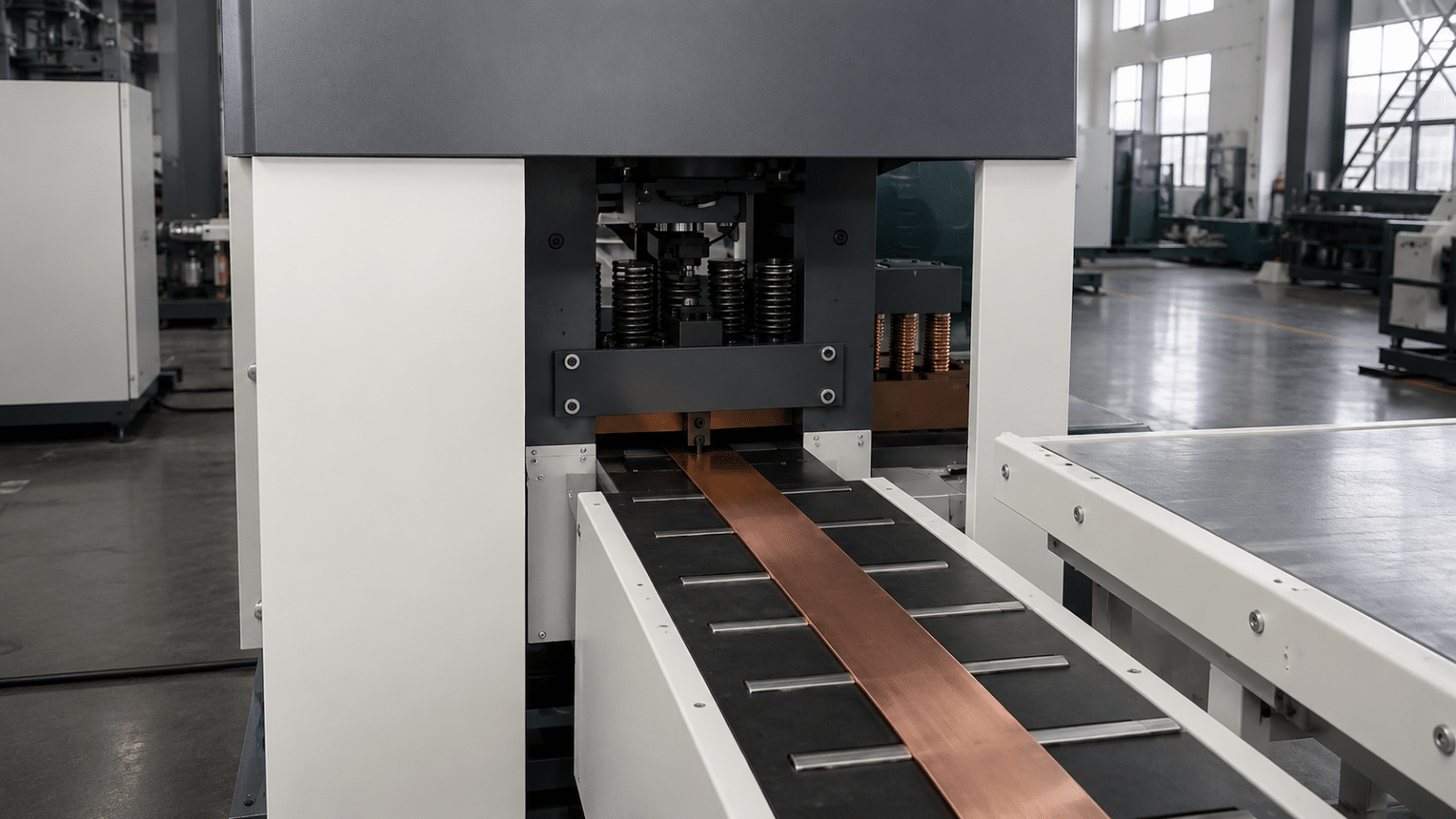
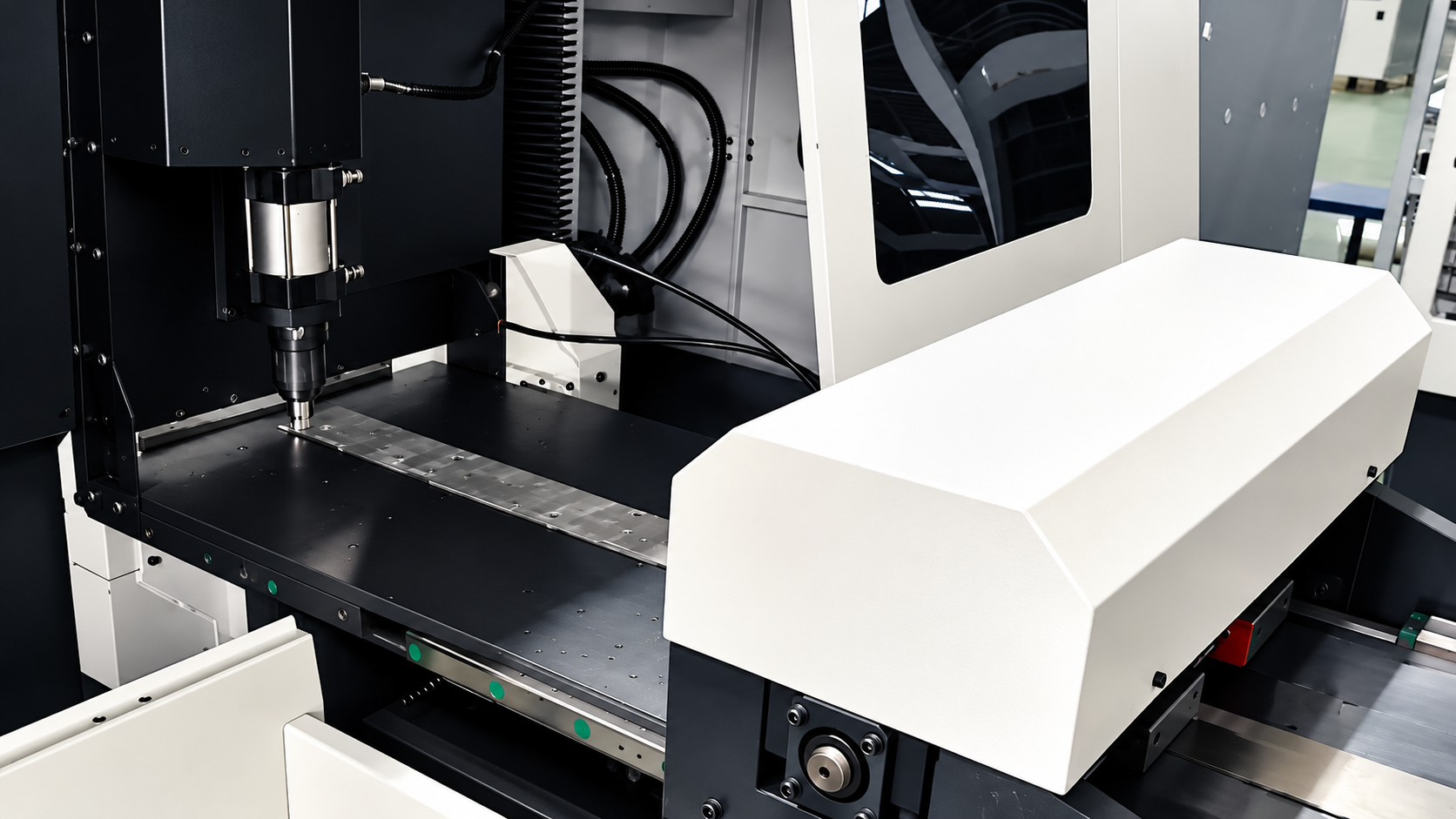
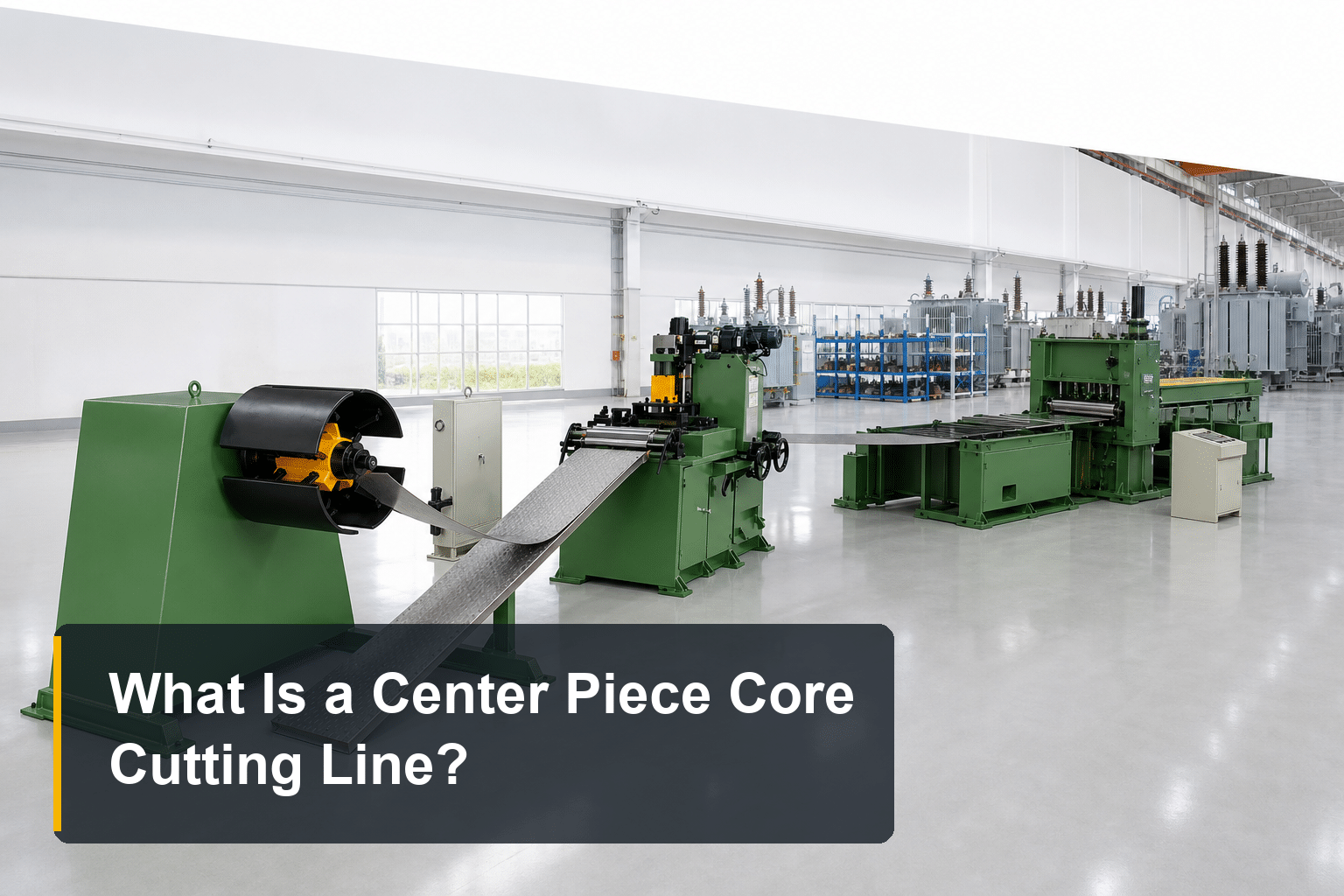
A center piece core cutting line is a high-precision cut-to-length line dedicated to processing center limb laminations for transformer cores. Like other core cutting equipment, it uncoils CRGO silicon steel strip, feeds it to a programmed length, and shears it — but its shearing station is built for the complex end geometries that center pieces require, cutting at precise angles rather than only square across the strip.
It is one member of the wider core cutting family. Standard lines handle side limbs and yokes with straight or 45° miter cuts; the center piece line exists because the center limb’s laminations carry shapes those lines cannot economically produce. For the full equipment landscape, see our guide to transformer core cutting lines.
What makes a center piece geometrically demanding? Look at a three-phase core from above: the center limb is flanked by two coil windows, and its laminations must interface with the top and bottom yokes on both ends. Depending on the core design, that means V-profiles, offset miters, notches, or stepped ends — shapes that must be cut identically on every sheet, at full strip speed, with burr low enough to protect interlaminar insulation.
Why Center Limbs Need Dedicated Cutting
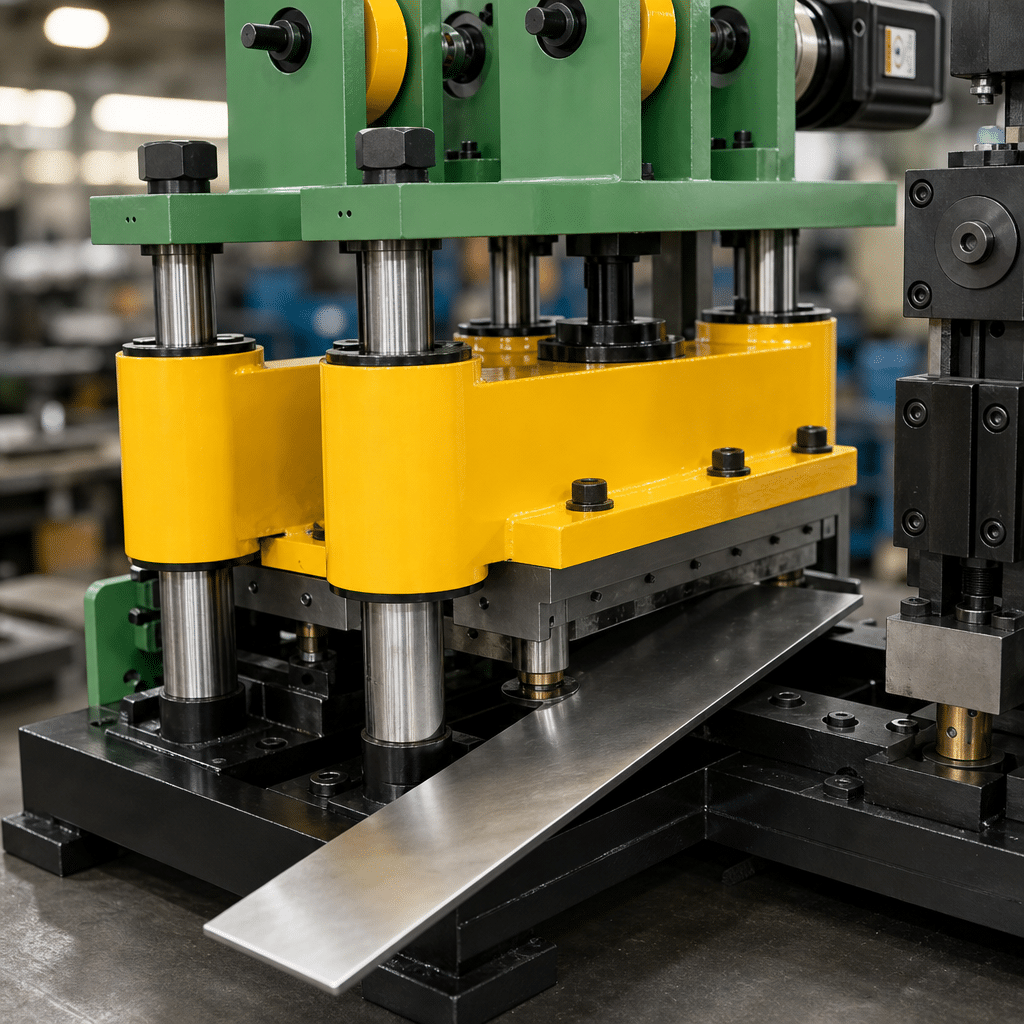
The center limb is where the magnetic circuits of a three-phase core meet. Every joint between a center piece and the yoke laminations is an air gap in the magnetic path — and air gaps are what drive up no-load losses and transformer noise.
That physical fact creates two requirements that ordinary cutting struggles to meet:
- Angular accuracy. Center pieces are cut with angled or profiled ends so they mate tightly against the yoke. The line holds a cutting angle accuracy of ±0.025° — at lamination scale, that precision is what keeps joint gaps invisible to the magnetic circuit.
- Consistent alignment. Every center piece in a stack must be identical. A deviation of even ±0.1 mm in length accumulates across hundreds of laminations and shows up as a crooked limb that no amount of clamping fully corrects.
Manufacturers who cut center pieces on general-purpose shears typically pay for it twice: once in rework and rejected sheets, and again in cores that test at the edge of their loss guarantees.
How the Line Works
The process mirrors other cut-to-length equipment, with the critical difference at the shear:
- Decoiling. The CRGO coil mounts on a powered mandrel and pays out under controlled tension to protect the surface coating.
- Feeding and leveling. Precision rollers flatten the strip and advance it at up to 180 m/min, with the feed measuring each piece to ±0.1 mm.
- Angle shearing. The shearing station cuts each center piece to length with the programmed end geometry — square, angled, or profiled — holding ±0.025° on the cut angle and burr at or below 0.02 mm.
- Discharge. Finished center pieces exit in sequence, ready for stacking.
Because the geometry is set in the control program, changeover between center piece designs is a settings change, not a tooling rebuild.
Specifications: XE-ZZ-300Z and XE-ZZ-400Z
Two standard models cover the center piece range for distribution and power transformers:
| Item | XE-ZZ-300Z | XE-ZZ-400Z |
|---|---|---|
| Cutting thickness | 0.23–0.35 mm | 0.23–0.35 mm |
| Cutting width | 40–300 mm | 40–300 mm |
| Cutting length | 150–2000 mm | 150–2000 mm |
| Feeding speed | 180 m/min | 180 m/min |
| Cutting burr | ≤0.02 mm | ≤0.02 mm |
| Length accuracy | ±0.1 mm | ±0.1 mm |
| Angle accuracy | ±0.025° | ±0.025° |
| Total motor power | 11 kW | 12 kW |
The two models differ mainly in structural capacity and drive power; the precision figures are identical. Note the thickness window of 0.23–0.35 mm — deliberately matched to the CRGO grades actually used in transformer cores.
Choosing between them follows your throughput and frame-size needs rather than accuracy: both hold the same ±0.025° angle and ±0.1 mm length tolerances. If your center pieces come from the same 300 mm strip width either way, the decision usually comes down to duty cycle and the rest of your cutting fleet’s capacity.
Center Piece Line vs. Standard Core Cutting Lines
How does this line fit with the rest of the cutting family? The division of labor in a core shop is straightforward:
- Center position or side position lines cut side limbs and yokes — the high-volume, straightforward pieces. Our center positioning line buying guide covers that selection.
- The center piece line handles the center limb — lower volume, but the highest geometric precision in the core.
Smaller factories often run one general line plus a center piece line; larger plants dedicate lines by product family. A transformer manufacturer in Rayong, Thailand runs a complete core cutting line built on exactly this logic — volume pieces on the main line, precision pieces where precision matters.
When is a dedicated center piece line not worth it? If you build single-phase cores (no center limb at all), buy center pieces from a service center, or produce three-phase cores only occasionally, the volume rarely justifies the machine. The break-even question is simple: how many center limbs do you cut per month, and what does rework or outsourced cutting cost you against the line’s price?
Conclusion
A center piece core cutting line exists for one reason: the center limb is where core losses are won or lost, and its laminations demand ±0.025° angular accuracy that general equipment cannot hold. If your cores are testing close to their guaranteed losses, or your center pieces need rework after cutting, this is the machine that fixes it. Full specifications are on our center piece core cutting line product page.