| Equipment | Pressboard Circular Shearing Machine |
| Customer | A distribution transformer manufacturer in Lagos, Nigeria, with an in-house insulation parts shop |
| Application | Circular and annular cutting of transformer insulation pressboard and epoxy board into end rings, angle rings and similar round insulation parts |
Customer information has been anonymized; only regional and industry attributes are retained. Performance figures represent design and acceptance reference values and may vary depending on configuration and actual operating conditions.
1. Customer Background
The customer manufactures 11/0.4 kV and 33/11 kV distribution transformers on the outskirts of Lagos, producing both windings and insulation parts in house. The insulation shop already ran pressboard sawing and milling equipment, but round parts — end rings and angle rings — were made by hand: mark out from a template, cut with hand shears, then dress the edge on a pedestal grinder.
From 2024 onward, grid rehabilitation orders in the region increased, and the number of insulation part specifications handled per quarter grew from a dozen to several dozen. Manual cutting hit its ceiling on roundness and throughput at the same time.
2. Industry Pain Points
Roundness depended on eye and hand, and end rings would not seat evenly. Large-diameter end rings are built from two pressboard pieces butted together. Error accumulated at the joint; once roundness drifted, the ring no longer sat concentrically on the winding, and even clamping pressure at the coil end had to be recovered with shims.
Cut edges frayed and delaminated, so a second operation was mandatory. Pressboard 1–3 mm thick came off the hand shears or the saw with an uneven edge and delaminated burrs. Every ring went to the grinder for dressing — extra labour, and dust in the shop.
Large-diameter boards sagged while being cut. Nothing supported the board during manual cutting, so ellipticity on a part such as Ø1600 mm drifted by millimetres. Out-of-tolerance rings were downgraded or scrapped.
Every specification change meant re-marking and re-aligning. A new diameter meant new layout, new centring and a trial cut, so consistency depended on which operator was on shift. Specifications the shop could not hold were bought in as finished rings, putting both lead time and price outside the customer’s control.
3. Solution
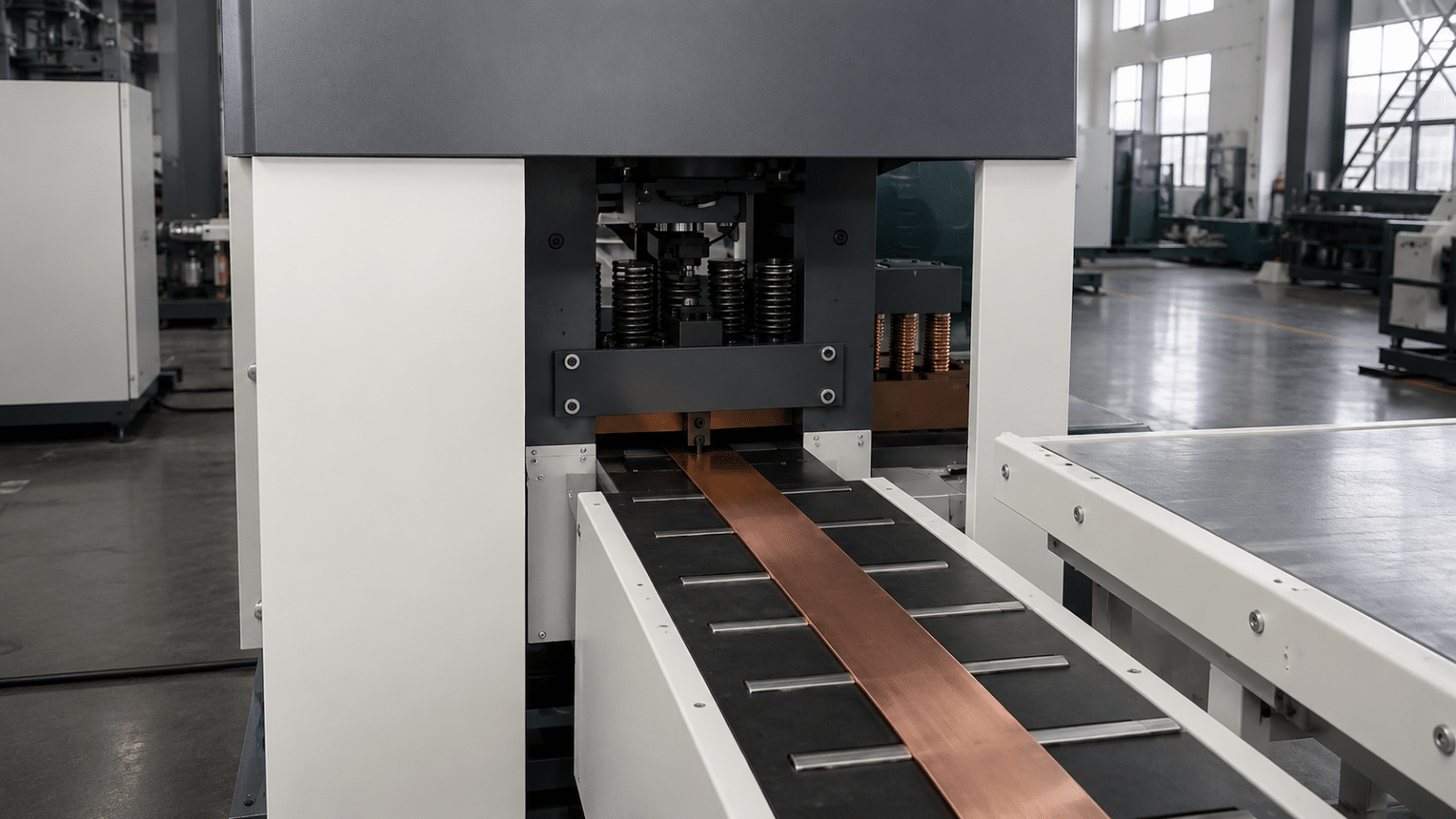
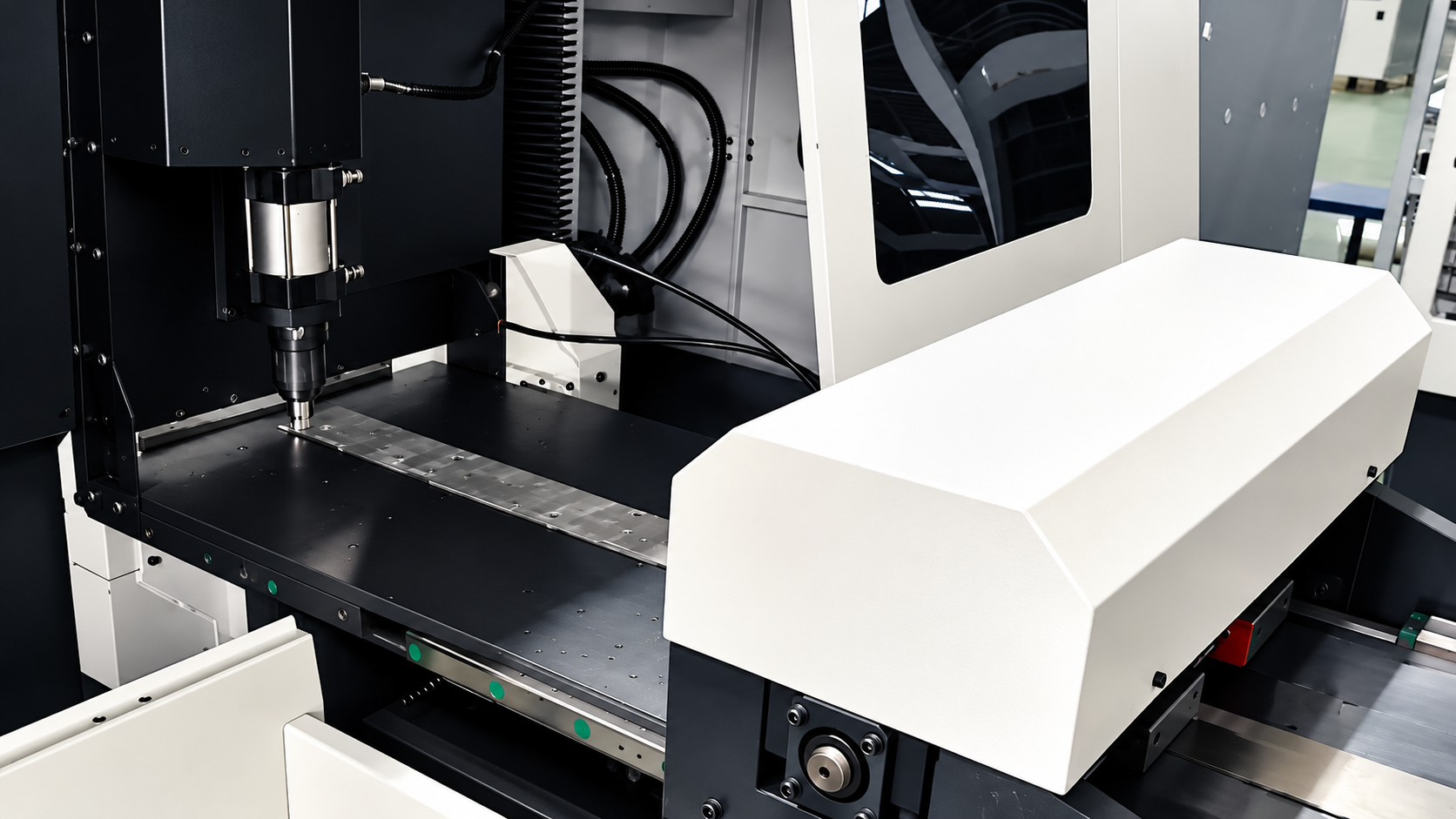
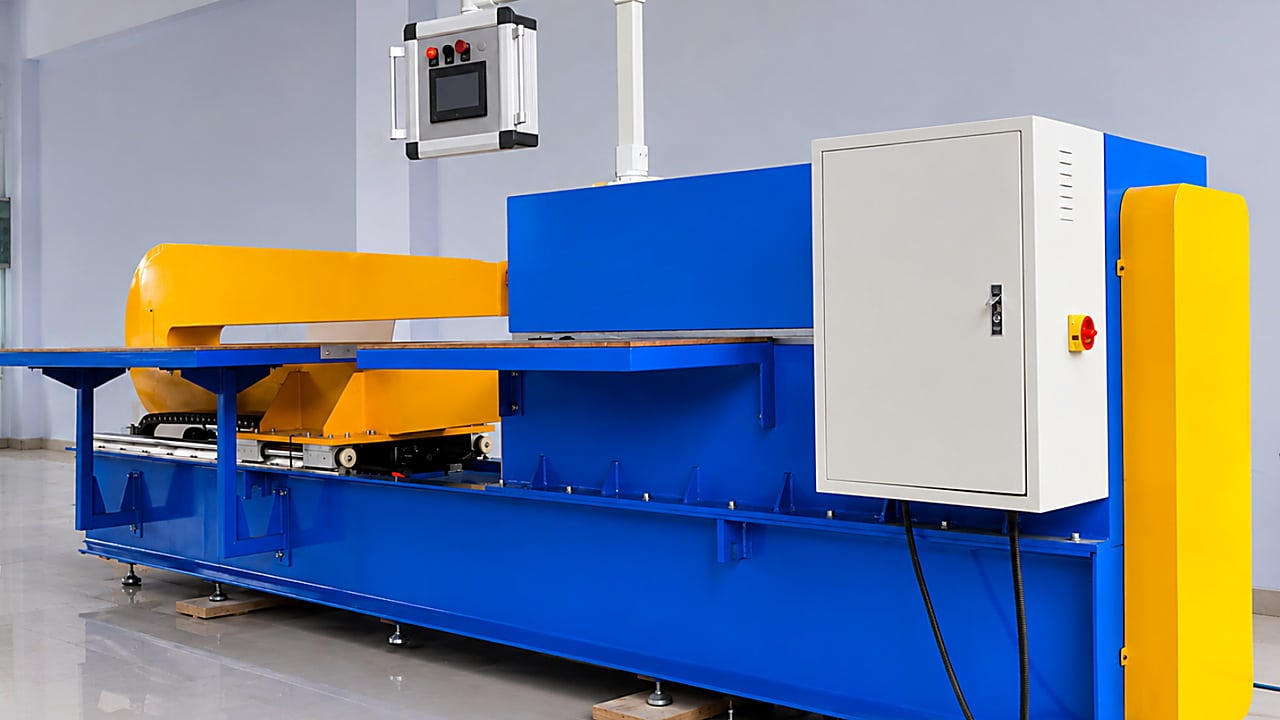
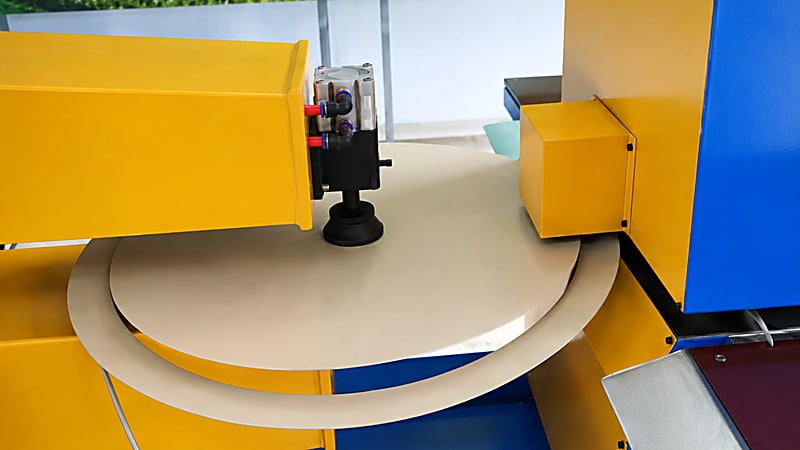
The customer selected the YJΦ300-2000 CNC model. Rings from Ø300 mm to Ø2000 mm are sheared in one revolution of the table, in insulation pressboard and epoxy board from 1 to 3 mm thick. The problem being solved was not cutting speed — it was taking the dimensional accuracy of round insulation parts out of the operator’s hands.
Rolling shear, with a smooth and flat cut edge. The upper shear blade and the upper pressing disc shear along the rotary table. This is continuous shearing rather than punching or sawing, so the edge comes out flat, without fraying or delamination, which removes the dressing operation entirely.
Large diameters are supported, not held by hand. A support assembly sits on each side of the bedside box, with adjustable support-rod height. When cutting large-diameter parts the board is carried on one common plane so it cannot sag — the precondition for holding ellipticity to ±1 mm.
Blade lifts 20 mm, pressing disc lifts 15 mm. The upper shear blade elevation distance is greater than 20 mm and the upper pressing disc greater than 15 mm, so 1–3 mm sheets load and unload without prying or scoring.
Rear frame locks for repeat batch production. The rear frame position is adjustable and can be locked, so a diameter is set once for a batch. On the CNC model the tailstock repeat positioning accuracy is ±0.1 mm, which means changing diameter is a matter of entering parameters rather than re-marking and re-centring.
30 m/min and 0.4 kW × 2. One full Ø2000 mm circle takes roughly ten-odd seconds, so a shift produces batches rather than a handful of parts. The machine is compact and takes little floor space, so it went straight into the existing insulation processing area.
4. Implementation and Commissioning
The machine was placed between the pressboard rack and the existing sawing and milling stations, so sheared rings flow straight into the next operation.
Commissioning ran in three stages. Stage one was no-load verification of table rotation and of the lift travel of the upper shear blade and pressing disc, confirmed at greater than 20 mm and 15 mm respectively. Stage two set blade clearance in steps by board thickness and ran trial cuts on the customer’s own 1 mm and 2 mm pressboard and 3 mm epoxy board at Ø600, Ø900, Ø1200 and Ø1600 mm, with ellipticity checked part by part and the cut edge checked visually and by hand. Stage three saved diameter and tailstock position for each specification as program numbers, spot-checked repeat positioning, and trained two operators.
Three items needed the most adjustment. On 3 mm board the blade clearance was set too tight and left a squeeze mark along the cut edge, so a clearance table was rebuilt by board thickness. Above Ø1600 mm a slight sag remained at the end of travel; raising the support rods and moving the support points inward settled the ellipticity. The initial pressing disc force was too high and left marks on 1 mm sheets, which disappeared once the force was reduced.
5. Acceptance Results
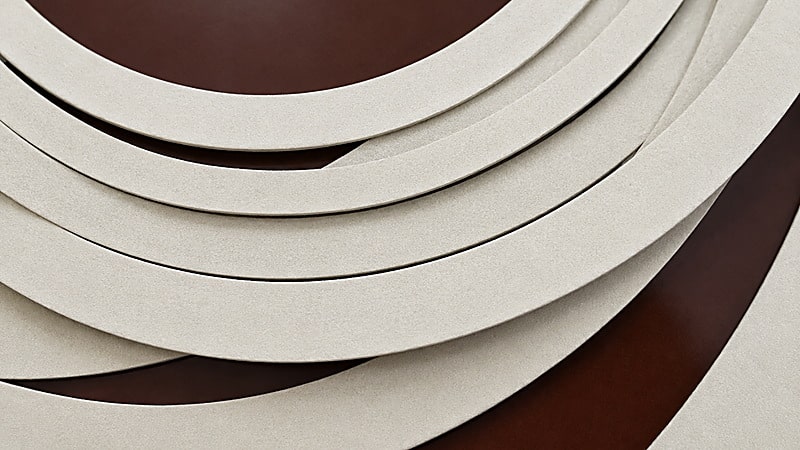
Trial parts passed the ellipticity and cut-edge checks, and the machine was handed over against the following design and acceptance reference values.
| Parameter | Design and acceptance reference value |
| Model | YJΦ300-2000 (CNC model) |
| Sheared pressboard diameter | Ø300–2000 mm |
| Pressboard thickness | 1–3 mm (insulation pressboard / epoxy board) |
| Sheared linear speed | 30 m/min |
| Ellipticity of sheared pressboard | ±1 mm |
| Upper shear blade elevation distance | >20 mm |
| Upper pressing disc elevation distance | >15 mm |
| Tailstock repeat positioning accuracy | ±0.1 mm (CNC model) |
| Main motor power | 0.4 kW × 2 |
| Also available in series | YJΦ300-3000 (Ø300–3000 mm) |
6. Customer Feedback
“A Ø1600 mm end ring used to take two men, a layout line and a saw — and we still could not finish many in a day, with the joint left to dress. Now one operator enters the diameter, and the edge that comes off one revolution is flat. It goes straight into the stack without rework.” — Insulation shop supervisor at the customer
7. Summary and Next Steps
The value of round insulation parts is not in cutting speed — it is in fitting the first time. Holding ellipticity to ±1 mm means end rings sit concentrically on the winding and the coil end can be clamped evenly without shim work. A cut edge that needs no dressing removes the dirtiest manual operation in the insulation shop.
Next, the customer plans to build a program library of end rings and angle rings by outer diameter, inner diameter and ring width, so that a specification change becomes a program number. They are also evaluating whether to link the circular shearing specification data with the downstream marking and milling operations, and considering the YJΦ300-3000 model to cover end rings for larger insulation cylinders.
Get a Quote
- WhatsApp: +86-15958243831
- Email: sales@tranfovia.com
- Website: https://tranfovia.com/