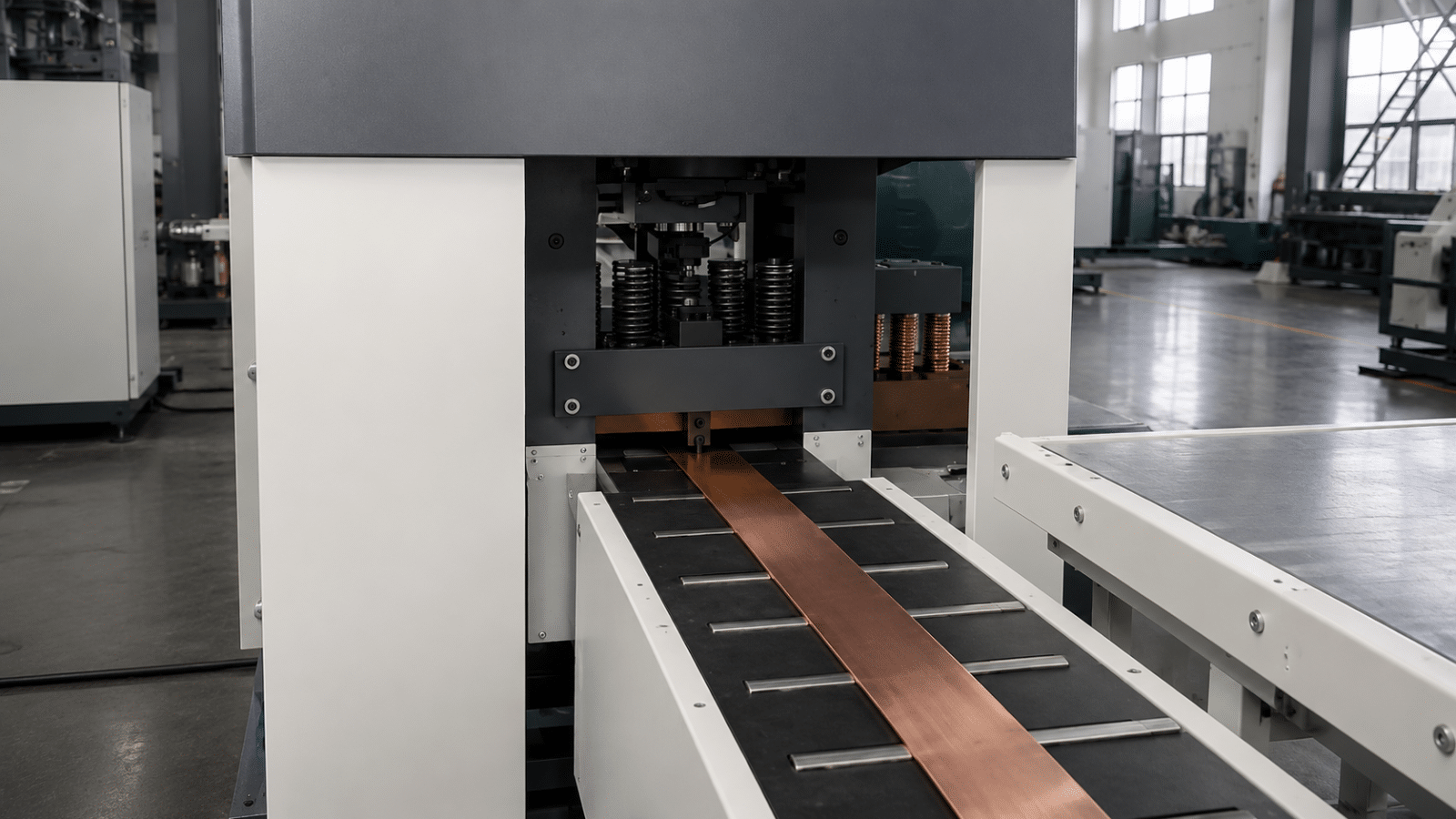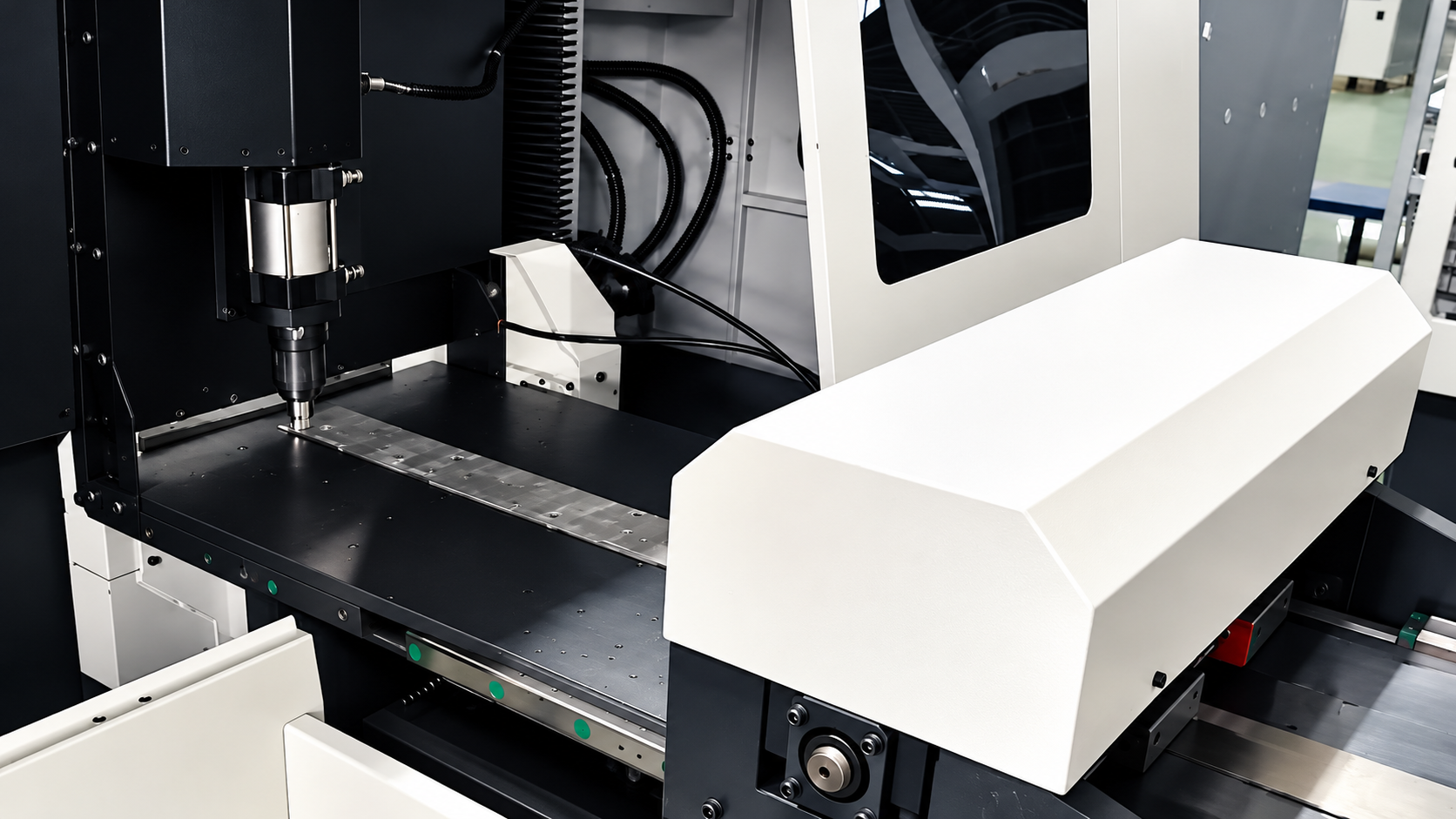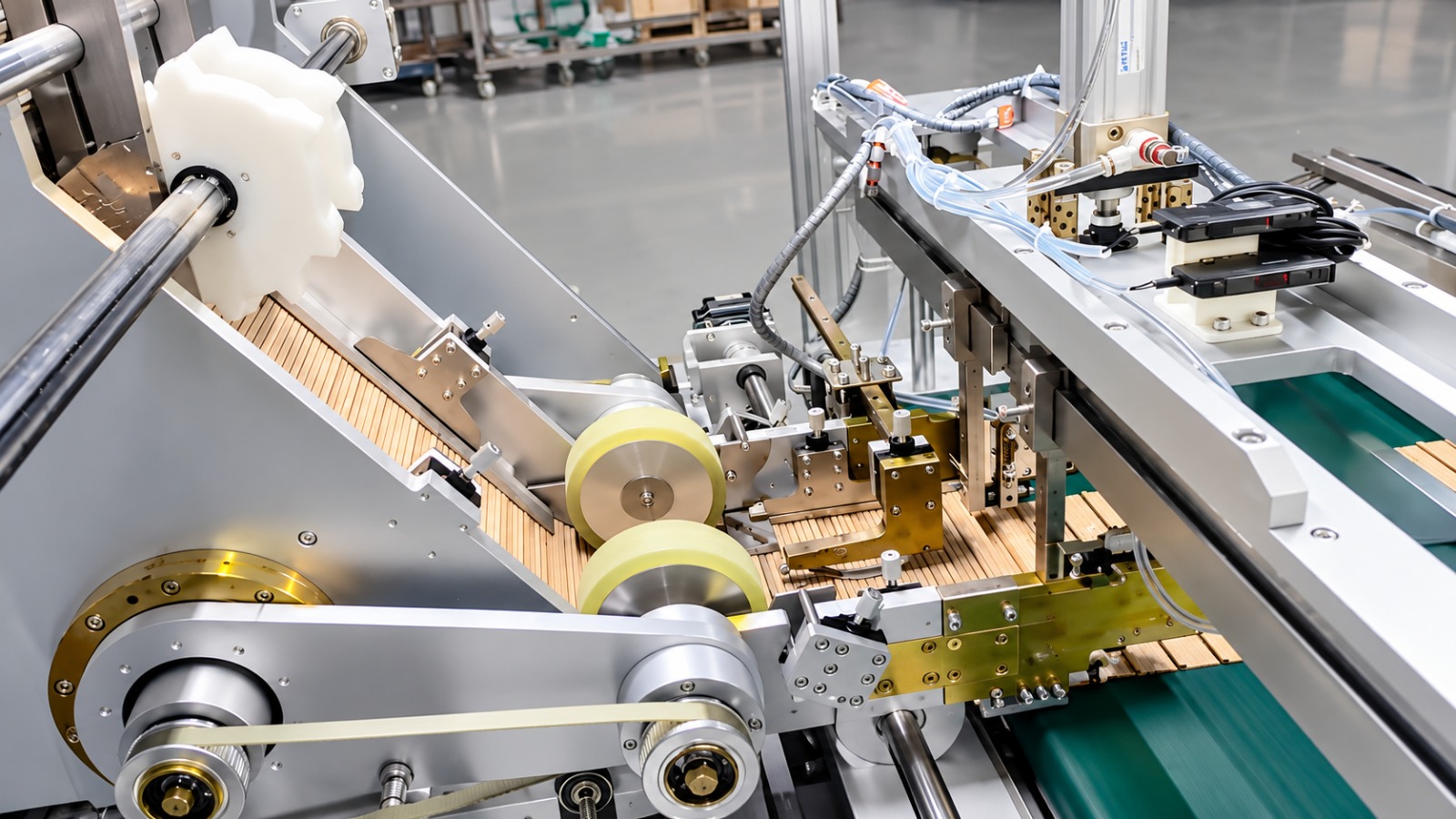
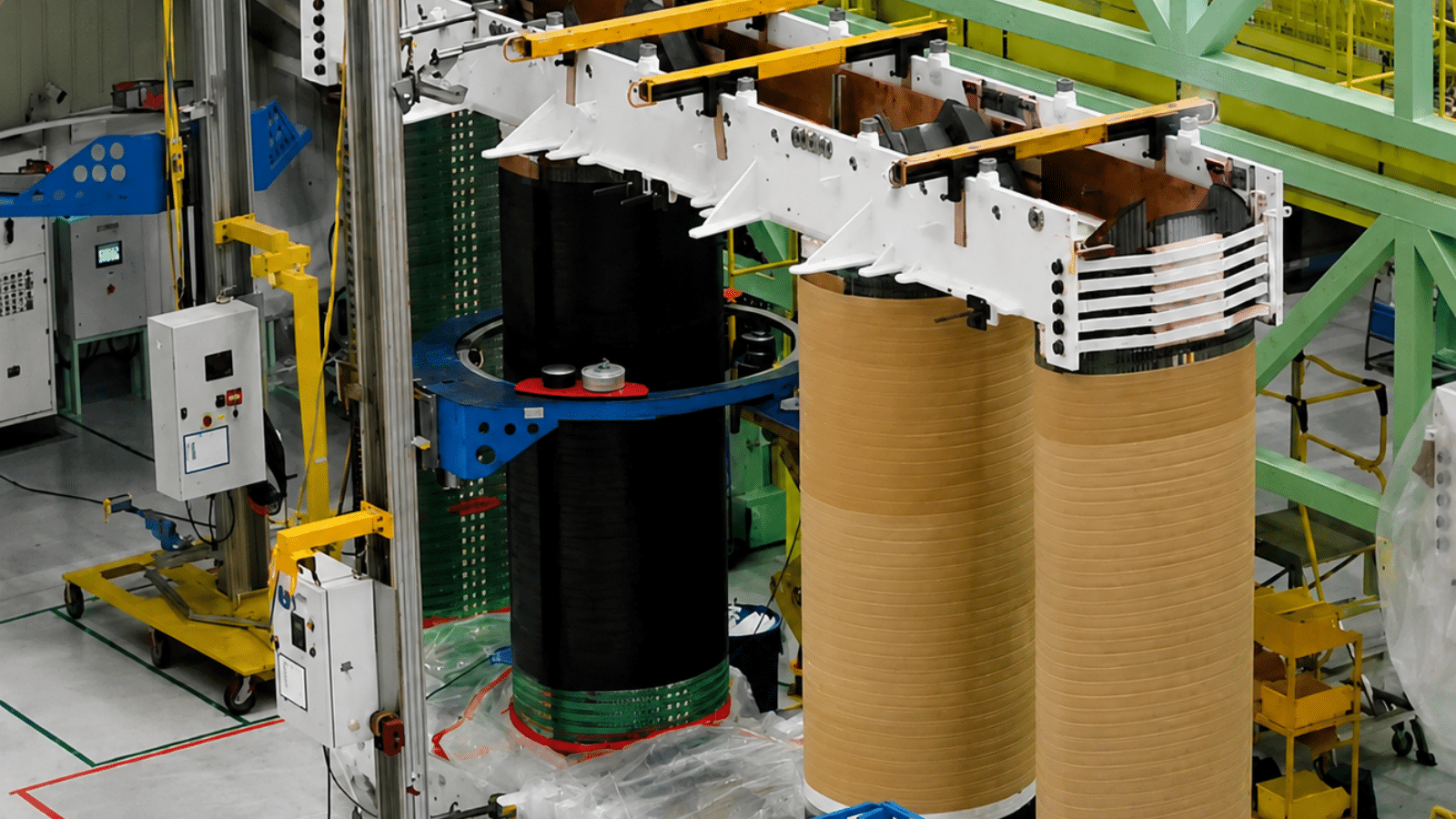
| Equipment | Iron Core Binding Machine |
| Customer | A distribution transformer manufacturer in Windsor, Ontario, Canada (serving North American grid modernization and industrial distribution markets) |
| Application | Automated core binding and precision tension control for oil-immersed and dry-type distribution transformer cores |
Customer information has been anonymized; only regional and industry attributes are retained. Performance figures represent typical reference values under standard operating conditions and may vary depending on actual production line conditions.
Customer Background
This distribution transformer manufacturer, based in Windsor, Ontario, Canada, produces a wide range of oil-immersed and dry-type transformers for utility grid modernization projects across North America. Located in a region with a deep manufacturing heritage, the company has built its reputation on reliable delivery to utilities and industrial end-users. Their product line includes cores with diameters ranging from a few hundred millimeters to over 1.8 meters. As aging grid infrastructure across the United States and Canada drives rising demand for higher-capacity transformers, the share of large-diameter cores in their order book has grown steadily. The traditional manual binding process they had relied on for years was increasingly becoming a production bottleneck.
Industry Pain Points
Core binding is one of the most critical steps in transformer manufacturing. It directly affects no-load noise, core losses, and long-term mechanical stability. Before automating this step, the customer assigned two operators to work together on each core, and the process was fraught with challenges:
Low efficiency and long cycle times. Binding a medium-sized core by hand typically took three to four hours. For large-capacity cores with a vertical span exceeding three meters, workers had to climb scaffolding multiple times to reach different heights. A single large core could consume half a shift, tying up labor that was needed elsewhere on the line.
Inconsistent tension. Strap tension was controlled entirely by the operator’s feel. Some sections ended up too loose, allowing silicon steel laminations to shift during transport or operation, which increased vibration noise and no-load losses caused by magnetostriction. Over time, even minor looseness could lead to hot spots and accelerated insulation aging. Other sections were pulled too tight, risking damage to the insulation layer or even strap breakage.
Safety risks. Large transformer cores weigh several tons. To avoid the hazards of repeatedly lifting and rotating them with overhead cranes, workers had to move around a stationary core in tight spaces, often within arm’s reach of sharp lamination edges. The combination of climbing, bending, and pulling straps created both cut and fall hazards.
Uncontrolled material waste. Consumption of non-woven tape, insulating paper, and other binding materials was estimated by experience rather than measured. Without accurate records, excess material usage went unnoticed and costs were difficult to control.
Solution
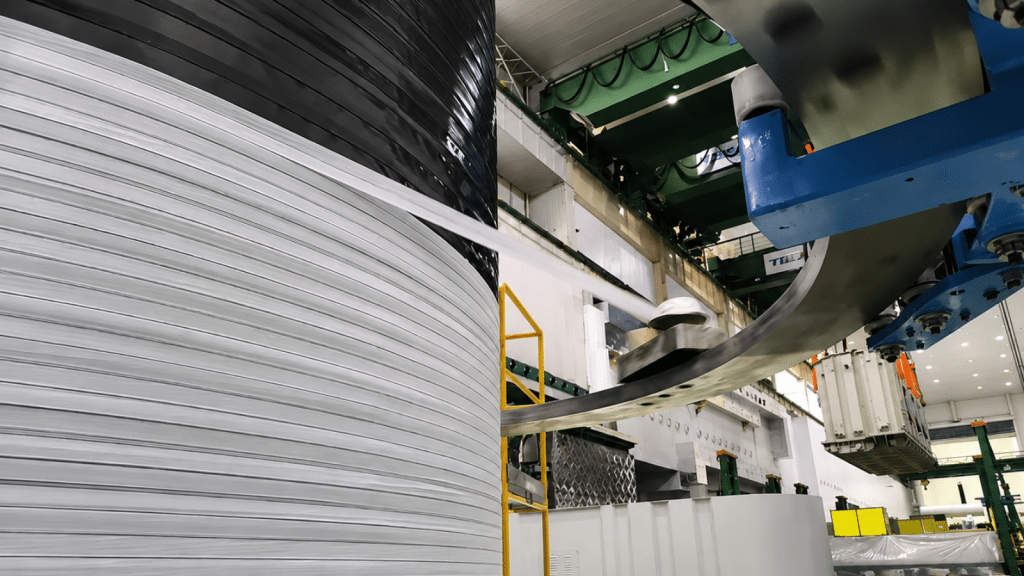
After evaluating multiple options, the customer selected the TRANFOVIA automatic core binding machine. The machine’s design directly addresses each of the pain points described above.
Stationary core, orbiting binding head. The binding head has a diameter of 1,800 mm and an opening of 1,875 mm. During operation, the core remains completely stationary while the head revolves around it. This eliminates the need to lift or rotate a multi-ton core with a crane, removing both safety risks and the potential loss of lamination alignment caused by repeated handling.
Precise tension control. A closed-loop tension control system maintains strap tension within the programmed range for every single wrap. Operators enter the target tension for each core design through the control panel, and the machine compensates automatically. This removes the human variability that plagued the manual process.
Flexible parameter settings. Tension, speed, pitch, and binding height can all be adjusted independently to match process requirements. With a vertical travel range of 500–5,200 mm and a rotational speed of 0–10 rpm, the machine covers the customer’s full product spectrum, from small distribution transformers to large power transformer cores.
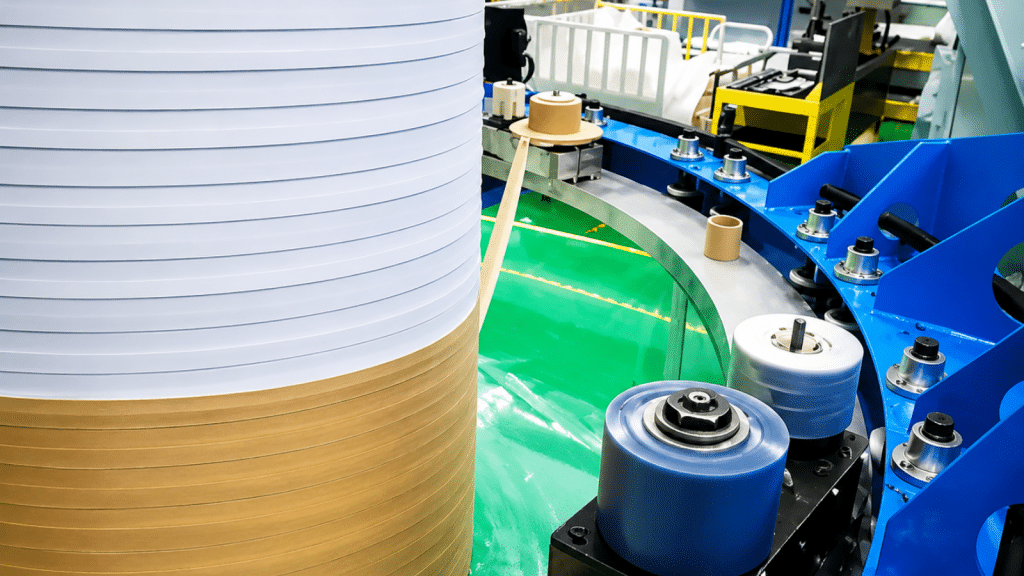
Multi-material compatibility. The machine handles non-woven tape, semi-conductive tape, shrink tape, and insulating paper. The customer can run different product families on the same equipment without swapping machines or reconfiguring mechanical components.
Energy and material monitoring. Real-time logging of material consumption and energy usage gives the customer a per-core cost baseline for the first time. This data supports ongoing process optimization and more accurate quoting.
Implementation
The project followed a “remote pre-acceptance plus on-site commissioning” model.
- Bilingual documentation. TRANFOVIA provided operation and maintenance manuals in both English and Chinese, making the materials accessible to the customer’s English- and French-speaking technical staff.
- Remote video acceptance. Before shipment, the customer witnessed no-load running tests and sample binding trials via video conference. They confirmed that the speed range and vertical travel met their process requirements.
- On-site commissioning and training. After the machine arrived at the Windsor plant, TRANFOVIA engineers completed installation, electrical connection (AC 380 V), and process parameter calibration within two weeks. They then conducted a one-week training program covering parameter setup, tape changeover, and routine maintenance. Because the machine runs on the same AC 380 V supply already available on the shop floor, no additional electrical infrastructure was required.
Results
After the machine entered production, the customer recorded measurable improvements in the core binding area:
- Dramatically shorter binding cycles. Binding time for a large core dropped from four to six hours to roughly 45–60 minutes. The shop floor was able to complete more cores per shift, easing the pressure during peak order periods. (Results may vary.)
- Improved tension consistency. Automated tension control eliminated batch-to-batch variation. Cores emerged from binding with uniform tightness, and downstream rework declined.
- Traceable material usage. System logging made binding material consumption transparent on a per-core basis. The customer’s initial estimate indicated material waste fell by approximately 15 percent. (Results may vary.)
- Safer working conditions. Operators now monitor the machine from the floor, eliminating the need for prolonged climbing and close-quarters work around the core. The reduced physical strain also improved operator morale and made the binding station easier to staff.
Customer Feedback
“We used to put two operators on a large core for most of a shift, and the tension was different every time. Now one operator finishes a full core in under an hour, and the tension is stable on every single wrap. We simply could not achieve that by hand.”
Next Steps
If your transformer factory is struggling with slow core binding, inconsistent tension, or safety risks around large cores, contact us for equipment recommendations and detailed technical specifications.
- WhatsApp: +86-15958243831
- Email: sales@tranfovia.com
- Website: https://tranfovia.com/