| Equipment | Transformer Radiator Production Line |
| Customer | A transformer panel radiator manufacturer in Brazil (serving the South American market) |
| Application | Fully automatic production of transformer radiators — from coil loading, roll forming and welding through to stacking |
Customer information has been anonymized; only region and industry attributes are retained. Performance figures are acceptance and typical-condition reference values and may vary depending on line configuration.
1. Customer Background
This customer, based in Brazil, specializes in panel radiators for power and distribution transformers, supplying radiator assemblies with fin widths of 300–535 mm and center distances of 400–4,000 mm to utility and industrial customers across South America. As grid investment in the region picked up, radiator orders shifted from few-spec, large-batch to high-mix, tight-deadline work — and the existing layout of stand-alone machines with crane transfer between stations could no longer keep up. After comparing several suppliers, including European line builders, the customer chose our transformer radiator production line. This installation also forms part of our export track record: identical lines have been delivered to radiator and transformer manufacturers in Russia, Kazakhstan, Mexico, India, the United States and South Korea.
2. Industry Pain Points
A panel radiator is made by pairing two roll-formed channel plates and welding them together along the oil channels. Simple as it looks, the manufacturing quality directly determines a transformer’s cooling capacity and long-term reliability. The customer’s stand-alone machine layout produced five recurring problems:
Scattered stations and handling damage. Rolling, pairing, spot welding and seam welding sat on separate machines, with semi-finished panels moved by crane and by hand. Panels were routinely bruised and distorted, and straightening consumed hours of every shift.
Poor dimensional consistency. Cutting lengths were set by manual measurement, so center distance and diagonal error fluctuated. Mismatched edges made pairing difficult and forced repeated rework at assembly.
Weld quality that depended on the operator. Seam welding speed and electrode pressure were set by feel. Leaks found at the air-pressure test meant rework and slipped delivery dates.
Slow changeovers. Every switch of fin width or center distance required a long stop for adjustment, so high-mix, small-batch orders were hard to schedule.
High labor content. Each machine needed its own operator — five to six people per line — which became painful during peak season.
3. Solution
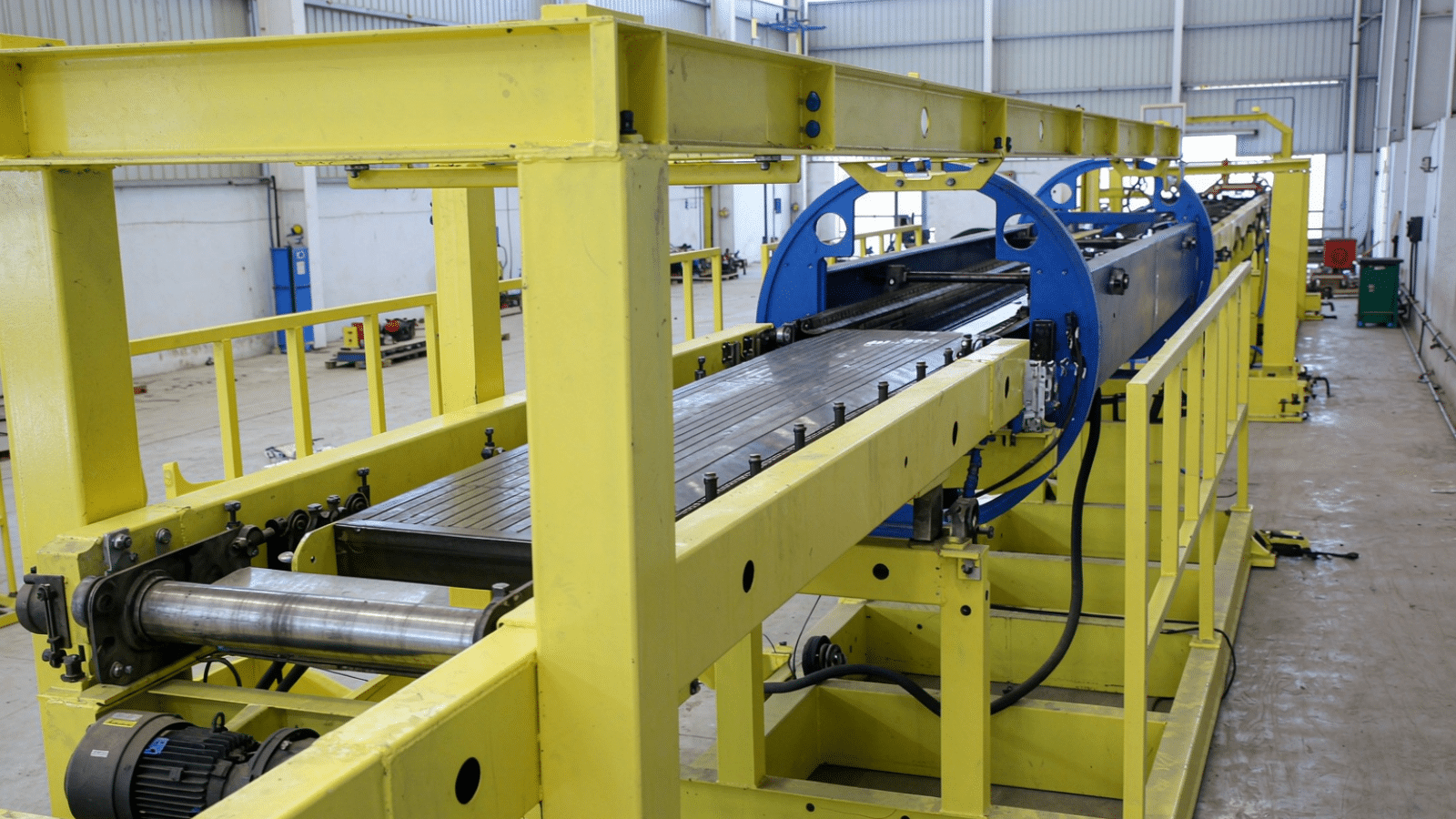
We configured a complete line from coil loading to stacking: hydraulic expanding-mandrel decoiler → roll forming unit (with leveling, hydraulic press forming and length measurement) → drum-type automatic pairing machine → gantry multi-spot welder → variable-frequency bilateral seam welders → edge rolling shear → hydraulic end-cutting press → end welding (TIG, MAG or seam welding to choose) → automatic leveling machine → gantry automatic stacking machine.
The design principle was to replace experience with programs:
- One-touch spec change. Enter the fin profile, length and quantity on the touch screen and the line runs and stops automatically at count. Changing fin width only requires swapping the roll stands — widths 520/535 share one pair — at rolling speeds of 9–12 m/min.
- Accuracy by structure. A measuring wheel with encoder and pneumatic pressure holds center distance error within ±0.25–0.5 mm and diagonal error within 2 mm, while a 7-roll leveler removes rolling distortion.
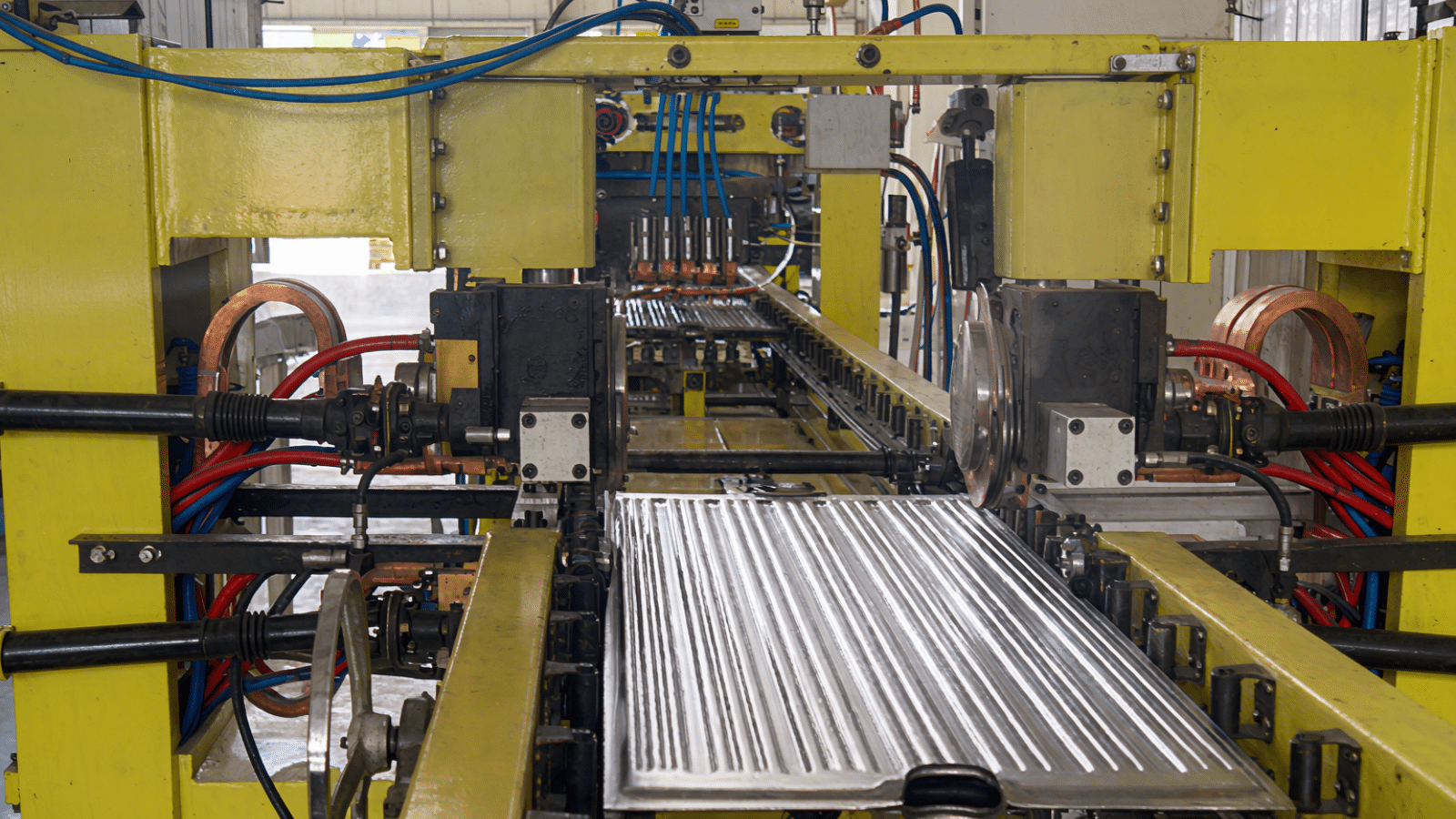
- Welding by parameters. On the multi-spot welder, current can be set independently for every pair of spots, with servo-indexed feeding for symmetric placement. The bilateral seam welders use twin servo drives top and bottom, keeping welding speed constant as the wheels wear, with an on-board cutter to dress the wheels at any time.
- Tightness by process. Single panels withstand positive pressure of 0.15–0.2 MPa and negative pressure of 133 KPa without distortion; completed assemblies hold 0.2 MPa for 30 minutes.
- Fewer people through interlocking. A photoelectric loop balances decoiler and forming speeds; the stacking machine picks panels by electromagnet and switches between two collection racks automatically. The whole line runs with one to two operators.
4. Implementation and Commissioning
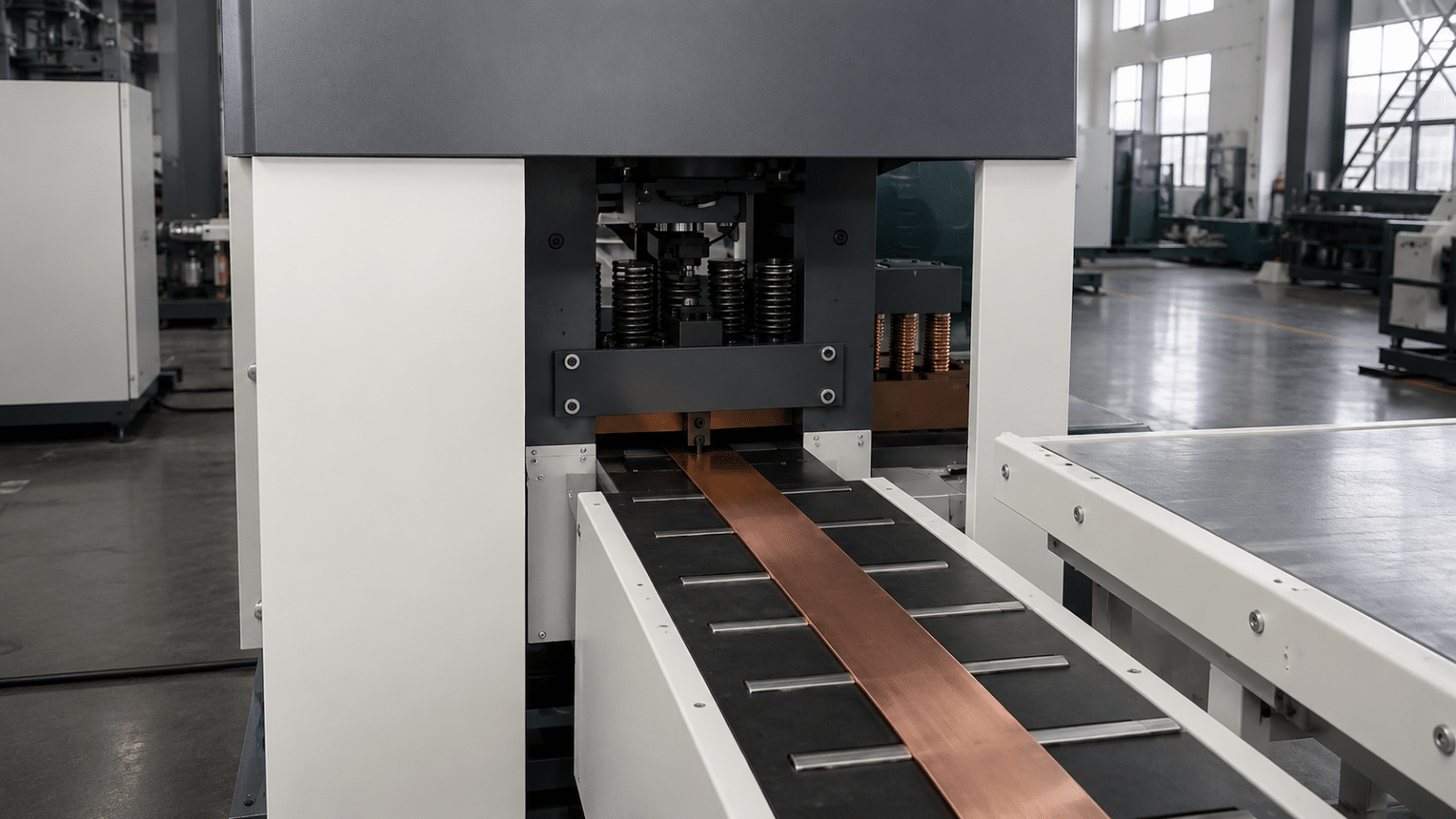
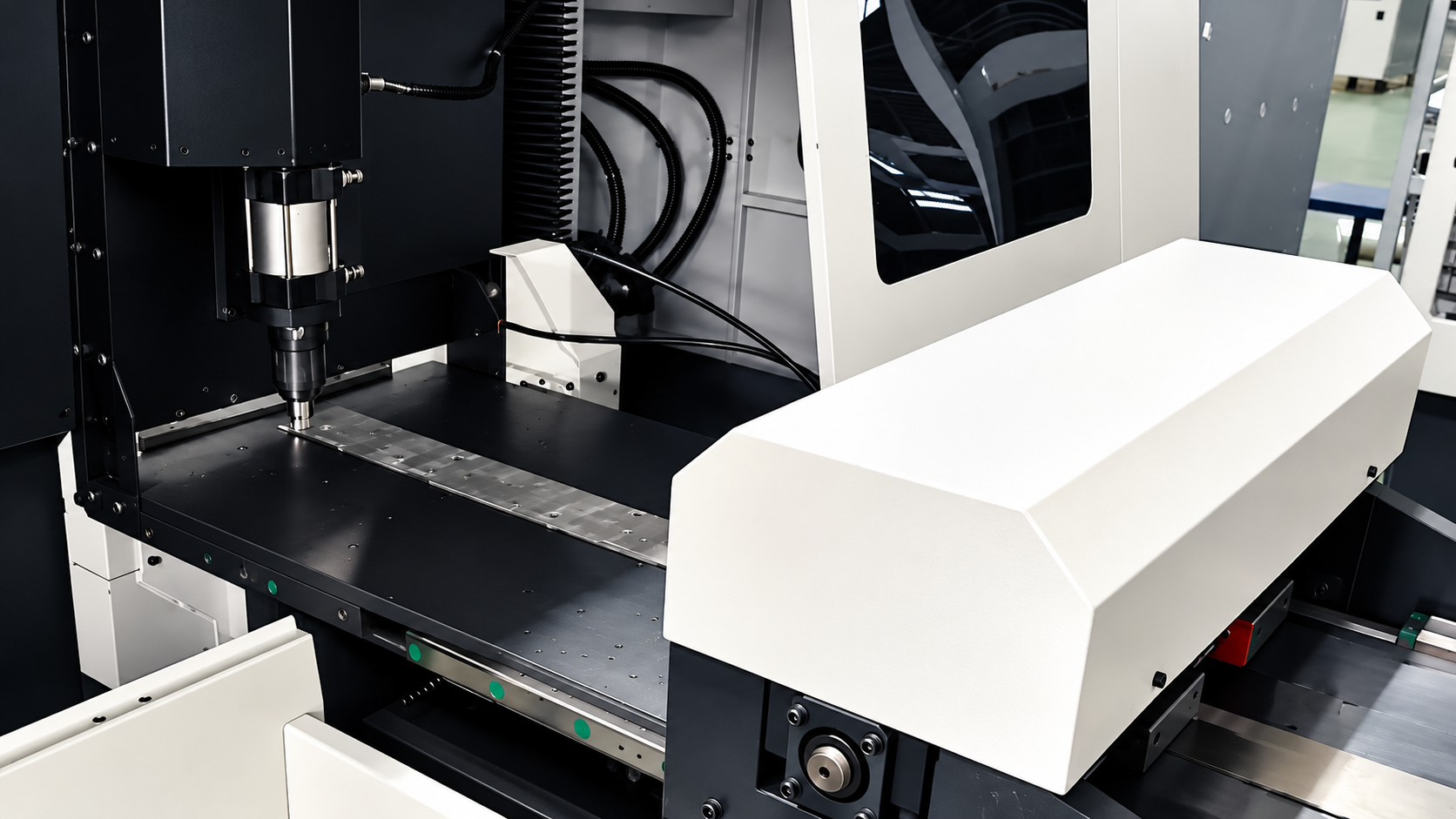
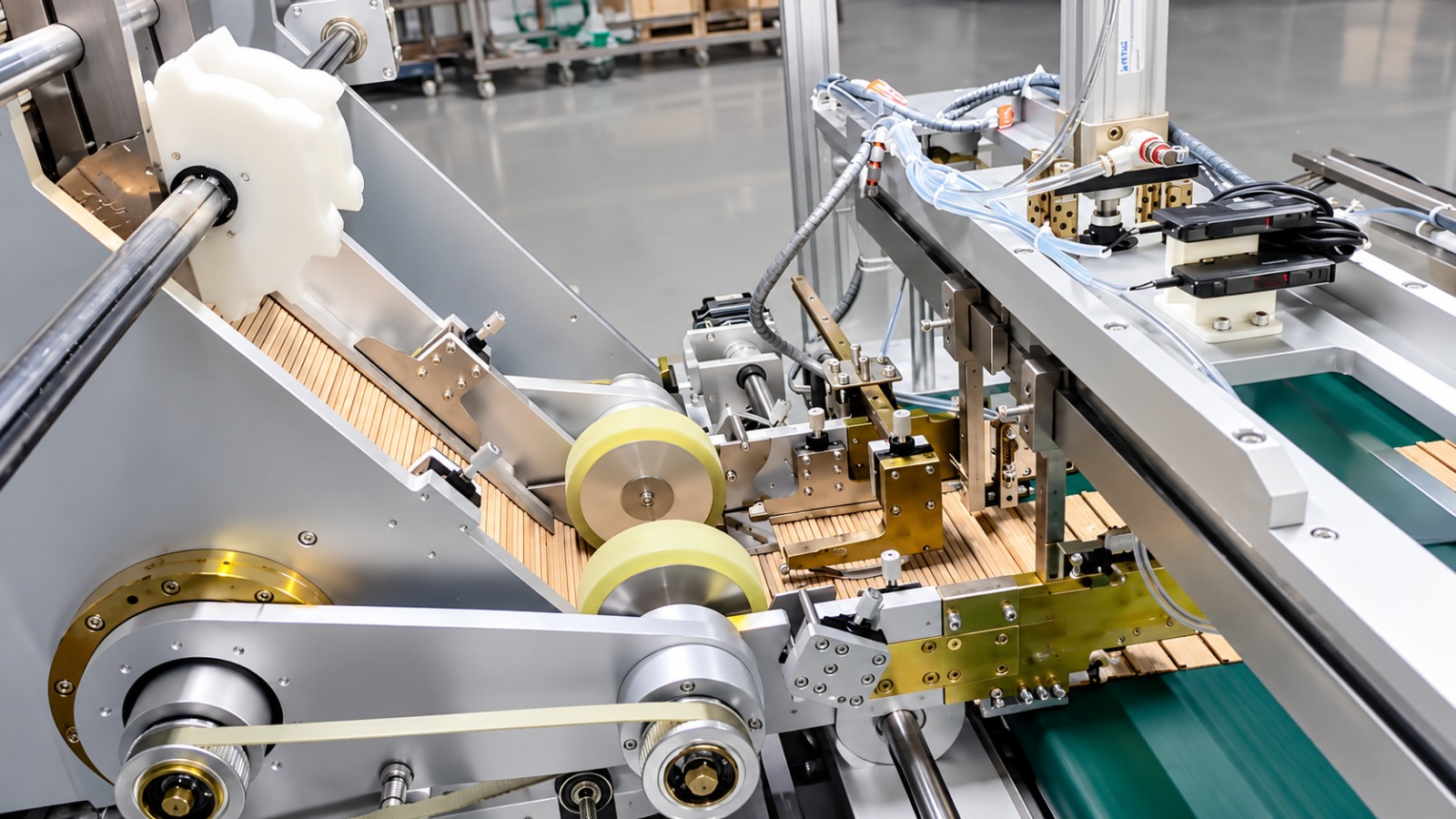
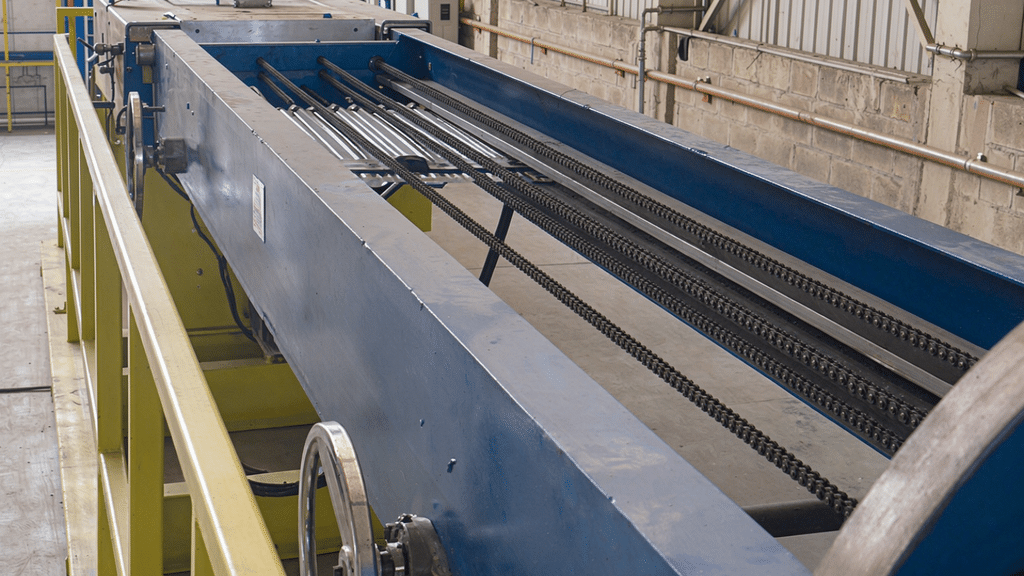
After the line arrived by sea, TRANFOVIA engineers worked with the customer’s equipment and process teams through a three-step on-site commissioning. First, we verified the foundations, the total power supply (about 315 KVA) and the cooling-water circuit for the welders, then ran each machine empty. Second, with the customer’s main fin width (520 mm) we threaded material through the whole line, tuned roll forming, pairing, spot welding and seam welding parameters station by station, and synchronized the line tempo. Third, we cut and welded test panels against the acceptance criteria of the technical agreement, and delivered English operation and maintenance manuals together with hands-on training for the customer’s operators and maintenance crew. The photographs in this article were taken during that commissioning — formed radiator fins flow automatically between rolling, pairing, spot welding and seam welding stations without any manual handling.
5. Acceptance Results
The line was verified item by item against the technical agreement during commissioning. Key indicators (design and acceptance reference values; actual figures depend on the configured line):
| Indicator | Value / Result |
| Center distance error | ±0.25 to ±0.5 mm (by specification) |
| Diagonal error | ≤ 2 mm, no visible bending after rolling |
| Single-panel pressure test | Positive ≥ 0.15–0.2 MPa, negative ≥ 133 KPa, no distortion |
| Assembly tightness | 0.2 MPa held for 30 minutes |
| Production rate | 60–75 panels/hour (at 2,000 mm center distance) |
| Operators for the whole line | 1–2 people |
The two most visible changes for the customer: radiator fins now travel from coil to stack in one pass, with no crane lifts or manual flipping in between; and a spec changeover went from “half a day of adjusting” to “swap the roll stands and enter the parameters”, so high-mix orders can be scheduled on the same line.
6. Customer Feedback
“From decoiler to stacker, the line flows more smoothly than we expected. During commissioning the engineers were very precise with the welding parameters, and after training our own operators can already handle spec changeovers and daily checks on their own.” — Customer Production Manager (at acceptance)
7. Summary and Next Steps
For radiator manufacturers, competition is no longer about whether a radiator can be made, but about dimensional consistency, leak-test pass rates and speed across mixed specifications. This production line integrates decoiling, forming, welding, leveling and stacking into one continuous flow, replacing manual experience with programmed parameters — the direct path from stand-alone machines to a true radiator line.
To configure a complete line around your fin-width range, center distances and output targets, contact the TRANFOVIA technical team for a proposal.
Related guide: For the complete machine-by-machine breakdown of the line, see our transformer radiator production line guide.
- WhatsApp: +86-15958243831
- Email: sales@tranfovia.com
- Website: https://tranfovia.com/