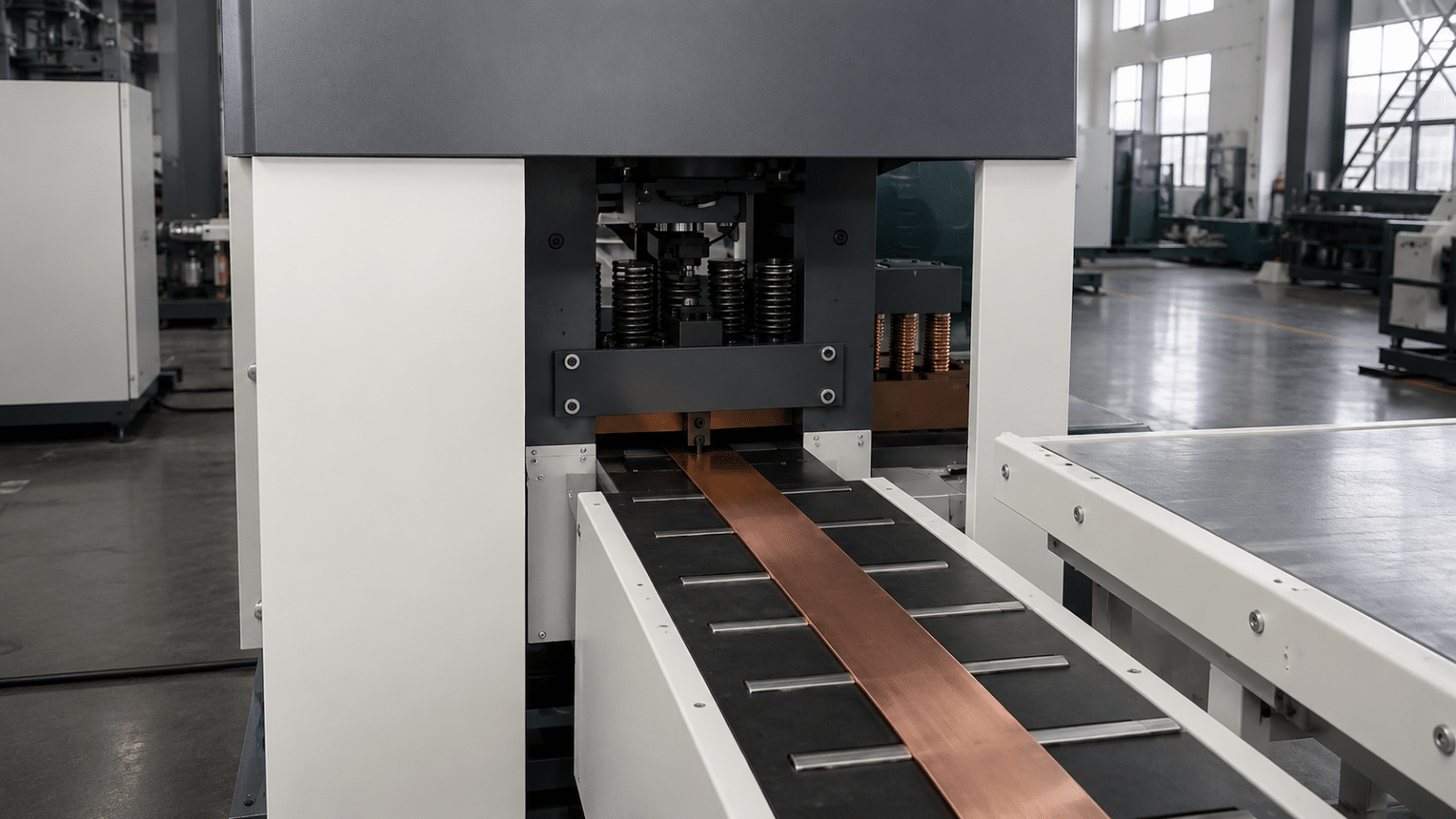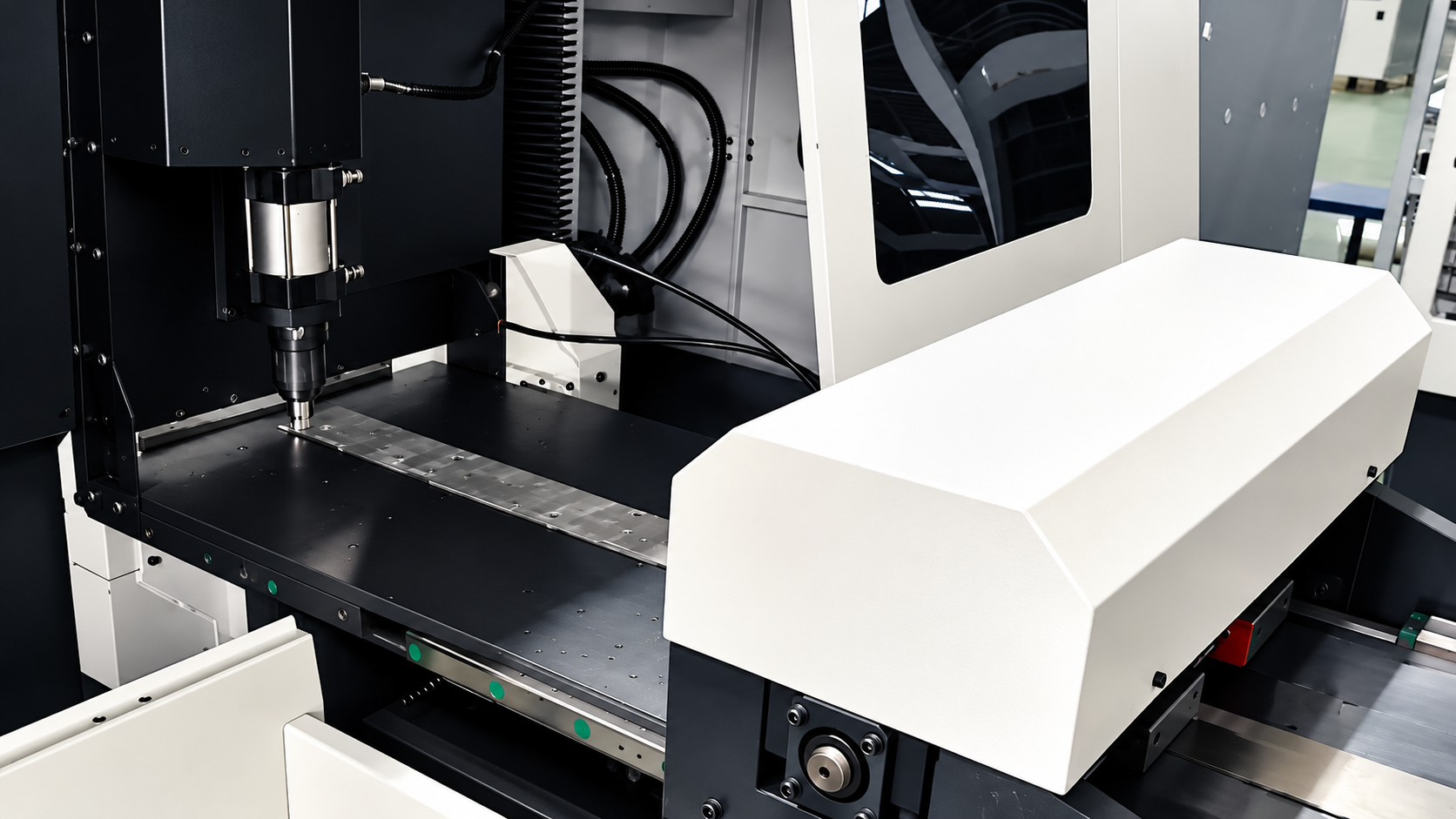
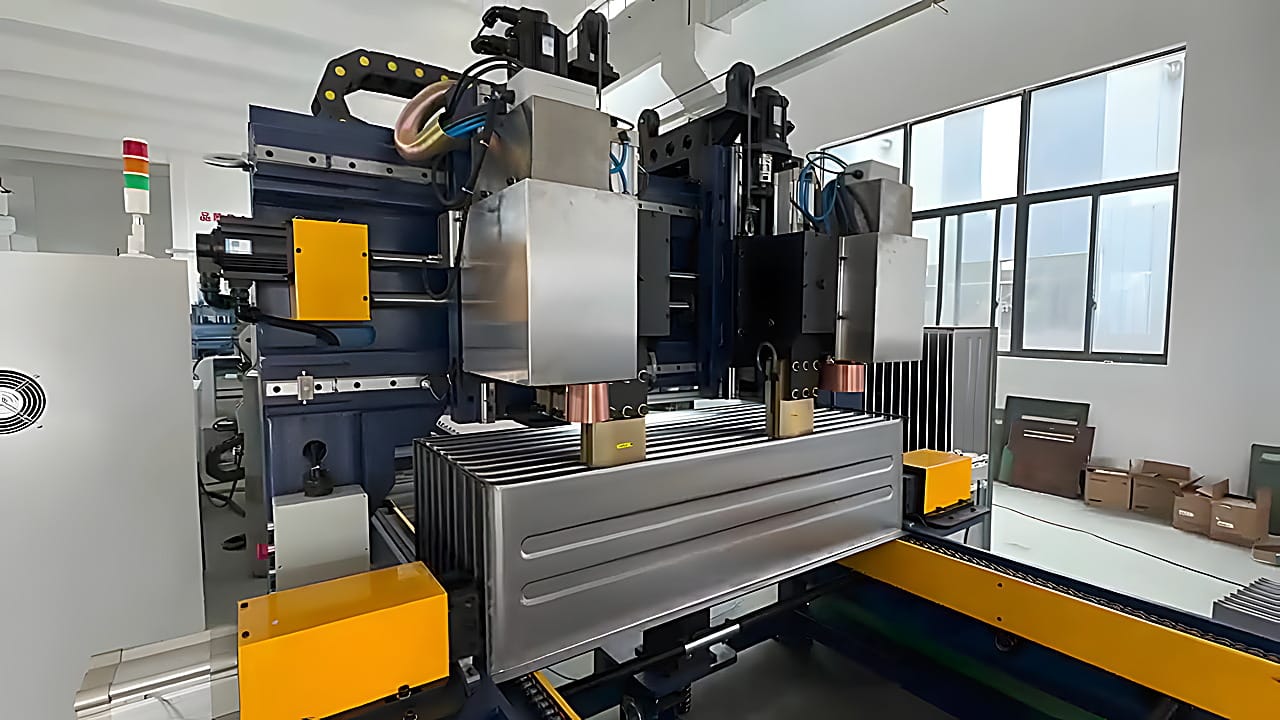
| Equipment | Corrugated Fin Stiffener Spot Welding Machine (2 × 50 KVA welding power supplies with servo positioning) |
| Customer | A transformer tank manufacturer in Karachi, Pakistan (serving the South Asian market) |
| Application | Resistance spot welding between corrugated fins and their stiffeners (stiffener plates or round bars) |
Customer information has been anonymized; only region and industry attributes are retained. Performance figures are acceptance and typical-condition reference values and may vary depending on line configuration.
1. Customer Background
This customer, based in Karachi, Pakistan, manufactures transformer tanks and supplies corrugated tank walls and corrugated fin assemblies to the South Asian market. Localized transformer manufacturing in Pakistan has grown noticeably in recent years, and tank shops around Karachi are taking on a widening range of specifications in shrinking batch sizes. The customer’s existing stiffener spot welding was done with a hand-held spot welding gun and single-point manual pressing. That was workable at low volume, but as the order mix changed, the operation became the hardest part of the shop to keep consistent. After comparing welding power capacity, clamping stability and electrode life across several suppliers, the customer selected the corrugated fin stiffener spot welding machine with a 2 × 50 KVA power supply configuration. Identical machines have previously run in corrugated fin lines delivered to customers in India, Thailand, Indonesia and Sudan.
2. Industry Pain Points
The connection between a stiffener — a stiffener plate or a round bar — and the corrugated fin is made by resistance spot welding. Those spot welds carry the structural strength of the fin, and they determine whether it will sit flush when it is welded onto the tank wall. Spot welding looks simple: press down, pass current, lift. But weld quality depends on three variables being stable at the same time — clamping force, current time and spot position — and any drift in one of them shows up in the nugget. The customer’s previous process had five recurring problems:
Clamping force could not be controlled. The nugget diameter is decided directly by clamping force, and with manual pressing the force drops as the operator tires and runs high at the start of a shift. The lack of fusion and spatter common in two-sheet spot welding usually trace back to exactly this.
Current time was estimated by the operator. The effective welding window for a single spot is only a fraction of a second, and manual control tends to be either short or long: too short gives an undersized nugget, too long overheats or even burns through the base material. In two-sheet welding, a small difference in stacked sheet thickness changes the window again, and estimation simply cannot hold it.
Spot spacing was inconsistent. The spacing of spots along the length of the stiffener decides how well the fin will mate with the tank wall downstream. Manual spot welding relies on visual positioning, and over a 1.8 m fin the spot positions could drift by 5–10 mm, which then showed up as alignment error at the tank wall.
Electrodes overheated during continuous work. Spot welding electrodes heat up under continuous current, and once the temperature climbs the nugget quality starts to drift. The only remedy was to stop and let them cool, which broke the cycle.
Specification changes meant re-positioning by eye. When fin height or width changed, the spot positions had to be found again by marking out and visual alignment — slow, and impossible to reproduce from one batch to the next.
3. Solution
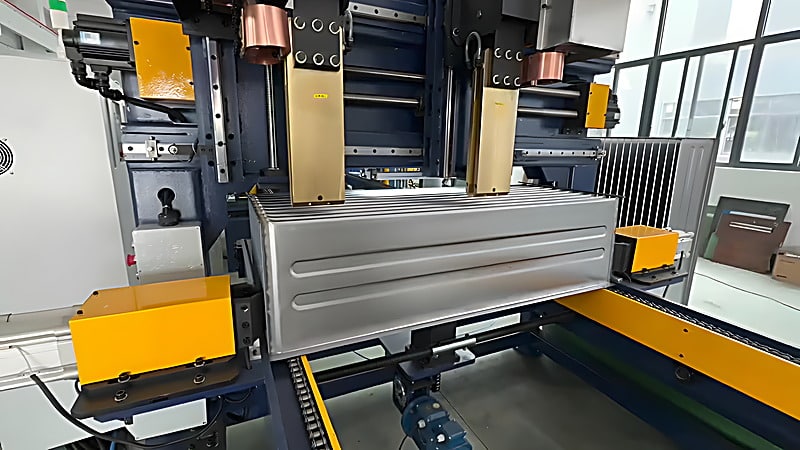
We configured the corrugated fin stiffener spot welding machine for this customer. The design principle was to hand all three variables — clamping, current time and positioning — to mechanisms and programs:
- 2 × 50 KVA welding power supplies. Welding power capacity of 50 KVA × 2 with a rated welding current of 180 A, secondary no-load voltage of 7.2 V and a 50% duty cycle gives ample, stable welding energy, covering the mainstream two-sheet range from 0.5 + 0.5 mm to 1.2 + 1.2 mm.
- Pneumatic clamping. Clamping force is delivered by AirTAC cylinders at a supply pressure above 0.4 MPa, so every spot sees the same force and the operator’s hand feel is removed from the equation.
- Program-controlled current time. Welding time is set by the program within the fraction-of-a-second window, so every spot receives the same current pulse, avoiding both undersized nuggets and overheating of the base material.
- Servo positioning. A Weichuang servo system controls spot spacing and row pitch, laying out spot positions automatically by program and reducing positional drift along long fins to a minimum.
- Water cooling. A cooling water flow of 30 L/min at 0.2 MPa keeps the electrodes working continuously without overheating.
- Wide specification coverage. Weldable corrugated fin height 100–400 mm and width 400–1600 mm; machine dimensions 4500 × 2400 × 2300 mm; input three-phase AC 380 V ± 15%.
Electrical and pneumatic components are established, commonly available brands, which keeps the customer’s future maintenance and spare-part purchasing straightforward.
4. Implementation and Commissioning
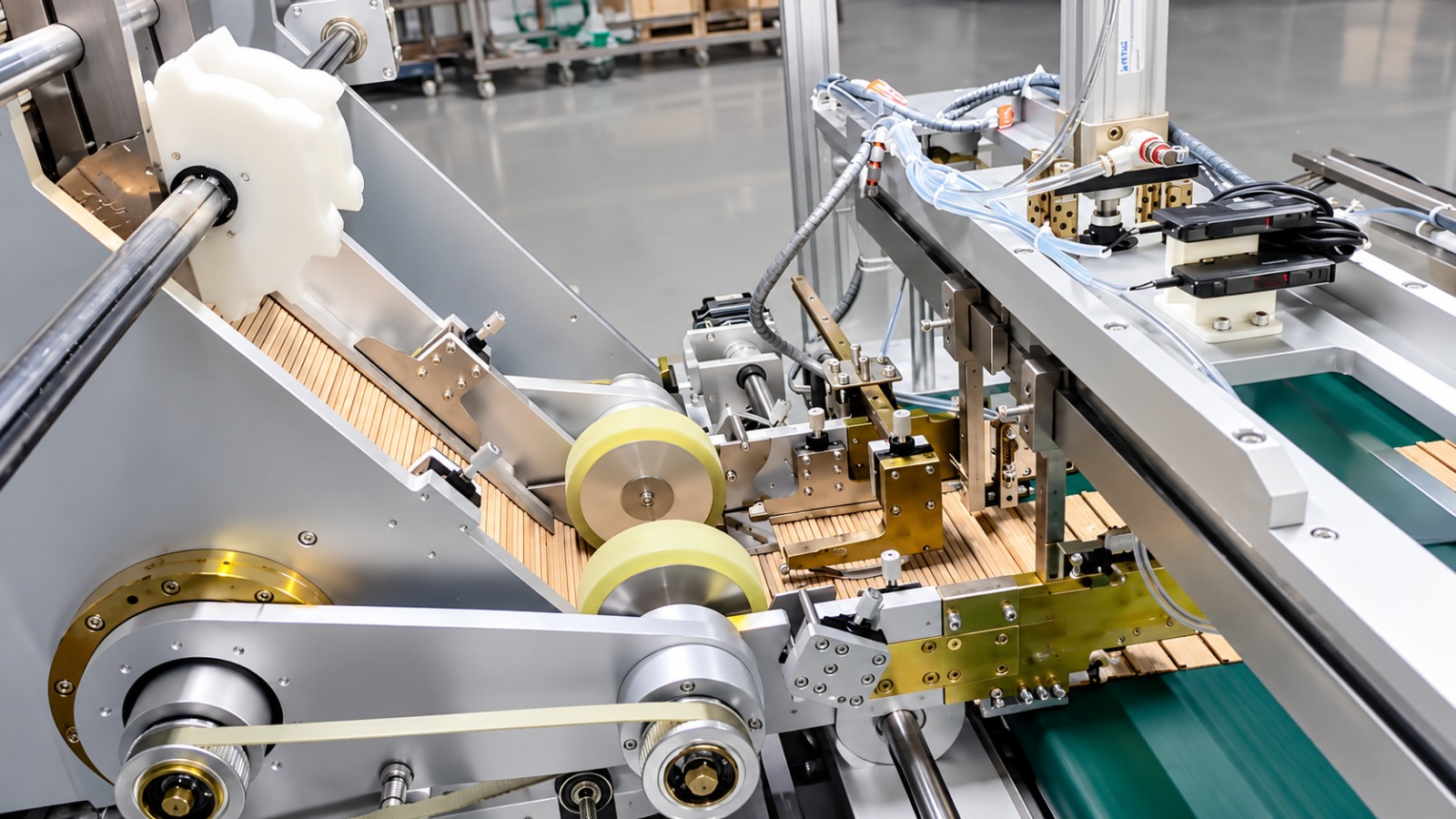
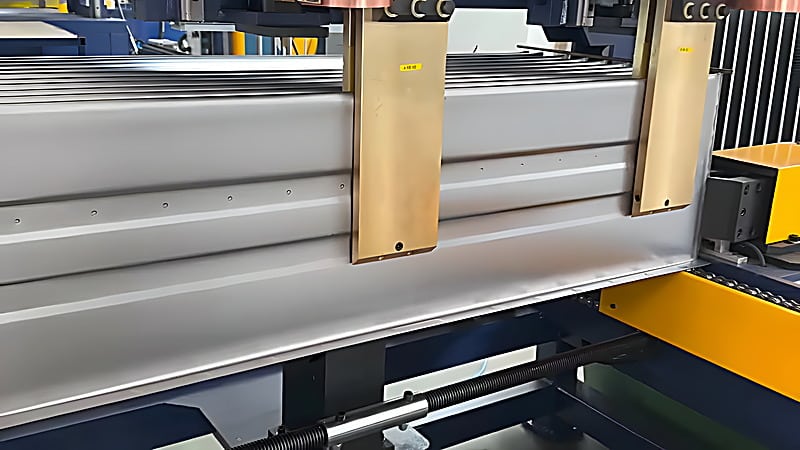
After the machine arrived by sea at the Karachi plant, TRANFOVIA engineers worked with the customer’s equipment and process teams through a three-step on-site commissioning. First, we checked the power supply (three-phase AC 380 V), supply air pressure and cooling water circuit, then ran each station empty to confirm that electrode clamping and servo positioning moved correctly. Second, with the customer’s main specification we threaded corrugated fins and stiffeners through and tuned welding current, current time and clamping force until nugget diameter and surface quality were stable and the cycle matched the line. Third, we ran trial welding across the customer’s full specification list and trained the operators to recall and switch welding programs on the touch screen, handing over English operation and maintenance manuals at the same time. The photographs in this article were taken during that commissioning.
5. Acceptance Results
The spot welding machine was verified item by item against the technical agreement during commissioning. Key indicators (design and acceptance reference values; actual figures depend on the configuration):
| Indicator | Value / Result |
| Welding power capacity | 50 KVA × 2 |
| Rated welding current | 180 A |
| Secondary no-load voltage | 7.2 V |
| Duty cycle | 50% |
| Weldable fin height | 100–400 mm |
| Weldable fin width | 400–1600 mm |
| Supply air pressure | > 0.4 MPa |
| Cooling water flow and pressure | 30 L/min, 0.2 MPa |
For the customer, the most visible changes are that spot welding has moved from “operator’s hand feel” to “program control”, that clamping force has moved from “different at every spot” to “identical at every spot”, and that spot position has moved from “5–10 mm of visual drift” to “servo-laid-out positions”. Alignment error at the tank wall downstream has decreased noticeably, and with it the rework volume.
6. Customer Feedback
“Spot welding used to be a job for whichever of the three had the best hand. Now it doesn’t matter who runs it — the spots come out the same. We don’t measure spacing with a rule any more either; the program lays it out and the machine welds where it goes.” — Customer Workshop Supervisor (at acceptance)
7. Summary and Next Steps
For transformer tank manufacturers, the difficulty in stiffener spot welding has never been machine power — it is making every single spot identical. This machine integrates dual power supplies, pneumatic clamping, program-controlled current time and servo positioning into one repeatable process, turning an operation that depended on individual hand feel into a standard procedure that can be trained and handed over.
The customer is now evaluating combining this spot welder with the existing forming main unit and automatic welding machine into a complete corrugated fin line. To configure spot welding equipment around your fin thickness, stiffener specification and cycle target, contact the TRANFOVIA technical team for a proposal.
- WhatsApp: +86-15958243831
- Email: sales@tranfovia.com
- Website: https://tranfovia.com/