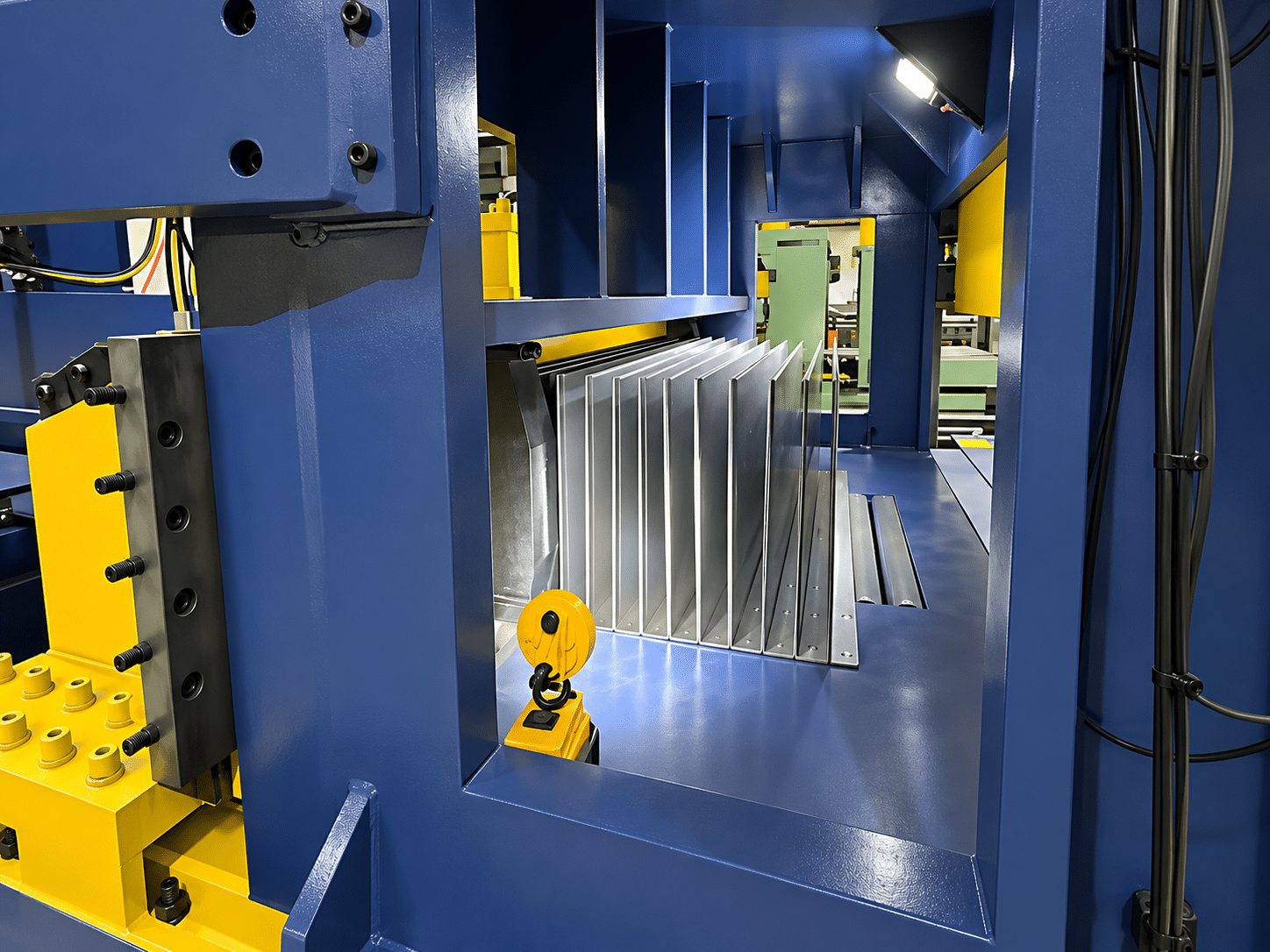
| Equipment | Corrugated Fin Forming Machine (LBW1600-400) |
| Customer | A transformer tank manufacturer in Ho Chi Minh City, Vietnam (serving the Southeast Asian market) |
| Application | Continuous forming of corrugated fins from cold-rolled steel sheet, with stiffener embossing performed on the same machine, for oil-immersed transformer tanks |
Customer information has been anonymized; only region and industry attributes are retained. Performance figures are acceptance and typical-condition reference values and may vary depending on line configuration.
1. Customer Background
This customer, based in Ho Chi Minh City, Vietnam, manufactures transformer tanks and supplies corrugated tank walls and corrugated fin assemblies to power and distribution transformer plants across Southeast Asia. As grid investment in Vietnam gathered pace, local transformer output expanded in step, and the customer’s corrugated fin order book changed shape: work that had once been few-spec and large-batch began arriving as a steady mix of specifications in smaller lots — the shop might run a 250 mm corrugation height in the morning and a 50 mm height in the afternoon of the same week. The customer’s existing folding setup was a manual press with simple tooling, and it could not keep pace with that rhythm. After comparing forming machines from several suppliers, the customer selected the LBW1600-400 corrugated fin forming machine. Identical main units have previously been delivered as part of complete lines to customers in India, Thailand, Indonesia and Sudan.
2. Industry Pain Points
A corrugated fin is the primary heat-dissipating surface of an oil-immersed transformer tank. Thin steel sheet is folded and pressed into corrugations, stiffening ribs are embossed to raise rigidity, and the finished fin is welded onto the tank wall. Folding is the first operation in that chain, and it decides whether everything downstream goes smoothly — if corrugation height or pitch drifts even slightly, the fins will not line up when they are welded into groups. The customer’s previous process suffered from five recurring problems:
Forming dimensions set by hand. The folding operation had no mechanical positioning, so the operator pressed by feel. Corrugation height and pitch varied along the length of a single fin, and the minimum pitch frequently came up short of the drawing requirement.
Tooling change meant stopping the line. Every change of corrugation height or fin width required the tooling to be removed, re-levelled and trial-pressed — a stop measured in half a days. With a rising number of mixed-specification orders, the line tempo was interrupted again and again.
Stiffener embossing was a second machine. After folding, parts had to be carried to a separate press for stiffener embossing. That extra stacking and handling consumed labor, and it scratched the sheet surface in a way that showed up later as welding defects.
Low material yield. A fin folded outside tolerance could only be scrapped as a whole. Thin sheet is not cheap, and the monthly scrap volume added up.
Skill that could not be copied. The experienced operator’s feel for folding could not be quantified. New hires took a long time to reach standard, so staff turnover fed straight through to delivery performance.
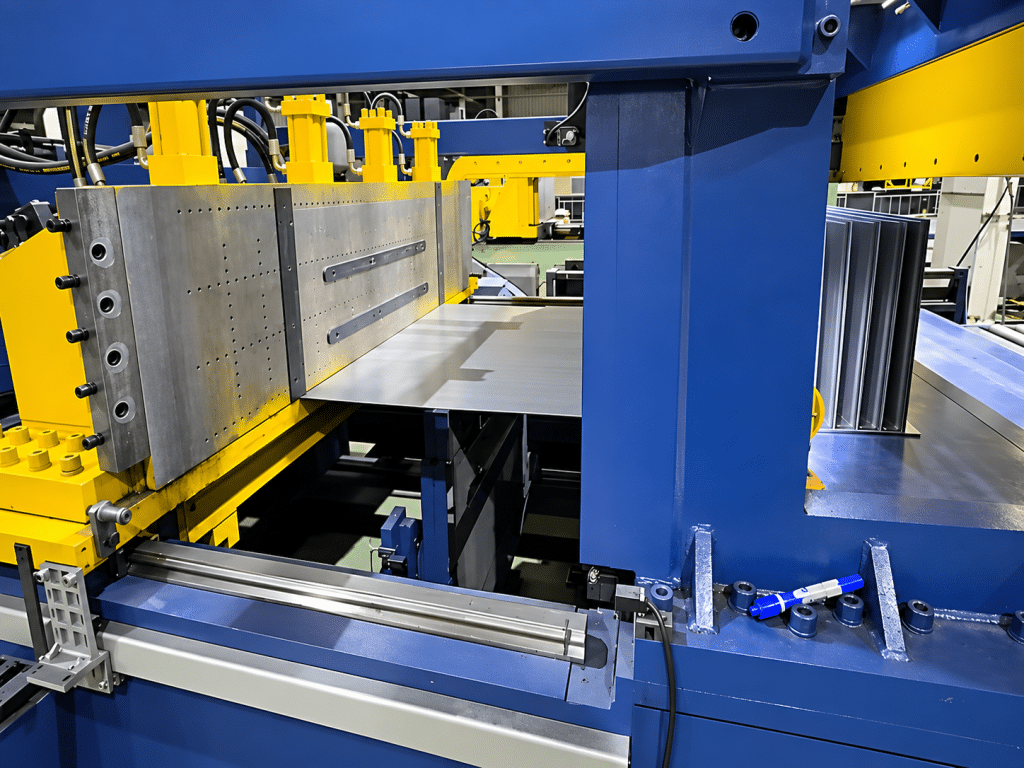
3. Solution
We configured the LBW1600-400 corrugated fin forming machine for this customer. The design principle was to move folding from craft to program:
- Full CNC forming. A Siemens PLC with touch screen controls folding angle and feed length. The operator enters corrugation height, pitch and quantity on the screen, and the machine completes the entire fin in one continuous run. Corrugation height is freely set from 50 to 400 mm.
- One machine, many specifications. Sheet width 300–1600 mm and sheet thickness 1.2–1.5 mm are handled on the same main unit, covering everything from small to large transformer tanks. Minimum corrugation pitch is ≥ 45 mm, and oil-channel gaps of 4 mm or 6 mm are available to suit different heat-dissipation areas.
- Integrated stiffener embossing. Stiffener ribs are embossed during forming itself — one rib at a corrugation height of 150 mm or more, two ribs at 250 mm or more — removing the second handling and second clamping operation while improving fin stiffness and cooling performance.
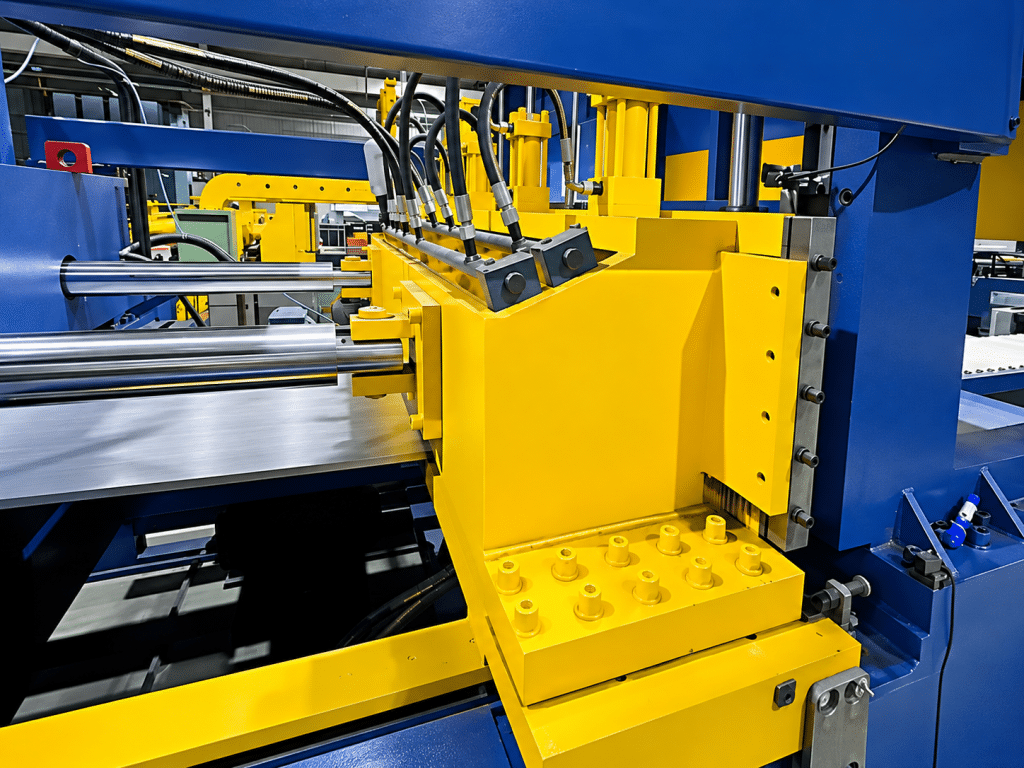
- Simplified changeover. An interchangeable tooling structure reduces a die change from “strip down the machine” to “swap the die module”, and the remainder of the changeover is parameter entry on the touch screen.
- Cycle time and rigidity. Forming speed is 3–4 fins per minute, total motor power is 37 kW, and machine weight is 16,000 kg, giving the frame the rigidity needed for continuous operation.
Core components include Siemens PLC and touch screen, Huade hydraulics, Schneider electrics, Beijing Shidai servo motors and AirTAC pneumatic components, giving the machine the stability and spare-part commonality that the customer’s maintenance team already knew.
4. Implementation and Commissioning
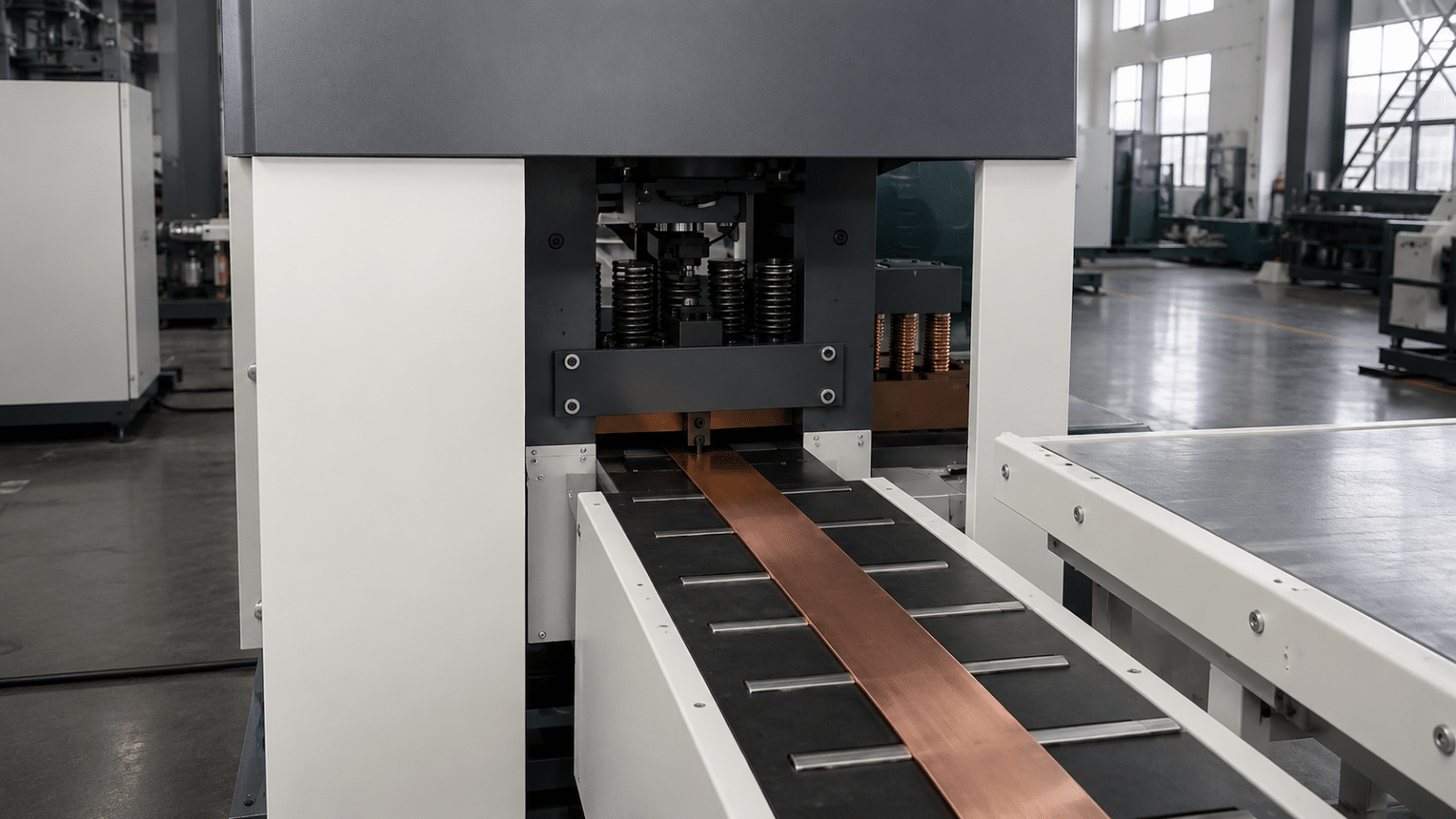
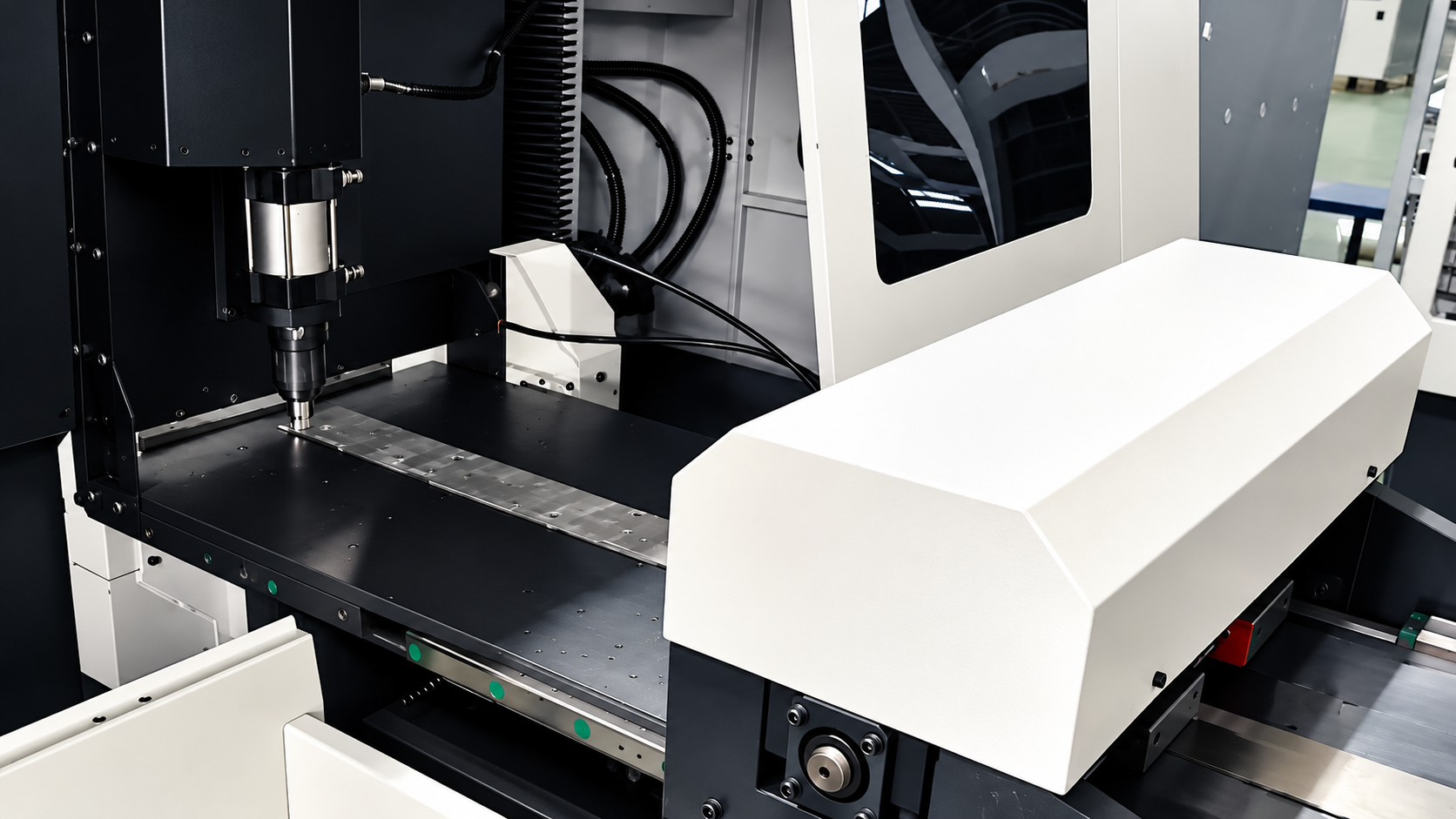
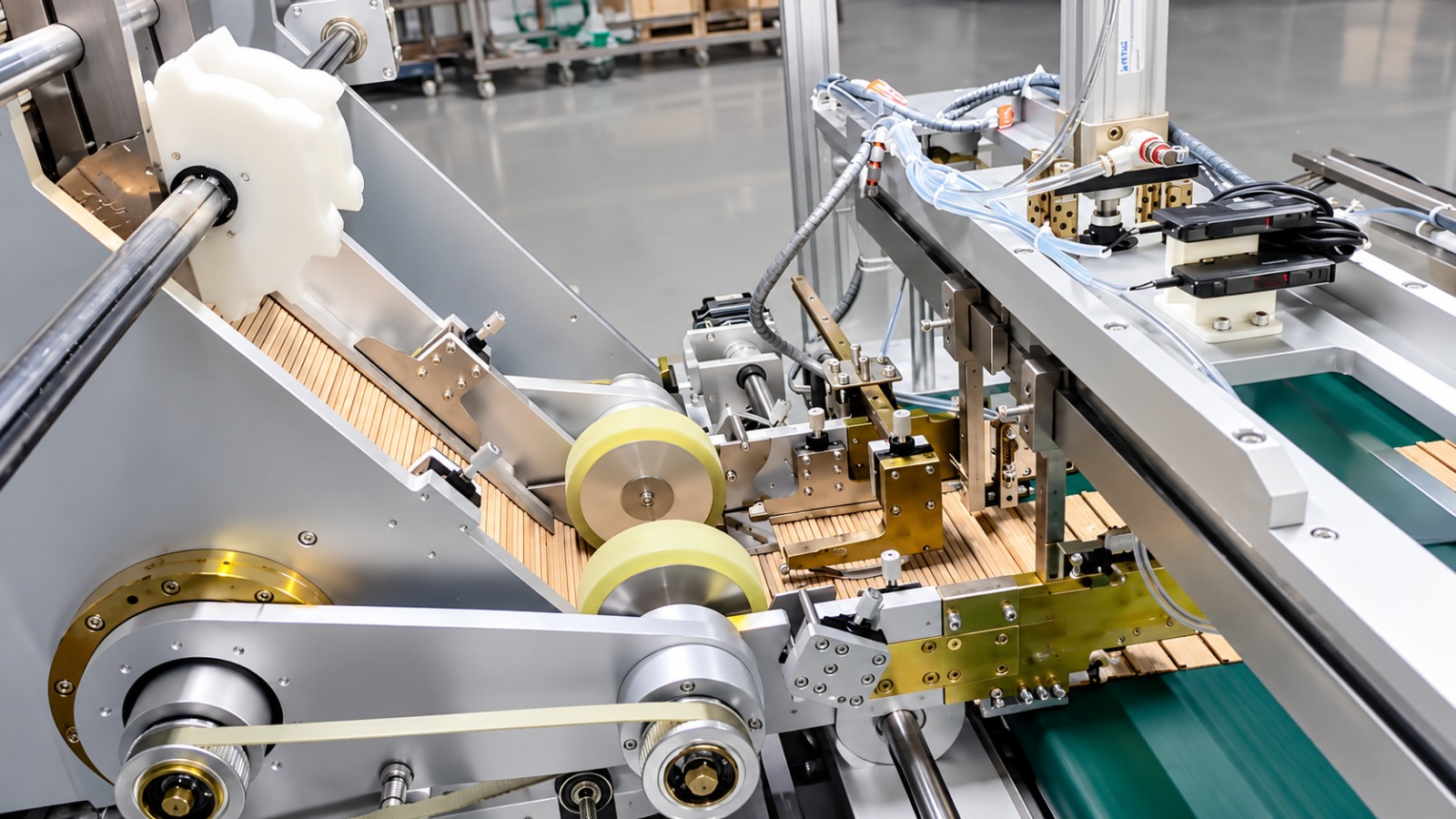
After the machine arrived by sea at the Ho Chi Minh City plant, TRANFOVIA engineers worked with the customer’s equipment and process teams through a three-step on-site commissioning. First, we verified the foundation, the power supply (380 V three-phase) and the hydraulic and pneumatic circuits, then ran each station empty. Second, with the customer’s main specification we threaded material through the machine and tuned folding angle, feed length and embossing parameters until corrugation height, pitch and cycle time were stable together. Third, we ran trial production across the customer’s full specification list, changeover by changeover, and trained the operators to switch specifications on the touch screen, handing over English operation and maintenance manuals at the same time. The photographs in this article were taken during that commissioning — sheet enters the dies at the infeed end and leaves as a finished corrugated fin at the discharge end.
5. Acceptance Results
The forming machine was verified item by item against the technical agreement during commissioning. Key indicators (design and acceptance reference values; actual figures depend on the configuration):
| Indicator | Value / Result |
| Corrugated fin width (sheet width) | 300–1600 mm |
| Corrugated fin height | 50–400 mm |
| Minimum corrugation pitch | ≥ 45 mm |
| Material thickness | 1.2–1.5 mm |
| Oil-channel gap | 4 mm / 6 mm |
| Forming speed | 3–4 fins per minute |
| Total motor power | 37 kW |
| Power supply | 380 V three-phase |
For the customer, the most visible changes are that folding has moved from “by feel” to “by parameter”, that a specification change has moved from “half a day of downtime” to “entering values on the screen”, and that stiffener embossing has moved from a second handling operation into the same pass. Mixed-specification orders can now be scheduled on the same main unit.
6. Customer Feedback
“Changing a corrugation height used to mean half a day of stripping dies. Now we change the values on the screen and go. The clearest difference is with new operators — they follow the parameters and the fins come out the same as the experienced hands’.” — Customer Production Supervisor (at acceptance)
7. Summary and Next Steps
For transformer tank manufacturers, competition in corrugated fins is no longer about whether a fin can be folded, but about forming accuracy, changeover speed and the ability to deliver mixed specifications. This forming machine merges folding and stiffener embossing into a single operation and replaces hand feel with programmed parameters — the direct path from manual folding to program-controlled forming.
To configure forming equipment around your corrugation-height range, fin widths and output targets, contact the TRANFOVIA technical team for a proposal.
- WhatsApp: +86-15958243831
- Email: sales@tranfovia.com
- Website: https://tranfovia.com/