| Equipment | CNC Step-Wood Processing Machine |
| Customer | A transformer manufacturer in Warsaw, Poland (EU market) |
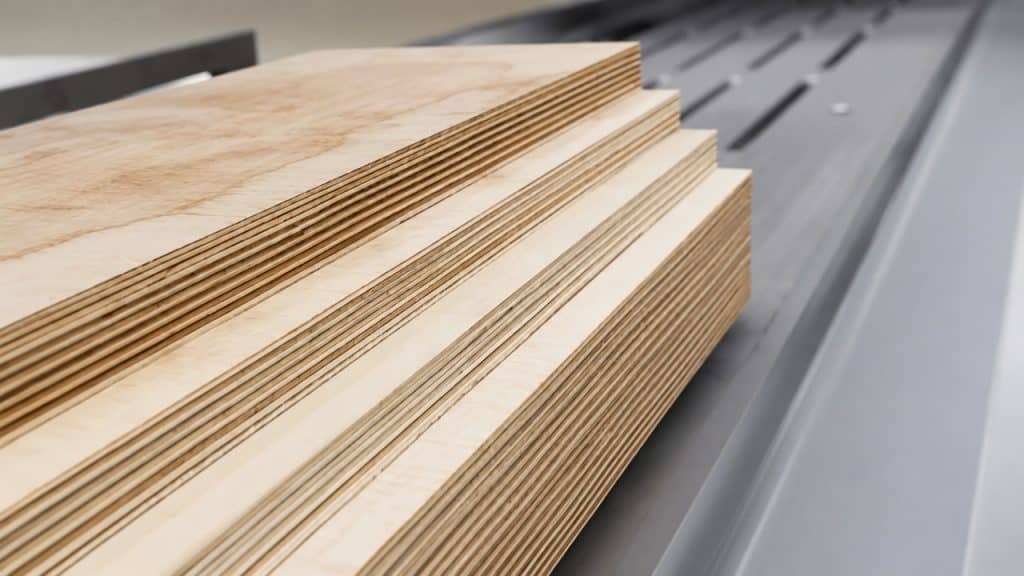
| Application | Automatic CNC machining of laminated wood step blocks — multi-step profiles machined automatically from drawing coordinates for core clamp and active-part assembly |
1. Customer Background
The customer is a transformer manufacturer based in Warsaw, producing distribution transformers for the European market. Core clamps and active-part assembly consume large quantities of laminated wood step blocks — stepped wooden insulation parts with three to seven steps per block, used in dozens of positions on every transformer. Part of the supply came from subcontractors and part was milled in-house on general-purpose milling machines. As European customers tightened delivery and traceability requirements, the manufacturer decided to bring step-block production back into its own workshop with a dedicated automatic machine.
2. Industry Pain Points
A transformer step block looks simple, but producing it in batches is not:
- Many steps, many coordinates. A single block carries three to seven steps. Manual milling means marking out, tool setting and measuring step by step, and one machinist produces only a handful of parts per day.
- Dimensions depend on feel. A general-purpose milling machine has no coordinate control, so step heights and positions rely on the operator’s experience. Batch consistency suffers, and assembly regularly pays for it with rework when steps do not line up.
- Burnt surfaces. When spindle speed and feed are not matched to the material, the wood surface burns and forms a carbonized layer that has to be sanded off by hand — an extra operation and an extra dust source.
- Uncontrolled subcontracting. Subcontracted blocks vary in material and size, and lead times follow somebody else’s production schedule; in peak season the wait runs to weeks.
- Wood dust. Airborne dust from milling spreads through the insulation workshop and complicates cleanliness control for other insulation parts.
- Rising labour cost. Industrial wages in Poland keep climbing, and experienced milling machinists are increasingly hard to recruit.
3. Solution
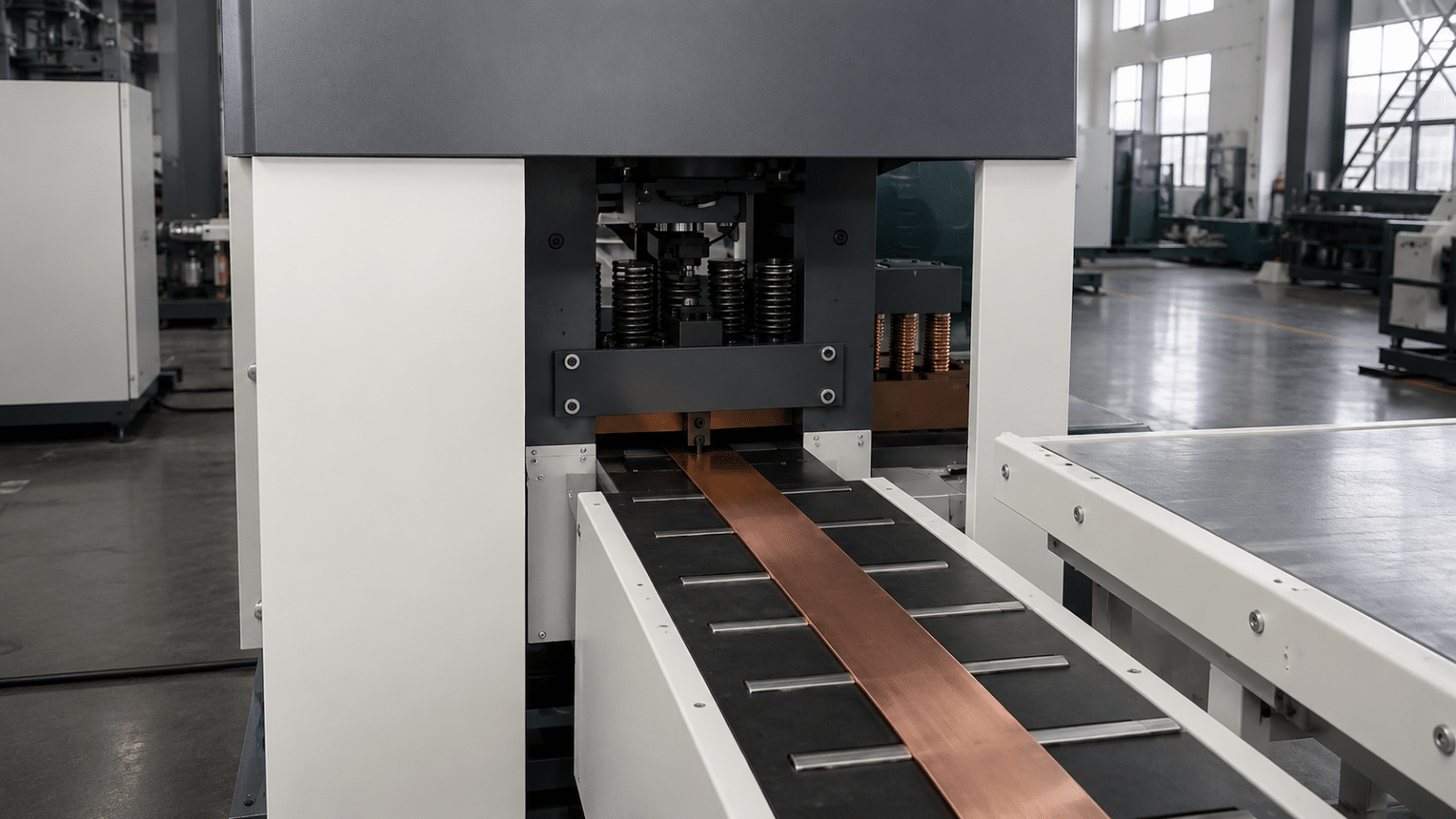
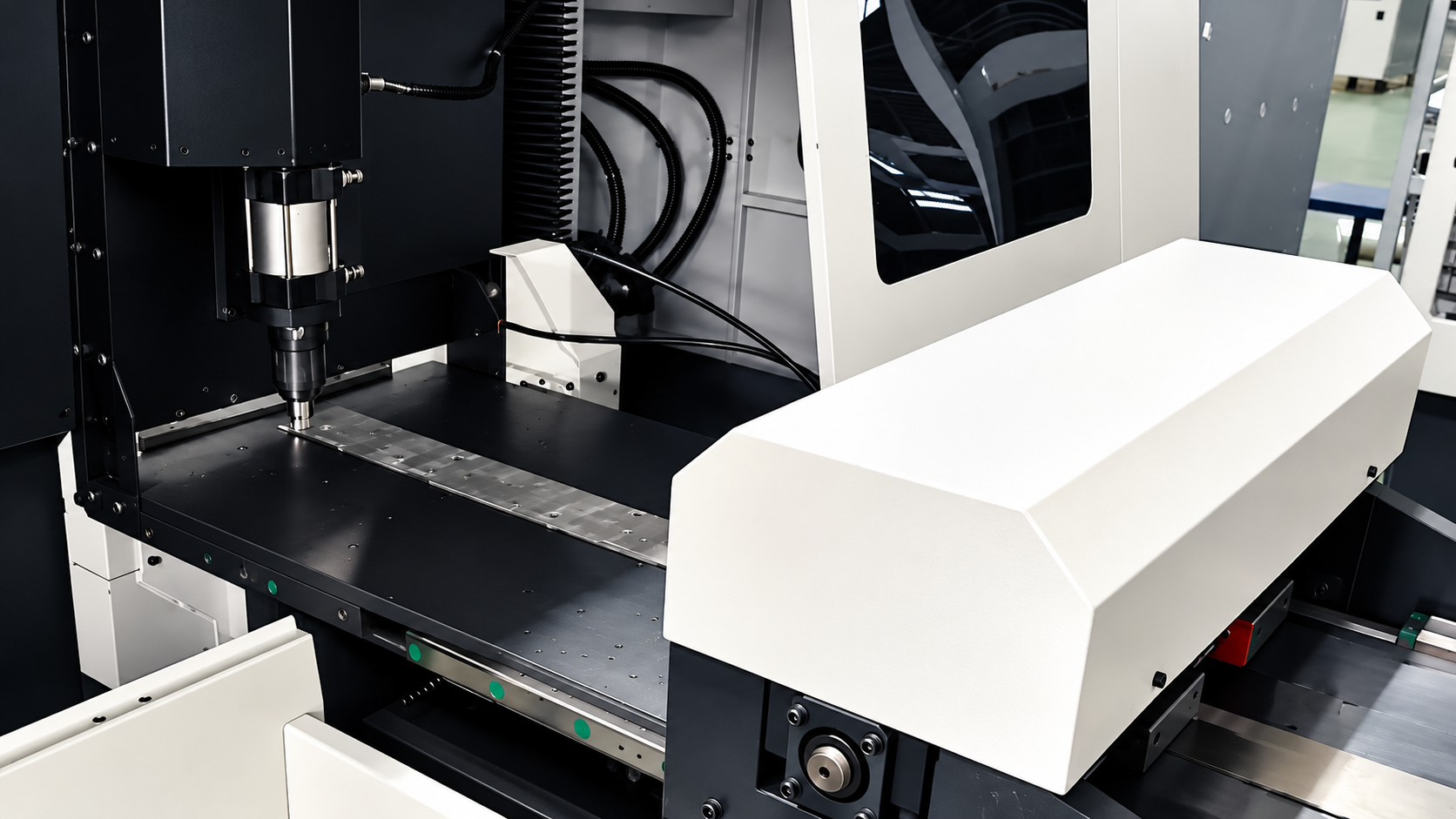
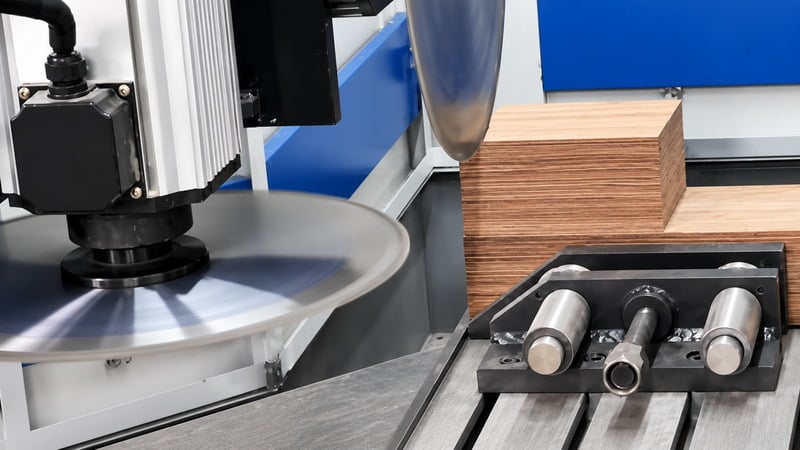
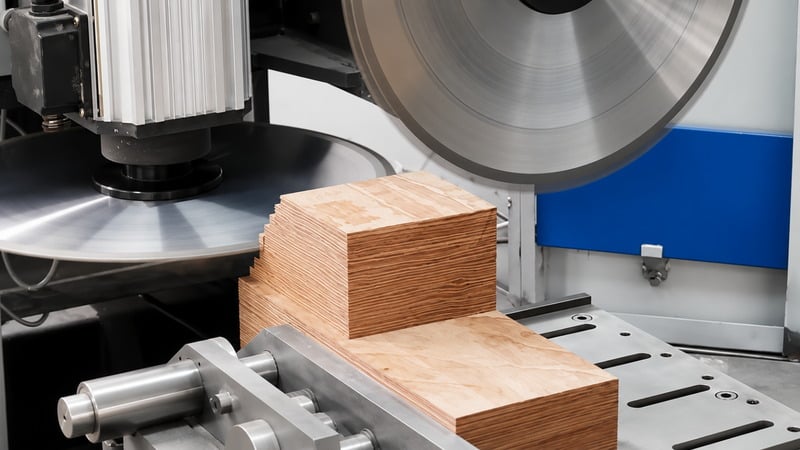
TRANFOVIA supplied a CNC Step-Wood Processing Machine built around a simple idea: replace the operator’s feel with drawing coordinates. The operator enters the coordinates of every step from the approved workpiece drawing, and the machine then runs the complete cutting cycle automatically, without continuous manual intervention. The milling blade runs at 2800 r/min and uses a professional woodworking saw blade, so under the specified process conditions the machined surface on laminated wood comes out smooth, undamaged and non-carbonized. Once the surface meets the drawing and inspection requirements, the part moves on directly — no secondary polishing. Feed speed is continuously adjustable from 0 to 5 m/min, so cutting speed can be matched to the material, the step profile and the surface requirement. Total power is 11 kW excluding the dust collector, and the machine needs no dedicated foundation, so it can be positioned wherever the insulation workshop layout allows. The standard maximum workpiece envelope is 500 × 500 × 600 mm (W × H × L), and machining capacity can be customized for parts outside this range. For suitable workpieces, overall productivity reaches at least three times that of ordinary milling-machine processing.
4. Implementation and Commissioning
The machine was placed directly on the shop floor with no special foundation; once the power supply and dust-extraction ducting were connected, commissioning could begin. It ran in three stages: first a single-step trial cut on the customer’s own laminated wood to confirm a non-carbonized surface; then the full coordinate set of the most complex step block in the customer’s range, run through the complete automatic cycle; finally feed-speed fine-tuning based on first-article inspection. Operator training concentrated on two things — reading the step coordinates off the drawing, and adjusting feed speed according to surface quality. Within half a day, two operators could enter coordinates and run the machine on their own, with first-article inspection handled by the workshop supervisor.
5. Acceptance Results
The machine was verified item by item against the technical agreement. Key parameters (design and acceptance reference values; actual figures depend on the configuration ordered):
| Parameter | Acceptance value |
| Milling blade speed | 2800 r/min |
| Feed speed | 0–5 m/min, stepless adjustment |
| Machining accuracy | ±0.3 mm |
| Total power | 11 kW (excluding dust collector) |
| Maximum workpiece size | 500 × 500 × 600 mm (W × H × L) |
| Surface quality | No burning or carbonization, no secondary polishing |
| Relative efficiency | 3× ordinary milling or better |
On the acceptance day, three blocks of a six-step part number that the customer runs frequently were machined back to back. Every sampled step height, position and length fell within ±0.3 mm, and the machined surfaces passed inspection directly, so the sanding operation was dropped from the route. Compared with the general-purpose milling machine it replaced, the same block used to take more than one man-hour including marking out; it is now clamped once and the cycle runs automatically, leaving one operator free to watch several machines.
6. Customer Feedback
“Half our step blocks used to come from subcontractors and half we milled ourselves, and the step dimensions changed from batch to batch — everything needed sanding afterwards. Now we enter the coordinates from the drawing, the machine runs the whole cycle by itself, the surface comes out clean and unburnt, and the blocks go straight onto the core.” — Customer core-assembly workshop supervisor (at acceptance)
7. Summary and Next Steps
Step blocks are inexpensive, but volumes are high and one missing batch stops the assembly line. This machine takes them out of the subcontracting and manual-milling loop: coordinate-based automatic machining turns step dimensions from a matter of feel into a matter of program, the woodworking saw blade removes the sanding operation from the process route, and the 500 × 500 × 600 mm standard envelope covers the largest blocks in the customer’s range. Next, the customer plans to turn the step coordinates of its common part numbers into parameter templates — a new part number means editing a coordinate table, not re-learning the part — and to move all subcontracted blocks back in-house. To evaluate a machining solution around your step-block drawings and step dimensions, contact the TRANFOVIA technical team for selection advice and a quotation.
- WhatsApp: +86-15958243831
- Email: sales@tranfovia.com
- Website: https://tranfovia.com/