| Equipment | CNC Pressboard Shearing Machine |
| Customer | A transformer insulation parts manufacturer in Casablanca, Morocco (supplying distribution and oil-immersed transformer builders) |
| Application | Automatic NC shearing of 0.5–3 mm insulation pressboard into rectangular strips and trapezoidal strips for oblique end rings |
Customer information has been anonymized; only region and industry attributes are retained. Performance figures are acceptance and typical-condition reference values and may vary depending on configuration.
1. Customer Background
This customer, based in Casablanca, Morocco, produces insulation parts for distribution and oil-immersed transformer manufacturers serving the domestic and North African markets: end rings, angle rings, spacers and step blocks. As grid refurbishment and renewable-energy connection projects in Morocco pushed transformer orders up, the customer’s insulation business shifted from a few repeating specifications to high-mix, small-batch work, and the existing manual cutting method could no longer hold the delivery dates. After comparing several suppliers, the customer selected our CNC pressboard shearing machine.
2. Industry Pain Points
Insulation pressboard strip is the raw material behind transformer end rings, angle rings and spacers. The board arrives between 0.5 mm and 3 mm thick, is sheared into strips, and then moves on to forming and bonding. If strip width or angle drifts, every part has to be re-fitted at assembly. The customer’s manual cutting operation produced five recurring problems:
- Strip width set by marking out. Operators measured and scribed each cut and used a simple shear, so strip width varied noticeably within a batch and end rings had to be re-fitted repeatedly.
- Oblique strips were hard to make. The trapezoidal strip used for oblique end rings has a non-rectangular geometry; hand cutting could not hold the angle, and scrap rates were high.
- Wide sheets wandered during feeding. Pressboard sheets are large, and manual feeding could not keep a straight edge — long strips went off-line and were scrapped.
- Slow changeovers. With many distribution transformer models, strip widths change often, and each change meant setting the machine up again.
- No dimensional record. Without NC positioning there was no record of what had been cut, so batch consistency depended entirely on operator experience.
3. Solution
We supplied one CNC pressboard shearing machine that replaces manual marking-out with numerically controlled feeding — turning “measure once, cut once” into “enter once, repeat consistently”:
- Enter the width on the touch screen, NC feeding does the rest. The operator enters the required shearing width; the feeding system positions the pressboard automatically and completes the cut, with a stated feeding accuracy of 0.2 mm.
- ±0.2 mm shearing accuracy. Strip width tolerance is held to ±0.2 mm, so end-ring components no longer need piece-by-piece re-fitting.
- Rectangular and trapezoidal strips on one machine. Beyond conventional rectangular strips, the machine automatically cuts the trapezoidal strips used for oblique end rings — one machine covers both cutting requirements.
- Feeding speed adjustable from 1 to 10 m/min. The rate can be matched to pressboard thickness and strip width: thin board runs fast, thicker board runs slower.
- Wide pressboard sheets accommodated. Insulation pressboard width of 2000–3200 mm is handled, and maximum sheet length is designed to the customer’s requirement.
- 0.5–3 mm covers everyday insulation pressboard. High-strength board is run at reduced thickness to avoid overloading the blade; the high-speed version is specified at approximately 60 idle strokes per minute.
4. Implementation and Commissioning
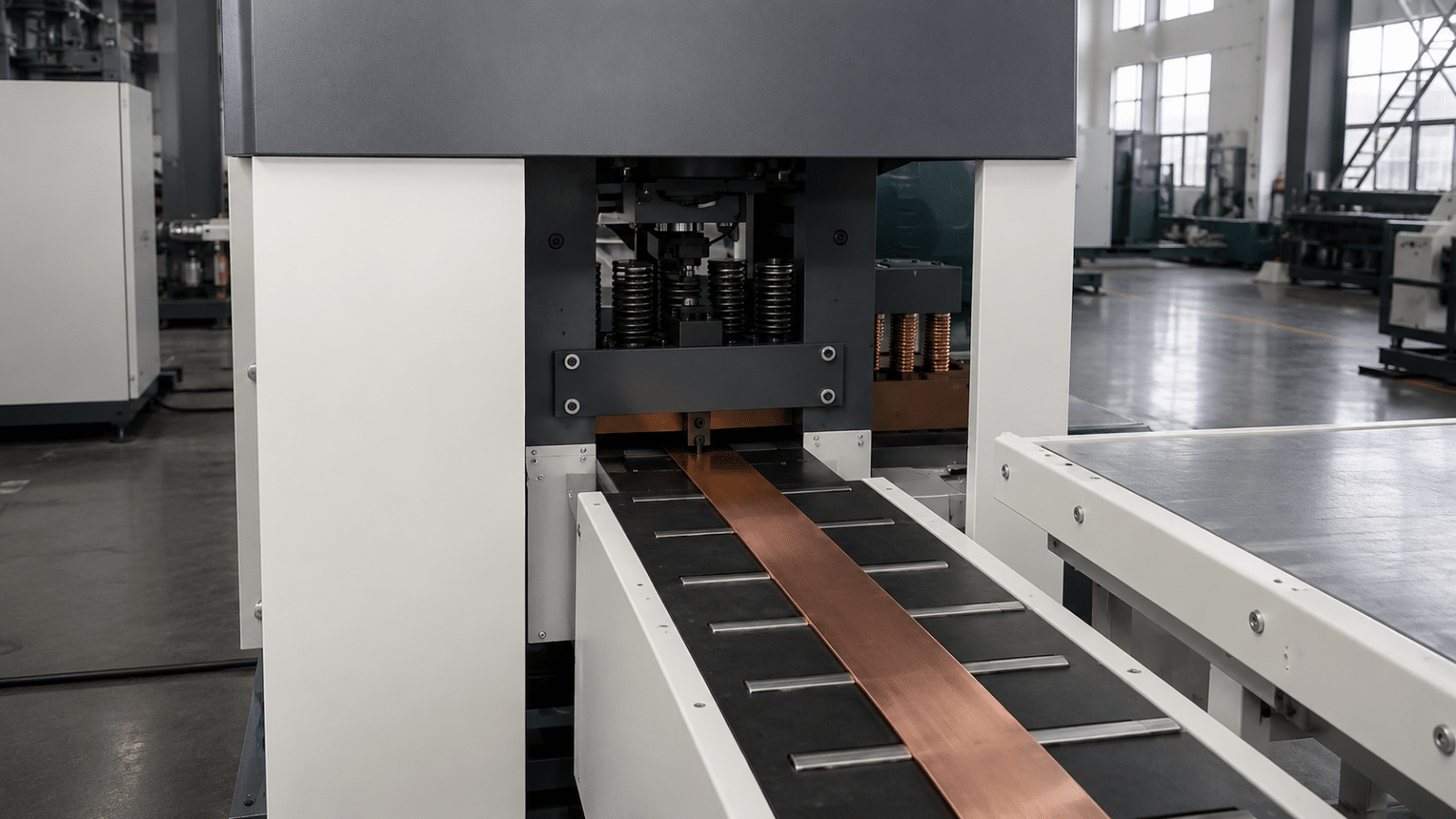
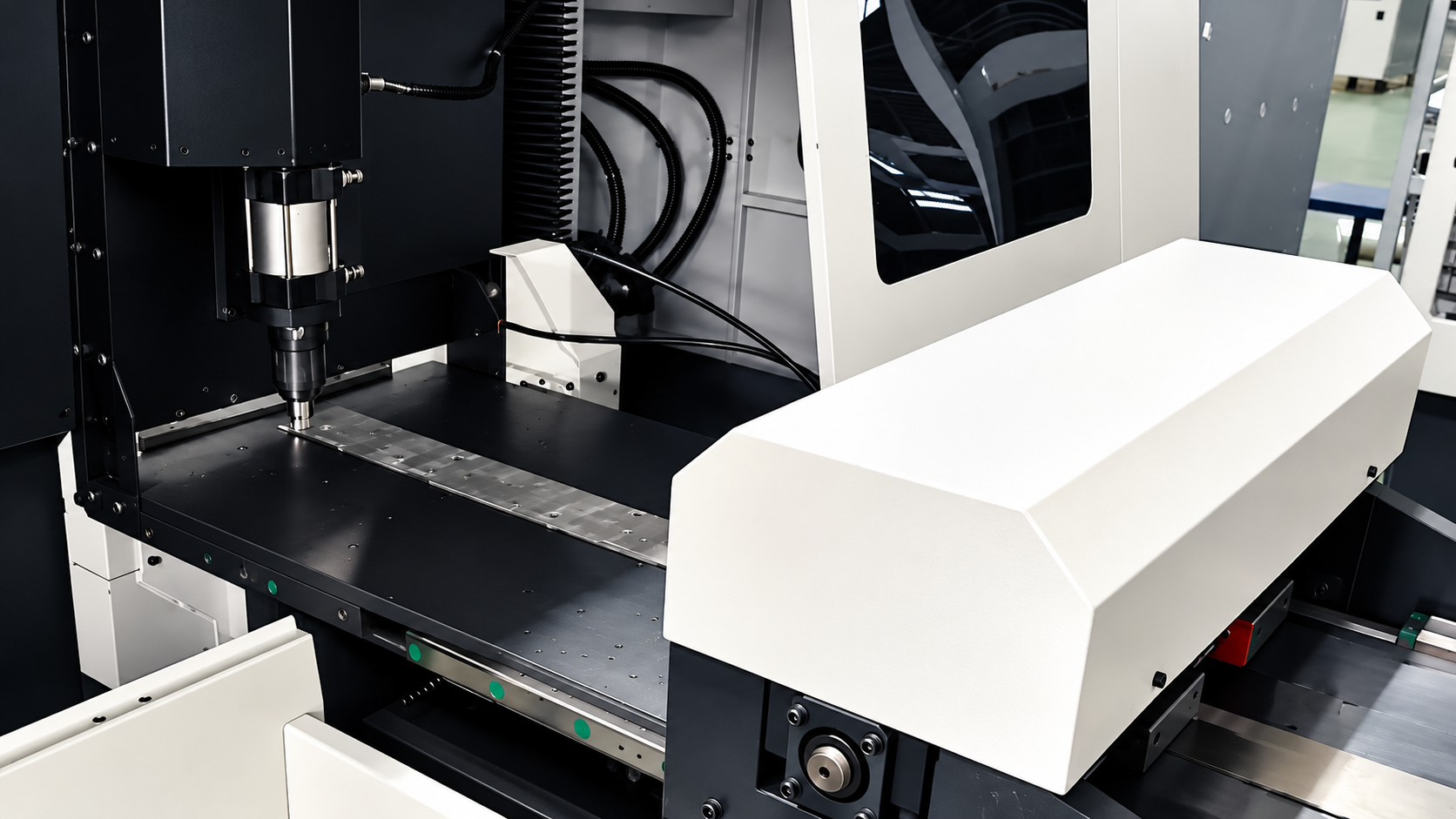
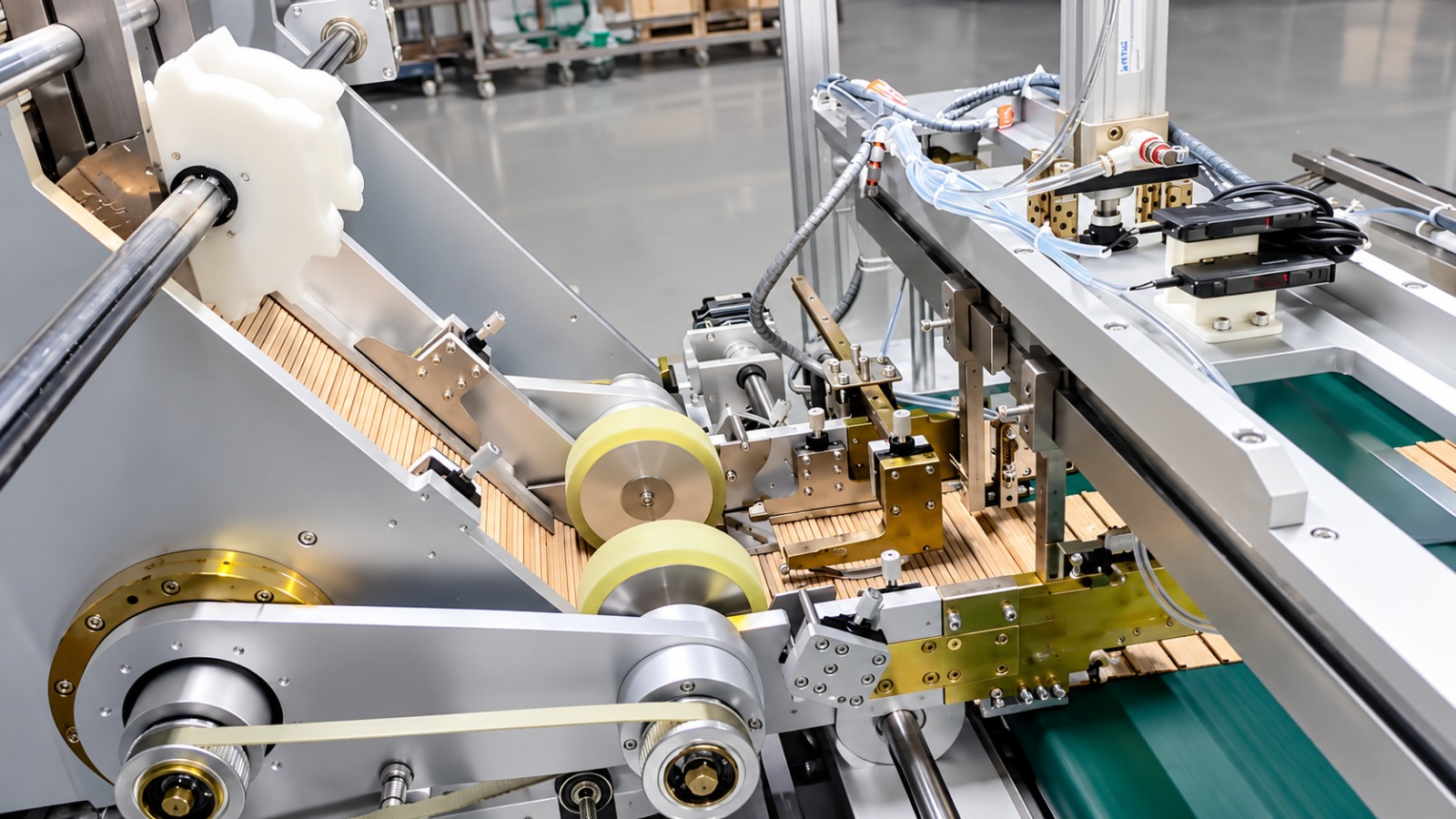
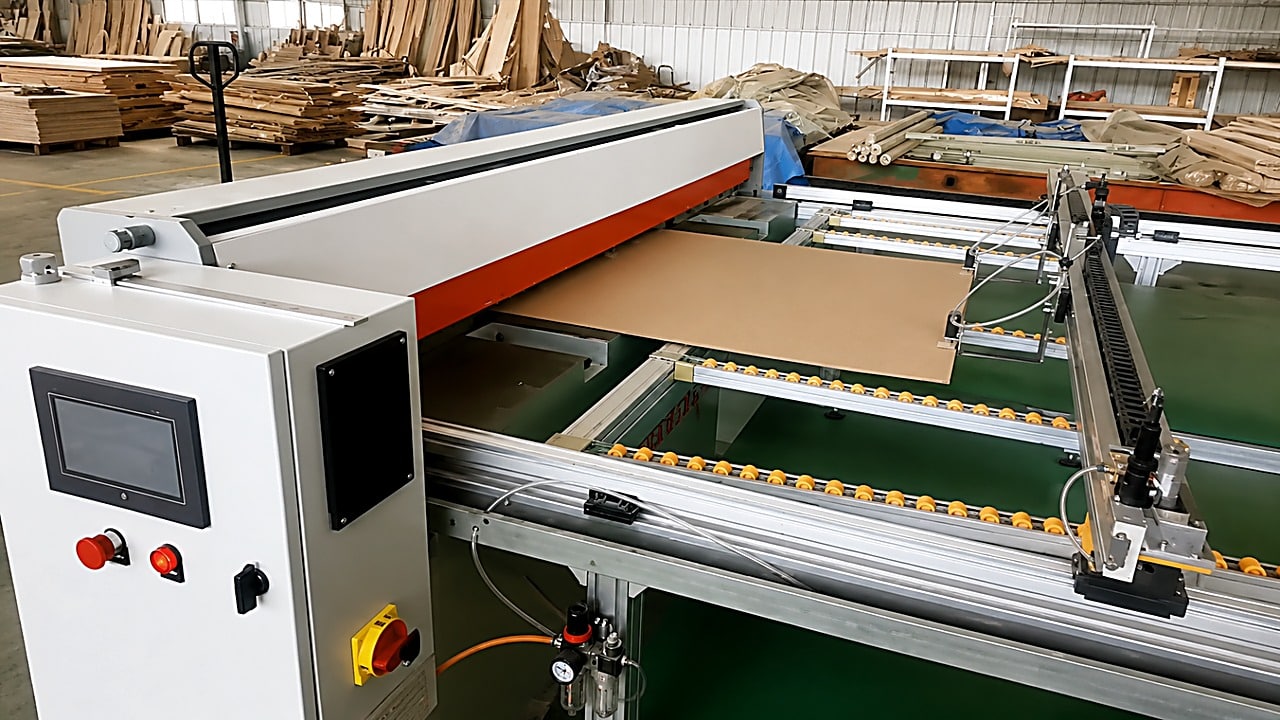
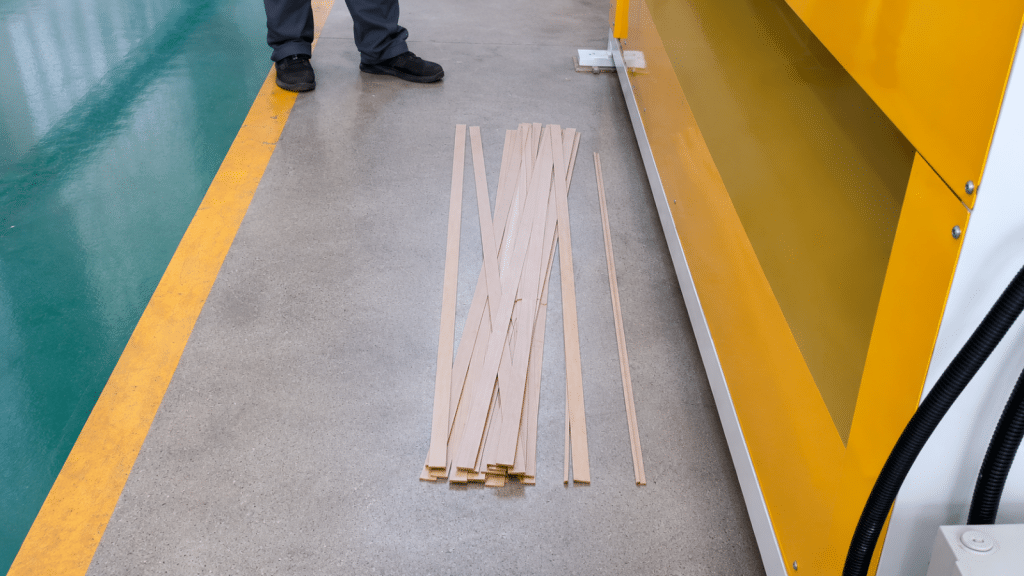
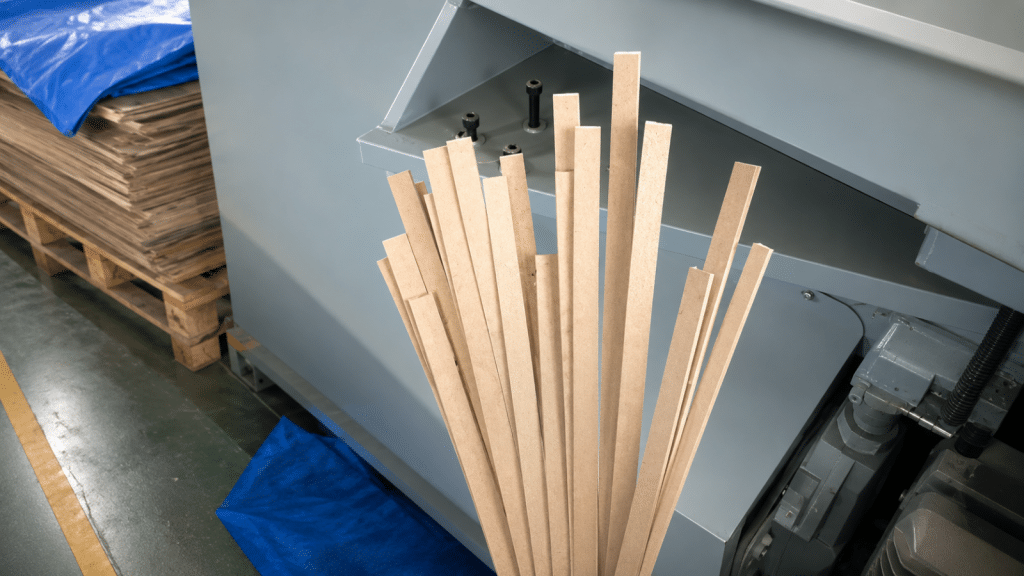
After the machine arrived by sea, TRANFOVIA engineers worked with the customer’s equipment and process teams through a three-step on-site commissioning. First, we verified the floor space and power supply, confirmed the feeding direction and control cabinet position, and ran the machine through its idle strokes while checking blade clearance. Second, we cut the customer’s regular specifications from real material, calibrated the relationship between the feeder’s actual travel and the value entered on the touch screen, and brought feeding accuracy to 0.2 mm. Third, we produced rectangular and trapezoidal strips against the acceptance criteria of the technical agreement, confirming behaviour across 0.5 mm, 1.5 mm and 3 mm board and across the strip width range, then trained the customer’s operators and maintenance crew with English operation and maintenance manuals. The photographs in this article were taken during that commissioning — the pressing beam and blade shear while the roller table feeds the sheet.
5. Acceptance Results
The machine was verified item by item against the technical agreement during commissioning. Key indicators (design and acceptance reference values; actual figures depend on the configured machine):
| Indicator | Value / Result |
| Insulation pressboard thickness | 0.5–3 mm |
| Insulation pressboard width | 2000–3200 mm |
| Maximum pressboard length | Customized to customer requirement |
| Shearing accuracy | ±0.2 mm |
| Feeding accuracy | 0.2 mm |
| Finished strip width | 5–500 mm |
| Feeding speed | 1–10 m/min |
| Idle strokes | Approx. 60 strokes/min (high-speed type) |
Two changes were immediately visible: strip width went from “scribe, shear and re-fit each part” to “enter the size and repeat it batch after batch”, and oblique end-ring strips moved from manual cutting to a single in-house operation.
6. Customer Feedback
“Before, we marked out, measured and then cut — and every batch still had a few widths that did not match, so we had to grind them at end-ring assembly. Now we just enter the width on the touch screen, and the strips hardly need any re-fitting.” — Customer insulation workshop production supervisor (at acceptance)
7. Summary and Next Steps
For transformer insulation parts manufacturers, the value of the cutting stage is not whether a strip can be cut, but how consistent the strip width is and how quickly the specification can be changed. NC feeding hands dimensions to a program instead of to feel: strips from 5 to 500 mm wide in 0.5–3 mm pressboard come off one machine consistently, and rectangular and oblique end-ring strips no longer need two separate processes.
Next, the customer plans to pair this shearing machine with a pressboard slitting machine and a circular shearing machine to complete a flow from sheet to end rings and angle rings. To configure a machine around your pressboard thickness range, strip widths and end-ring specifications, contact the TRANFOVIA technical team for selection advice and a quotation.
- WhatsApp: +86-15958243831
- Email: sales@tranfovia.com
- Website: https://tranfovia.com/