| Equipment | Transformer Radiator Production Line |
| Customer | A transformer panel radiator manufacturer in Russia (serving the Russian-speaking and CIS markets) |
| Application | Fully automatic production of transformer radiators across multiple fin widths, from coil loading to stacking |
Customer information has been anonymized; only region and industry attributes are retained. Performance figures are acceptance and typical-condition reference values and may vary depending on line configuration
1. Customer Background
Based in Russia, this customer supplies panel radiators to local power and distribution transformer plants, with 520 mm as the standard fin width and regular orders in 310–480 mm sizes. Radiators here often serve transformers installed across a wide territory, so the plant keeps a generous buffer of finished panels — one more reason stable tempo matters more than peak speed. Project timing in the region has a distinct rhythm: equipment procurement cycles are long and on-site installation windows are short, so once the customer decided to upgrade, the line had to be delivered and commissioned in one go with minimal downtime. The old shop was built around stand-alone machines. After evaluating several sources, the customer brought in our transformer radiator production line — the same line type already operating at radiator and transformer manufacturers in Russia, Kazakhstan, Mexico, India, the United States and South Korea, with a mature cross-border delivery and support process.
2. Industry Pain Points
The customer’s previous layout — a rolling mill, spot welders and seam welders connected by crane and manual transfer — produced five recurring problems:
Handling distortion. Panels were lifted between machines again and again; fin edges were bruised and straightening consumed hours of every shift.
Manual length setting. Cutting lengths were marked by tape measure and scriber, so center distance error came and went, and misaligned edges had to be ground down by hand before pairing.
Welding by feel. Seam welding speed and pressure depended on the operator, occasional leaks at the air test kept first-pass yield unstable.
Long changeovers. Switching fin width or center distance stopped the whole shop, and multi-spec orders queued behind each other.
A shrinking pool of skilled workers. Experienced welders and setup men were hard to hire, and peak-season output was capped by who was on shift.
3. Solution
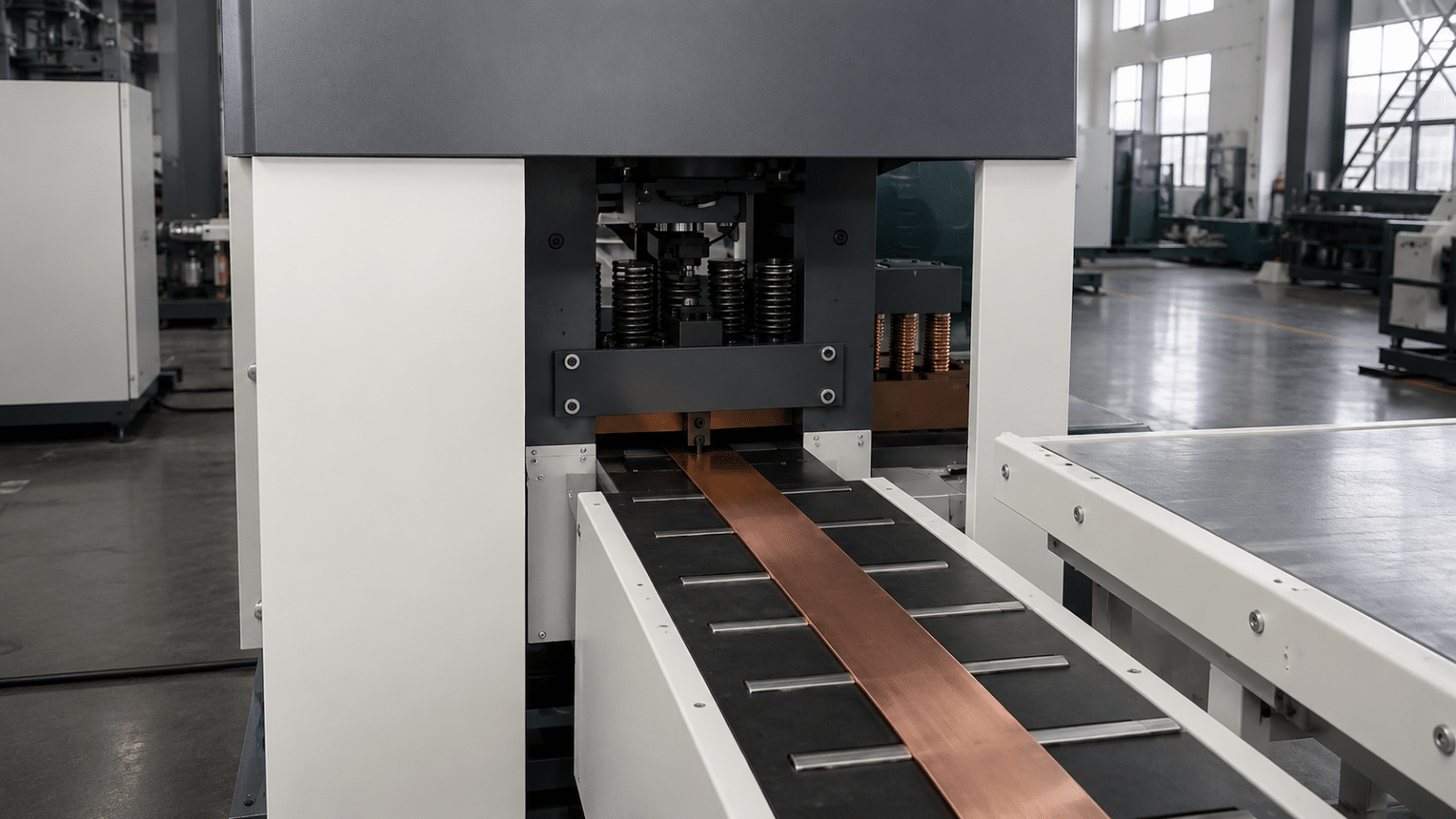
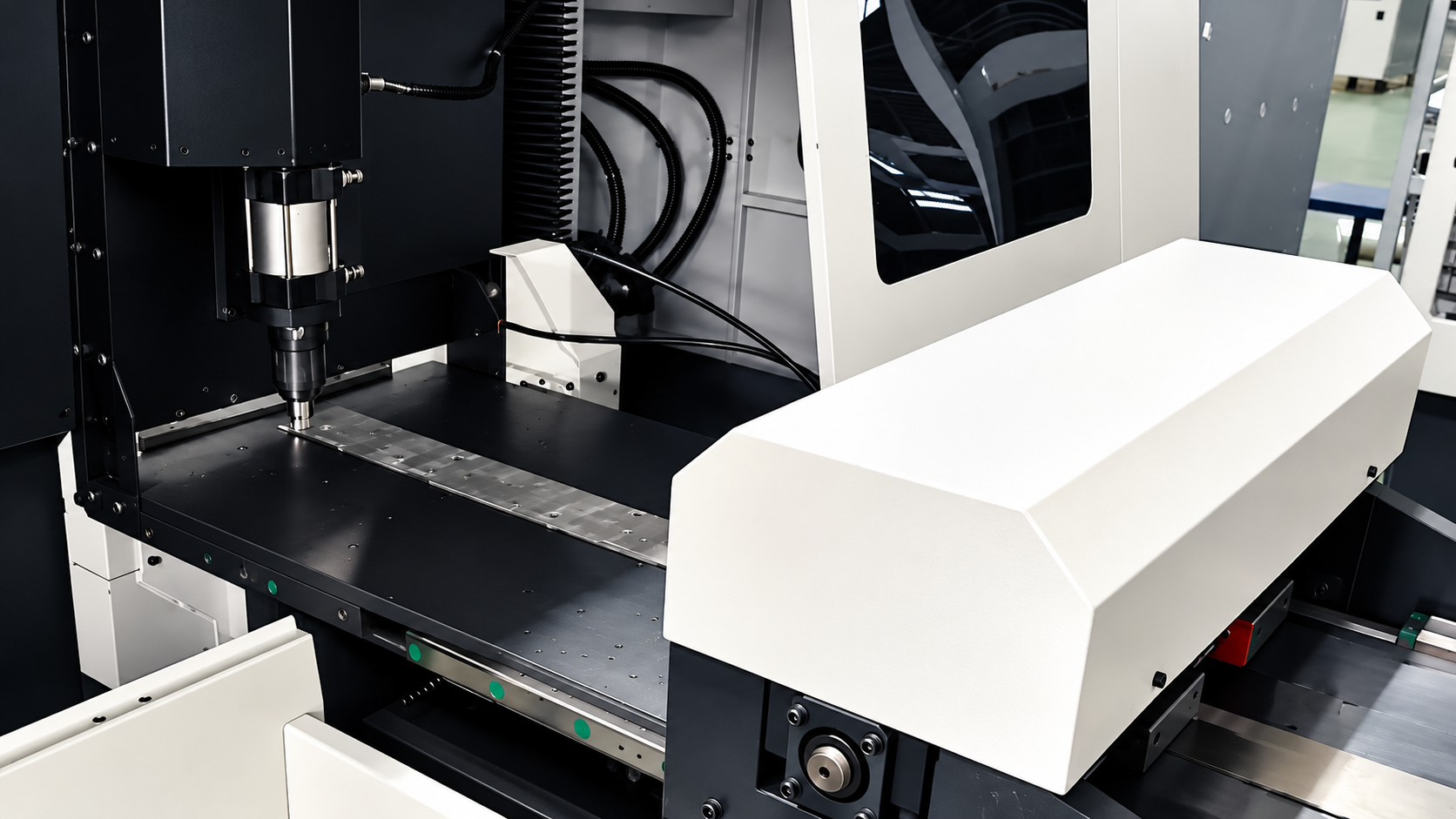
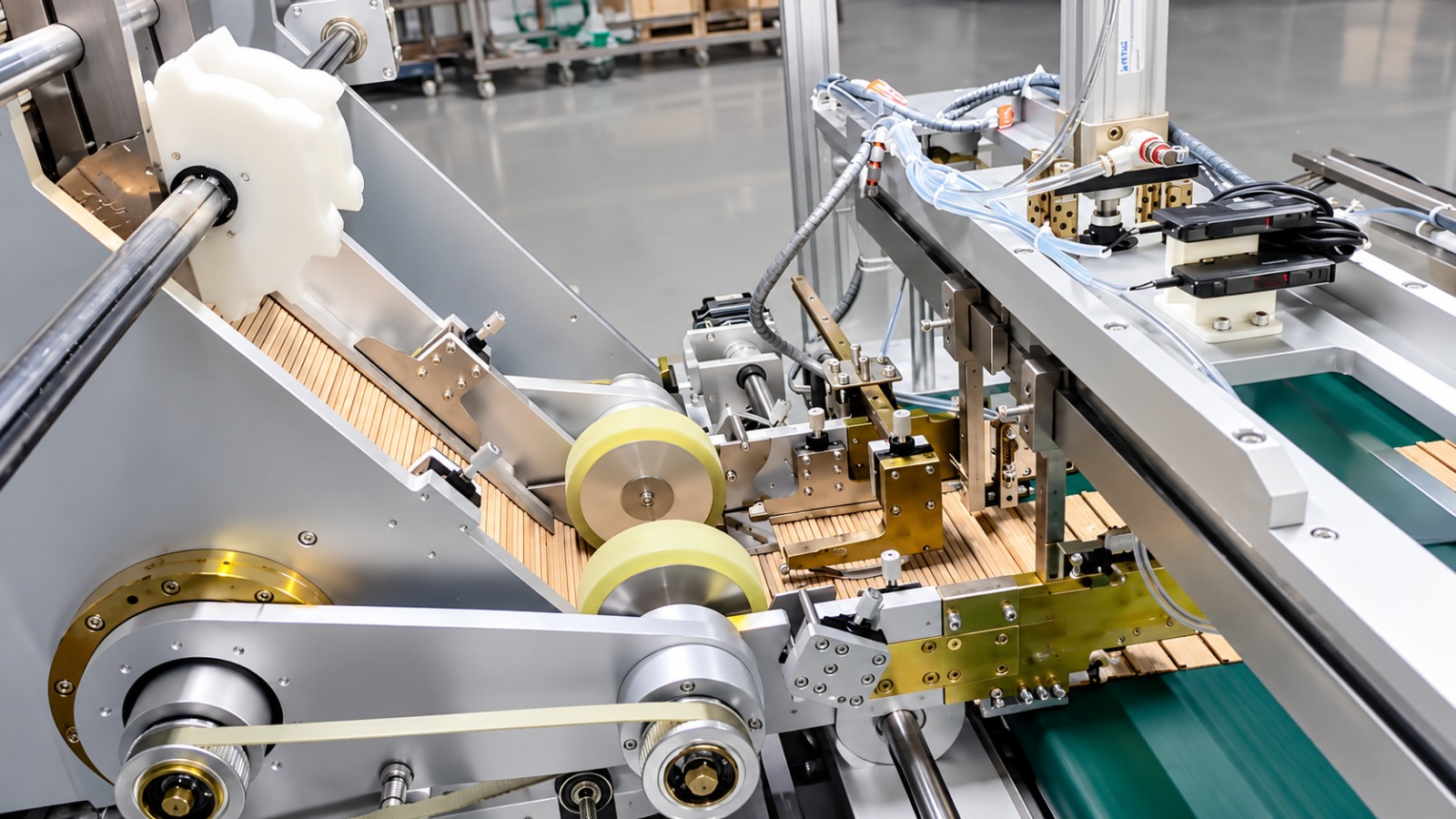
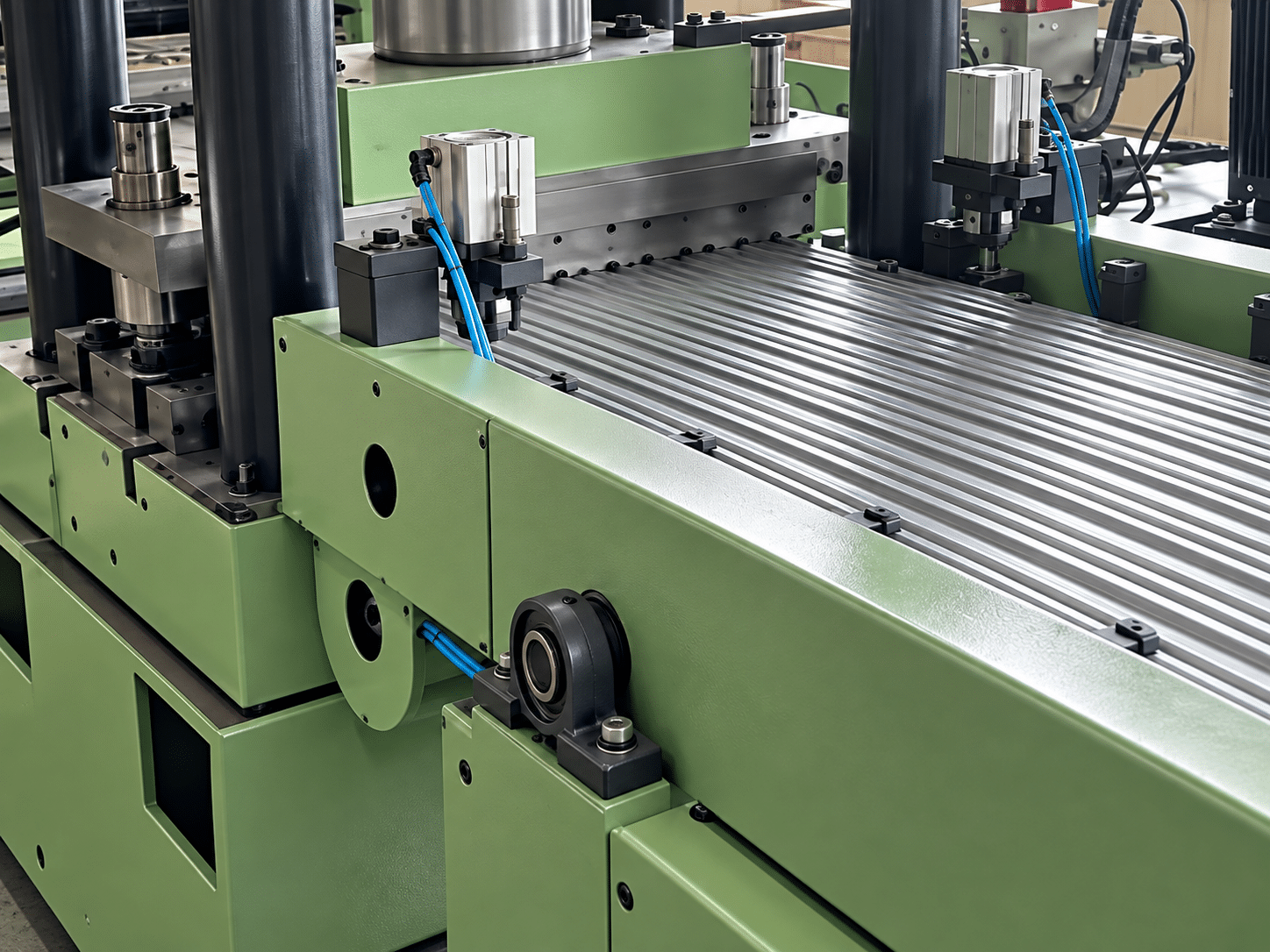
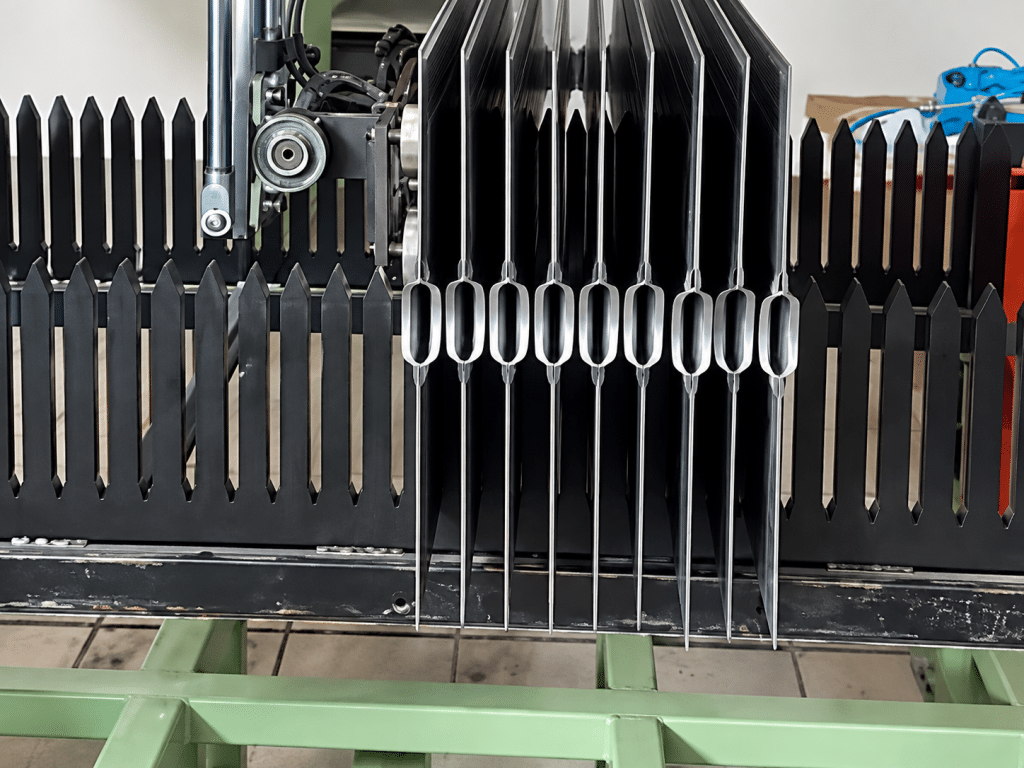
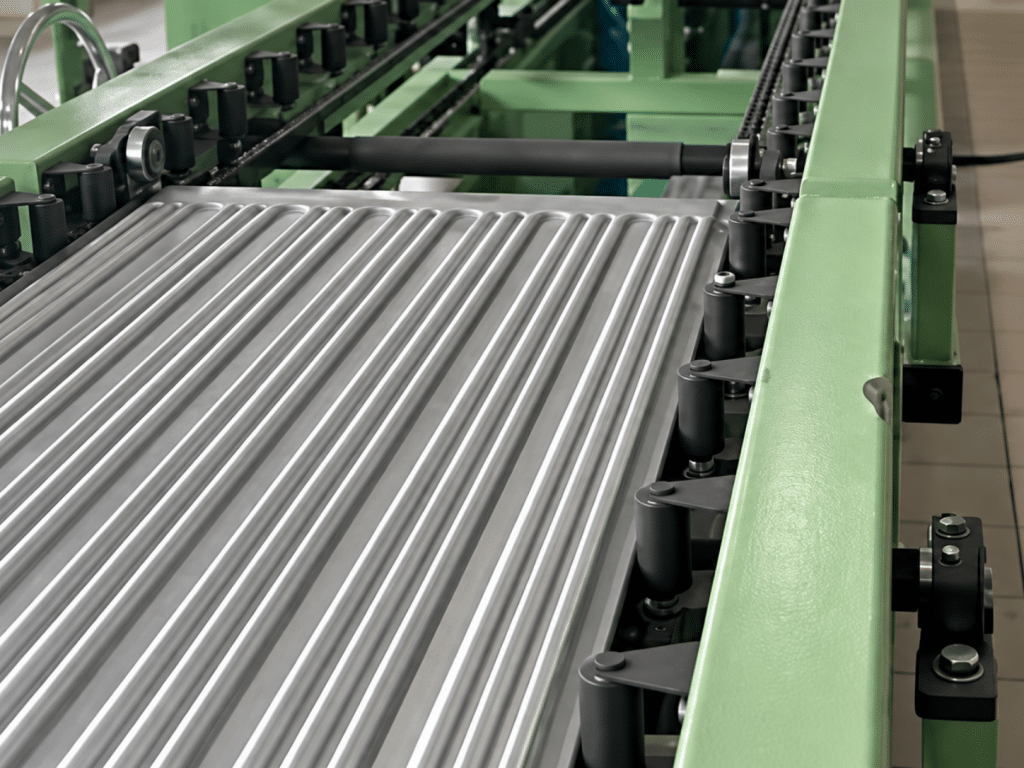
The line we configured covers the full flow from coil to stack: hydraulic expanding-mandrel decoiler → roll forming unit (leveling, press forming and length measurement built in) → automatic pairing machine → gantry multi-spot welder → variable-frequency bilateral seam welders → edge rolling shear → hydraulic end-cutting press → end welding → automatic leveling machine → gantry stacking machine. Three points addressed the customer’s situation directly:
- Spec changes as a program. Fin profile, length and quantity are entered on the touch screen and the line executes automatically; different lengths and counts can also be loaded into the PLC as batch lists. Changing fin width only means swapping roll stands — 520/535 share one pair — at rolling speeds of 9–12 m/min.
- Accuracy from the mechanism. A measuring wheel with encoder and pneumatic clamping holds center distance within ±0.25–0.5 mm and diagonal error within 2 mm; 7-roll leveling before welding and automatic leveling after it keep flatness out of the operator’s hands.
- Welding decoupled from individual welders. The multi-spot welder sets current pair by pair; the bilateral seam welders run twin servo drives top and bottom, keeping speed constant as wheels wear, so an ordinary trained operator can tend the stations.
4. Implementation and Commissioning
After the line arrived by sea, TRANFOVIA engineers and the customer’s team verified foundations, the total power supply (about 315 KVA) and the welder cooling-water circuit, then ran each machine empty. Commissioning continued with the main 520 mm width threaded through the line, tuning rolling, pairing, spot welding and seam welding parameters station by station until the line tempo locked in. Acceptance followed the technical agreement with test cuts and welds, alongside on-site training and English operation and maintenance manuals. Throughout commissioning, our engineers documented every parameter baseline — rolling speed, welding current and seam speed for each width — so the customer can restore settings after maintenance or roll changes. Wear parts such as electrode caps, weld wheels and shear blades were shipped with the line together with recommended replacement intervals. For a cross-border project, we also prepared a remote troubleshooting guide for common faults, so day-to-day issues can be handled over a call instead of waiting for an engineer to travel.
5. Acceptance Results
The line was accepted item by item against the technical agreement. Key indicators (design and acceptance reference values; actual figures depend on the configured line):
| Indicator | Value / Result |
|---|---|
| Center distance error | ±0.25 to ±0.5 mm (by specification) |
| Diagonal error | ≤ 2 mm, no visible bending after rolling |
| Single-panel pressure test | Positive ≥ 0.15–0.2 MPa, negative ≥ 133 KPa, no distortion |
| Assembly tightness | 0.2 MPa held for 30 minutes |
| Production rate | 60–75 panels/hour (at 2,000 mm center distance) |
| Operators for the whole line | 1–2 people |
The practical gains for the customer: multi-spec orders no longer queue behind changeover stoppages, fins travel from coil to stack in one pass, and the shop’s output no longer depends on finding scarce skilled welders.
6. Customer Feedback
“Commissioning went more smoothly than we expected. Once the parameters were set, a spec change is just swapping rolls and entering data. One shift with two people can now look after the whole line.” — Customer Production Manager (at acceptance)
7. Summary and Next Steps
For radiator manufacturers in the Russian and CIS markets, the real questions around a cross-border line purchase are delivery, commissioning and after-sales response — not single-machine specs. This line turns multi-spec changeover into a standard routine of swapping rolls and entering parameters, and with the remote troubleshooting guide it keeps running stably far from the equipment builder’s base. The same logic applies to future capacity: because the line’s settings live in recipes rather than in individual skills, adding a shift or a second line does not rebuild the learning curve from zero.
To configure a line around your fin-width range and output targets, contact the TRANFOVIA technical team for a proposal.
Related guide: For the complete machine-by-machine breakdown of the line, see our transformer radiator production line guide.
- WhatsApp: +86-15958243831
- Email: sales@tranfovia.com
- Website: https://tranfovia.com/