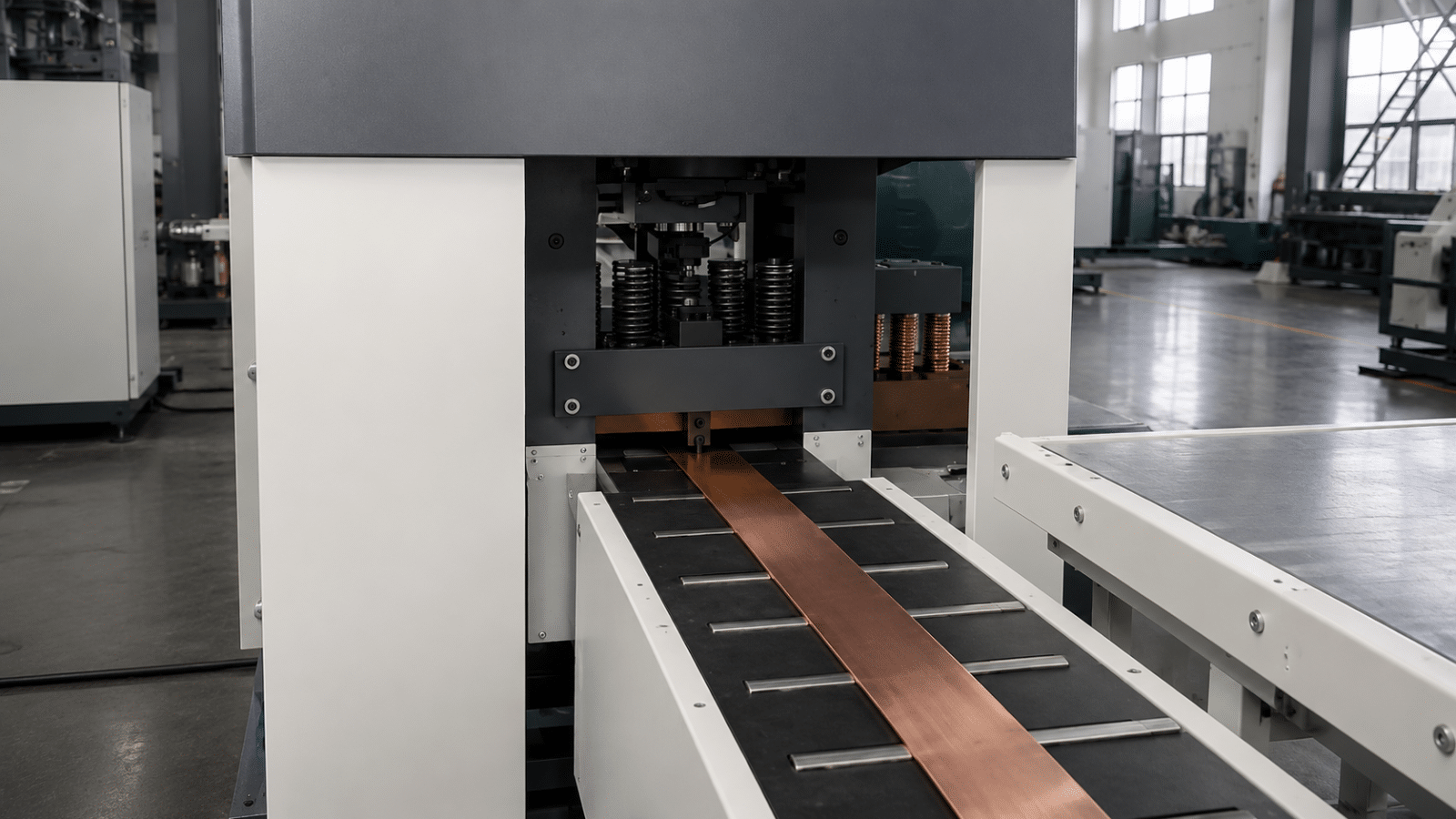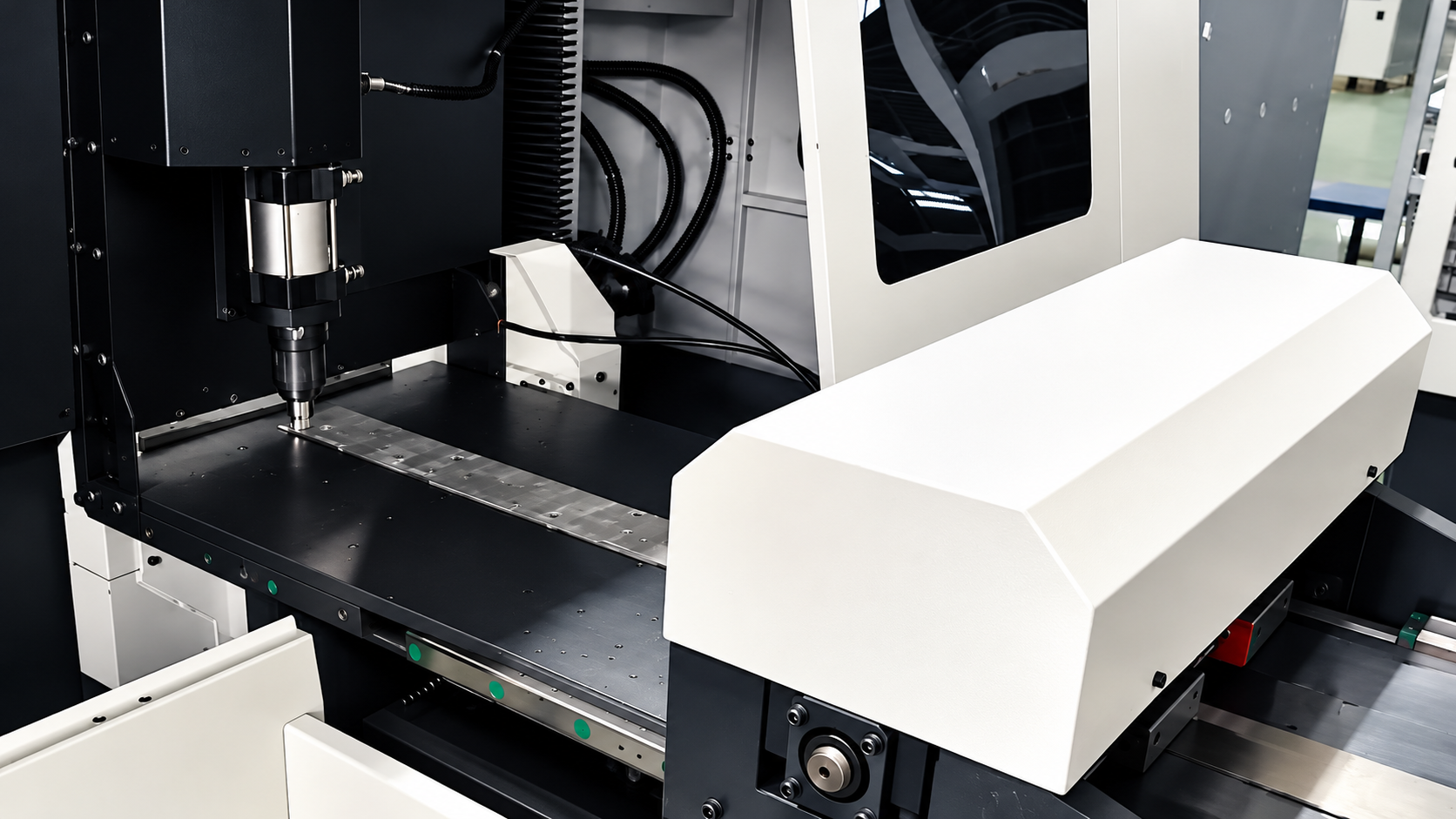
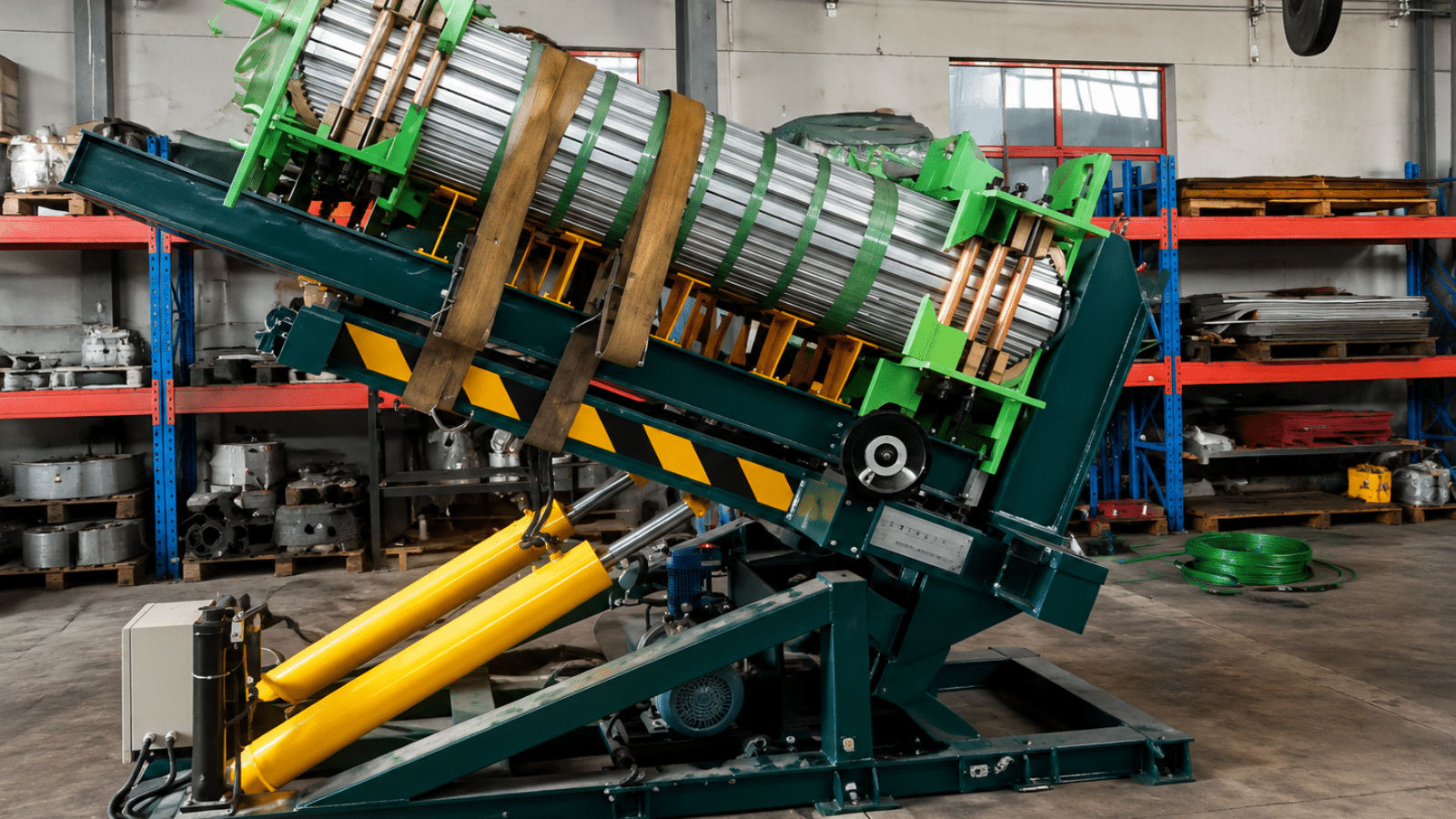
| Equipment | Transformer Core Stacking and Turning Table |
| Customer | A large power transformer manufacturer in São Paulo, Brazil (serving South American utility grids and mining distribution markets) |
| Application | Horizontal stacking and 90-degree turning of cores for 50–150 MVA oil-immersed power transformers |
Customer information has been anonymized; only regional and industry attributes are retained. Performance figures represent typical reference values under standard operating conditions and may vary depending on actual production line conditions.
Customer Background
This manufacturer is located in São Paulo state, Brazil, and supplies 50–150 MVA oil-immersed power transformers to Brazil’s national grid and major South American mining groups. Annual output is approximately 120 units.
As Brazil expands wind and solar generation, grid operators are demanding more large-capacity transformers. The customer planned a 30% capacity increase for 2024–2025. However, their existing core-handling process was becoming a bottleneck.
Previously, core stacking and turning were performed at separate stations. Cores were stacked horizontally on a fixed table, lifted by crane to an in-ground turning pit for the 90-degree flip, and lifted again to the assembly bay. This workflow consumed three cranes, two pits, and introduced repeated handling risks.
Industry Pain Points
For large transformer manufacturers, turning a stacked core from horizontal to vertical is a high-risk, high-precision operation. The customer faced four specific problems:
1. Repeated lifting increased distortion risk Moving the core from the stacking table to the turning pit and then to assembly required three to four crane lifts. Each lift created opportunities for lamination edge misalignment. In severe cases, local short-circuits within the core increased no-load losses.
2. In-ground pit foundations were costly and slow The existing turning pit was 2.5 meters deep and required waterproofing, drainage, and reinforced foundations. A single pit cost more than USD 80,000 and took two to three months to construct. Because the São Paulo facility was leased, the customer was reluctant to invest in permanent civil work.
3. Uneven support and vertical deviation The pit-based turner gripped the core with side clamps that did not always synchronize. Measured core-window deformation after turning reached 5–8 mm. If the core was not perfectly upright after turning—deviations exceeding 3 mm—coil-to-core clearances became uneven, creating a potential partial-discharge risk.
4. Overturning safety hazard Large transformer cores can weigh 30–60 tonnes. Once upright, inadequate support created a risk of overturning. The shop had experienced one near-miss when support legs were not fully locked, causing a slight tilt that required an emergency re-lower.
Solution
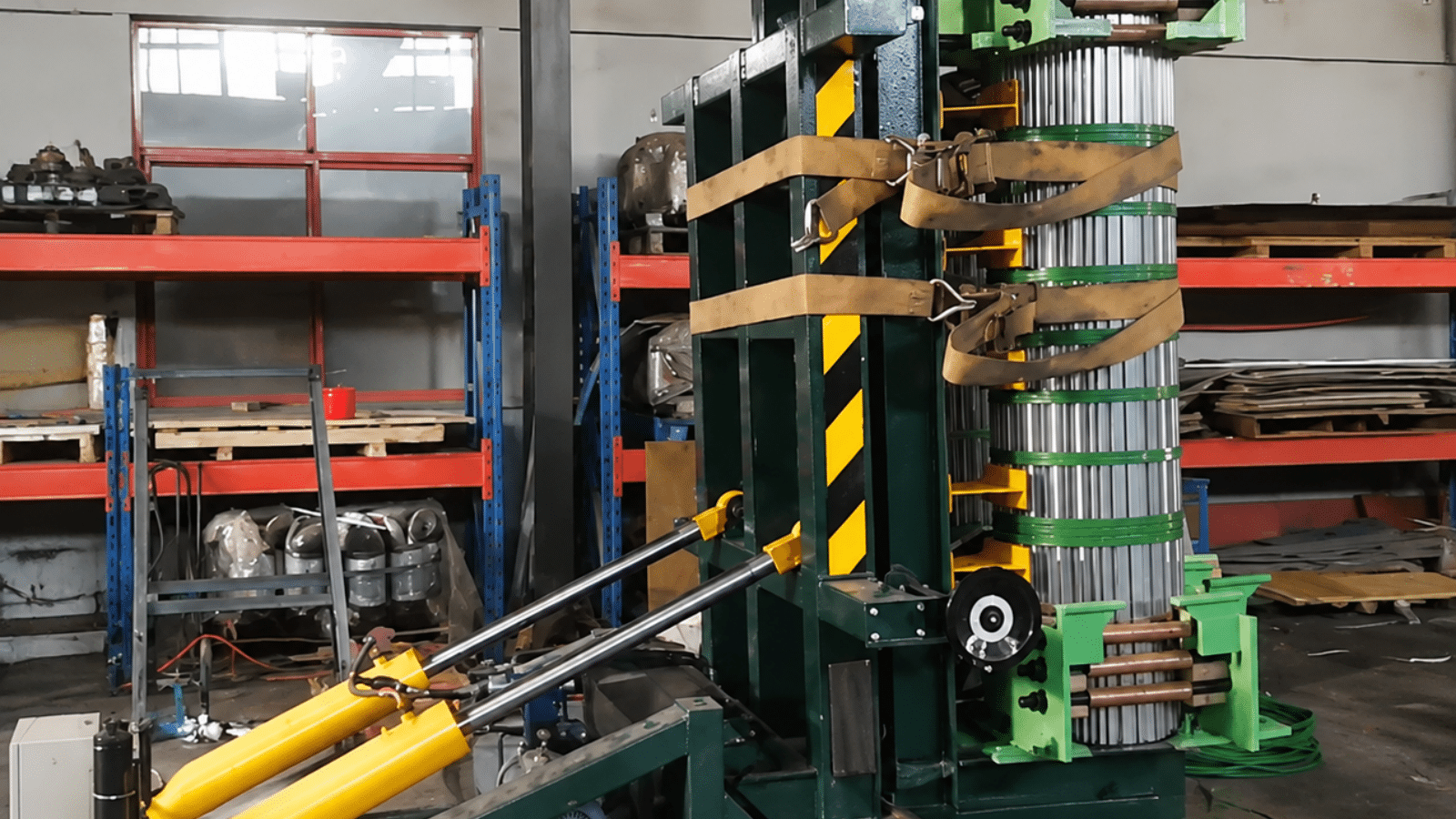
We supplied a transformer core stacking and turning table that unifies stacking, turning, and staging on a single platform. The key capabilities are:
One-platform workflow Core stacking begins on the turning table itself. When stacking is complete, the same platform carries the core through the 90-degree turn. There are zero intermediate crane moves, eliminating the distortion risk created by repeated lifting.
No-pit installation The table is installed at floor level and requires no excavated pit or special foundation—only a leveled floor and anchor bolts per our foundation drawing. For manufacturers in leased facilities, this dramatically reduces both capital outlay and lead time.
Modular platform layout The table consists of multiple modular sections that can be arranged to match the core window size, limb spacing, and three-limb or five-limb structure. The customer reconfigures the layout in roughly one hour when changing product families.
Synchronized turning with controlled deformation During the turn, all platform sections move together. Combined with smooth crane lifting, overall worktable deformation is kept below 3 mm—well under the 5–8 mm the customer had previously experienced. The vertical deviation between the stacking table and turning beam is held below 2 mm, ensuring the core is truly upright for coil insertion without compensatory adjustments.
Anti-overturn outriggers After the core reaches the vertical position, extendable flip outriggers on the longitudinal beams deploy automatically, creating a stable support footprint and removing overturn risk.
Structural integrity The load-bearing frame uses hot-rolled structural sections or welded low-carbon steel. Key locating surfaces are machined for flatness. Welded assemblies receive aging/stress-relief treatment, and the design is verified by finite-element analysis before manufacture.
Implementation
The equipment shipped from Ningbo to the Port of Santos, Brazil, with a sea freight cycle of approximately 40 days. Our engineer then spent eight days on site for installation and commissioning:
- Days 1–2: Machine positioning and modular platform assembly; joint flatness verification (≤0.1 mm/m).
- Days 3–4: Anchor-bolt tensioning and fine leveling; turning-beam-to-crane-hook alignment check.
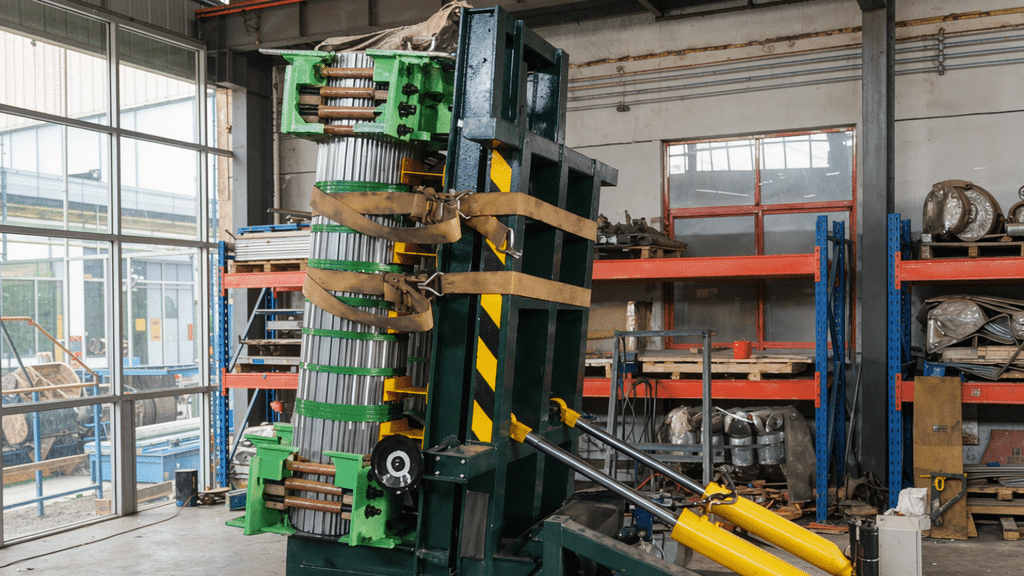
- Days 5–6: First-article trial turn—a 100 MVA three-limb core weighing approximately 42 tonnes. Measured maximum table deformation during turning was 2.1 mm; post-turn vertical deviation was 1.3 mm, both within specification.
- Day 7: Anti-overturn outrigger deployment/retraction testing under simulated extreme-load conditions.
- Day 8: Operator training (English/Portuguese bilingual manuals plus hands-on practice). Three local operators completed a full stacking-and-turning cycle independently on a second core.
Key Performance Data
Figures below represent typical improvements on comparable product lines. Actual results vary with core dimensions, crane dynamics, and operator experience.
| Metric | Before (Separate Stations) | After (Integrated Table) |
| Core handling / crane lifts | 3–4 moves | 1 move (zero intermediate lifting) |
| Core distortion during turning | 5–8 mm | < 3 mm |
| Vertical deviation after turning | 3–5 mm | < 2 mm |
| Civil-work cost and time | Pit USD 80k+ / 2–3 months | Zero pit / zero civil-work lead time |
| Crane occupancy per turn | 20–30 minutes | 12–15 minutes |
| Stacking-to-assembly cycle | 2.5–3 days | 1.5–2 days |
After three months of production, the customer reported that core rework caused by turning distortion had dropped from two to three units per month to near zero. First-pass success rate for coil insertion rose from 88% to 96%. Surface lamination edge damage—previously caused by repeated sling contact during multiple lifts—also declined markedly.
Customer Feedback
“Our biggest problem was never the stacking itself—it was how to get the core upright safely after stacking. We used an in-ground pit turner for ten years, and distortion and handling risks were always there. The value of this table is that it combines stacking and turning into one continuous operation; the core never leaves the platform. The vertical accuracy after turning surprised us—our assembly team said it was the easiest coil insertion they had done in ten years.” —— Customer Equipment & Production Manager (excerpt)
Closing Notes
For medium-to-large transformer manufacturers, core turning is not simply a material-handling step—it is a quality-critical transition that determines lamination alignment, core loss, and the ease of subsequent assembly. An integrated stacking-and-turning table that offers no-pit installation, synchronized low-deformation turning, and stable vertical positioning can reduce distortion risk, shorten manufacturing cycles, and improve first-pass assembly rates—without the civil investment traditionally required.
If you are evaluating safer, more accurate solutions for large transformer core stacking and turning, contact us for a layout proposal and on-site assessment:
- Email: sales@tranfovia.com
- WhatsApp: +86-15958243831
- Website: https://tranfovia.com/