| Equipment | End Insulation Bonding Machine |
| Customer | A medium-sized distribution transformer manufacturer in Medellin,Colombia (serving the South American distribution market) |
| Application | End-insulation forming for low-voltage windings of 10-35 kVA oil-immersed distribution transformers |
1. Customer Background
Our customer is based in Medellín, Colombia’s second-largest city, and has long supplied 10–35 KVA single-phase oil-immersed distribution transformers to local utilities and neighboring markets in Ecuador and Venezuela. Annual output sits at roughly 60,000 units. For more than a decade, the company relied on two older semi-automatic bonding machines supplemented by significant hand-gluing to form the end-insulation rings that protect the coil ends. When local electrification projects picked up again after 2024, the existing line struggled to meet the new pressure on lead times and insulation consistency.
2. Line Status and Pain Points
In our first conversations, the production manager listed five specific issues that were hurting the business every day:
- Speed bottleneck: The old line ran at only 3–4 meters per minute, making end-insulation the slowest workstation in the coil shop.
- Uneven glue layer: Hand touch-up caused some coils to receive too much adhesive (requiring wiping) and others too little (failing bond-strength checks). Sampling rejection had been stuck at 4–5% for years.
- Length tolerance: Manual alignment before cutting produced inconsistent strip lengths, leading to exposed white edges or overlaps during downstream pressing.
- Worker dependency: Experienced operators took 1–2 months to become fully independent; turnover created real production risk.
- Floor cleanliness and 5S: Hand-gluing inevitably left glue stains around the workstation, which external auditors had flagged on multiple visits.
3. The Solution
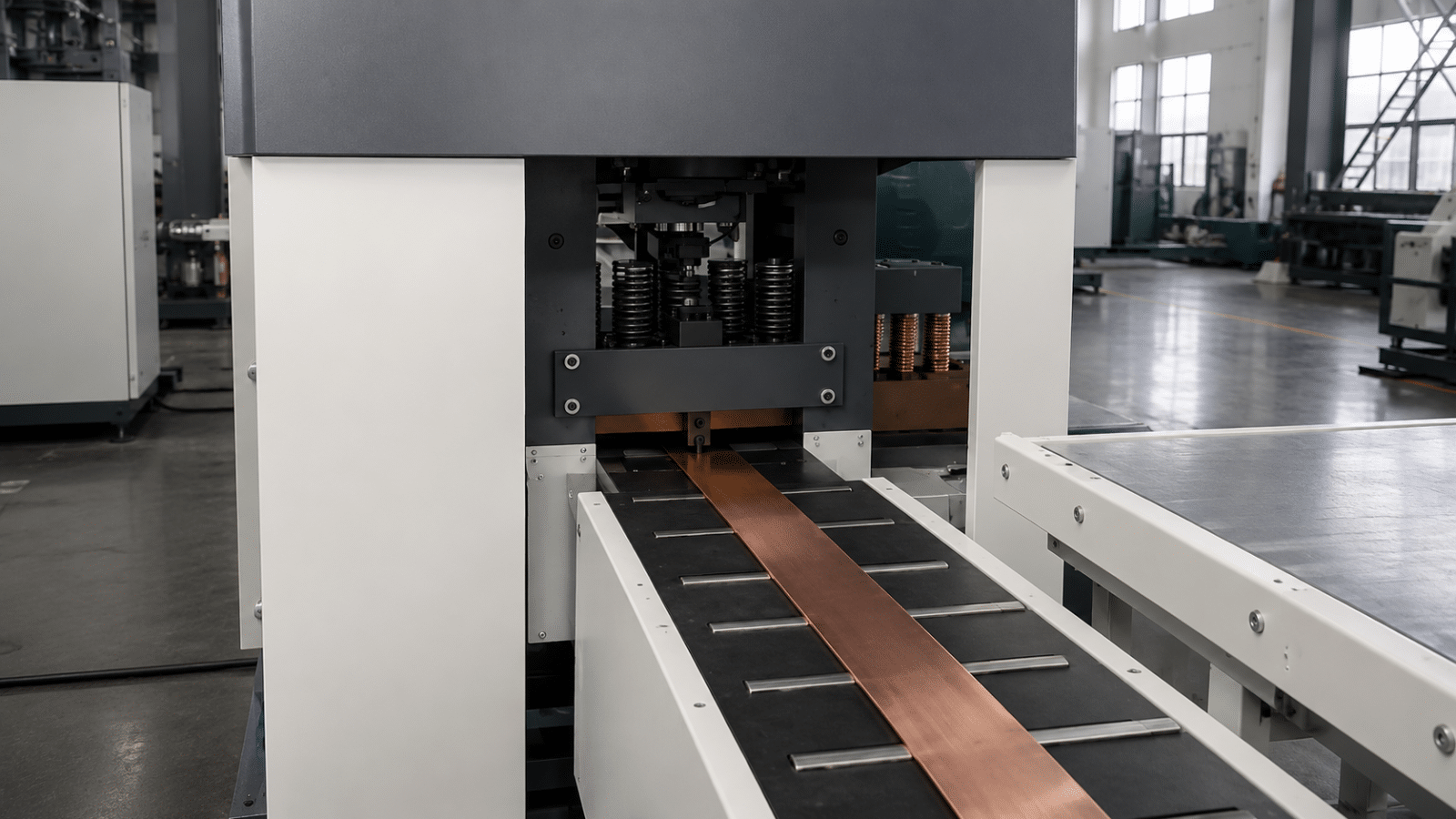
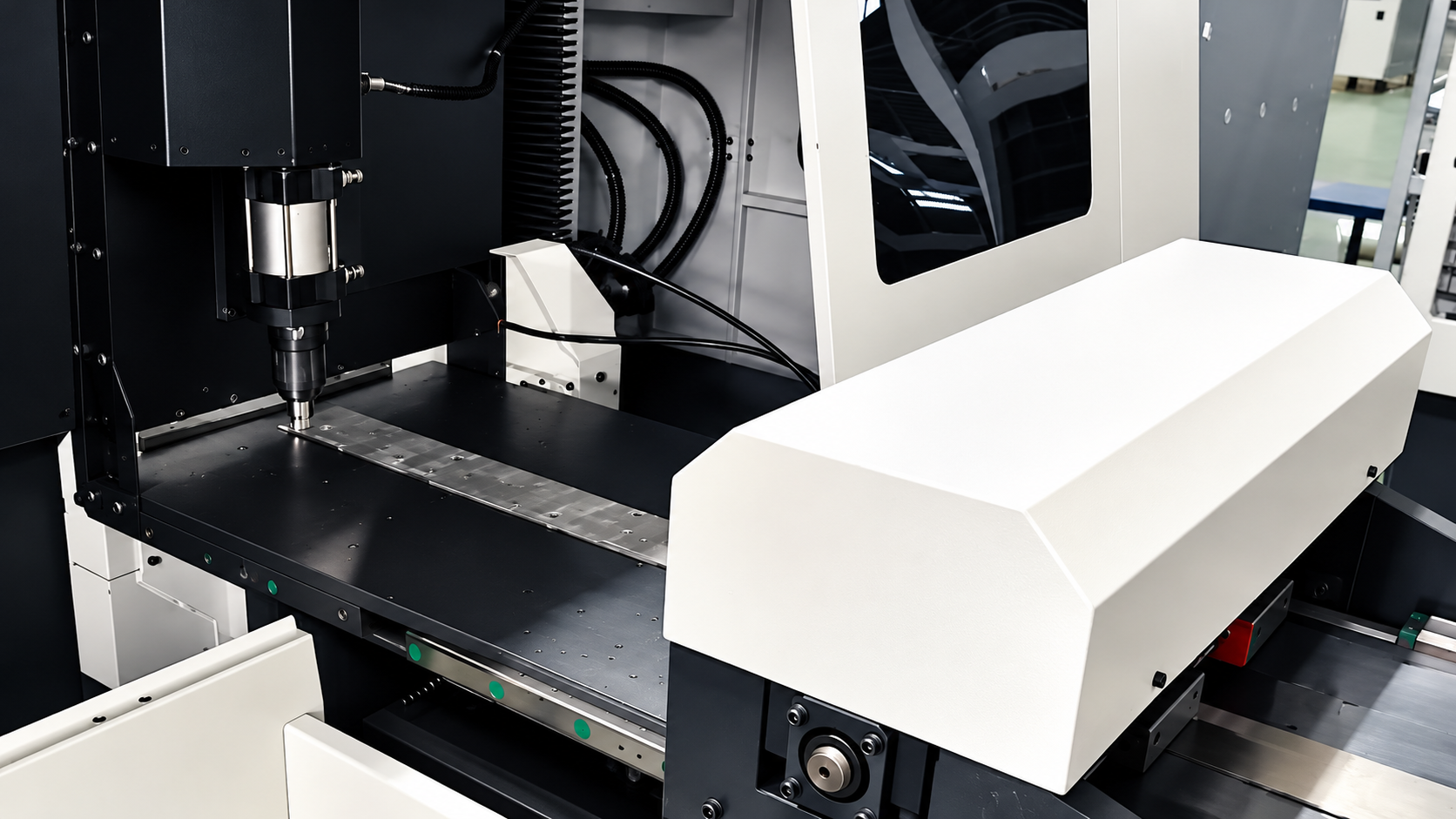
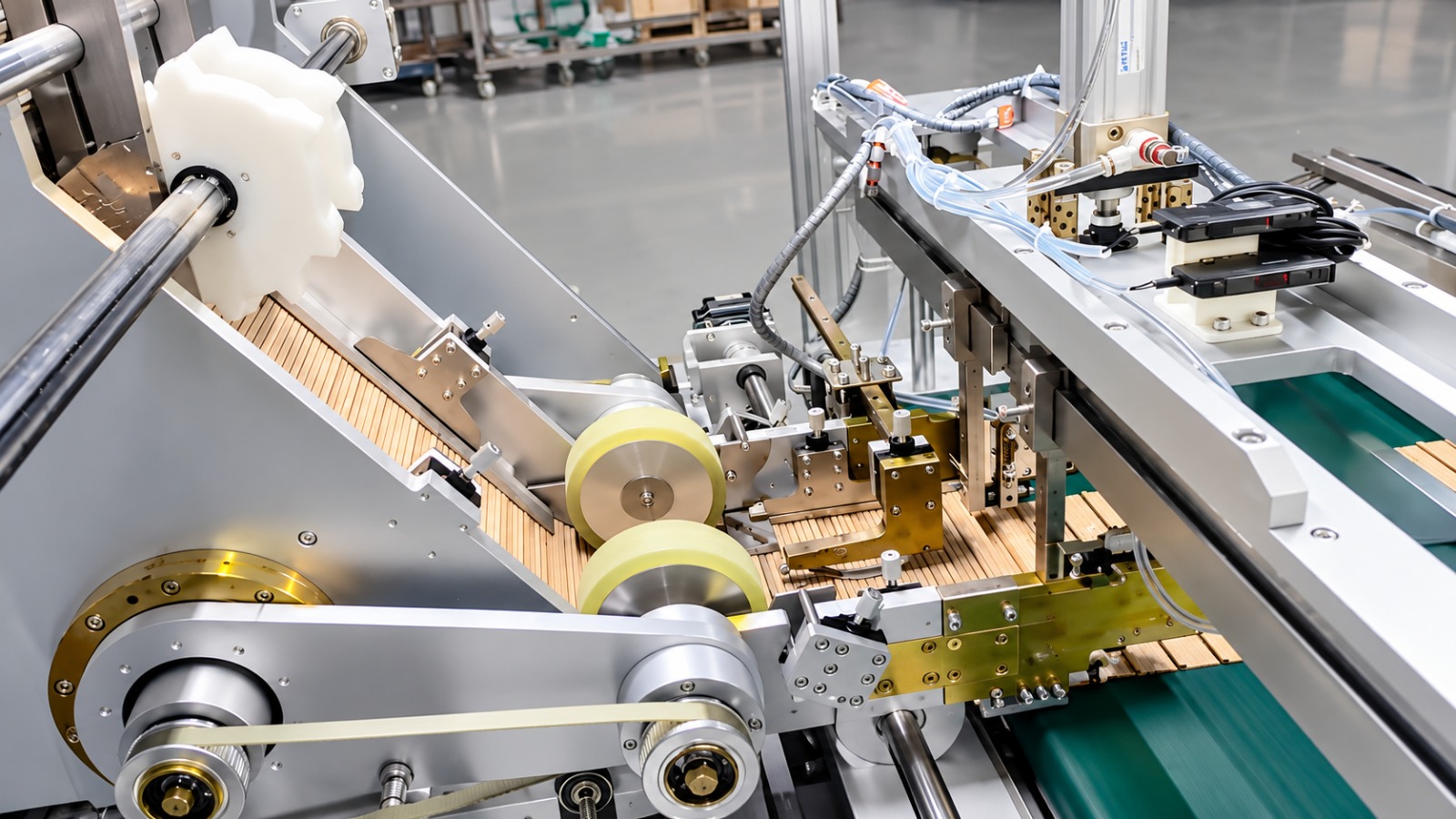
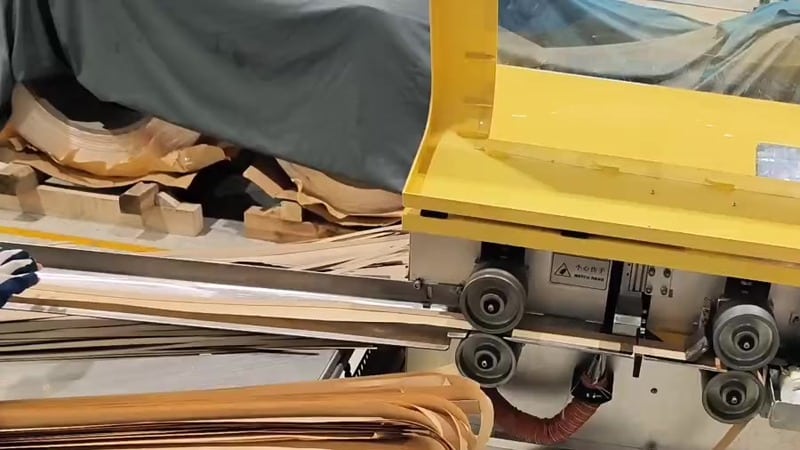
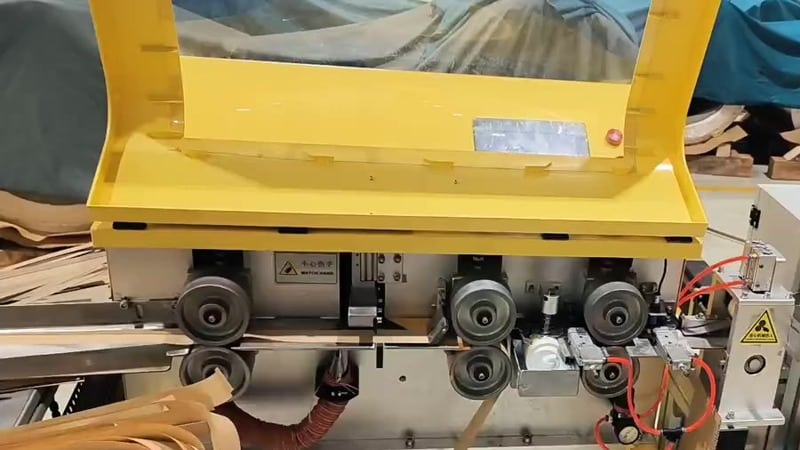
To address these pain points, we proposed a single End Insulation Bonding Machine that integrates every step of the process: feeding, gluing, heated pressing, automatic cutting, and automatic counting. Key technical features drawn directly from the machine specification:
- One-pass integration: Paperboard reel to finished insulation strip in a single pass, with no manual intervention in between.
- Stable throughput: Processing speed of 12–17 meters per minute, roughly 3–4× the previous semi-automatic line.
- PLC touchscreen: All parameters (glue amount, heating temperature, cut length, batch count) are stored as recipes on the HMI, so a single tap switches the line between product variants. New operators become independent in under an hour.
- Heated pressure roller: A 1000 W heating tube combined with a pressure roller ensures uniform glue thickness and consistent bond strength, eliminating the thickness variation typical of hand-glued parts.
- Automatic cutting: Pre-set cut length is executed automatically, removing the manual alignment step that caused the length errors.
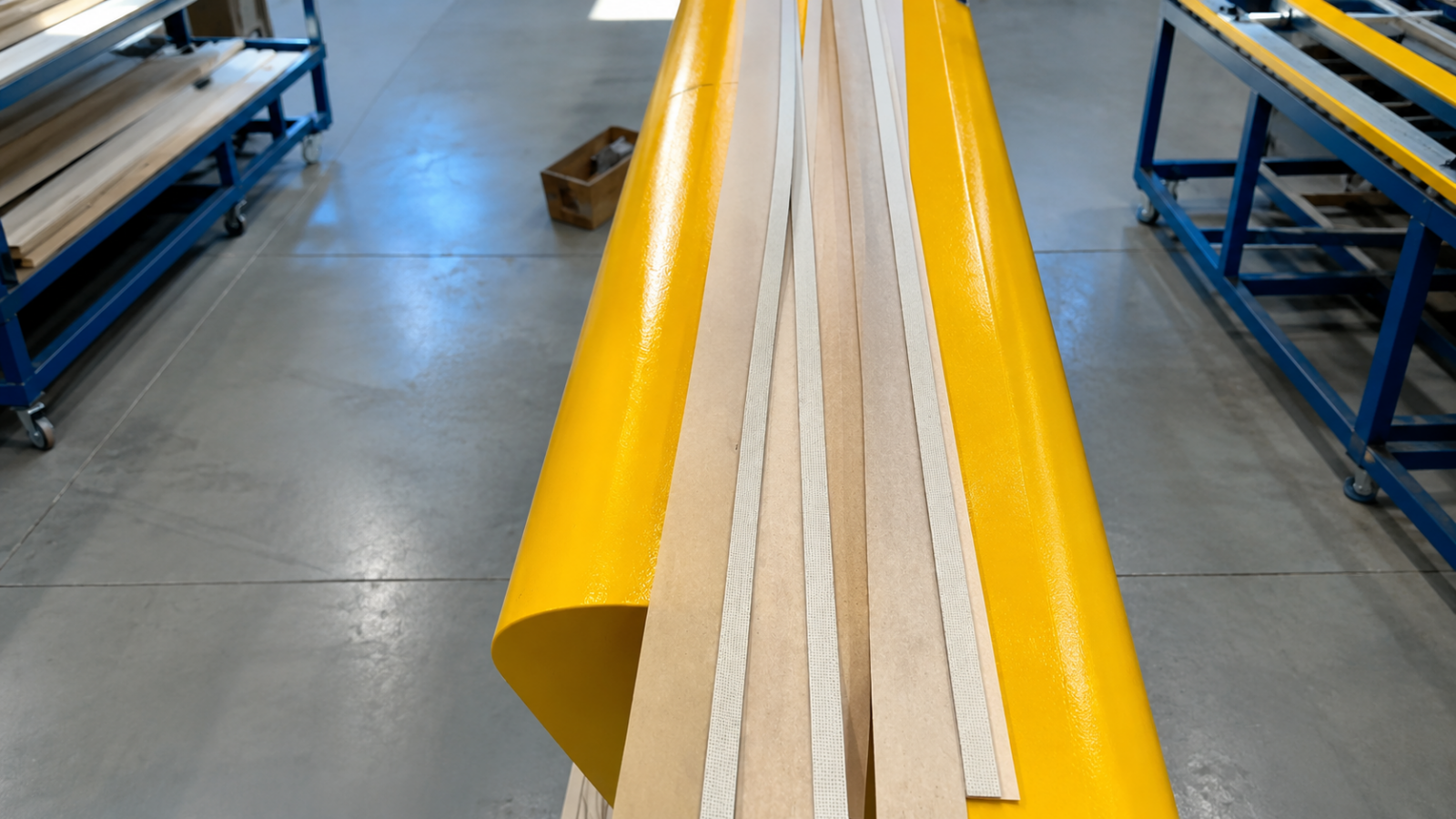
- Flexible paperboard handling: Accepts 1–2 mm thick, 7–20 mm wide pressboard strips, covering the full range used in 10–35 KVA transformers.
- Low power draw: The main motor draws only 0.4 kW, so running cost is significantly lower than the legacy line.
- Compact footprint: The whole machine occupies roughly half the floor area of the previous semi-automatic setup, simplifying retrofit inside the existing shop.
4. Implementation
Because the customer’s team operates in Spanish, we tailored the delivery and onboarding accordingly:
- Bilingual documentation: Each machine ships with English and Spanish operating manuals, maintenance procedures, and electrical drawings.
- Remote pre-acceptance: Before shipping, the machine ran a 72-hour continuous test in our workshop. Key operating videos and data were shared over WhatsApp with the Medellín engineering team, who signed off remotely.
- Sea freight + on-site commissioning: The machine left Ningbo port and arrived at Colombia’s Buenaventura port about four weeks later, then moved by road to Medellín. Our engineer travelled with the machine, spending five days on installation, commissioning, and operator training.
- First-article confirmation: After commissioning, we produced 200 end-insulation strips back-to-back with parts from the existing line for side-by-side comparison. The customer signed off only after the new line passed every check.
- After-sales commitment: We committed to a 24-hour email response window and a 7-business-day DHL dispatch for urgent spare parts.
5. Operating Results (Reference Figures, Results May Vary)
After six months of stable operation, the customer’s production manager reported the following comparison:
| Metric | Before | After | Change |
| End-insulation line throughput | 3–4 m/min | 12–17 m/min | 3–4× |
| Sampling rejection rate | 4–5% | <0.5% | Major drop |
| Working time per coil end | ~90 s | ~25 s | 70% saved |
| Operators per shift | 4 | 1 | 3 fewer |
| New-operator ramp-up | 1–2 months | <1 week | Major reduction |
| Floor cleanliness / 5S | Glue stains visible | Almost none | Improved |
Because end-insulation was no longer the bottleneck, the entire coil shop’s daily output rose by roughly 25%, and the customer was able to deliver an 8,000-unit rush order in the second half of 2025.
6. Closing Thoughts
End-insulation is one of those small steps in distribution transformer manufacturing that looks simple but is the easiest place to lose consistency. Turning this step over to a purpose-built machine that can repeat the process parameters exactly is often the most direct way for a small or mid-sized transformer maker to move from “we can make it” to “we can make it well.”
If you are also struggling with efficiency or consistency in coil end-insulation, end-ring forming, or any similar small process step, we welcome the chance to discuss your line and arrange a sample trial:
- WhatsApp: +86-15958243831
- Email: sales@tranfovia.com
- Website: https://tranfovia.com/