Busbar Leveling for Stable Downstream Processing
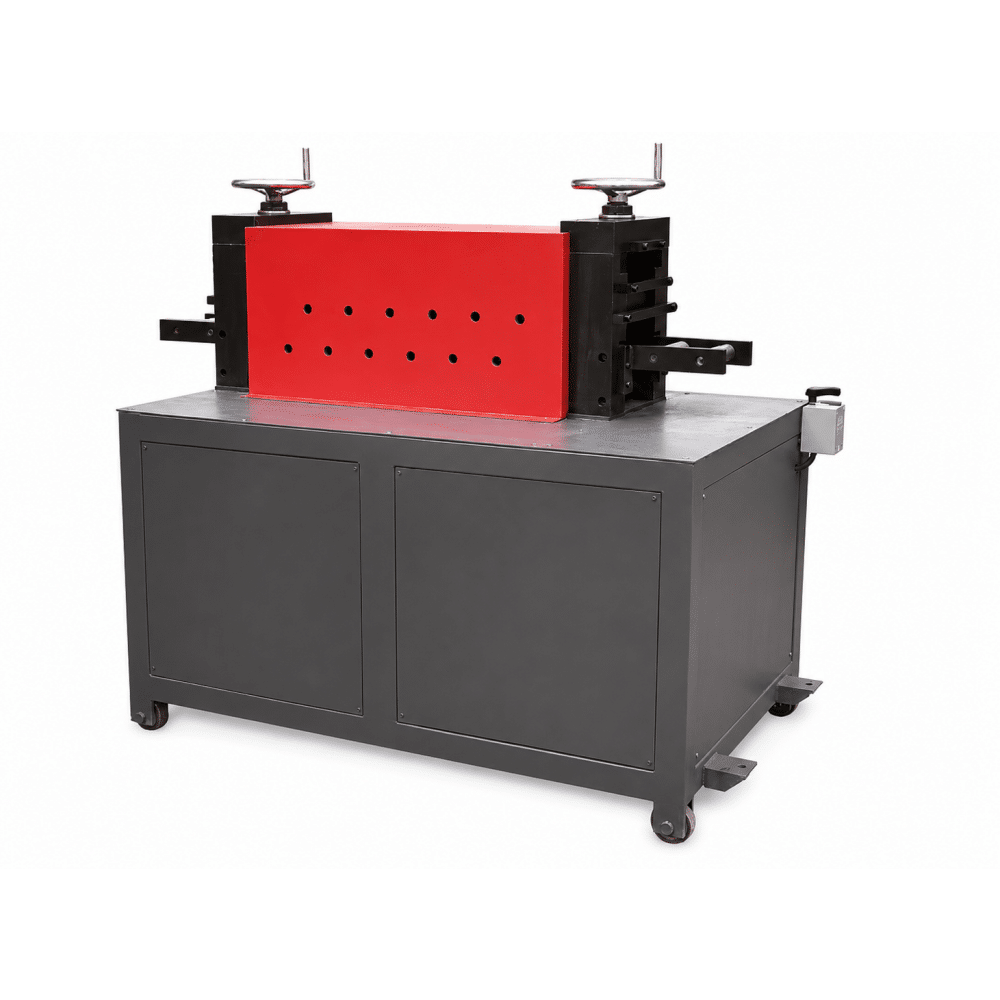
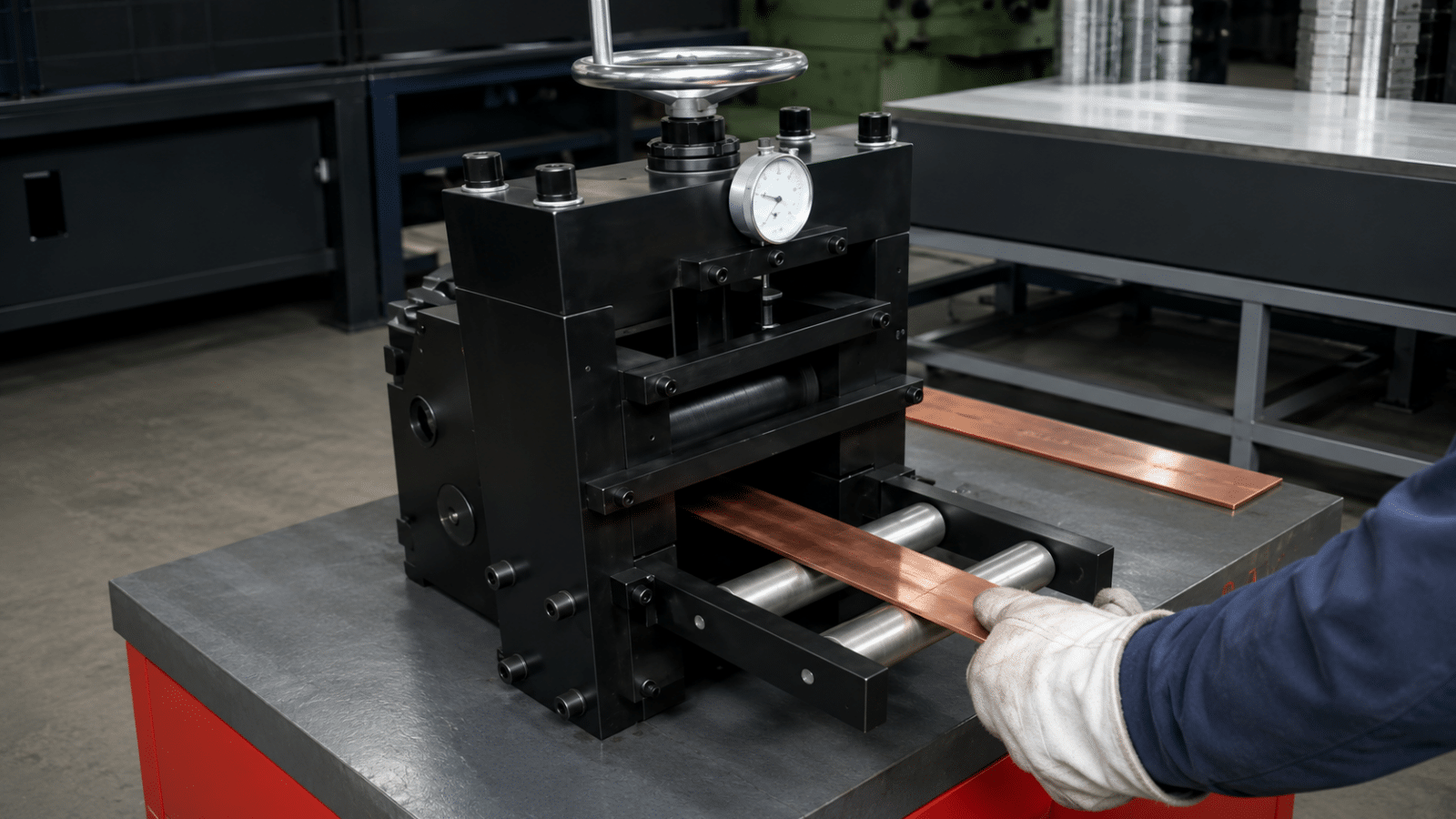
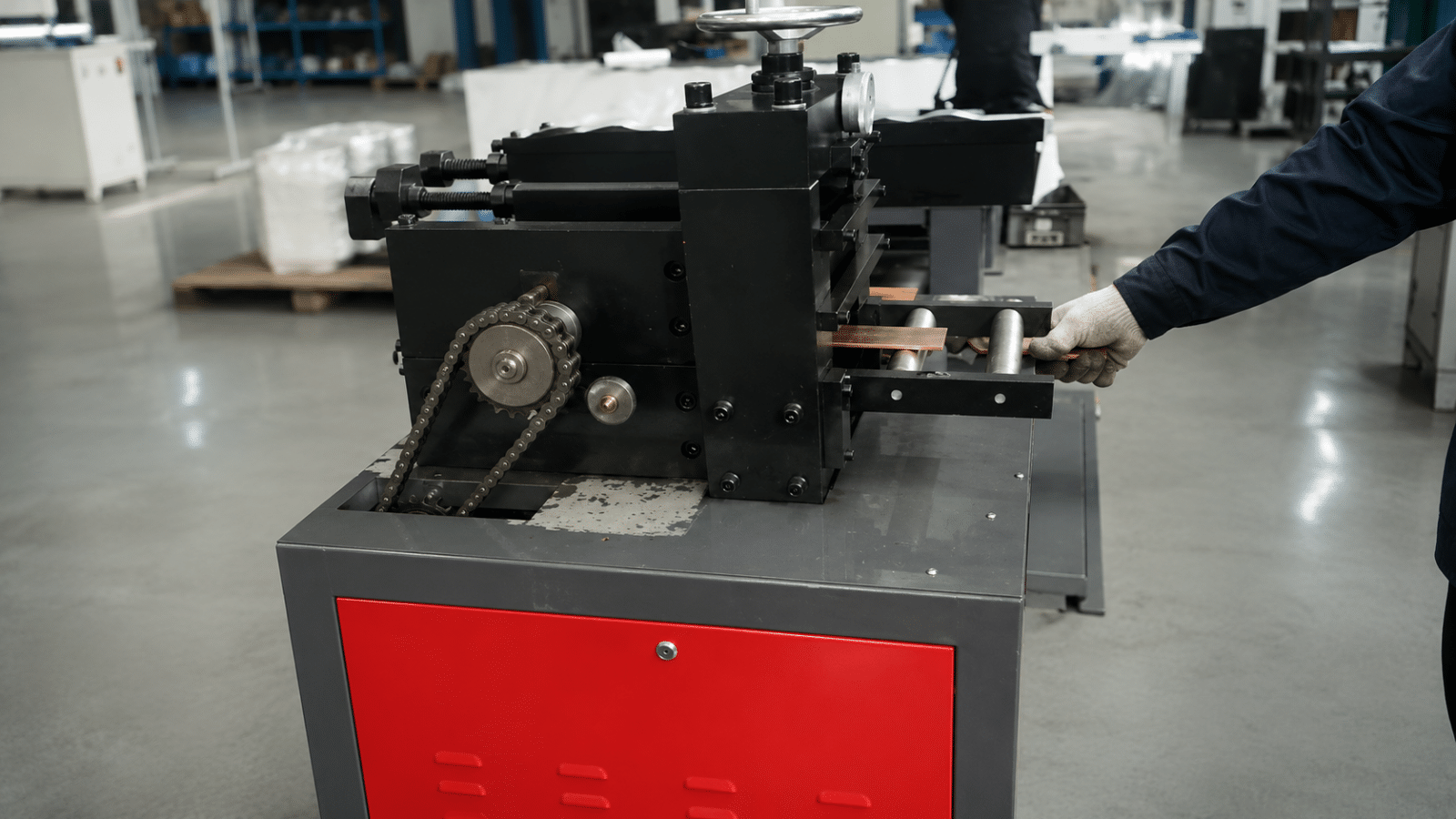
The TRANFOVIA Busbar Leveling Machine is a roller-type machine designed to level busbars before they continue to subsequent busbar processing or assembly operations. The machine uses a 13-roller arrangement and can be used together with other busbar processing equipment.
Two models are available. The MXJP-160 supports a maximum leveling cross section of 160 × 12 mm, while the MXJP-260 extends the range to 260 × 12 mm. Both models are specified for a flatness of <1 mm/m.
Application in Busbar Production
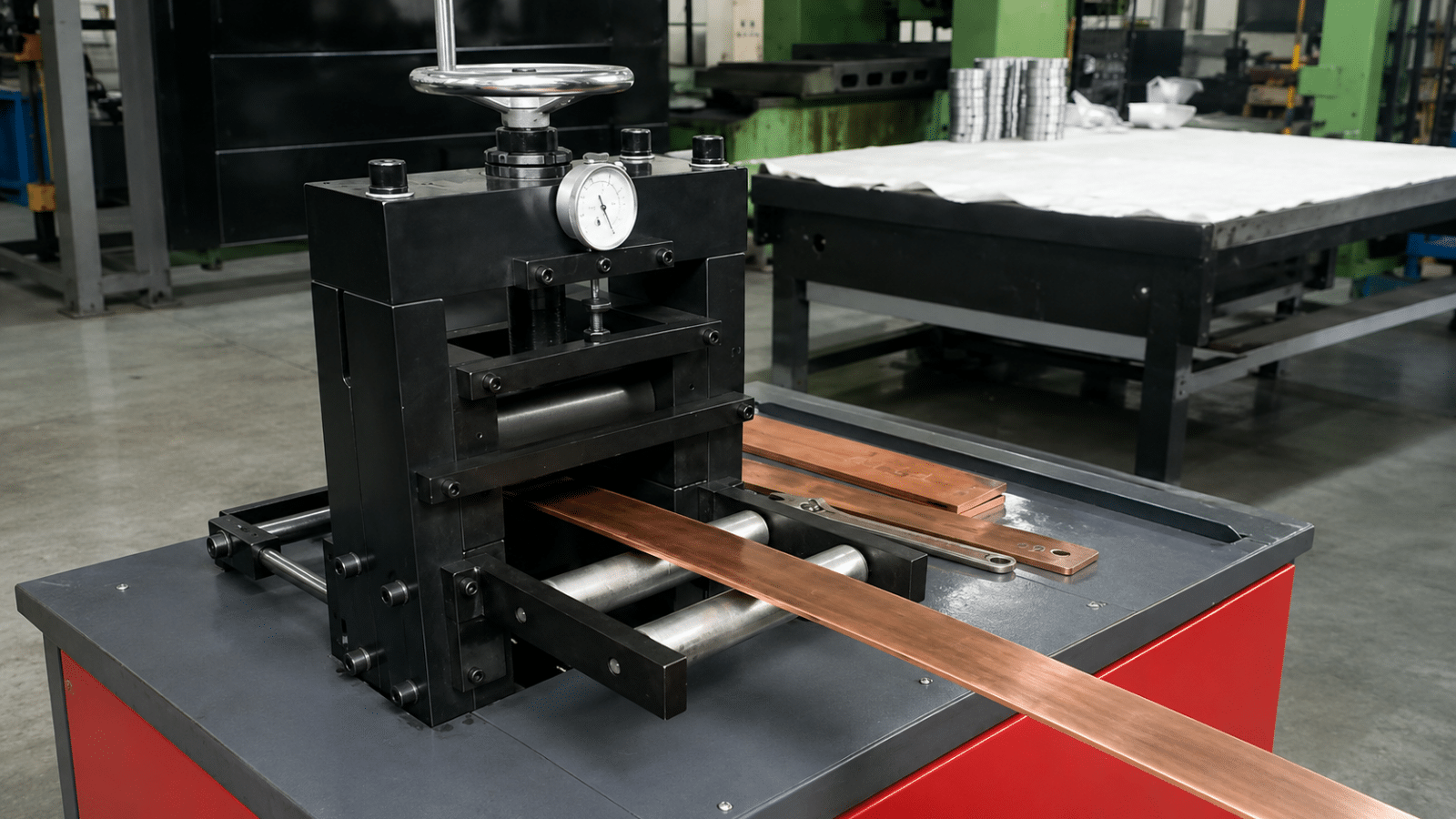
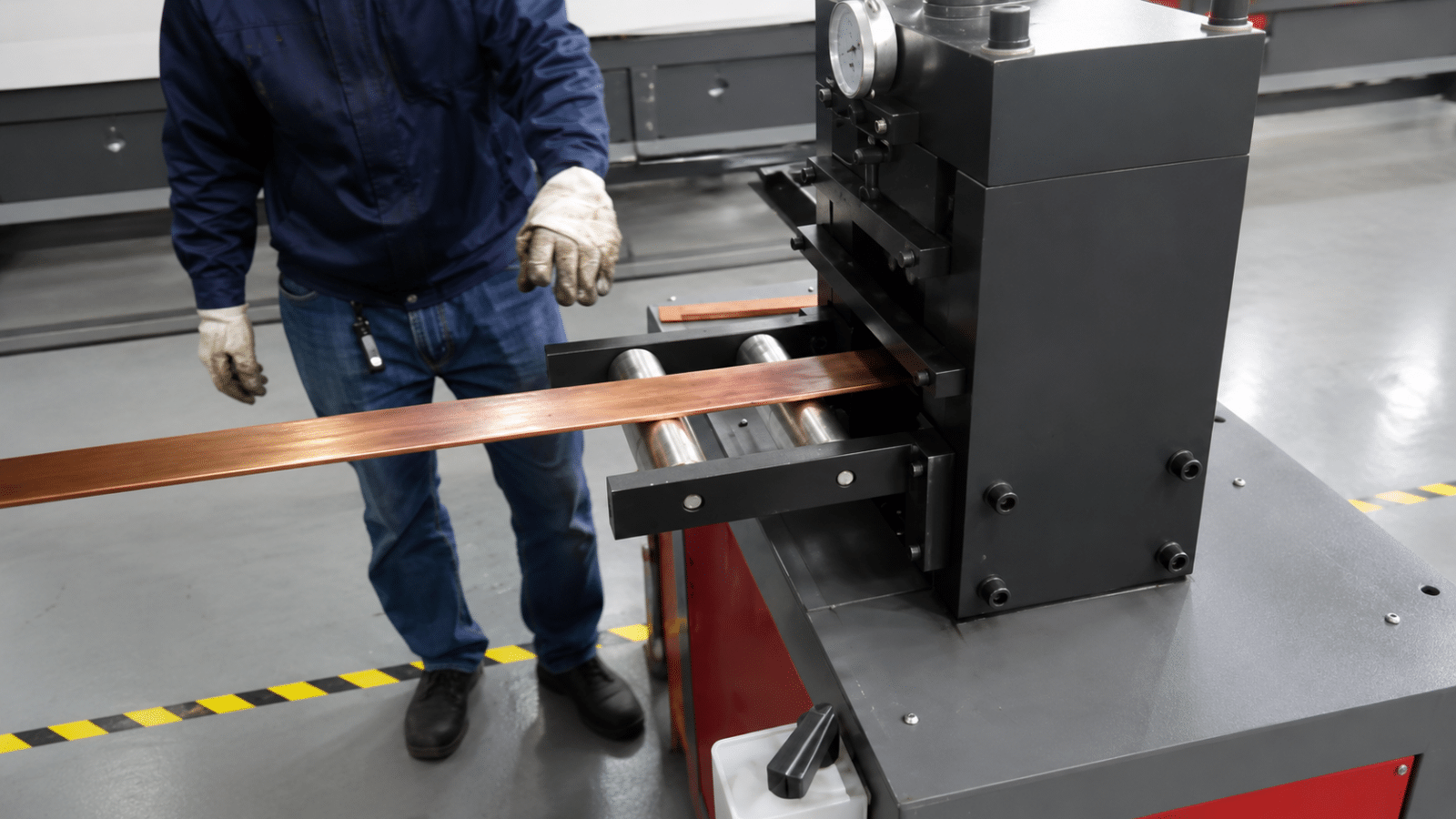
Busbars can require straightening and leveling before further processing. A dedicated roller leveling machine provides a separate station for correcting flatness so that the material can proceed to the next busbar manufacturing operation in a more controlled condition.
The MXJP series is used as a dedicated busbar leveling station and can be paired with busbar processing machines. It is suitable for workshops that require busbar flatness correction before the material enters subsequent processing or assembly.
13-Roller Leveling Structure
The machine uses 13 leveling rollers. This roller arrangement is designed for fast output, efficient operation and straightforward use.
As the busbar passes through the roller section, the repeated roller contact is used to correct the material and improve its flatness before downstream processing.
Curvature Compensation for More Stable Leveling
The machine incorporates curvature compensation technology. Compared with a conventional roller arrangement, this design improves workpiece slippage during leveling and provides a more reasonable force distribution.
The same design is also intended to reduce electrical energy consumption and extend machine service life by improving the way load is distributed through the leveling section.
Technical Specifications
| Parameter |
MXJP-160 |
MXJP-260 |
| Overall Dimensions |
1580 × 800 × 1300 mm |
1700 × 1000 × 1300 mm |
| Motor Power |
3 kW |
5.5 kW |
| Maximum Leveling Cross Section |
160 × 12 mm |
260 × 12 mm |
| Flatness |
<1 mm/m |
<1 mm/m |
| Machine Weight |
700 kg |
1200 kg |
Information Required for Machine Selection
To confirm the suitable leveling machine, provide the main busbar dimensions and production requirements:
- Maximum busbar width and thickness.
- Typical busbar cross sections used in production.
- Required flatness acceptance criterion.
- How the leveling machine will be arranged with existing busbar processing equipment.
- Factory electrical standard and available installation space.
FAQ
- What is a busbar leveling machine used for?
It is used to level busbars and improve flatness before the material continues to subsequent busbar processing or assembly operations.
- How many leveling rollers does the MXJP machine use?
The machine uses a 13-roller leveling structure.
- What is the maximum busbar size for the MXJP-160?
The listed maximum leveling cross section is 160 × 12 mm.
- What is the maximum busbar size for the MXJP-260?
The listed maximum leveling cross section is 260 × 12 mm.
- What flatness is specified for the machine?
Both models are listed with a flatness specification of <1 mm/m.
- What is the purpose of curvature compensation?
Curvature compensation improves workpiece slippage compared with a conventional roller arrangement, provides a more reasonable force distribution, saves electrical energy and helps extend machine service life.
- Can the leveling machine be used with other busbar processing equipment?
Yes. This machine can be used together with busbar processing equipment.
- How do I choose between MXJP-160 and MXJP-260?
Choose according to the largest busbar cross section in production. MXJP-160 covers up to 160 × 12 mm, while MXJP-260 extends the range to 260 × 12 mm.