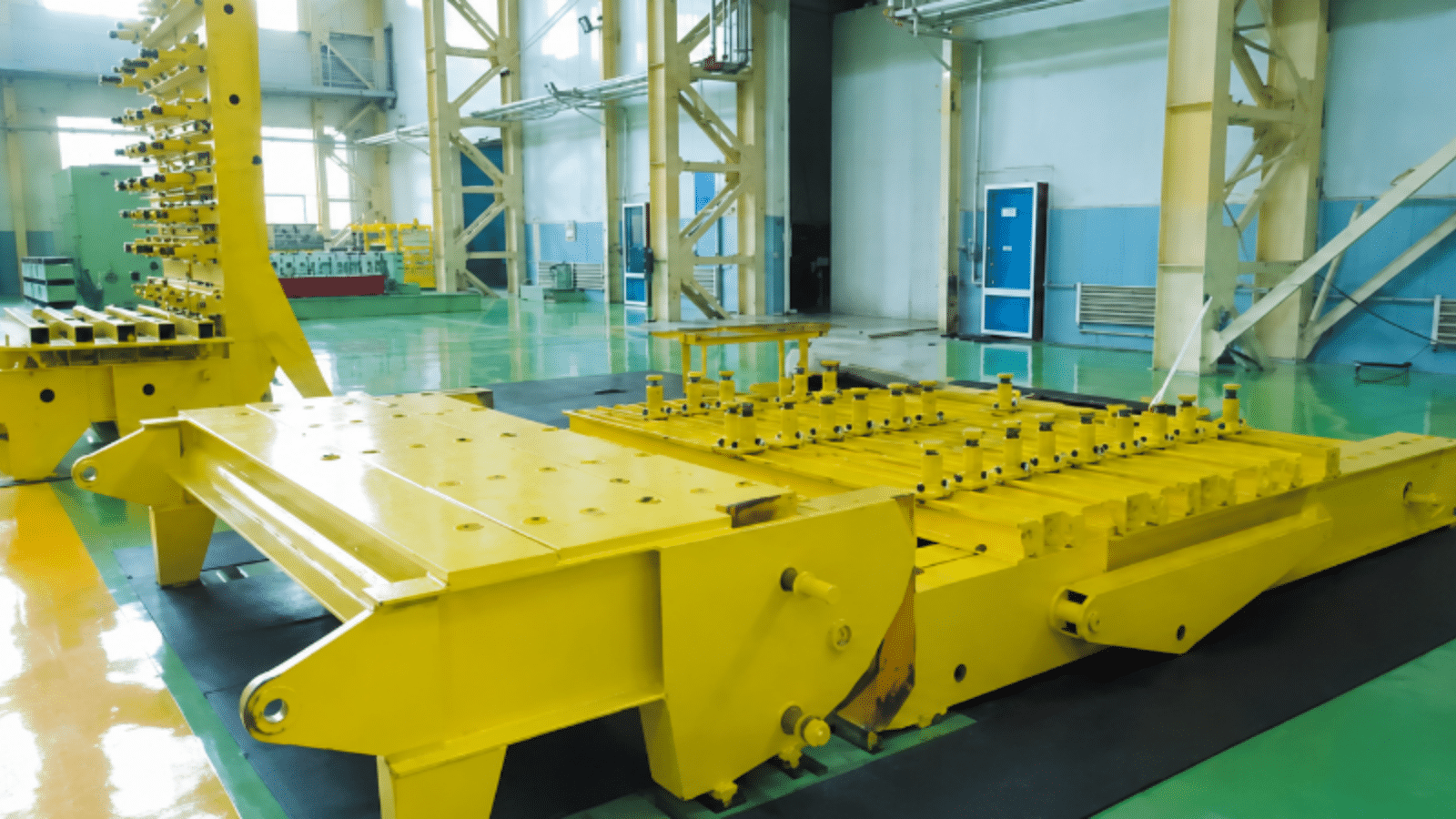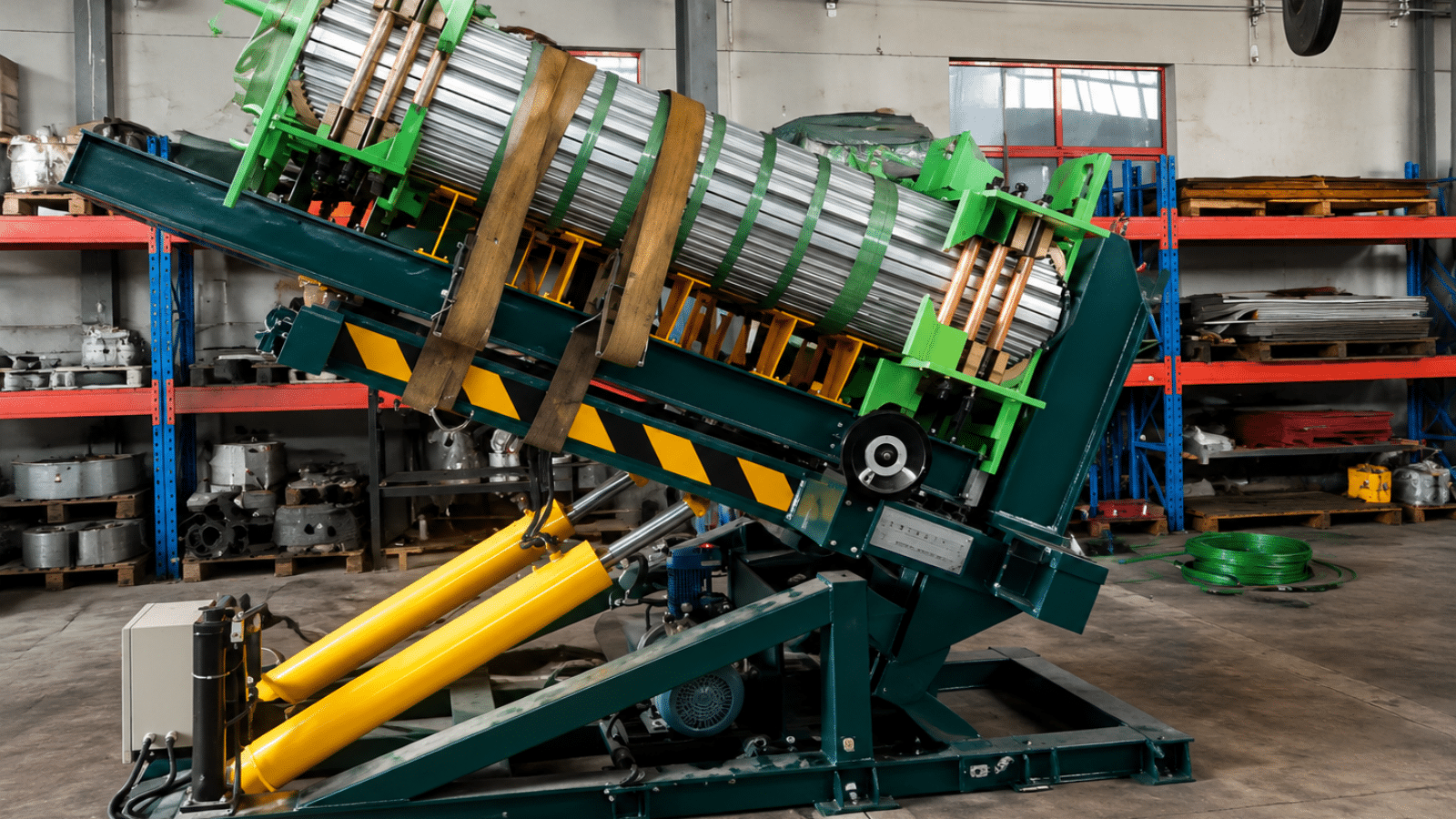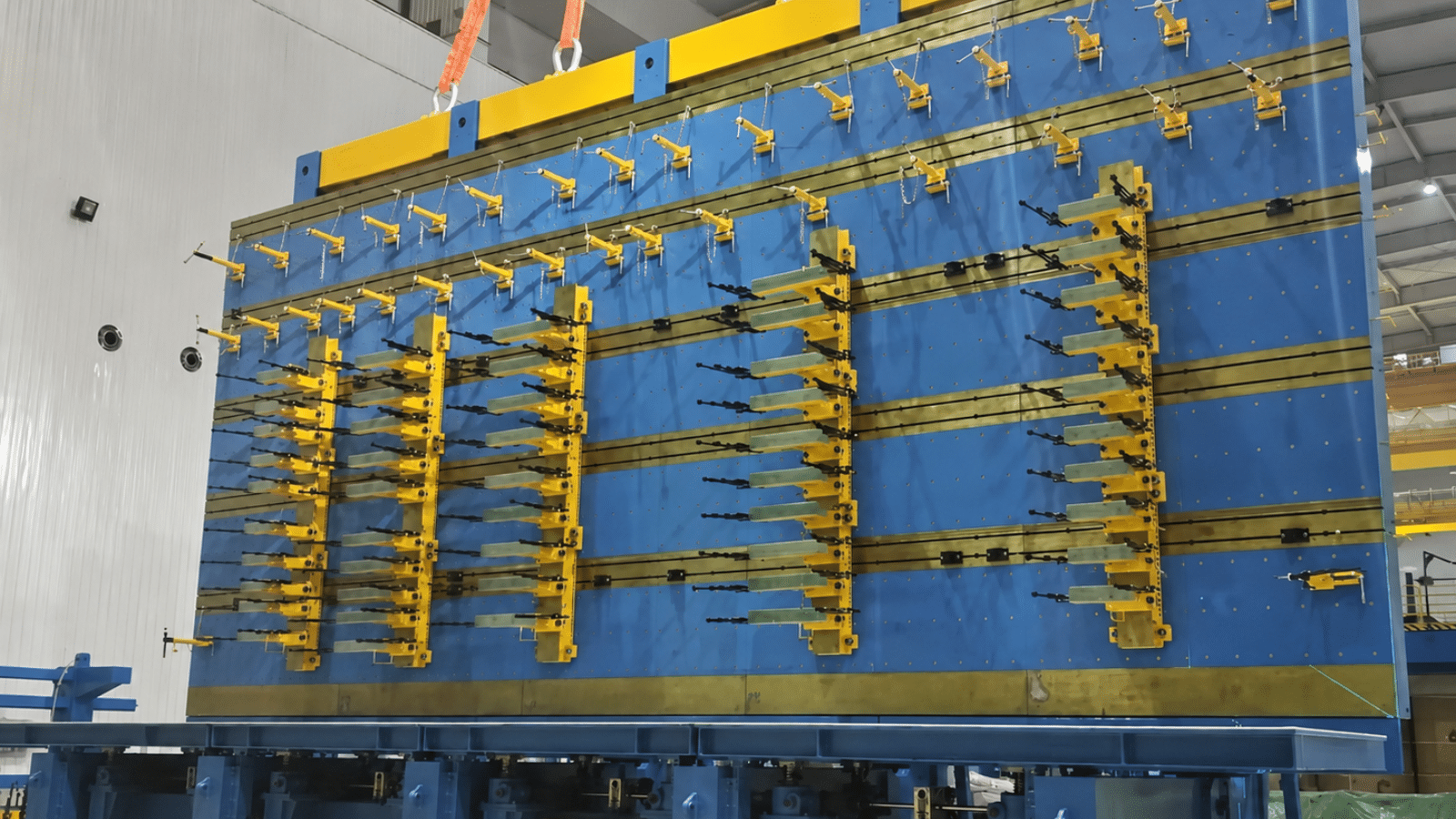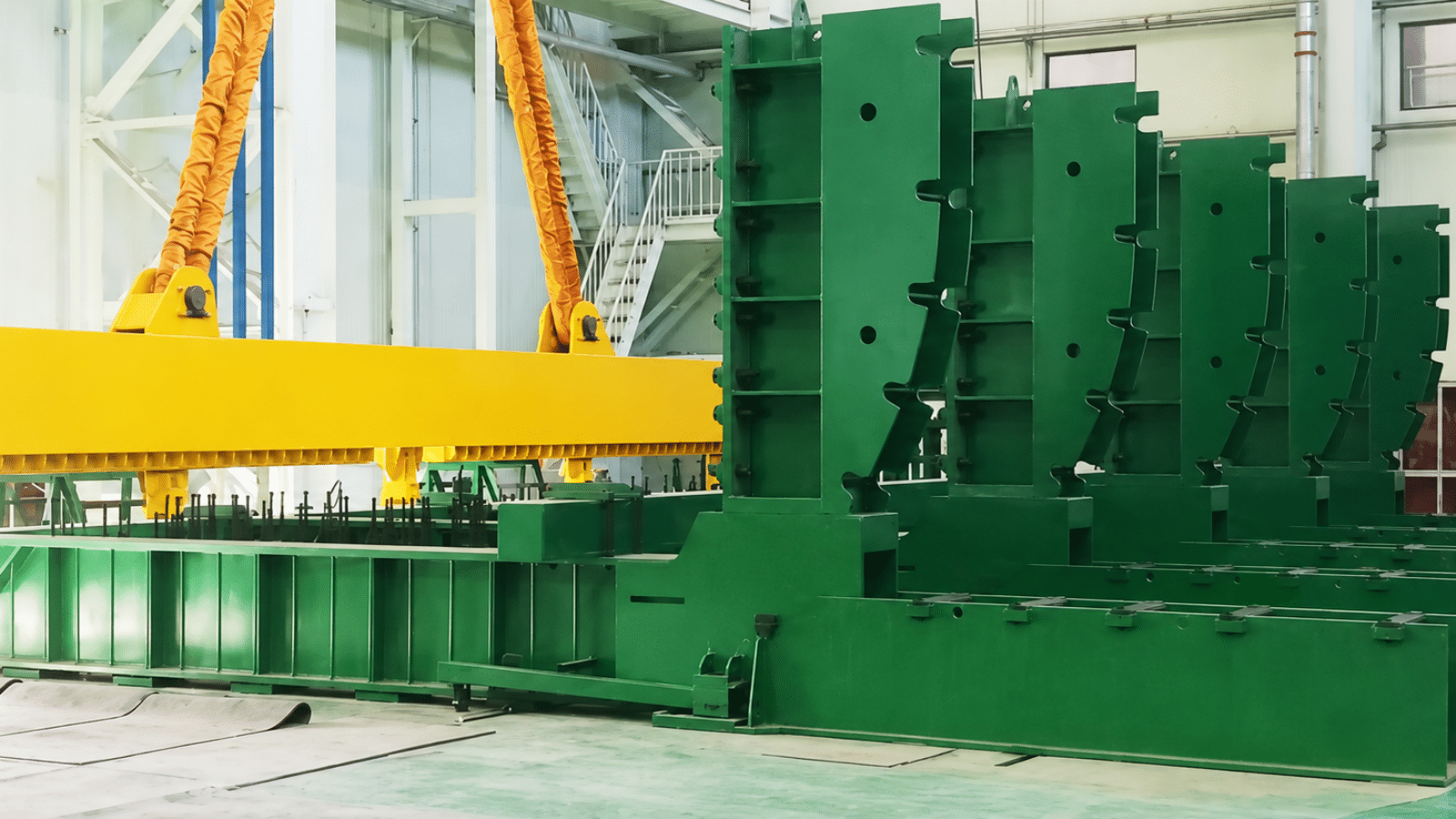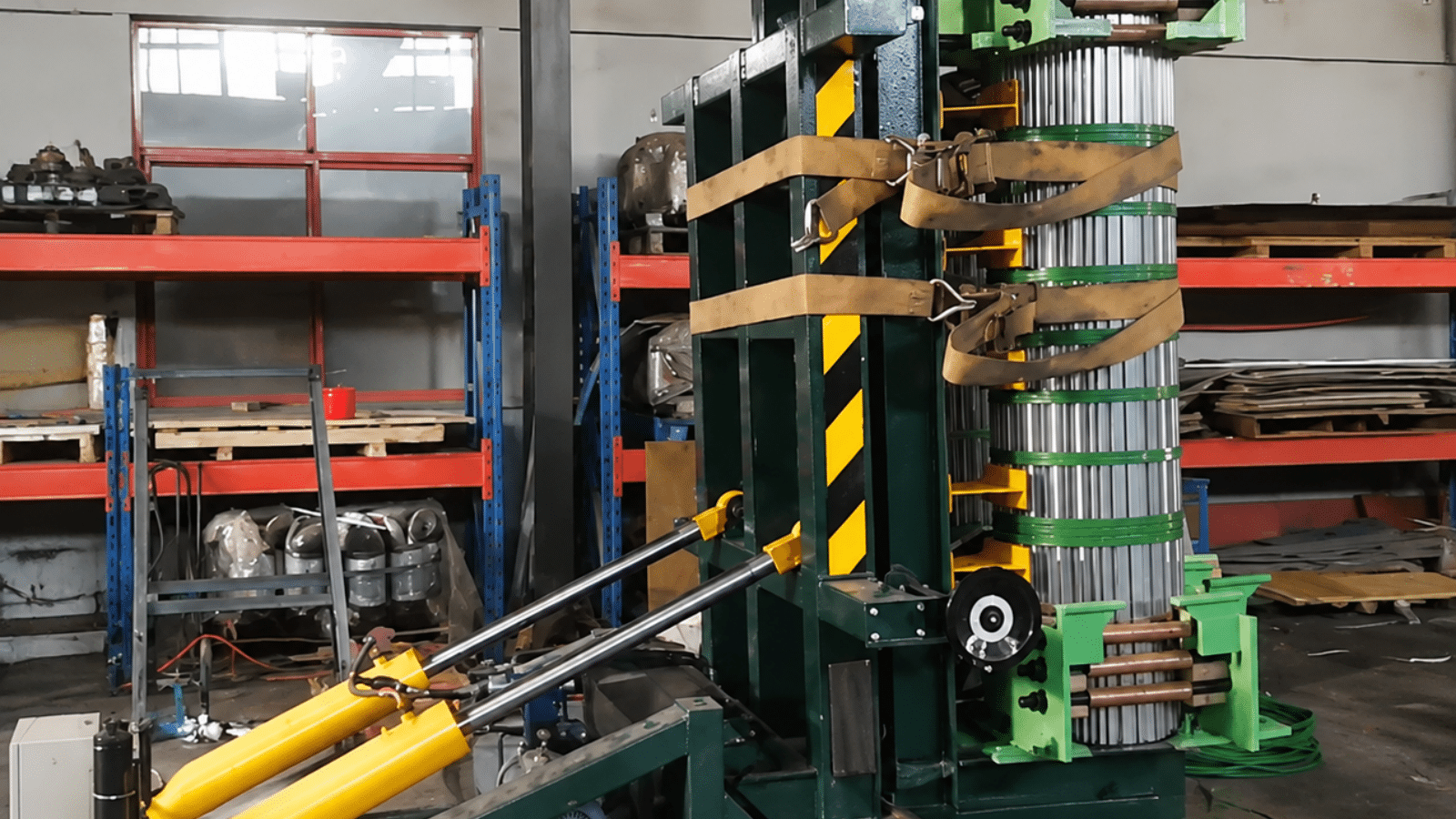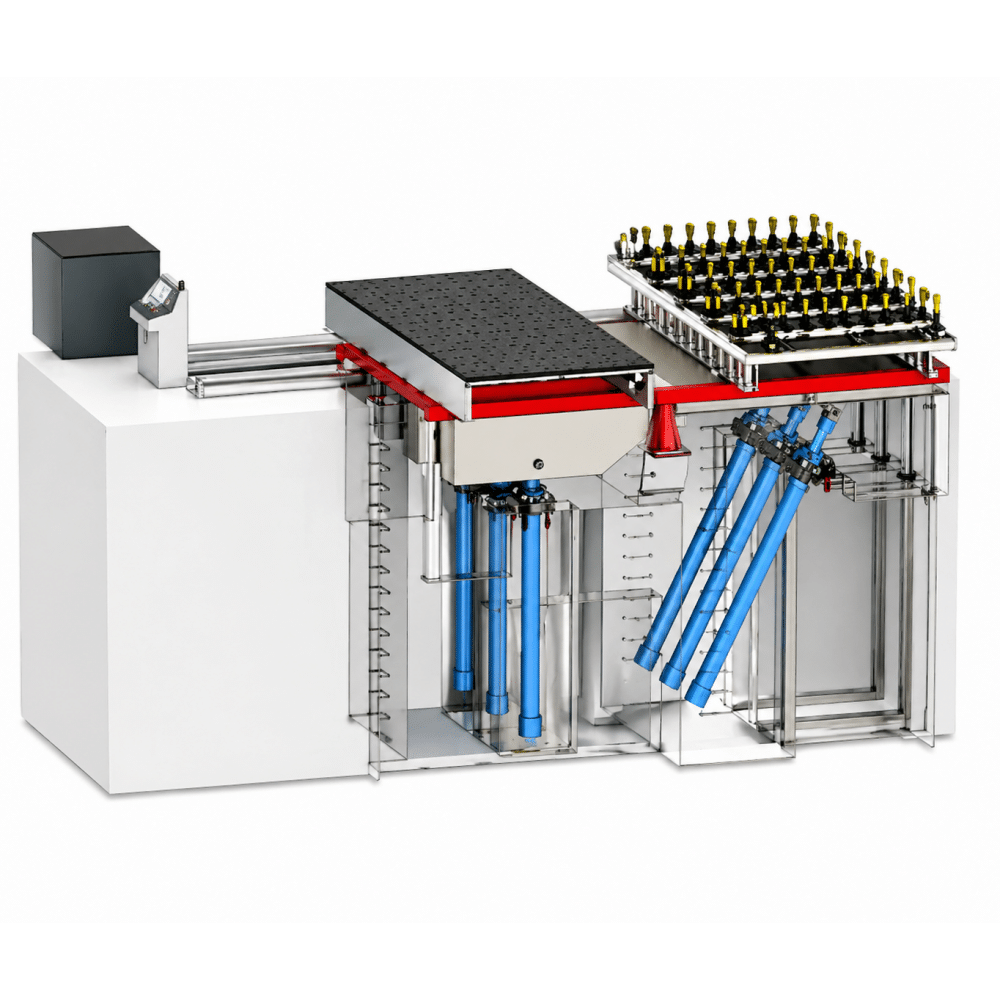
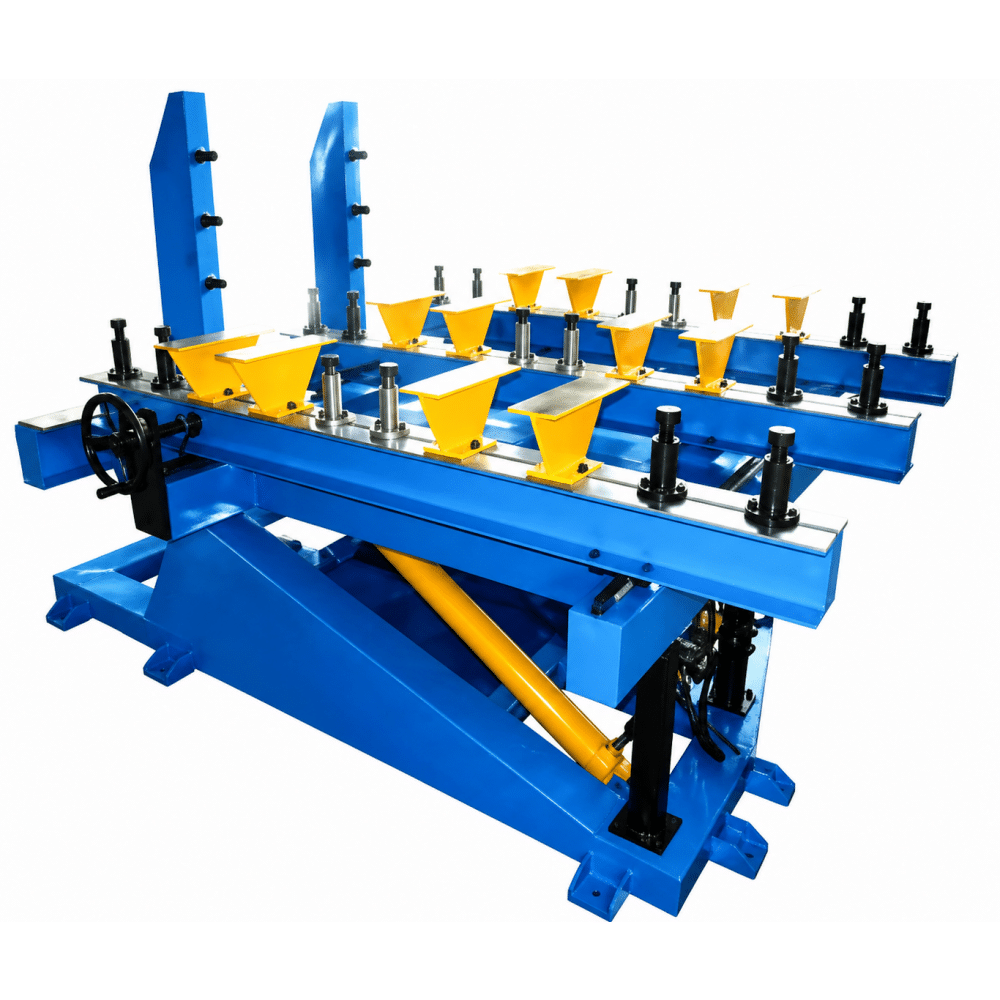
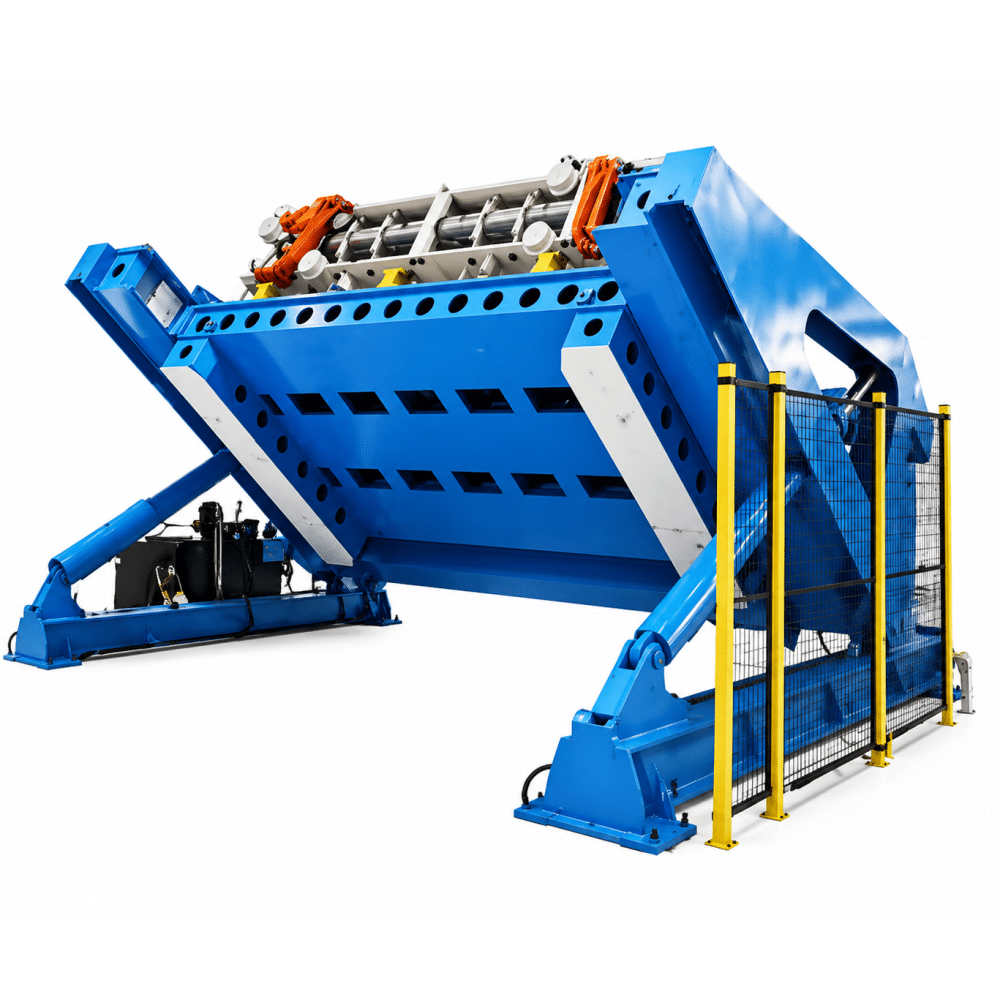
The TRANFOVIA transformer core stacking and turning table provides one coordinated platform for horizontal core stacking and crane-assisted turning into the vertical assembly position. Its modular table layout can be matched to three-limb or five-limb cores, while the no-pit structure reduces workshop modification and simplifies installation.
Large transformer cores are normally stacked in a horizontal position, but the completed core must be turned upright for subsequent assembly. Moving the core between separate stacking and turning stations increases lifting operations, floor-space demand and the risk of distortion during handling.
This equipment keeps the core on the same modular platform from the beginning of lamination stacking through the 90-degree turning operation. The workshop crane supplies the lifting force, while the turning beams, synchronized table sections and supporting outriggers guide and stabilize the movement.
| Core / Process Type | Table Configuration |
| Three-limb transformer core | Configured with three platform sections to support the three-column core arrangement. |
| Five-limb transformer core | Configured with five platform sections to support the five-column core arrangement. |
| Core stacked with the upper yoke | The complete core can be stacked before the turning operation. |
| Core stacked without the upper yoke | The core can also be turned as part of a production route in which the upper yoke is installed later. |
| Parameter | Unit | Value |
| Primary application | – | Stacking and 90-degree turning of medium and large transformer cores |
| Table arrangement | – | Modular combination matched to core window size |
| Center distance | – | Adjustable |
| Foundation requirement | – | No pit or special foundation |
| Turning power source | – | Workshop crane |
| Worktable deformation during turning | mm | < 3 |
| Vertical deviation before and after turning | mm | < 2 |
| Three-limb core configuration | platforms | 3 |
| Five-limb core configuration | platforms | 5 |
| Structural material | – | Hot-rolled section steel or welded low-carbon steel |
| Key surface treatment | – | Mechanical machining |
| Welded structure treatment | – | Aging / stress relief |
| Safety support | – | Extendable flip outriggers |
Available internal configuration references include FT02, FT05, FT10, FT20, FT30, FT50, FT80, FT100, FT150, FT200, FT250, FT350 and FT450.
It provides a horizontal surface for stacking the transformer core and then supports the same core during crane-assisted turning into the vertical assembly position.
No. The structure is designed for floor installation without a dedicated pit, reducing civil work and simplifying workshop integration.
The workshop crane supplies the lifting force while the turning beams and synchronized table sections guide the core through the 90-degree movement.
Yes. Three-limb cores use three platform sections, while five-limb cores use five platform sections.
Yes. The table supports production routes with the upper yoke installed before turning as well as routes where the upper yoke is added later.
The welded structure, machined reference surfaces, synchronized table sections and structural verification limit worktable deformation to less than 3 mm during the turning operation.
Extendable flip outriggers on the longitudinal beams provide additional support after the core reaches the vertical position.