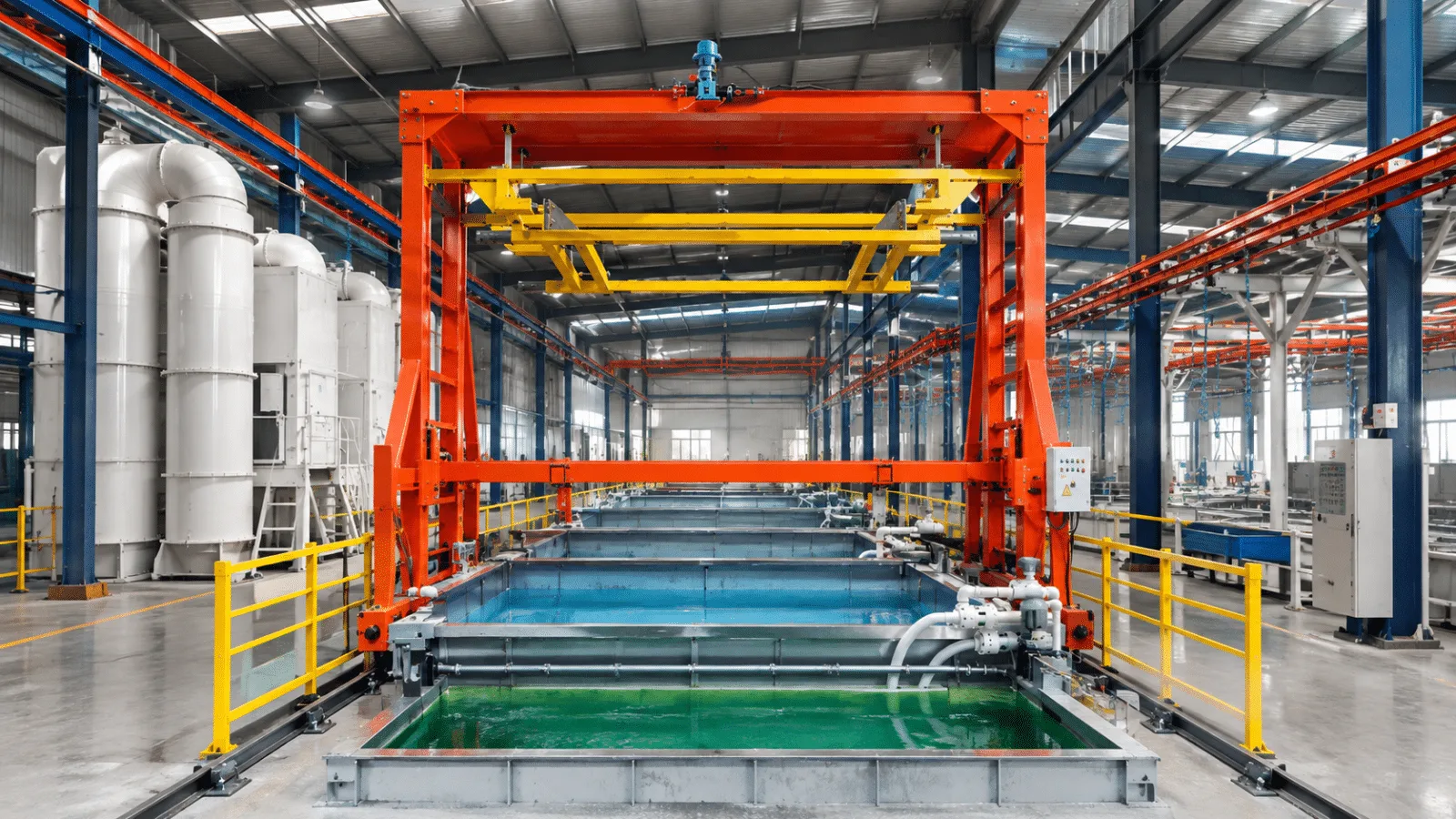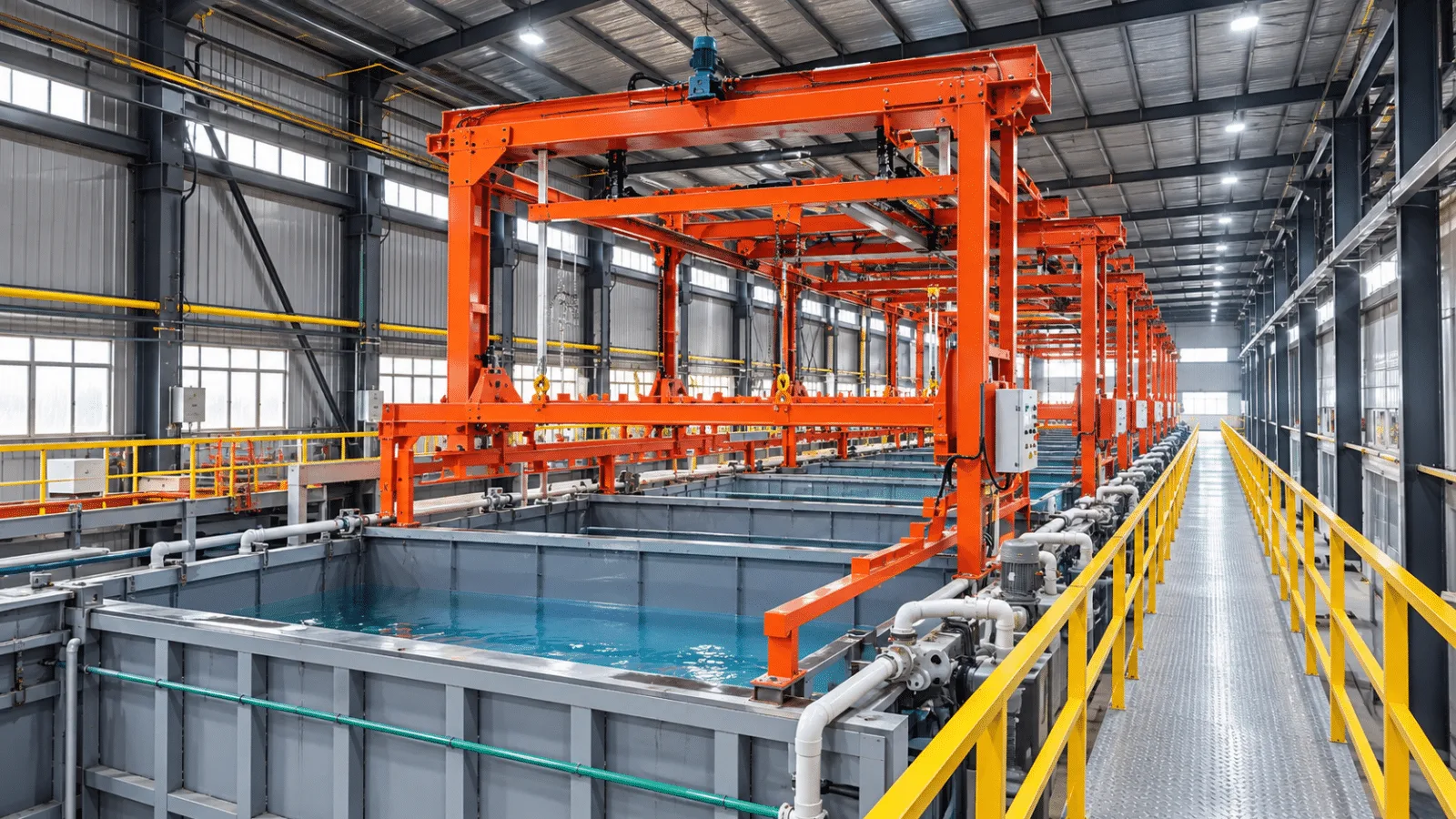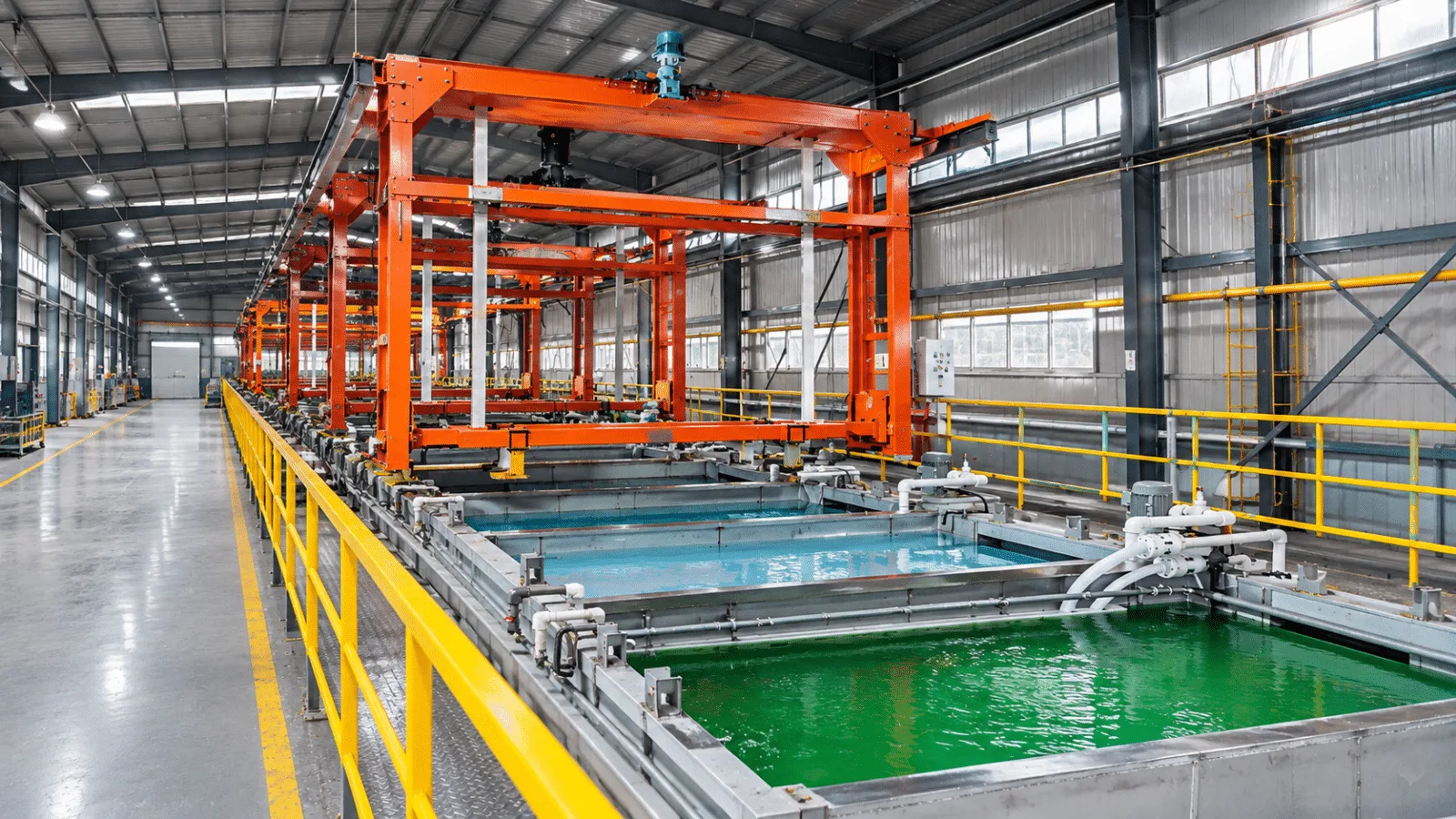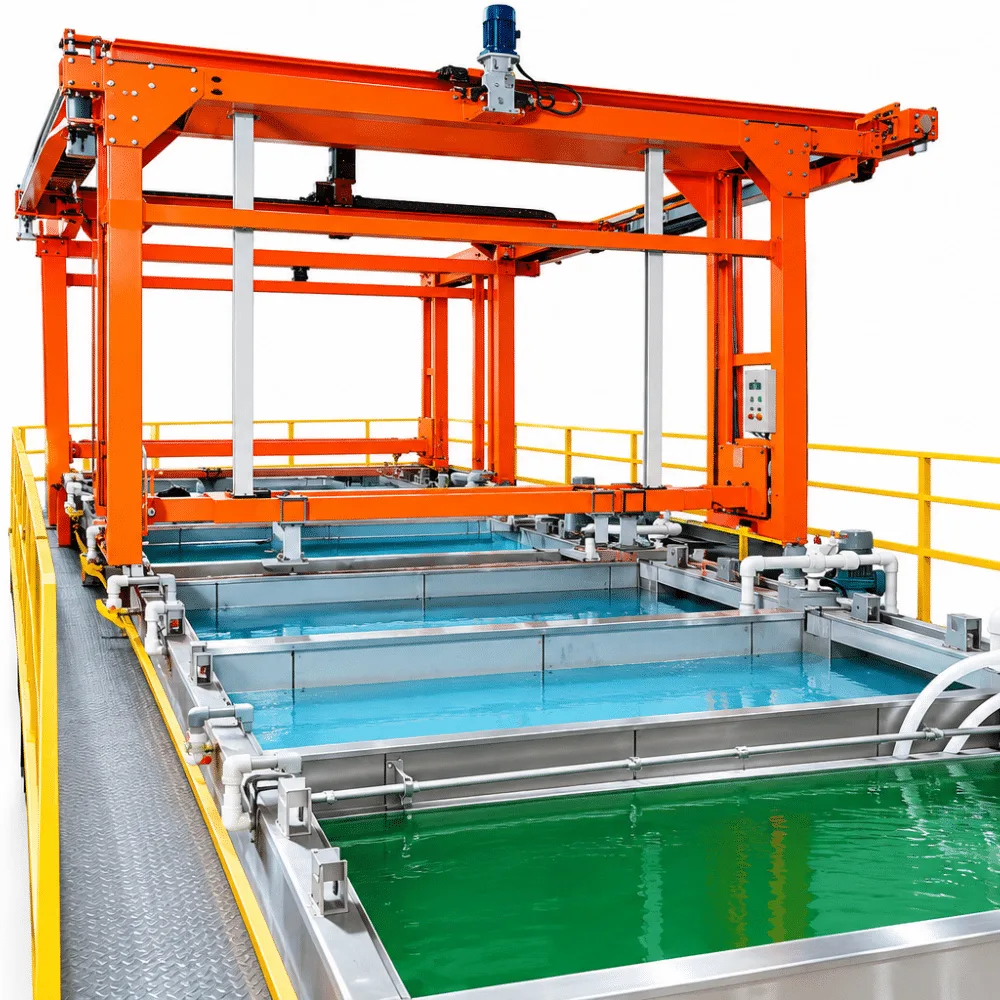
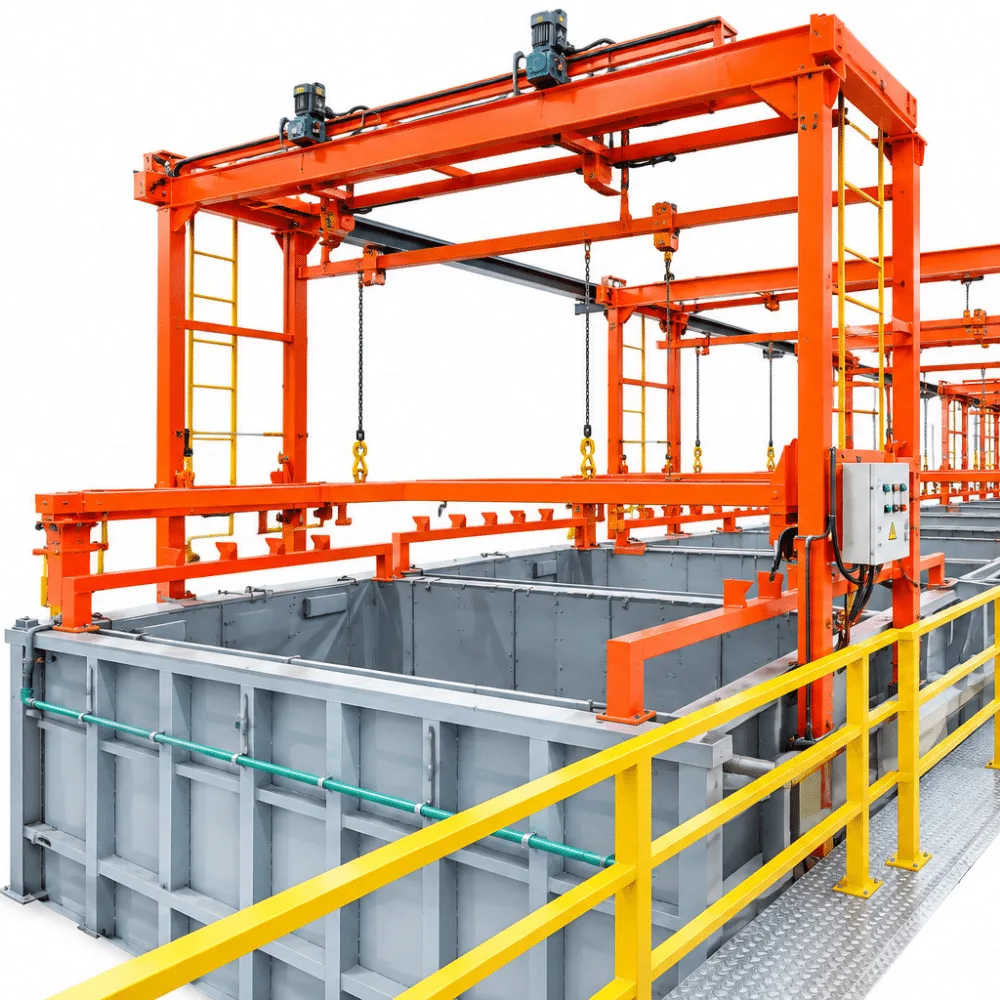
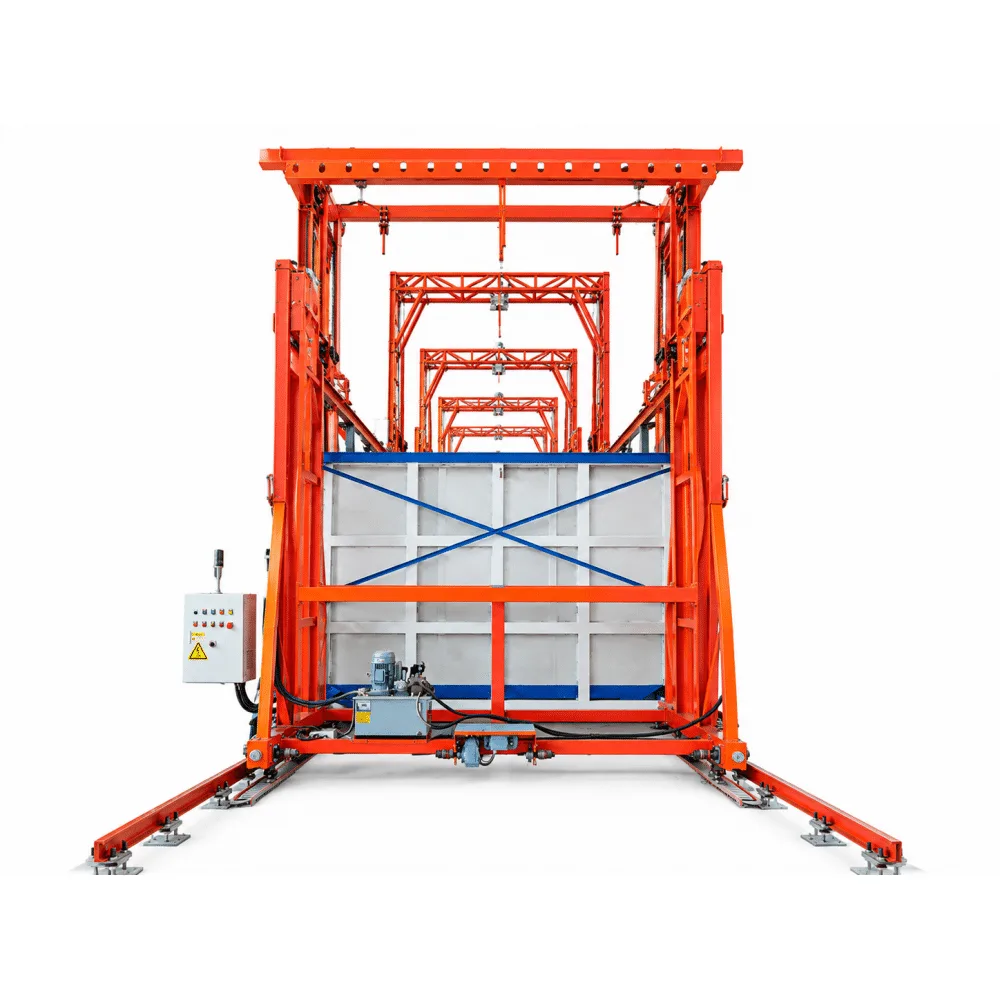
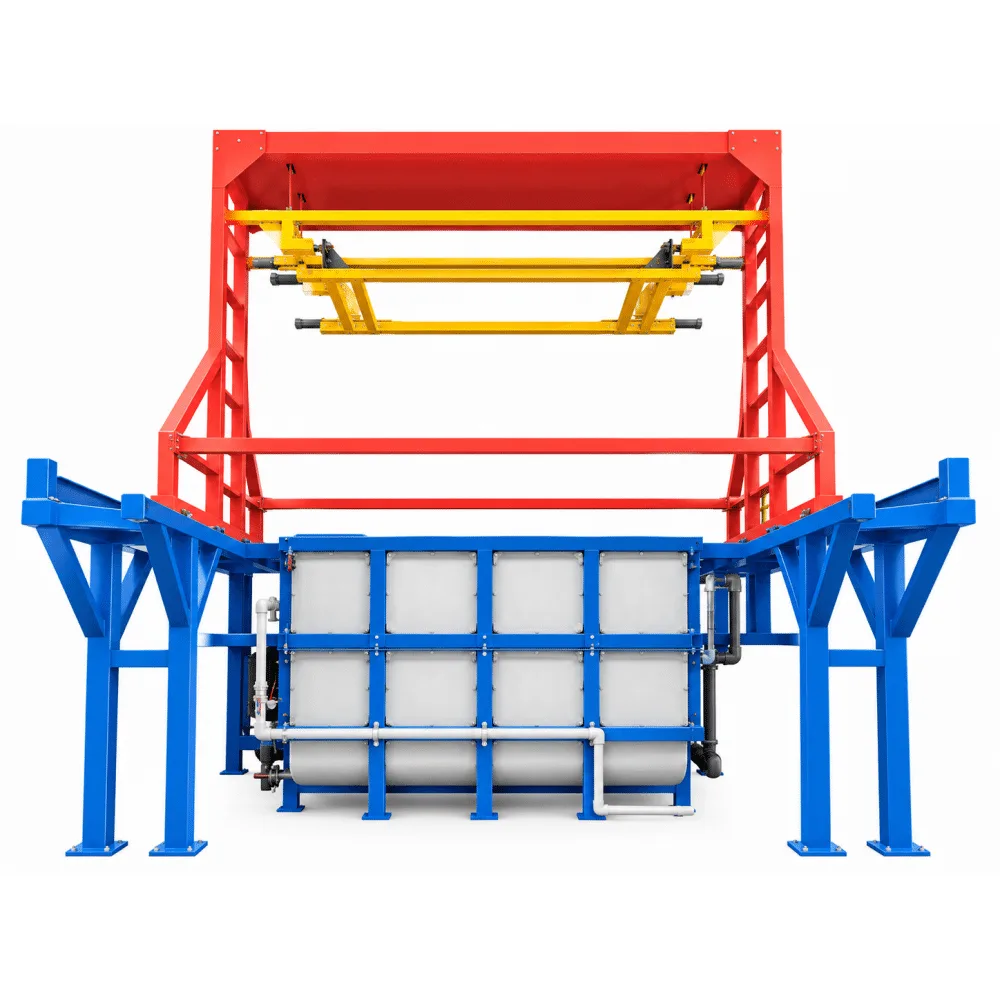
The Automatic Immersion Pretreatment Line for Transformer Tanks is a heavy-duty, turnkey surface preparation system engineered specifically for transformer manufacturers, switchgear builders, and heavy steel fabrication plants. Designed for workpieces up to 3,000 kg and configured in 7-tank (standard) or 9-to-12-tank (complete) layouts, this gantry-type line utilizes programmable overhead hoists and total immersion to deliver superior degreasing, surface conditioning, and zinc phosphating on complex box structures prior to painting or powder coating.
Transformer tanks feature complex internal baffles, flange faces, multi-directional weld seams, and deep cavities. Traditional spray tunnels often leave internal shadows and unreached pockets where conversion coatings fail. Total immersion ensures that every wetted surface—inside and out—is exposed to identical bath chemistry, temperature, and dwell time. Backed by a zinc phosphate film rated for over 200 hours of salt spray resistance, this system guarantees long-term corrosion protection for outdoor power and distribution transformers.
| Process Stage | Treatment Method | Treatment Solution | Temperature | Dwell Time | Agitation & Control |
|---|---|---|---|---|---|
| Pre-Degrease | Immersion | Alkaline cleaner 30–50 g/L | 50–60°C | 2–8 min | Submerged pump circulation |
| Main Degrease | Immersion | Alkaline cleaner 40–60 g/L | 50–60°C | 3–8 min | Submerged pump circulation |
| Water Rinse 1 | Immersion + Out-of-tank spray | Industrial water | Ambient | 1–2 min | Overflow rinse, conductivity <500 μS |
| Acid Pickling (Optional) | Immersion | HCl 18–20% + Inhibitor | Ambient (≤30°C) | 8–12 min | Acid-resistant air agitation, Free acid 5–7 points online monitoring |
| Water Rinse 2 | Immersion + Out-of-tank spray | Industrial water (2-stage counter-flow) | Ambient | 1–2 min each | Counter-flow overflow, conductivity <200 μS |
| Neutralizing (Optional) | Immersion | Na₂CO₃ 3–5 g/L | Ambient | 1 min | pH online control 8–9 |
| Surface Conditioning | Immersion | Titanium colloid 0.1–0.2% | 50–60°C | 1–2 min | Mechanical agitation |
| Zinc Phosphating | Immersion | Zinc phosphating solution (Total acid 25–35 pts) | 55–65°C | 3–12 min | Air agitation + circulation filtration, Coating weight 2–4 g/m² |
| Water Rinse 3 | Immersion | Industrial water | Ambient | 1 min | Overflow rinse |
| Deionised Final Rinse | Immersion + Out-of-tank spray | Deionised pure water <30 μS/cm | Ambient | 1 min | Cl⁻ <20 ppm red-line monitoring |
| Dewatering Dry-Off (Optional) | Hot air circulation | Natural gas hot air furnace 350 kW | 80–100°C | 10–15 min | PID temperature control ±2°C, Uniformity ±3°C |
| Parameter | Specification |
|---|---|
| Application | Transformer tanks and large welded steel fabrications (Q235B / SPCC) |
| Workpiece Envelope | Approx. L2500 × W1500 × H1850 mm (Customizable) |
| Max Workpiece Weight | 3,000 kg |
| Process Stages | 7 tanks (Standard) / 9–12 tanks (Complete with pickling & oven) |
| Designed Output | 16–20 pieces per shift (approx. 50 min per piece) |
| Handling System | Programmed overhead hoist, inverted two-point hanging |
| Heating & Temperature | 50–65°C, PID controlled via external 316L plate heat exchangers (±2°C) |
| Control System | Siemens S7-1200 PLC + 10″ HMI touch screen, 30 days data logging |
| Corrosion Performance | Zinc phosphate coating weight 2–4 g/m²; salt spray resistance ≥200 h |
| Power Supply | 230/400V, 50/60Hz (Configured to destination market standards) |
The standard design handles tank envelopes up to L2500 × W1500 × H1850 mm and 3,000 kg. However, tank dimensions, hoist ratings, and bath volumes are fully customized to your specific drawing and production output targets.
If your facility already performs shot blasting to remove mill scale and rust, the 7-tank version is recommended. If your raw material carries mill scale or rust, the 9-tank version with hydrochloric acid pickling and an inhibitor is required to dissolve oxides before phosphating.
To prevent hydrogen embrittlement on stressed weldments, our pickling bath is dosed with an effective inhibitor, dwell time is strictly controlled (8–12 minutes), and the process is immediately followed by neutralizing and counter-flow rinsing stages.
The line requires industrial water (approx. 1 t/h at 0.2–0.3 MPa), compressed air (approx. 2 m³/min at 0.4–0.7 MPa), electricity (400V 50/60Hz, installed power 42 kW for standard or 150 kW for complete version), and heating fuel (natural gas approx. 59.5–116 m³/h or diesel approx. 163 L/h).
On the 7-tank version, there is no acid stage, so an exhaust scrubber is not required. On the 9-tank complete version, pickling produces acid fumes and wastewater; thus, treatment systems are integrated to ensure legal compliance. These environmental systems can be custom-sized to match your local discharge limits rather than standard benchmarks.