TRANFOVIA(NINGBO) EQUIPMENT TECHNOLOGY CO.,LTD

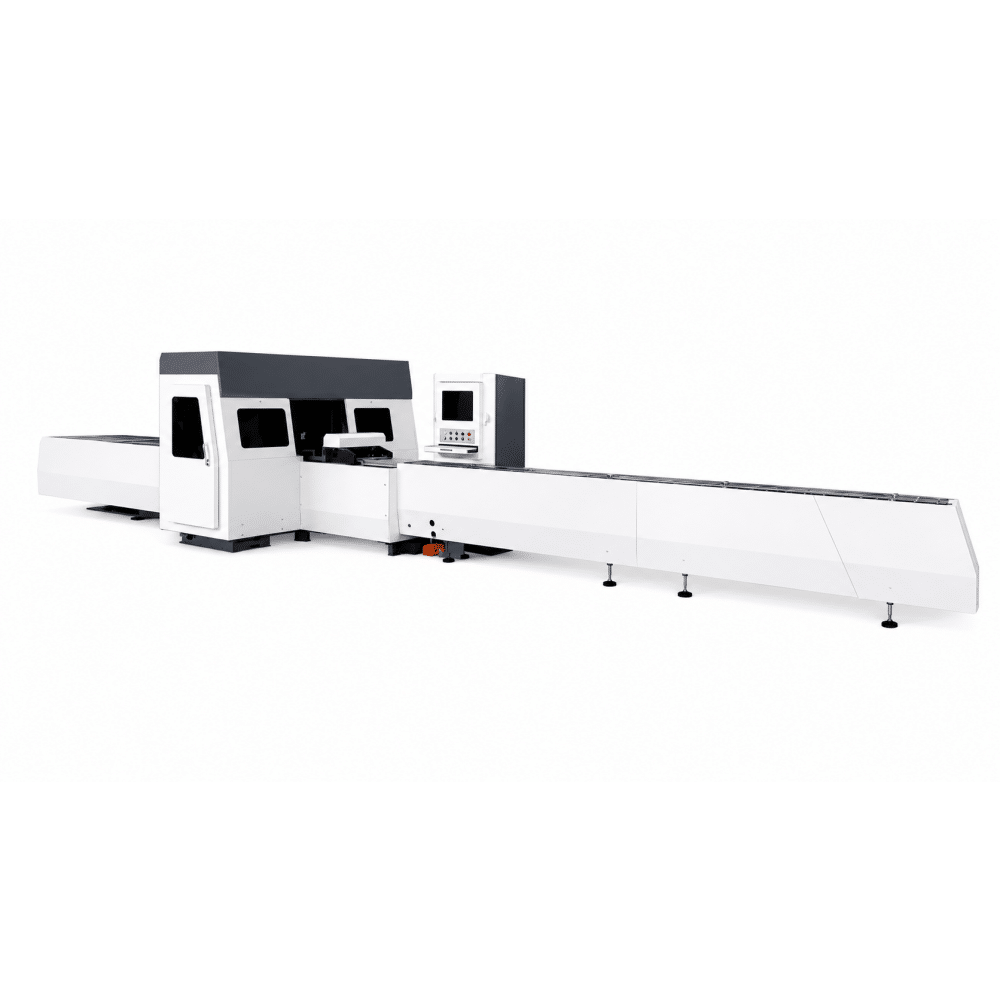
The CNC Bus Sawing and Folding Machine MXC60-260 is designed for full CNC processing of copper busbars used in transformers, switchgear, electrical cabinets, and power distribution systems.
This machine integrates busbar sawing, folding, bending, and forming into one automated production process. It helps manufacturers improve busbar processing speed, dimensional accuracy, and forming consistency.
For transformer and electrical equipment manufacturers, busbar quality directly affects assembly efficiency and electrical connection reliability. This CNC busbar sawing and folding machine provides stable hydraulic power, multi-axis control, and precise cutting movement, making it suitable for high-efficiency copper busbar production.
Compared with traditional manual busbar processing, this machine reduces labor dependence, improves repeatability, and supports batch production of copper busbars with different shapes and specifications.
The machine is suitable for processing copper busbars used in transformer lead-out connections, internal conductive structures, and electrical connection assemblies.
This CNC busbar processing machine can be used for copper busbar cutting and folding in medium-voltage and low-voltage switchgear production.
It supports the production of conductive copper busbars for power distribution cabinets, busduct systems, and electrical panels.
The machine is suitable for manufacturers that need stable busbar sawing, bending, and forming in batch production.
It can be used in specialized busbar processing workshops that supply finished copper busbar components to transformer, switchgear, and power equipment factories.
The machine performs CNC-controlled sawing and folding processes on copper busbars, helping achieve high processing speed and stable forming quality.
The hydraulic system adopts dual-speed and dual-pressure rapid oil supply. The maximum output force can reach 600 kN, providing strong support for copper busbar folding and forming.
The circular saw movement is mainly driven by a servo motor through a rack-and-pinion mechanism, enabling stable reciprocating motion. This allows the circular saw to perform both cutting feed and tool retraction.
The folding unit works through the coordinated movement of two axes driven by hydraulic cylinders. The system can lift to different heights to achieve the required bending and folding effect.
With CNC control and servo-driven movement, the machine supports stable dimensional control during busbar cutting and forming.
The MXC60-260 model can process copper busbars with a maximum width of 260 mm and a maximum thickness of 6 mm.
For transformer factories and switchgear manufacturers, this machine can improve busbar processing efficiency and reduce manual correction work.
| Item | Unit | Parameter |
| Nominal Pressure — Lifting Unit | kN | 600 |
| Nominal Pressure — Pressing Unit | kN | 600 |
| Control Axes | Axis | 6 |
| Saw Blade Length Accuracy | mm/m | ±0.20 |
| Max. Copper Busbar Width | mm | 260 |
| Max. Copper Busbar Thickness | mm | 6 |
| Machine Footprint | mm | 9500 × 2980 × 1700 |
| No. | Component | Brand |
| 1 | Main Motor | ABB |
| 2 | Programmable Logic Controller | Beckhoff, Germany |
| 3 | Servo Motor | Rexroth |
| 4 | Intermediate Relay | Honeywell |
| 5 | Servo Driver | Rexroth |
| 6 | Industrial Computer | Beijing Qiyang |
A CNC Bus Sawing and Folding Machine is used to process copper busbars through sawing, folding, bending, and forming. It is mainly used in transformer, switchgear, and electrical equipment manufacturing.
It belongs to the CNC busbar processing machine category, but this model focuses on busbar sawing and folding instead of punching or simple shearing.
The machine is mainly designed for copper busbar processing. Depending on the configuration and material condition, it may also be adapted for aluminum busbar processing.
Sawing uses a saw blade to cut the busbar, usually suitable for controlled cutting sections. Shearing uses a blade to cut by shear force. They are different cutting methods and should not be mixed in technical descriptions.
In busbar processing, bending generally refers to forming the busbar to a required angle or shape. Folding is often used to describe a specific forming process where the busbar is folded through coordinated mechanical or hydraulic movement.
