
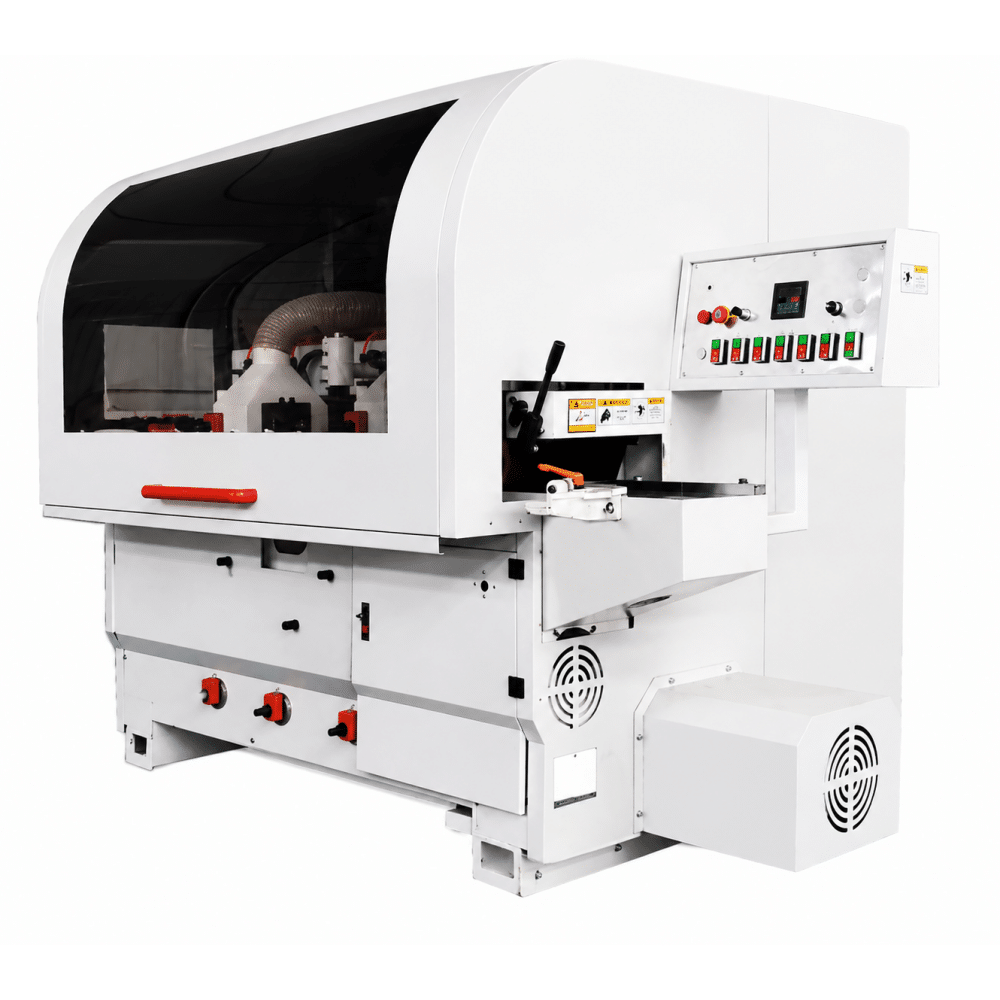
The Batten Shaping Machine is designed for efficient production of insulation strips and oil duct battens used in transformer manufacturing. This batten shaping machine for transformer applications integrates slitting, shaping, and chamfering into one process, significantly improving productivity and material utilization.
As a key piece of insulation strip forming equipment, it ensures smooth surfaces, burr-free edges, and consistent dimensions, making it ideal for distribution and power transformer production.
This batten shaping machine is mainly used for producing transformer insulation strips and oil passages. It can slit insulation pressboard and shape multiple strips in one operation, making it highly efficient for transformer oil duct strip manufacturing.
One feeding operation can produce 10–20 strips simultaneously, making it up to 5 times more efficient than traditional single-strip machines.
Combines multiple processes into one system, ensuring smooth edges and burr-free surfaces in insulation strip shaping applications.
Material usage is increased by approximately 20%, reducing waste in pressboard strip processing.
Optional automatic feeding system with dual drive shafts ensures smooth and continuous operation.
Equipped with cooling and dust collection systems to extend tool life and maintain a clean working environment.
Batten Thickness: 3–15 mm
Batten Width: 5–70 mm
Max. Feeding Width: 150 mm
Max. Strip Quantity: 22 pcs
Processing Speed: 2–8 m/min
The Batten Shaping Machine is designed for efficiently producing insulation strips and oil duct battens used in transformer manufacturing. It integrates slitting, shaping, and chamfering into a single process, significantly improving productivity and material utilization.
The machine is primarily used for processing insulation pressboard, shaping it into strips and oil passages for transformer applications, particularly in the production of distribution and power transformers.
The machine is capable of processing multiple strips in one operation, producing 10–20 strips simultaneously, which is up to five times more efficient than traditional single-strip machines.
Key features include multi-strip processing, integrated slitting, shaping, and chamfering for burr-free finishes, improved material utilization, stable feeding system with optional automatic feeding, and a dust removal and cooling system.